Artwork
Untitled
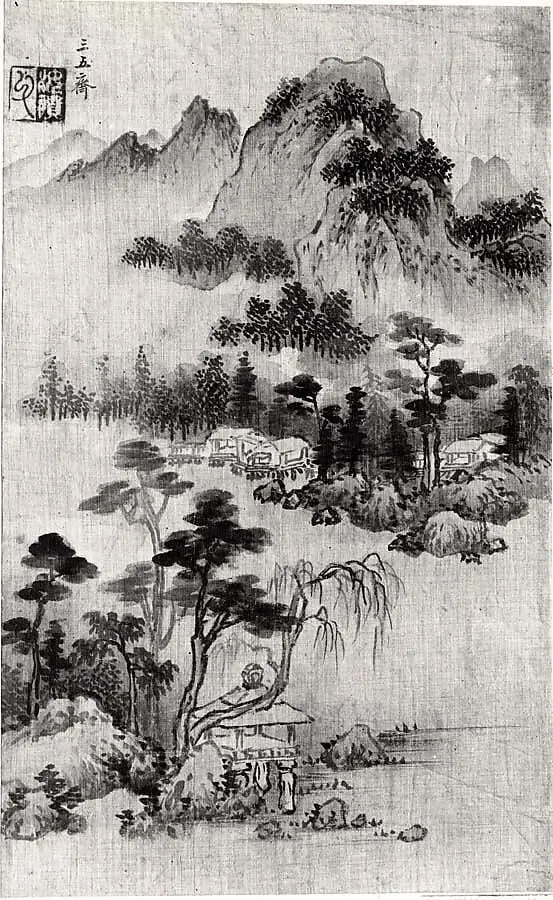
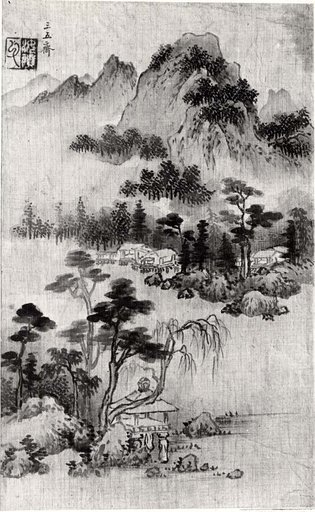
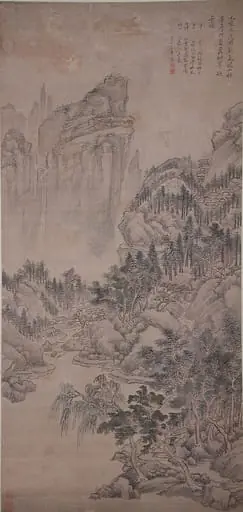
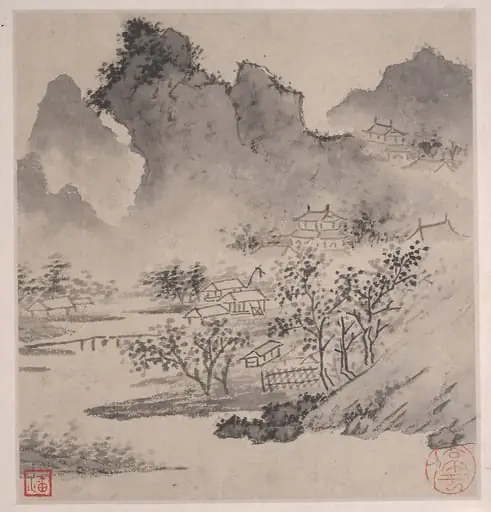
Untitled is an ink painting by the Korean Minhwa artist Samoje. It dates from 1800 and is held in the collection of the Metropolitan Museum of Art. Pavilion by the Lake is a framed painting from the late 18th century, created during Korea's Joseon dynasty.
About this work
Subject & Meaning
Created during the Joseon dynasty, the painting reflects the popularity of nature-themed subjects in Korean art of the period.
Although cataloged as Untitled, this work is descriptively known as Pavilion by the Lake. The composition depicts a naturalistic landscape featuring a house, a pavilion, trees, and mountains. Created during the Joseon dynasty, the painting reflects the popularity of nature-themed subjects in Korean art of the period.
The imagery likely derives from Chinese Ming dynasty painting manuals imported to the peninsula, specifically adapting compositions found in the influential Mustard Seed Garden Manual. This reliance on established pattern books suggests the work represents a professional interpretation of standardized motifs rather than a unique observation of a specific location. The artist, signing with the style name Samoje, was probably a member of the jungin class, utilizing these imported guides to produce light, monochrome-style landscapes characteristic of the era's synthesis of local taste and foreign artistic instruction.
Technique & Style
The work is a framed painting executed in ink and color on a hemp or ramie support (1). Its support measures 45.4 cm in height by 27.6 cm in width, characteristic of late‑18th‑century Korean landscape painting (2,3). The artist signs with the style name Samoje, but remains unidentified, likely a professional painter from the jungin class of the Joseon dynasty (3,4).
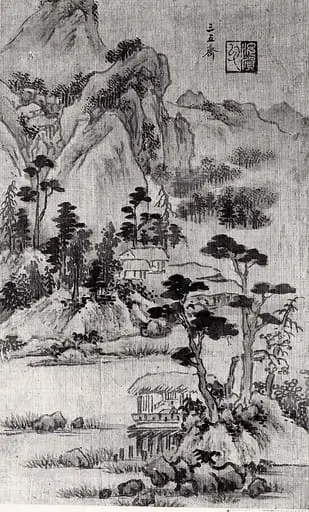
The composition draws on Ming‑dynasty painting manuals, especially the Mustard Seed Garden treatise, adapting its spatial and decorative conventions to depict a house, pavilion, tree and mountain within a naturalistic landscape (3,4). Formal qualities include a balanced vertical format, restrained brushwork, and a palette that blends ink outlines with subtle color washes, reflecting the synthesis of Chinese influence and Korean aesthetic sensibilities of the period.
History & Provenance
The work is dated to circa 1800 (early 19th century), though some descriptions place it in the late 18th century【1†L1-L2】【2†L1-L3】. It was created by an unidentified painter who used the style name Samoje and is thought to have been a professional artist of the jungin (middle‑people) class of the Joseon dynasty【3†L1-L4】【4†L1-L4】. The composition likely draws from Ming‑dynasty painting manuals, especially the Mustard Seed Garden manual【3†L5-L6】【4†L5-L6】.
Provenance shows the painting was given to the Metropolitan Museum of Art by the Rogers foundation in 1915 and remains in the Met’s collection【3†L7-L8】【4†L7-L8】【2†L1-L2】. It was displayed in the Met’s Korean Art exhibitions of 2006 and 2010【3†L9-L10】【4†L9-L10】. No documentary evidence of a commission appears in the sources.
The work Untitled (1800) by Samoje is housed in the collection of the Metropolitan Museum of Art in New York, where it is catalogued as part of the museum's Korean painting holdings. Its dimensions (45.4 cm × 27.6 cm) are recorded in the museum's catalogue. The painting has been shown publicly as part of the museum’s Korean Art exhibitions in 2006 and again in 2010, allowing visitors to view the piece within a broader context of Joseon‑period landscape works.
Context
Scholarship identifies the work, often titled Pavilion by the Lake, as a product of the late Joseon dynasty, likely executed by a professional painter from the jungin (middle people) class. While the artist's specific identity remains unconfirmed due to scarce documentation, they utilized the style name Samoje. Art historical analysis suggests the composition derives from Ming dynasty painting manuals imported from China, with the Mustard Seed Garden Manual cited as a prominent influence on its naturalistic themes.
This adaptation reflects the broader trajectory of Korean painting, which evolved from mural traditions to monochrome and light painting under Chinese influence. The work's significance is underscored by its inclusion in Metropolitan Museum of Art exhibitions dedicated to Korean art in 2006 and 2010, following its 1915 donation by the Rogers Foundation.
Overview
Pavilion by the Lake is a framed painting from the late 18th century, created during Korea's Joseon dynasty. Executed with ink and color on a textile base of hemp or ramie, this artwork measures 45.4 cm in height and 27.6 cm in width. The artist is identified only by the style name Samoje, with their personal identity and given name remaining undocumented. This work exemplifies the landscape traditions prevalent in the period.
Artist & collection