Artwork
The Collector of Prints
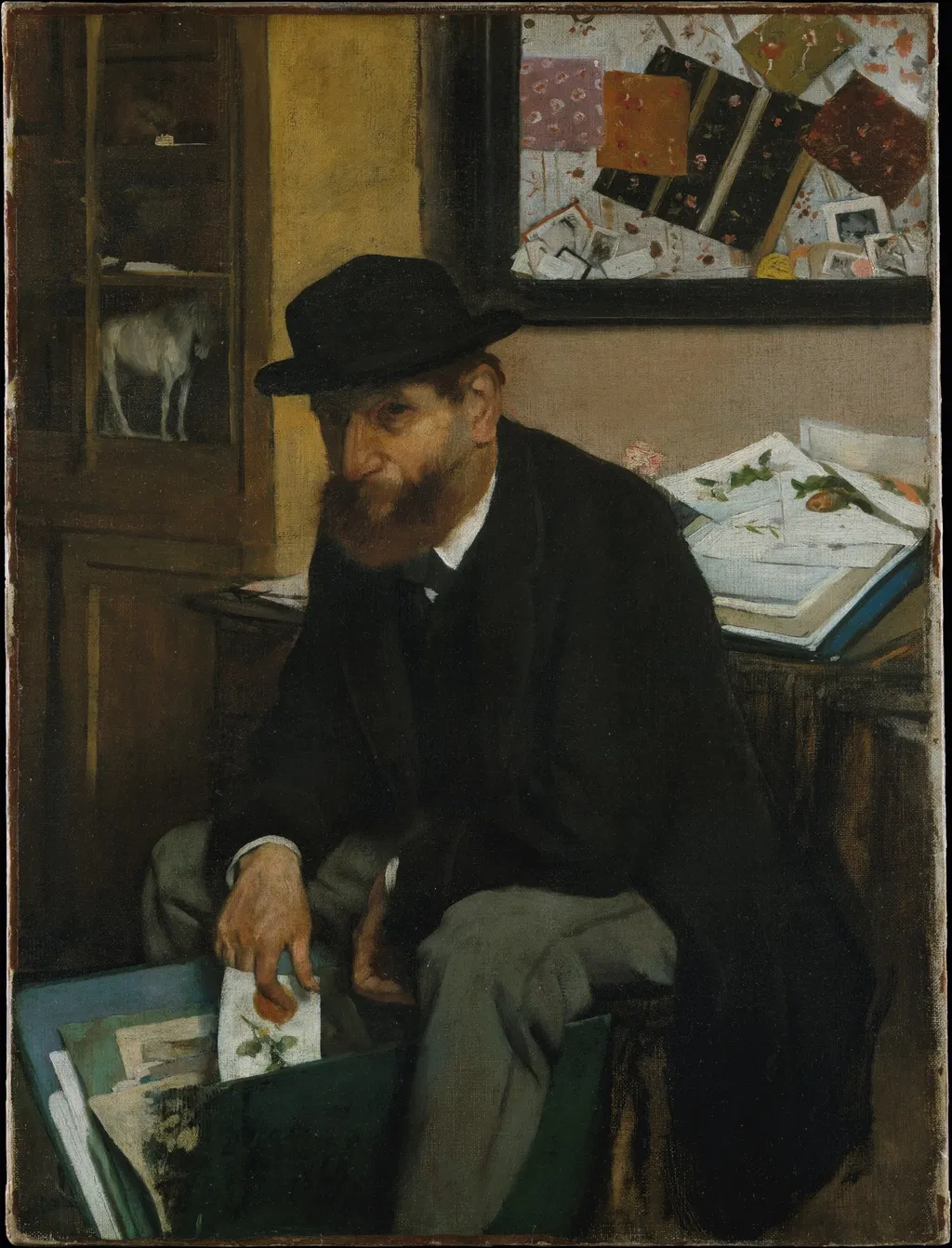
The Collector of Prints is an oil painting by the Realist artist Edgar Degas. It dates from 1866 and is held in the collection of the Metropolitan Museum of Art.
About this work
Subject & Meaning
This juxtaposition symbolizes a deep, personal commitment to accumulating beauty over wealth, reflecting Degas's own identification with the figure.
The painting depicts an elderly, unknown male sitter pausing while browsing a portfolio of prints, directly engaging the viewer's gaze. The setting is a modest gallery filled with a complex array of objects that define the subject's character as an obsessive, old-fashioned collector rather than a fashionable spender. The background integrates diverse artistic styles, featuring inexpensive, outdated European lithographs alongside valuable Chinese and Japanese artifacts, including a T'ang Dynasty ceramic horse and embroidered silk fragments.
This juxtaposition symbolizes a deep, personal commitment to accumulating beauty over wealth, reflecting Degas's own identification with the figure. By surrounding the man with items ranging from floral studies to Far Eastern fabrics, the work illustrates the sitter's passionate dedication to art, merging the subject with his environment.
Technique & Style
The Collector of Prints is an oil-on-canvas painting executed by Edgar Degas in 1866, measuring 53 by 40 centimeters. Degas approached the work with the deliberate aim of integrating the sitter with a densely layered background. The background is among the painting's most intricate features: a bulletin board to the right of the figure bears European stationery and fragments of Japanese embroidered silk, likely intended for pocketbooks and jacket linings, while the table behind him holds small color lithographs of flowers stylistically similar to those of Pierre-Joseph Redouté, repeated in the portfolio the man browses.
A cupboard to the left contains a white ceramic horse figurine resembling T'ang Dynasty examples, with a bent head and flaring nostrils. The composition reflects Degas's experimentation with pictures-within-pictures and his personal engagement with collecting.
History & Provenance
The Collector of Prints was executed by Edgar Degas in 1866 using oil on canvas. It depicts an unidentified male collector seated, absorbed in a portfolio of prints, with a meticulously assembled background of European and Asian objects. The work was acquired by Louisine Havemeyer in 1895 from the dealer Durand-Ruel and later entered the collection of the Metropolitan Museum of Art, where it is displayed in Gallery 815.
No evidence suggests a commission; the painting resulted from Degas's personal experimentation with interior scenes. Its provenance traces from Havemeyer's ownership to the museum's permanent display, where it has been exhibited as part of the museum's presentation of 19th-century French works.
Overview
Edgar Degas's 1866 oil painting, The Collector of Prints, portrays an unidentified man engrossed in a portfolio of artworks. The subject, captured mid-action, momentarily pauses to meet the viewer's gaze from a densely arranged personal space. This work exemplifies Degas's early interest in depicting individuals within their intimate, often cluttered, environments, offering a glimpse into private moments and professional pursuits rather than idealized scenes.
Context
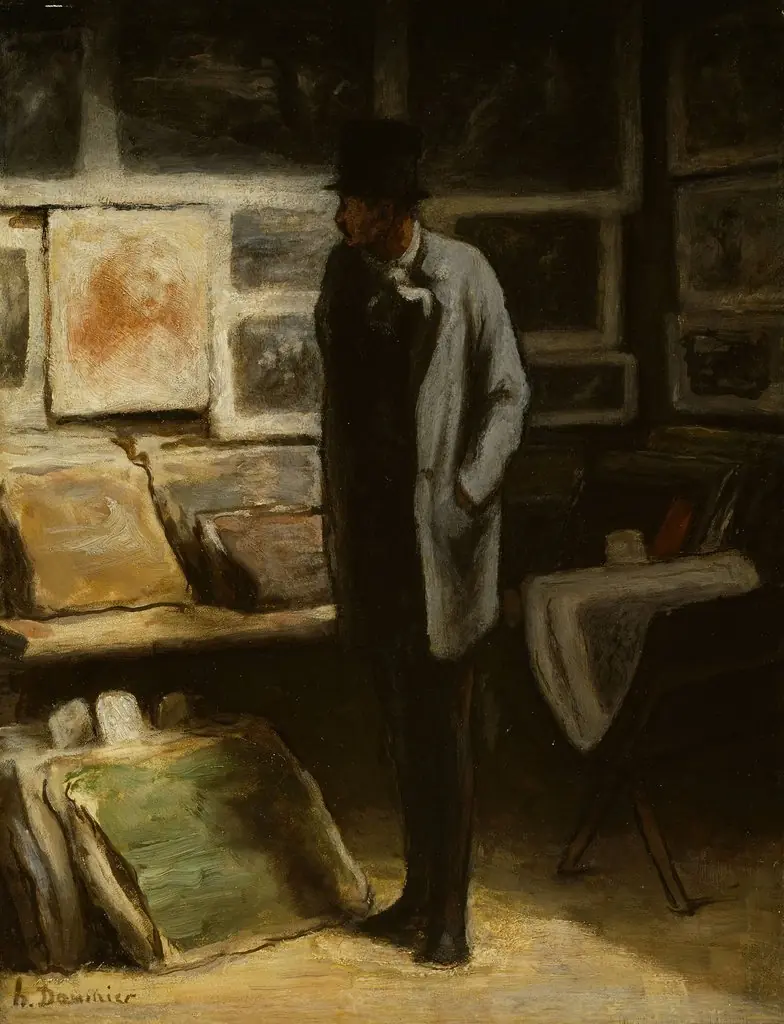
Created in 1866, The Collector of Prints reflects the artistic currents of its era and Degas's engagement with contemporary figures. Influences from artists like Honoré Daumier and Édouard Manet, alongside critic Edmond Duranty, are evident in its observational quality and focus on modern life. The painting's detailed, yet informal, depiction of a private interior aligns with a growing interest in representing authentic, unidealized human experience and surroundings.
Own this work as a print
Artist & collection
Artist
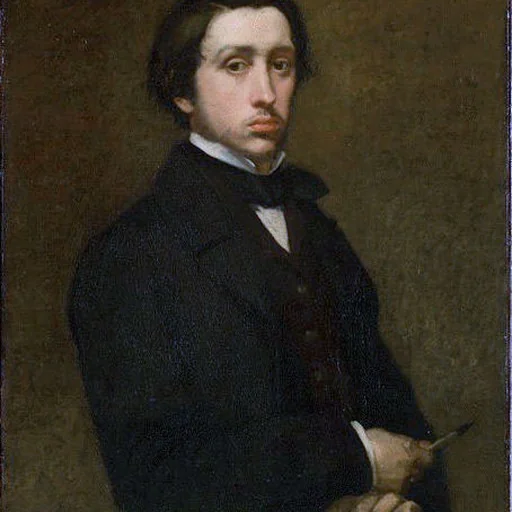
Born Hilaire-Germain-Edgar De Gas on 19 July 1834 in Paris, Edgar Degas came from an affluent banking family with aristocratic roots and spent his childhood among the cultivated circles of the French capital.

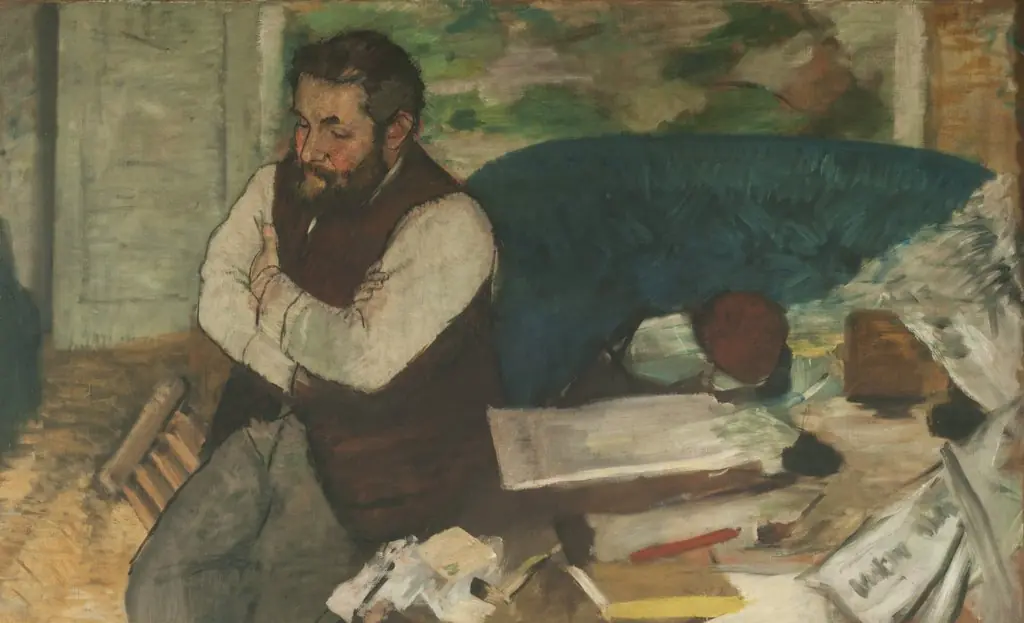 Portrait de Diego Martelli
 Arkitekten Thorvald Bindesbøll i sin arbejdsstue
 Arkitekten Thorvald Bindesbøll i sin arbejdsstue
 Portrait of Stanisław Czachórski (1853–1904), artist’s brother
 Portrait of the Painter Nils Kreuger
 Monet that reads
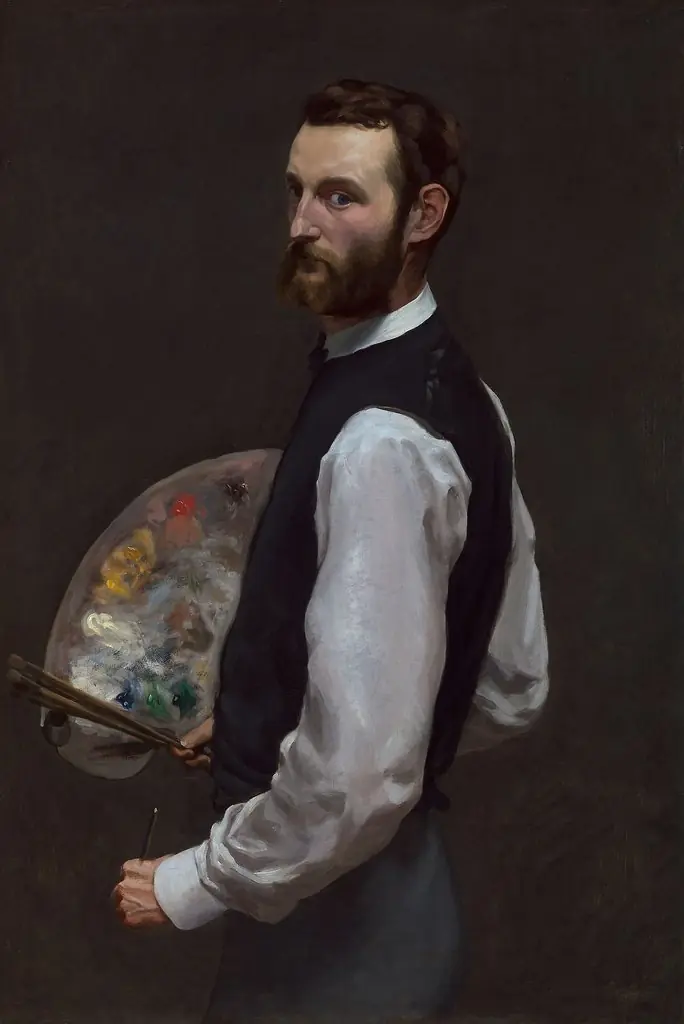 Self-Portrait
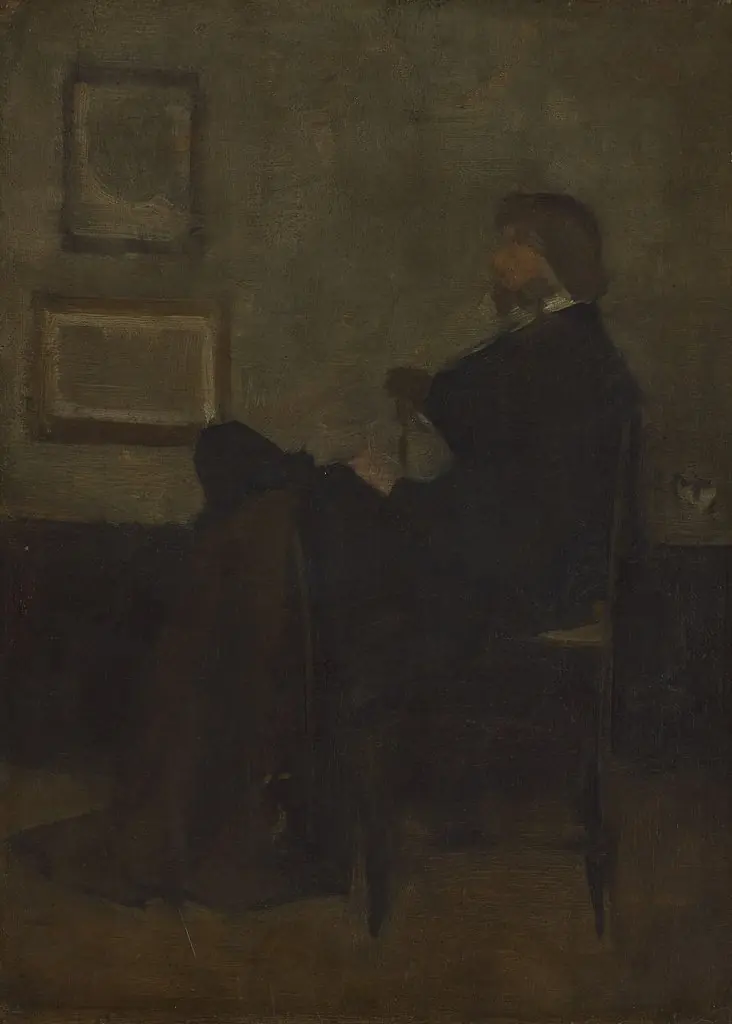 Study for "Arrangement in Grey and Black, No. 2: Thomas Carlyle"
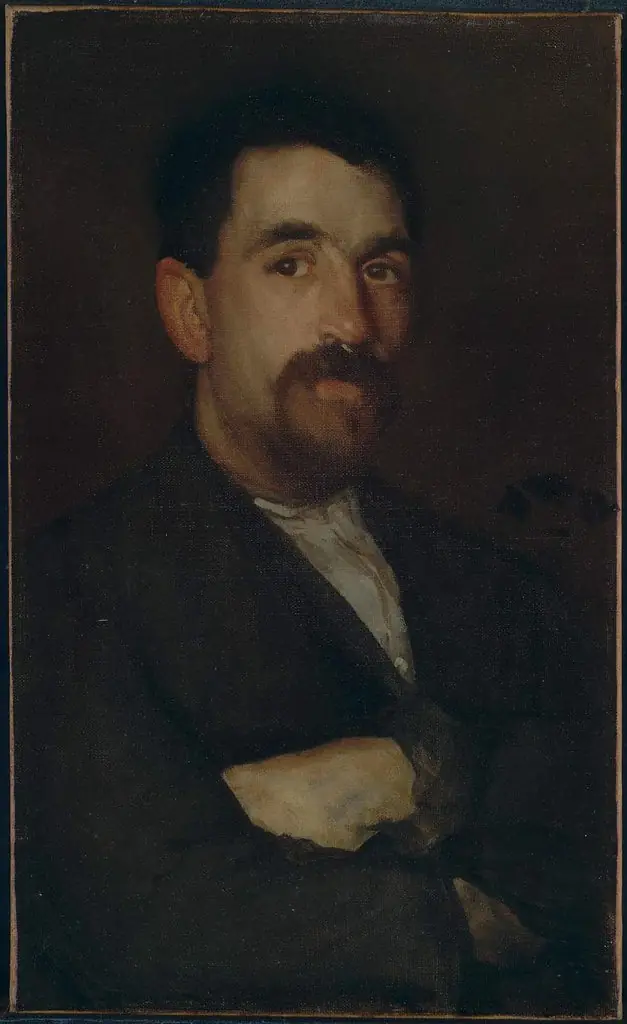 The Master Smith of Lyme Regis