Artwork
Self-Portrait
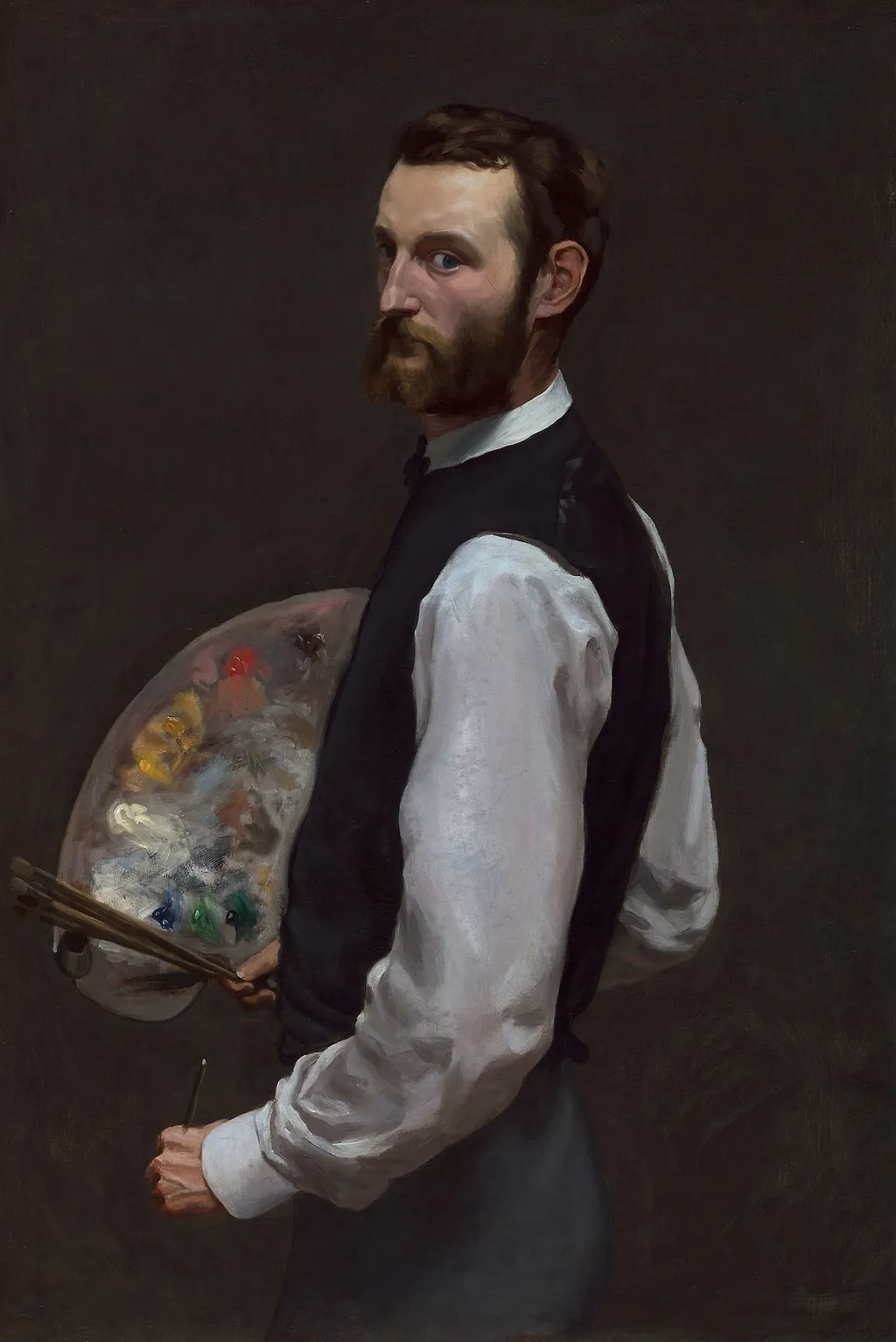
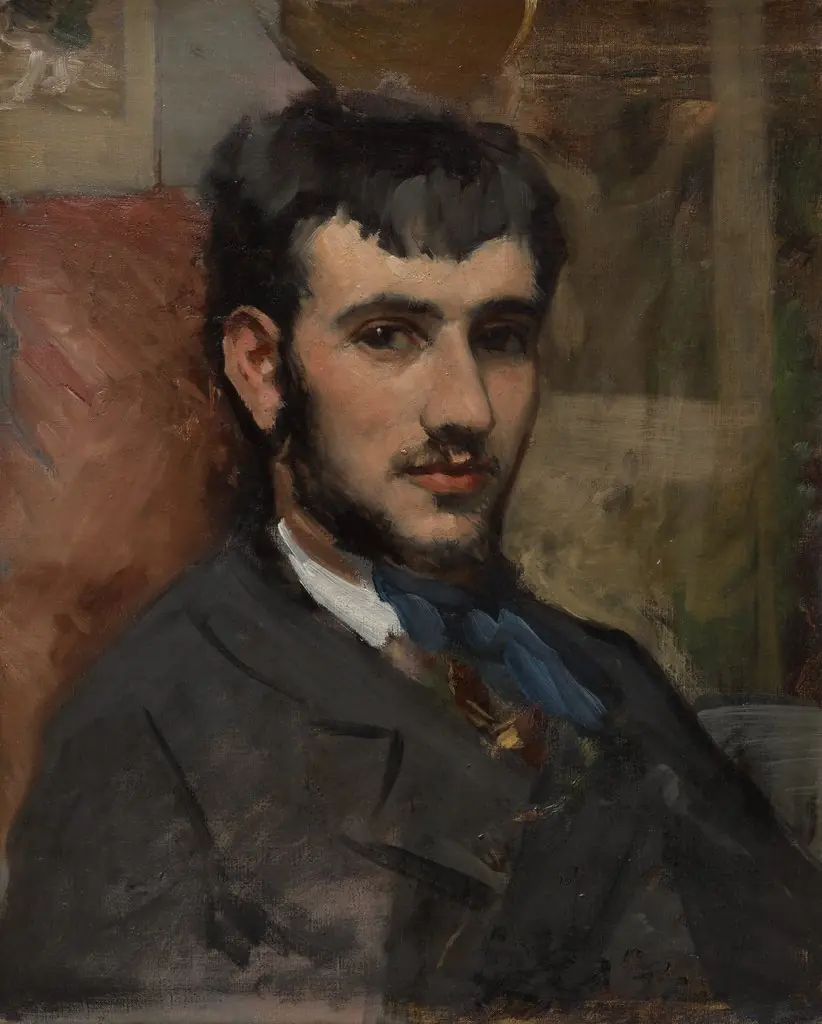
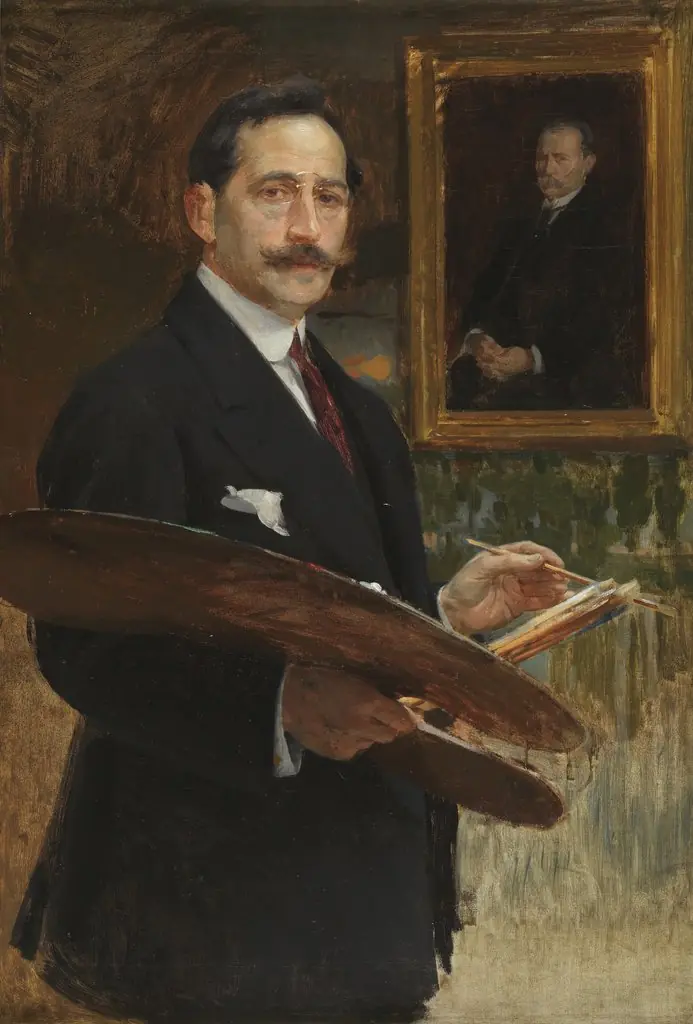
Self-Portrait is an oil painting by the French Romanticist artist Frédéric Bazille. It dates from 1865 and is held in the collection of the Art Institute of Chicago.
About this work
Overview
Self-Portrait is an oil on canvas painting by the French artist Frédéric Bazille, executed in 1865-1866.
Self-Portrait is an oil on canvas painting by the French artist Frédéric Bazille, executed in 1865-1866. Measuring 108.9 × 71.1 cm, the work depicts the young painter in three-quarter profile, holding his palette and brushes. It is held by the Art Institute of Chicago, where it is on view in Gallery 225. The painting is one of only four self-portraits by Bazille, whose career was cut short by his death in the Franco-Prussian War at age twenty-eight, and it stands as a significant document of a pivotal figure in the early Impressionist circle.
Subject & Meaning
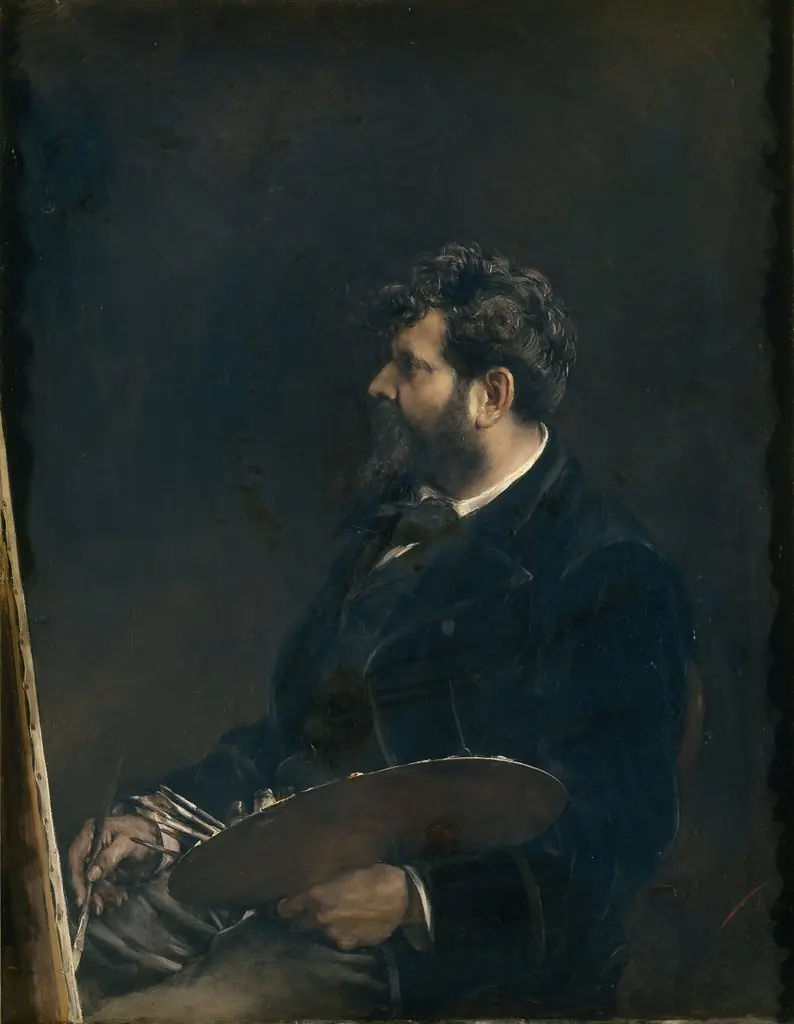
The painting shows Bazille as a bearded young man, turned in three-quarter profile toward the viewer, his head slightly rotated to meet our gaze. He wears a white collared shirt with full sleeves beneath a dark vest, attire that suggests working practice rather than formal presentation. In his left hand he holds a painter's palette loaded with dabs of red, yellow, blue, green, and white paint, with several brushes tucked beneath his thumb; his right hand grips a single thin paintbrush. The composition functions on multiple levels: it is simultaneously a practice piece, in which Bazille observed and painted his reversed image as seen in a mirror, and a professional manifesto, asserting his new identity as an artist following his decision to abandon medicine. The unseen easel and canvas must lie immediately before him and to our left. The palette itself, with its small vivid patches of color against the otherwise restrained tonality, serves as both attribute and symbol, the tools of his trade becoming an emblem of vocation. The direct, almost unguarded gaze conveys what one observer described as an almost clinical self-awareness, a quiet confidence that avoids theatricality.
Technique & Style
The painting is executed in oil on canvas with a semi-smooth finish. Light falls from the upper left, illuminating the face, hands, and white fabric while creating soft shadows along the right side. The handling varies across the surface: the face and shirt display smoother, more blended treatment, while the palette shows looser, more textured brushwork, and the clothing and background reveal visible strokes that suggest the influence of contemporary realist practice. The overall palette is restrained, built on browns, blacks, and whites, with the small vivid color patches on the palette providing deliberate contrast. This subdued tonality owes something to Courbet's realism, yet the directness of observation and the interest in light effects gesture toward the techniques Bazille was developing alongside Monet and Renoir. The vertical format and centered composition, with the figure occupying most of the frame, create an intimate, frontal presence that emphasizes the painter's confrontation with his own image.
History & Provenance
Bazille painted this self-portrait while sharing an apartment-studio with Claude Monet, a period of intense experimentation that would prove central to the emerging Impressionist movement. The work remained in the family of the artist's brother until 1960, when it was sold to the Galerie Charpentier in Paris. In 1962 it was purchased by the Art Institute of Chicago with funds provided by Mr. and Mrs. Frank H. Woods in memory of Mrs. Edward Harris Brewer, and it bears the reference number 1962.336. The painting has been exhibited at the institution as part of its permanent collection and is currently on view in Gallery 225 within the Department of Painting and Sculpture of Europe.
Context
Bazille was in his mid-twenties when he executed this work, part of a brief career that produced approximately seventy paintings. His decision to paint this self-portrait coincided with his definitive abandonment of a medical career for art, and its creation in shared quarters with Monet places it at a formative moment for what would become Impressionism. During this period Bazille was actively experimenting with new painting techniques that would be central to the movement, making the work both a personal document and a piece of artistic research. The painting's honesty of observation and controlled brushwork reflect the intersection of realist training and emerging avant-garde concerns that characterized the early 1860s in Paris. Among the four self-portraits Bazille produced, this is distinguished by its professional character, the palette serving as explicit attribute, in contrast to the more informal presentation of later examples such as the 1870 Self-Portrait in Shirt Sleeves.
Own this work as a print
Artist & collection

Artist
Jean Frédéric Bazille (French pronunciation: ; December 6, 1841 – November 28, 1870) was a French Impressionist painter.