Artwork
De Pottenmakersstraat in Brugge
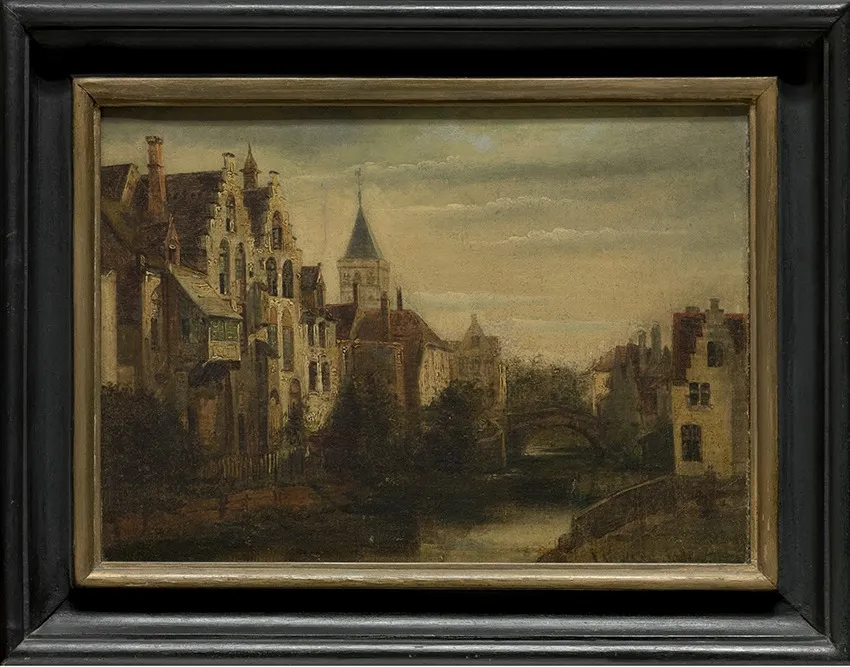
De Pottenmakersstraat in Brugge is an oil painting by the Neoclassicist artist Eduard Wallays. It dates from 1813 and is held in the collection of the Groeningemuseum.
About this work
Subject & Meaning
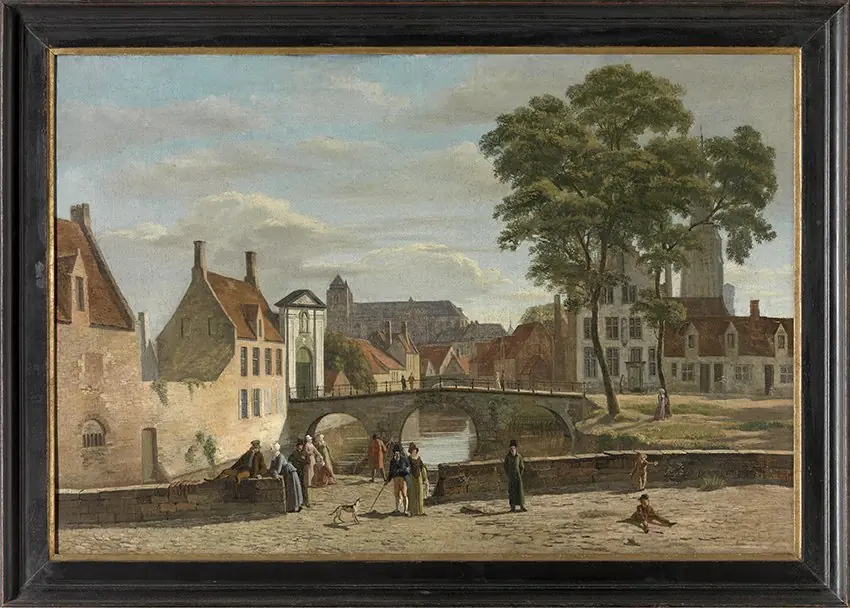
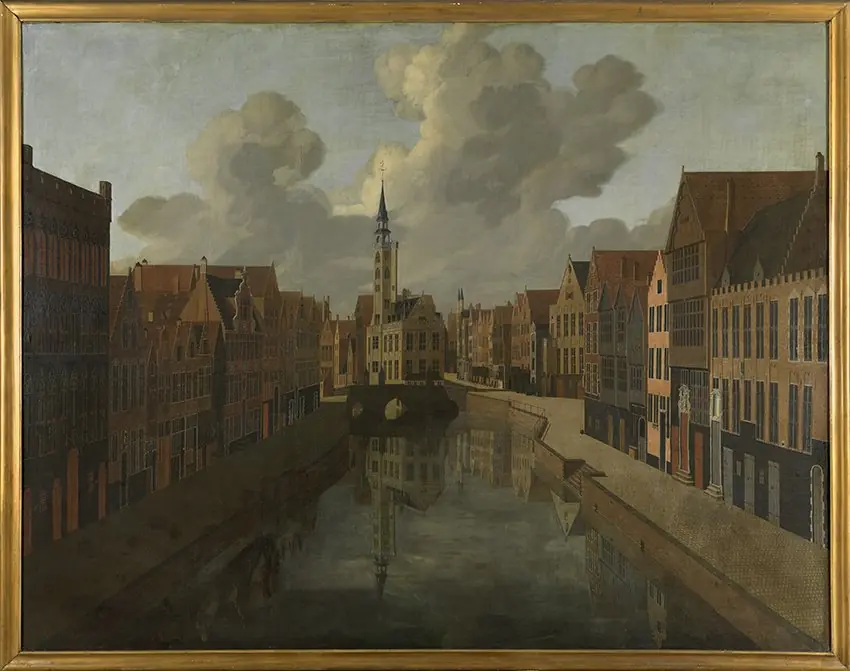
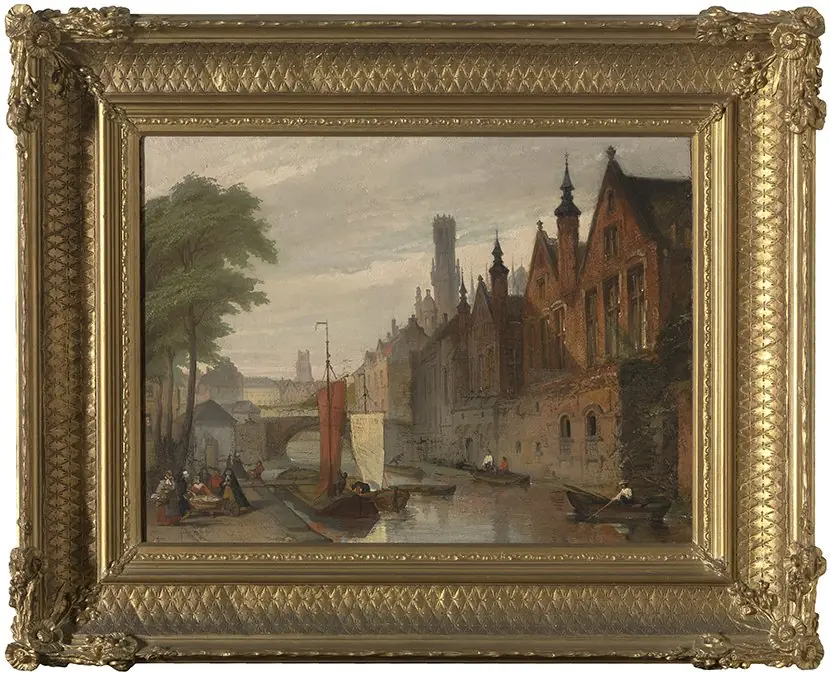
The composition features residential houses lining the street, with a tree and a bridge crossing the Reie river included in the foreground or middle ground.
Eduard Wallays's 1813 oil painting captures a specific view of the Pottenmakersstraat in Bruges. The composition features residential houses lining the street, with a tree and a bridge crossing the Reie river included in the foreground or middle ground. In the background, the work depicts St. James Church, anchoring the scene within the recognizable topography of the city.
As a cityscape, the painting functions as a topographical record, representing the architectural and urban character of Bruges during the early nineteenth century. The inclusion of specific landmarks alongside everyday street life emphasizes the work's role in documenting the physical environment of the location rather than conveying abstract symbolism.
Technique & Style
De Pottenmakersstraat in Brugge is executed in oil paint on canvas, a standard medium for early nineteenth-century easel painting. The work is a cityscape measuring 26.2 cm in height by 36.8 cm in width, a modest scale suited to detailed topographical observation. Stylistically, it belongs to the cityscape genre, depicting the Pottenmakersstraat with its houses, the Reie waterway, a bridge, trees, and St. James Church, characteristic of Eduard Wallays's documentary approach to Bruges's urban fabric.
History & Provenance
The painting De Pottenmakersstraat in Brugge is dated to 1813, as indicated by its Wikidata entry which also records its dimensions as 26.2 cm in height and 36.8 cm in width.
The work is held in the collection of the Groeningemuseum in Bruges, where it is catalogued as part of the museum’s holdings. The painting depicts the Pottenmakersstraat, a street in Bruges, alongside identifiable local features such as Saint James’s Church, the Reie river, a bridge, and surrounding trees.
The painting De Pottenmakersstraat in Brugge by Eduard Wallays is held in the collection of the Groeningemuseum in Bruges. While the work was created in 1813, the provided sources do not specify a unique inventory or accession number for the piece. No exhibition history is recorded in the available documentation.
The artwork remains part of the museum's permanent holdings, where it is categorized as an oil-on-canvas cityscape depicting the Pottenmakersstraat, the Reie canal, and St. James Church.
Context
Eduard Wallays painted De Pottenmakersstraat in Brugge in 1813, capturing a Bruges street scene with the St. James Church and Reie river. The work, an oil on canvas measuring 26.2 cm by 36.8 cm, belongs to the cityscape genre and is housed in the Groeningemuseum. Scholarship situates it within early 19th-century Flemish landscape painting, reflecting precise topographical interest in urban environments.
Its detailed depiction of local landmarks like Pottenmakersstraat and the bridge contributed to the visual documentation of Bruges during this period.
Overview
Eduard Wallays, a Belgian artist who directed the Bruges Academy of Fine Arts, completed an oil painting in 1813 titled De Pottenmakersstraat in Brugge. The work records a quiet street scene in Bruges, featuring the Reie river, a modest arched bridge, and the spire of St. James Church.
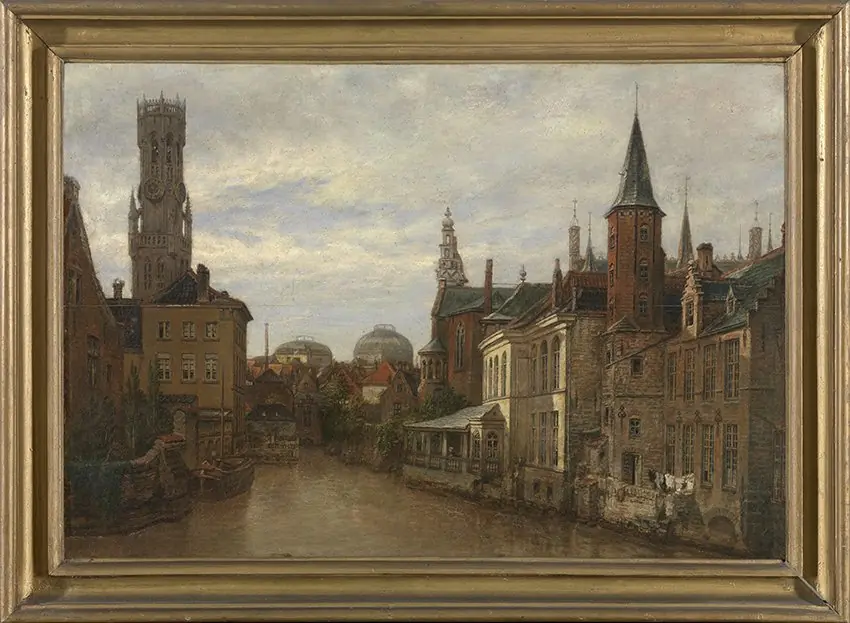
Artist & collection
Artist
Eduard Wallays (2 July 1813 in Bruges – 28 January 1891 in Bruges) was a Belgian painter, graphic designer, and Director of the Bruges Academy of Fine Arts.

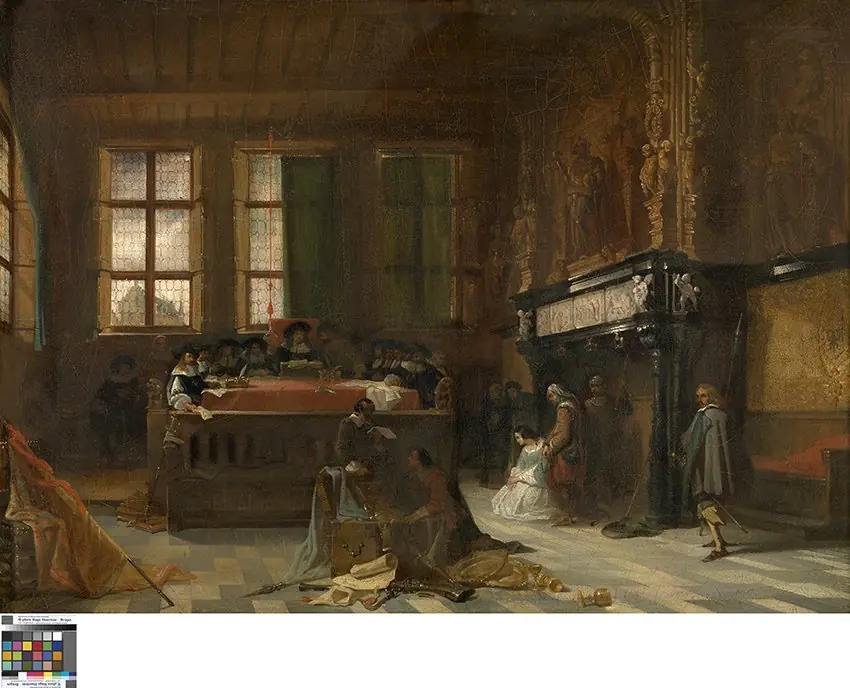 De zitting van de rechtbank
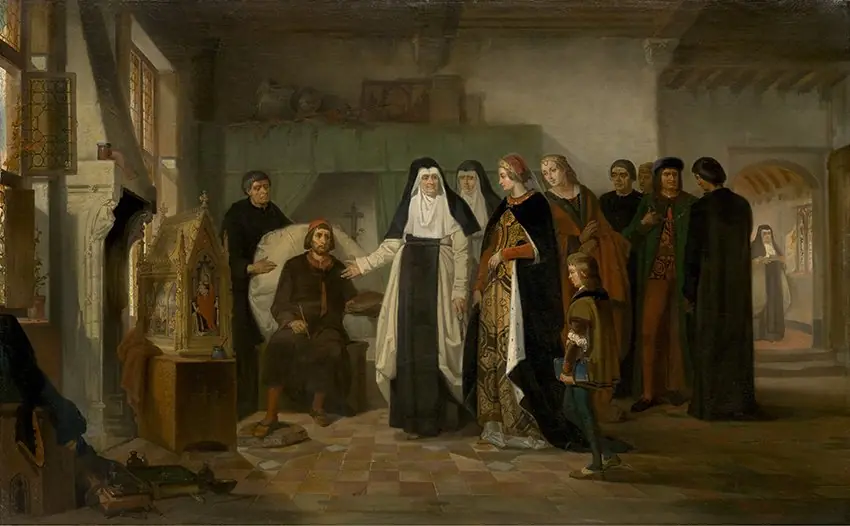 Memling schildert de Rijve van de Heilige Ursula
 Het Brugse Vrije vanop de Steenhouwersdijk
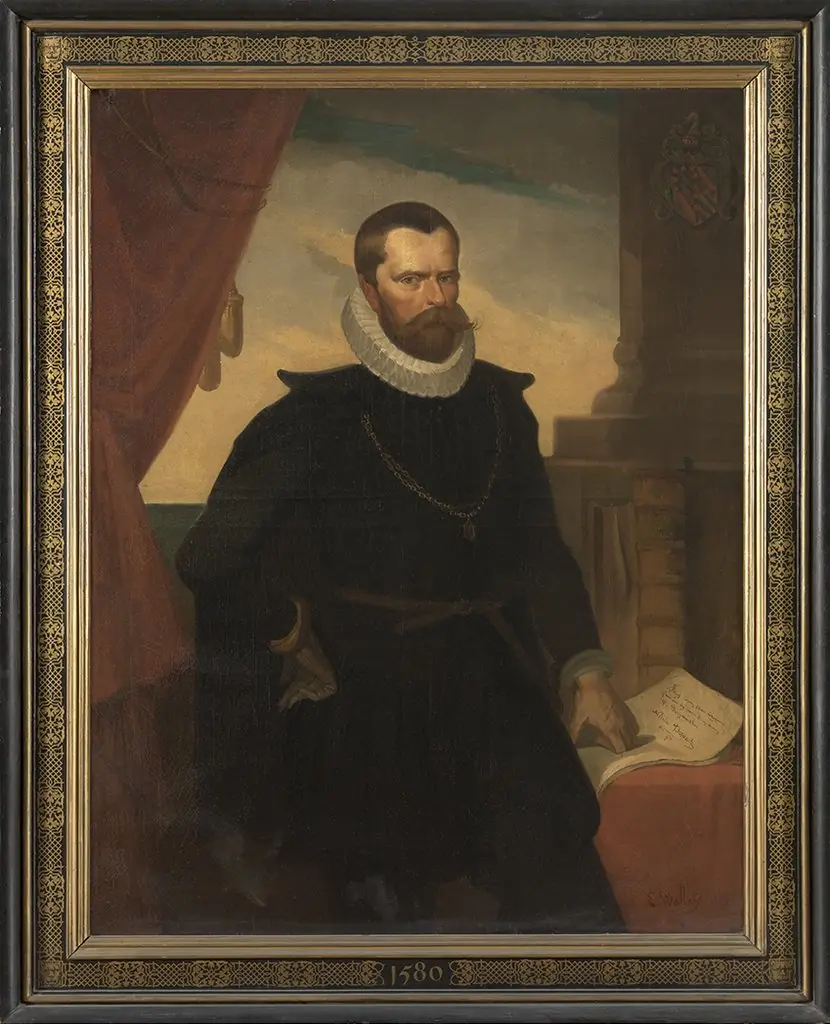 Portret van Nicolas Despars, burgemeester van Brugge
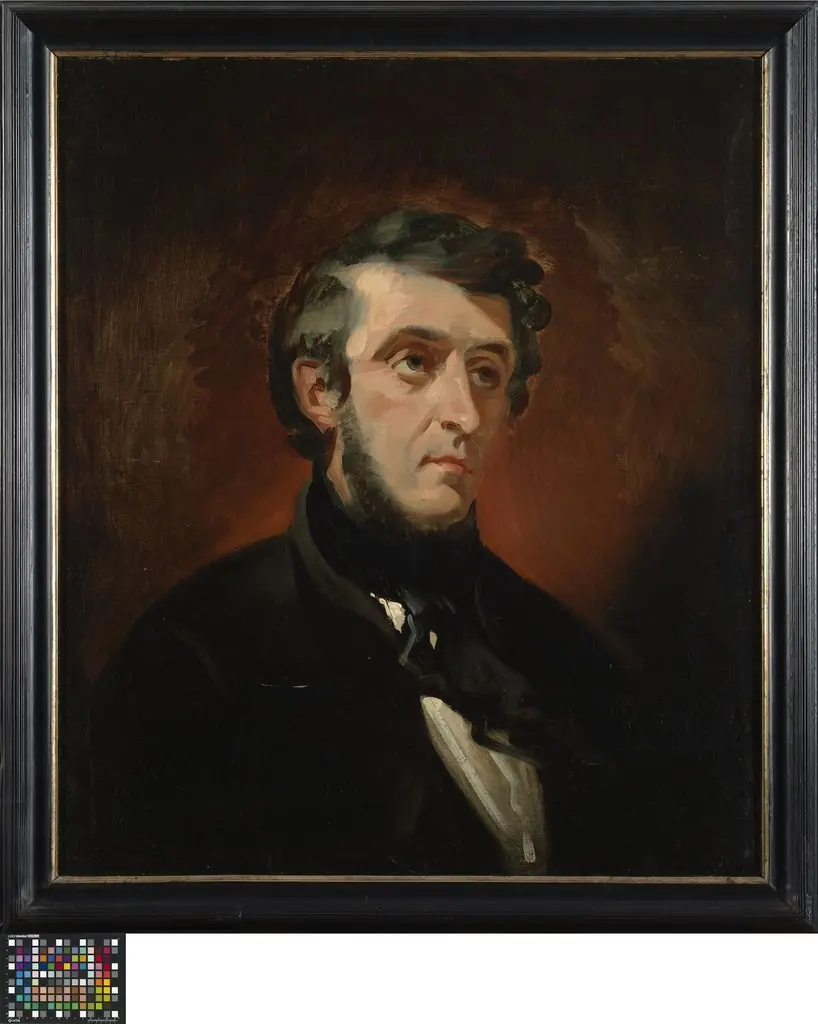 Portret van John Steinmetz
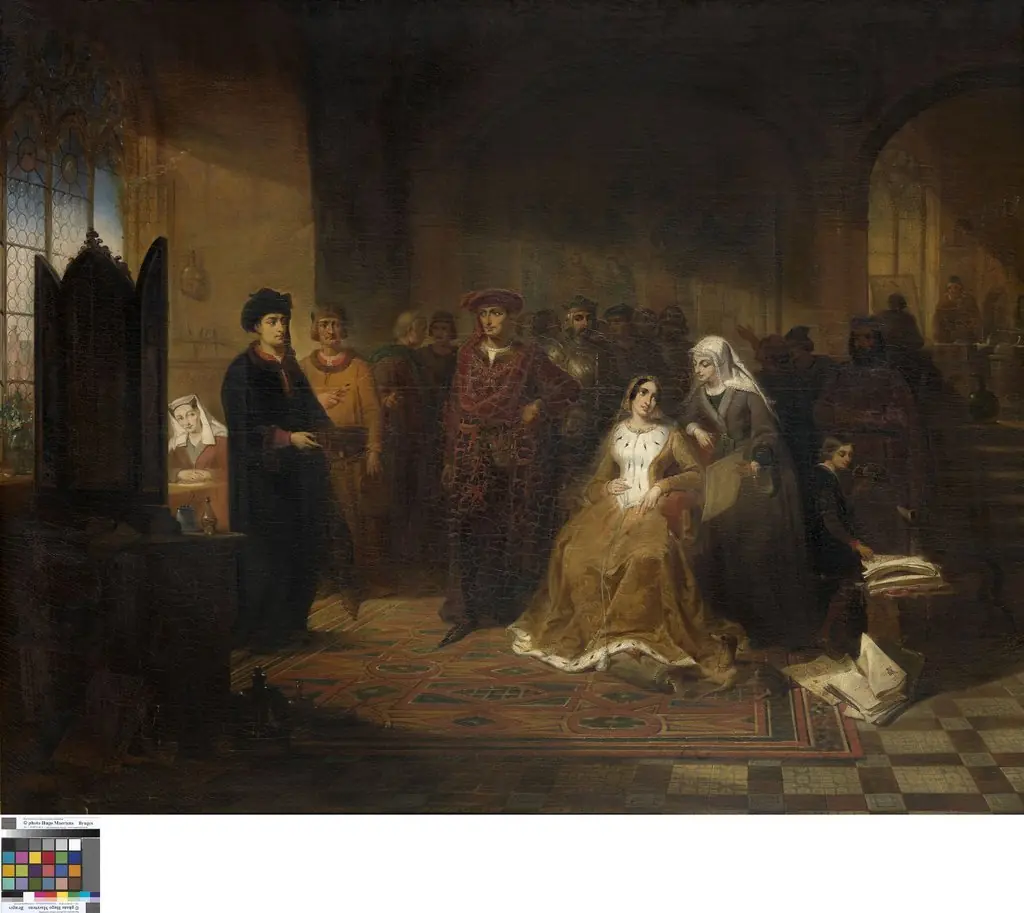 Filips de Goede bezoekt het atelier van Jan van Eyck
 Portret van Cornelis Van Baesdorp, burgemeester van Brugge