Artwork
Jealousy
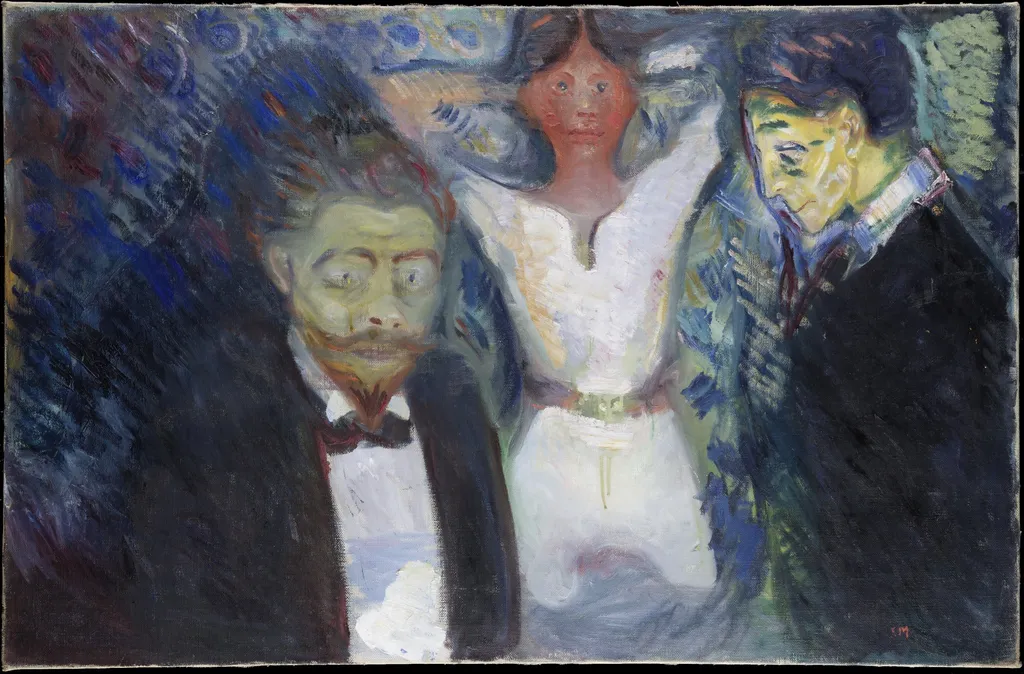
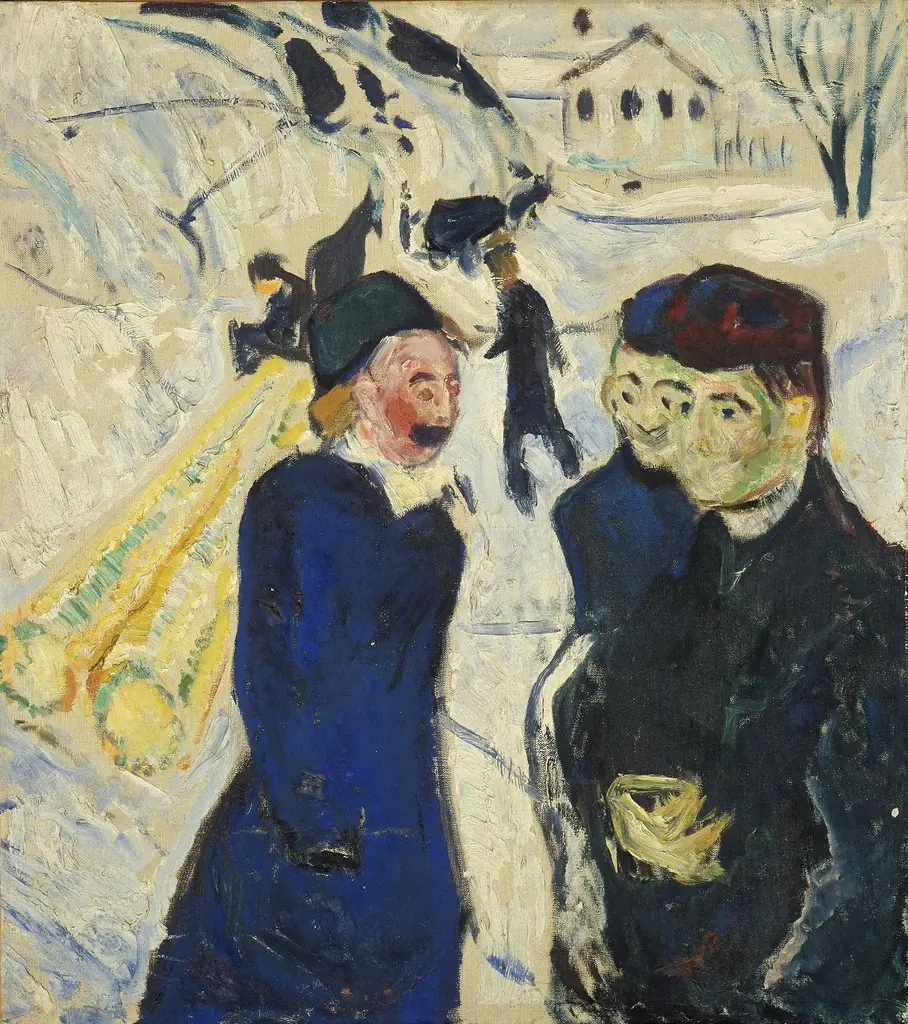
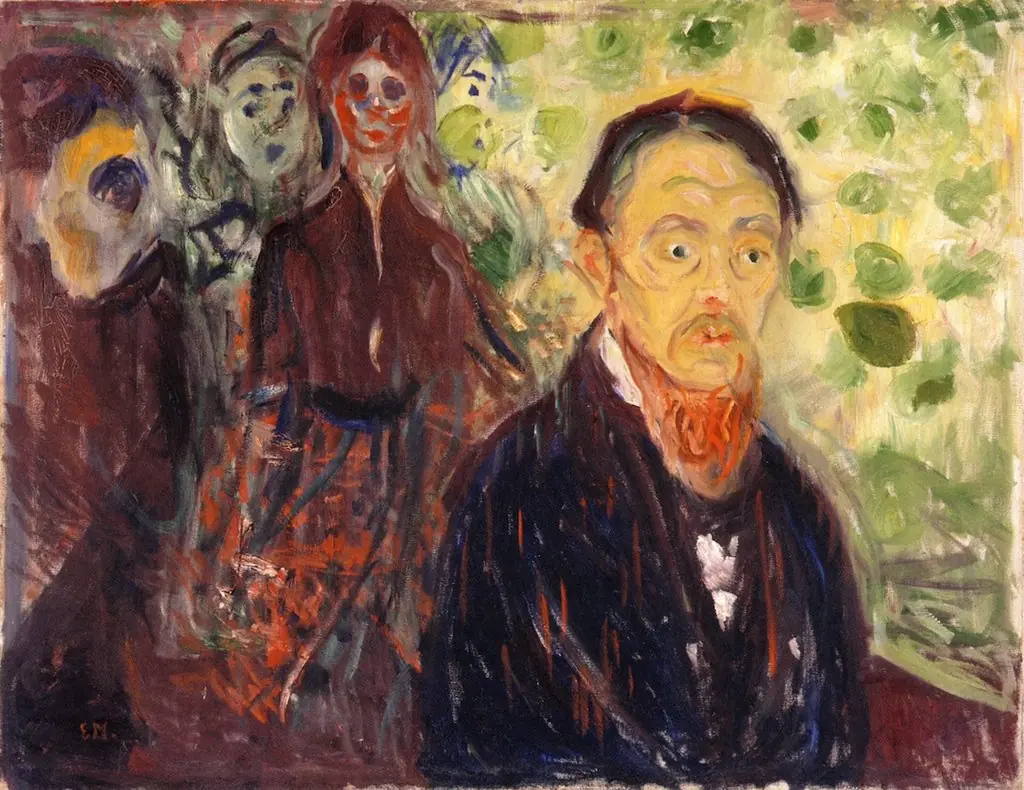
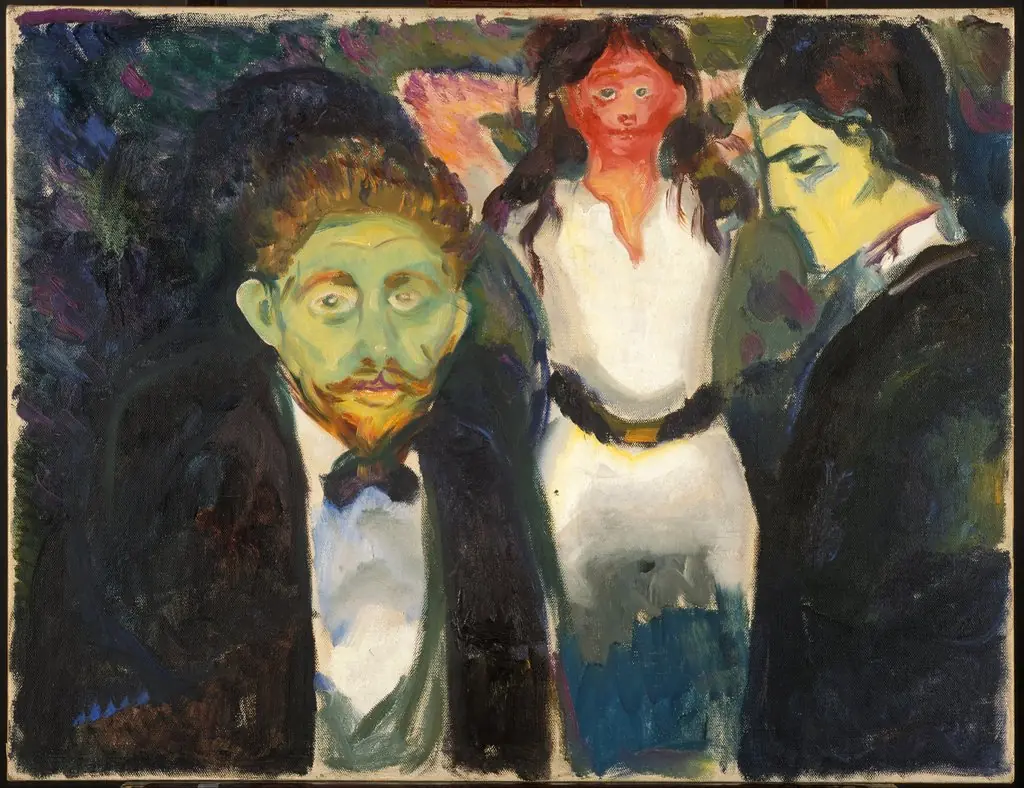
Jealousy is an oil painting by the Symbolist artist Edvard Munch. It dates from 1913 and is held in the collection of the Städel Museum.
About this work
Overview
It is part of a series of works addressing themes of love, anxiety, and isolation, and is currently held in the Städel Museum’s collection in Frankfurt.
Painted in 1913 by Norwegian artist Edvard Munch, Jealousy is an oil on canvas work that belongs to his broader investigation into human emotion. Created during a period of sustained psychological inquiry, the painting reflects Munch’s interest in internal states over external realism. It is part of a series of works addressing themes of love, anxiety, and isolation, and is currently held in the Städel Museum’s collection in Frankfurt.
Subject & Meaning
The painting depicts three figures in a dim interior: a man on the left, a woman in the center, and another man on the right, dressed in dark attire. The composition suggests tension between the figures, with the central woman seemingly observed or contested by the two men. Munch uses this arrangement to visualize emotional rivalry, where jealousy is not expressed through action but through posture, gaze, and spatial unease.
Technique & Style
Munch employs thick, layered brushwork and a muted yet dissonant palette to dissolve clear boundaries between figures and environment. Forms are suggested rather than defined, with colors blending into one another to evoke psychological ambiguity. His approach, rooted in Symbolism, prioritizes emotional resonance over naturalism, drawing on earlier studies at the Royal School of Art in Kristiania to develop a personal visual language of inner turmoil.
History & Provenance
Created in 1913, Jealousy emerged during Munch’s mature period, after his breakthrough with The Scream and amid ongoing personal reflections on relationships and loss. The painting entered the Städel Museum’s collection in the 20th century, likely through acquisition or donation. Its provenance remains largely unaltered since its inclusion, preserving its connection to Munch’s late oeuvre and institutional recognition in Germany.
Context
Munch painted Jealousy amid broader European interest in psychological expression, influenced by Freudian thought and the decline of academic realism. His work aligned with Symbolist currents that sought to externalize the invisible, emotions, fears, desires. In Norway, where personal grief shaped his artistic vision, such themes resonated with a cultural climate attuned to existential and emotional depth.
Legacy
Though less widely known than The Scream, Jealousy exemplifies Munch’s enduring focus on the psyche through visual metaphor. It contributes to a body of work that redefined modern painting’s capacity to convey subjective experience. The painting continues to be studied for its formal innovation and emotional precision, influencing later expressions of psychological art in the 20th century.
Own this work as a print
Artist & collection
Artist
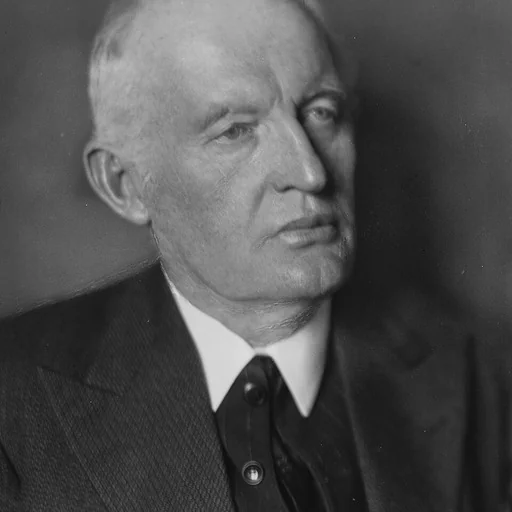
Edvard Munch ( MUUNK; Norwegian:; 12 December 1863 – 23 January 1944) was a Norwegian painter.