Artwork
Still life
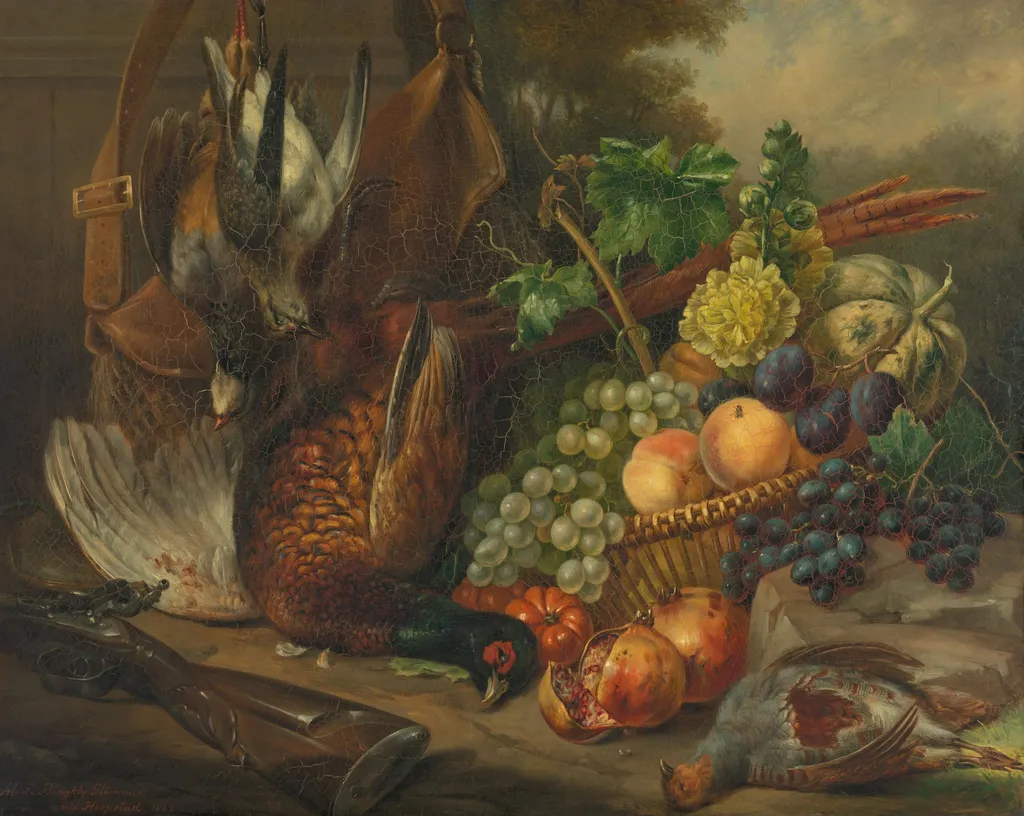
Still life is an unspecified painting by the Biedermeier artist Elisabeth Iosetta Hoopstad. It dates from 1842 and is held in the collection of the Rijksmuseum.
About this work
The mix of food and hunting gear feels like a quiet flex, someone showing off their wealth without saying a word.
You see a table covered in fruit, dead birds, a rifle, and a woven basket. The grapes glisten, the pheasant’s feathers catch the light, and the melon looks almost too heavy to lift.
This painting was made in 1842, but the artist’s name is lost. The mix of food and hunting gear feels like a quiet flex, someone showing off their wealth without saying a word.
If you like the way light plays on everyday objects, look up chiaroscuro.
Overview
This 1842 still life painting depicts an arrangement of abundant fruit and game on a table, accompanied by hunting equipment, conveying a sense of opulence.
Subject & Meaning
The composition juxtaposes edible delights (grapes, plums, peaches, melon, pomegranates, and rosemary) with the spoils of the hunt (various dead birds, including a pheasant), alongside a rifle and a wicker basket. This blend of luxury food and hunting trophies subtly implies the subject's wealth.
Technique & Style
The work employs chiaroscuro, evident in the pronounced play of light on reflective surfaces (like grapes) and the textured, illuminated feathers of the pheasant, creating a sense of depth and volume.
History & Provenance
Created in 1842, the painting's artist remains anonymous due to lost attribution over time.
Context
The piece reflects the traditional European still life theme of abundance, while the inclusion of hunting gear adds a hint of the hunter's pride, common in 19th-century depictions of leisure activities among the affluent.
Legacy
While not attributed to a known artist, the painting demonstrates technical proficiency in chiaroscuro, a technique influential in Western art, particularly in the Baroque period and beyond.
Own this work as a print
Artist & collection
Artist
From Flanders in the early 1800s comes Elisabeth Iosetta Hoopstad’s quiet corner of still life.

 Still life
 A Larder
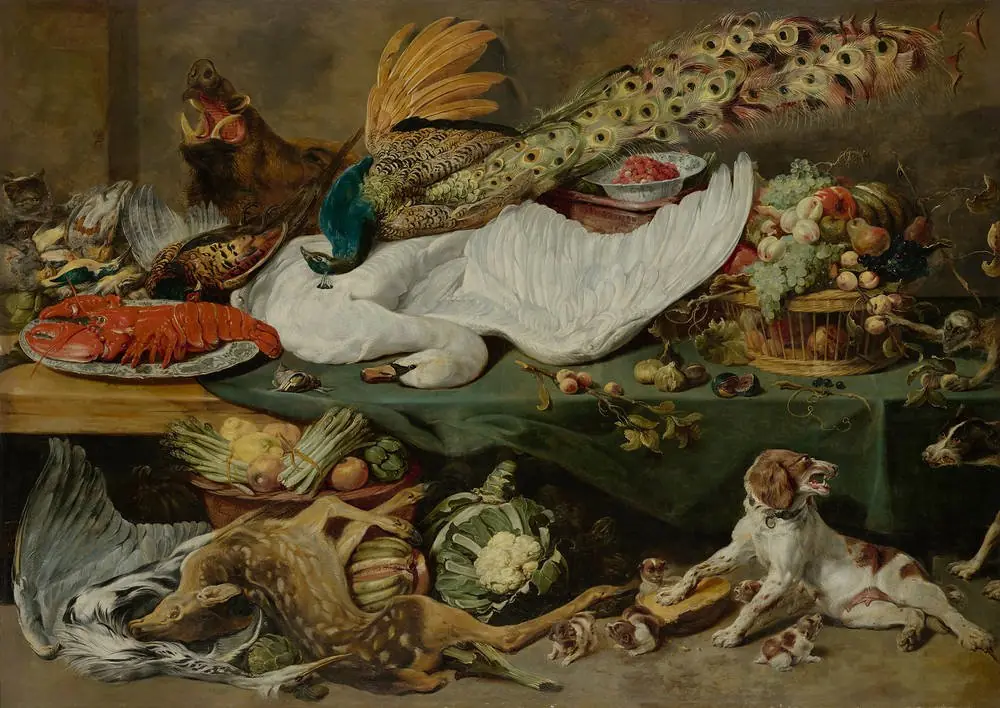 Still-life with a Spaniel and her Pups
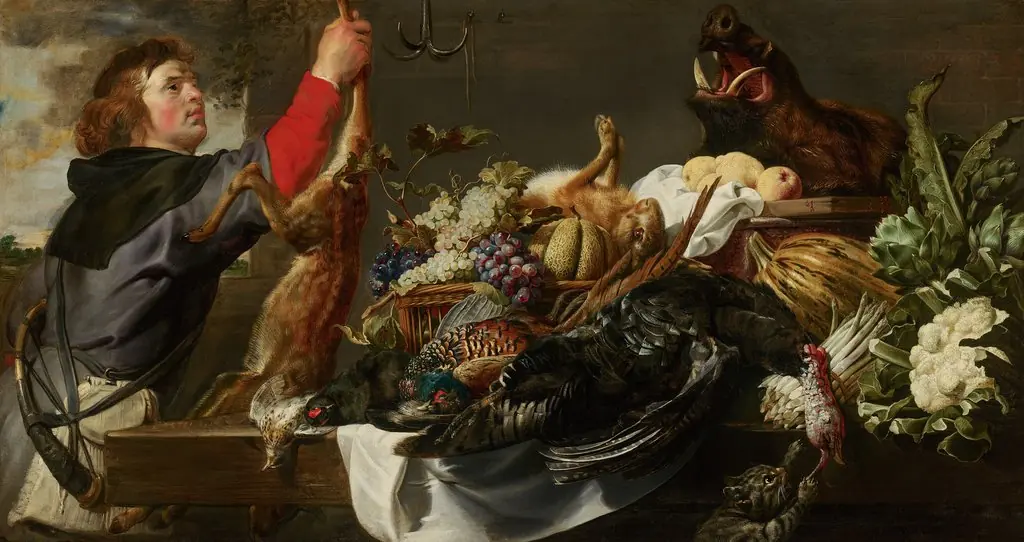 Still Life with Huntsman
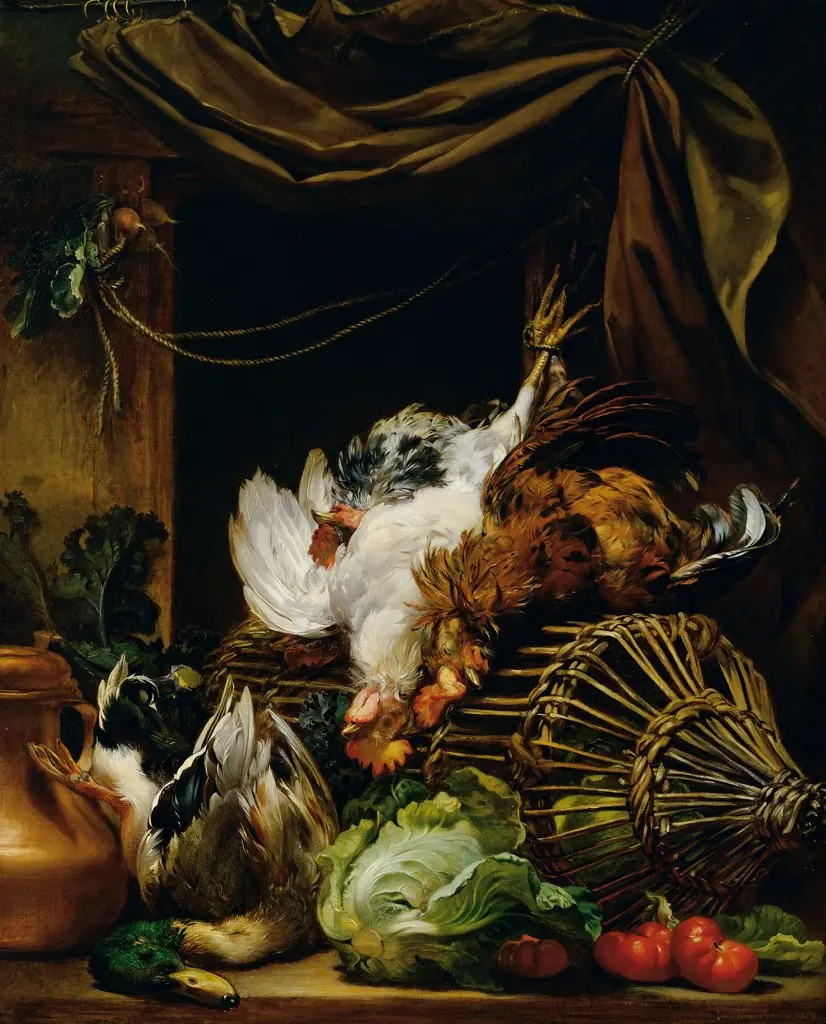 Still Life
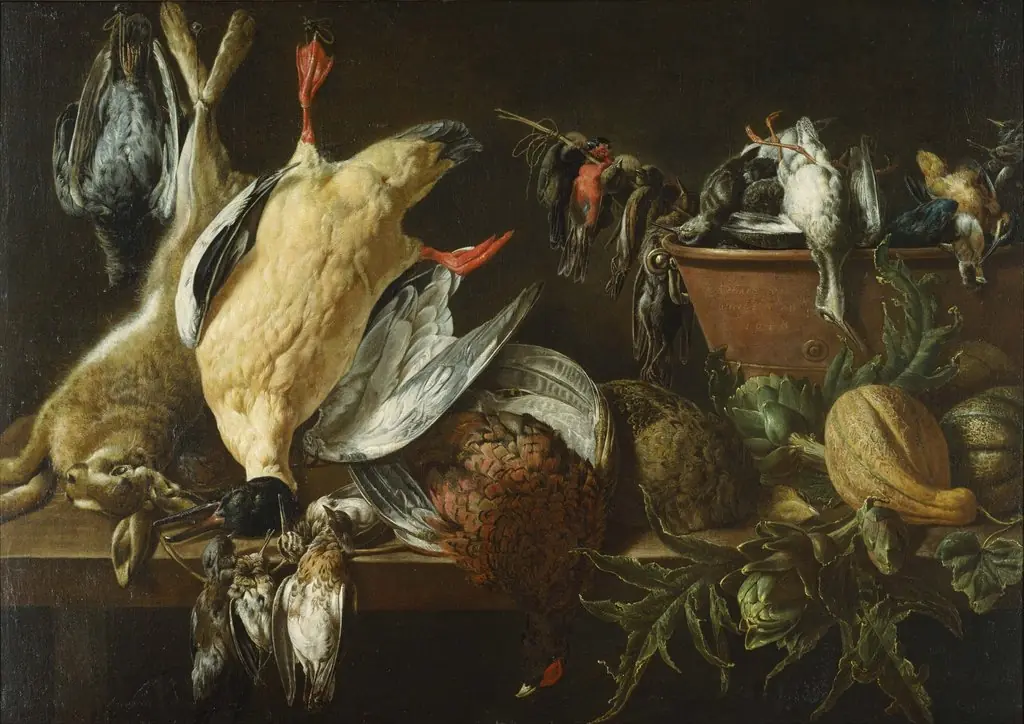 Still Life with Games and Vegetables
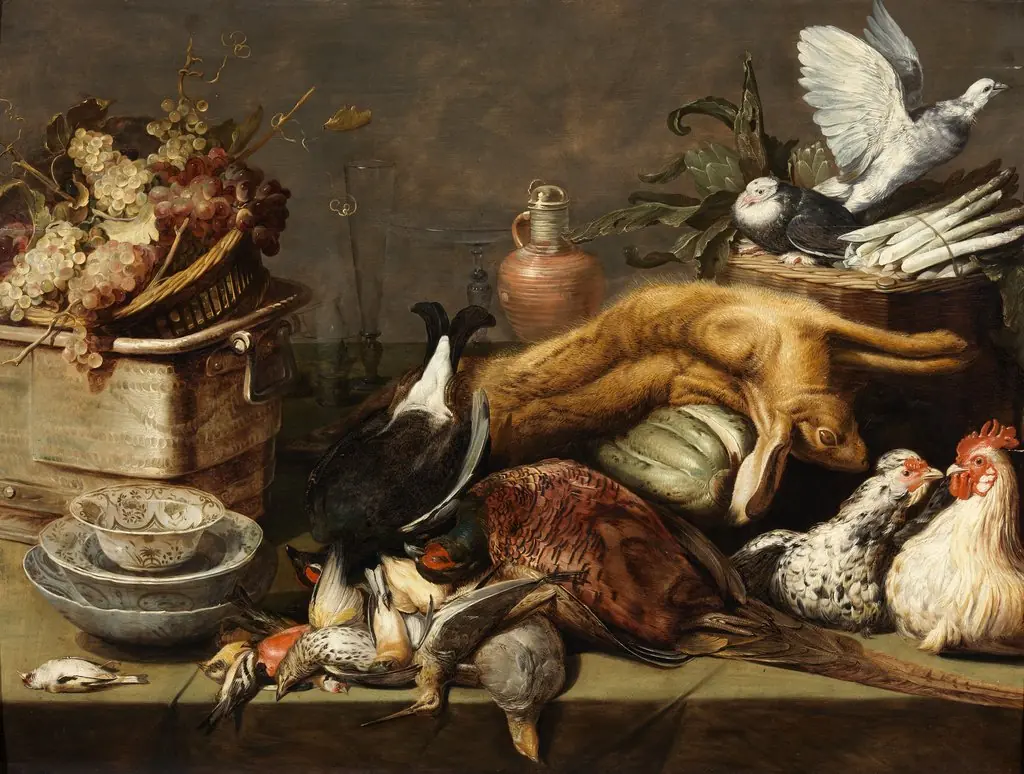 A Still Life with Dead Birds and a Hare
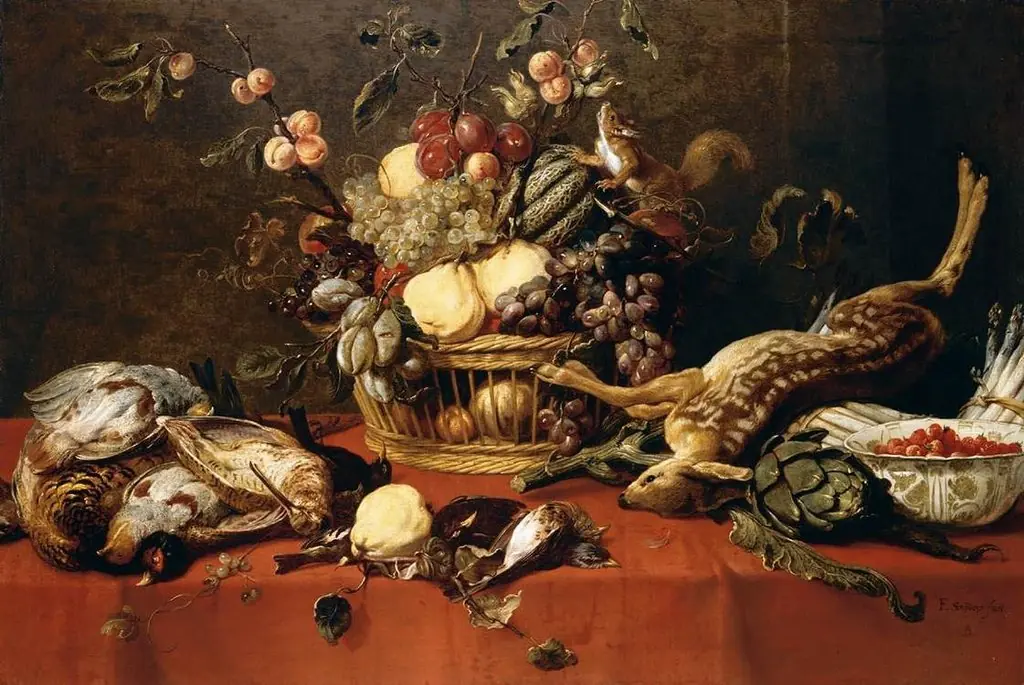 Still life of fruit in a basket together with game, a bowl of fraises-de-bois, artichokes, asparagus and a squirrel upon a table draped with a red cloth
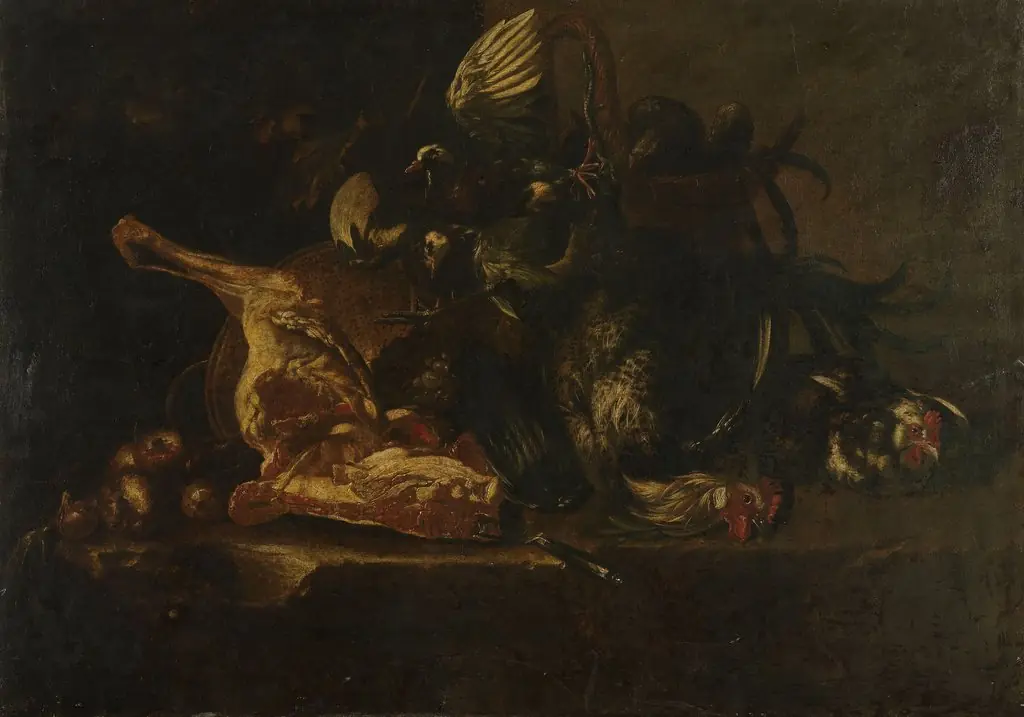 Still life with meat and dead birds
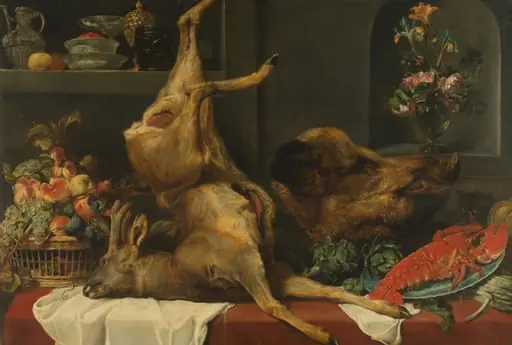 Larder Still life