Artwork
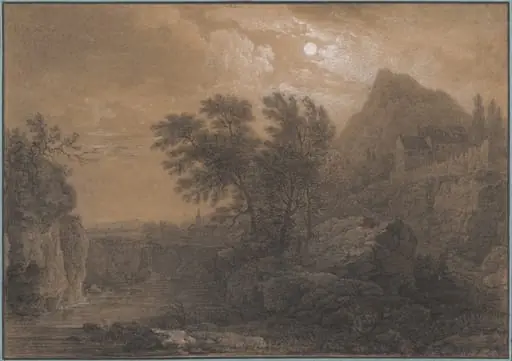
Moonlit Landscape with a Monk Walking near a Palace
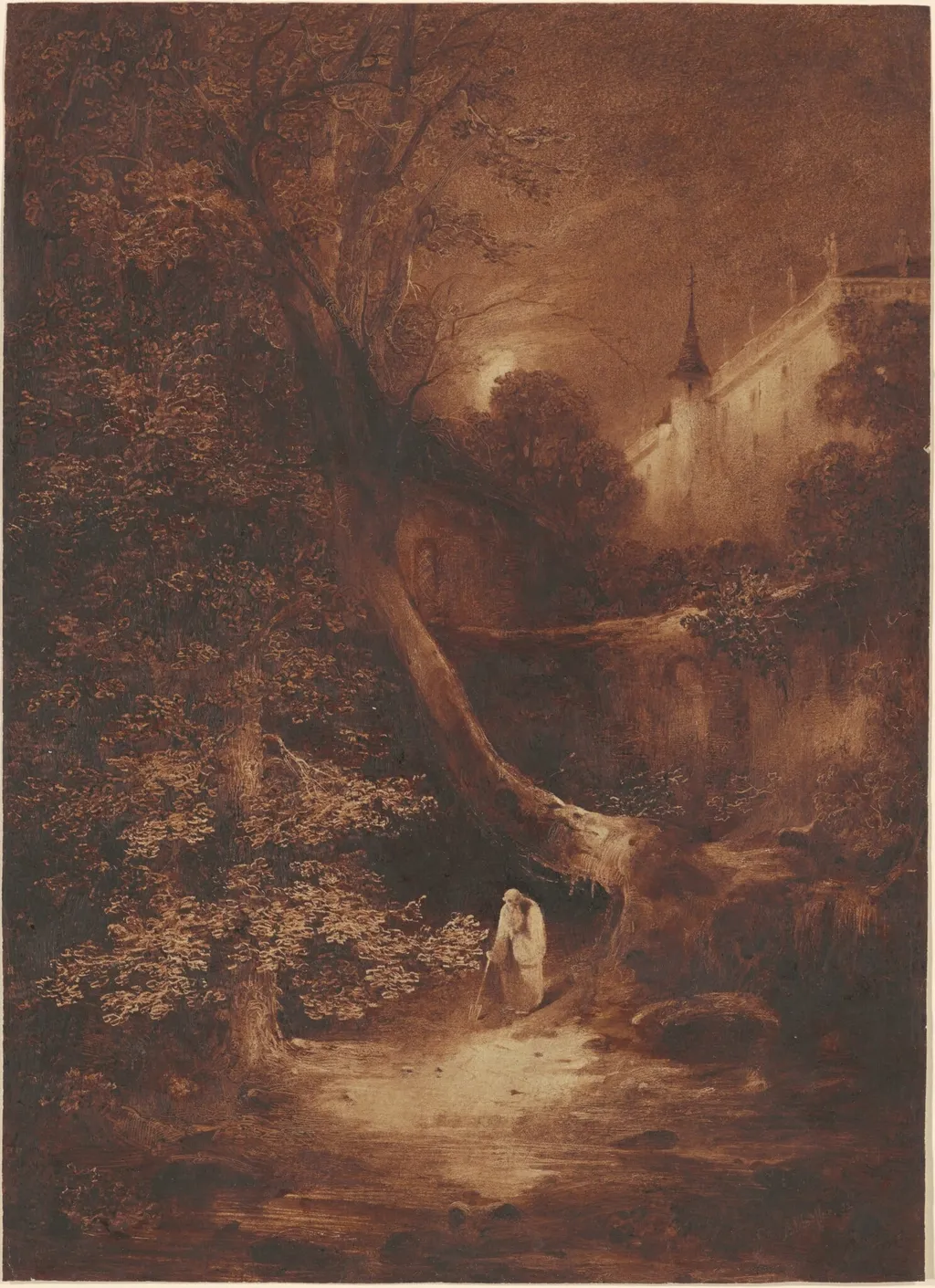
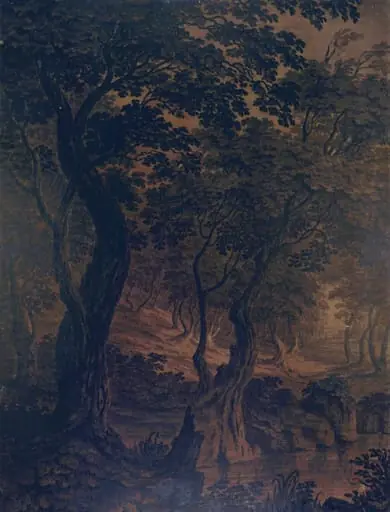
Moonlit Landscape with a Monk Walking near a Palace is a drawing by the Impressionist artist Julius Albert Elsasser. It dates from 1852 and is held in the collection of the National Gallery of Art.
- Inscription
- Inscribed:scratched out in lower right:J A Elsasser 52
About this work
Overview
The artist employs scratching techniques to define forms and suggest light, producing a quiet, atmospheric composition.
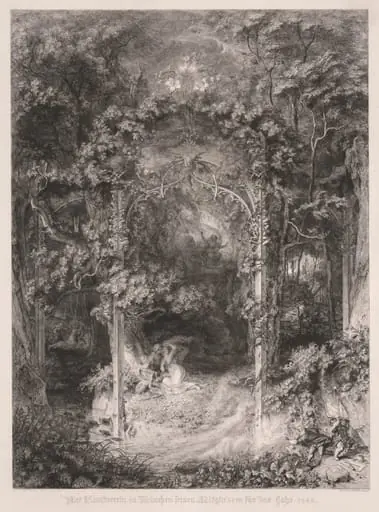
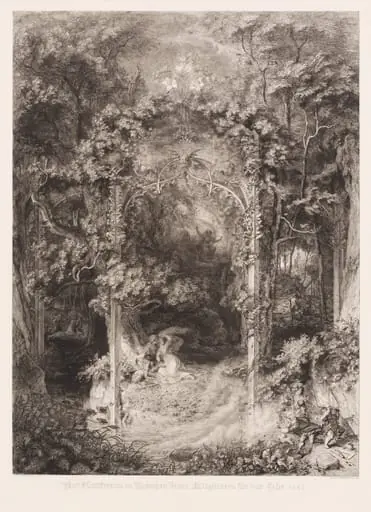
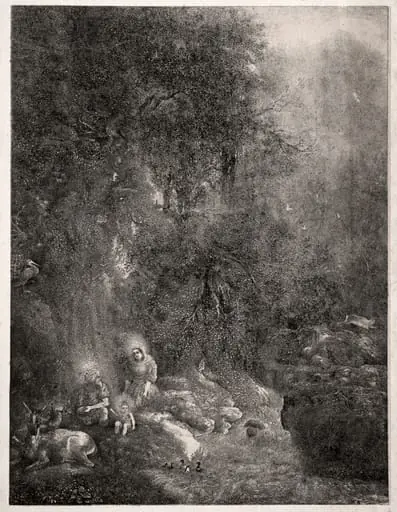
Created in 1852, this drawing by Julius Albert Elsasser depicts a nocturnal scene rendered in brown wax on wove paper. The artist employs scratching techniques to define forms and suggest light, producing a quiet, atmospheric composition. The work belongs to a tradition of Romantic-era landscape drawings that emphasize mood over narrative, using minimal media to evoke emotional resonance through tone and texture.
Subject & Meaning
A solitary monk, clad in a long robe and carrying a staff, follows a narrow path beneath the shadow of a distant palace. The figure’s small scale contrasts with the monumental architecture, suggesting themes of humility and transience. The moonlit setting, devoid of human activity beyond the monk, evokes contemplation and solitude, aligning with spiritual and Romantic ideals of nature as a space for introspection.
Technique & Style
Elsasser used brown wax applied with precision, then scraped away to reveal highlights and define contours. The scratching technique creates subtle gradations of light, particularly around the moon’s glow and architectural details. The limited palette and textured surface enhance the sense of night’s stillness, while the controlled use of negative space directs attention to the path and the palace’s silhouette.
History & Provenance
The drawing was completed during Elsasser’s active period in Germany, likely as a study or independent work rather than a preparatory sketch. It remained in private collections through the 19th and 20th centuries, with no record of public exhibition until the late 1900s. Its survival in good condition reflects careful handling and the medium’s durability, despite the fragility of wax on paper.
Context
Elsasser worked within the German Romantic tradition, influenced by artists like Caspar David Friedrich, who favored solitary figures in vast landscapes. While oil paintings dominated public exhibitions, drawings in wax or chalk were valued for their intimacy and immediacy. This piece reflects a broader 19th-century interest in nocturnal scenes as vehicles for emotional and philosophical expression.
Legacy
Though not widely reproduced, the drawing exemplifies the quiet power of small-scale works in Romantic art. Its restrained technique and evocative atmosphere have influenced later artists interested in monochromatic night scenes and the expressive potential of drawing media. It remains a quiet testament to the era’s fascination with solitude, nature, and the sublime.
Own this work as a print
Artist & collection