Artwork
Interior of the Nieuwe Kerk in Amsterdam
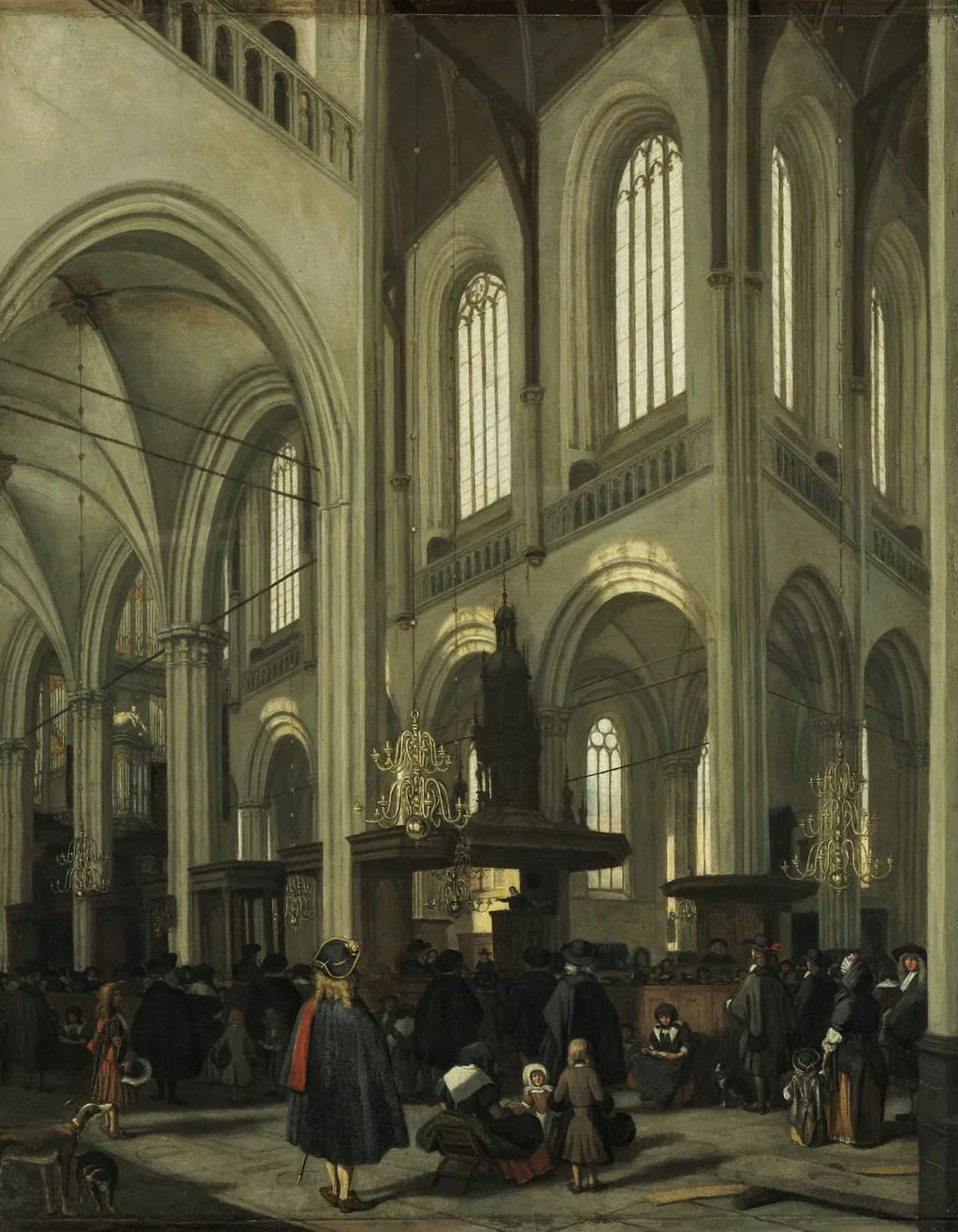
Interior of the Nieuwe Kerk in Amsterdam is a paint painting by the Dutch Golden Age artist Emanuel de Witte. It dates from 1690 and is held in the collection of the Gemäldegalerie Berlin.
About this work
Subject & Meaning
Emanuel de Witte's 1680 painting depicts the interior of the Nieuwe Kerk in Amsterdam, establishing the specific religious architecture as its primary subject.
Emanuel de Witte's 1680 painting depicts the interior of the Nieuwe Kerk in Amsterdam, establishing the specific religious architecture as its primary subject. The composition functions as a church interior genre scene, populating the sacred space with figures of a man and a woman. These human elements are integrated into the vast architectural setting, illustrating daily life occurring within the Protestant sanctuary.
The work represents a detailed visualization of this specific Amsterdam landmark, focusing on the spatial dynamics of the nave and the interaction between the congregants and their environment.
Technique & Style
Emanuel de Witte rendered Interior of the Nieuwe Kerk in Amsterdam using oil paint applied to a stretched canvas, a standard support for 17th-century Dutch interior scenes. The work depicts the church's nave with figures positioned in the central aisle, reflecting a meticulous yet somewhat theatrical handling of perspective common in his church interiors. Formal qualities include a strong linear structure and a restrained palette that emphasizes architectural clarity over naturalistic lighting.
The surface condition shows typical craquelure from age, though no major structural damage is noted in the source documentation.
The painting’s stylistic approach combines precise architectural rendering with a compositional balance that guides the viewer’s eye toward the altar, while the figures are rendered with loose brushwork that contrasts with the detailed masonry.
History & Provenance
Emanuel de Witte created the painting Interior of the Nieuwe Kerk in Amsterdam in 1680. Executed in paint on canvas, the work depicts the interior of the Nieuwe Kerk church, featuring figures of a man and a woman within the architectural space. The artwork is currently held in the collection of the Gemäldegalerie in Berlin.
Emanuel de Witte's painting Interior of the Nieuwe Kerk in Amsterdam, created in 1680, is held in the collection of the Gemäldegalerie Berlin. The work is part of the museum's permanent holdings, where it is identified as a canvas painting depicting the church interior along with figures of a man and a woman. While the sources confirm the artwork's current location and its creation date, no specific inventory or accession numbers are provided in the available records.
Furthermore, the provided sources do not contain information regarding the painting's exhibition history or past loans to other institutions.
Overview
Interior of the Nieuwe Kerk in Amsterdam, painted by Emanuel de Witte in 1690, is an oil painting depicting the interior of the Nieuwe Kerk in Amsterdam. The work is part of the collection at the Gemäldegalerie Berlin.
Context
Painted during the Dutch Golden Age, this work exemplifies the period's interest in capturing mundane life within revered spaces, blending religious and secular themes.
Legacy
As a representative of 17th-century Dutch interior painting, it contributes to the broader understanding of the genre's emphasis on light, daily life, and architectural detail.
Own this work as a print
Artist & collection
Artist
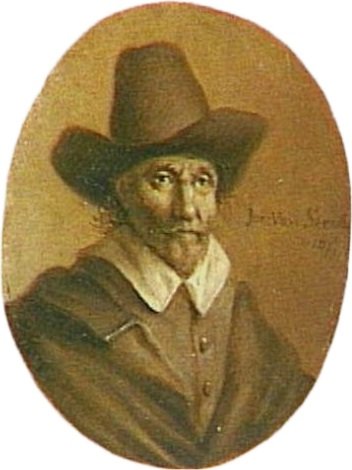
Emanuel de Witte (1617–1692) was a Dutch perspective painter. In contrast to Pieter Jansz Saenredam, who emphasized architectural accuracy, De Witte was more concerned with the atmosphere of his interiors. Though few in…

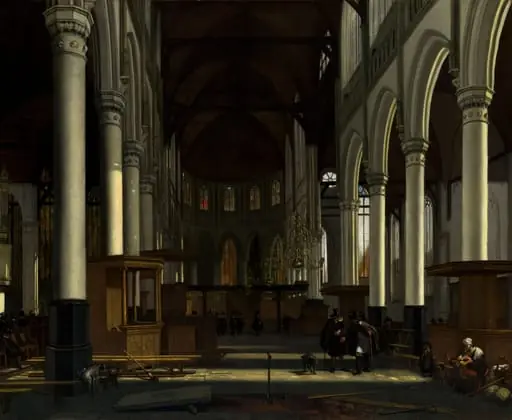 The Interior of the Oude Kerk, Amsterdam
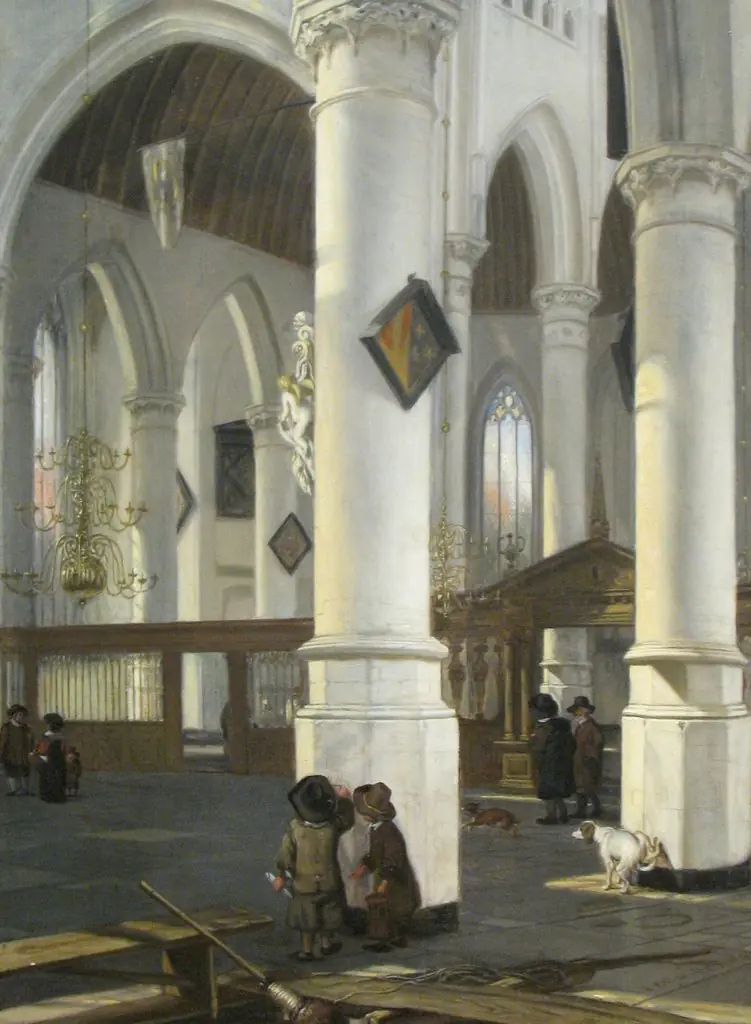 Interior of the Oude Kerk, Delft
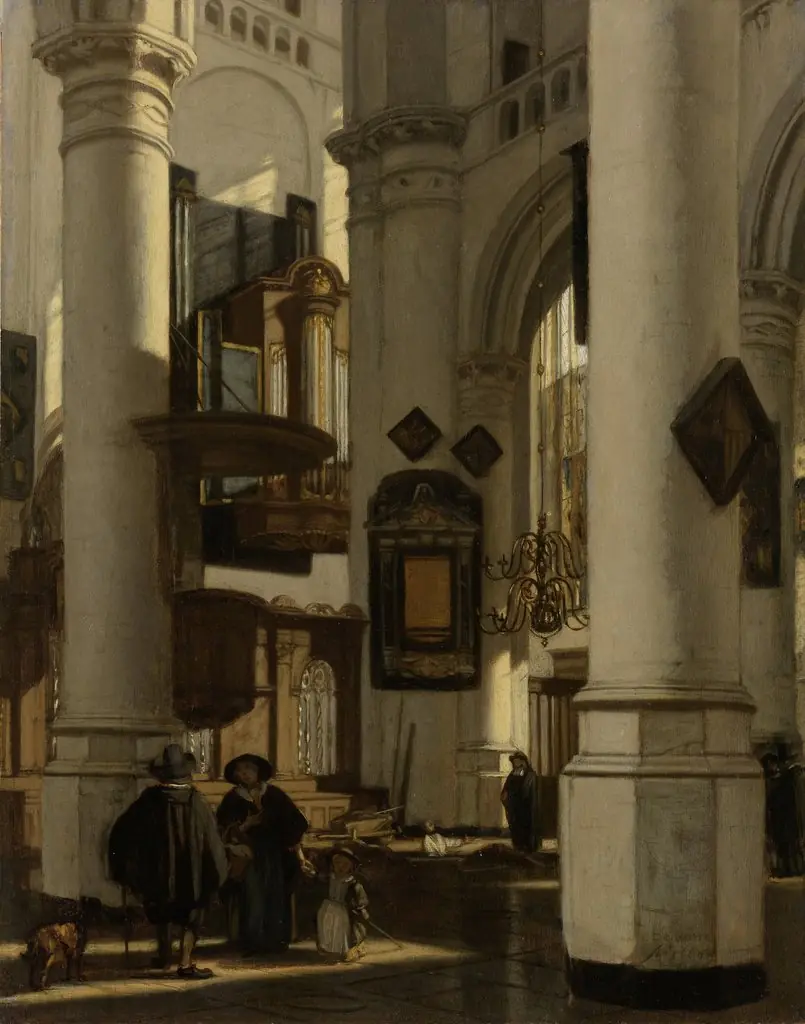 Interior of a Protestant, Gothic Church, with a Gravedigger in the Choir
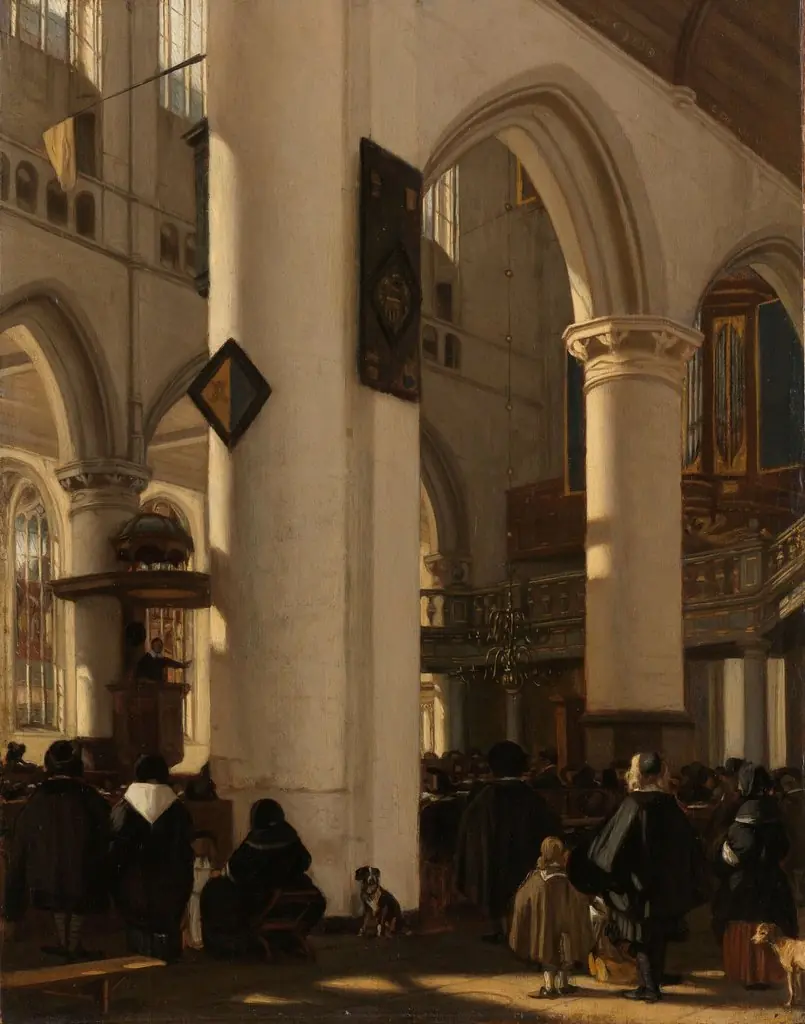 Interior of a Protestant, Gothic Church during a Service
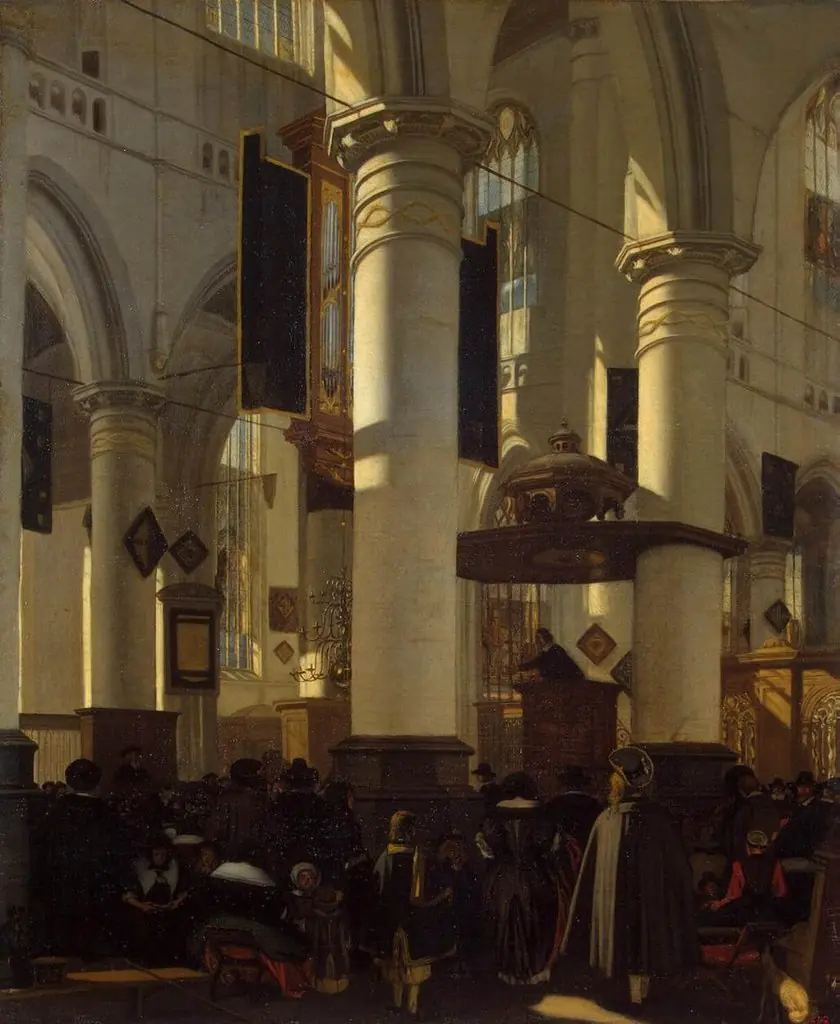 Interior of a Church
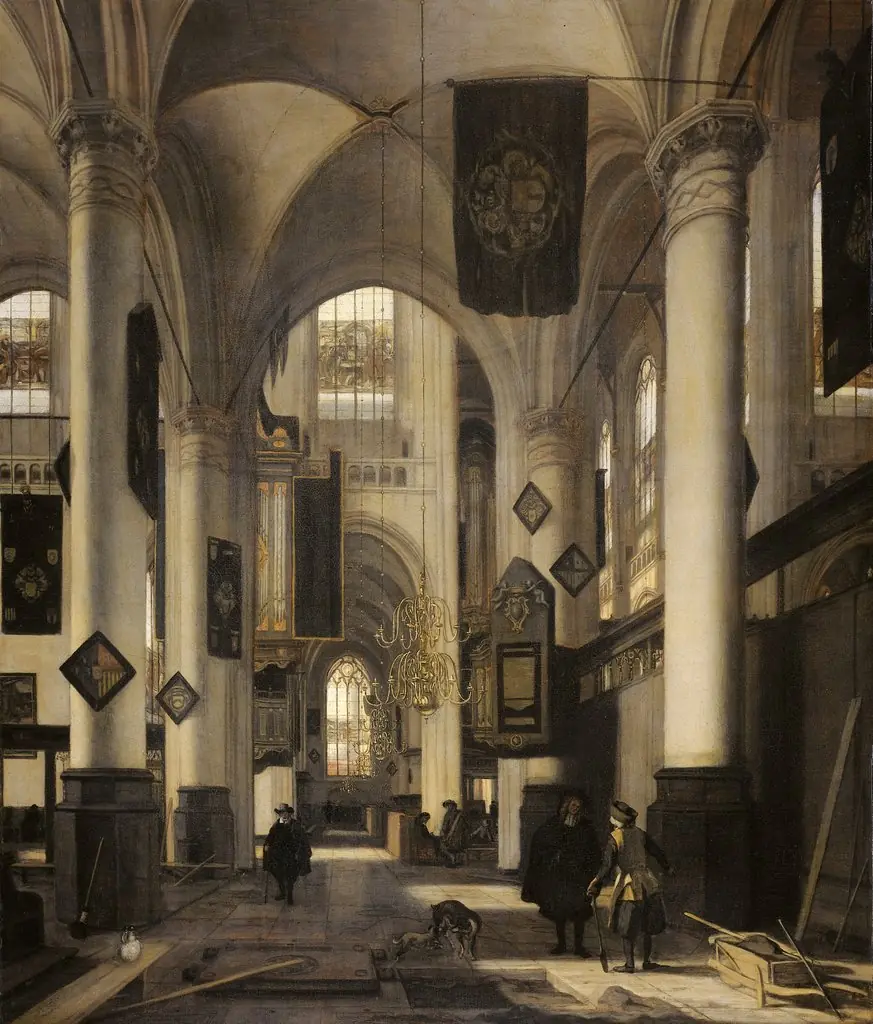 Interior of a Protestant Gothic Church
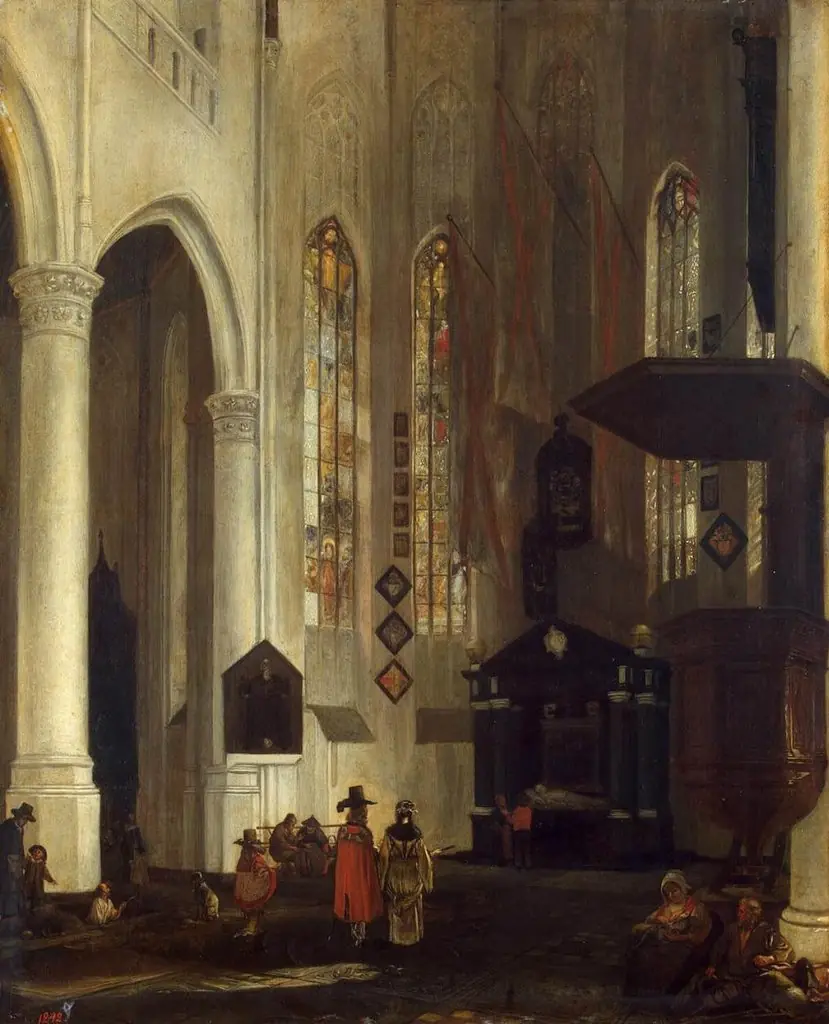 Old Church (Oudekerk) in Delft with the Tomb of Admiral Pieter Pieterszoon Hein (Heyn)
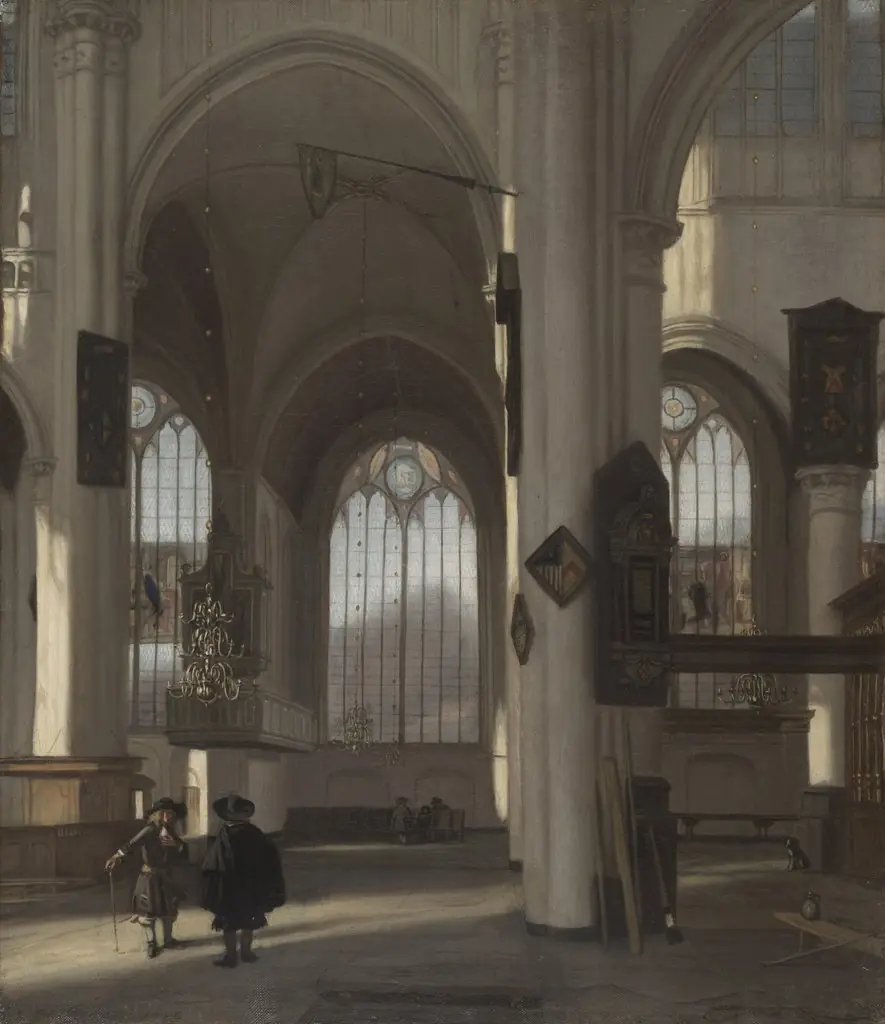 Interior of a Church
- Interior of the Oude Kerk in Amsterdam
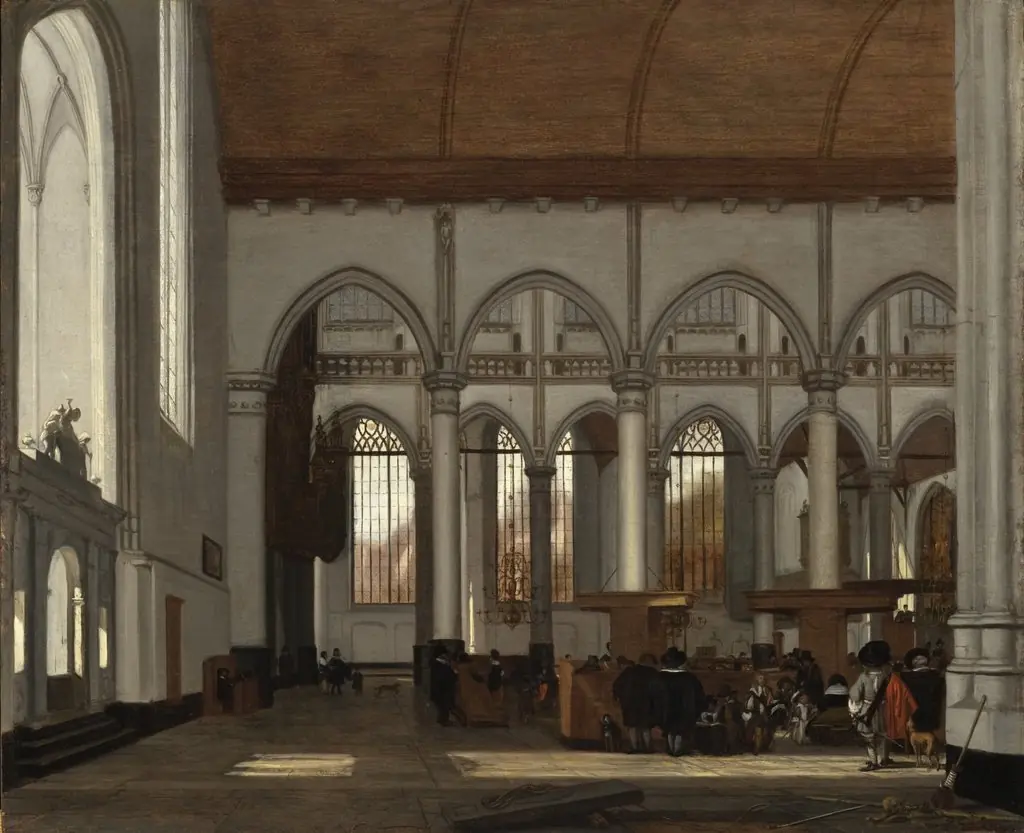 Interior of the Oude Kerk, Amsterdam
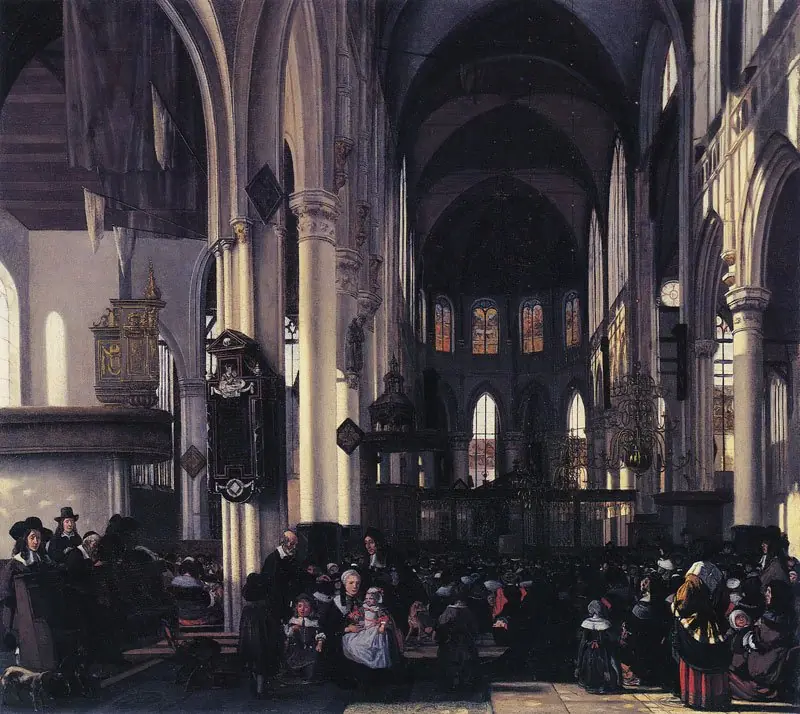 Interior of the Oude Kerk in Amsterrdam
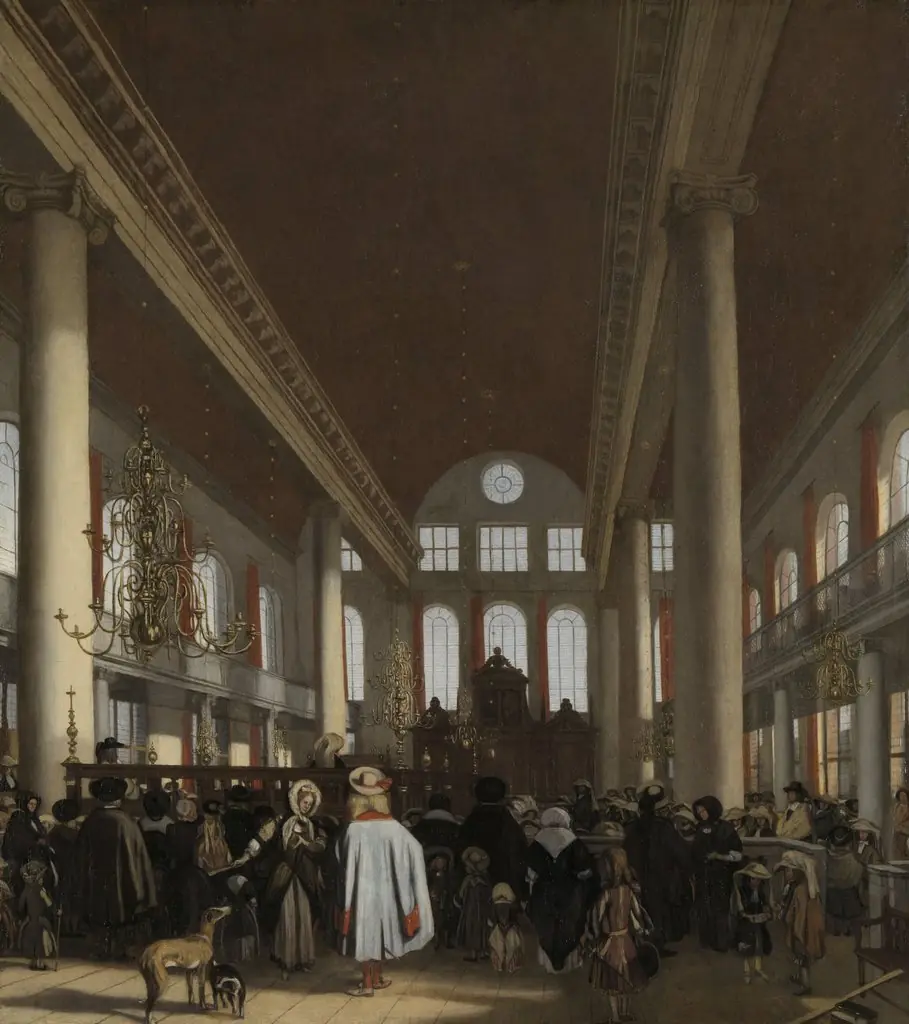 Interior of the Portuguese synagogue in Amsterdam
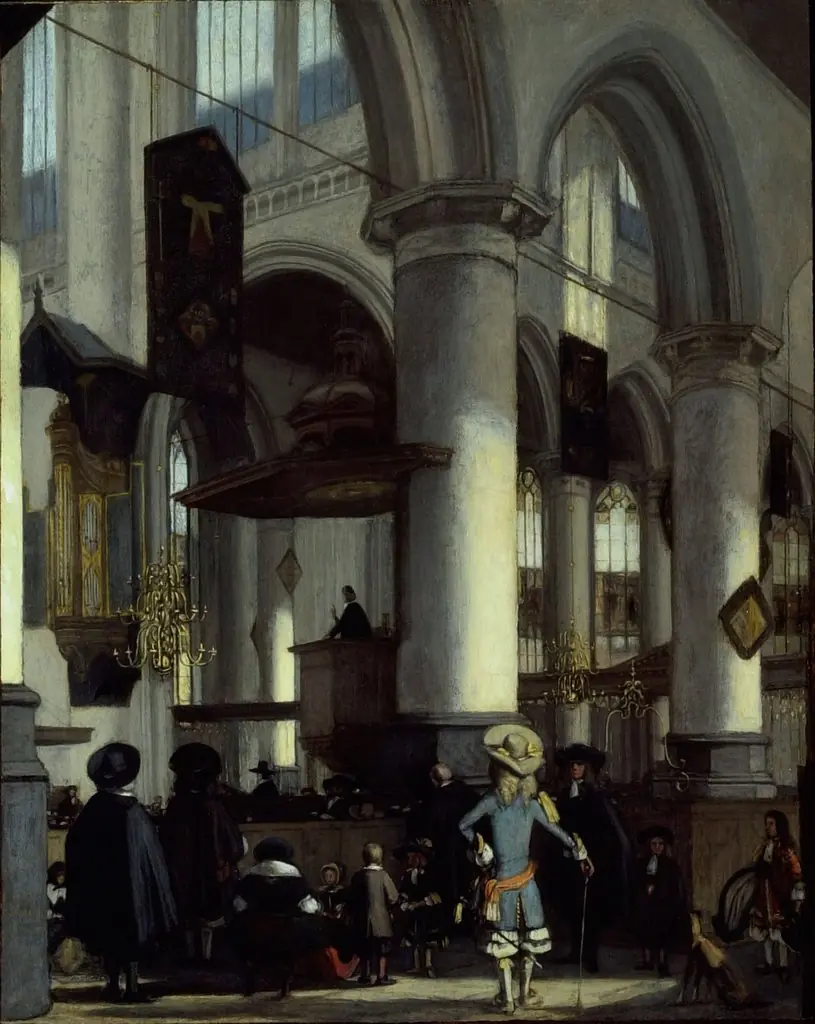 Interior of the Oude Kerk, Delft
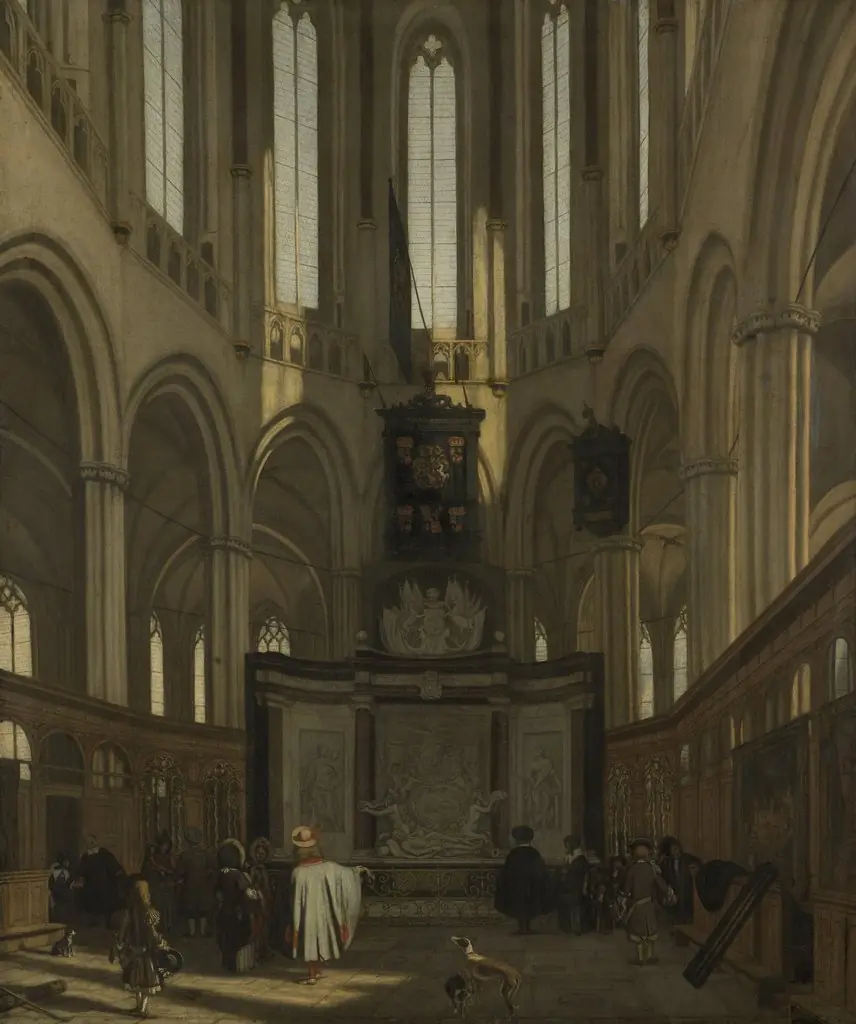 The Tomb of Michiel de Ruyter in the Nieuwe Kerk, Amsterdam
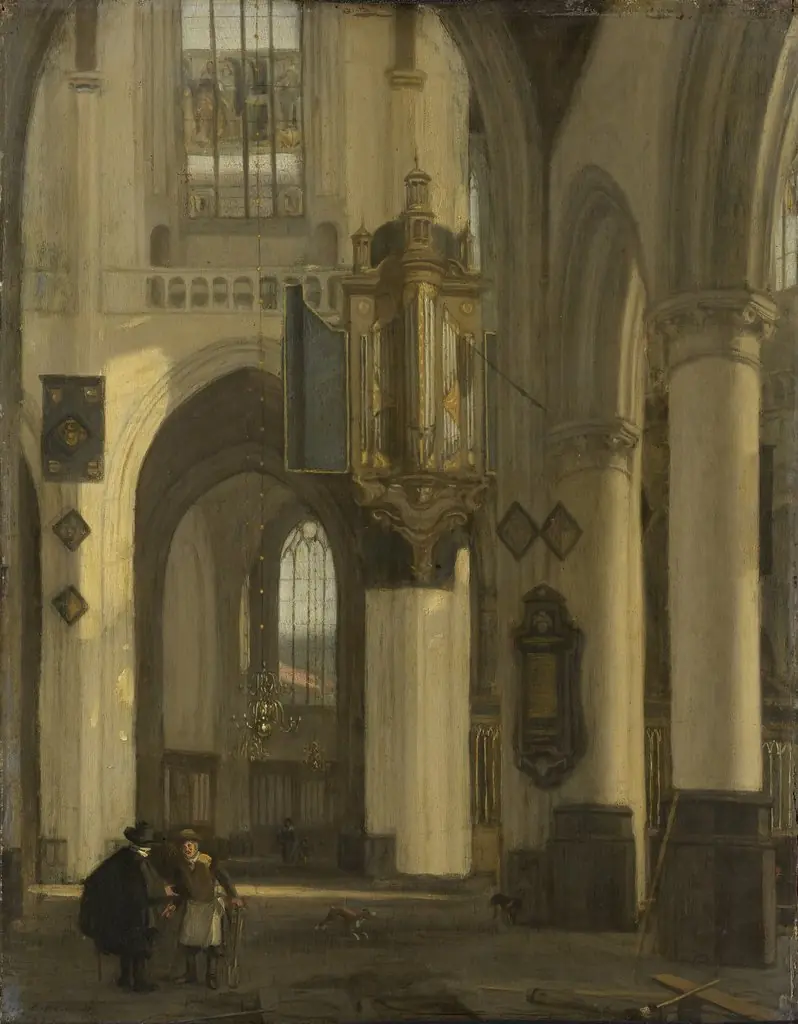 Interior of a Protestant Gothic church with motifs of the Oude and the Nieuwe Kerk in Amsterdam
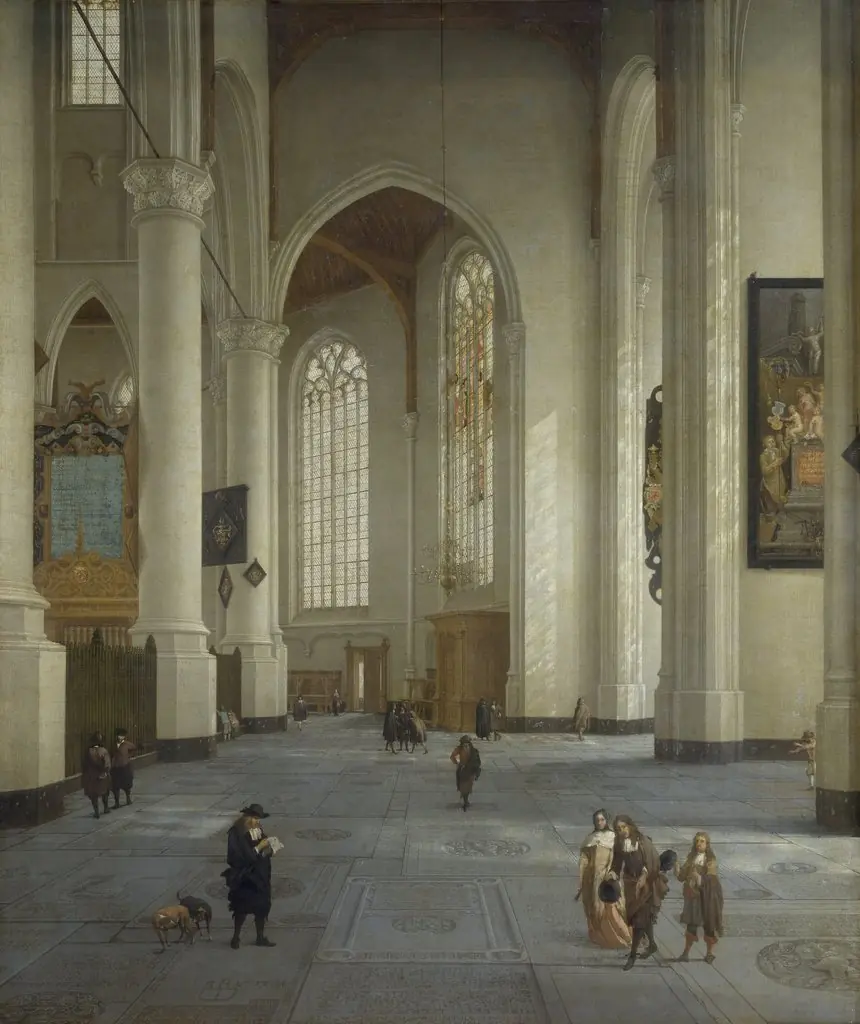 Interior of the St Laurenskerk, Rotterdam
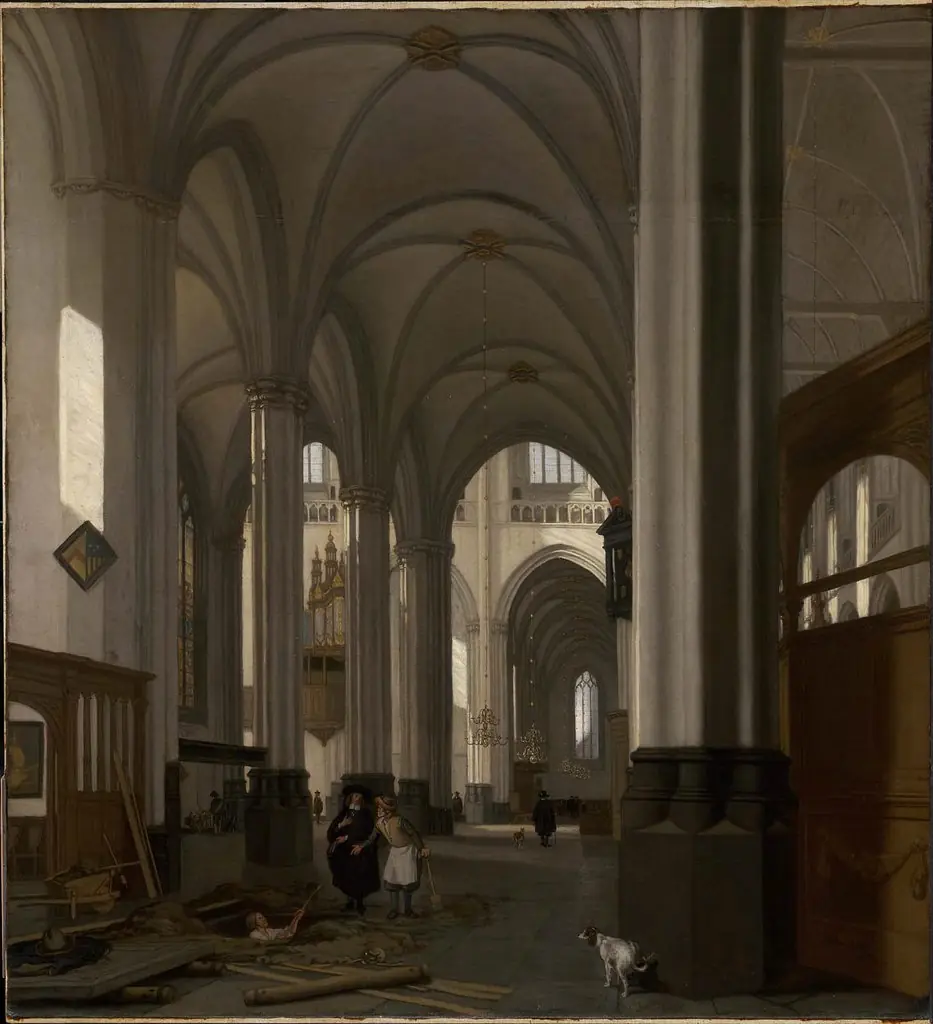 Interior of the Nieuwe Kerk, Amsterdam