Artwork
El velatorio del angelito, costumbre popular chilena
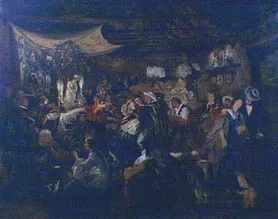
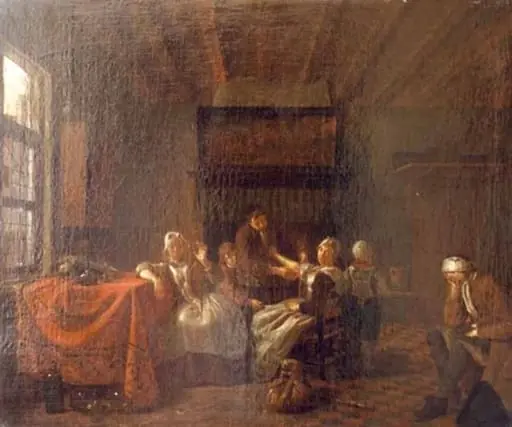
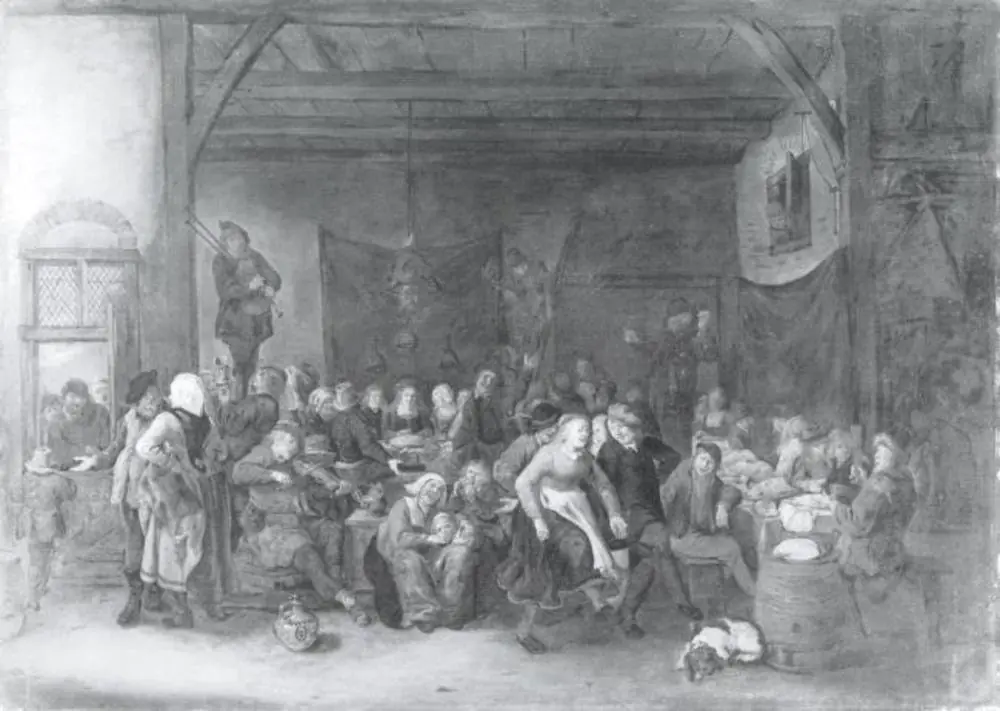
El velatorio del angelito, costumbre popular chilena is an oil painting by the Realist artist Ernest Charton. It dates from 1848 and is held in the collection of the National Museum of Fine Arts, Argentina.
About this work
Overview
Ernest Charton’s 1848 oil work titled El velatorio del angelito, costumbre popular chilena portrays a quiet funeral gathering. The composition centers on a modestly decorated coffin surrounded by mourners, rendered in a restrained palette that emphasizes the scene’s melancholy. The painting is part of the collection of the National Museum of Fine Arts in Buenos Aires.
Subject & Meaning
The image captures a moment of communal grief, focusing on a grieving woman and a solemn man whose postures convey personal loss. A small winged figure rests on the coffin lid, suggesting a cultural belief in a guardian angel accompanying the deceased, reflecting Chilean folk customs surrounding death and remembrance.
Technique & Style
Charton employs chiaroscuro to model forms, allowing light to fall gently on the central figures while the surrounding space recedes into shadow. The soft illumination highlights the textures of the flowers, candles, and the coffin’s ornamentation, creating depth and a contemplative atmosphere without overt dramatization.
History & Provenance
Created in 1848, the painting entered the holdings of Argentina’s National Museum of Fine Arts, where it remains on display. Its acquisition reflects the museum’s 19th‑century interest in works that document Latin American social practices, particularly those illustrating everyday rituals.
Context
During the mid‑1800s, Charton, a French painter, traveled widely and produced genre scenes that recorded local customs. This work aligns with his broader interest in documenting cultural rites, offering a visual record of a Chilean funeral rite that would have been unfamiliar to European audiences of the period.
Artist & collection

Museum
National Museum of Fine Arts, Argentina
Continue through works from the same source collection.