Artwork
Harlem River
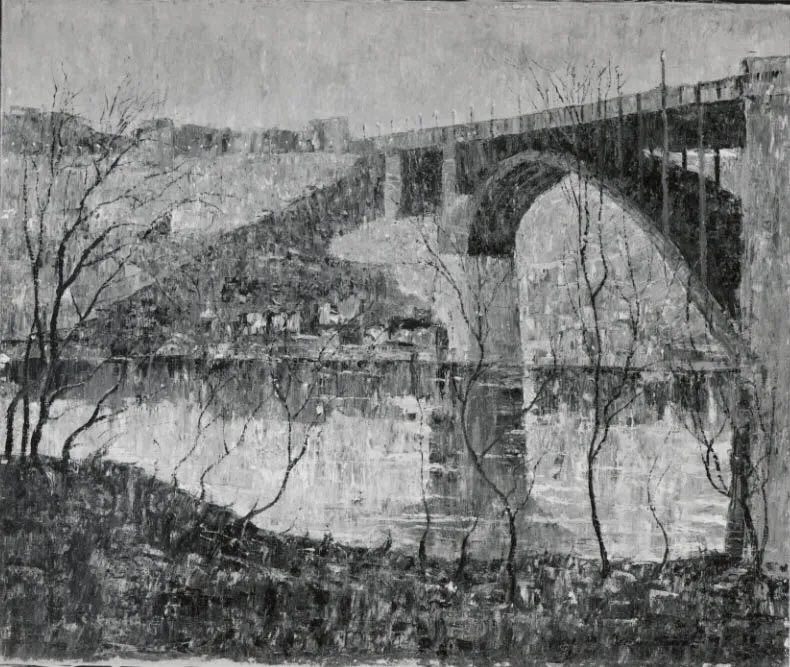
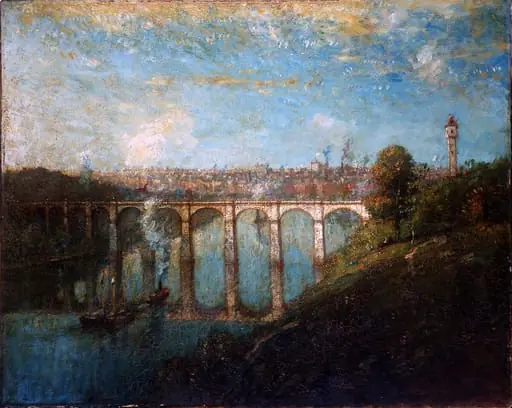
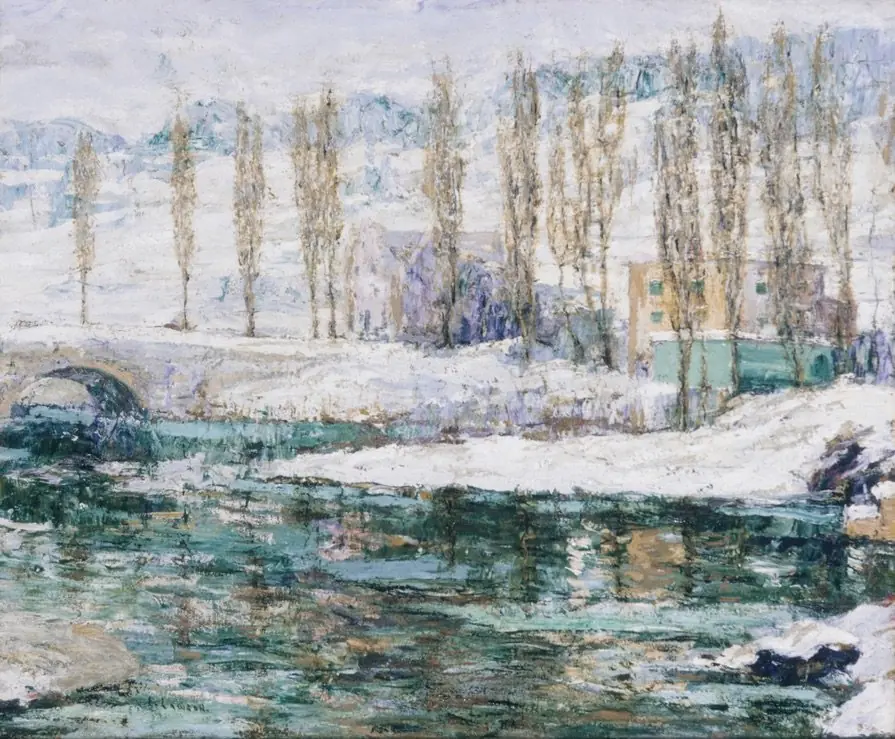
Harlem River is an oil painting by the American Impressionist artist Ernest Lawson. It dates from 1913 and is held in the collection of the Metropolitan Museum of Art.
About this work
The artist's use of oil paint creates a sense of texture and depth, drawing the viewer's eye into the tranquil atmosphere of the scene.
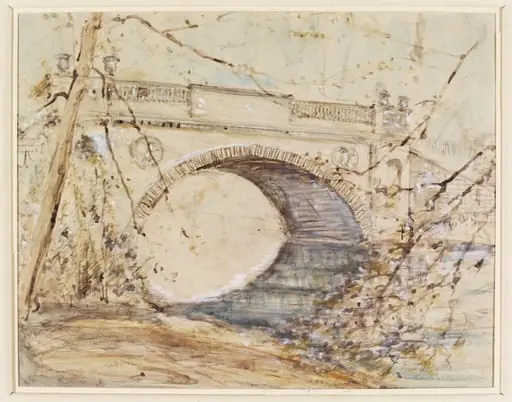
The painting "Harlem River" by Ernest Lawson, created in 1913, depicts a serene river scene with a bridge in the background. The bridge's arches and the surrounding trees are rendered in a muted color palette, with the river flowing gently beneath.
In the foreground, the trees stand tall, their branches stretching towards the sky. The artist's use of oil paint creates a sense of texture and depth, drawing the viewer's eye into the tranquil atmosphere of the scene.
The painting's focus on the natural world invites the viewer to appreciate the beauty of the everyday. To explore more works by the artist who created this piece, look up Ernest Lawson.
Subject & Meaning
Ernest Lawson's Harlem River (1913) depicts a stretch of the titular waterway, framed by trees and spanned by a bridge. The painting captures the river as both a physical landmark and a symbol of the urban-industrial edge where nature and infrastructure meet. The trees flanking the composition anchor the scene in the surrounding landscape, while the bridge signals human intervention and the connectivity the river provides across the boroughs.
Together, these elements present the Harlem River not merely as a topographical feature but as a working artery of the city, rendered through Lawson's painterly attention to the interplay between water, foliage, and built structures.
Technique & Style
Lawson’s 1913 oil on canvas renders the Harlem River with a fluid, broken-brush handling that captures the shimmering surface and atmospheric effects of the site. The composition relies on a restricted palette of silvery blues, muted greens, and ochres, applied in quick, prismatic strokes to suggest rippling water and foliage rather than delineate form. Reflections in the river are rendered with horizontal dabs of light, while the distant bridge and trees dissolve into soft, atmospheric passages.
The canvas weave remains visible through the thinly applied paint, contributing to the work’s luminous, evanescent quality. No condition issues are recorded for the Metropolitan Museum of Art’s version, which measures 64.1 × 76.5 cm.
History & Provenance
The painting Harlem River by Ernest Lawson was created in 1913, as indicated by both internal records and Wikidata documentation. The work is an oil on canvas depicting a scene of a tree, bridge, and river, aligning with Lawson’s characteristic style of the period. It entered the collection of the Metropolitan Museum of Art, where it remains housed. No documented commission records or pre-creation ownership history are provided in the sources.
Ernest Lawson's 1913 oil painting titled Harlem River is held in the collection of the Metropolitan Museum of Art. The work, which depicts a bridge, river, and trees, is executed in oil paint on canvas and measures 64.1 centimeters in height by 76.5 centimeters in width. While the sources confirm the artwork's current location and physical dimensions, they do not provide a specific accession or inventory number, nor do they list any past or future exhibition history for this specific piece.
Context
Ernest Lawson's 1913 oil painting Harlem River, titled Harlem River and measuring 64.1 × 76.5 cm, depicts a tree, bridge and river and is classified as a painting in the Metropolitan Museum of Art collection. The work appears in a dedicated catalogue entry and is also recorded in the artist’s Wikidata entry, which confirms its creation date, medium, dimensions and current location. These sources situate the painting within Lawson’s early twentieth‑century output, providing scholarly documentation of its provenance and physical attributes.
Legacy
Ernest Lawson’s Harlem River (1913) has cemented its place in early 20th-century American art as a key example of urban Impressionism. Acquired by the Metropolitan Museum of Art, the work has been regularly exhibited in surveys of American modernism, where it is cited for its vibrant, textured depiction of industrializing New York. Critics and scholars frequently highlight Lawson’s technique, visible brushwork and luminous color, as influential for later painters exploring urban landscapes.
While not as widely reproduced as works by his Ashcan School contemporaries, Harlem River remains a touchstone in discussions of the movement’s transitional role between Impressionism and realism.
Overview
Ernest Lawson, a Canadian-American painter, completed Harlem River in 1913 using oil paint. This painting exemplifies his dedication to landscape subjects, often capturing the interplay between natural environments and urban elements. The work depicts a tranquil river scene, featuring a prominent bridge and surrounding trees, rendered with a muted palette characteristic of American Impressionism. It is currently part of The Metropolitan Museum of Art's collection.
Artist & collection
Artist
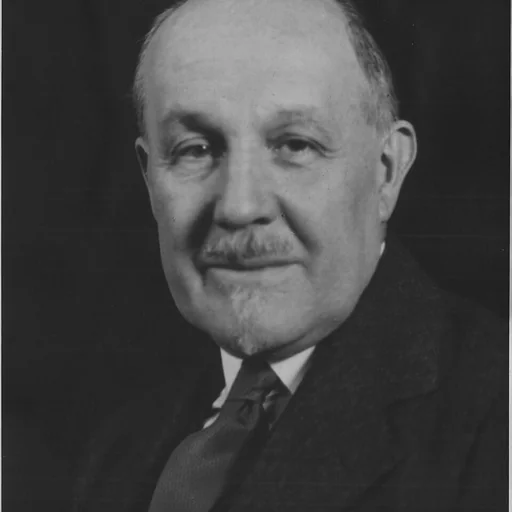
Ernest Lawson (March 22, 1873 – December 18, 1939) was a Canadian-American painter and exhibited his work at the Canadian Art Club and as a member of the American group The Eight, artists who formed a loose association…

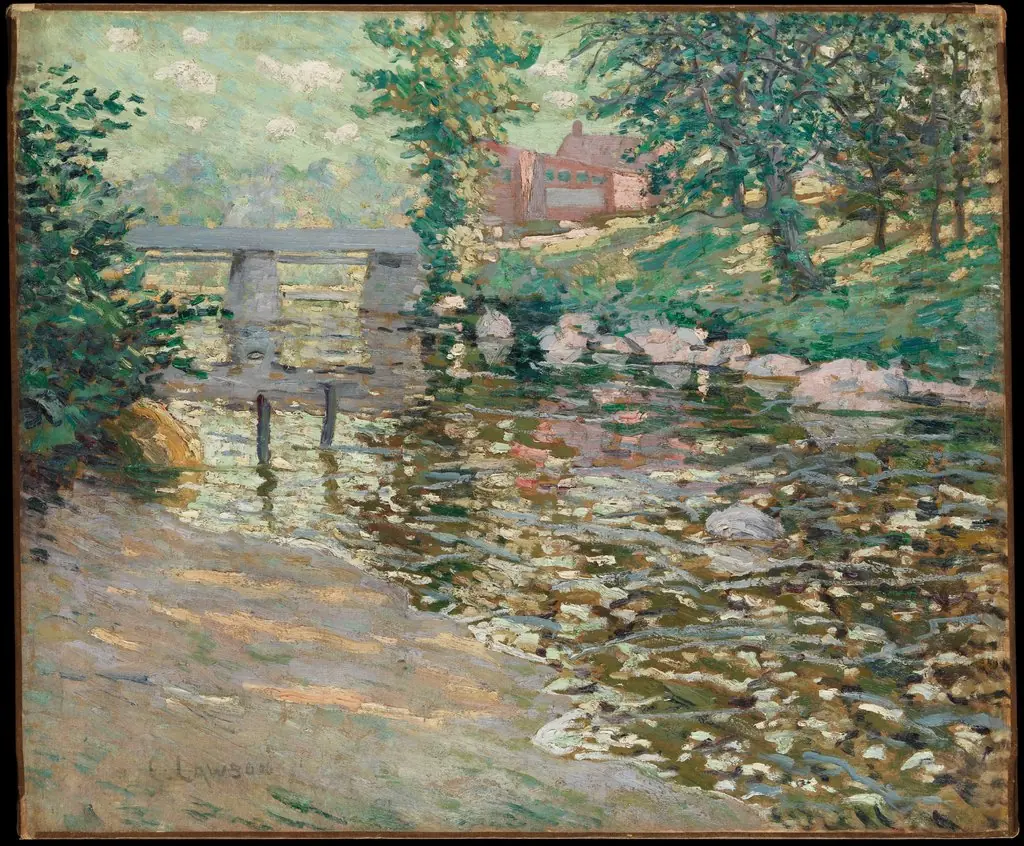
![The City Bridge, St. Louis [bottom]](https://artifactworldgallery.com/img/the-city-bridge-st-louis-bottom--bb02af50b68cd7e2-w320.webp)
![The Eads Bridge, St. Louis [top]](https://artifactworldgallery.com/img/the-eads-bridge-st-louis-top--5e23fa5f4cd6aa2c-w320.webp)