Artwork
Kabyle Shepherd (Shepherd: High Plateau of Kabylia)
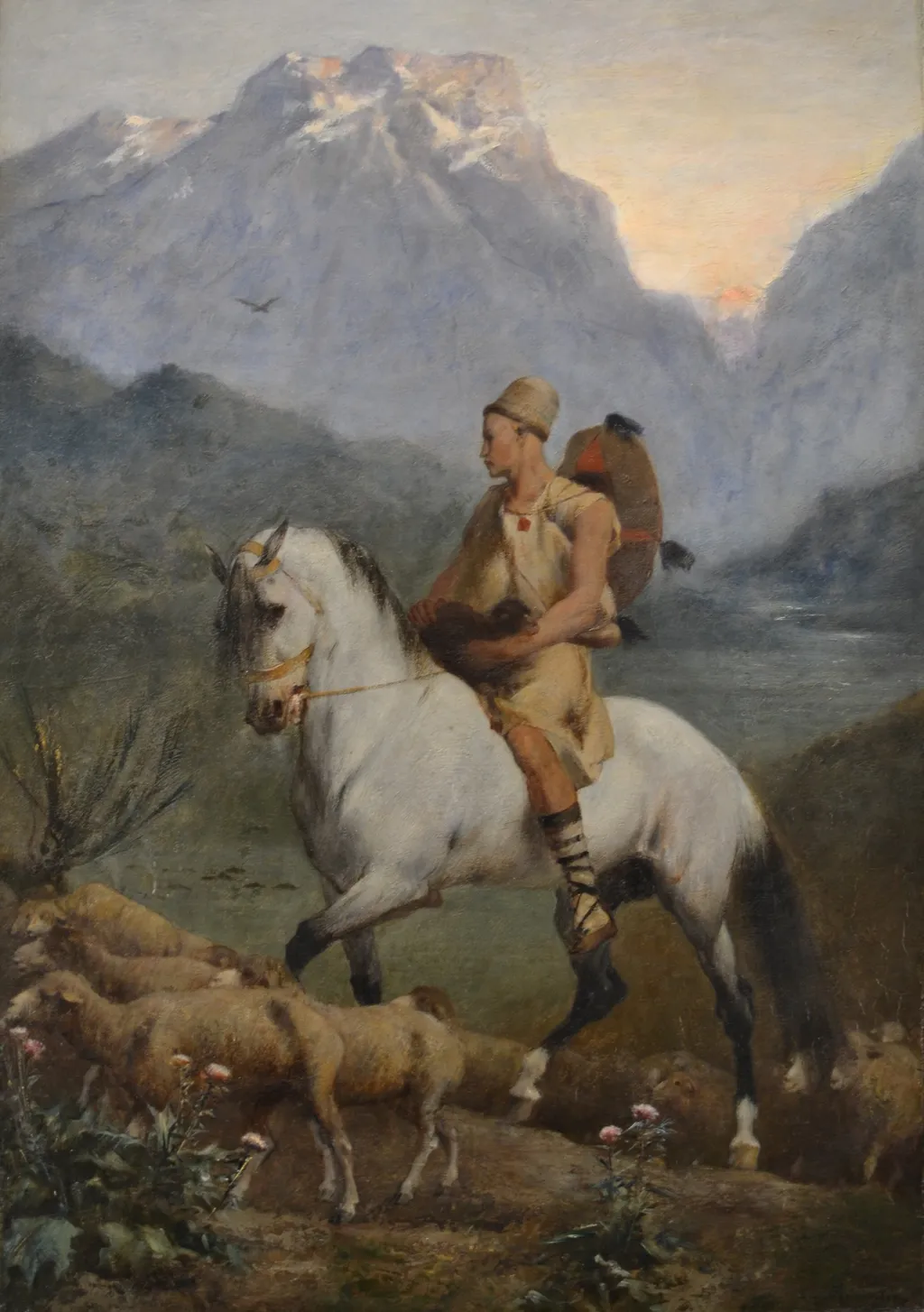
Kabyle Shepherd (Shepherd: High Plateau of Kabylia) is an oil painting by the Orientalist artist Eugène Fromentin. It dates from 1861 and is held in the collection of the Philadelphia Museum of Art.
About this work
Overview
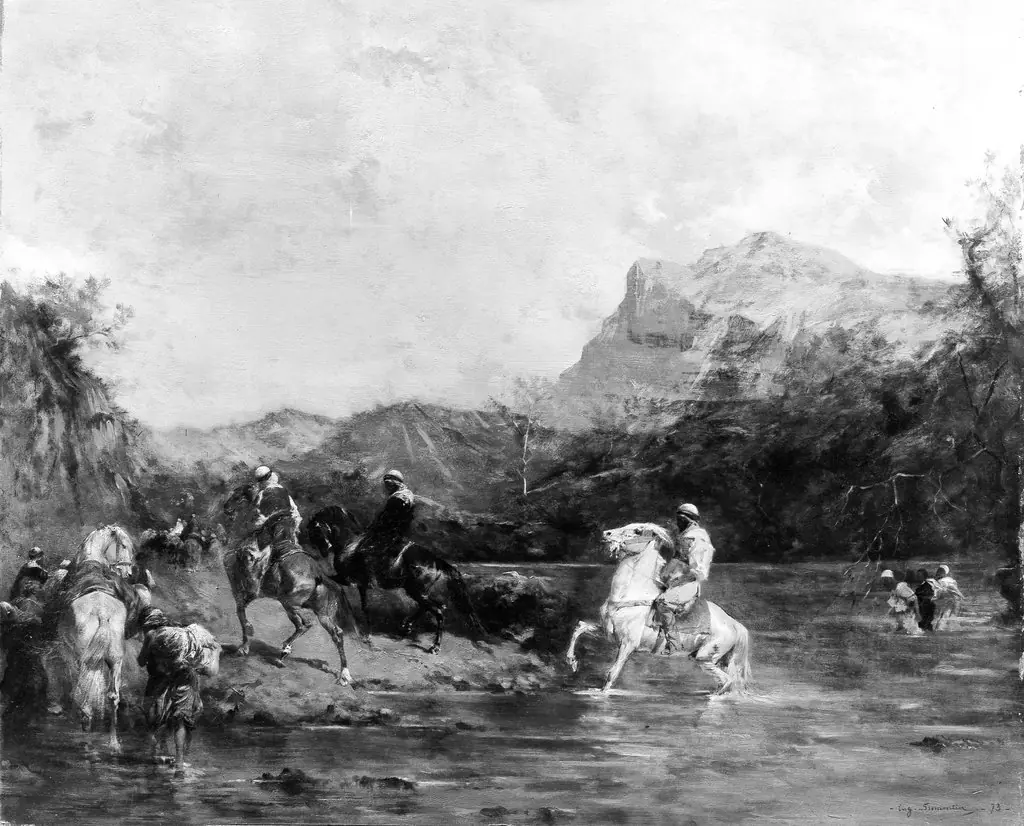
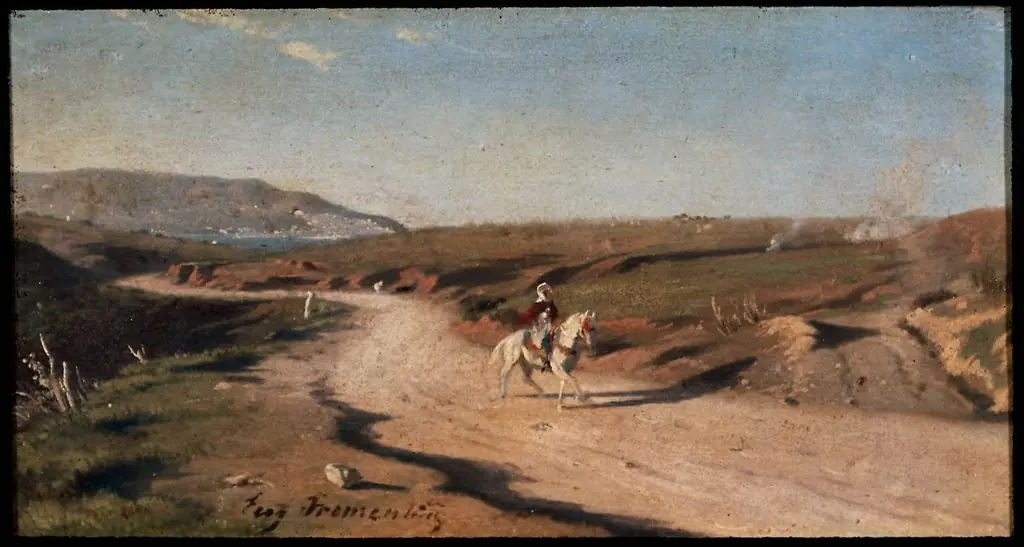
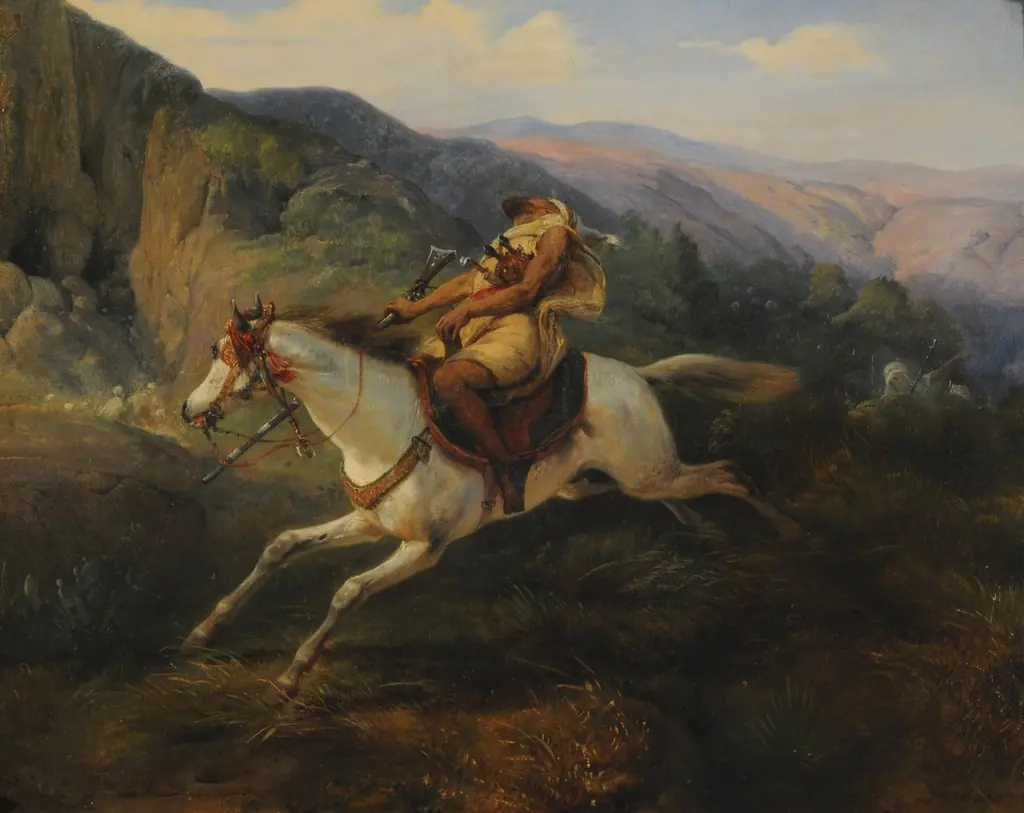
A rider on a white horse leads a small flock of sheep across a grassy slope dotted with wildflowers, while distant peaks rise mist‑shrouded in the background.
Eugène Fromentin’s 1861 oil painting titled Kabyle Shepherd (Shepherd: High Plateau of Kabylia) presents a pastoral tableau set in a rugged mountain valley. A rider on a white horse leads a small flock of sheep across a grassy slope dotted with wildflowers, while distant peaks rise mist‑shrouded in the background. The work belongs to the 19th‑century Orientalist genre and is part of the Philadelphia Museum of Art’s collection.
Subject & Meaning
The composition centers on a lone shepherd, attired in a simple hat and light tunic, carrying a bundle on his back. His horse, rendered with a glossy mane, conveys movement through the landscape, while the accompanying lamb and sheep underscore themes of rural labor and the relationship between humans and livestock in the Kabyle highlands.
Technique & Style
Fromentin employs soft, fluid brushwork to model the folds of the shepherd’s clothing and the sheen of the horse’s coat, creating a subtle contrast with the darker, craggy terrain. Light catches the mane and the animal’s flank, enhancing the sense of depth, while the overall palette reflects the muted tones typical of Orientalist genre scenes.
History & Provenance
Completed in 1861, the painting reflects Fromentin’s interest in North African subjects following his travels in Algeria. After changing hands among private collectors, it entered the Philadelphia Museum of Art, where it has been displayed as part of the museum’s European 19th‑century holdings.
Context
Within the broader Orientalist movement, the work exemplifies the 19th‑century European fascination with exoticized rural life in North Africa. Fromentin’s attention to atmospheric detail and his sympathetic portrayal of a Kabyle shepherd contributed to a nuanced visual record of the region, influencing later depictions of North African pastoral scenes.
Own this work as a print
Artist & collection