Artwork
Oriental rider on a white horse
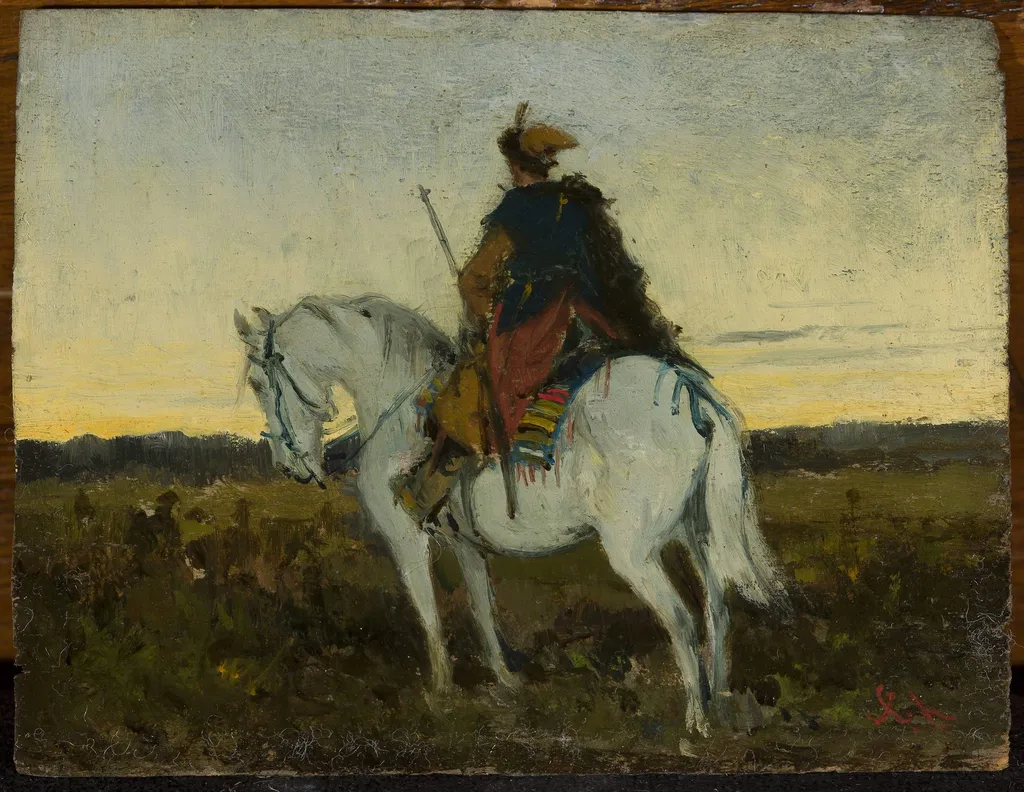
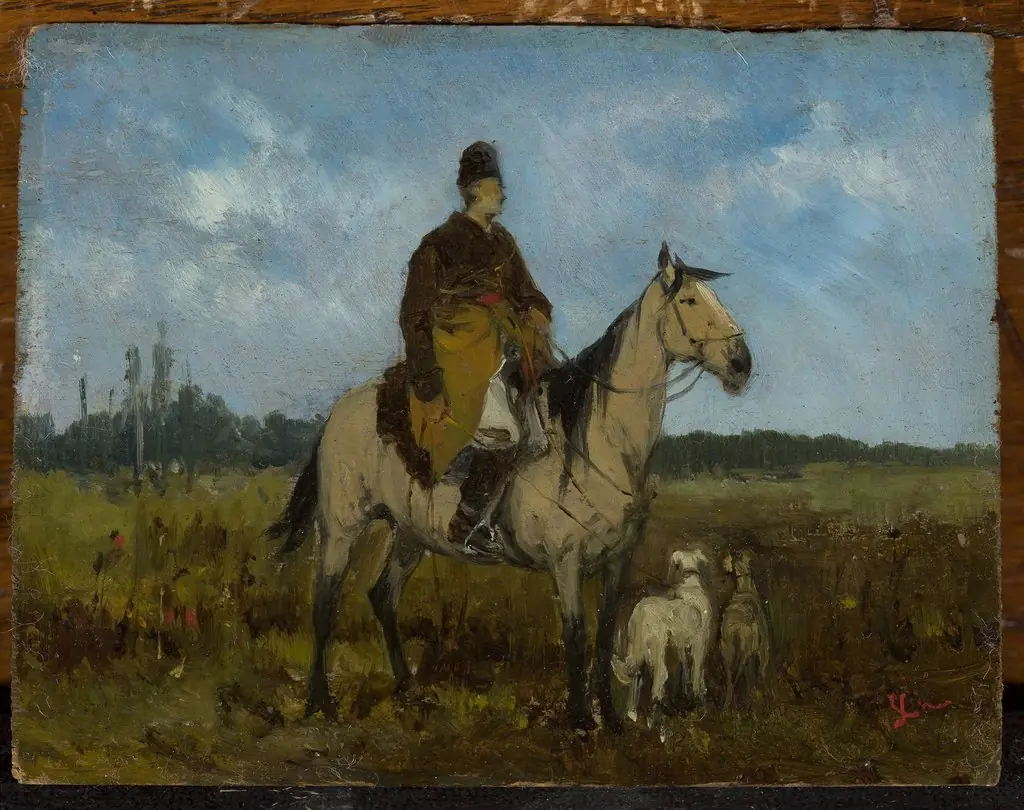
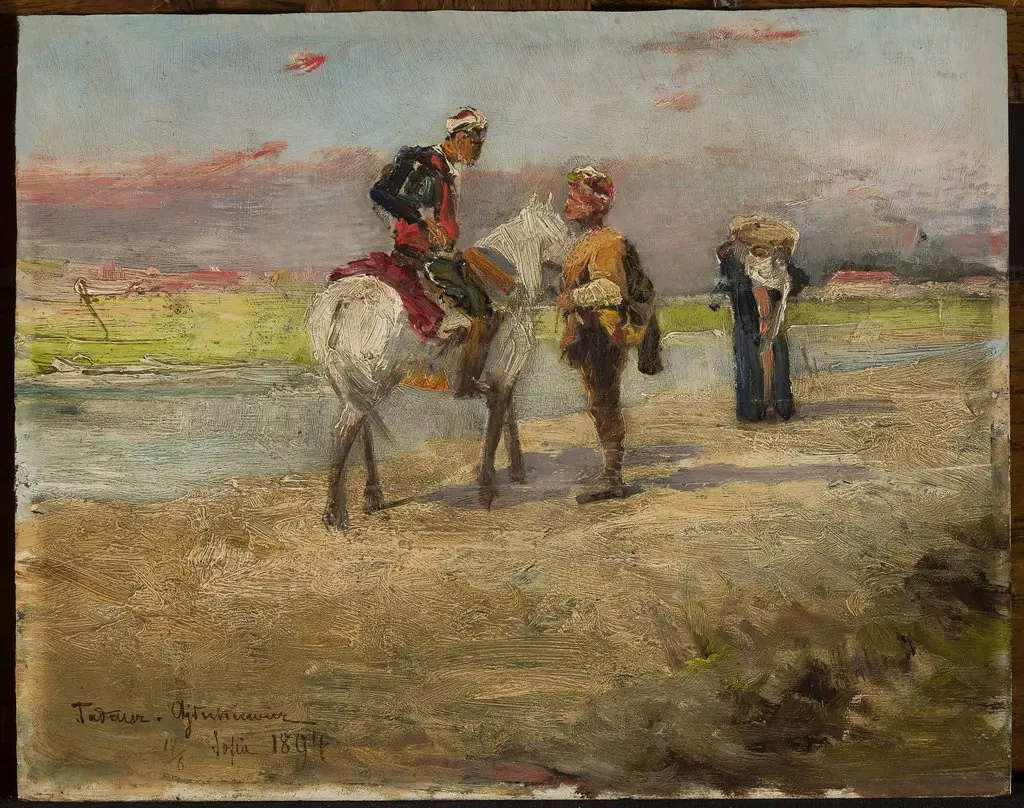
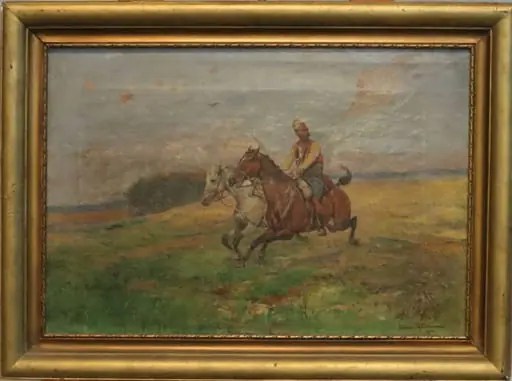
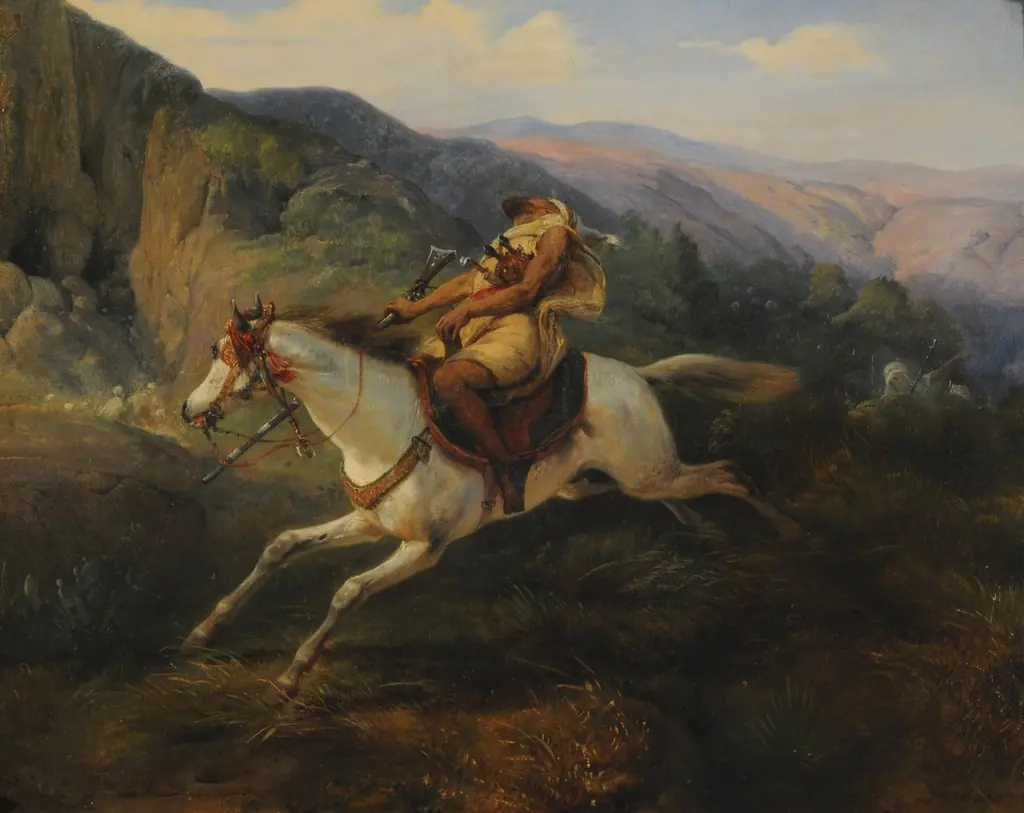
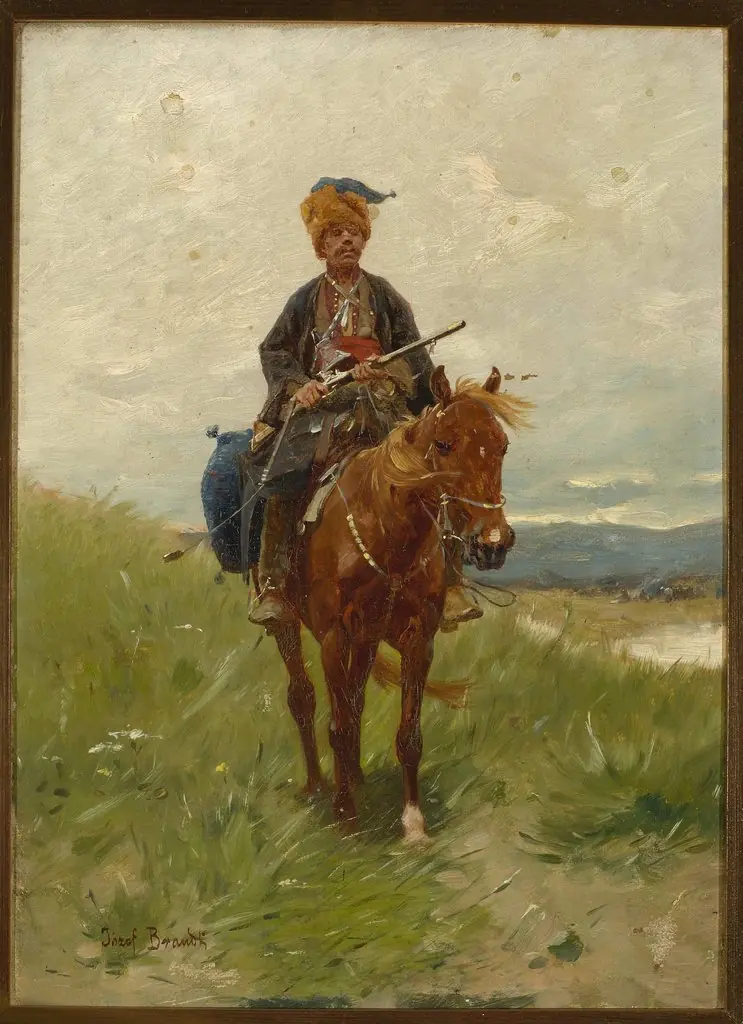
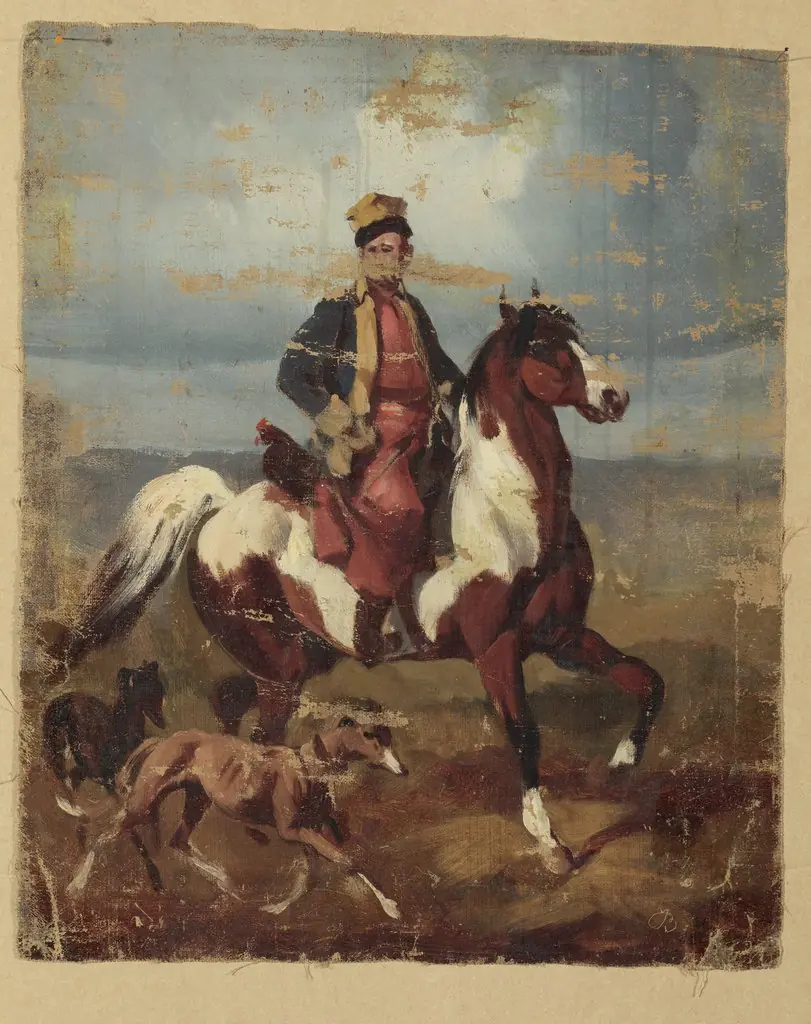
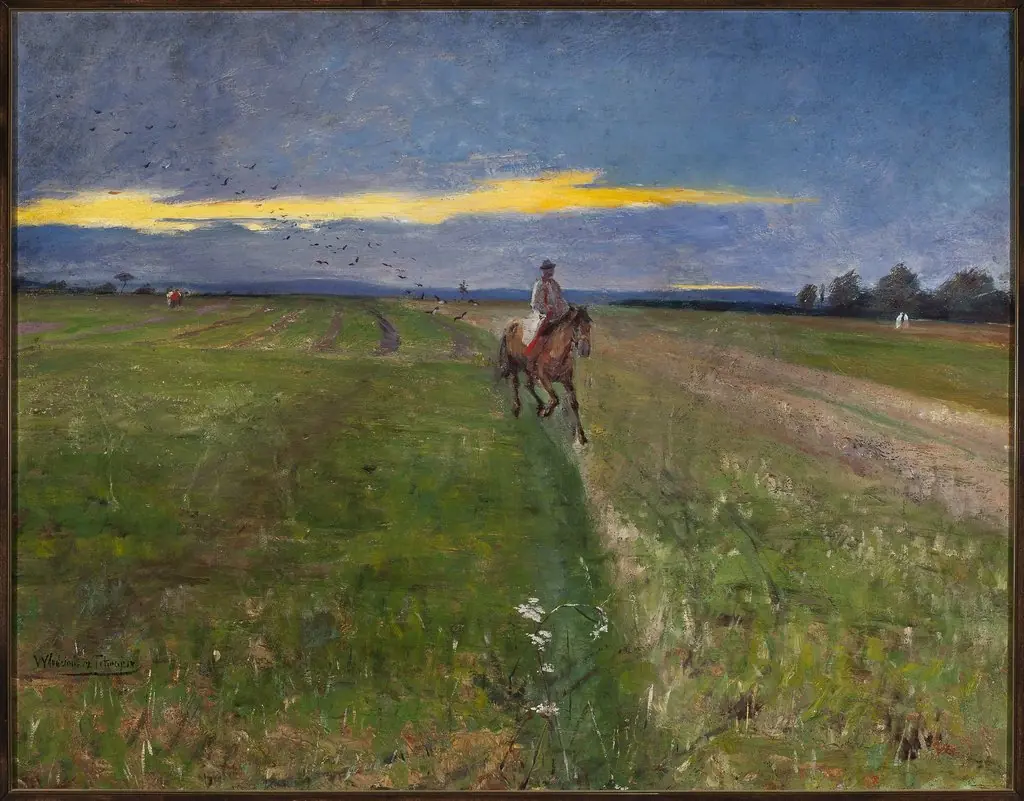
Oriental rider on a white horse is an oil painting by the Orientalist artist Jan Chełmiński. It dates from 1873 and is held in the collection of the National Museum in Warsaw.
About this work
Overview
The painting reflects the 19th-century European fascination with Eastern cultures, though it offers no specific geographic or narrative context.
Painted in 1873 by Polish artist Jan Chełmiński, this oil-on-canvas work portrays a solitary rider on a white horse, viewed from behind. The painting reflects the 19th-century European fascination with Eastern cultures, though it offers no specific geographic or narrative context. It resides in the National Museum in Warsaw as part of its 19th-century collection, representing Chełmiński’s engagement with exotic themes during his artistic development.
Subject & Meaning
The figure, dressed in a dark blue tunic and crimson cloak, rides a horse decorated with vivid textiles and a blue bridle. His posture and attire suggest a figure of authority or travel, but his identity remains ambiguous. The lack of identifiable landmarks or cultural markers prevents definitive interpretation, reinforcing the painting’s role as a generalized representation of Orientalist fantasy rather than a documented scene.
Technique & Style
Chełmiński employs loose brushwork and a warm, luminous palette to convey motion and atmosphere. The contrast between the white horse and the rider’s deep garments draws the eye, while the yellow sky and green field create a flat, decorative backdrop. Light falls evenly across the scene, with minimal chiaroscuro, emphasizing form and color over dramatic depth, aligning with academic traditions of the period.
History & Provenance
The painting entered the National Museum in Warsaw’s collection in the late 19th or early 20th century, likely acquired directly from the artist or through a Polish patron. Chełmiński, trained in Warsaw and later in Munich, produced numerous works on Eastern themes during this period. Its preservation in a major Polish institution reflects its significance within the national art narrative of the time.
Context
Created during the height of Orientalism in European art, the painting responds to a broader trend of depicting the Middle East and North Africa through a romanticized, often speculative lens. Polish artists like Chełmiński, though geographically distant from these regions, participated in this visual discourse, influenced by travel literature and imperial exhibitions circulating in Western Europe.
Legacy
While not widely exhibited outside Poland, the work remains a representative example of Polish engagement with Orientalist imagery. It illustrates how artists from non-colonial nations absorbed and reinterpreted Western artistic conventions. Today, it serves as a historical artifact of 19th-century cultural perceptions, prompting reflection on the construction of 'the Other' in visual art.
Own this work as a print
Artist & collection
Artist
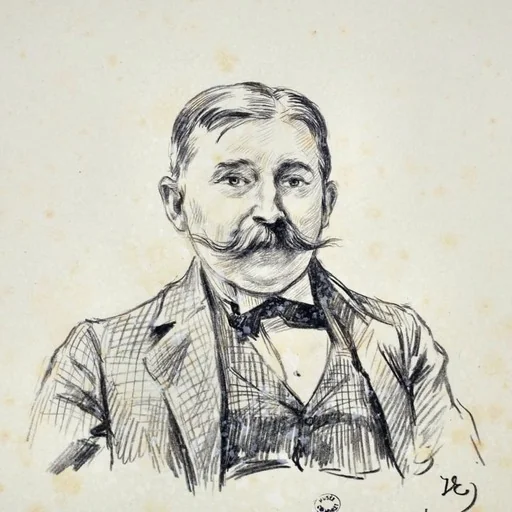
Jan Chełmiński, also known as Jan van Chelminski, born Jan Władysław Chełmiński (27 January 1851 – 1925), was a Polish painter.