Artwork
The Lock at Pontoise
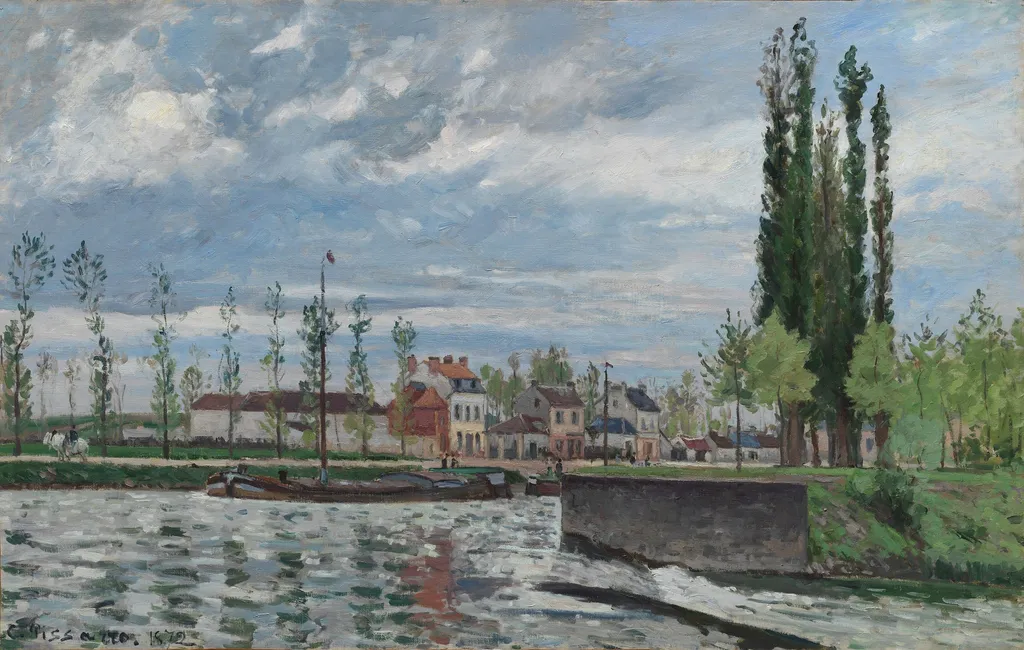
The Lock at Pontoise is an oil painting by the Impressionist artist Camille Pissarro. It dates from 1872 and is held in the collection of the Cleveland Museum of Art.
About this work
Technique & Style
The formal qualities emphasize the natural elements and architectural structures typical of Pissarro's rural scenes from this period.
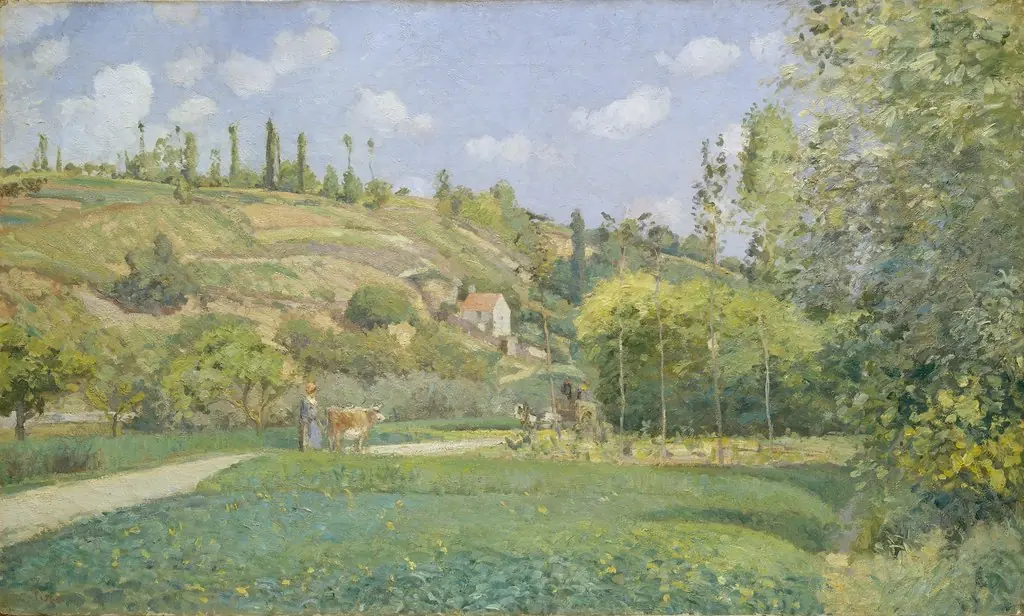
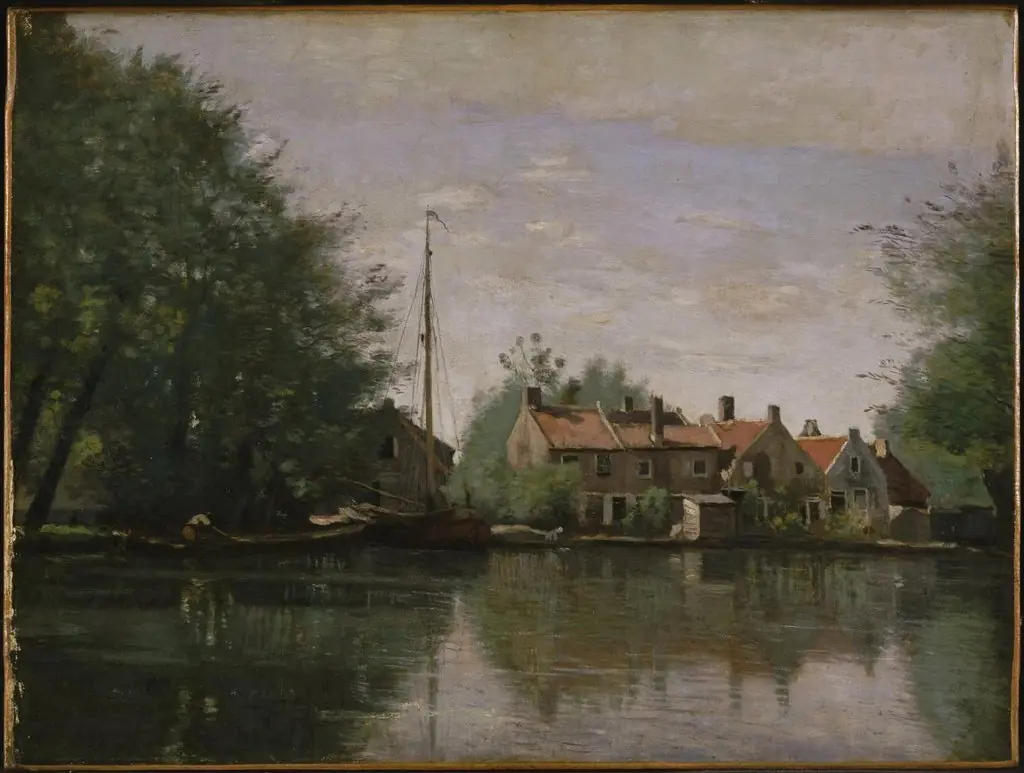
Created in 1872, The Lock at Pontoise is an oil painting executed on a canvas support. The work measures 53 centimeters in height and 83 centimeters in width. As a landscape genre piece, the composition depicts houses and trees within the French setting.
The handling of the medium reflects the artist's engagement with the Impressionist style, utilizing oil paint to capture the specific topography of the location. The physical condition of the canvas and paint layers is consistent with its preservation history within major collections and exhibitions, such as Discovering the Impressionists: Paul Durand-Ruel and the New Painting. The formal qualities emphasize the natural elements and architectural structures typical of Pissarro's rural scenes from this period.
History & Provenance
The painting titled The Lock at Pontoise was executed by Camille Pissarro in 1872 while he was working in France. It is an oil on canvas landscape measuring roughly 53 × 83 cm. The work first appeared in the collection of Artemis S.A., later passed to David Graham Carritt and Wildenstein & Company before entering the Cleveland Museum of Art, where it remains on view. Its provenance was highlighted in the exhibition catalogue Discovering the Impressionists: Paul Durand‑Ruel and the New Painting.
Inception records place its creation in 1872, and the piece is classified as a landscape painting in the museum’s catalogue.
The Lock at Pontoise is held in the collection of the Cleveland Museum of Art, where it is recorded with the accession number 1970.15. The painting entered the museum’s holdings in 1970 through purchase from Wildenstein & Company, having previously formed part of the collections of Artemis S.A. and David Graham Carritt. It was exhibited in Discovering the Impressionists: Paul Durand-Ruel and the New Painting, organized in France as part of the exhibition’s international tour.
Context
The Lock at Pontoise (1872) exemplifies Camille Pissarro’s early exploration of rural French landscapes, combining meticulous brushwork with a keen observation of light and atmosphere. Although the work initially attracted modest attention, its inclusion in the exhibition Discovering the Impressionists: Paul Durand‑Ruel and the New Painting signaled growing appreciation for Pissarro’s contribution to Impressionist landscape painting. Scholarship emphasizes the painting’s role within Pissarro’s broader oeuvre, highlighting his transition from rural genre scenes toward a more atmospheric approach that influenced later artists.
Today the work is housed in the Cleveland Museum of Art, underscoring its significance within the canon of 19th‑century French landscape art.
Overview
Camille Pissarro, a Danish-French artist, painted The Lock at Pontoise in 1872 using oil on canvas. This landscape captures a tranquil scene of a small town situated by a river, featuring a lock in the foreground. The work exemplifies the Impressionist movement's dedication to rendering everyday environments and the transient effects of light and atmosphere. It is now part of the collection at The Cleveland Museum of Art.
Subject & Meaning
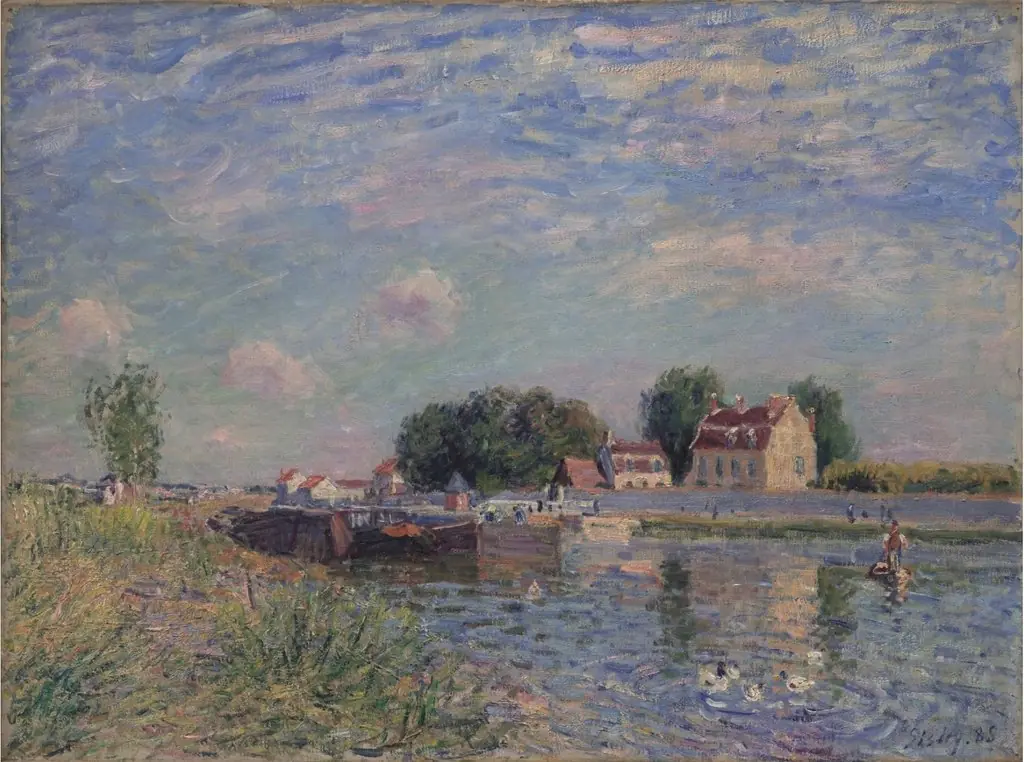
The painting portrays a quiet moment along a river in Pontoise, France. A lock structure occupies the foreground, guiding the viewer's eye through the calm water, which mirrors the overcast sky and nearby structures. Red-roofed houses are nestled among trees lining the riverbank, creating a harmonious composition. This focus on an ordinary, unidealized natural setting is characteristic of Impressionist interests.
Own this work as a print
Artist & collection