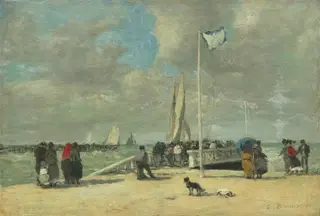
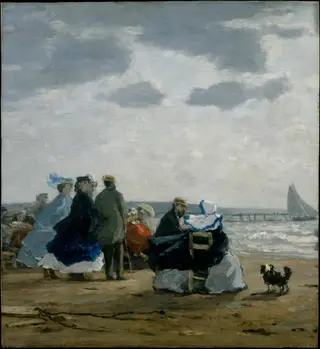
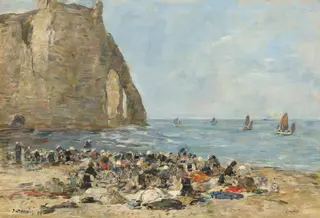
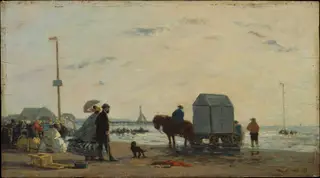
Artwork
La Touques near Deauville
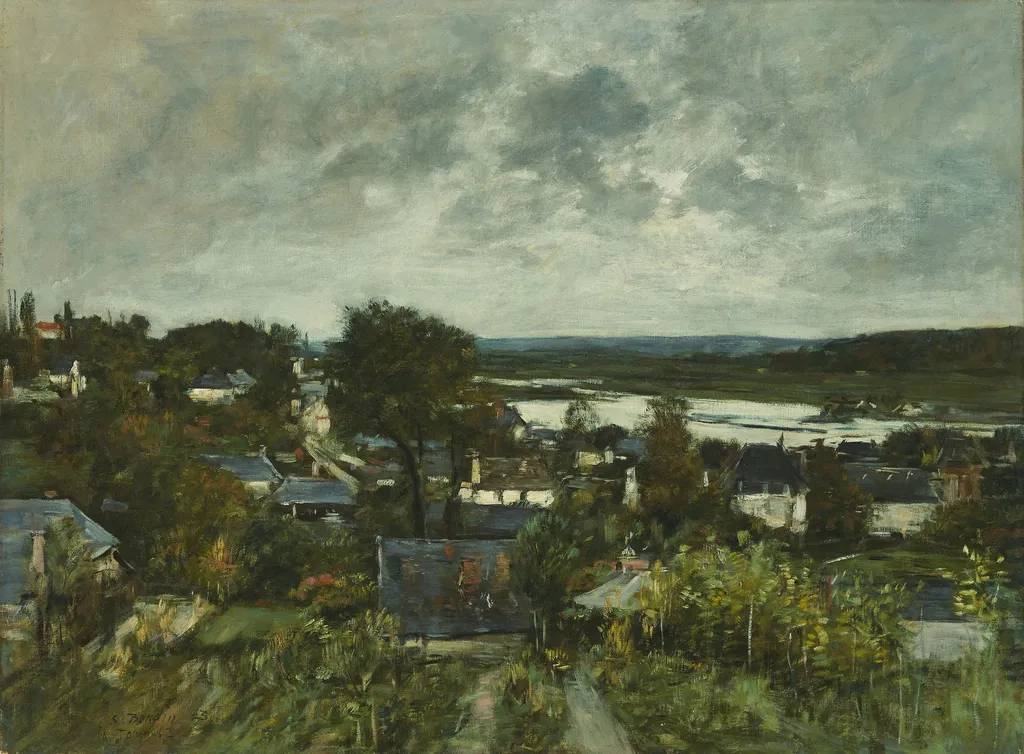
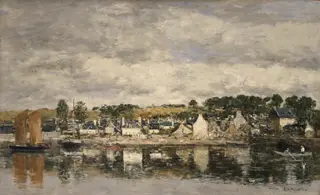
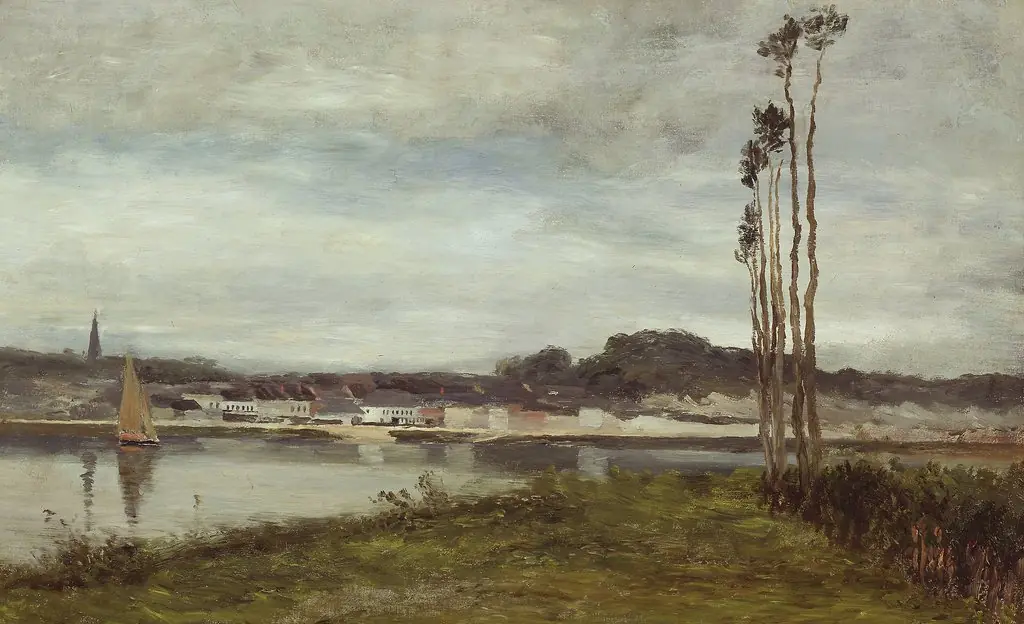
La Touques near Deauville is an oil painting by the Impressionist artist Eugène Louis Boudin. It dates from 1892 and is held in the collection of the Art Institute of Chicago.
About this work
Overview
The work reflects his lifelong commitment to painting outdoors and his role in shaping the visual language of late 19th-century French landscape art.
Painted in 1892, La Touques near Deauville is an oil landscape by French artist Eugène Boudin, depicting a quiet stretch of the Touques River as it winds through the Normandy countryside. Boudin, known for his coastal scenes, turned his attention here to a more inland waterway, capturing the subtle interplay of light and weather. The work reflects his lifelong commitment to painting outdoors and his role in shaping the visual language of late 19th-century French landscape art.
Subject & Meaning
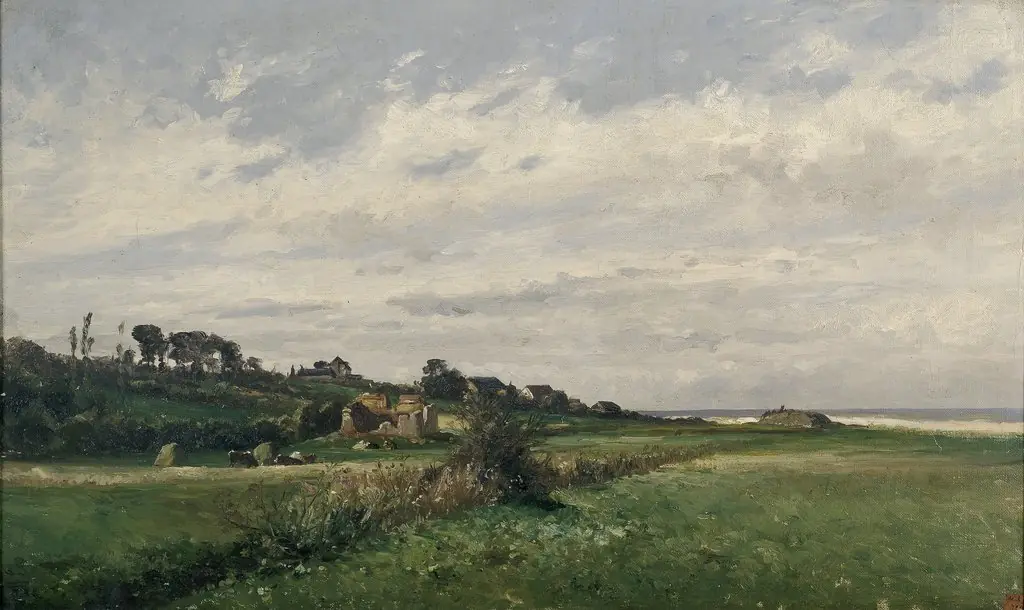
The painting presents a tranquil riverside scene with trees, modest buildings, and a gently flowing stream, all rendered without dramatic narrative. The absence of human figures emphasizes the quiet rhythm of nature. The muted palette and soft sky suggest a moment of calm, perhaps early morning or late afternoon, reinforcing Boudin’s interest in transient atmospheric conditions rather than idealized scenery.
Technique & Style
Boudin employed loose, fluid brushwork to convey the movement of air and water, avoiding sharp outlines in favor of blended tones. His use of muted greens, grays, and browns reflects a sensitivity to natural light rather than artificial contrast. The sky, partially obscured by clouds, is rendered with delicate strokes that suggest shifting weather, a hallmark of his approach and a precursor to Impressionist methods.
History & Provenance
Created during the final decade of Boudin’s career, the painting emerged from his continued focus on Normandy’s waterways after decades of coastal studies. It entered the collection of the Art Institute of Chicago in the 20th century, where it remains as part of a broader grouping of French Impressionist and post-Impressionist works. Its provenance reflects its recognition among institutions interested in the evolution of plein air painting.
Context
Boudin worked alongside early Impressionists like Monet, whom he mentored, and shared their interest in capturing fleeting natural effects. While not as radical in color as later Impressionists, his commitment to painting directly from nature laid groundwork for the movement. La Touques near Deauville exemplifies how artists of the time turned from studio conventions to observe the subtle shifts of light and weather in everyday landscapes.
Legacy
Though less celebrated than his contemporaries, Boudin’s influence on the development of Impressionism is acknowledged in his pioneering plein air technique and his role in encouraging younger artists to observe nature directly. La Touques near Deauville stands as a quiet testament to his enduring focus on atmosphere, light, and the unembellished beauty of the French countryside.
Own this work as a print
Artist & collection

Artist
Eugène Louis Boudin (French: ; 12 July 1824 – 8 August 1898) was one of the first French landscape painters to paint outdoors.