Artwork
Vanitas still life
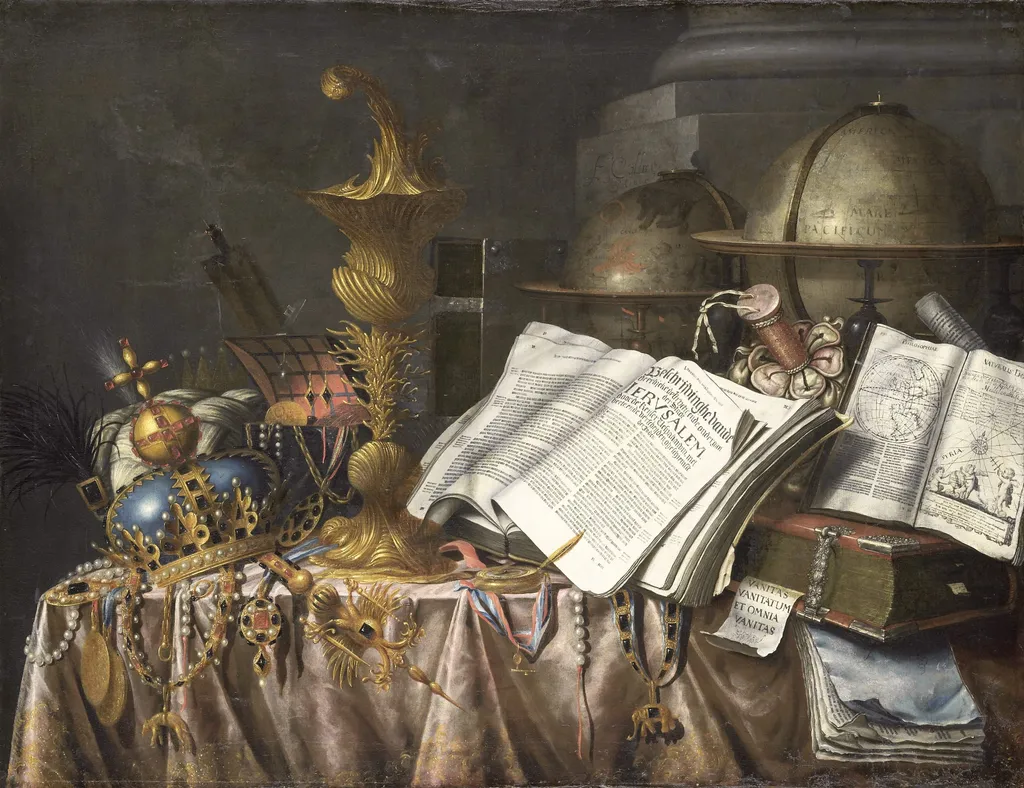
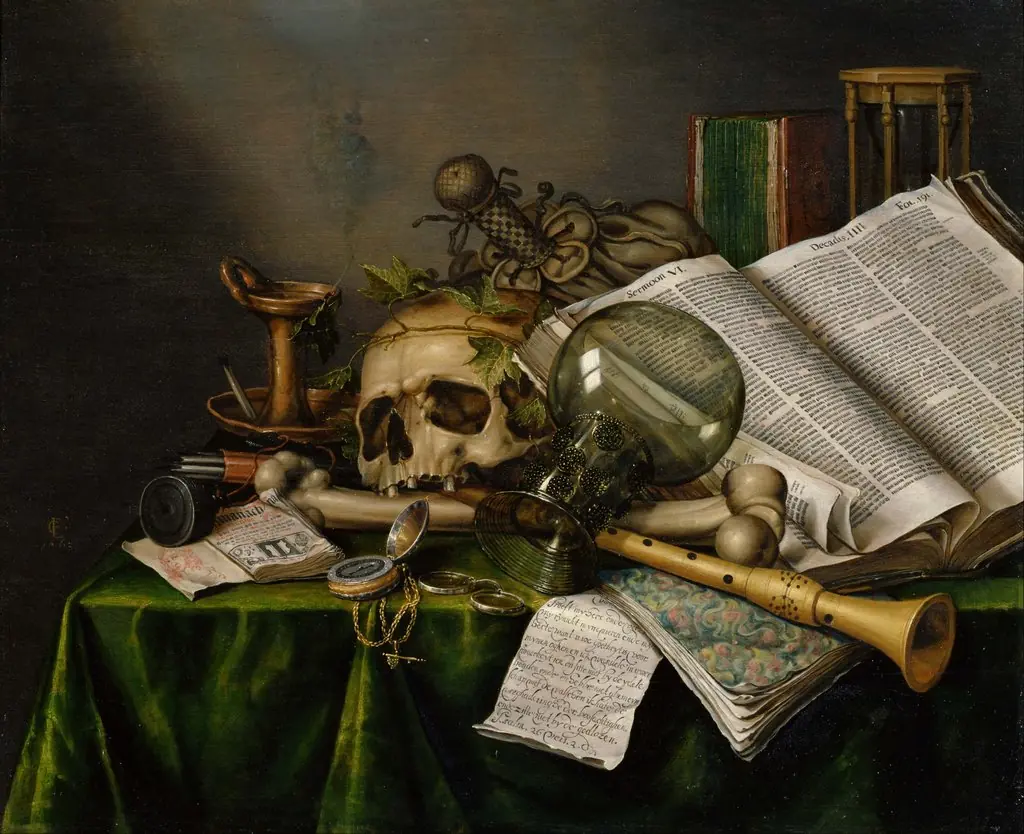
Vanitas still life is an oil painting by the Dutch Golden Age artist Evert Collier. It dates from 1662 and is held in the collection of the Rijksmuseum.
About this work
Subject & Meaning
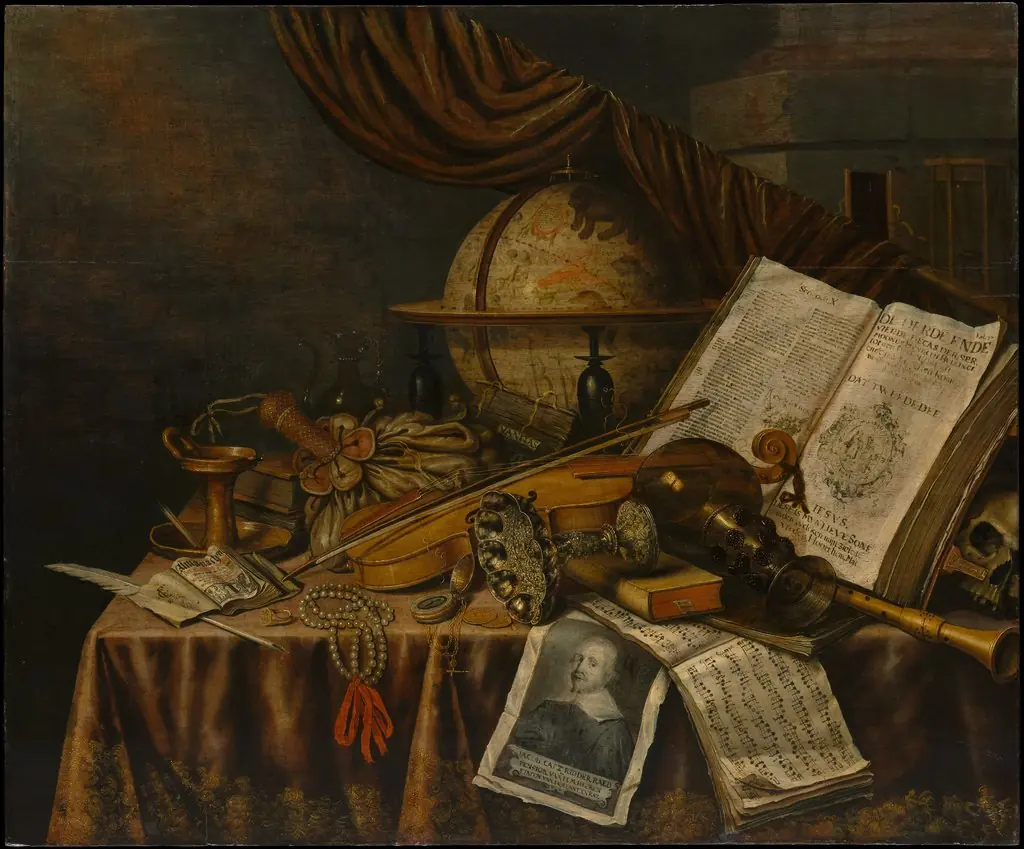
Crowns, a medallion, and a money bag evoke political power and wealth, while a casket, ring, and pearls connote personal status and mortality.
The 1662 vanitas still life by Evert Collier assembles emblems of transience and earthly vanity. A pocket watch and a Persian carpet signal the passage of time and the luxury of life's fleeting comforts. Crowns, a medallion, and a money bag evoke political power and wealth, while a casket, ring, and pearls connote personal status and mortality.
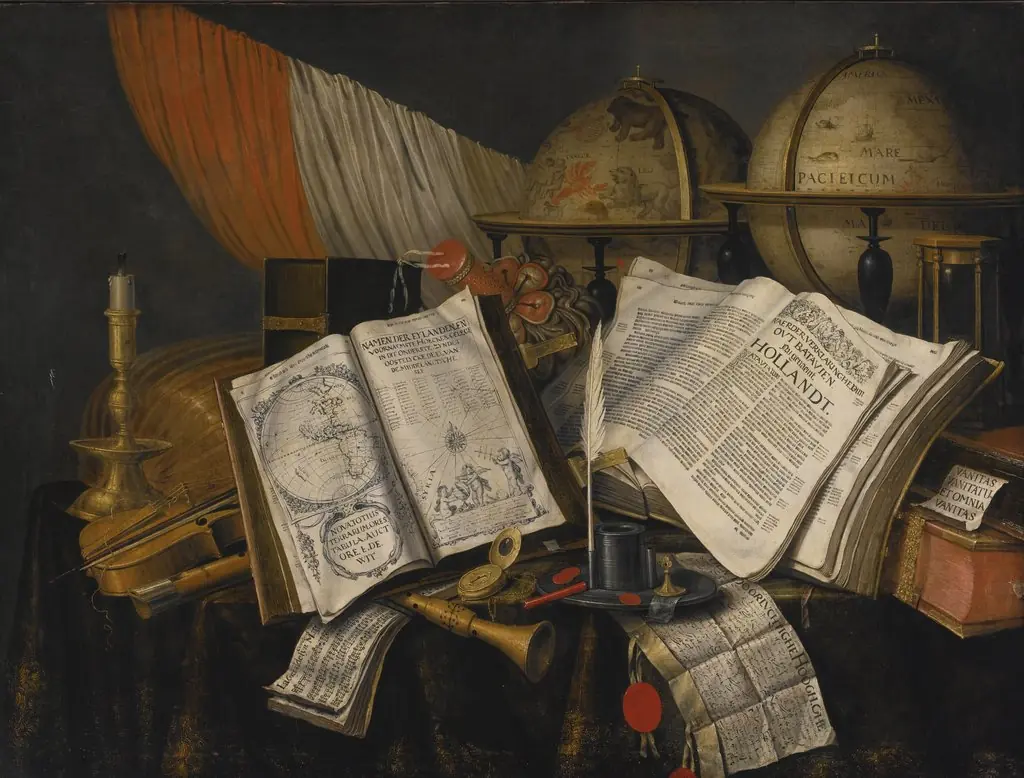
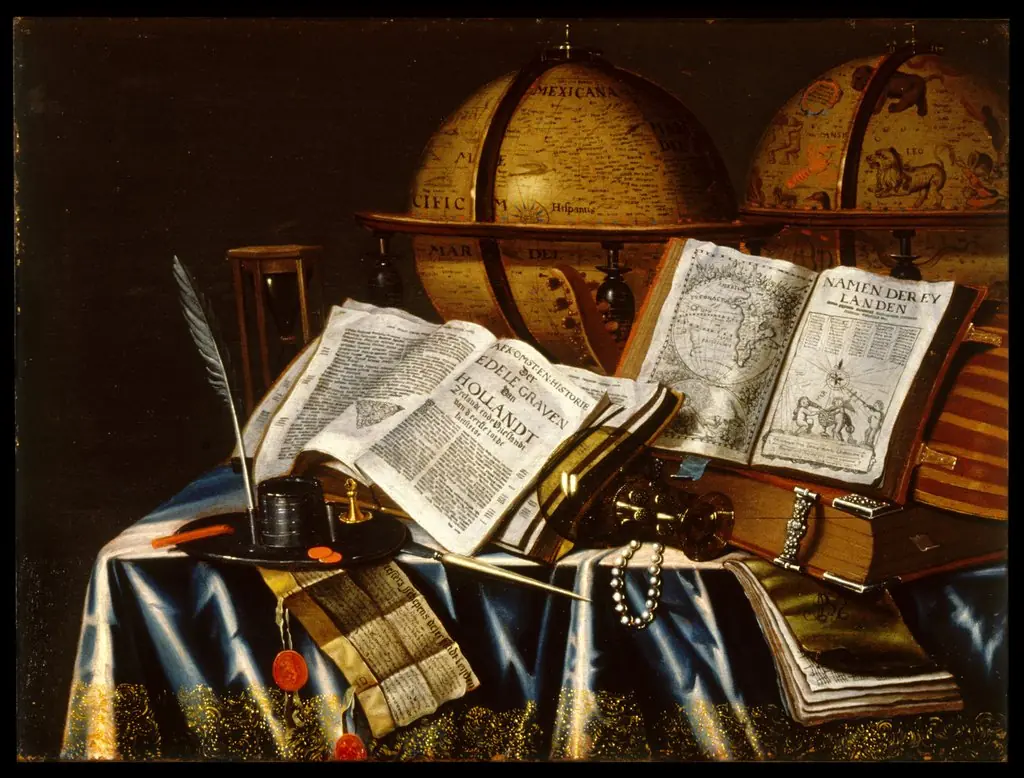
Globes and covered beakers extend the vanitas theme by referencing the world's impermanence and the futility of human endeavors. Together these objects articulate a moralizing meditation on the brevity of existence and the ultimate futility of earthly attainments.
Technique & Style
The work is executed in oil paint on canvas, a standard support for mid-seventeenth-century Dutch still lifes. The canvas measures 102.5 cm in height by 132 cm in width, providing a broad horizontal field suited to the arrangement of objects across a tabletop. The medium allows Collier to render the varied textures of the depicted items, glass, metal, textiles, pearls, and a Persian carpet, with fine tonal control.
The composition is laid out as a vanitas still life, organizing symbols of wealth and transience across the picture plane in a manner typical of the genre.
History & Provenance
The vanitas still life was executed in 1662 by the Dutch painter Evert Collier, in oil paint on canvas. The painting is currently held in the collection of the Rijksmuseum. While the original commissioner and the detailed chain of ownership prior to its museum acquisition are not detailed in the available records, the work's creation is firmly attributed to Collier in the mid-seventeenth century.
The piece measures 102.5 centimeters in height and 132 centimeters in width, depicting a complex arrangement of symbolic objects typical of the vanitas genre.
Context
Evert Collier's Vanitas still life (1662) belongs to the Dutch Golden Age's moralizing still-life tradition, assembling emblematic motifs to reflect on material excess and transience. A pocket watch underscores the passage of time, while crowns, a medallion, and a money bag evoke the impermanence of wealth and political power. The work aligns with the broader vanitas current of the period, in which everyday and luxury objects were arranged as a memento mori.
Its didactic function reflects the Calvinist values prevalent in the seventeenth-century Netherlands, and it sits within the wider European memento mori iconography that helped shape later still-life conventions.
Overview
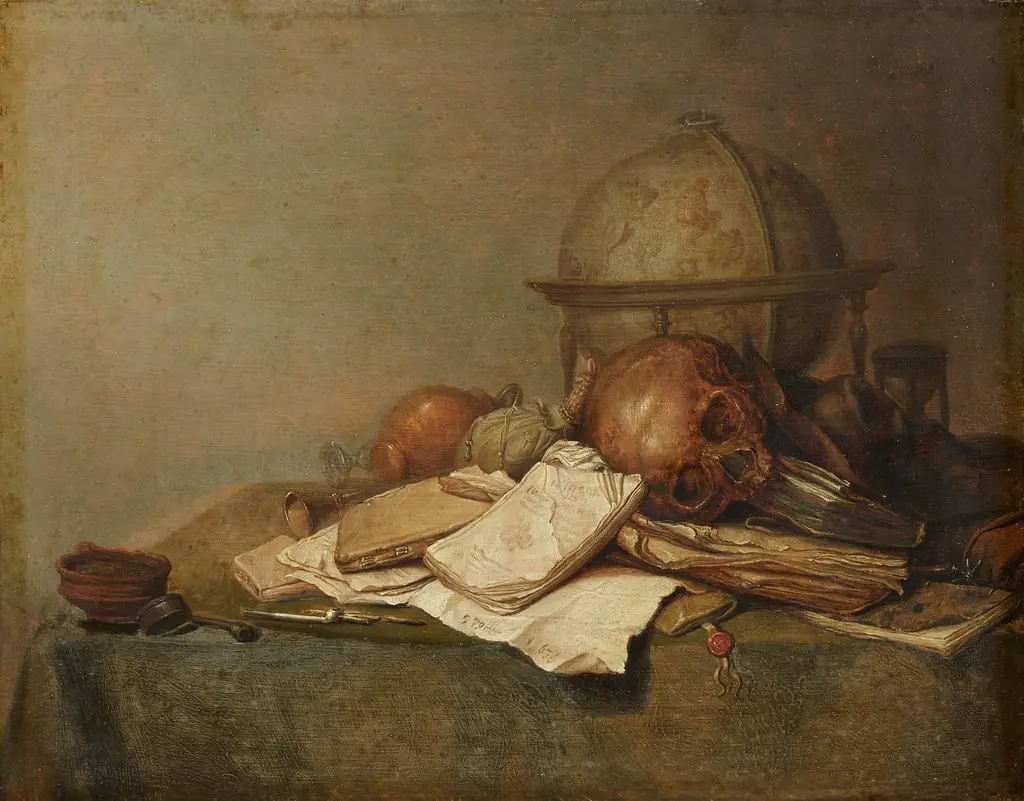
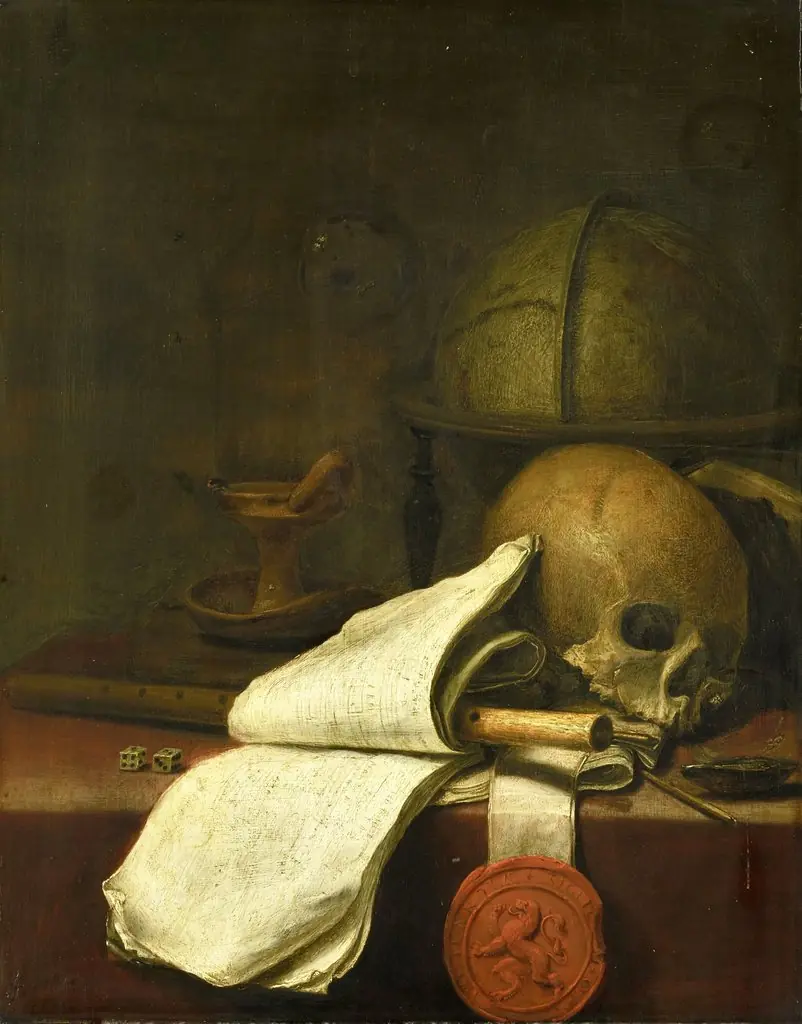
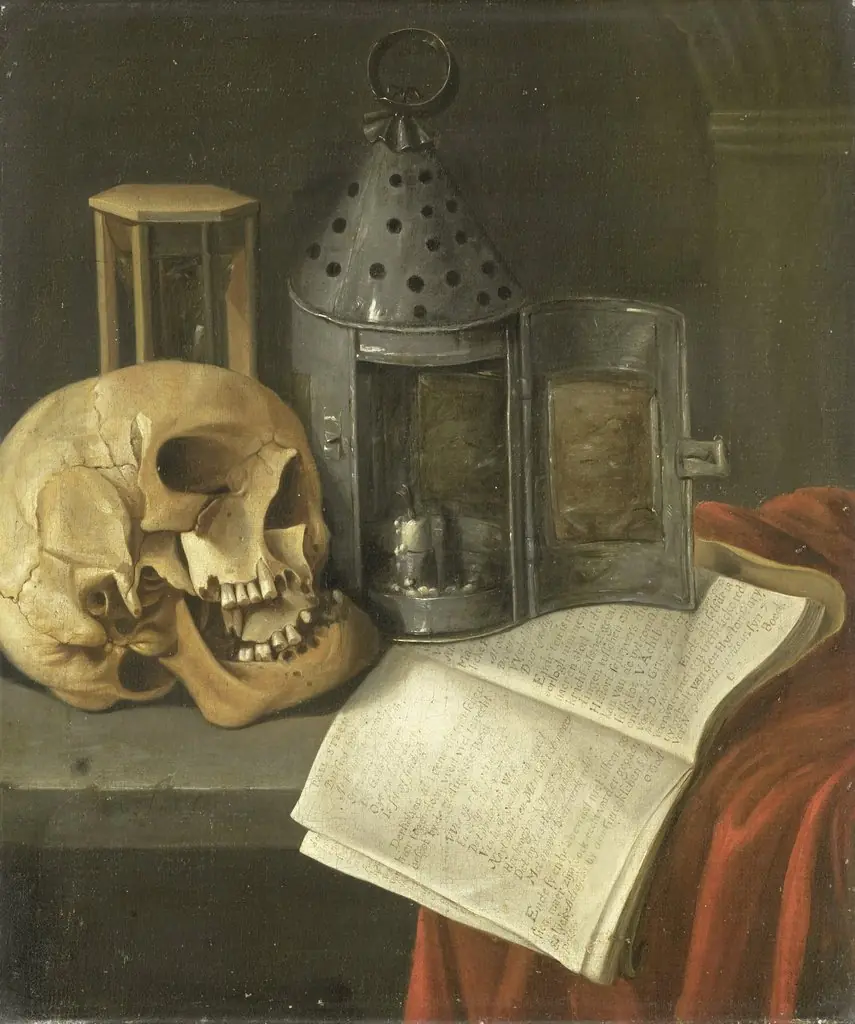
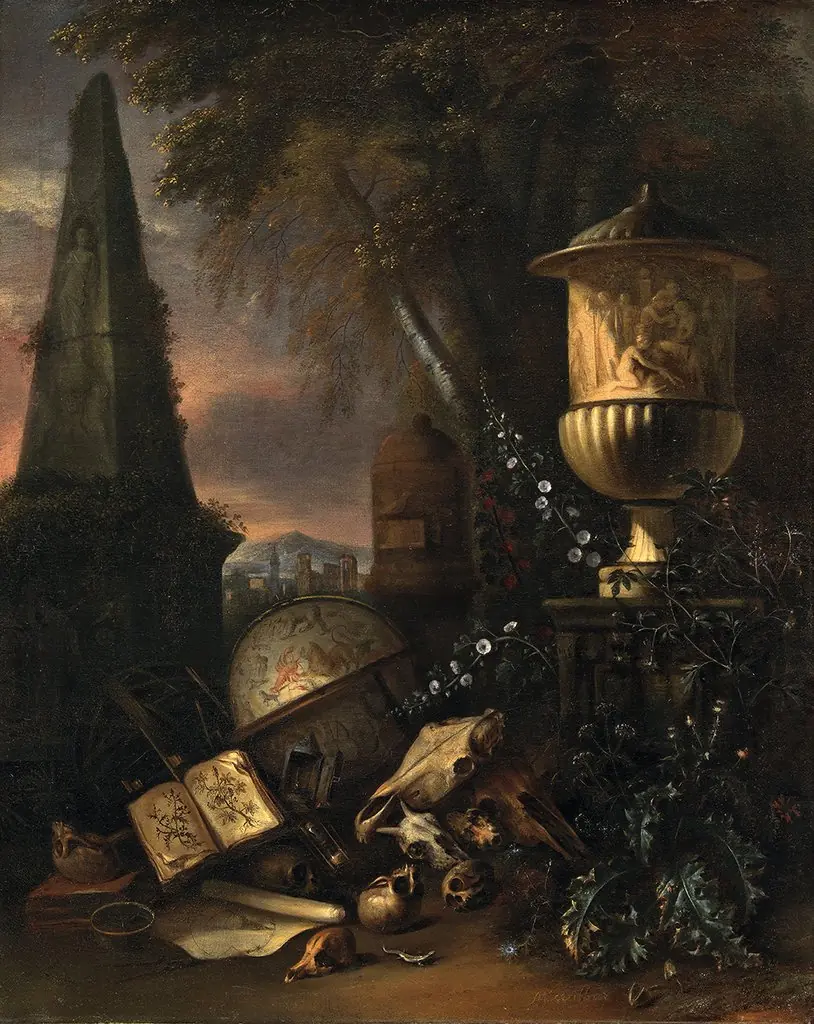
This oil painting, titled Vanitas still life, presents a densely arranged collection of objects on a table. Through its detailed depiction of both luxurious and mundane items, the artwork serves as a visual meditation on the transient nature of human existence and worldly possessions. The composition invites contemplation on the passage of time and the ultimate futility of material wealth and earthly knowledge.
Own this work as a print
Artist & collection

Artist
Evert Collier (26 January 1642 – few days before 8 September 1708) was a Dutch Golden Age still-life painter known for vanitas and trompe-l'œil paintings.