Artwork
Vanitas still life
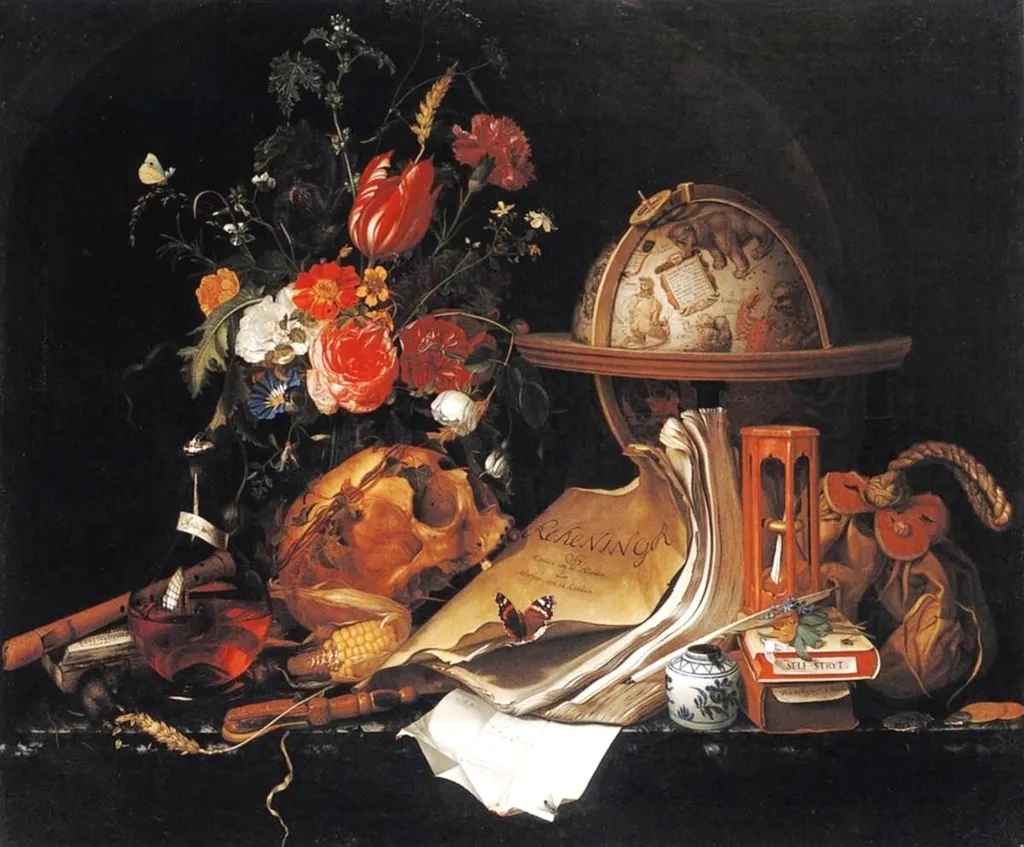
Vanitas still life is an oil painting by the Dutch Golden Age artist Jan Davidsz. de Heem. It dates from 1668 and is held in the collection of the Kunsthistorisches Museum.
About this work
Subject & Meaning
Together these elements convey a Protestant‑inspired meditation on mortality, the inevitability of judgment and the possibility of attaining a place in heaven.
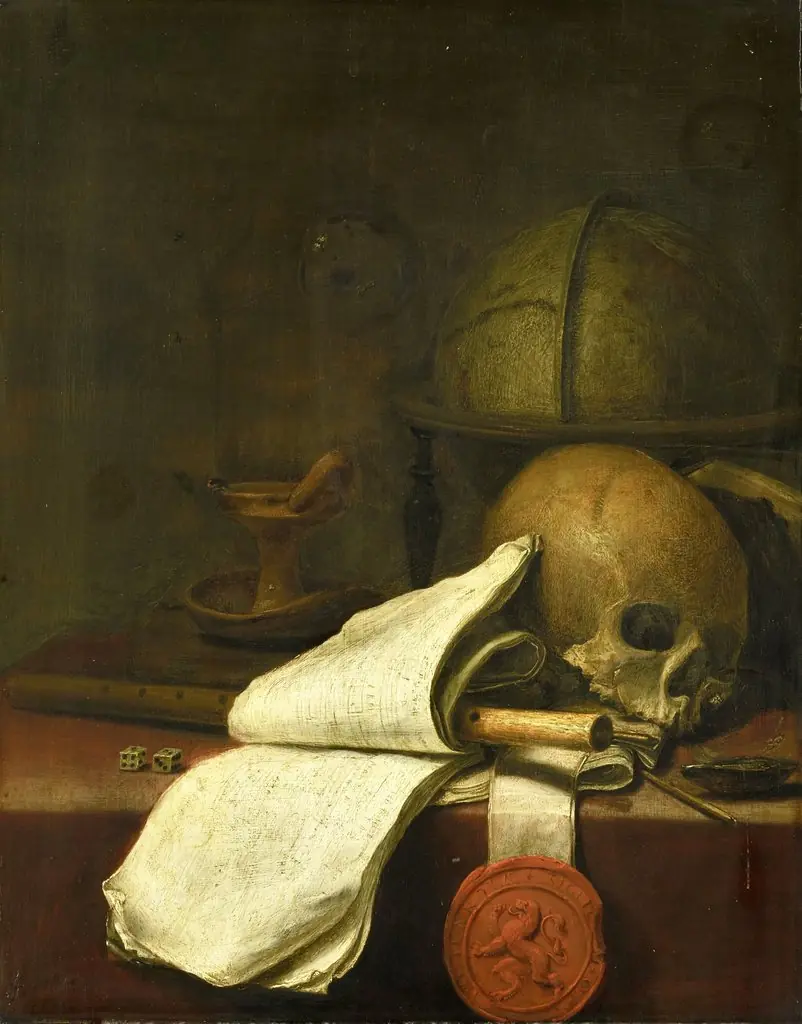
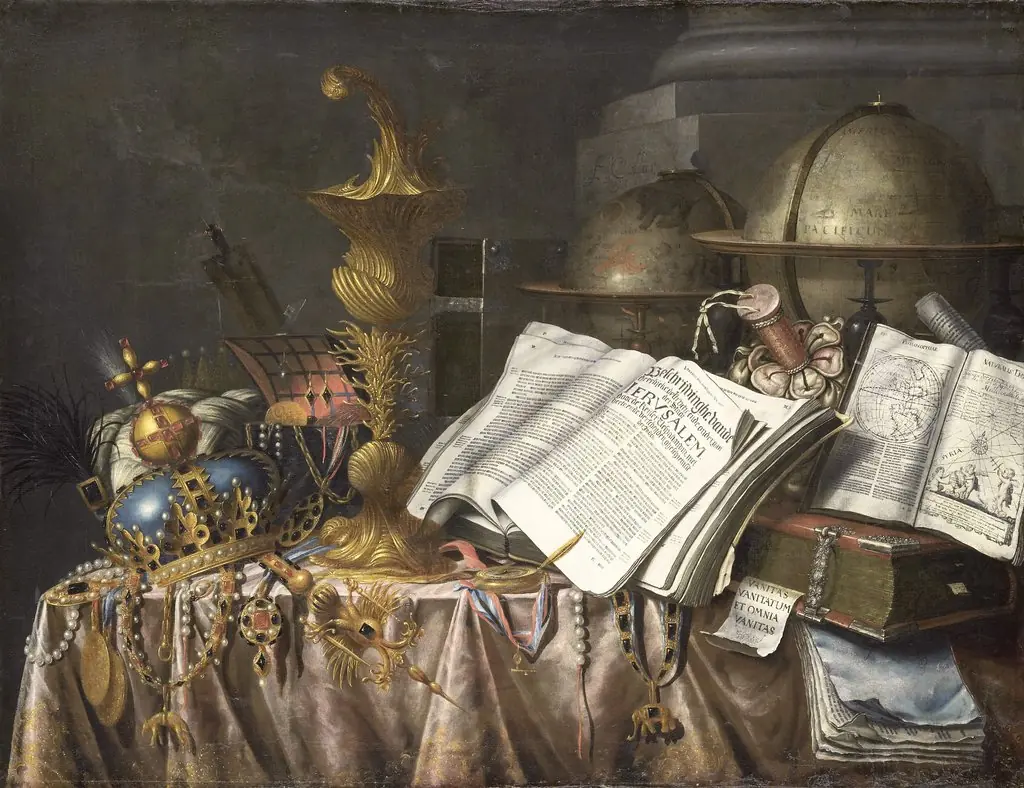
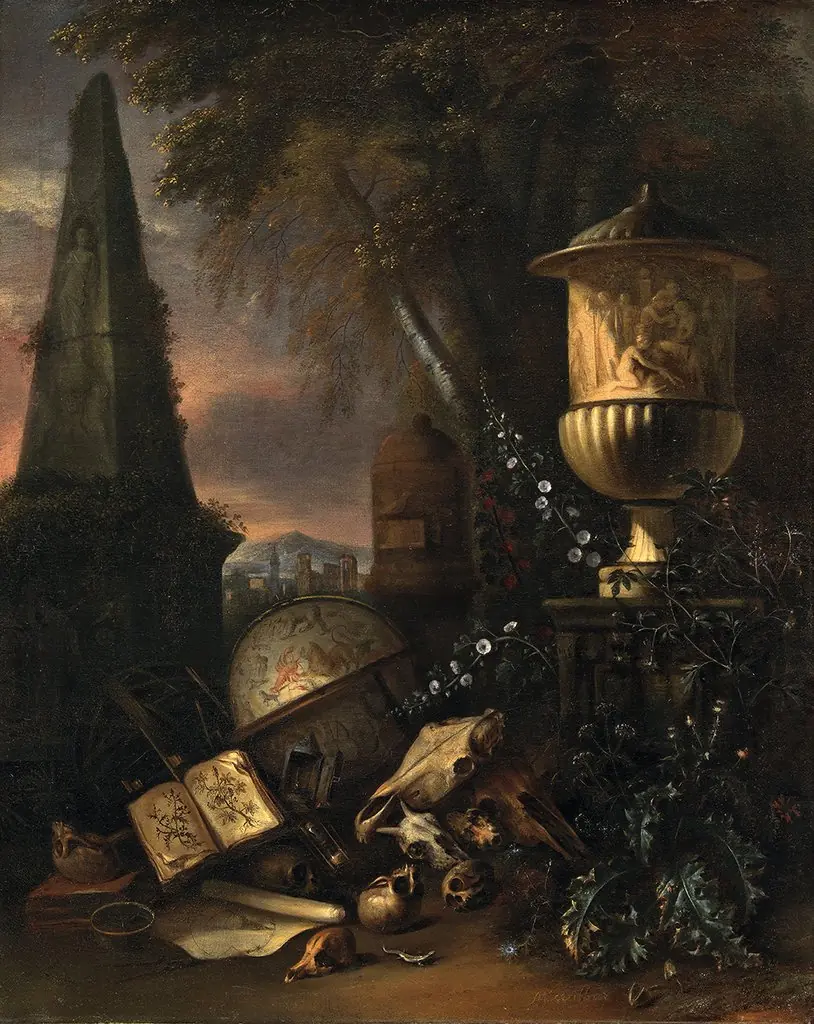
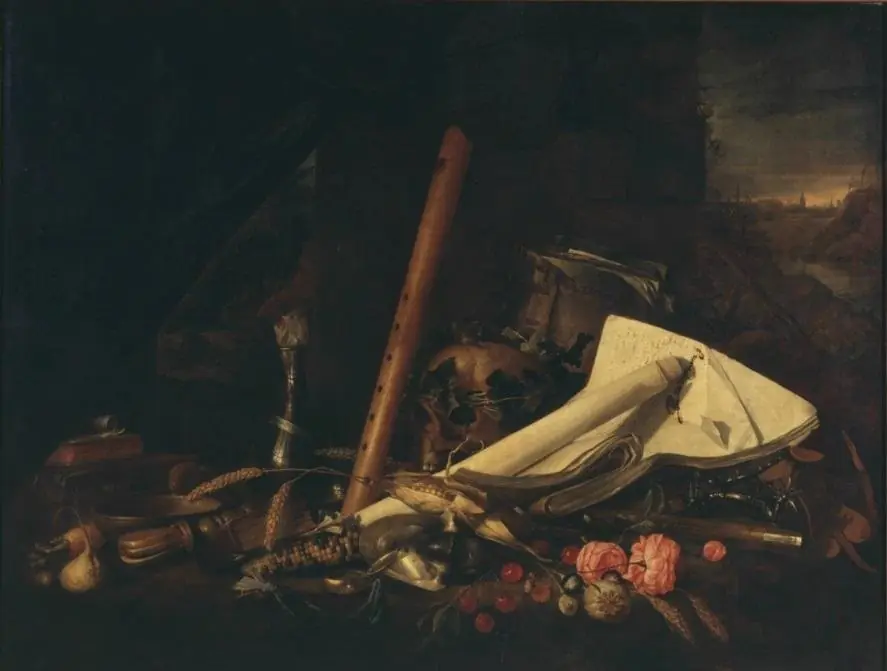
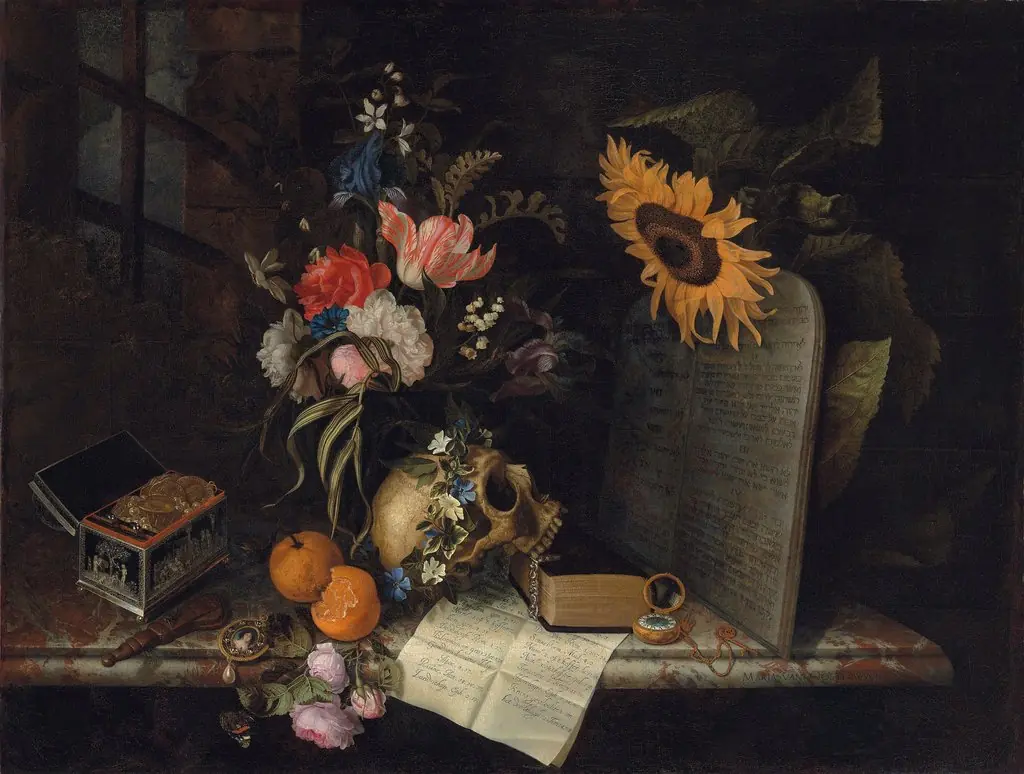
The painting presents a vanitas still life in which everyday objects carry moral and theological symbolism. A skull, butterfly, celestial globe, leper clapper and a book marked “Rekeningh” signal the fleeting nature of earthly existence and the promise of salvation. Flowers, insects and a cracked marble table underscore decay, while the Aqua Vitae bottle and a half‑peeled maize ear suggest the hope of eternal life and rebirth.
Musical instruments and a glass of wine reference the transience of pleasure, and a sand‑glass reinforces the passage of time. Together these elements convey a Protestant‑inspired meditation on mortality, the inevitability of judgment and the possibility of attaining a place in heaven.
Technique & Style
The work is executed in oil paint on canvas, measuring 73 by 88.5 centimeters. The composition is arranged across intersecting vertical and horizontal axes on a marble tabletop set against a shallow background niche, with the arrangement appearing disordered yet carefully balanced through juxtaposition of rounded forms such as the celestial globe and the skull.
The handling demonstrates exceptional technical command, with a theatrical presentation heightened by strong chiaroscuro produced by raking light entering from the left. The marble surface is rendered as solid yet locally damaged, signaling decay. Small details, including a fly on a book, butterflies on an ear of corn and a volume, a mouse gnawing grain, and the artist's reflection in a carafe, are integrated as deliberate motifs rather than incidental touches, reflecting the meticulous finish characteristic of the pronkstilleven tradition.
History & Provenance
The painting is held in the collection of the Kunsthistorisches Museum in Vienna, where it is part of the holdings at Schloss Ambras Innsbruck. It is catalogued in Wikidata as belonging to that museum's collection.
No specific inventory or accession number is recorded in the available sources, and no exhibition history is documented. The painting's documented provenance is limited to its current institutional home.
Context
Maria van Oosterwijck’s Vanitas still life (1668) is situated within the Dutch Golden Age tradition of pronkstillevens while advancing a morally didactic program. Scholars note its deliberate juxtaposition of terrestrial vanities with celestial aspirations, aligning it with contemporary Calvinist meditations on mortality and divine judgment. The composition’s theatrical clarity-obscur lighting and meticulous arrangement reflect the technical ambitions of still-life specialists who elevated the genre from decorative object to moral tableau.
Critics have emphasized the painting’s integration of emblematic and textual references, weaving Job 14 and Thomas à Kempis’s Navolgingh Christi into a cohesive vanitas narrative. Its inclusion in the Kunsthistorisches Museum’s holdings underscores its recognition as a paradigmatic example of Dutch allegorical still life, bridging Haarlem’s artistic circles and broader European trends in symbolic representation.
Overview
Artist Maria van Oosterwijck completed Vanitas still life in 1668, employing oil paint to render a complex arrangement of objects. This work exemplifies the Dutch Golden Age tradition of still-life painting, a genre in which Oosterwijck specialized. The composition is characterized by its meticulous detail and the symbolic nature of its elements, which collectively explore themes of human mortality and the ephemeral quality of earthly existence. The painting is housed in the Kunsthistorisches Museum.
Artist & collection
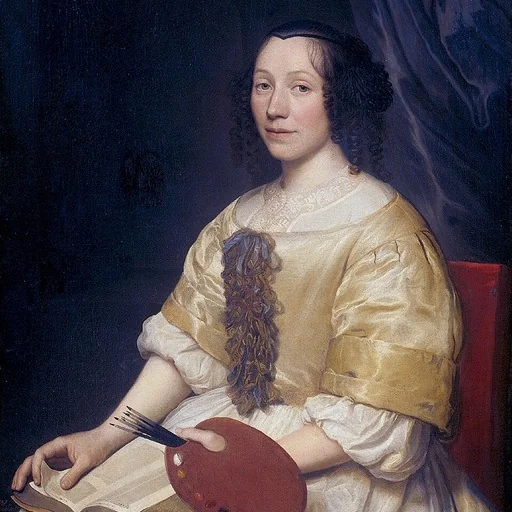
Artist
Maria van Oosterwijck (1630–1693), also spelled Oosterwyck, was a Dutch Golden Age painter, specialising in richly detailed flower paintings and other still lifes.