Artwork
Vanitas still life
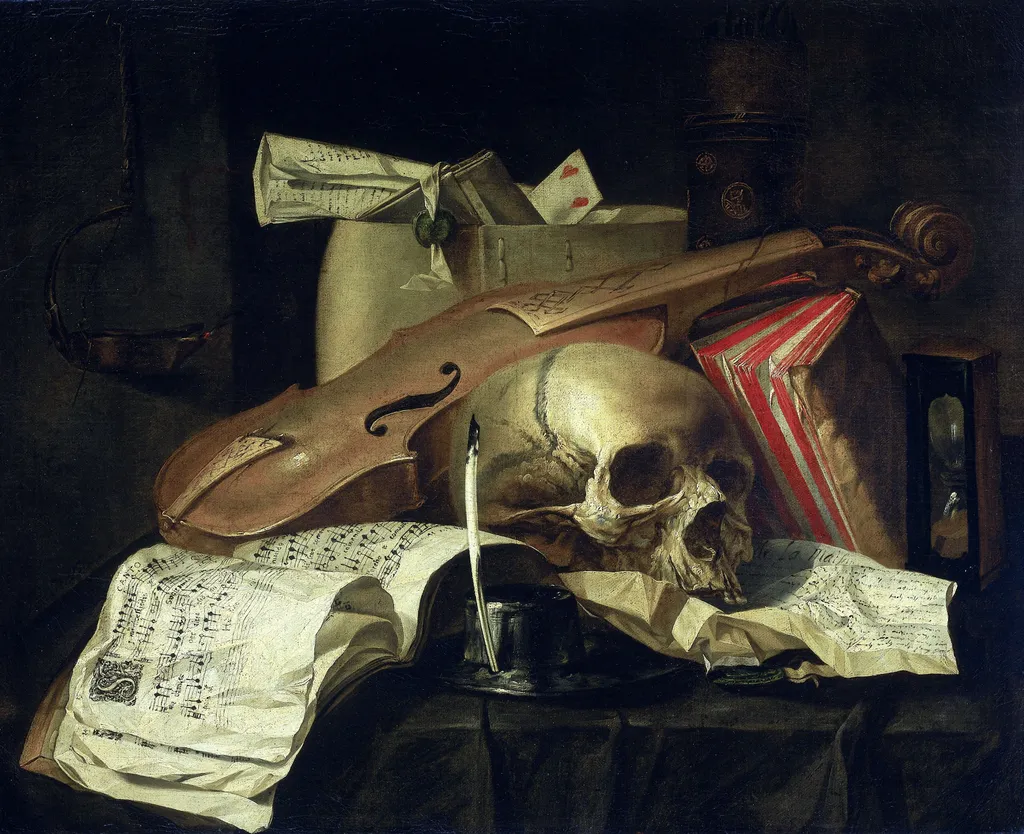
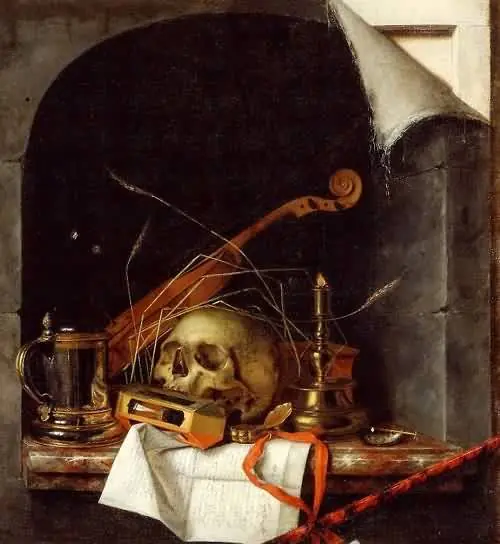
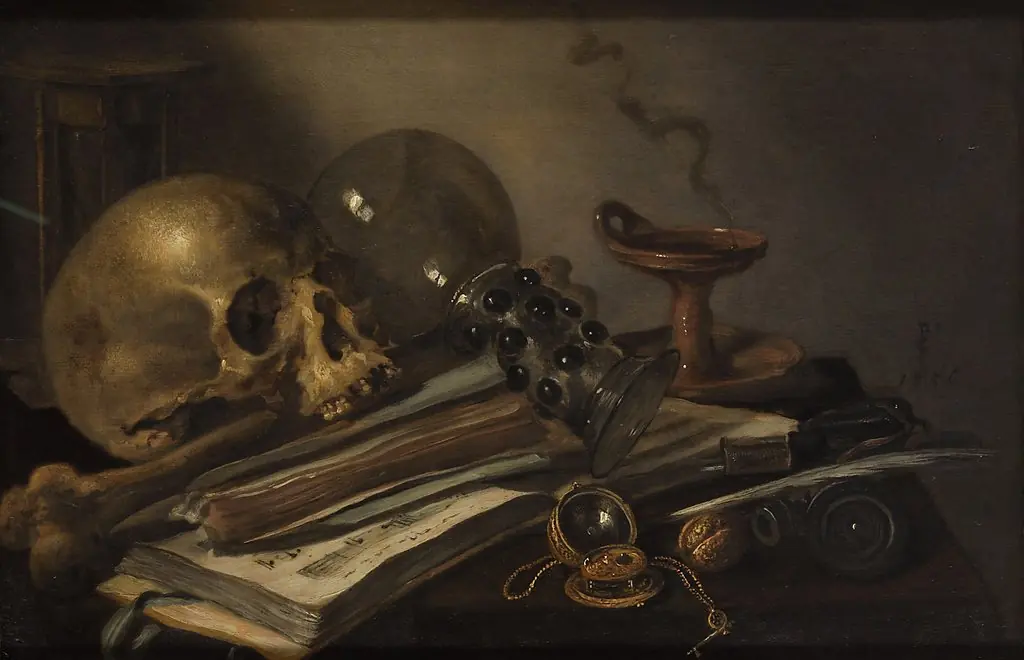
Vanitas still life is an oil painting by the Dutch Golden Age artist N.L. Peschier. It dates from 1660 and is held in the collection of the Rijksmuseum.
About this work
Subject & Meaning
The composition conveys the Dutch seventeenth-century moral that earthly pleasures and achievements are ultimately futile.
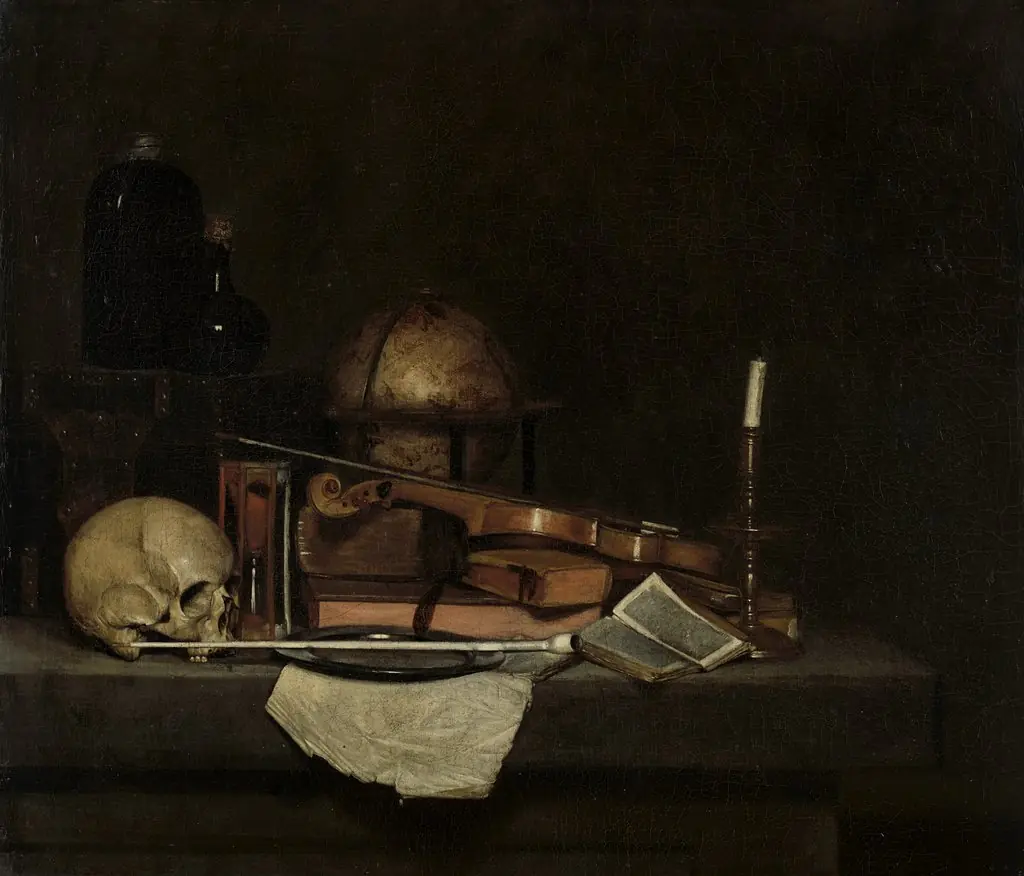
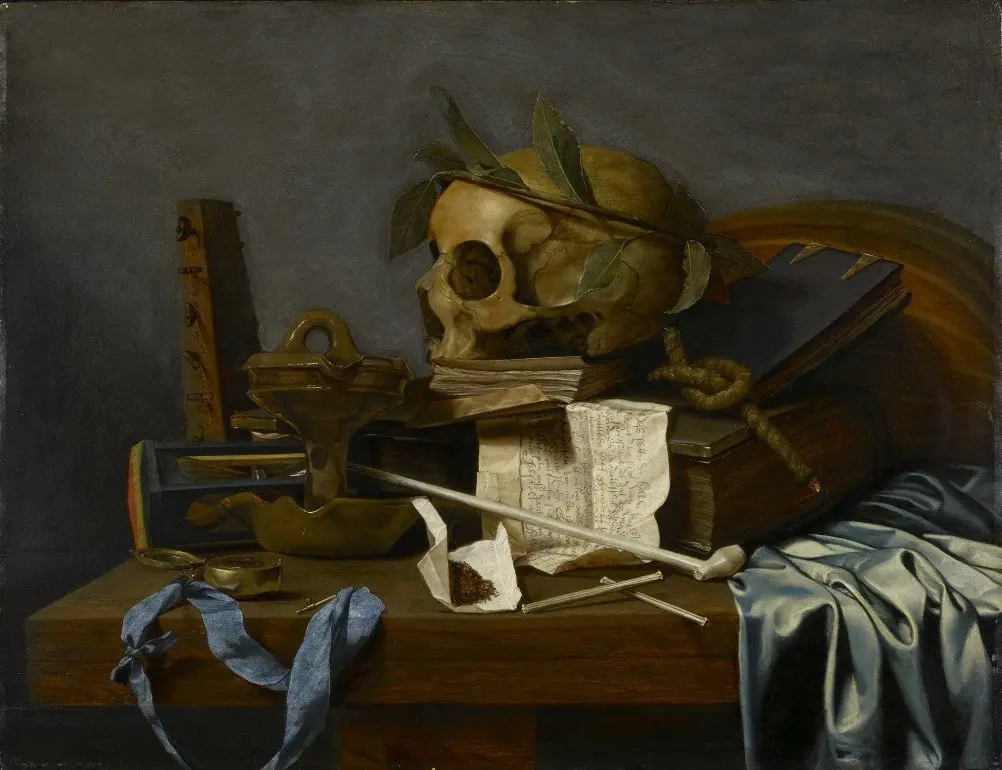
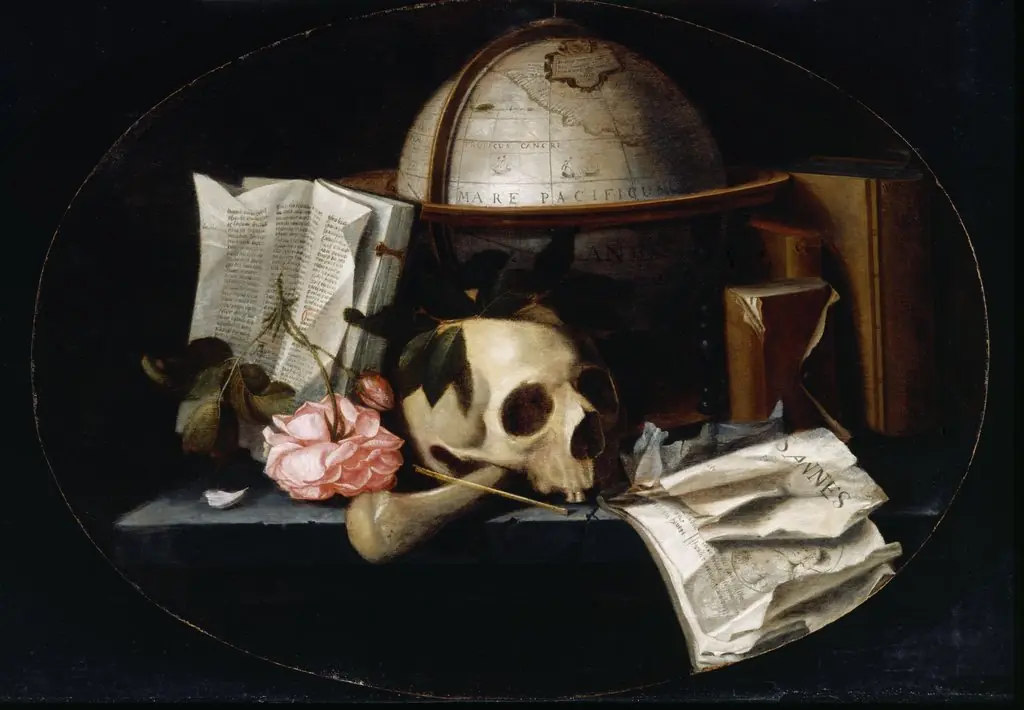
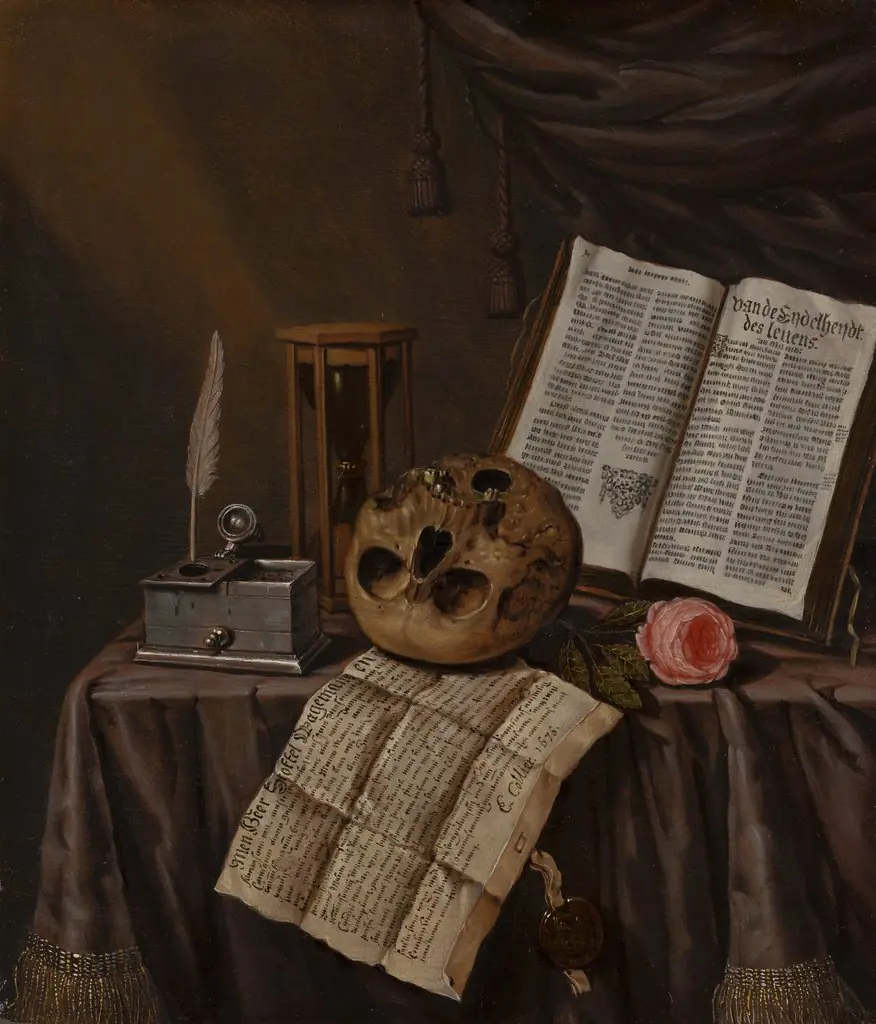
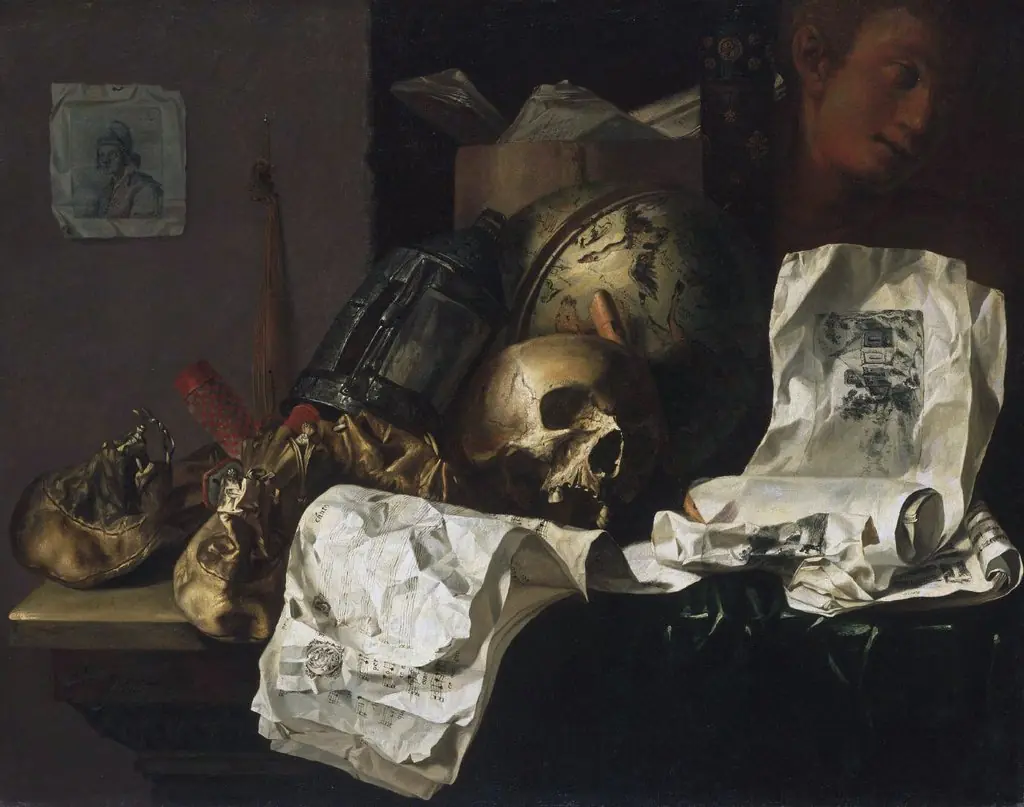
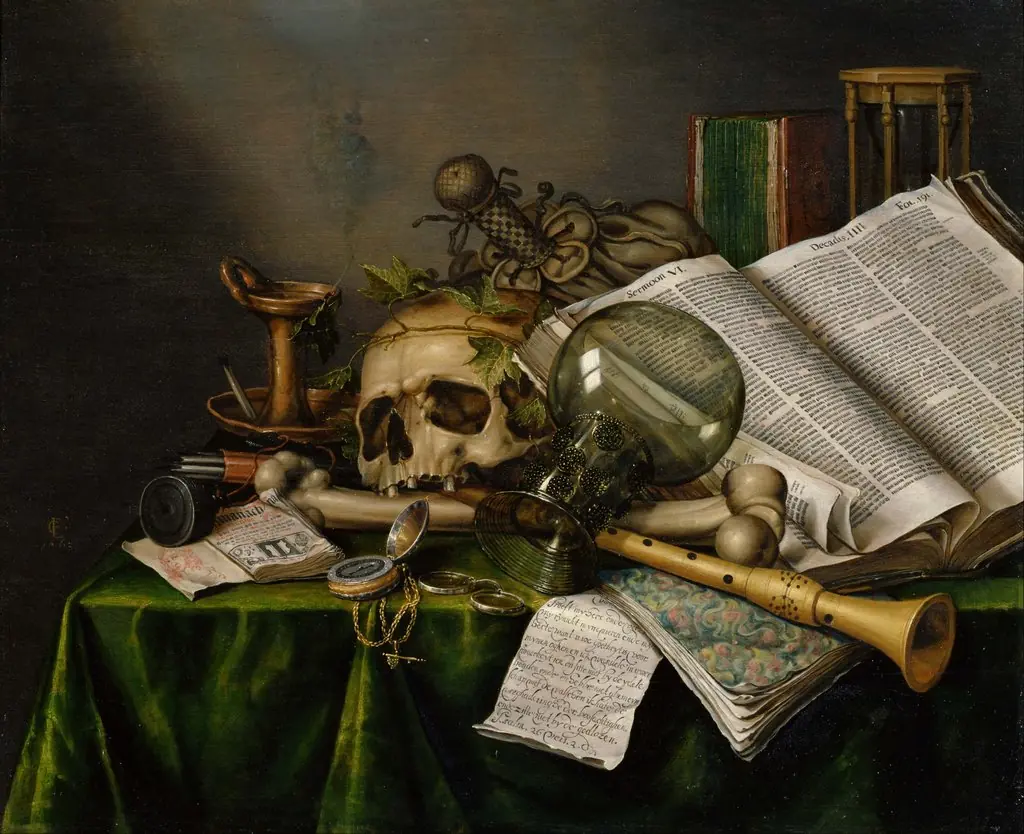
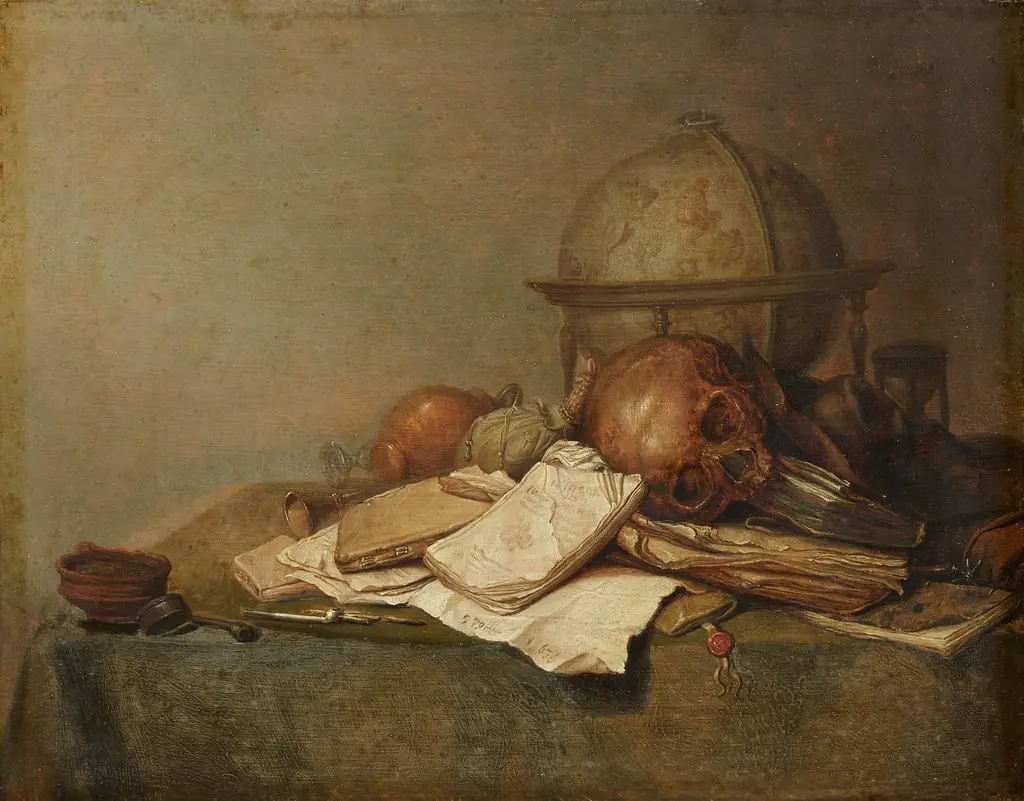
The vanitas still life by N.L. Peschier (1660) assembles conventional symbols of transience and mortality. A human skull, the central emblem of vanitas, underscores the inevitability of death. Surrounding it are objects that evoke the fleeting nature of life: an hourglass marking the passage of time, a burning oil lamp suggesting the fragility of existence, and a playing card hinting at chance or fortune’s unpredictability.
Musical elements, a violin, sheet music, and quill with inkwell, allude to the arts and learning, while a book and seal may reference scholarship or official authority, all of which are transient pursuits in the face of death. The composition conveys the Dutch seventeenth-century moral that earthly pleasures and achievements are ultimately futile.
Technique & Style
The work is executed in oil on canvas, measuring roughly 57 × 70 cm, characteristic of mid‑17th‑century Dutch still‑life practice. Peschier applied thin, translucent layers of oil paint to achieve a smooth surface and subtle modeling of light, employing the chiaroscuro typical of the period. The support is a tightly woven canvas, primed and stretched, which was handled with the careful preparation customary for museum‑grade paintings.
The composition balances a human skull, violin, hourglass and assorted vanitas objects on a draped table, rendered with precise detail and a muted palette that emphasizes texture and depth. The painting’s condition remains stable, with original varnish largely intact.
Overview
This oil painting, titled Vanitas still life, presents a collection of objects arranged on a table. At its core is a human skull, surrounded by items associated with artistic and intellectual pursuits. These include a violin, sheets of crumpled music, a quill pen, and a partially filled glass. The composition emphasizes the transient nature of life and worldly achievements through its symbolic elements.
Own this work as a print
Artist & collection
Artist
N.L. Peschier (died after 1661), was a Dutch Golden Age painter. According to the RKD nothing more is known of him besides his signatures on dated paintings. He influenced David Bailly and is known for vanitas paintings…