Artwork
Vanitas still life
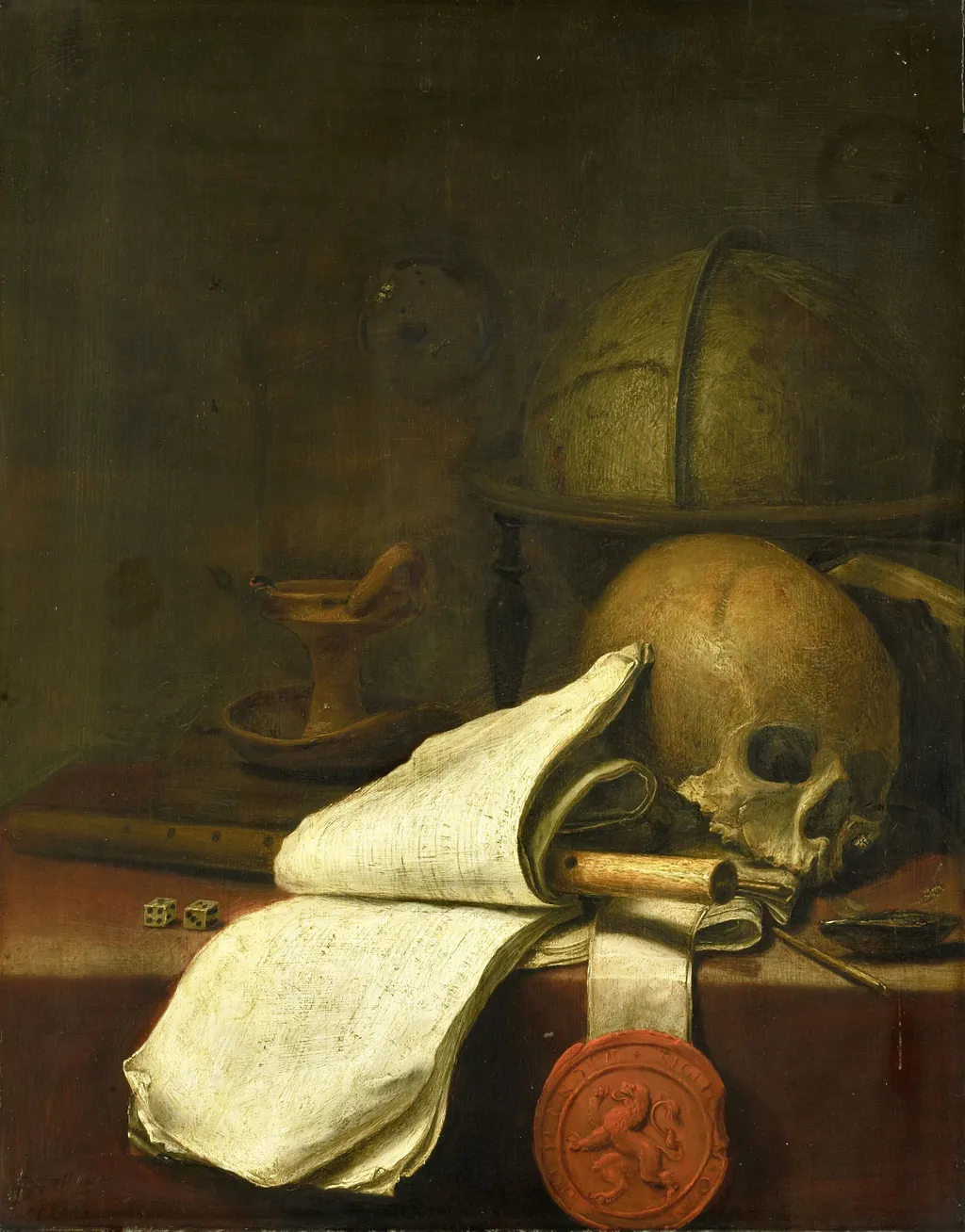
Vanitas still life is an oil painting by the Dutch Golden Age artist Pieter Symonsz Potter. It dates from 1646 and is held in the collection of the Rijksmuseum.
About this work
Subject & Meaning
Created in 1646, this vanitas still life by Pieter Symonsz Potter serves as a meditation on the transience of life and the futility of earthly pleasures.
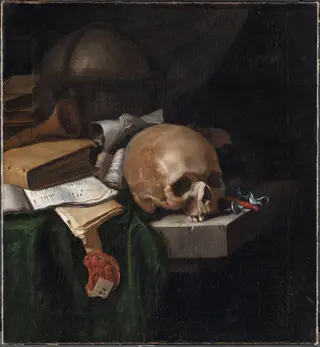
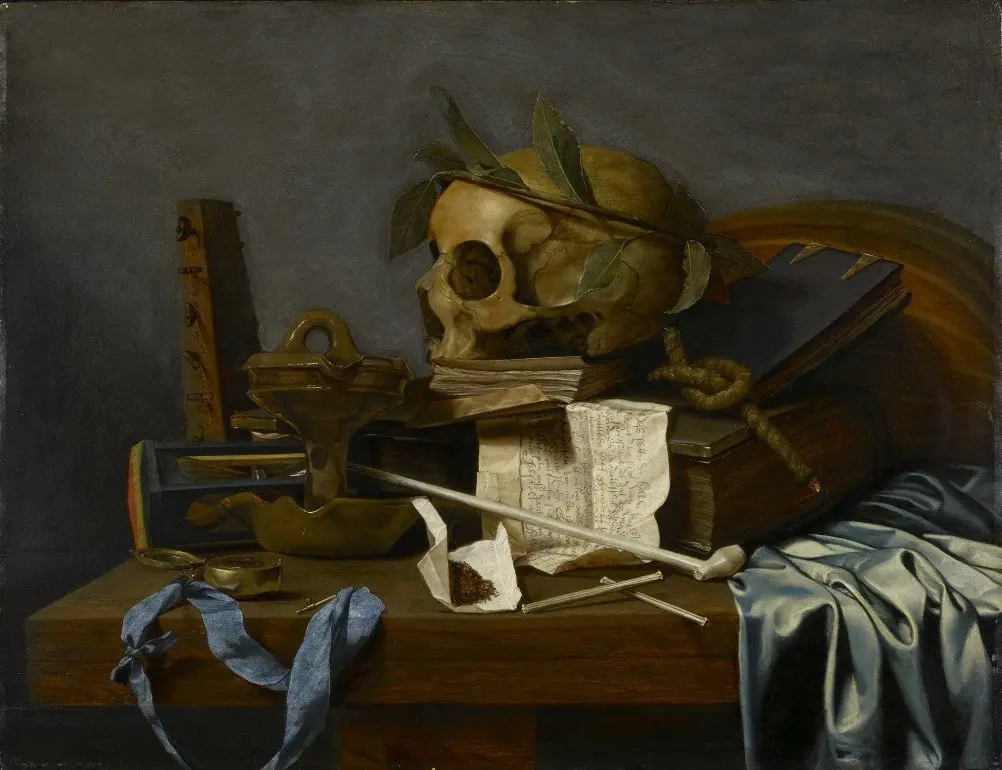
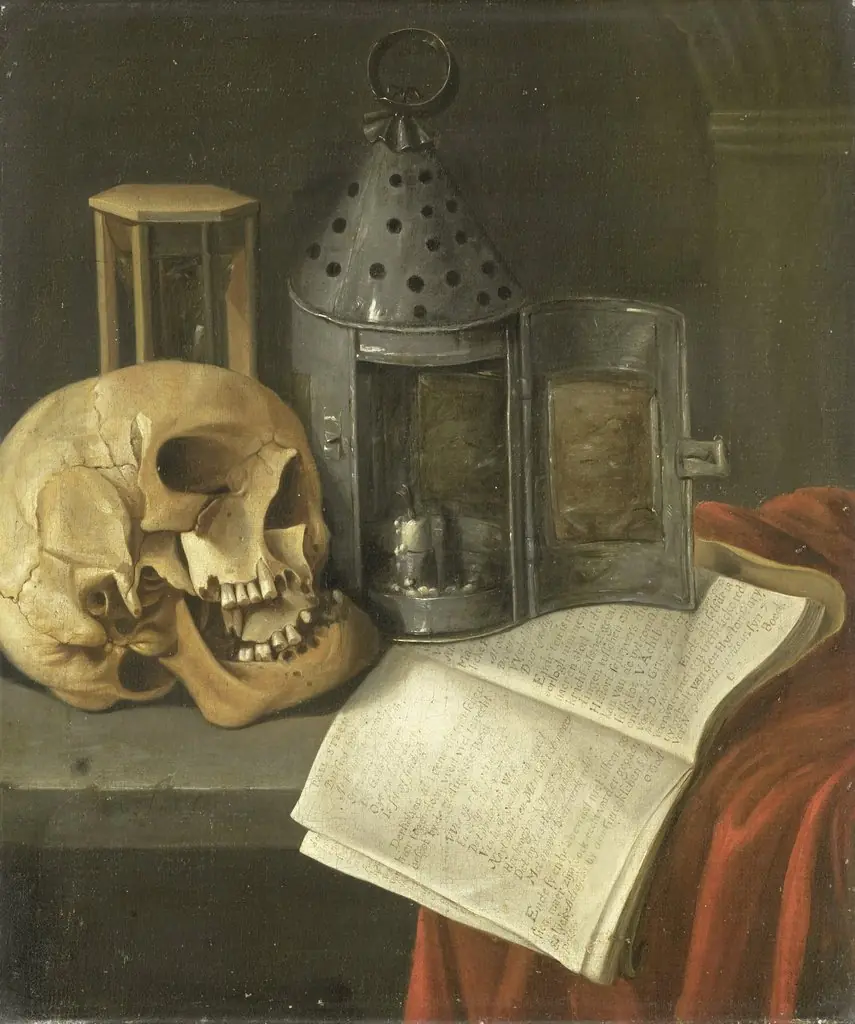
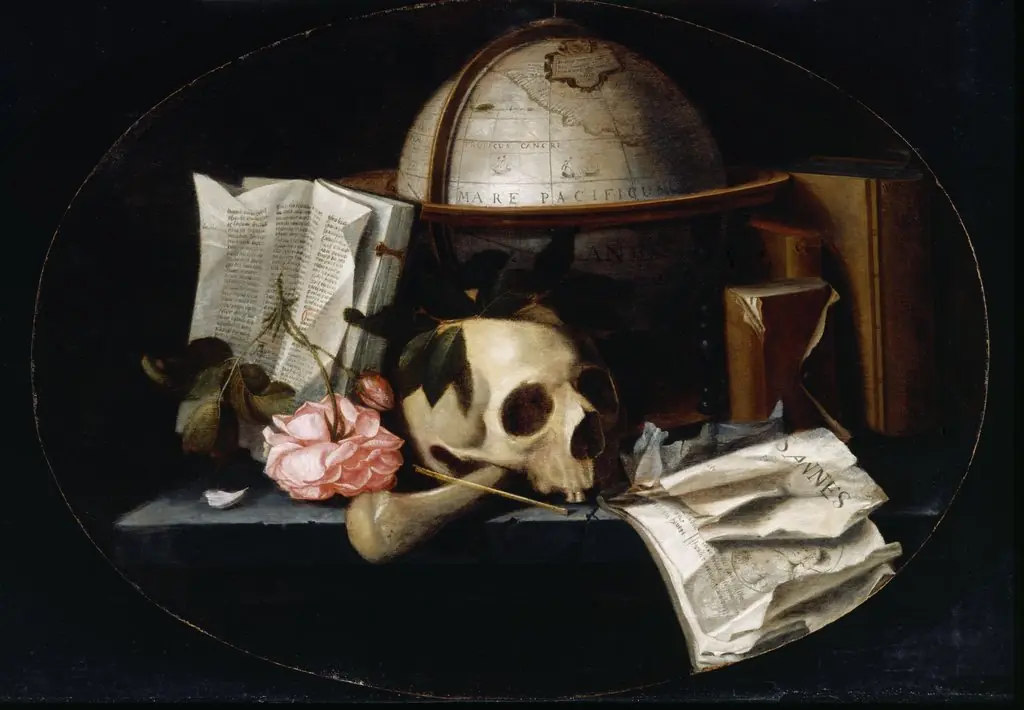
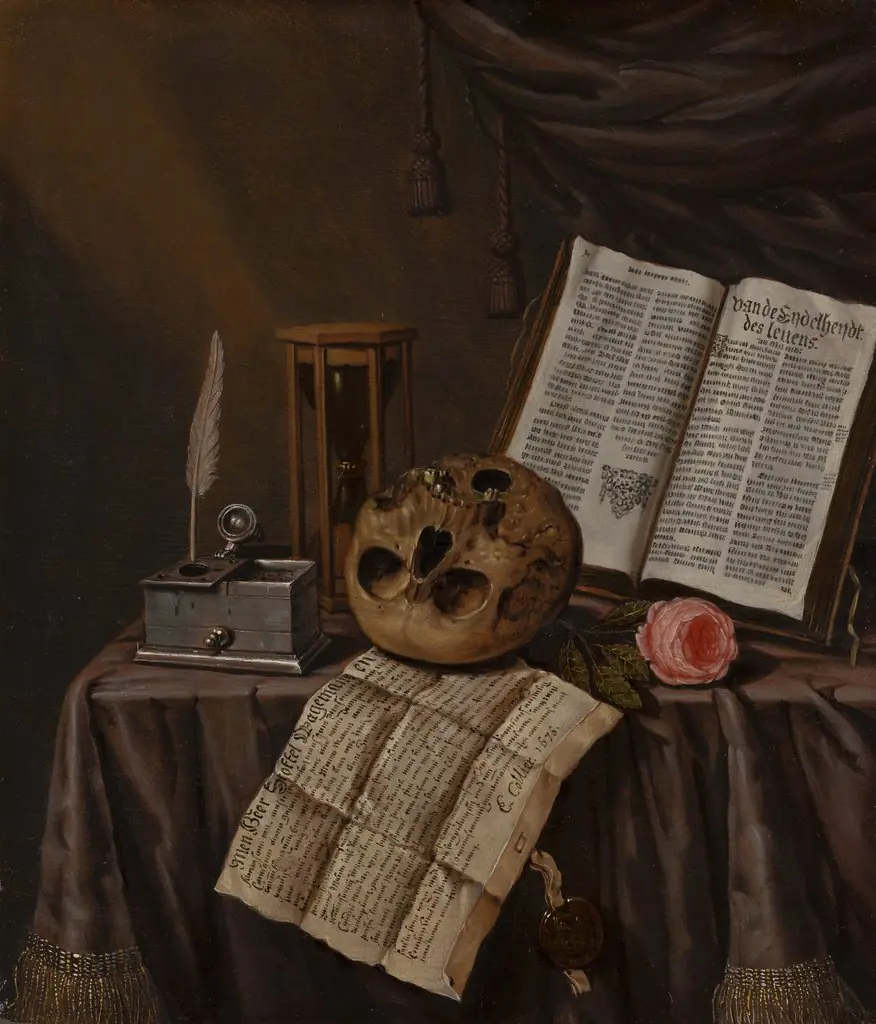
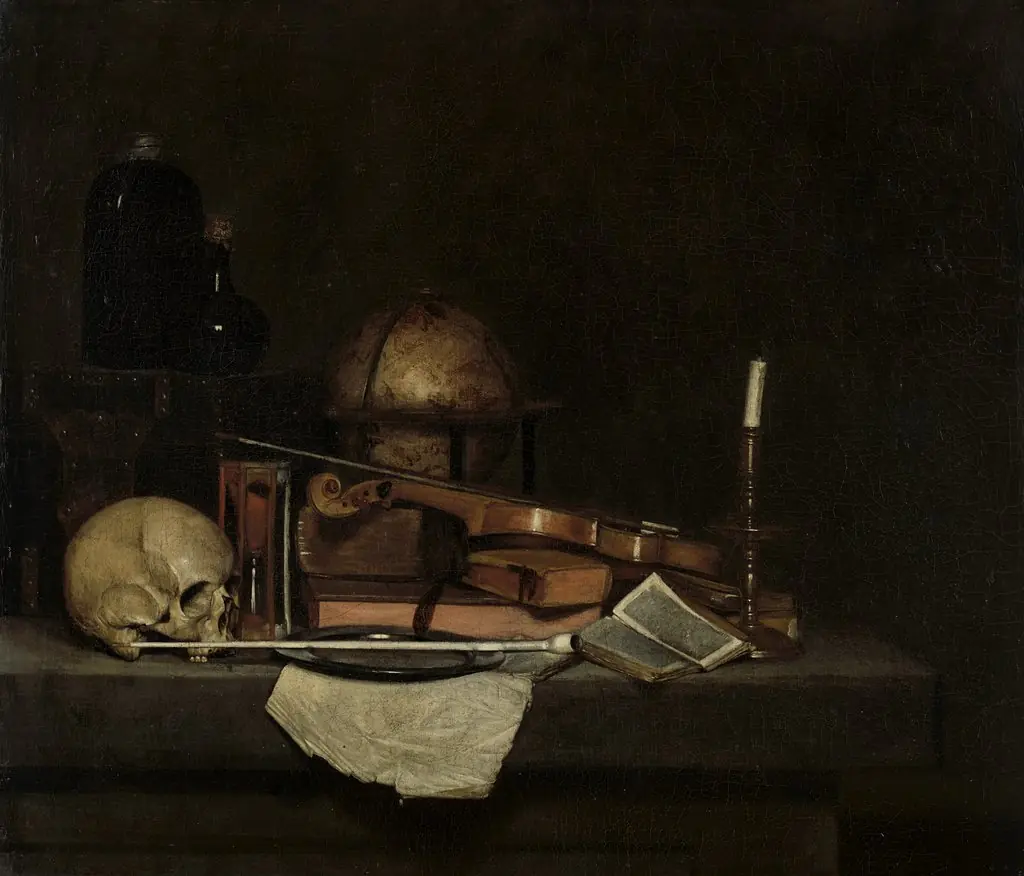
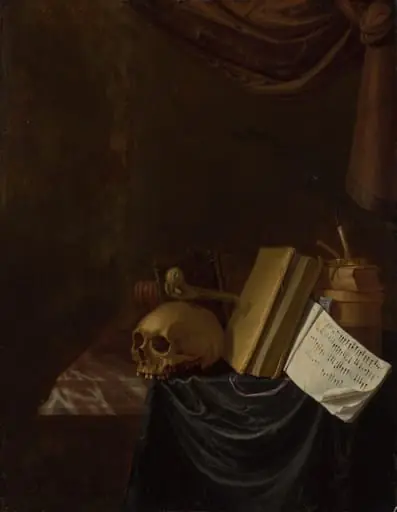
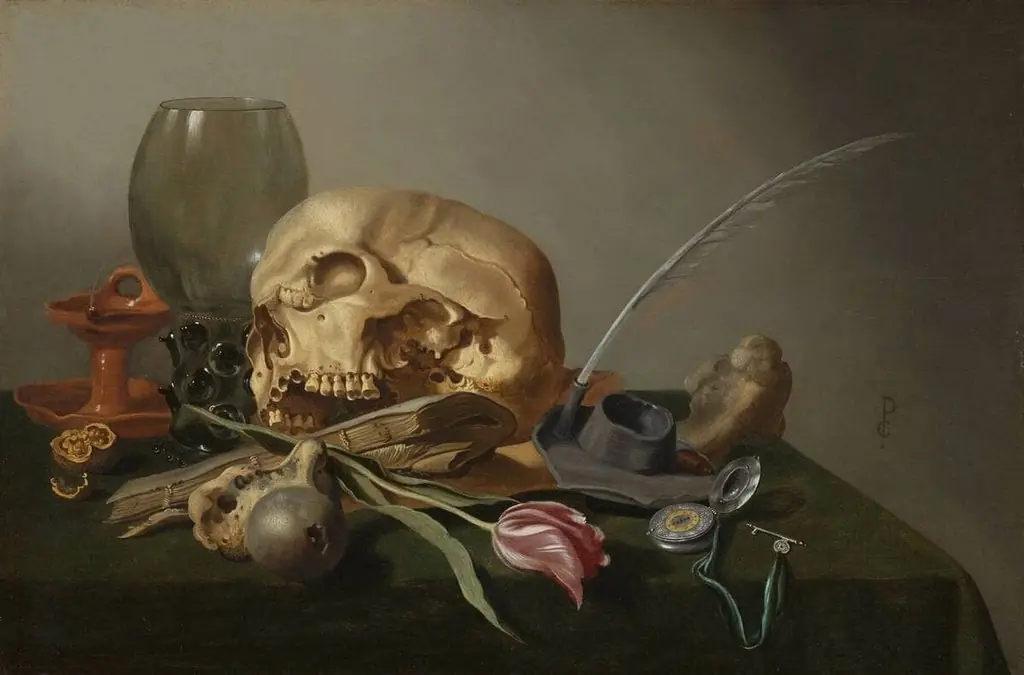
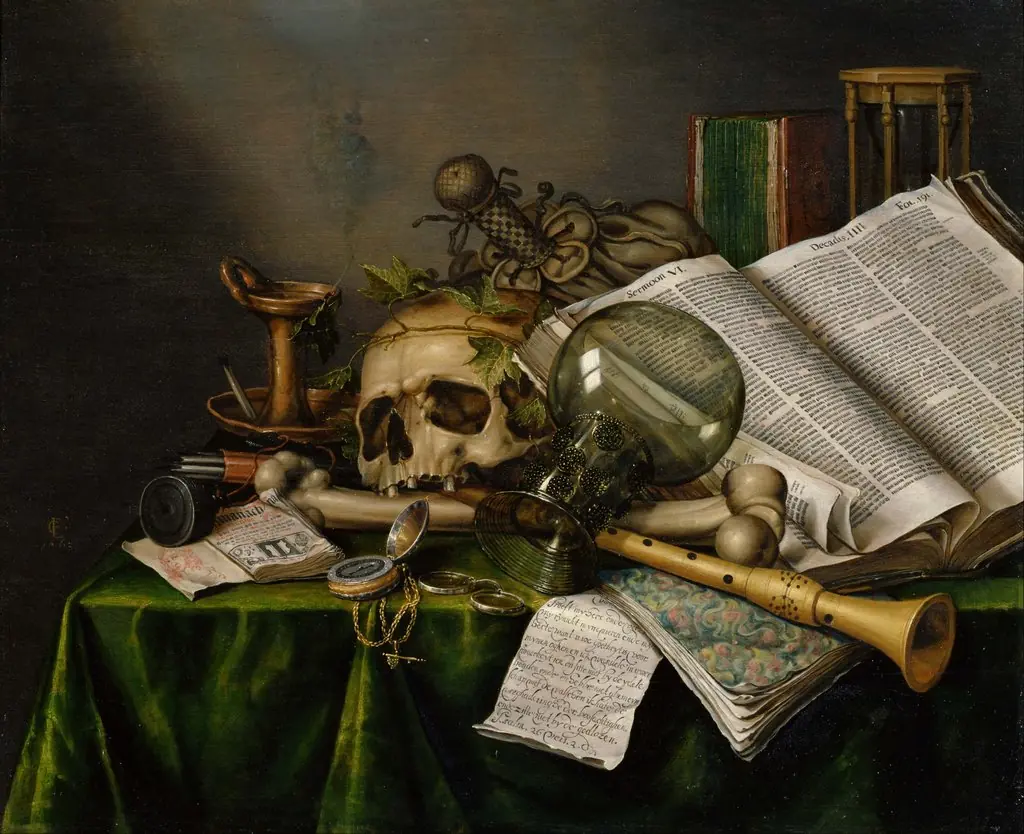
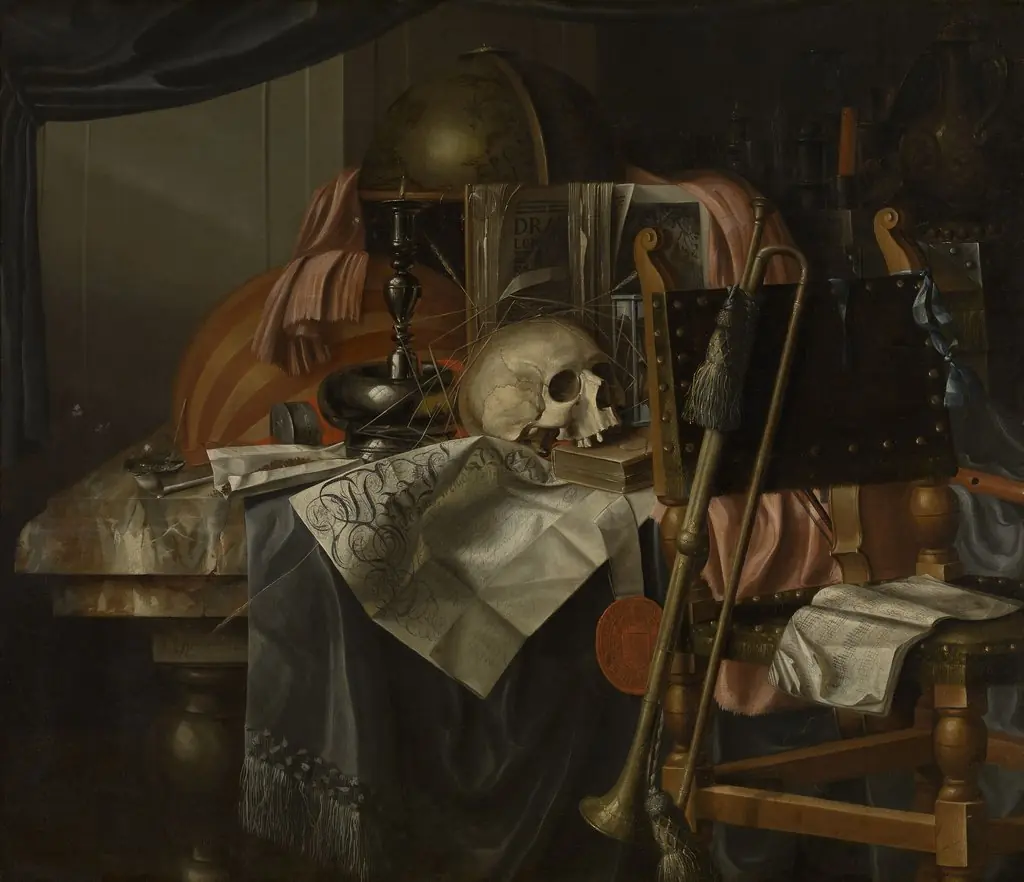
Created in 1646, this vanitas still life by Pieter Symonsz Potter serves as a meditation on the transience of life and the futility of earthly pleasures. The composition arranges specific symbolic objects on a table to convey this moral message. Central to the imagery is a human skull, a universal memento mori representing inevitable death.
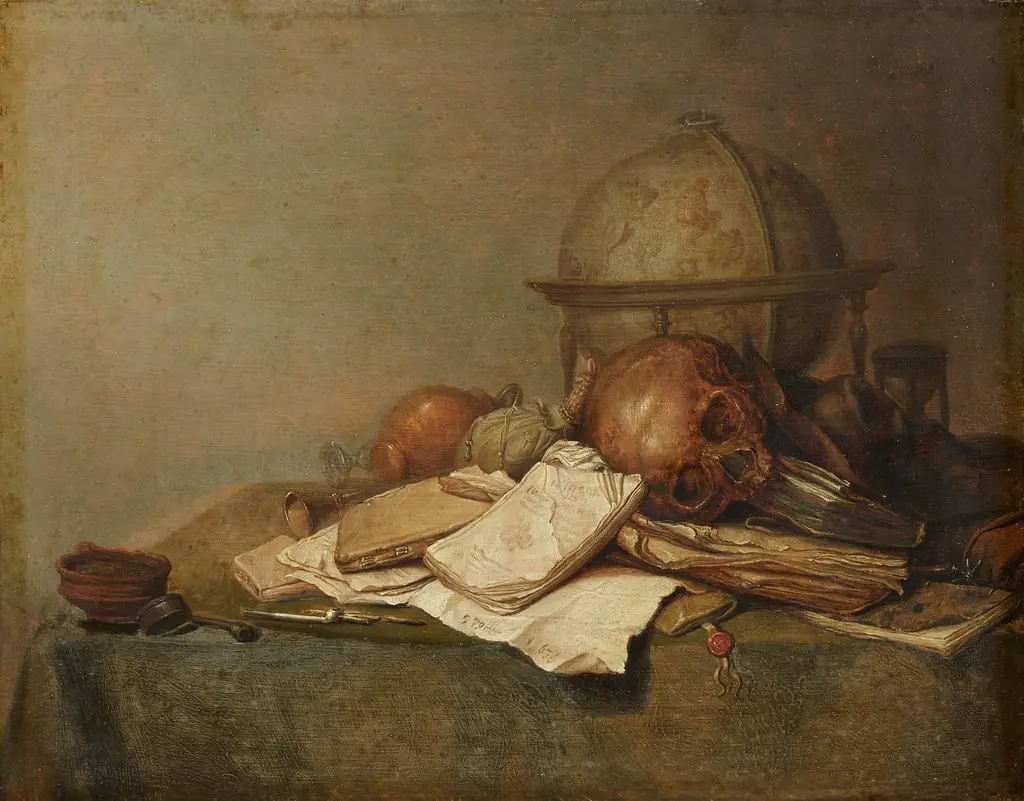
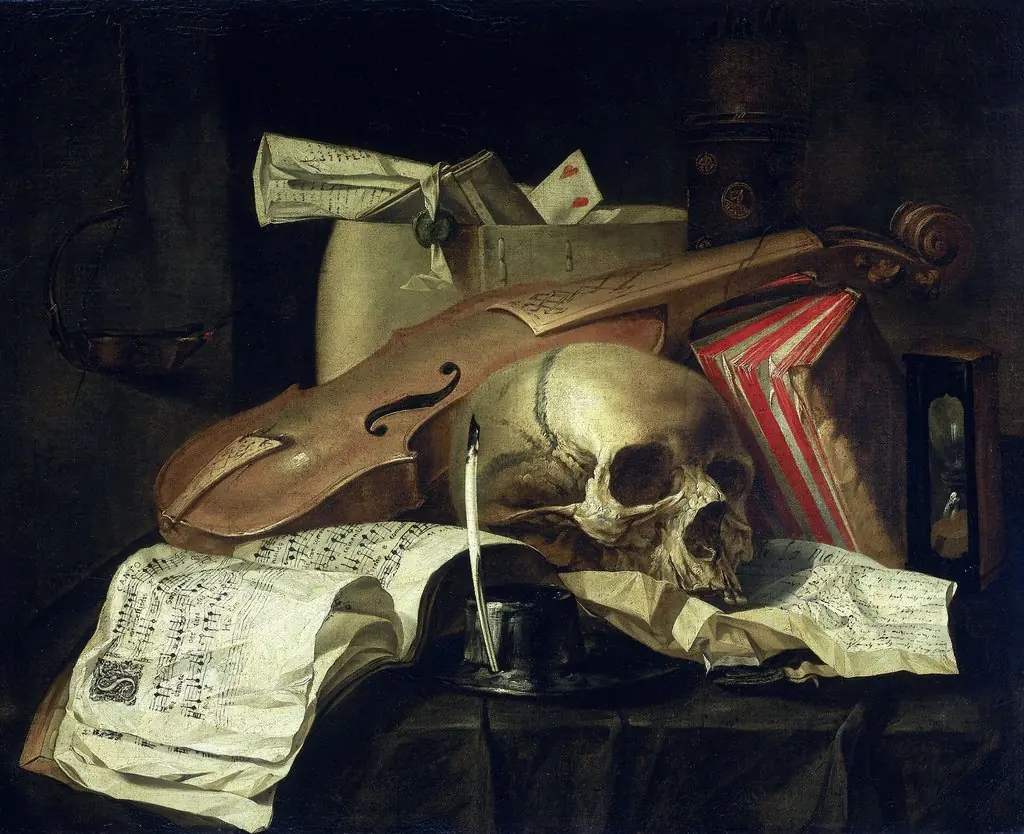
Surrounding it are items signifying the fleeting nature of human endeavors: a soap bubble and an extinguished oil lamp denote the brevity of life, while a globe and books suggest the limits of worldly knowledge and power. Additional elements, including a flute, sheet music, a document with a seal, and an oyster, further illustrate the temporary allure of music, art, and material wealth. Collectively, these motifs urge the viewer to reflect on spiritual values over temporal gains.
Technique & Style
Pieter Symonsz Potter’s Vanitas still life (1646) is executed in oil paint on a wooden panel, a common support for Dutch seventeenth‑century works. The painting presents a tightly arranged assortment of vanitas symbols, a human skull, oil lamp, globe, flute, sheet music, documents, seal, soap bubble, oyster, and book, rendered with precise detail and a restrained palette that emphasizes the textures of metal, glass, and organic matter. The composition balances vertical and horizontal elements, while the subtle lighting highlights the transient nature of the depicted objects, reinforcing the moral theme of mortality.
History & Provenance
The vanitas still life was created in 1646 by the Dutch painter Pieter Symonsz Potter. After its completion, the work entered the collection of Adriaan van der Hoop, whose name is recorded as the owner in the provenance. It subsequently became part of the holdings of the Rijksmuseum and the Amsterdam Museum, where it remains today. No information about a specific commission is available in the provided sources.
Overview
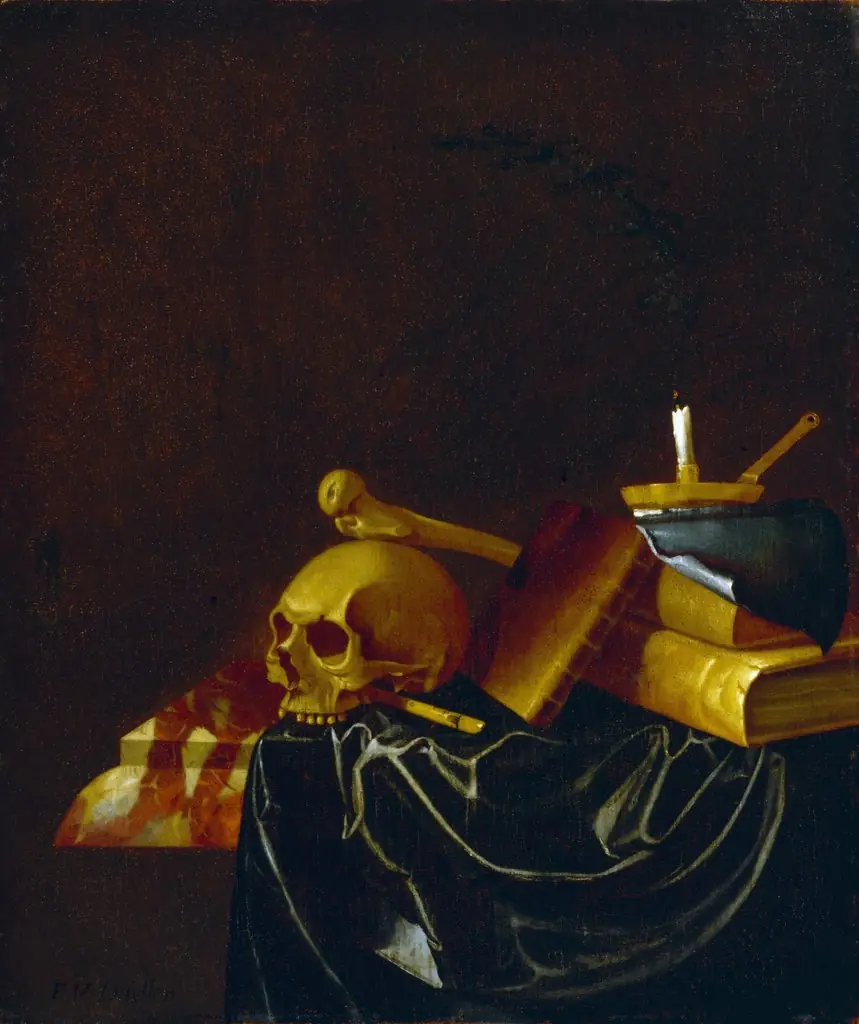
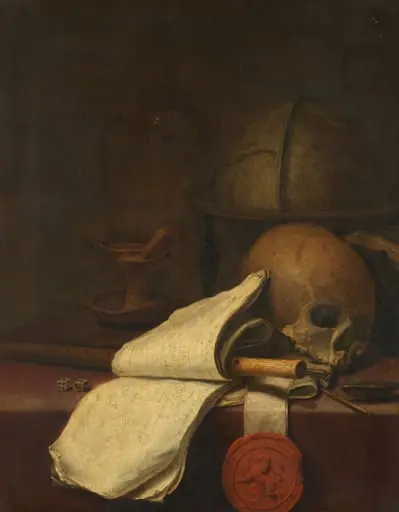
Painted in 1646 by the Dutch artist Pieter Symonsz Potter, this vanitas still life serves as a meditation on the transience of earthly life and the inevitability of death. The composition centers on a human skull resting on a dark wooden table, which holds a pipe and a red wax seal impressed with a lion, likely referencing the Dutch Republic. Surrounding the skull are objects symbolizing the fleeting nature of worldly pursuits: a pair of dice representing chance and gambling, a folded paper suggesting unfinished business or ephemeral knowledge, and a white cloth.
In the background, a greenish hat and a small cup on a saucer complete the arrangement. Potter employs a somber palette and dramatic chiaroscuro, using deep shadows to isolate the objects against a dark void, thereby intensifying the moral gravity of the scene. Created during the Dutch Golden Age, a period when vanitas paintings were popular among the merchant class, this work exemplifies the genre's function as a memento mori.
Potter, known for his detailed still lifes and genre scenes, utilizes precise brushwork to render the textures of bone, wax, and fabric, inviting the viewer to reflect on the vanity of material accumulation in the face of mortality.
Own this work as a print
Artist & collection