Artwork
Thomas Hoobs (Thomas Hobbes)
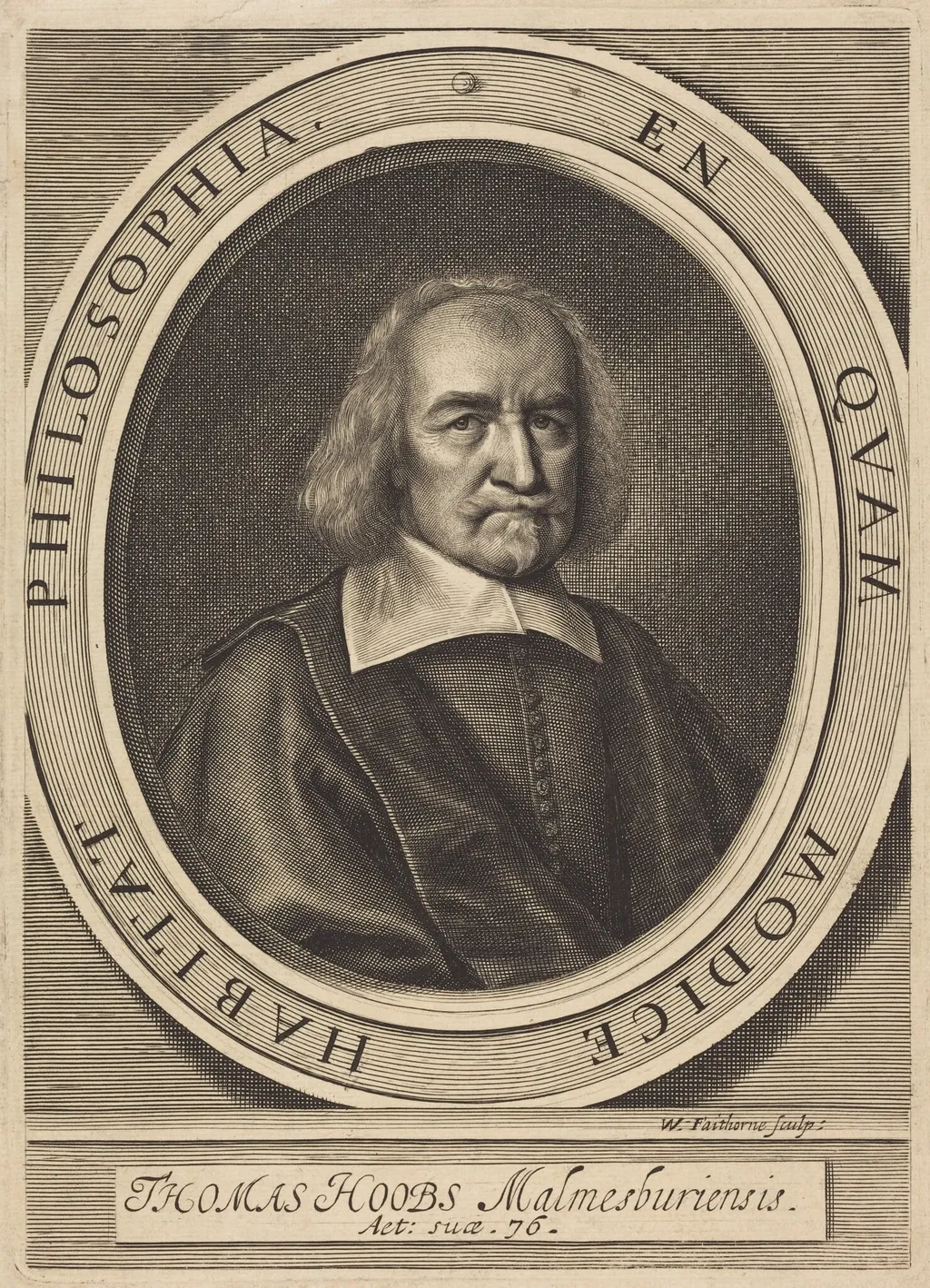
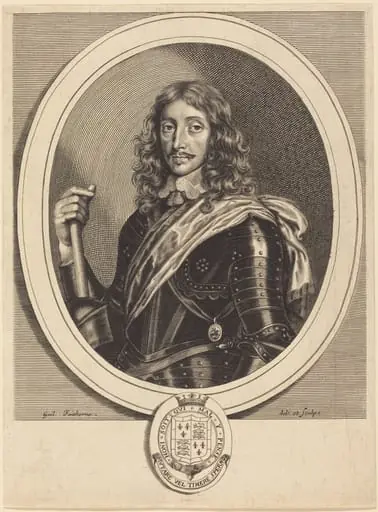
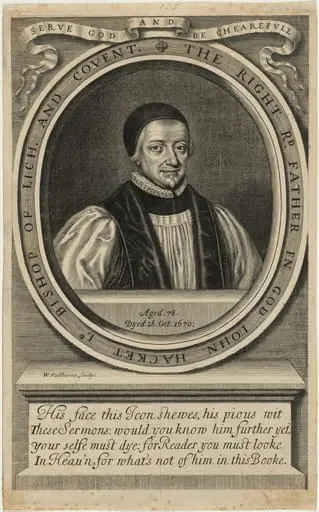
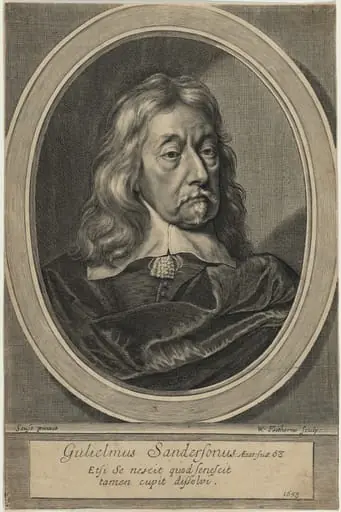
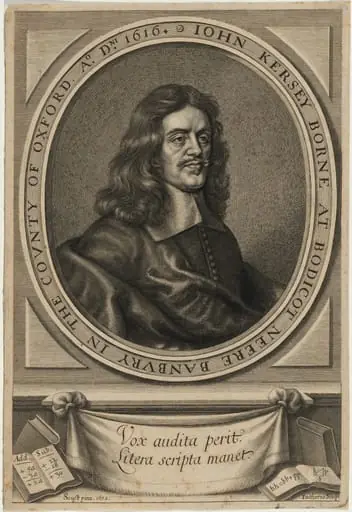
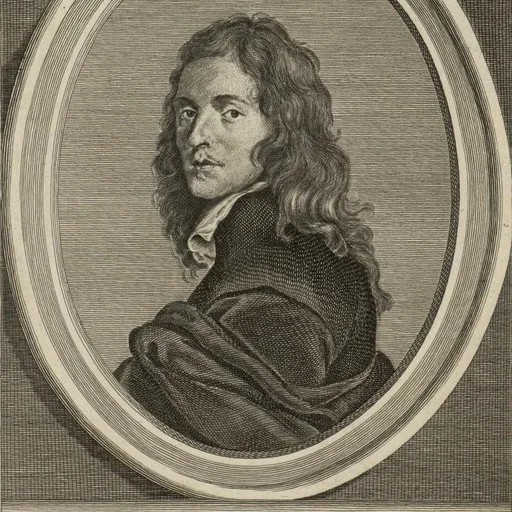
Thomas Hoobs (Thomas Hobbes) is an ink print by the Baroque artist William Faithorne. It dates from 1664 and is held in the collection of the National Gallery of Art.
- Inscription
- Inscribed:in image around frame: PHILOSOPHIA EN QVAM MODICE HABITAT; lower right in image: W. Faithorne sculp:; lower center in plate: THOMAS HOOBS Malmeskuriensis. / Aet: suae. 76
About this work
Overview
William Faithorne’s 1664 engraving presents a portrait of Thomas Hoobs, also known as Thomas Hobbes. Rendered on laid paper, the image captures the sitter in a dark jacket with a white collar, his hair falling to the shoulders and a full beard framing a solemn, wrinkled face. The figure gazes directly at the viewer against a deep, unlit background, emphasizing his presence.
Subject & Meaning
The portrait depicts Hoobs as a mature, contemplative individual, his serious expression and detailed facial lines suggesting a man of experience and intellect. The direct eye contact invites viewers to consider his personal character, while the austere attire and muted setting reflect the conventions of dignified portraiture in the mid‑seventeenth century.
Technique & Style
Faithorne employed fine cross‑hatching to model light and shadow, creating a textured surface that conveys the folds of the jacket and the subtle tones of skin. The engraving’s chiaroscuro effect, with a stark contrast between the illuminated figure and the dark background, aligns it with Baroque portrait conventions, emphasizing drama and three‑dimensionality.
History & Provenance
Created in 1664, the print is a product of Faithorne’s mature period, when he was a leading English engraver. The work has survived on laid paper, a common support for prints of the era, and is catalogued among his portrait series of notable contemporaries.
Own this work as a print
Artist & collection
Artist
William Faithorne (1616–1691) was a British artist, born in Greater London.