Artwork
Purification at the Orchid Pavilion

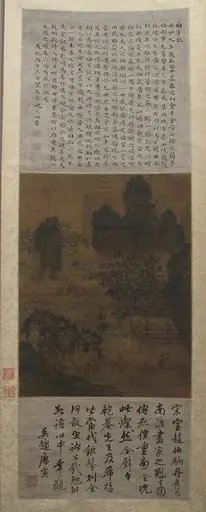
Purification at the Orchid Pavilion is an unspecified painting by the Baroque artist Fan Yi. It dates from 1671 and is held in the collection of the Cleveland Museum of Art.
- Accession no.
- 1977.47
- Credit line
- Gift of Mrs. Wai-kam Ho and the Womens Council of The Cleveland Museum of Art
About this work
This painting shows a famous gathering from 353 CE, where poets wrote verses and floated wine cups down the stream.
You see scholars in long robes sitting by a river, dipping brushes in ink while others chat under willow trees.
This painting shows a famous gathering from 353 CE, where poets wrote verses and floated wine cups down the stream. Fan Yi’s version glows with soft colors and fine brush lines, making the scene feel quiet and alive. The original event was so well-known that artists kept painting it for centuries.
To see how earlier painters handled the same moment, look up the subject china, Qing dynasty (1644-1911).
Overview
The work titled Purification at the Orchid Pavilion is a 17th‑century Chinese painting that revisits the celebrated literary assembly held in 353 CE at Lanting, Zhejiang. The scene captures scholars gathered beside a flowing stream, engaging in poetry and wine‑floating rituals, a subject that has recurred in Chinese art for centuries.
Subject & Meaning
The composition portrays a group of literati in flowing robes, some dipping brushes into ink, others conversing beneath drooping willows. The gathering reflects the Daoist‑inspired ideal of communal refinement, where poetry, calligraphy, and nature intertwine, embodying the cultural reverence for the historic Orchid Pavilion event.
Technique & Style
Fan Yi employs a refined brush technique characterized by slender, precise strokes that outline figures and foliage. A palette of muted, luminous hues softens the overall tone, lending the scene a tranquil atmosphere. The delicate rendering of water and willow leaves demonstrates the artist’s mastery of subtle tonal modulation.
History & Provenance
The motif originally derived from a now‑lost composition attributed to Li Gonglin of the Northern Song. In the early Qing period, artists of the Wu school revived the theme, and Fan Yi, brother of the noted painter Fan Qi, produced this particular version, which has been documented in several early catalogues of Nanjing collections.
Context
By the 1600s the Orchid Pavilion narrative had become a standard literary‑artistic reference, symbolizing the harmonious blend of scholarship and nature. Fan Yi’s rendition reflects the Wu school’s interest in reinterpreting classical subjects with a softer, more lyrical aesthetic, aligning with broader Qing‑era tastes for refined elegance.

Artist & collection
Artist
Fan Tat (范逸) also known as Phạm Dat or Fan Yi was the King of Champa, then known as Lin-yi, from 284 to 336.