Artwork
明/清 佚名(舊傳趙伯駒) 蘭亭圖 軸|Orchid Pavilion or Lanting
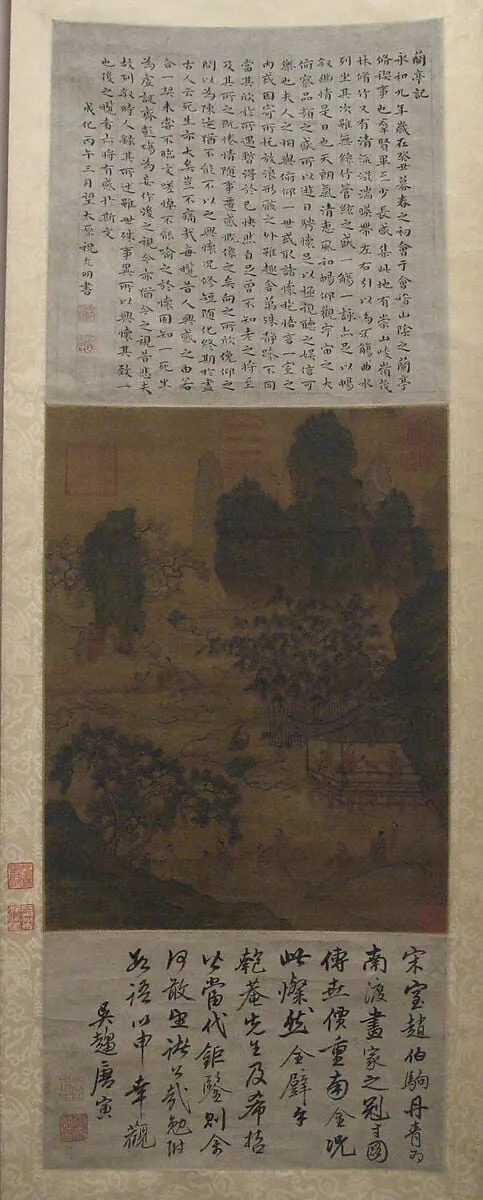
明/清 佚名(舊傳趙伯駒) 蘭亭圖 軸|Orchid Pavilion or Lanting is an ink painting by the Song dynasty landscape artist After Zhao Boju. It dates from 1639 and is held in the collection of the Metropolitan Museum of Art. This hanging scroll, titled Orchid Pavilion (Lanting), is an ink and color on silk painting from the Ming or Qing dynasty, dated 1639.
- Accession no.
- 13.220.106
- Credit line
- John Stewart Kennedy Fund, 1913
About this work
Subject & Meaning
The piece functions as a landscape genre work that evokes the cultural significance of the Orchid Pavilion through its depiction of the pavilion itself.
The work depicts a pavilion, identifying the scene as the famous Orchid Pavilion gathering. As a landscape painting created in 1639, the composition centers on this architectural structure within a natural setting. The subject references the historical literary event associated with the site, though the specific iconography of the figures or calligraphy is not detailed in the available records.
The painting serves as a visual representation of this celebrated location, rendered in ink and color on silk. While traditionally attributed to the Song dynasty artist Zhao Boju, current scholarship identifies the creator as an anonymous painter from the Ming or Qing period. The piece functions as a landscape genre work that evokes the cultural significance of the Orchid Pavilion through its depiction of the pavilion itself.
Technique & Style
Executed in 1639, this work is a hanging scroll created with ink and color pigments applied to a silk support. The painting functions as a landscape composition, visually centered on the depiction of a pavilion. While historically attributed to Zhao Boju, the piece is currently recognized as the work of an anonymous artist from the Ming or Qing dynasty.
The use of colored ink on silk represents the traditional medium for such hanging scrolls produced in China during this period. The formal classification remains within the genre of landscape painting, utilizing the vertical format typical of scrolls intended for display.
History & Provenance
The work, a hanging scroll in ink and color on silk depicting a pavilion, is attributed to an anonymous painter working after Zhao Boju and dated to 1639. It was produced in China, reflecting the stylistic tradition of the Ming‑Qing transition. Following its creation, the scroll entered the collection of the Metropolitan Museum of Art, where it has been catalogued as part of the museum’s landscape painting holdings.
The museum’s records indicate the piece was acquired as part of the institution’s early acquisitions of Chinese art, and it remains on view in the Asian art galleries. The dating and attribution are documented in both the object’s internal catalogue entry and its Wikidata entry.
Overview
This hanging scroll, titled Orchid Pavilion (Lanting), is an ink and color on silk painting from the Ming or Qing dynasty, dated 1639. While formerly attributed to Zhao Boju, the artist remains anonymous. The work depicts a serene landscape featuring a pavilion nestled by a river, where scholars are gathered, engaging in conversation and writing.
Artist & collection



 Untitled
 Quiet Life in a Wooded Glen
 Visiting a friend in the mountains
 宋人寒林樓觀 軸
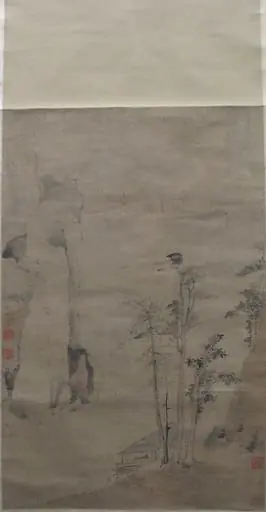 清 佚名 舊傳陸治 秋林圖 軸|An Autumnal Grove
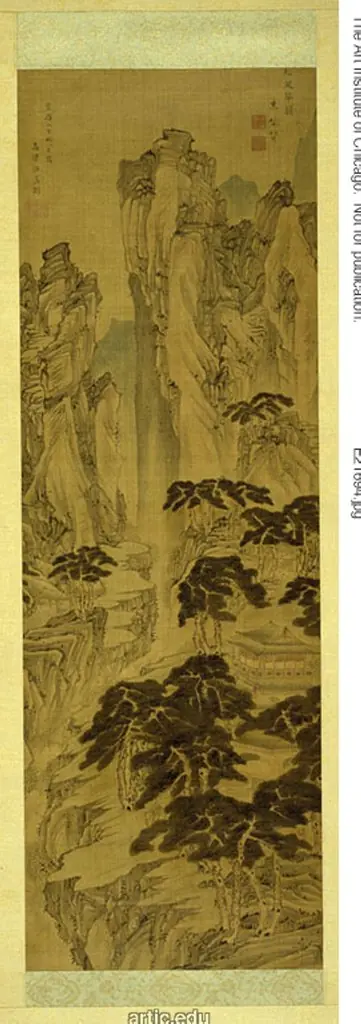 Pine-Scented Wind, the Harmony of a Lute
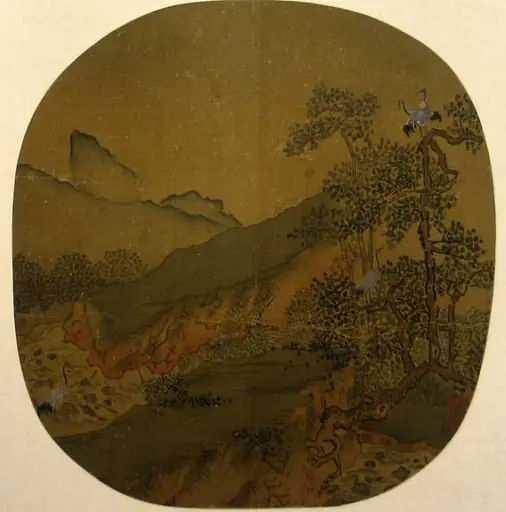 Untitled
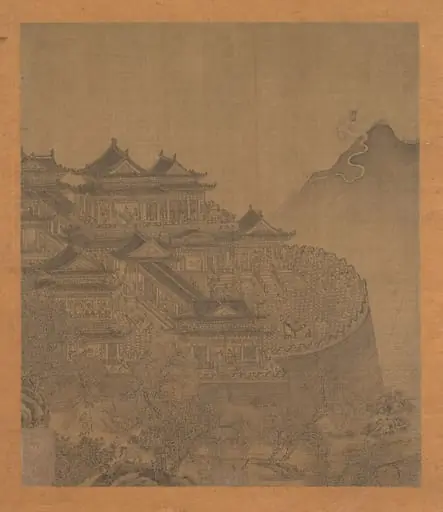 元 佚名 倣夏永 呂洞賓過岳陽樓 冊頁|明 佚名 呂洞賓過岳陽樓圖 冊頁|The Immortal Lü Dongbin Appearing over the Yueyang Pavilion
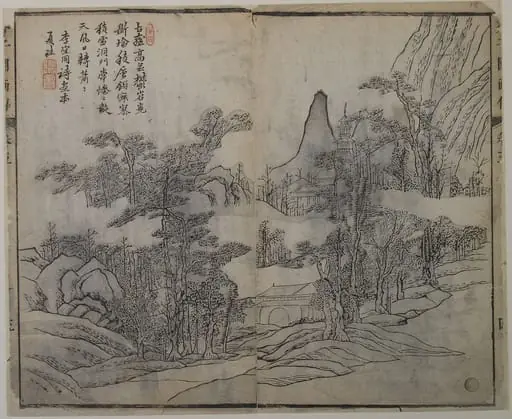 清 王槩 設計,李漁出版 芥子園畫傳 版本|Landscape after Xia Gui (active ca. 1195–1230), from the Mustard Seed Garden Manual of Painting
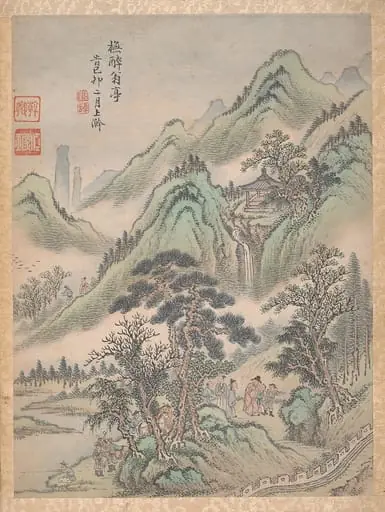 清 陸漢 山水八開 冊|Eight landscapes