Artwork
Still Life with Mustard Pot
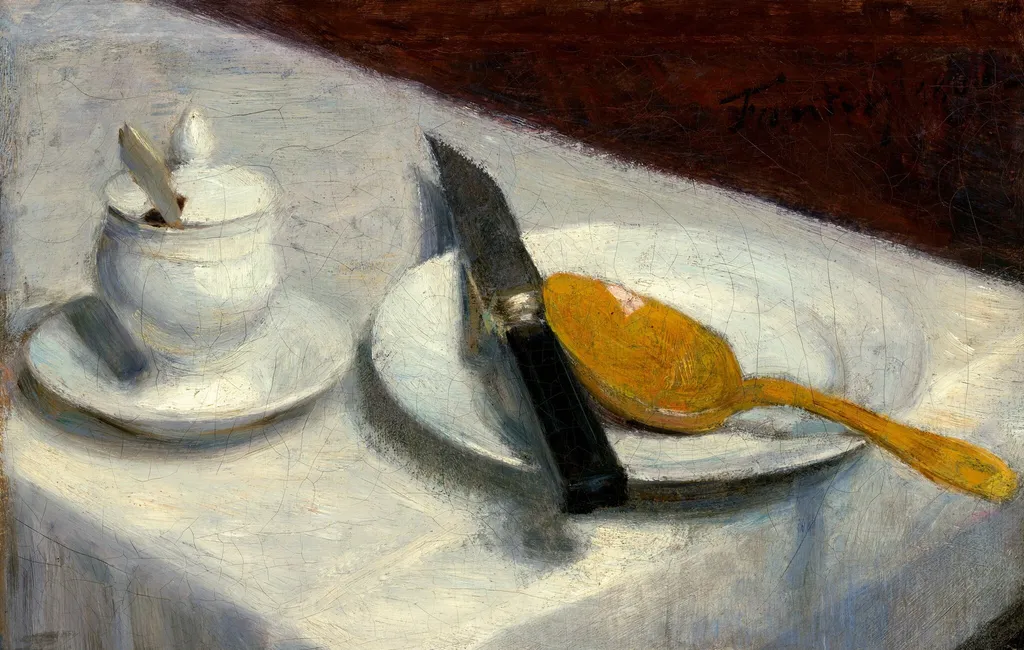
Still Life with Mustard Pot is an oil painting by the Impressionist artist Henri Fantin-Latour. It dates from 1860 and is held in the collection of the National Gallery of Art.
- Inscription
- Inscribed:lower left: HFL
About this work
Subject & Meaning
The mustard pot serves as the organizing motif, anchoring a composition of everyday objects that exemplifies the artist's refined approach to the genre.
The painting depicts a tabletop still life arrangement centered on a mustard pot, rendered in the realist tradition for which Henri Fantin-Latour was celebrated. The mustard pot serves as the organizing motif, anchoring a composition of everyday objects that exemplifies the artist's refined approach to the genre. The work represents the mid-19th-century French still life tradition, elevating humble domestic items through careful attention to texture, light, and formal arrangement.
Technique & Style
Executed in 1860, this still life is an oil painting on canvas. The work measures approximately 26 by 40 centimeters. As a representative example of the genre, the composition focuses on the arrangement of everyday objects, specifically highlighting a mustard pot as the central subject.
The application of oil paint on a woven canvas support reflects the standard materials and handling techniques employed by the artist during this period of his career.
History & Provenance
The painting was completed in 1860, as recorded in its creation date. It was owned by Léonce Bénédite and appeared in the 1906 memorial exhibition of Fantin-Latour's work, the Exposition des oeuvres de Fantin-Latour held at the École nationale des beaux-arts in Paris, where it was catalogued as no. 64. It was subsequently acquired by Paul Mellon, who bequeathed it to the National Gallery of Art in Washington, D.C., in 1999, with a life interest granted to his wife, Rachel Lambert Mellon. The work remains in the museum's collection today.
Legacy
Still Life with Mustard Pot, painted by Henri Fantin‑Latour in 1860, exemplifies the mature French still‑life tradition. After passing through the collection of Léonce Bénédite, who exhibited it at the 1906 École nationale des Beaux‑arts show, the work entered the National Gallery of Art, Washington, D.C., via the 1999 bequest of Paul Mellon. Its presence in a leading public museum and repeated scholarly attention have contributed to a sustained reputation as a representative example of 19th‑century French decorative painting, influencing later interpretations of the genre.
Overview
Henri Fantin-Latour's Still Life with Mustard Pot, painted in 1860, is an oil on canvas work that exemplifies the Realist approach to art. This painting showcases the artist's dedication to depicting common subjects with meticulous detail. Fantin-Latour, a French painter, was recognized for his still lifes and his group portraits of contemporary Parisian cultural figures, and this piece reflects his early engagement with the precise observation characteristic of the period.
Context
Born in 1836, Henri Fantin-Latour was a French artist who became known for his still life compositions and his portraits of prominent artists and writers in Paris. This 1860 work aligns with the burgeoning Realist movement, which championed the depiction of unidealized subjects from daily life. While later associated with Impressionism through his connections, this early still life firmly establishes his roots in the precise observational methods of Realism.
Own this work as a print
Artist & collection

Artist
Ignace Henri Jean Theodore Fantin-Latour (French pronunciation:; 14 January 1836 – 25 August 1904) was a French painter and lithographer best known for his flower paintings and group portraits of Parisian artists and writers.


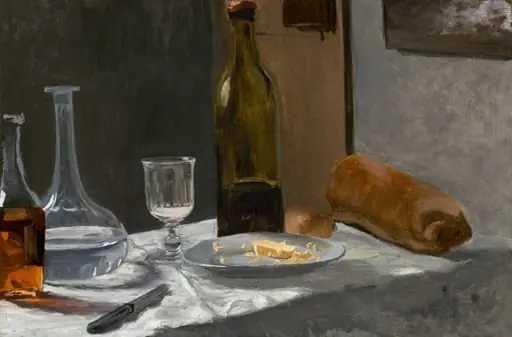 Still Life with Bottle, Carafe, Bread, and Wine
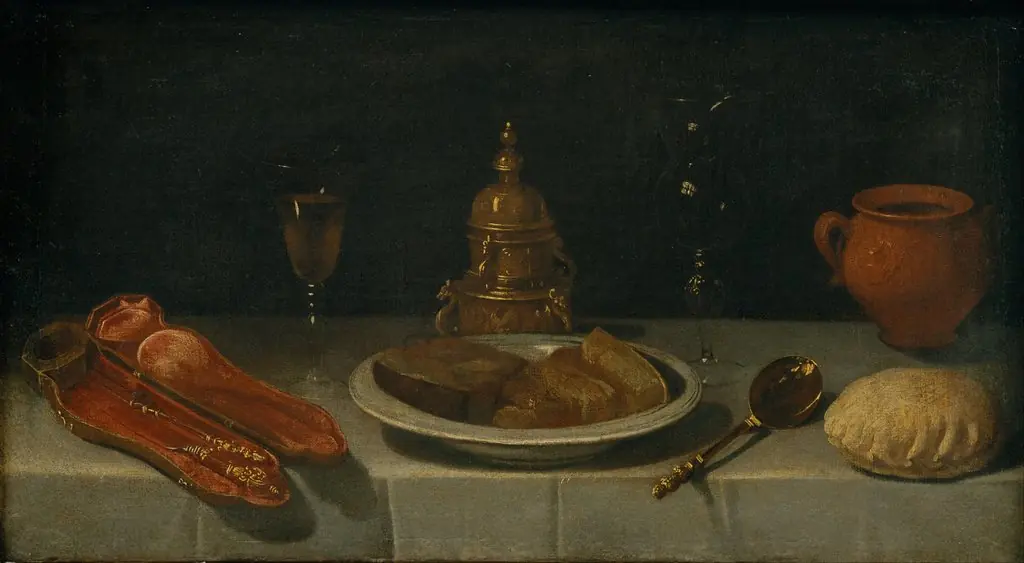 Still Life and Laid Table
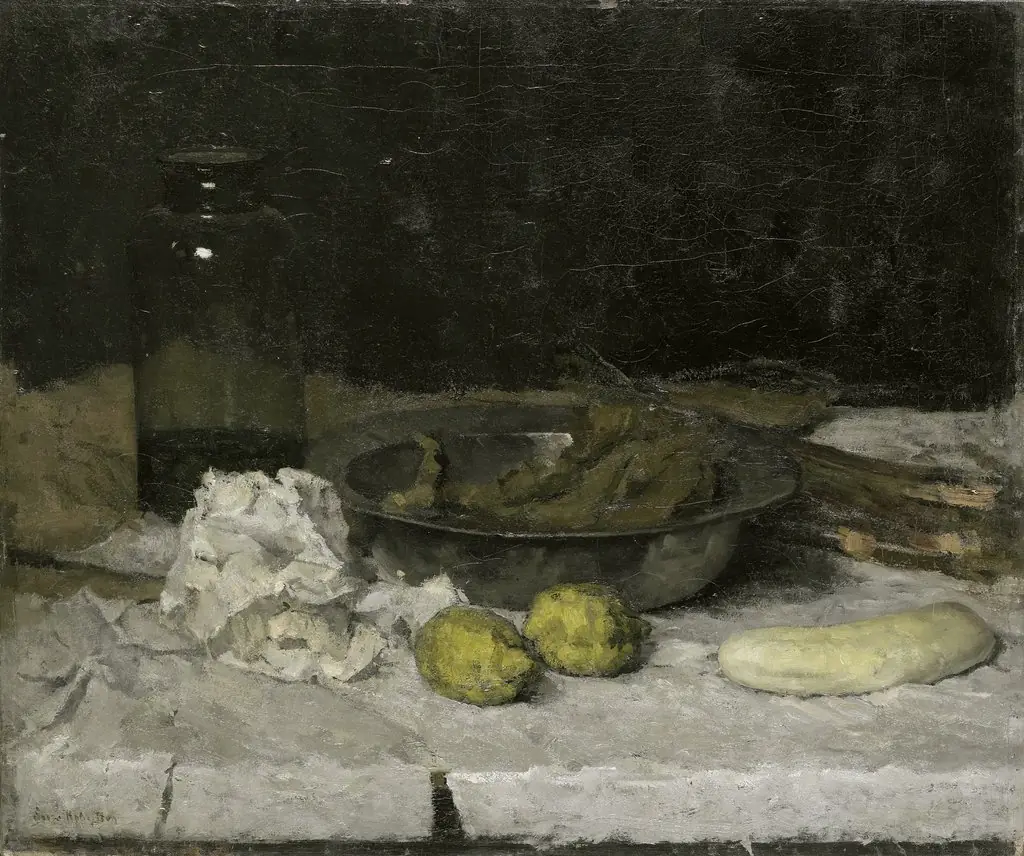 Still life with a a bottle and tin plate
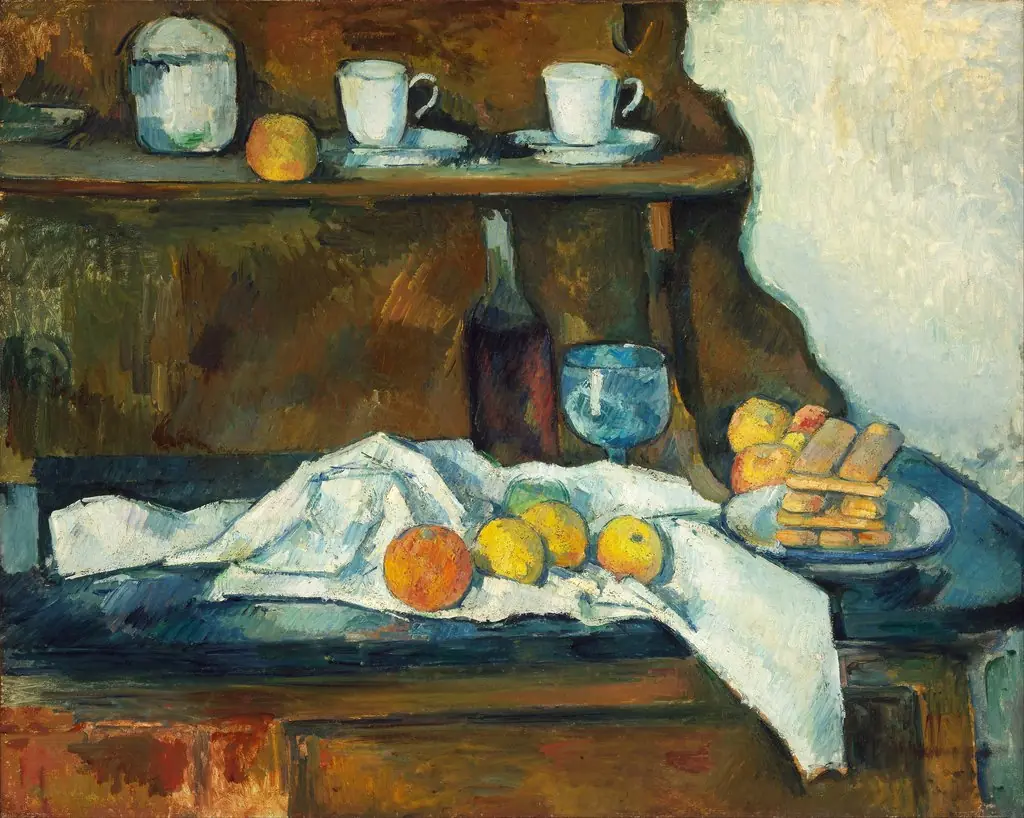 The Buffet
 Natură moartă cu pepene
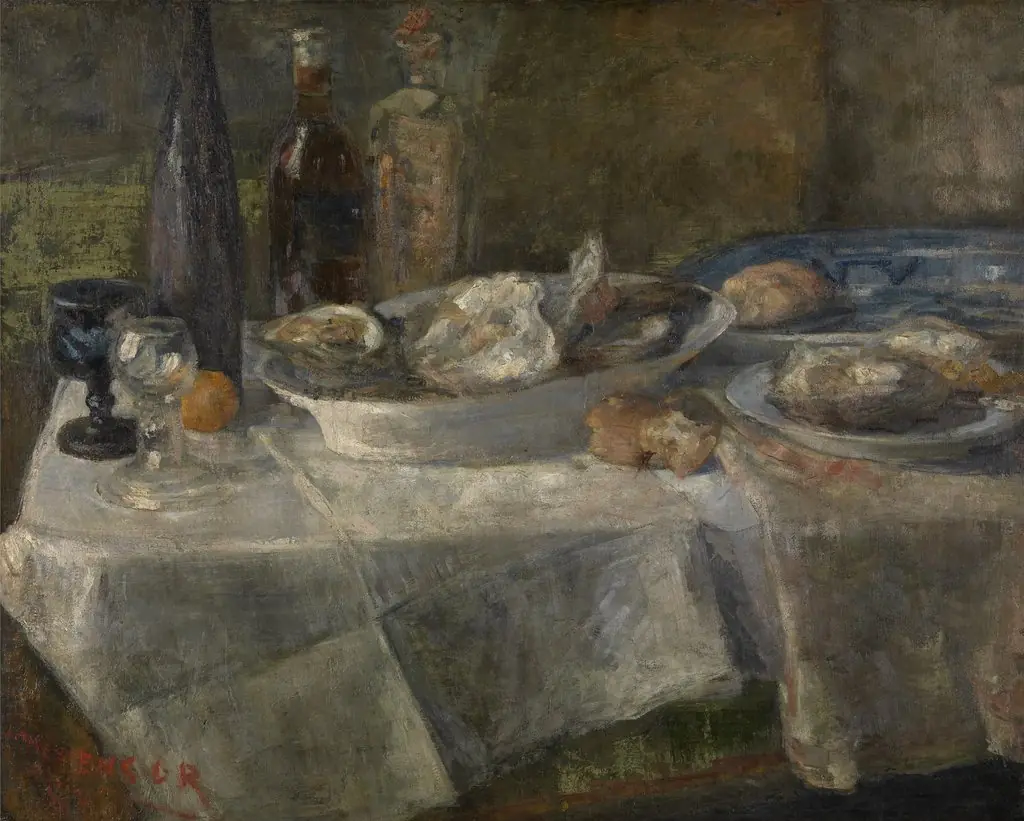 Still Life with Oysters
 Natură statică
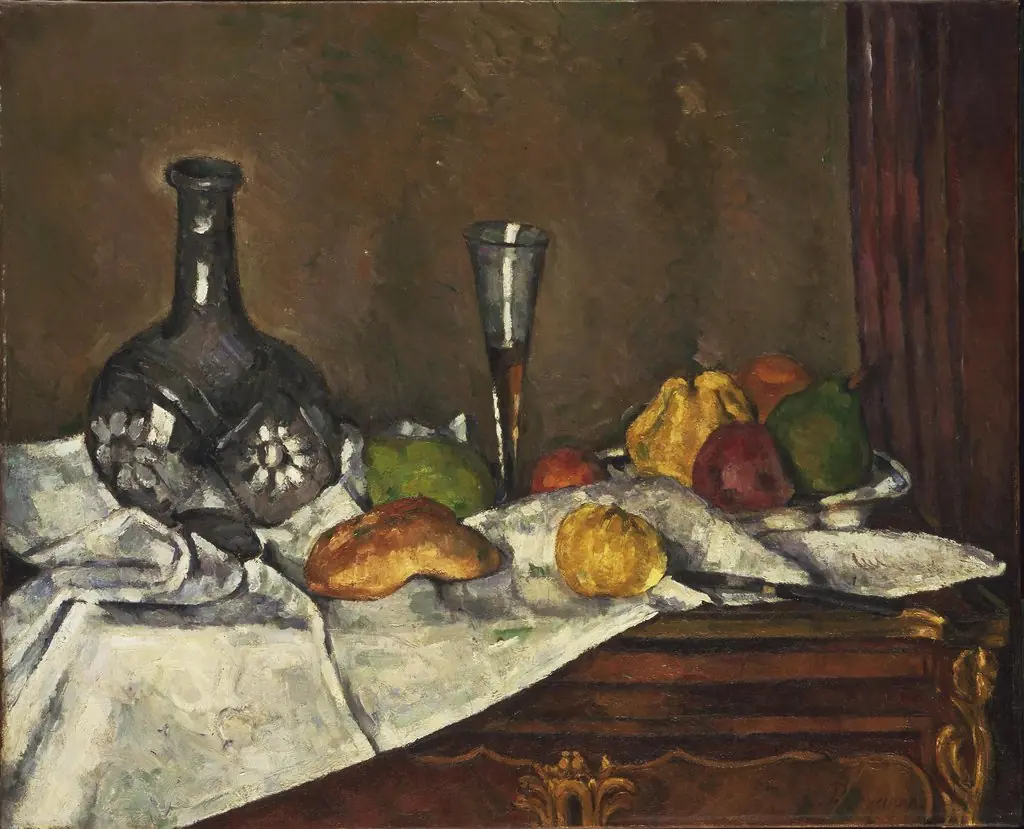 Still Life with a Dessert
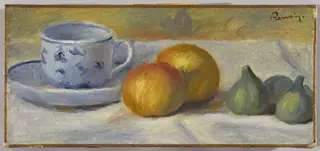 Still Life with Blue Cup
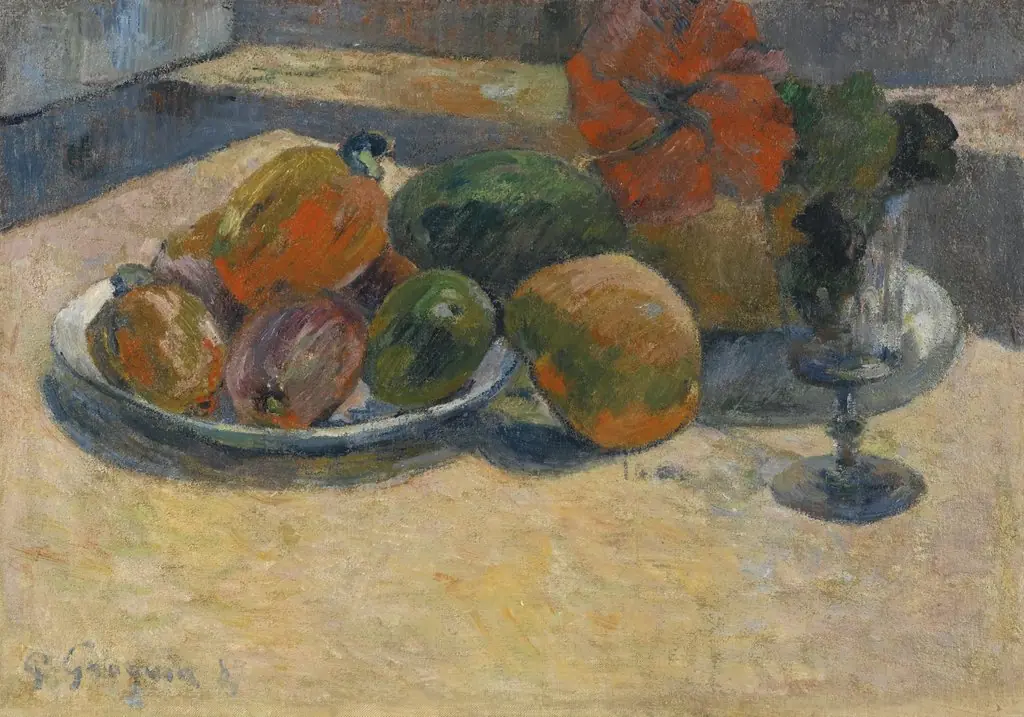 Still Life with Mangoes and a Hibiscus Flower
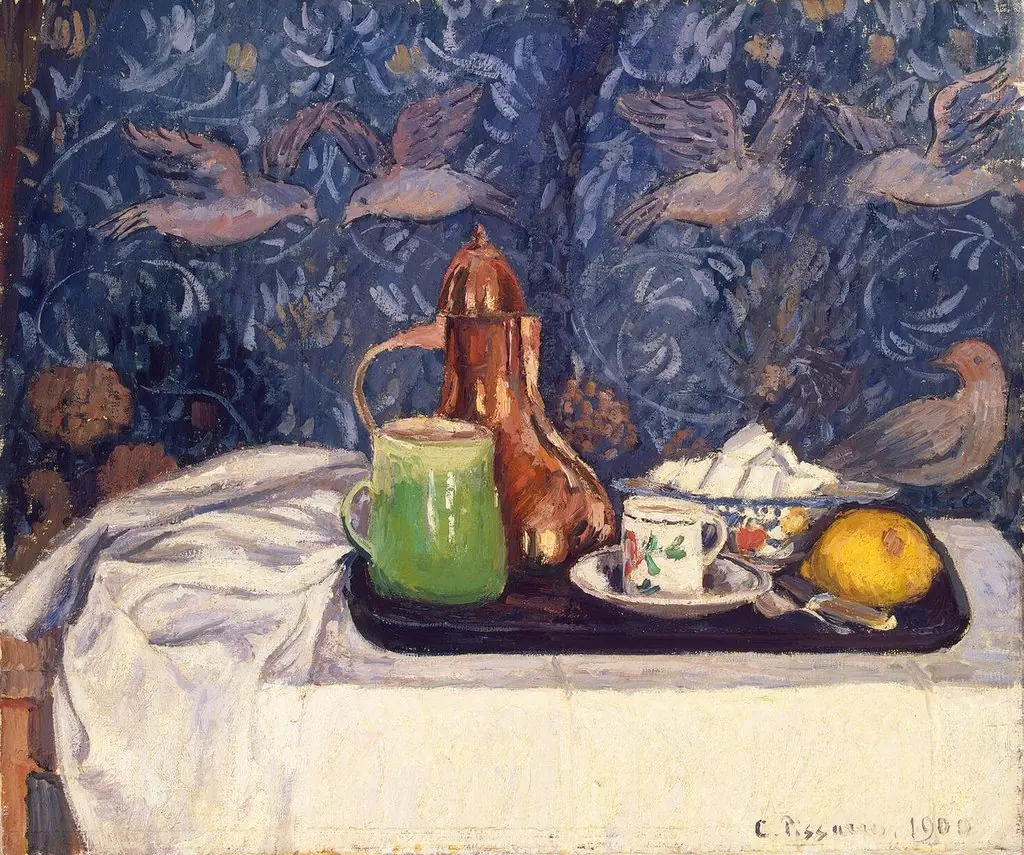 Still Life with a Coffeepot
- Breakfast