Artwork
The Pietà
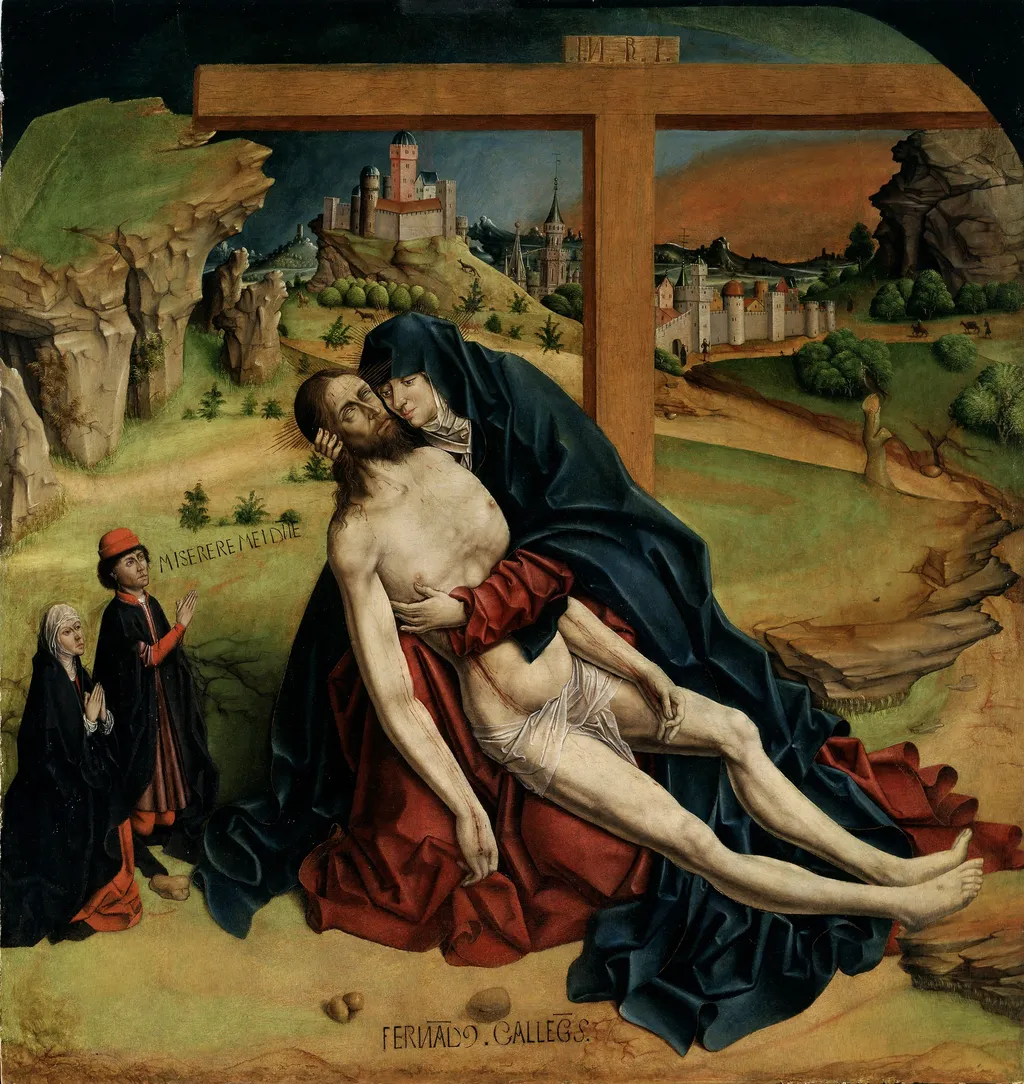
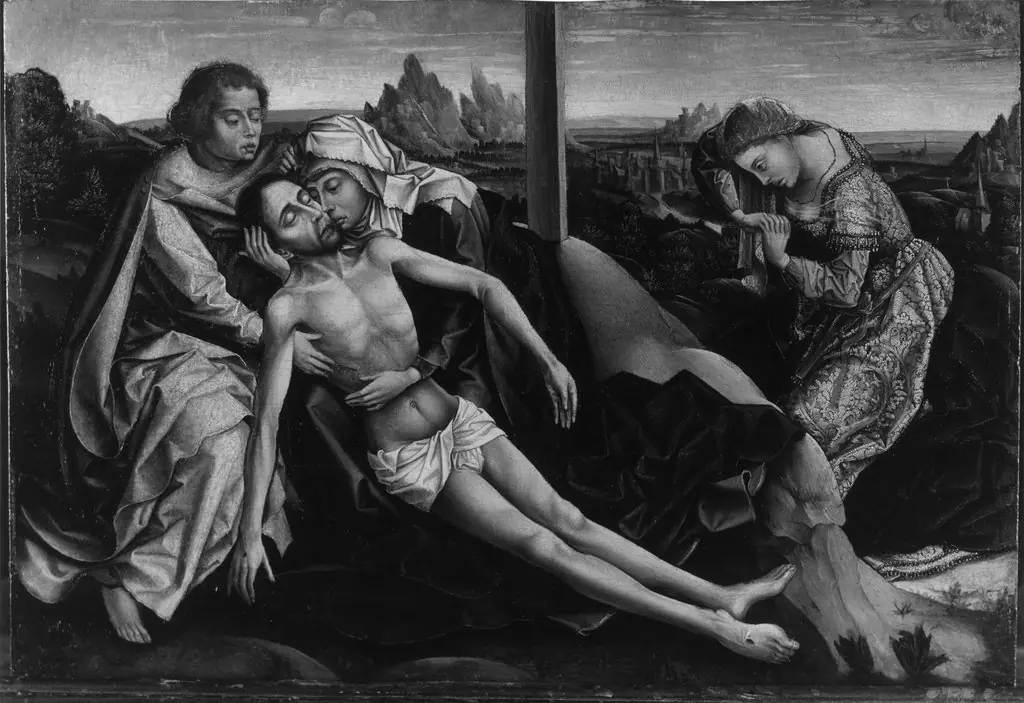
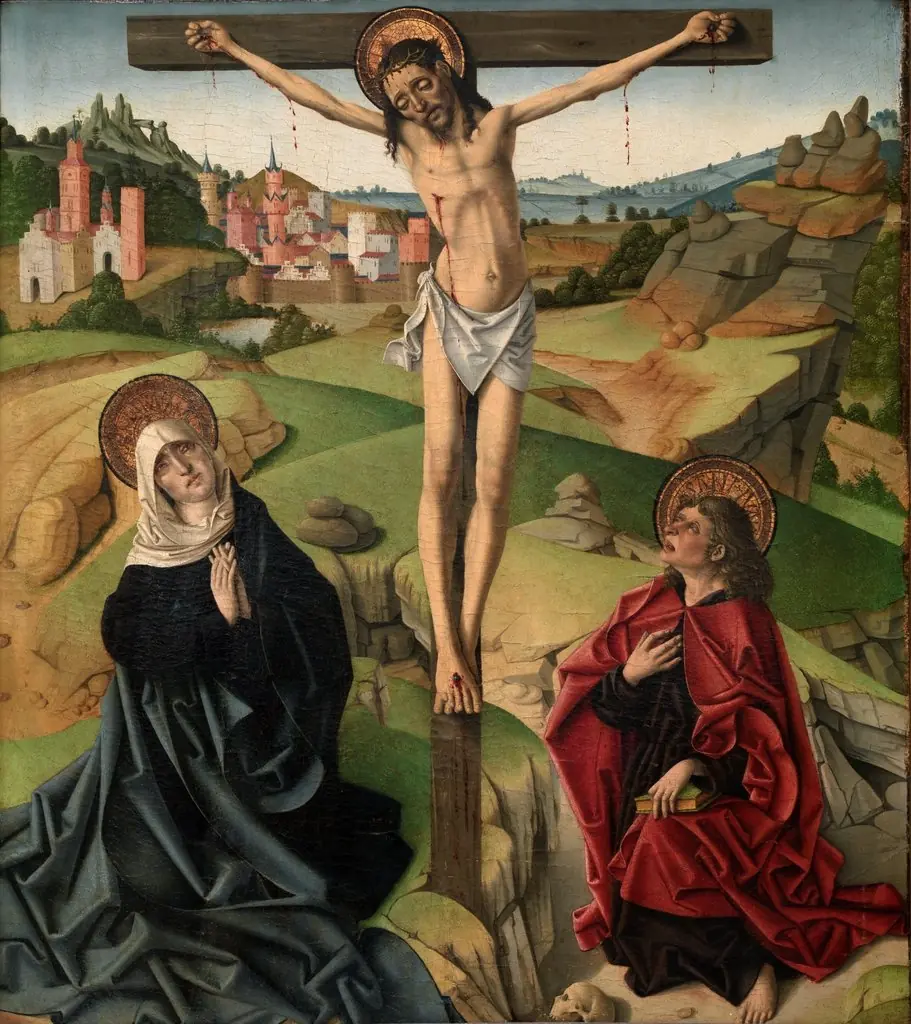
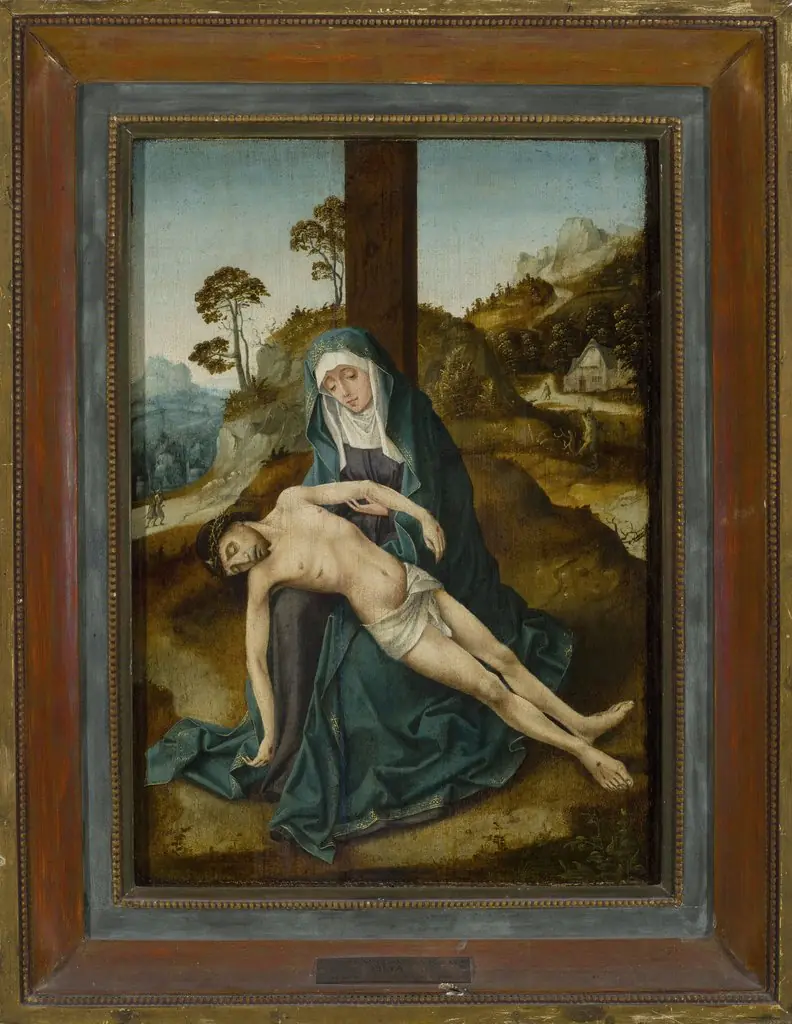
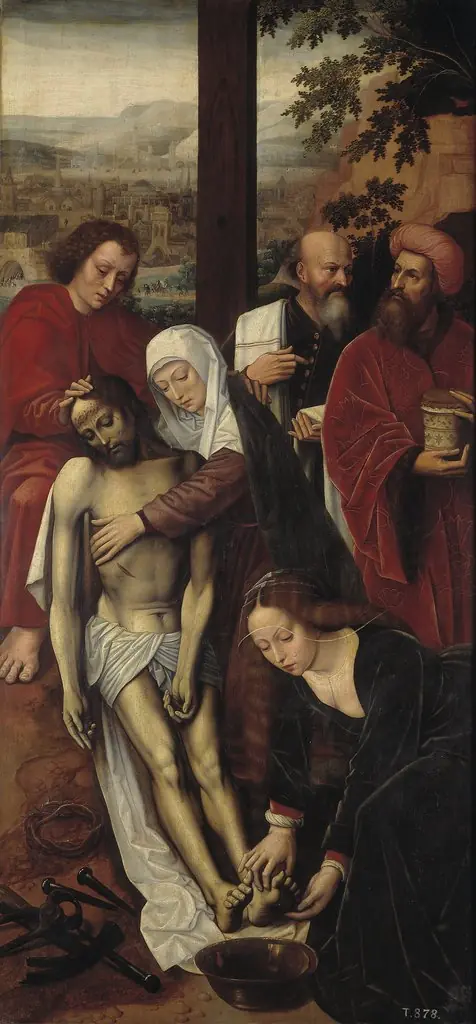
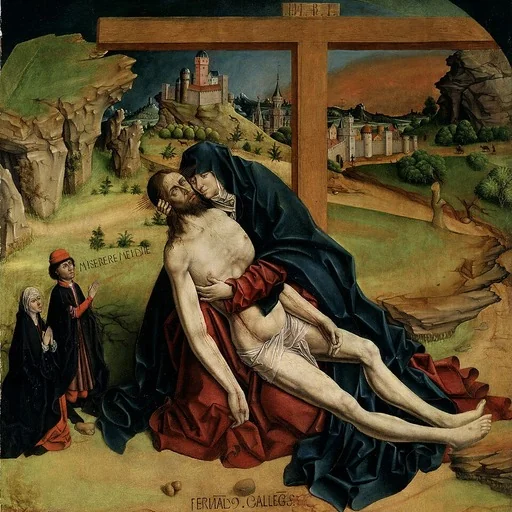
The Pietà is an unspecified painting by the Early Renaissance artist Fernando Gallego. It dates from 1465 and is held in the collection of the Museo del Prado.
About this work
Subject & Meaning
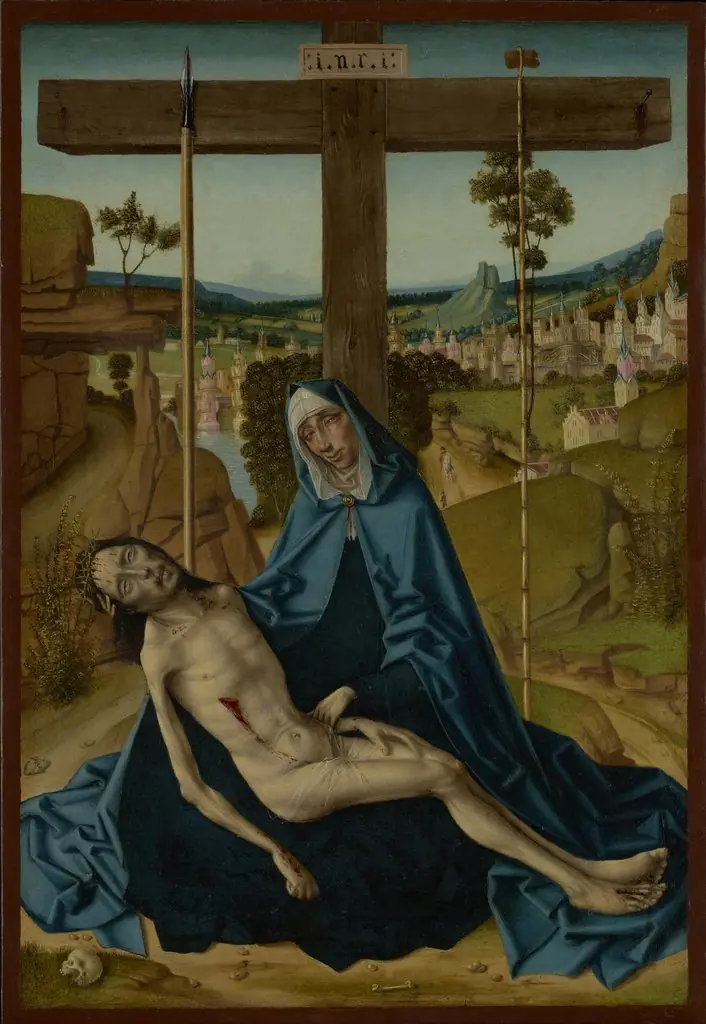
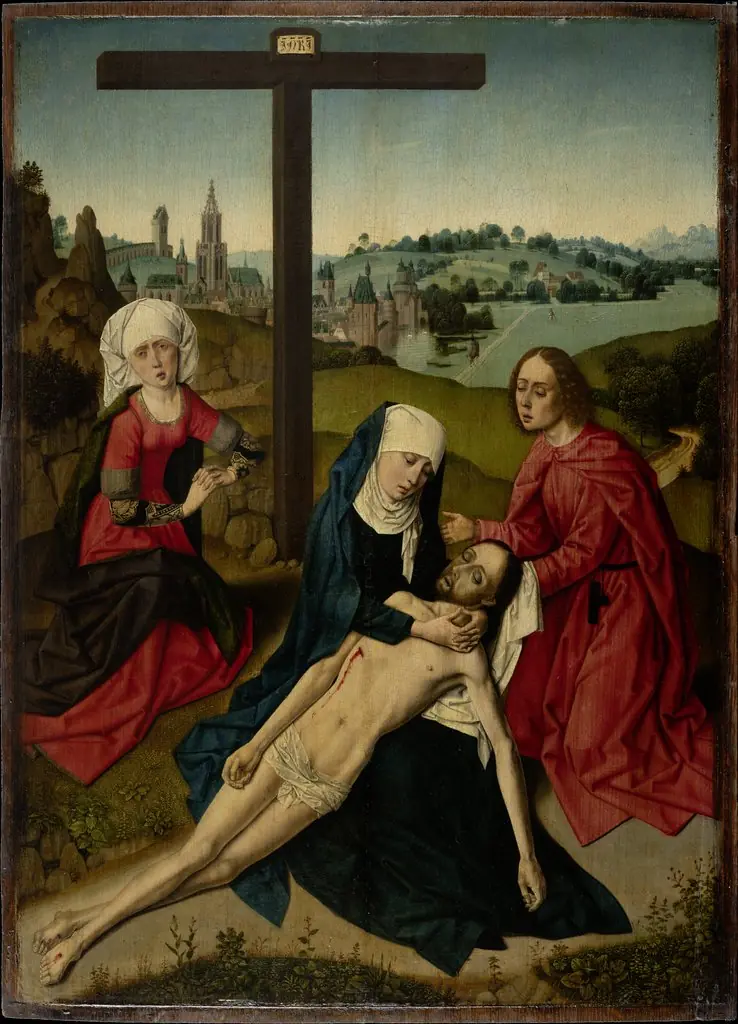
The composition follows Flemish conventions: Christ’s pallid, emaciated body, marked by wounds and a transparent shroud, underscores his sacrifice.
The work depicts the Pietà, a devotional subject of the Virgin Mary cradling the dead Christ after his Crucifixion. Originating in German devotional art during the fourteenth century, the theme emphasizes maternal grief and the human cost of Christ’s Passion. Mary’s red tunic signals sorrow, while her blue mantle frames her bowed posture and covered hair, underscoring humility and mourning.
The composition follows Flemish conventions: Christ’s pallid, emaciated body, marked by wounds and a transparent shroud, underscores his sacrifice. The golden rays forming his halo contrast with Mary’s earthly colors, spiritualizing the scene. A Gothic cityscape in the background evokes early-first-century Jerusalem, situating the sacred event in time and place.
Technique & Style
Executed as a painting on an unspecified support, this work measures 118 cm in height and 111 cm in width. The composition reflects the prevailing style in Castile during the late 15th century, demonstrating a strong influence from Flemish painting traditions. Visually, the piece relies on stark chromatic contrasts to evoke emotional resonance; the Virgin Mary is depicted in a red tunic symbolizing the Passion and a blue mantle, which stand against the pale, whitish flesh tones of the dead Christ.
The figure of Jesus is rendered with white eyes and visible wounds, covered only by a transparent cloth, while a halo of golden rays surrounds his head. These elements combine to create the classic iconography of the Flemish Pietà. The artist also employed hierarchical scaling, portraying the donors at a significantly smaller size than the sacred figures, and set the scene against a background depicting a Gothic city representing first-century Jerusalem.
History & Provenance
The Pietà was commissioned as a devotional painting in Spain during the late 15th century, reflecting the devotional practices of the Castilian religious milieu influenced by Flemish art. It was created between 1465 and 1470 by the Spanish painter Fernando Gallego, as documented by multiple sources.
The work was executed in oil on panel and originally intended for private contemplation, likely for a religious confraternity or patron. Its iconography draws from the German-originated Pietà motif, which had spread across Europe by the 15th century, depicting the Virgin Mary cradling the dead body of Christ.
Dating is anchored to the earliest recorded date of 1465, with the work completed no later than 1470, aligning with stylistic analysis and contemporary records.
The painting remained in its original religious context until it entered the collection of the Museo del Prado in Madrid, where it has been housed since at least the 19th century, forming part of the museum’s foundational holdings of Spanish Renaissance art.
Context
The Pietà by Fernando Gallego, painted in 1465, exemplifies the religious art of late 15th-century Castile, a period shaped by Flemish influences. Depicting the Virgin Mary in a red tunic and blue mantle cradling the dead Christ, the work employs characteristic Flemish motifs such as a halo of golden rays and donor figures rendered at reduced scale. This composition situates the piece within broader Iberian artistic trends while engaging with Central European devotional practices introduced a century earlier.
Legacy
The Pietà by Fernando Gallego exerted influence through its adoption of Flemish compositional techniques and its role in shaping Spanish religious imagery of the late 15th century. Its depiction of the Virgin Mary in the Pietà motif, drawing on German devotional traditions adapted into Iberian contexts, contributed to the stylistic evolution of Spanish religious art. The work's presence in the Museo del Prado cemented its reputation as a key example of Castilian painting influenced by early Netherlandish art, inspiring later artists in their treatment of Marian subjects and devotional scenes. This legacy is reflected in scholarly discussions of its iconography and stylistic parallels with contemporary works.
Overview
Created in 1465, The Pietà is an oil painting by Castilian artist Fernando Gallego, representative of the early Renaissance Hispano‑Flemish tradition. The work is part of the collection of the Museo del Prado in Madrid and bears the artist’s signature in the lower corner.
Own this work as a print
Artist & collection
Artist
Fernando Gallego (c. 1440 – 1507) was a Castillan painter, and his art is generally regarded as Hispano-Flemish in style. Gallego was likely born in Salamanca, Spain, and worked throughout Castile and Extremadura, most…