What you'll explore
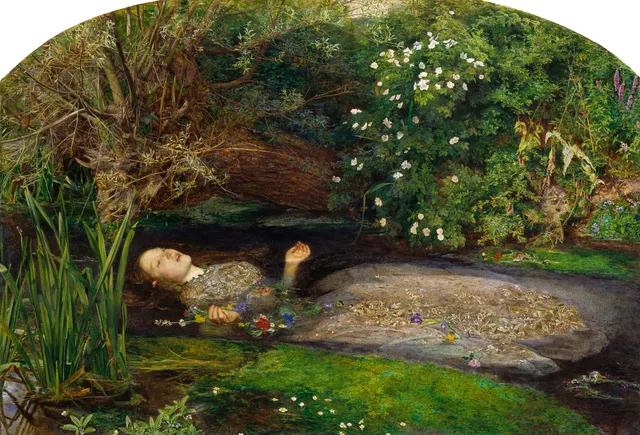
- Artist John Everett Millais
- Place London
- Movement Pre-Raphaelite
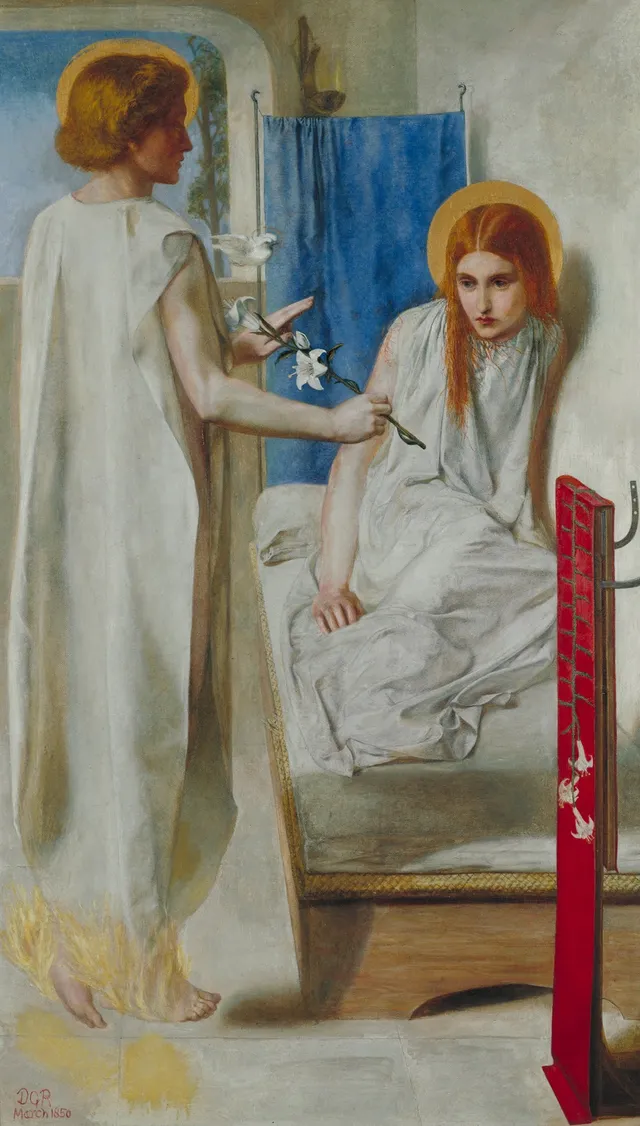
- Artist Dante Gabriel Rossetti
- Artist Ford Madox Brown
- Moment Founding of the Pre-Raphaelite Brotherhood
- Artist John William Waterhouse
- Artist Marie Spartali Stillman
- Artist Marshall, Faulkner & Co. Philip Webb
- Artist Mary Evelyn De Morgan
- Group Pre-Raphaelite Brotherhood
- Movement Symbolism
The lessons
-
The Brotherhood's First Light
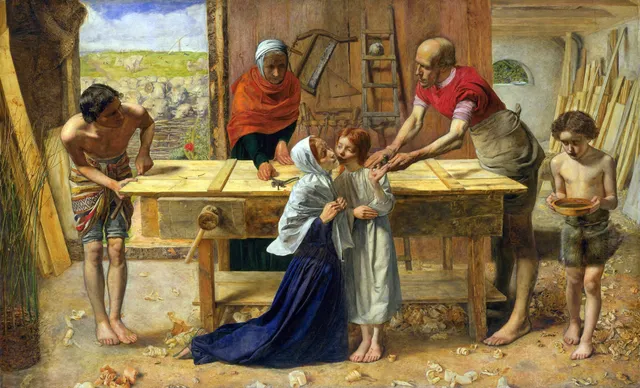 Christ in the House of His Parents John Everett Millais
 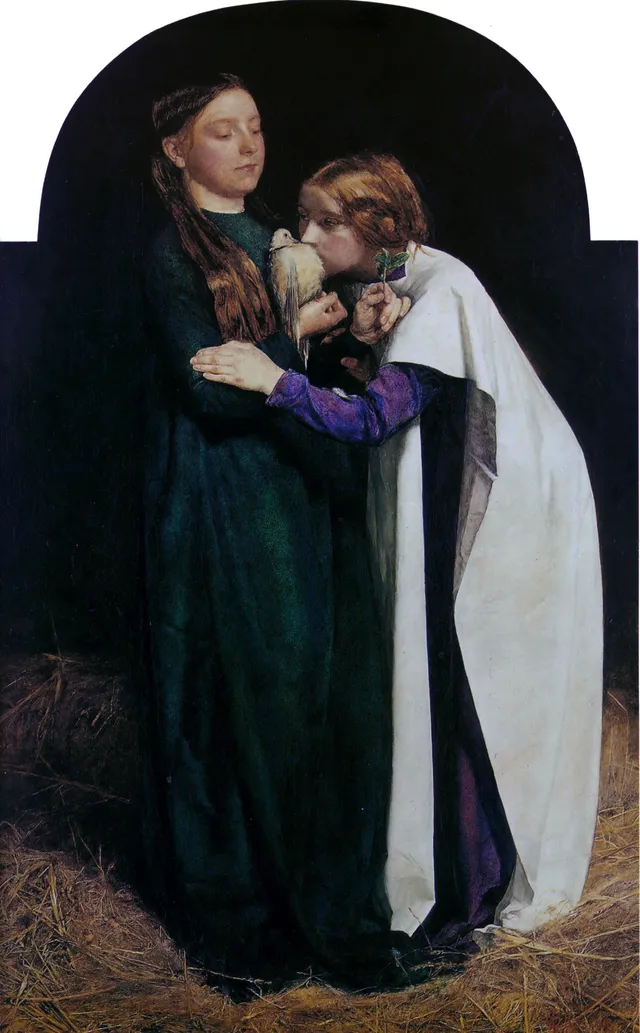 The Return of the Dove to the Ark John Everett Millais
 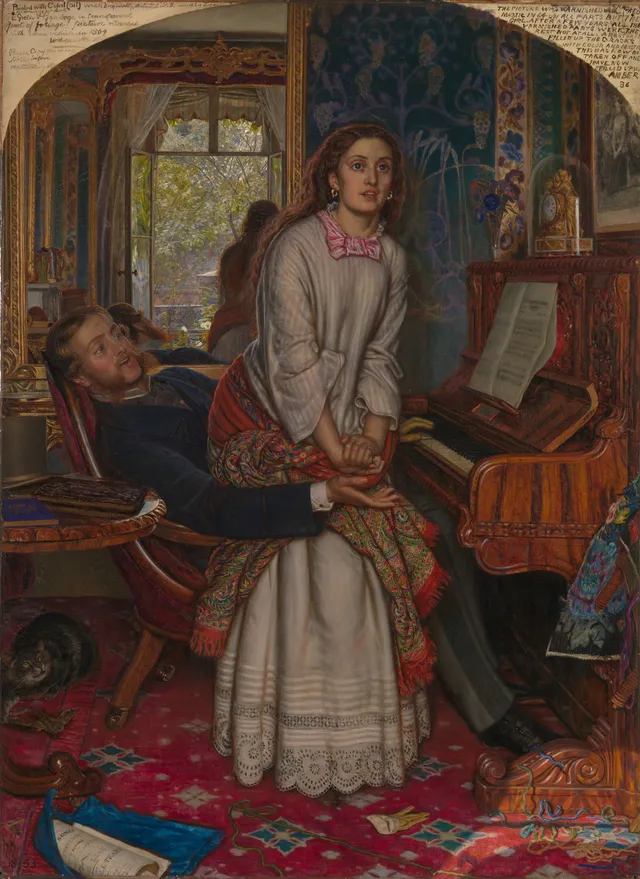 The Awakening Conscience William Holman Hunt
 From the in-app quiz
-
Which specific detail in Millais's painting caused the most outrage for its lack of idealization?
Christ in the House of His Parents , John Everett Millais - The bleeding wound on the young Christ's hand Answer
- The presence of a donkey in the background
- The golden halo floating above Mary
- The use of bright, unnatural colors
You are correct. The painting caused a scandal because Millais depicted the young Christ with a real, bleeding wound on his hand, treating the holy figure with the same physical vulnerability as any other child.
-
In what year was the Pre-Raphaelite Brotherhood founded?
- 1849
- 1848 Answer
- 1851
- 1853
That is right. Although Millais painted 'Christ in the House of His Parents' in 1849, the Pre-Raphaelite Brotherhood itself was founded by seven young artists in London in 1848.
-
-
Truth to Nature: The Sorrow of Mariana
From the in-app quiz
-
In the foreground of 'Mariana,' which object on the table signals the passage of time and the protagonist's isolation?
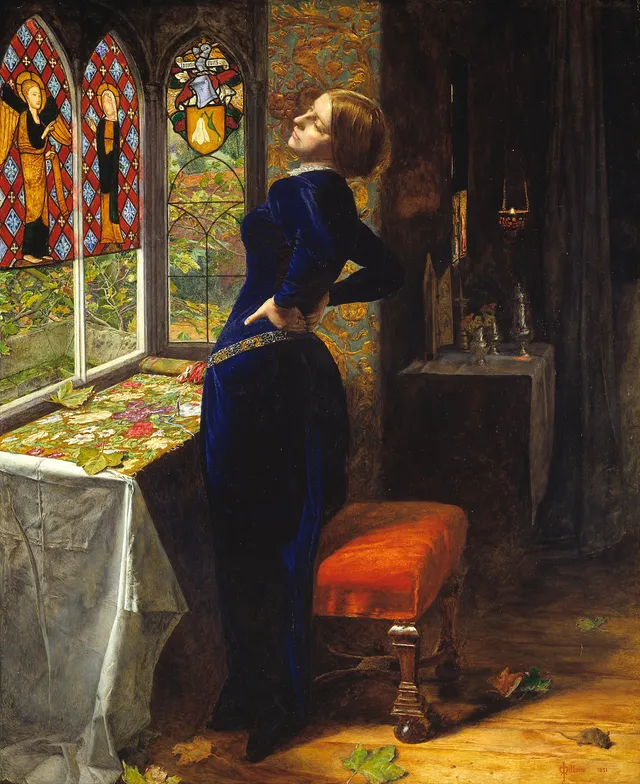
Mariana , John Everett Millais - A vibrant bouquet of fresh flowers
- A broken needle and unfinished tapestry Answer
- A large, open book of poetry
The unfinished tapestry and the needle lying idle on the table are the quiet markers of time passing while Mariana waits. These details show that her work has stopped, just as her life seems paused in anticipation.
-
Which other painting in this course shares the theme of a woman waiting in a confined or suspended space?
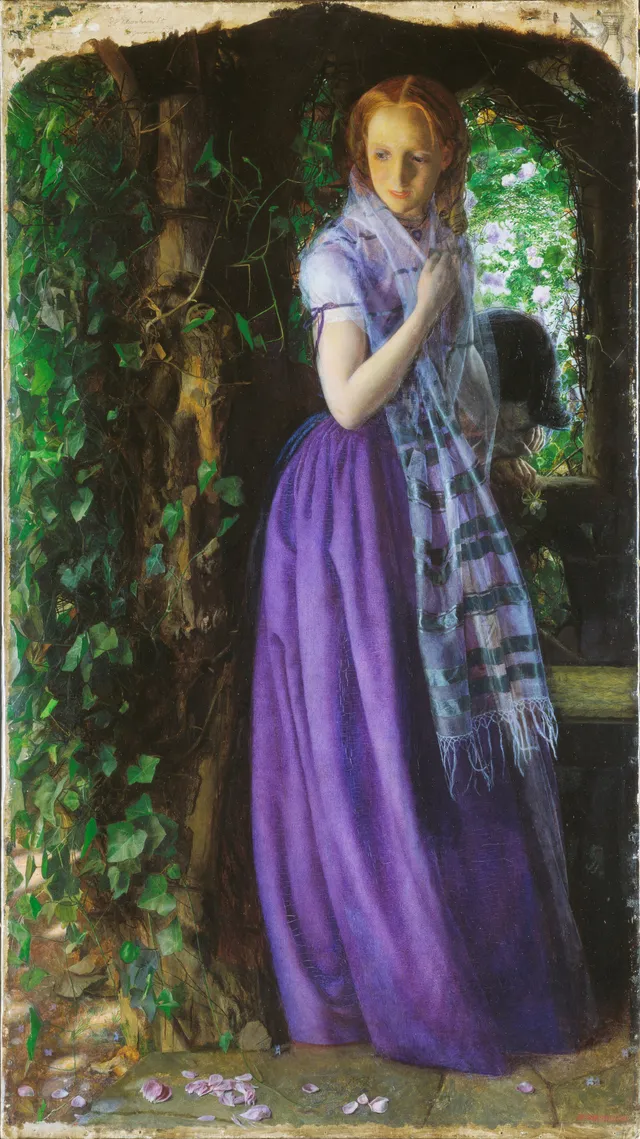 April Love Arthur Hughes Answer
 Arthur Hughes's 'April Love' depicts a couple frozen in a moment of hesitation, capturing a similar sense of suspended time and emotional waiting found in Millais's work.
-
-
The Dreaming Second Generation
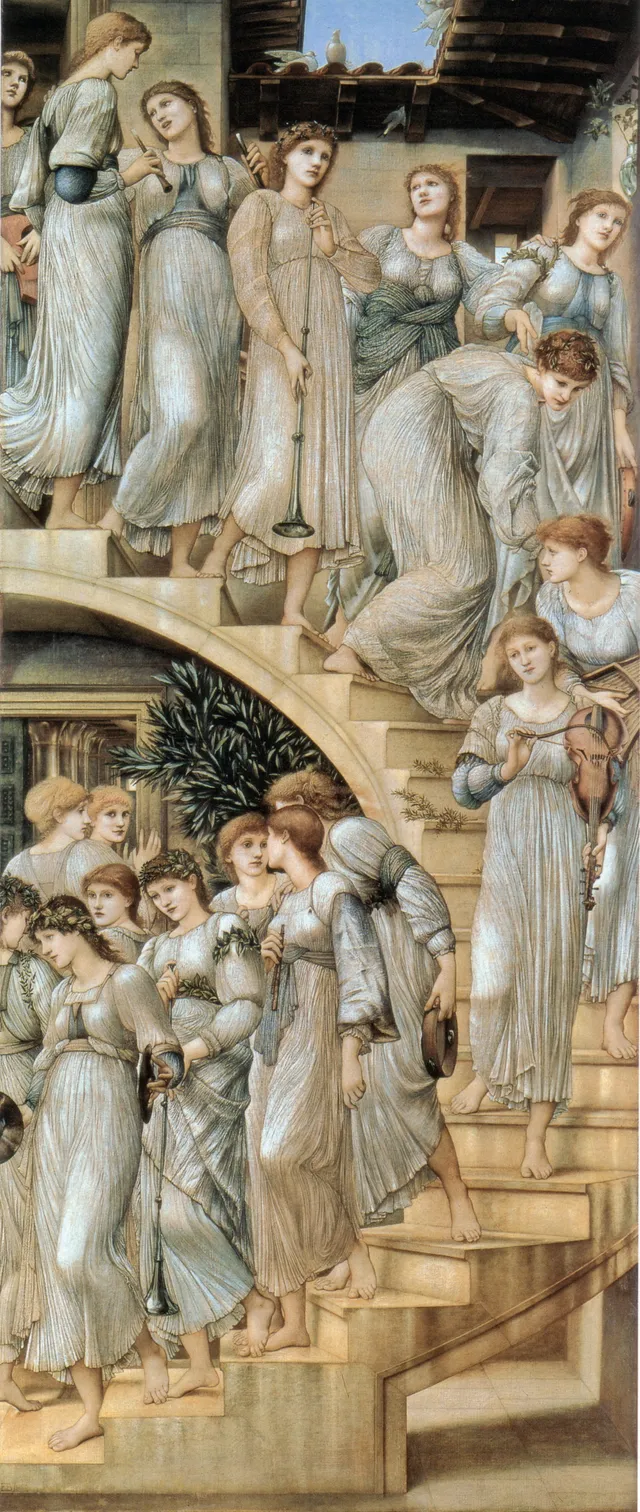 The Golden Stairs Edward Burne-Jones
 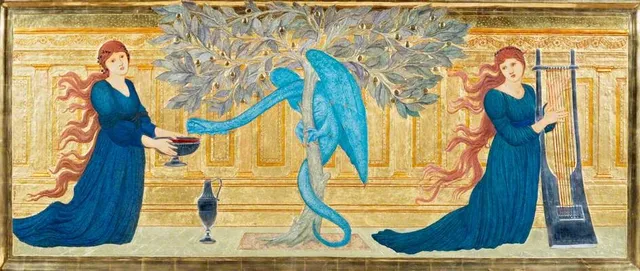 The Garden of the Hesperides Edward Burne-Jones
 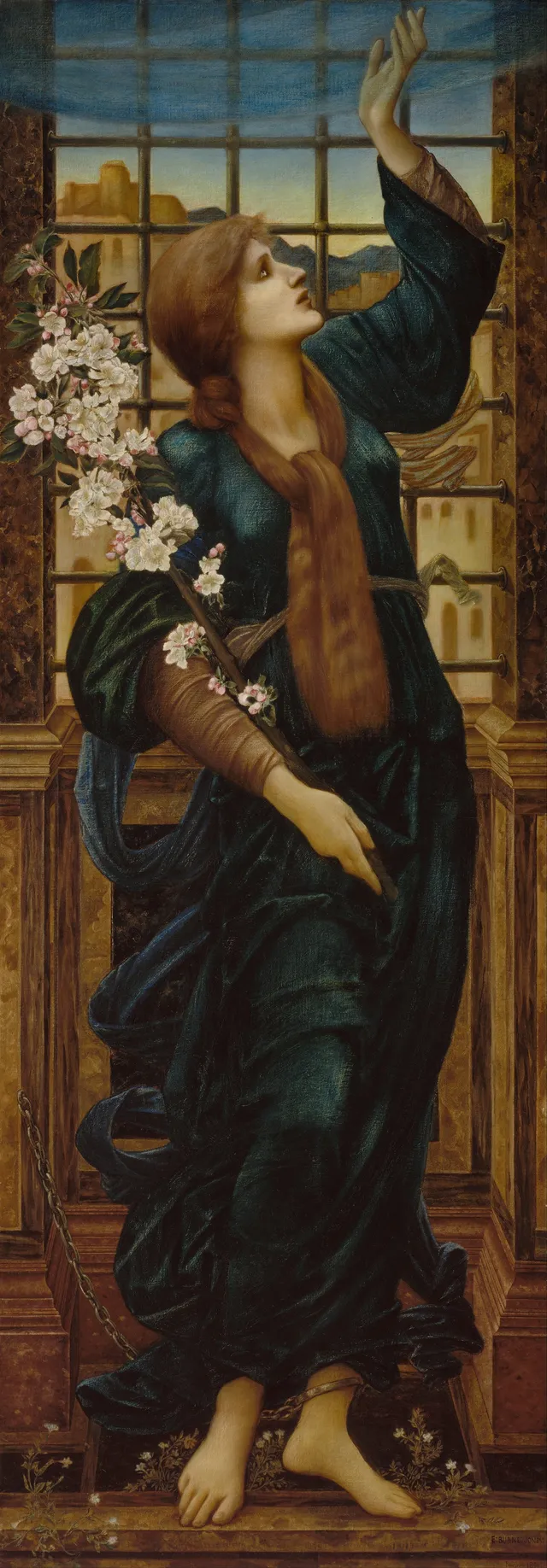 Hope Edward Burne-Jones
 From the in-app quiz
-
How does the quality of light in 'The Golden Stairs' compare to the early Pre-Raphaelite works?
- It uses harsh, specific daylight to reveal minute natural details.
- It employs a soft, diffuse illumination that creates a timeless, dreamlike atmosphere. Answer
- It relies on dramatic, high-contrast shadows to suggest religious mystery.
You are right. Burne-Jones replaced the sharp, scientific daylight of the early Brotherhood with a soft, hushed light that suggests an eternal twilight, fitting for a scene of musical reverie.
-
Which other Burne-Jones work in this collection features a garden setting filled with mythological figures?
Correct. 'The Garden of the Hesperides' depicts a lush, enclosed garden with the dragon Ladon and the Hesperides, a distinct shift toward mythological fantasy.
-
-
The Women of the Circle
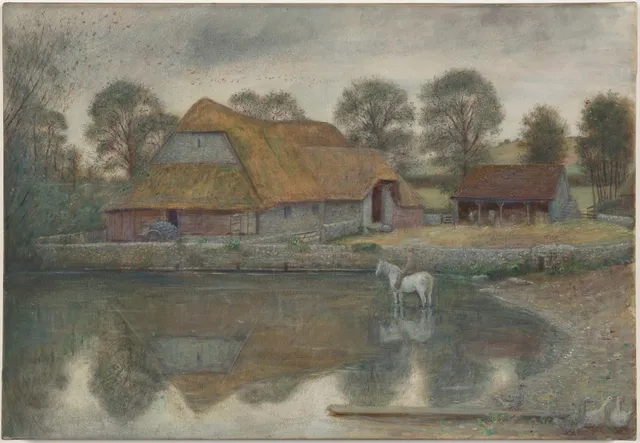 The Old Barn, Arreton, Isle of Wight Marie Spartali Stillman
 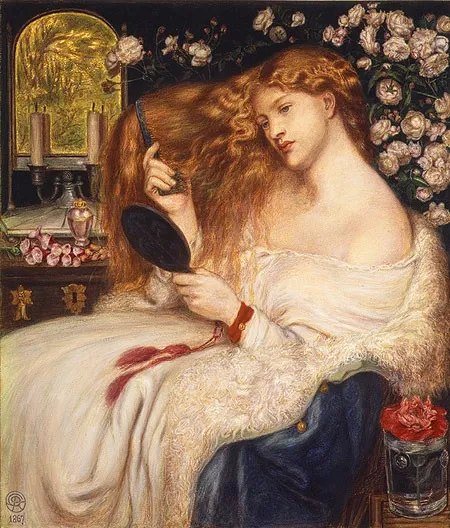 Lady Lilith Dante Gabriel Rossetti
 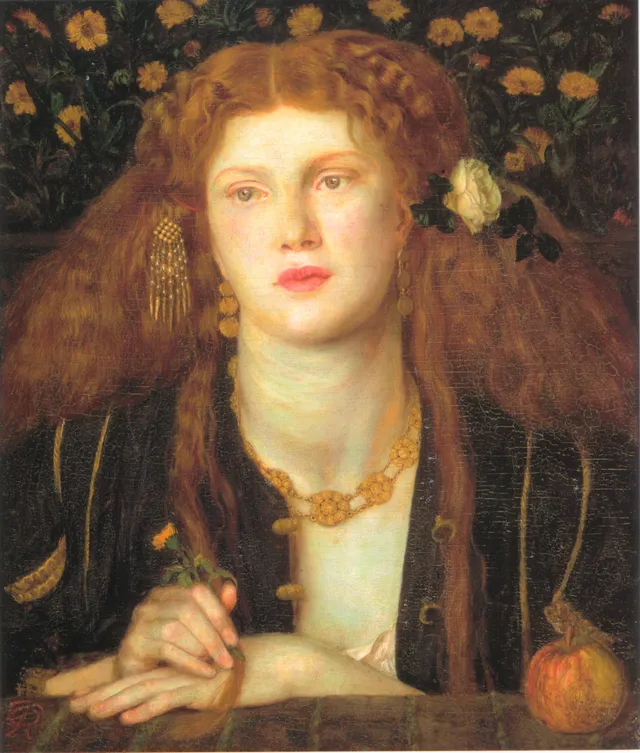 Bocca Baciata Dante Gabriel Rossetti
 From the in-app quiz
-
What distinguishes Stillman's landscape approach from the narrative focus of her male contemporaries?
- She prioritized atmospheric sensitivity over dramatic storytelling. Answer
- She focused exclusively on medieval religious iconography.
- She used thick oil impasto to mimic Rossetti's portraits.
- She abandoned color entirely to focus on charcoal sketches.
Stillman's 'The Old Barn' captures the mood of the landscape through watercolor, favoring atmospheric feeling over the heavy narratives found in the works of the Brotherhood.
-
Which Rossetti painting in this collection exemplifies the 'femme fatale' archetype that influenced the circle's women artists?
Rossetti's 'Lady Lilith' is the quintessential example of the seductive, dangerous beauty that defined the femme fatale archetype within the movement.
-
-
The Aftermath: Waterhouse and the Magic Circle
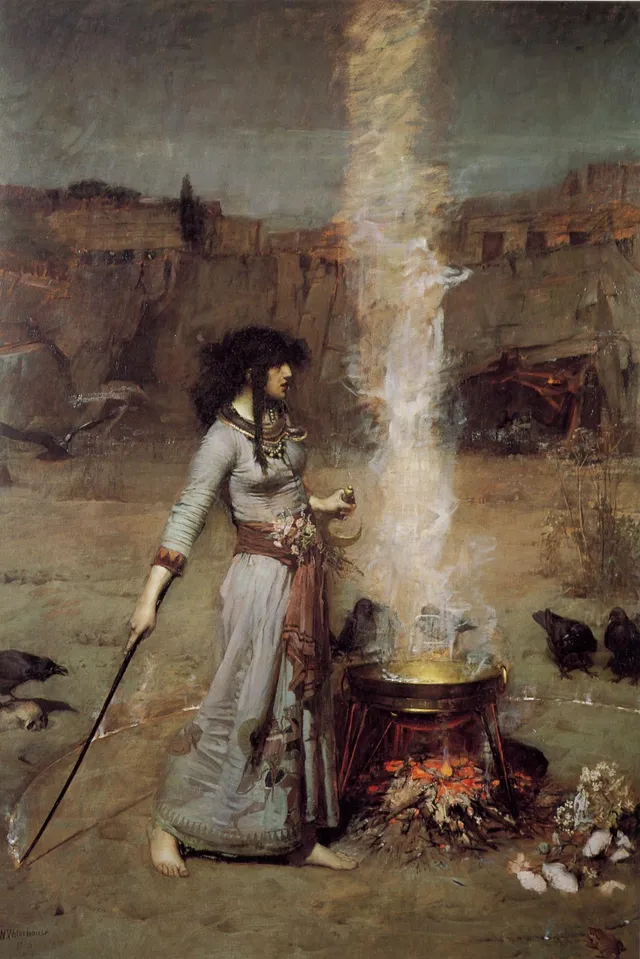 The Magic Circle John William Waterhouse
 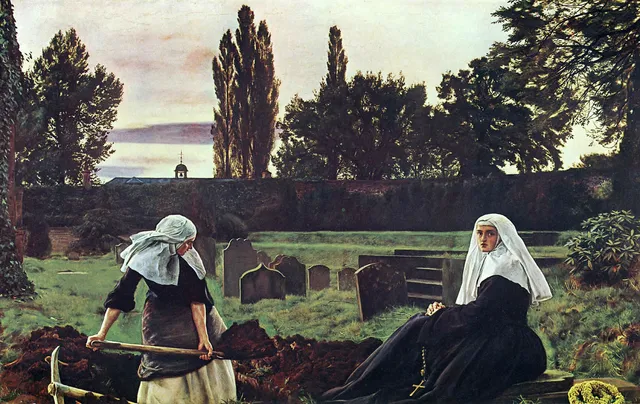 The Vale of Rest John Everett Millais
 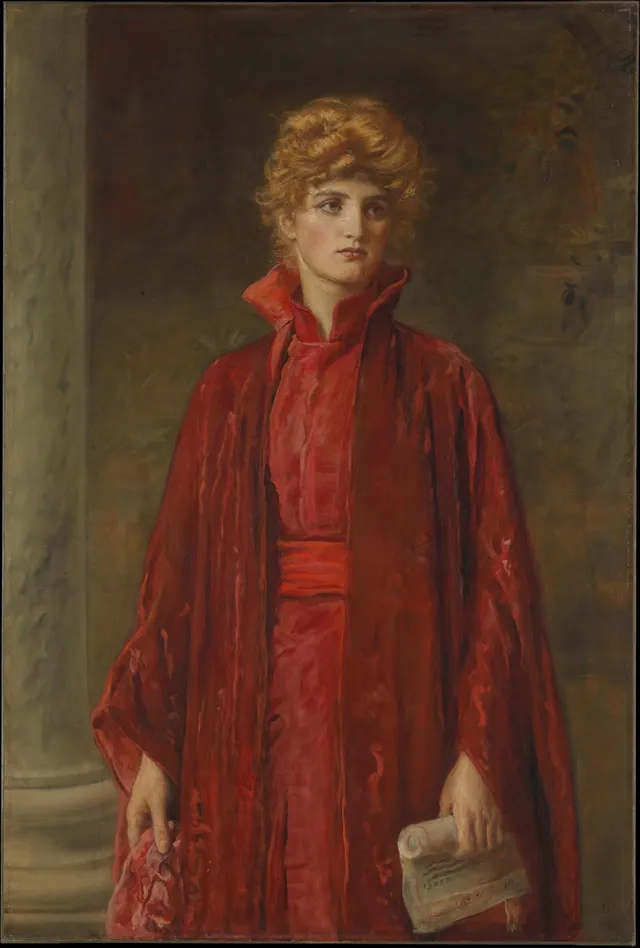 Portia John Everett Millais
 From the in-app quiz
-
In 'The Magic Circle,' what element of the composition suggests a shift from the Brotherhood's 'truth to nature' to a more romanticized fantasy?
The Magic Circle , John William Waterhouse - The glowing ring of light surrounding the figure Answer
- The detailed rendering of the forest floor
- The realistic depiction of the woman's hands
The glowing ring is a supernatural element that places the scene firmly in the realm of fantasy rather than observable reality. This marks a departure from the early Pre-Raphaelite commitment to painting only what could be seen in the natural world.
-
Which Millais painting in this course also features a woman in a moment of intense, solitary concentration?
'The Vale of Rest' shows two nuns in a moment of deep, quiet focus as they dig a grave, mirroring the solitary concentration found in Waterhouse's sorceress. The other options depict different emotional states or narrative moments.
-