Artwork
Wapping
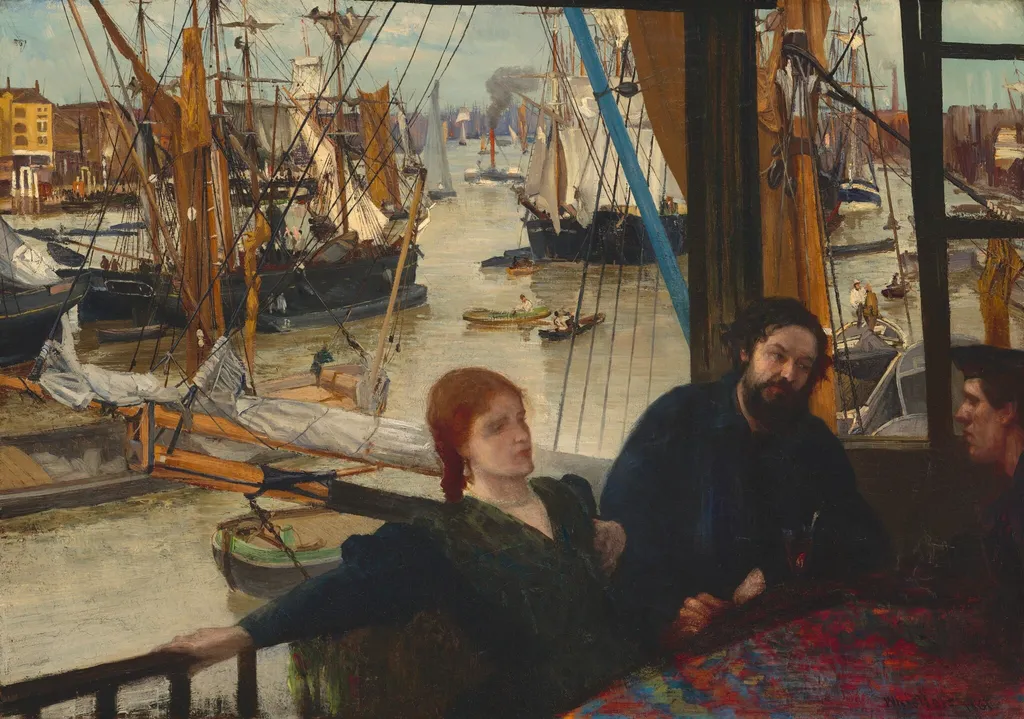
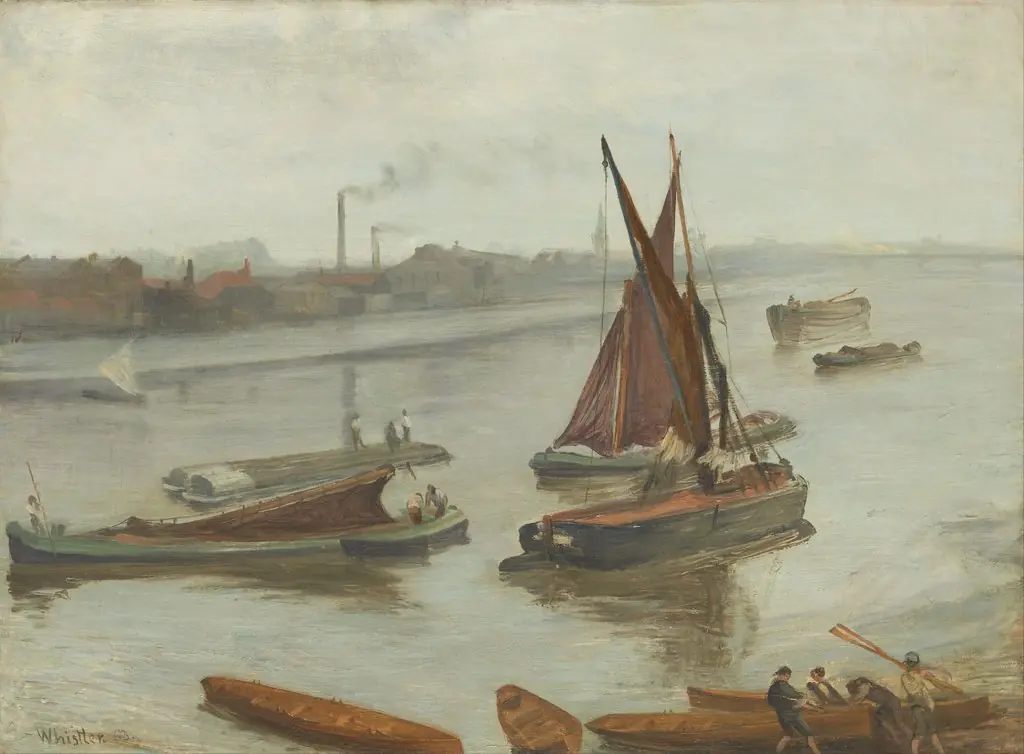
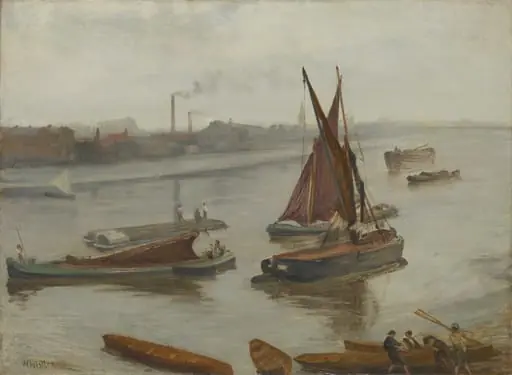
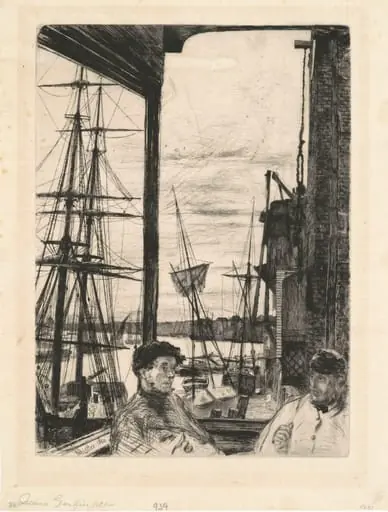
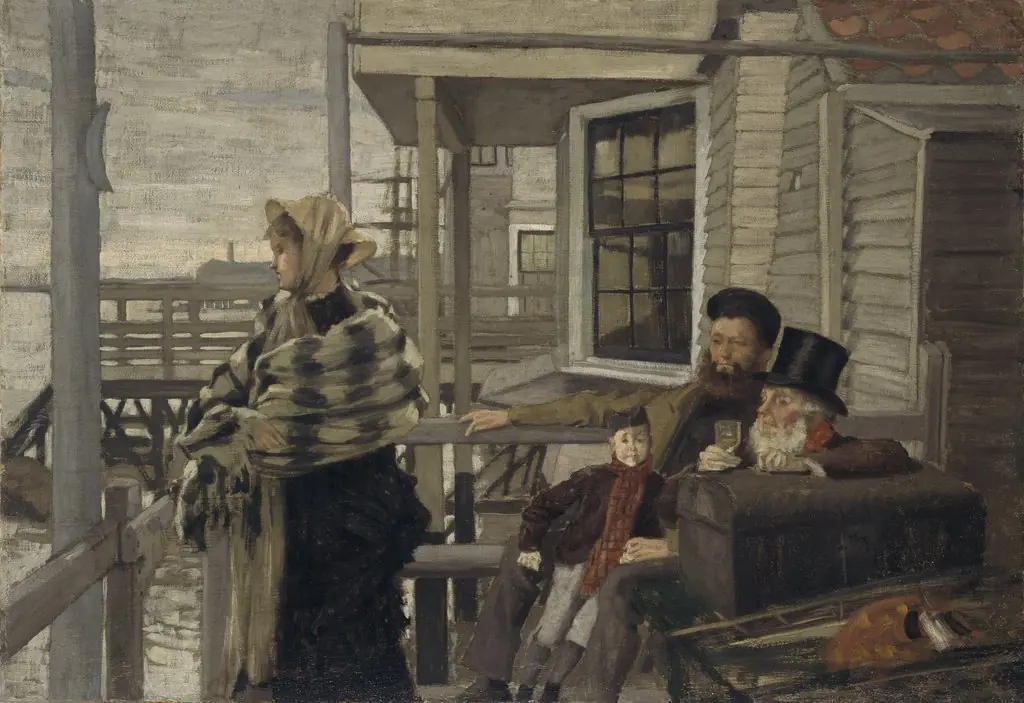
Wapping is an oil painting by the Impressionist artist James McNeill Whistler. It dates from 1862 and is held in the collection of the National Gallery of Art.
- Inscription
- Inscribed:lower right: Whistler. / 1861
About this work
Technique & Style
The paint is applied in thin, fluid layers that allow the canvas texture to remain visible, creating a silvery tonality across the composition.
Executed in oil on canvas in 1861, _Wapping_ is a portrait in which Whistler employs a restrained, broadly handled technique to convey atmosphere rather than detail. The paint is applied in thin, fluid layers that allow the canvas texture to remain visible, creating a silvery tonality across the composition. Forms are generalized with soft edges, emphasizing tonal harmony over linear definition, while the handling aligns with the artist’s early experiments in evoking mood through subtle gradations of light and shadow.
The horizontal format and muted palette contribute to an understated, contemplative effect, with the sitter’s features emerging from the subdued ground without sharp delineation. This approach reflects Whistler’s turn toward tonalism, prioritizing overall effect over descriptive precision.
History & Provenance
James McNeill Whistler painted Wapping in 1861. The work entered the collection of George Alfred Lathrop by 1866, before being purchased in 1867 by Thomas DeKay Winans of Baltimore, possibly at the Universal Exhibition in Paris. Winans retained the painting until his death in 1878, after which it passed to his daughter, Celeste Winans (Mrs. G. M. Hutton), who held it until at least 1923.
The piece subsequently came into the possession of Flora MacDonald White in New York. It was sold on September 29, 1928, to John Hay Whitney of Manhasset, New York. Whitney deeded the work to the John Hay Whitney Charitable Trust in 1982, which then gifted it to the National Gallery of Art in Washington, D.C., later that same year.
The work "Wapping" (1861) is held by the National Gallery of Art in Washington, D.C., where it entered the collection via a 1982 gift from the John Hay Whitney Charitable Trust. Its provenance moves from George Alfred Lathrop by 1866 to Thomas DeKay Winans in 1867, then through his daughter Celeste Winans Hutton, to Flora MacDonald White, and finally to John Hay Whitney in 1928 before donation to the NGA. The painting was shown at the 1866 Artists' Fund Society exhibition and was noted in contemporary accounts of the 1867 Paris Universal Exhibition; Whistler sought to exhibit it at Goupil's in 1892 but it was not publicly displayed after 1867.
Overview
James McNeill Whistler's oil painting Wapping, completed in 1862, captures a bustling scene within London's docklands. This work exemplifies the Realist movement, reflecting Whistler's characteristic approach to art. An American artist living in the United Kingdom, he consistently pursued refined compositions and technical precision, often emphasizing atmospheric qualities and delicate tonal variations in his work.
Subject & Meaning
The painting presents a complex view of the Wapping docks. In the foreground, two figures occupy a dimly lit interior, their gazes directed towards each other, creating a sense of intimacy. Beyond them, the vibrant activity of the harbor unfolds.
Tall ships with intricate rigging dominate the background, while smaller vessels navigate the water and a distant smokestack emits a faint plume, conveying the industrial energy of the port.
Context
As an American expatriate residing in the United Kingdom, James McNeill Whistler developed a distinctive artistic vision. His work, including Wapping, aligns with the Realist movement's focus on depicting everyday life. Whistler was particularly interested in capturing atmospheric effects and achieving subtle color relationships, a pursuit that underscored his broader philosophy of art prioritizing aesthetic qualities over narrative or moralizing content.
Legacy
Whistler's distinctive artistic identity is further emphasized by his unique butterfly signature, which appears on Wapping. This personal emblem became synonymous with his work and his aesthetic principles, serving as a subtle yet recognizable mark of his authorship and his dedication to art as an independent entity, separate from conventional storytelling or moral instruction.
Own this work as a print
Artist & collection
Artist
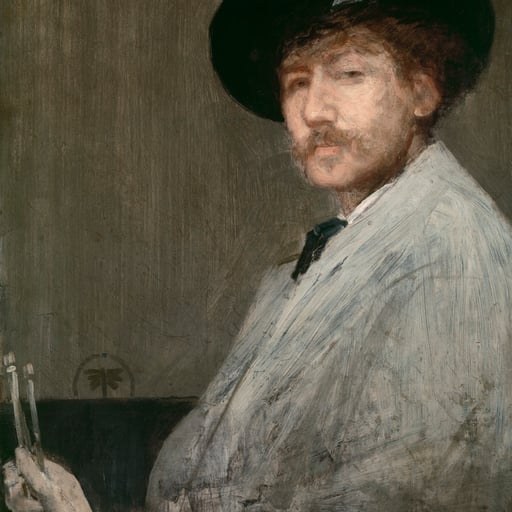
James Abbott McNeill Whistler (; July 10, 1834 – July 17, 1903) was an American painter in oils and watercolor, and printmaker, active during the American Gilded Age and based primarily in the United Kingdom.

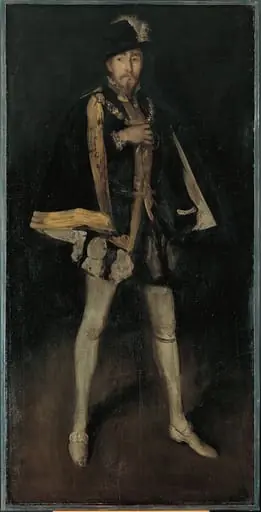 Arrangement in Black, No. 3: Sir Henry Irving as Philip II of Spain
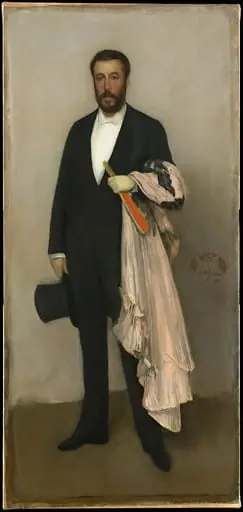 Arrangement in Flesh Colour and Black: Portrait of Theodore Duret
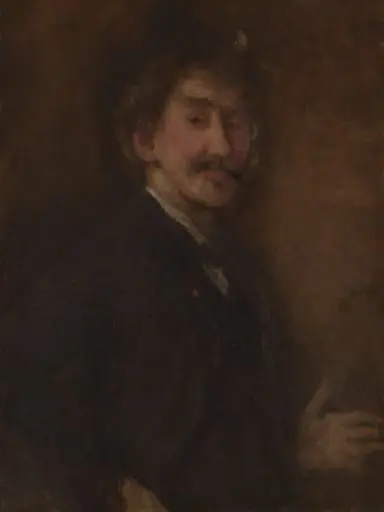 Gold and Brown: Self-Portrait
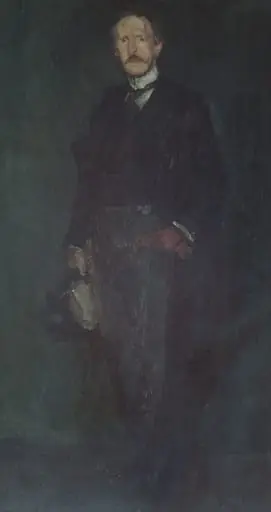 Edward Guthrie Kennedy
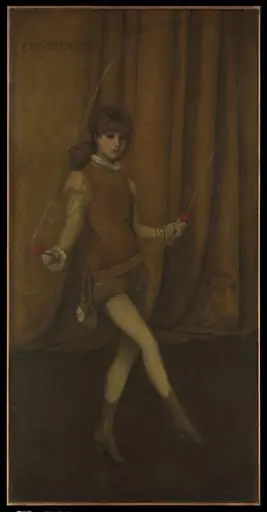 Harmony in Yellow and Gold: The Gold Girl—Connie Gilchrist
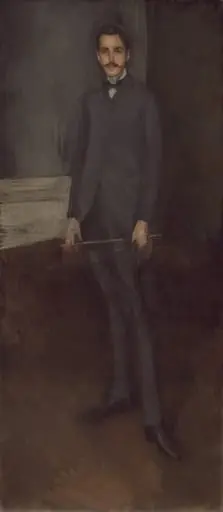 George W. Vanderbilt
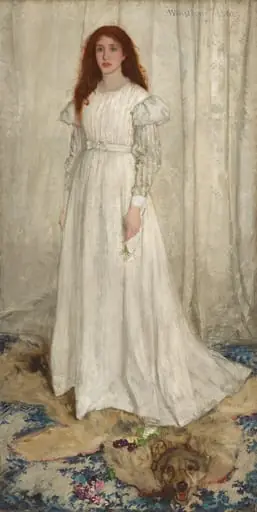 Symphony in White, No. 1: The White Girl
 Henry Irving as Philip II of Spain