Artwork
Water Carrier Seated on His Yoke
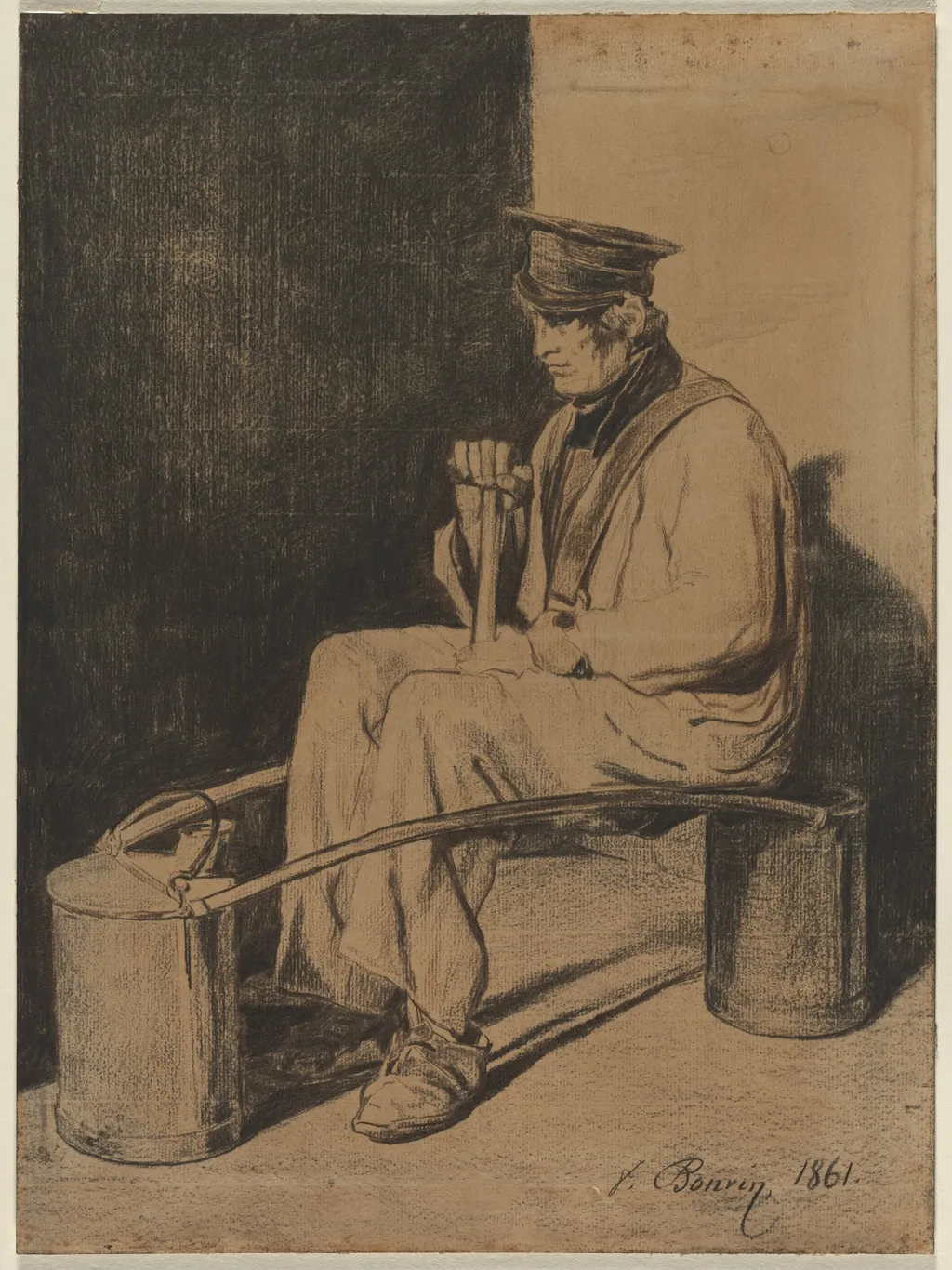
Water Carrier Seated on His Yoke is a drawing by the Impressionist artist François Bonvin. It dates from 1861 and is held in the collection of the Cleveland Museum of Art.
- Accession no.
- 1978.128
- Credit line
- Gift of Muriel S. Butkin
About this work
Overview
The lighting highlights the lighter tones of the man's attire and the containers, creating a stark contrast that emphasizes the solidity of the figure.
François Bonvin's 'Water Carrier Seated on His Yoke' (1861) depicts a laborer resting with his burden, a subject central to the artist's commitment to realist genre painting. The composition focuses on a man seated directly upon the wooden yoke that supports two large water containers, one on either side. Clad in a long coat and cap, the figure grips the yoke with both hands, his posture conveying the physical weight of his trade.
Bonvin isolates the subject against a dark, indistinct background, a technique that eliminates narrative distraction and directs attention to the textures of the clothing and the forms of the vessels. The lighting highlights the lighter tones of the man's attire and the containers, creating a stark contrast that emphasizes the solidity of the figure. Painted during the height of the Realist movement, this work reflects Bonvin's dedication to portraying the dignity of ordinary working-class life without romanticization.
The piece exemplifies his mature style, characterized by a sober palette and a quiet, observational approach that elevates a mundane moment of rest into a study of human endurance and material presence.
Subject & Meaning
The central figure is a water carrier taking a brief pause, his cap and long coat suggesting modest, working‑class dress. His gaze is directed slightly leftward, his expression neutral, conveying a moment of quiet endurance rather than narrative drama. The composition foregrounds the everyday toil of 19th‑century urban laborers, inviting contemplation of ordinary labor as a dignified subject.
Technique & Style
Bonvin employs a restrained chiaroscuro, using strong contrasts between the dark background and the lighter tones of the man’s clothing and the vessels to model volume. The drawing’s line work is precise yet economical, capturing the texture of fabric and wood without excessive detail, a quality that aligns it with the realist tendencies of mid‑century French drawing.
History & Provenance
Created in 1861, the drawing entered the Cleveland Museum of Art’s holdings through acquisition (specific acquisition details are not recorded in the available sources). It remains a representative example of Bonvin’s oeuvre, illustrating his interest in portraying the lives of ordinary people during the Second Empire period.
Own this work as a print
Artist & collection

- Sitting Man with His Hat in His Right Hand
 "Since Then" ("Depuis ce temps-la")
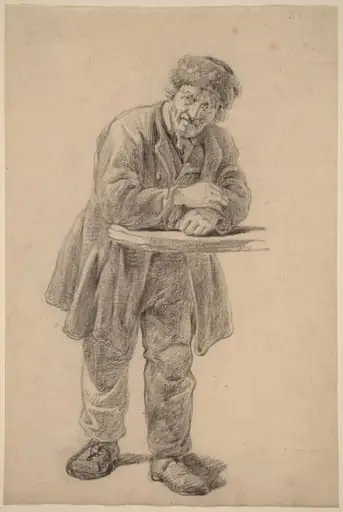 Man Leaning on a Counter
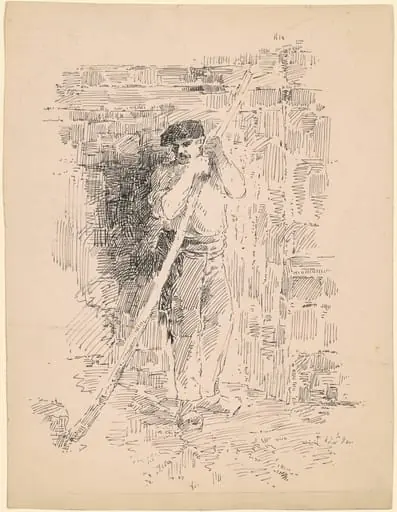 Peasant
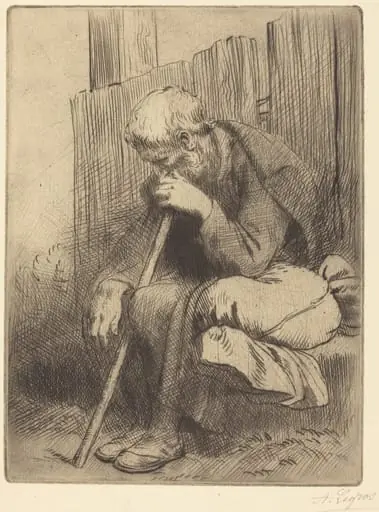 Thinker (Le penseur)
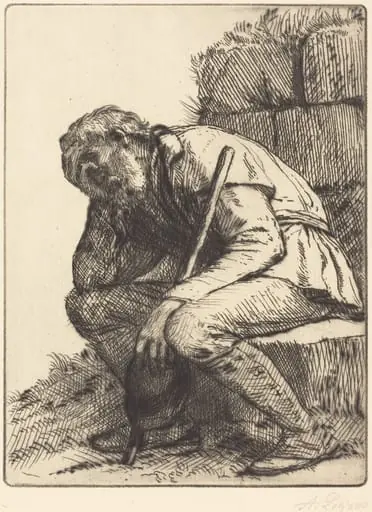 Desperate Man (Le desespere)
 Siesta of a Laborer (Sieste d'un ouvrier)
 The Three Drinkers
 Visser met een mand, van achteren gezien
 La Mère Gérard
 L'hareng saur
 The Tinker (Le retameur)