Artwork
Study for a Monument to a Princely Figure
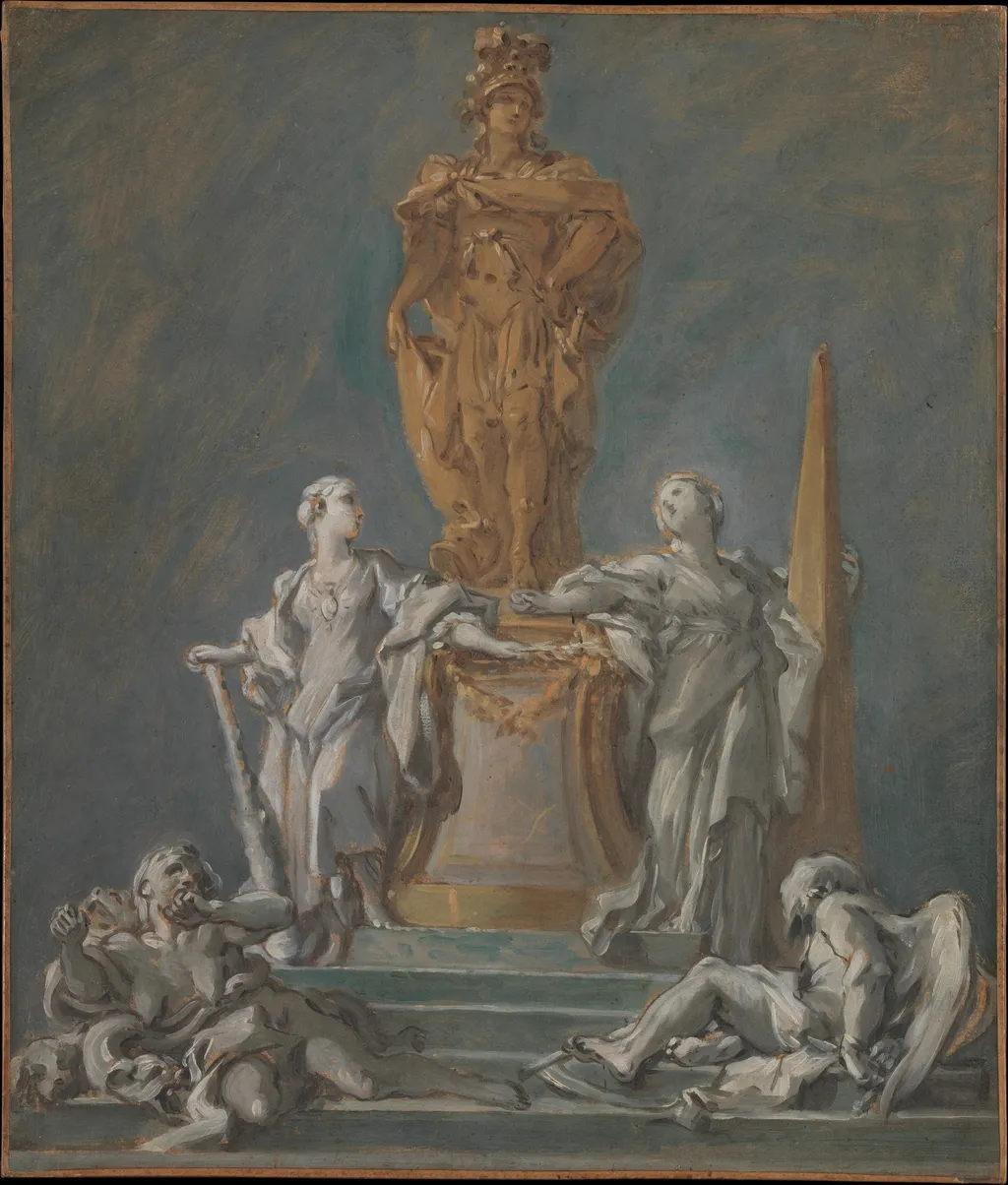
Study for a Monument to a Princely Figure is an unspecified painting by François Boucher. It dates from 1746 and is held in the collection of the Metropolitan Museum of Art.
About this work
Technique & Style
The painting is executed in oil on canvas, measuring 38.1 × 32.1 cm. Boucher's handling emphasizes fluid, delicate modeling of drapery and flesh in a light, luminous palette, with softly blended forms creating the refined finish typical of mid-eighteenth-century Rococo painting. The background dissolves into loosely brushed atmospheric tones that avoid hard contours.
History & Provenance
The work was painted in 1746 by François Boucher, as recorded in the Metropolitan Museum of Art's catalog entry. It entered the museum's collection, where it remains, and is executed in oil on canvas measuring 38.1 cm in height by 32.1 cm in width. No accession number or exhibition history is documented in the available sources.
Context
The work demonstrates Boucher's handling of dynamic figure arrangement within a compact format, consistent with his role in shaping the Rococo visual language.
Scholarship identifies this study as a preparatory composition by François Boucher for a larger, unexecuted monument, reflecting eighteenth-century French academic approaches to allegorical representation. The work demonstrates Boucher's handling of dynamic figure arrangement within a compact format, consistent with his role in shaping the Rococo visual language. Its depiction of a woman and man in interaction situates it within his broad output of both religious and secular subjects. The piece is held in the collection of the Metropolitan Museum of Art.
Legacy
The preparatory study for a monumental equestrian monument to a princely figure, created by François Boucher in 1746, influenced later decorative and architectural projects that sought to emulate French courtly grandeur, particularly in 18th‑century French decorative arts and neoclassical design discourse.
Scholars have noted its role as a visual prototype for subsequent ceremonial imagery, shaping artistic conventions in European royal iconography.
The work is held in the collection of the Metropolitan Museum of Art, where it is displayed as part of the museum’s French paintings gallery.
Overview
François Boucher’s 1746 oil sketch, titled Study for a Monument to a Princely Figure, serves as a preparatory design for a larger sculptural project. The composition centers on an imagined golden statue of a crowned woman holding a scroll, set against a dark, textured backdrop that emphasizes its luminosity. The work is part of the Metropolitan Museum of Art’s collection.
Subject & Meaning
The imagined monument portrays a regal female figure elevated on a pedestal, symbolizing authority through her crown and scroll. Flanking her are two robed attendants, one bearing a staff, the other a spear, suggesting ceremonial or martial support. At the base, two muscular men kneel, their gazes directed upward, reinforcing the hierarchy and reverence inherent in the design.
![Madame de Maintenon Returning to the Catholic Church [1]](https://artifactworldgallery.com/img/charles-dominique-joseph-eisen--madame-de-maintenon-returning-to-the-catholic-church-1--9ba1cbdc12b3c6eb-w320.webp)
Own this work as a print
Artist & collection
Artist
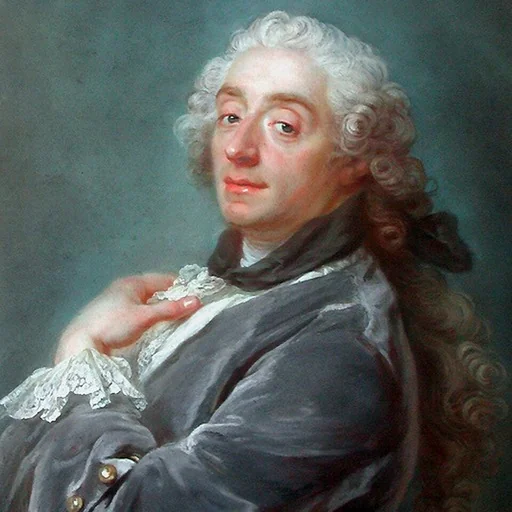
François Boucher was a French painter, draughtsman and etcher, who worked in the Rococo style.


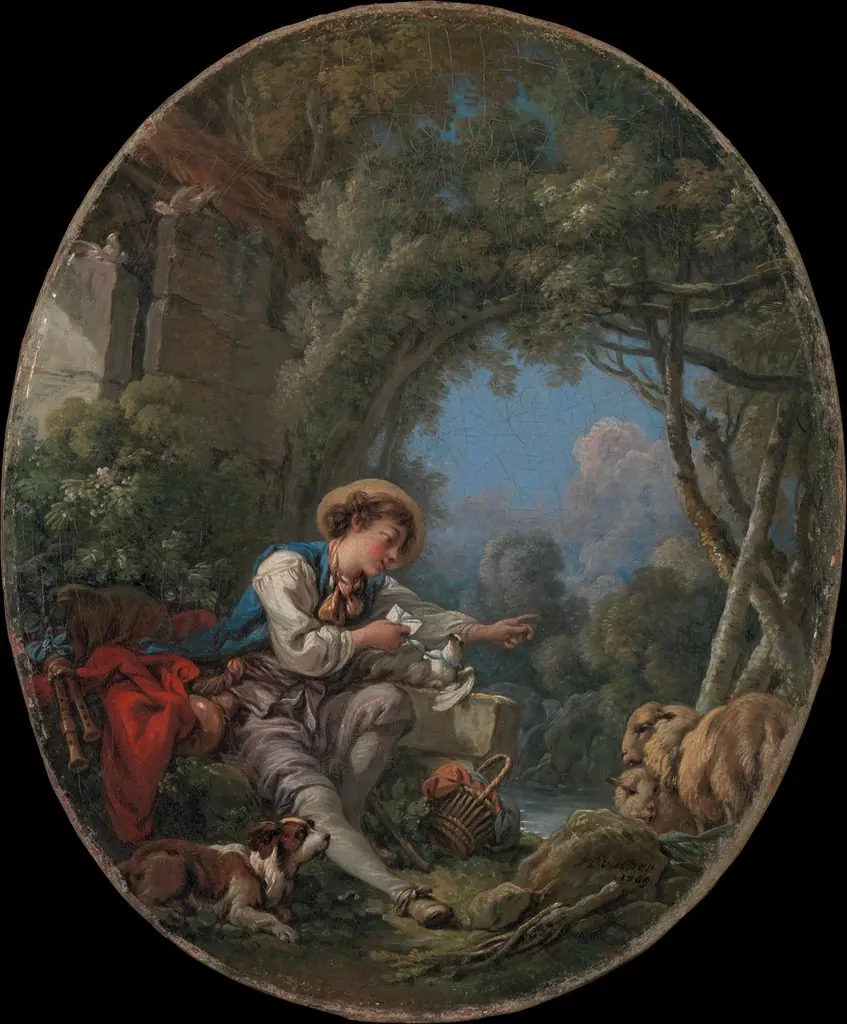
- Madame de Maintenon Returning to the Catholic Church [1]
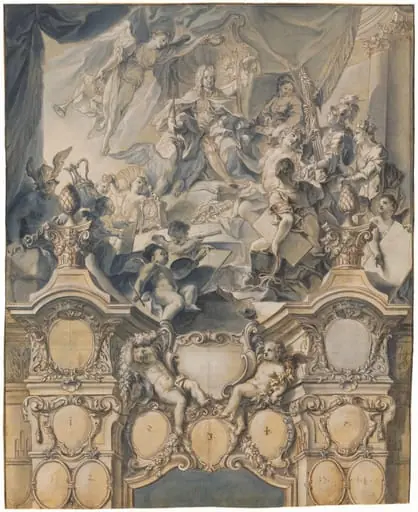 The Arts and Powers Pay Homage to Emperor Charles VI
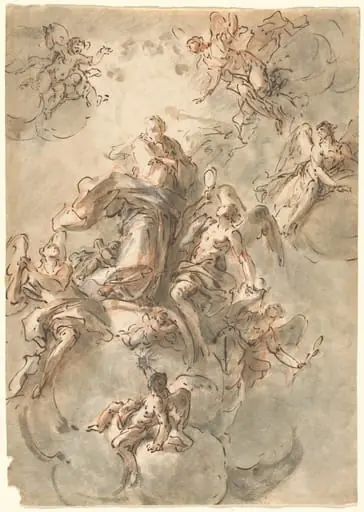 Virgin of the Immaculate Conception
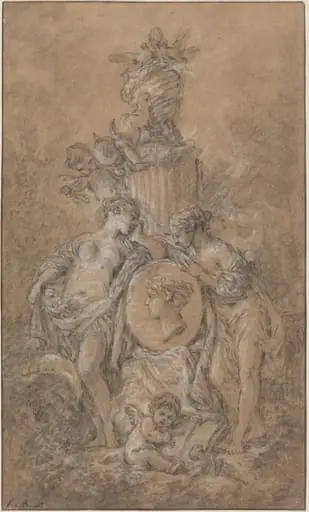 Design for a Funeral Monument
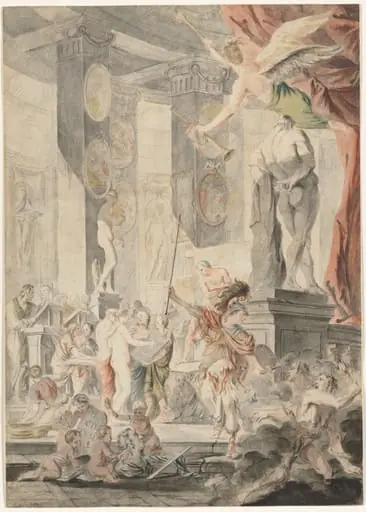 Ut Pictura Poesis
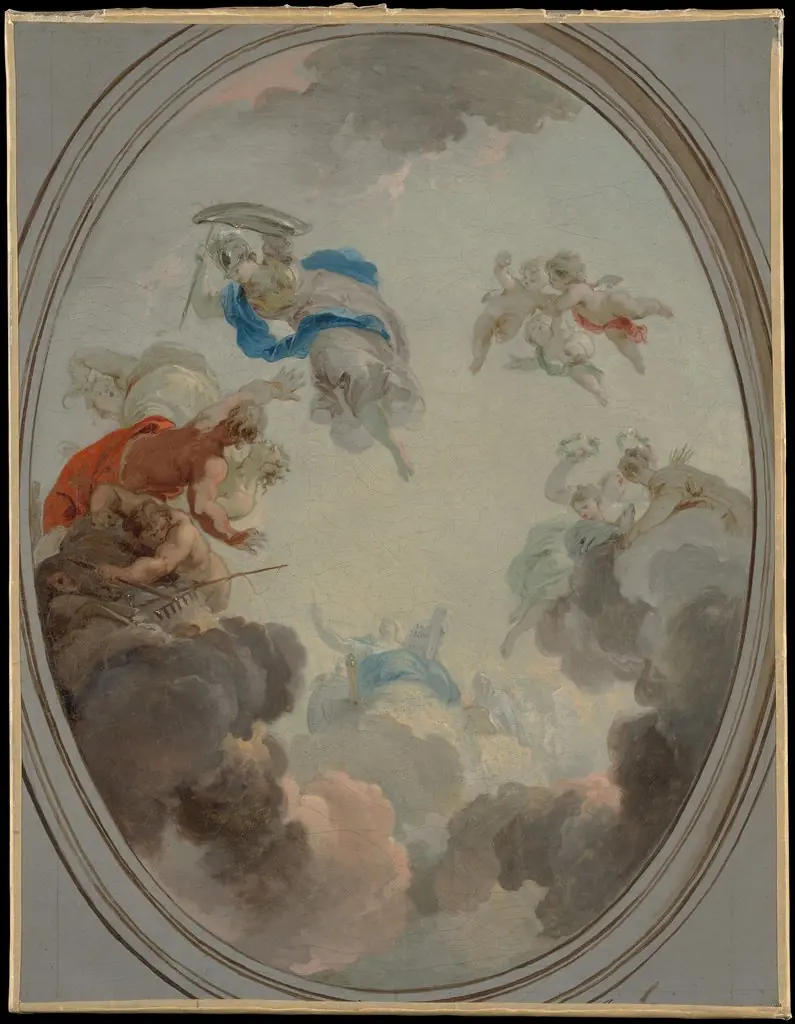 Allegory of Government: Wisdom Defeating Discord
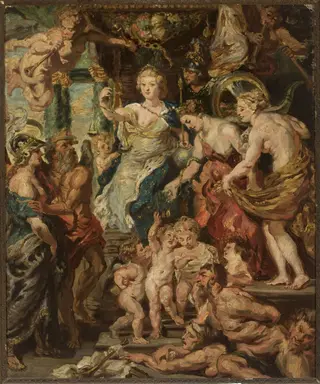 Apotheosis of Maria Medici
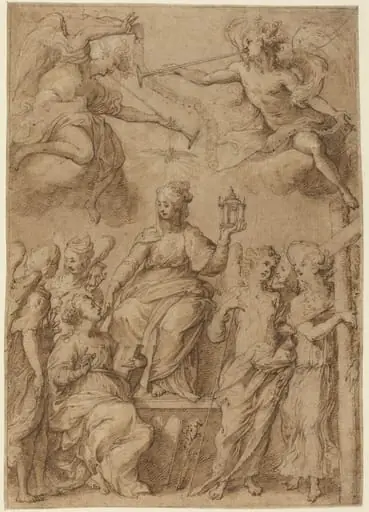 Ecclesia Surrounded by Angels Holding the Instruments of the Passion
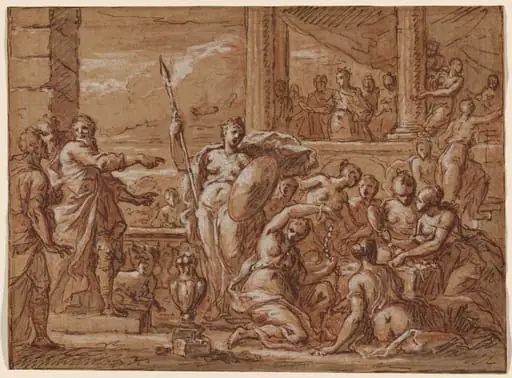 The Discovery of Achilles among the Daughters of Lycomedes
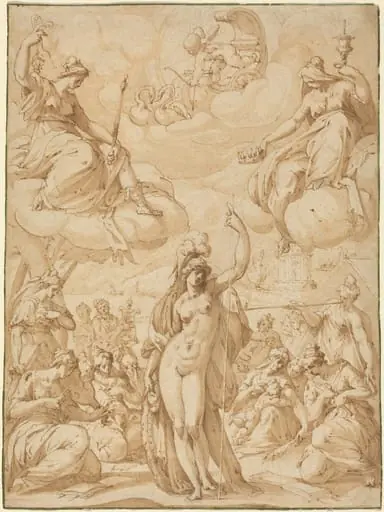 Allegory of Minerva as the Head of the Muses
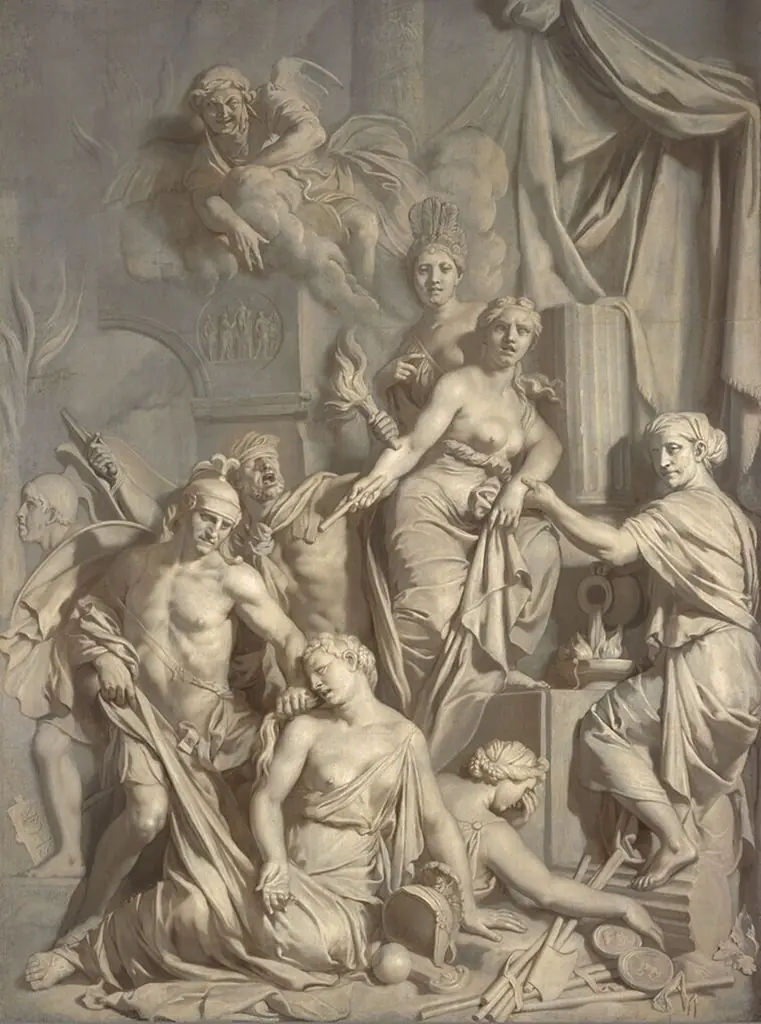 Rome from the Throne
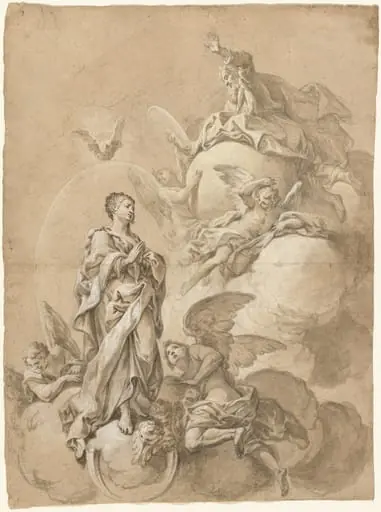 Vision of the Immaculate Conception