Artwork
Allegory of Government: Wisdom Defeating Discord
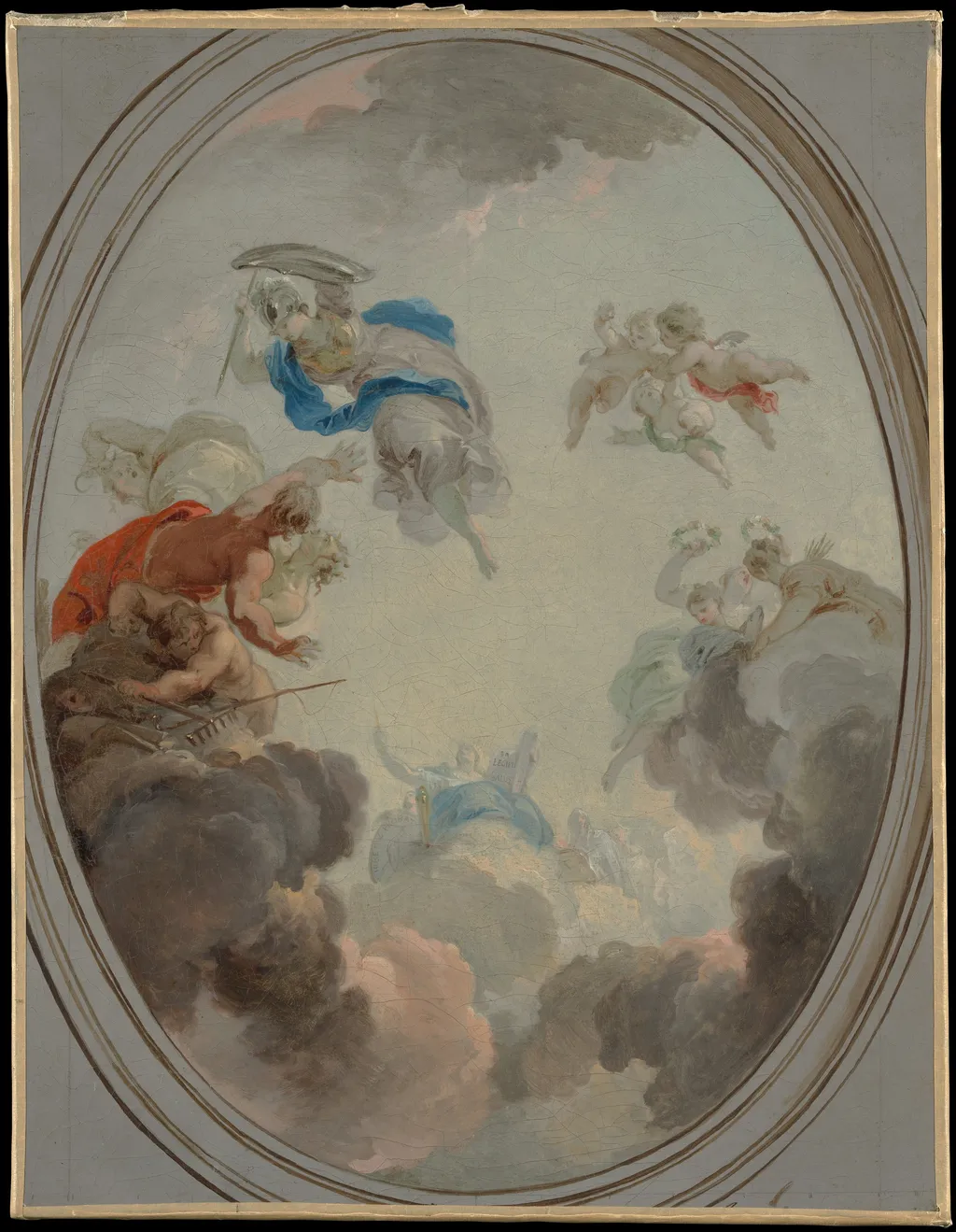
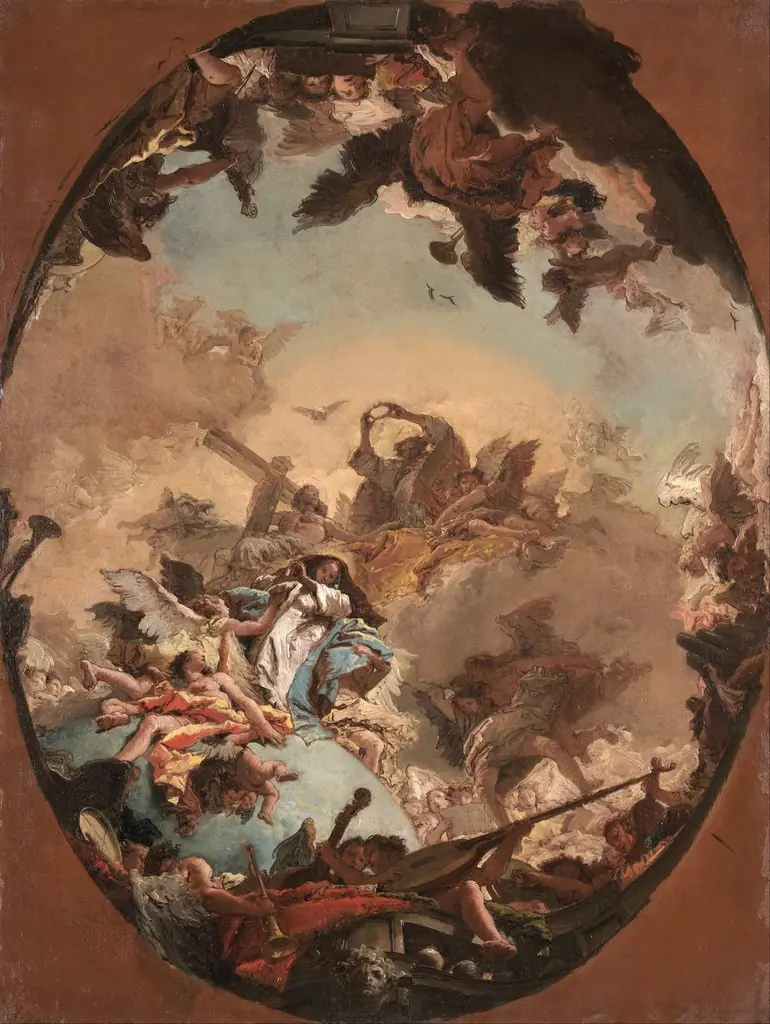
Allegory of Government: Wisdom Defeating Discord is an oil painting by the Rococo painting artist Jacob de Wit. It dates from 1734 and is held in the collection of the Metropolitan Museum of Art.
About this work
Technique & Style
Stylistically, the work relies on clear linear contours and a restrained palette, reinforcing its didactic purpose within the allegorical genre.
The painting is an oil work on canvas, measuring about 51.1 cm by 39.1 cm, as recorded in the catalog entry. Jacob de Wit applied oil paint to achieve a smooth surface typical of early eighteenth‑century Dutch decorative art, using a technique that emphasizes even brushwork and subtle tonal modulation. The composition centers a putto amid swirling clouds and an open sky, arranging the figures in a balanced, symmetrical layout that underscores the allegorical theme of wisdom overcoming discord.
Stylistically, the work relies on clear linear contours and a restrained palette, reinforcing its didactic purpose within the allegorical genre.
History & Provenance
Allegory of Government: Wisdom Defeating Discord was executed in 1734 by the Dutch painter Jacob de Wit, who specialized in allegorical subjects. The work, rendered in oil on canvas, measures 51.1 × 39.1 cm and belongs to the allegory genre. It was created as an autonomous painting rather than part of a decorative scheme, reflecting de Wit’s mature style in the 1730s.
The painting entered the collection of the Metropolitan Museum of Art, where it remains on public display, having been acquired by the museum at an undocumented date. No earlier owners or commissioning details are recorded in the available documentation.
Overview
Jacob de Wit's 1734 oil painting, Allegory of Government: Wisdom Defeating Discord, exemplifies the Rococo aesthetic through its dynamic, ethereal composition. This large-scale work, now housed at The Metropolitan Museum of Art, presents a complex allegorical narrative. De Wit, a Dutch artist known for his decorative schemes and religious subjects, created a vibrant scene where celestial figures interact amidst swirling clouds, embodying abstract concepts of governance and societal harmony.
Subject & Meaning
The painting depicts a celestial conflict, with figures suspended in a sky filled with light and shadow. A central female figure, clad in blue and holding a mirror, symbolizes wisdom. She confronts a red-cloaked male figure wielding a spear, representing discord or strife.
Winged putti, some bearing scrolls or tools, populate the scene, further elaborating on the themes of order and chaos within the context of effective governance.
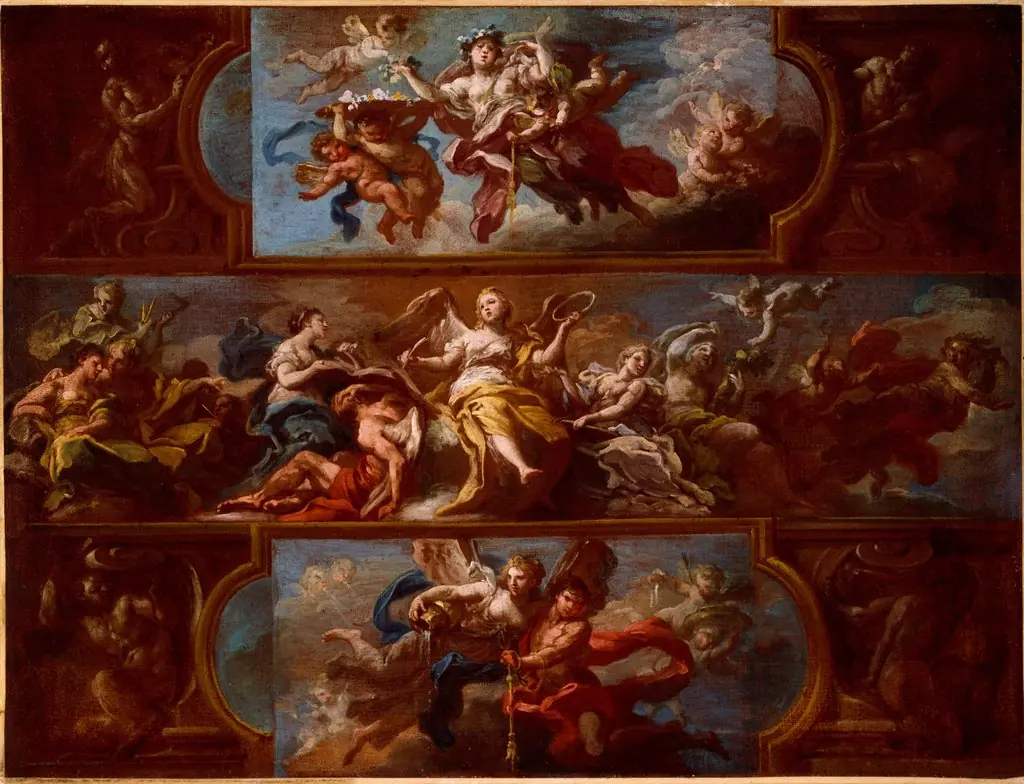
Own this work as a print
Artist & collection
Artist
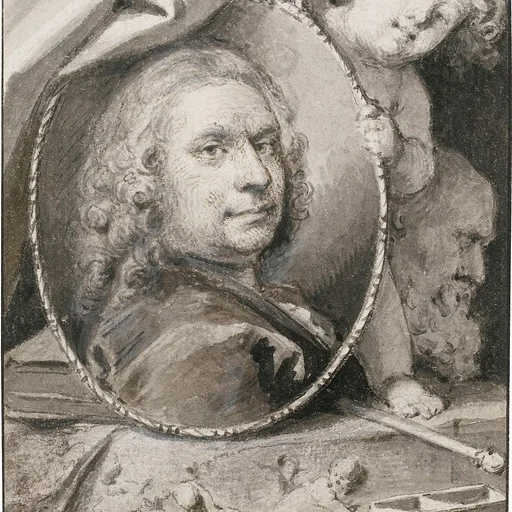
Jacob de Wit (19 December 1695 – 12 November 1754) was a Dutch painter and interior decorator. He is best known for his depictions of religious scenes.

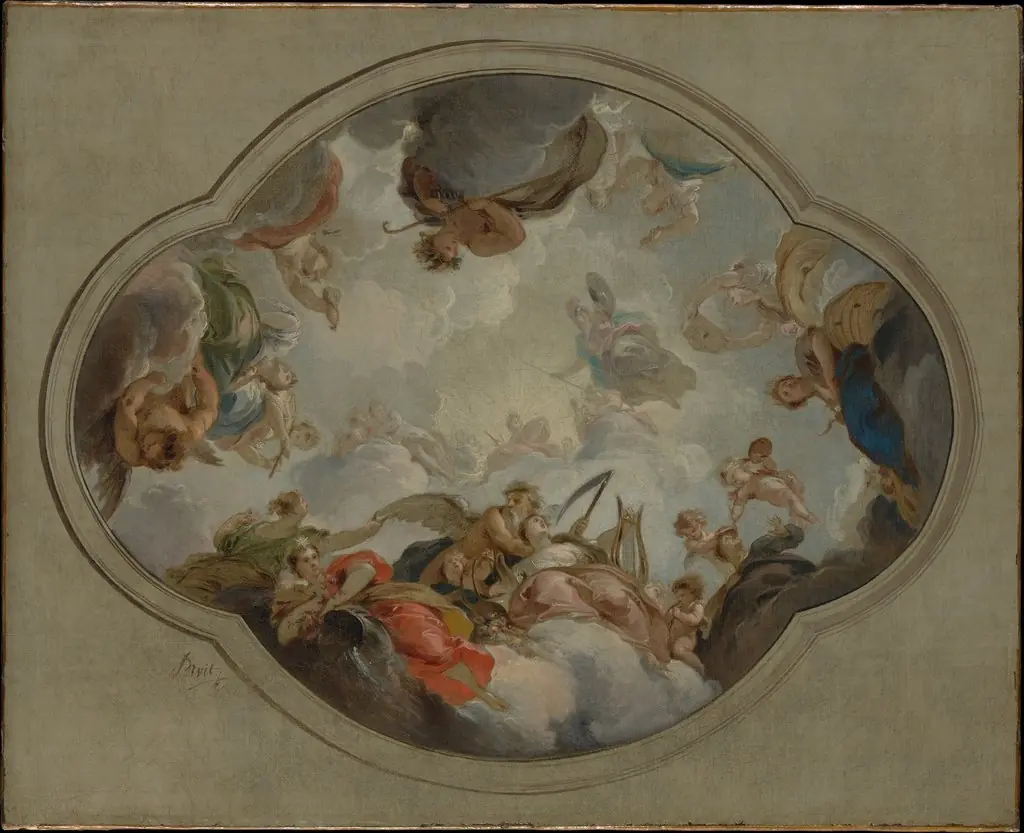
- Allegory
 Sketch for a Ceiling Fresco
 The Apotheosis of the Spanish Monarchy
 Design for a ceiling piece with Aeneas and the four seasons in the corners
 Allegorical Figures
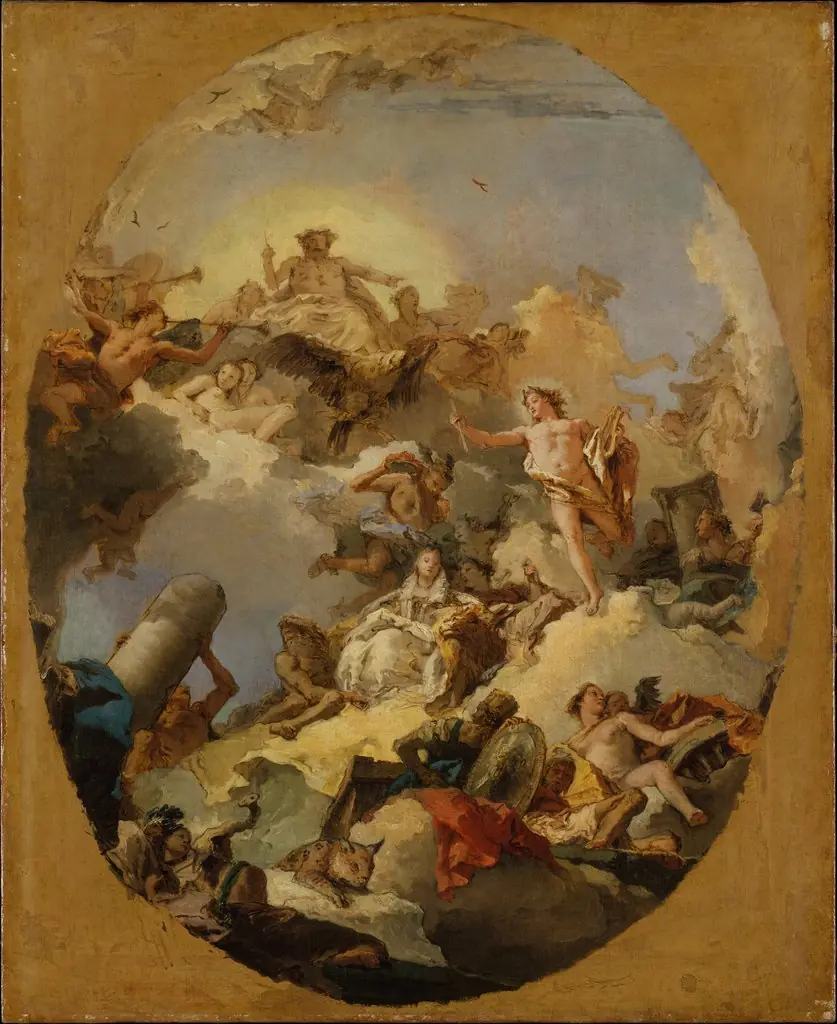 The Apotheosis of the Spanish Monarchy
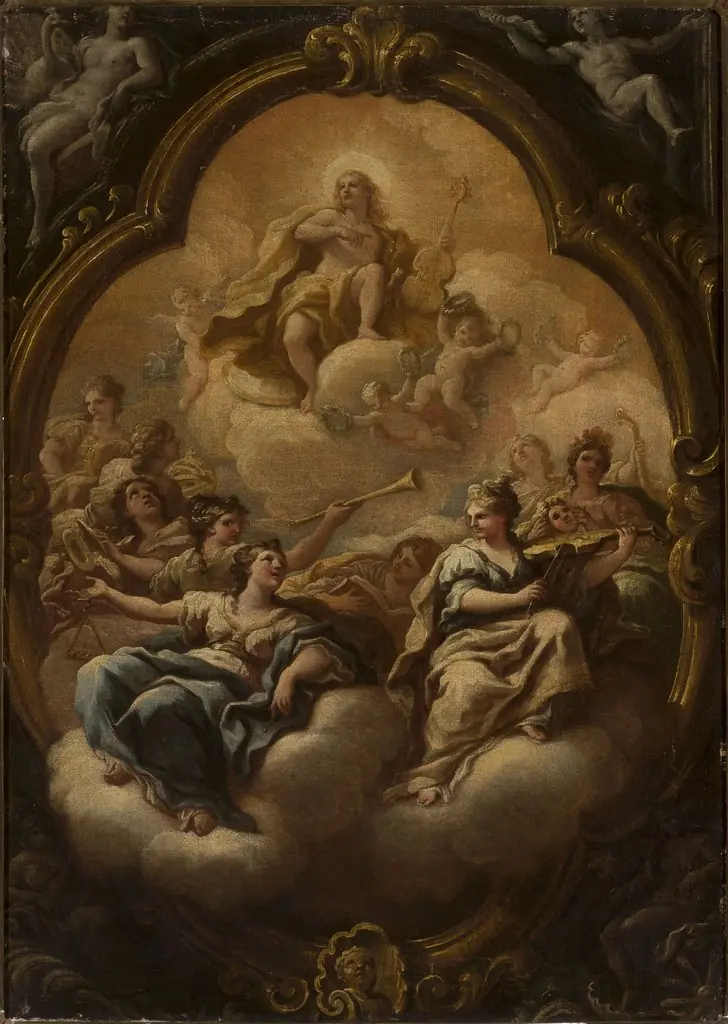 Apollo and Muses
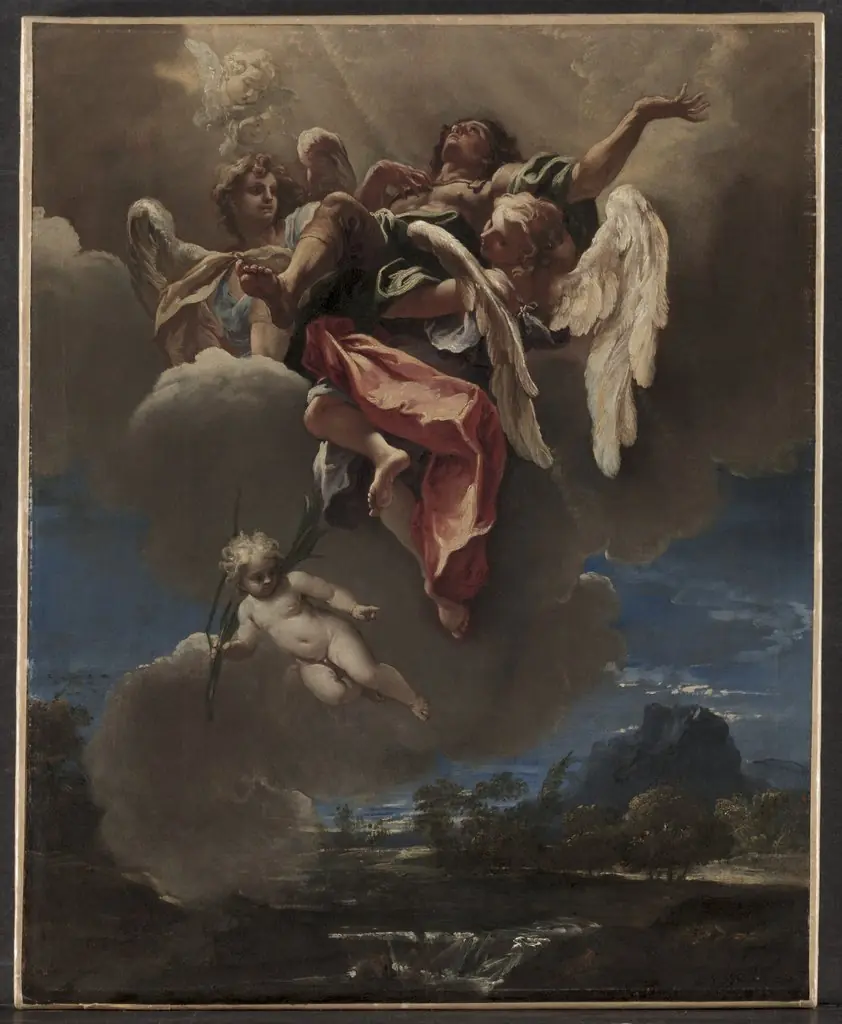 Study for "An Apotheosis of a Saint" (for San Bernardino dei Morti, Milan)
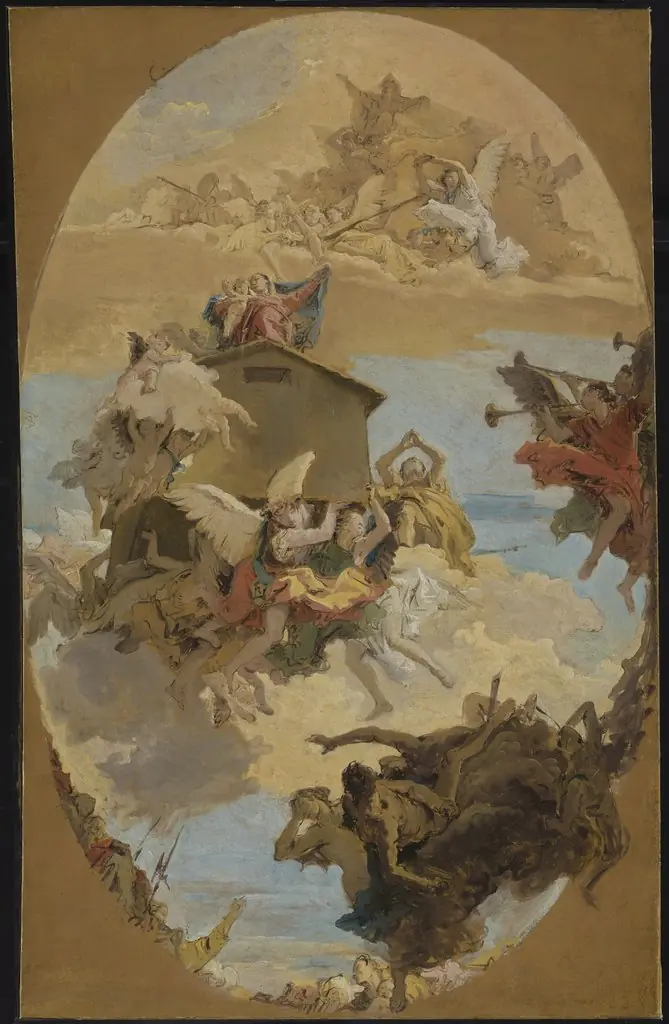 The Miracle of the Holy House of Loreto
 The Coronation of the Virgin