Artwork
Madonna and Child Enthroned with Saints
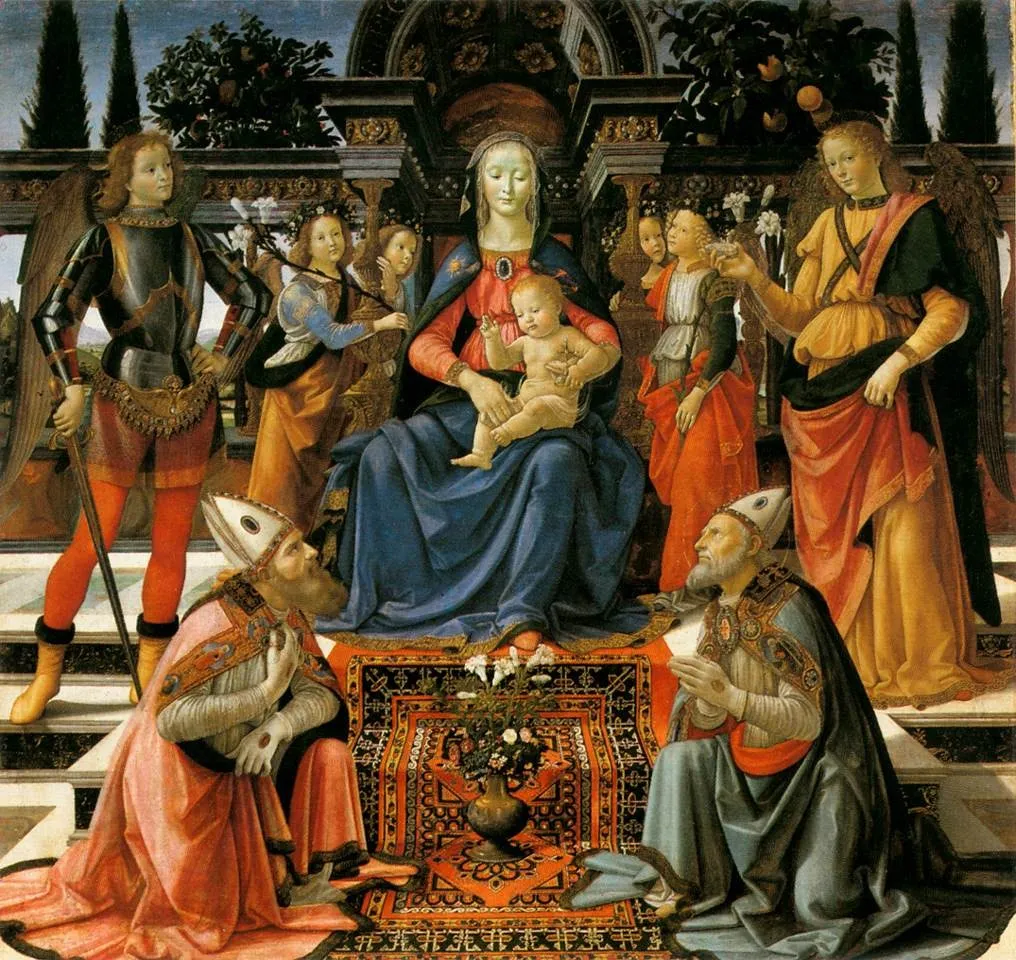
Madonna and Child Enthroned with Saints is an unspecified painting by the High Renaissance artist Domenico Ghirlandaio. It dates from 1492 and is held in the collection of the Uffizi Gallery.
About this work
Overview
Measuring 190 by 200 cm, the work is held in the collection of the Uffizi Gallery in Florence, where it entered in 1853 with inventory number 1890, no.
Madonna and Child Enthroned with Saints, also known as the Sacra conversazione degli Ingesuati, is a tempera on panel painting by the Italian Renaissance master Domenico Ghirlandaio, dated to 1484. Measuring 190 by 200 cm, the work is held in the collection of the Uffizi Gallery in Florence, where it entered in 1853 with inventory number 1890, no. 881. The painting represents a major achievement in Ghirlandaio's mature religious output, exemplifying his synthesis of Florentine compositional traditions with Flemish-inspired detail and virtuoso tempera technique. It remains one of the most celebrated sacra conversazione panels of the late fifteenth century, notable for its pyramidal structure, symbolic richness, and polished enamel-like surface finish.
Subject & Meaning
The painting depicts a sacra conversazione, a sacred conversation uniting heavenly and earthly saints around the enthroned Virgin and Child. At the center, Mary sits frontally on a marble throne beneath an ornate architectural canopy, holding the Christ Child on her lap. The Christ Child raises his hand in blessing and holds a crystal orb topped with a golden cross and pearls, symbolizing his dominion over the world. Flanking the Virgin are the archangels Michael and Gabriel: Michael appears in gleaming armor, while Gabriel bears lilies, the traditional emblem of the Annunciation. Four additional angels occupy the terrace behind the throne. In the foreground, two kneeling bishops in ecclesiastical dress with mitres and clasped hands represent the earthly saints: Saint Zenobius and Saint Justus of Volterra, the latter being the titular saint of the church for which the altarpiece was commissioned. The composition is rich with symbolic objects. The Virgin wears a sapphire brooch surrounded by pearls, emblematic of chastity and modesty, and an embroidered star on her mantle recalling the Star of Bethlehem and divine grace. The pearl-studded cornices signify purity. The patterned Anatolian carpet at the base, with its floral bouquet, contains lilies, roses, and other Marian flowers. Behind the architectural screen, a garden yields cypresses, pomegranate, and orange trees: the pomegranate signifies fertility and royalty, the orange alludes to original sin overcome by Christ's birth, and the cypresses evoke the hortus conclusus, the enclosed garden symbolizing Mary's virginity.
Technique & Style
The work is executed in tempera on panel, a medium in which Ghirlandaio achieved exceptional refinement. The surface is polished and enamel-like, with smooth handling, fine linear detail in textiles and armor, precise contouring of faces, and flat gold decorative elements. Light falls evenly across the figures with soft modeling and minimal deep shadow. The palette is dominated by deep blues, vermilion reds, coral pinks, and gold accents against darker architectural tones, with red serving as the Passion color throughout the composition in the Virgin's mantle, episcopal garments, carpet patterns, Saint Michael's greaves, and an angel's cape. The orange tones, assimilable to gold, complement this scheme in garments and fruit. Vasari particularly praised Ghirlandaio's ability to recreate golden color and metallic effects without traditional gold leaf, using only tempera colors, a technique he attributed to Ghirlandaio as an invention, though it had precedents in Flemish painting and in the work of Piero della Francesca. The painting demonstrates authentic virtuosity in rendering transparency, notably in the crystal orb and the impalpable veil clothing the Christ Child. The Flemish influence is evident in the detailed still life of the flower vase and the precious Anatolian carpet, which reappears in Ghirlandaio's Saint Jerome in His Study fresco of 1480. The composition is harmoniously balanced in masses, volumes, and color alternation, with a pyramidal structure derived from Fra Angelico's San Marco Altarpiece of circa 1438-1440.
History & Provenance
The painting was commissioned for the high altar of the church of San Giusto alle Mura, known as degli Ingesuati, located just outside the walls of Florence. It was produced in connection with important redecoration works at the church, which also involved Pietro Perugino, who contributed three panels now also in the Uffizi: The Agony in the Garden, The Crucifixion, and The Pietà. The altarpiece was seen at San Giusto by Albertini in 1510. The church was destroyed in 1529 during the siege of Florence, and the paintings were moved by the friars to their new residence at the convent of San Giovanni Battista della Calza near Porta Romana, where Vasari later saw and described them on the side altars. The painting entered the Uffizi collections in 1853. The complete altarpiece originally included a predella in five compartments, attributed to David Ghirlandaio, which is now dispersed among the Metropolitan Museum of Art in New York (three panels: The Translation of the Body of Saint Zenobius, The Marriage of the Virgin, and The Archangel Raphael and Tobias), the Detroit Institute of Arts (The Fall of the Rebel Angels), and the National Gallery in London (The Miracle of the Bread of Saints Justus and Clement).
Context
Ghirlandaio's Sacra conversazione degli Ingesuati occupies a central position in the development of Florentine altarpiece painting during the late Quattrocento. Its pyramidal composition directly descends from Fra Angelico's San Marco Altarpiece, consolidating a tradition that had become well established in Florentine practice. Yet Ghirlandaio infused this conventional structure with a festive and pleasing tone, rich in details drawn from the daily life of Florence's affluent classes, rendered with impeccable pictorial technique. The work exemplifies the artist's characteristic approach to religious themes, combining devotional seriousness with worldly splendor. The painting has been compared to Ghirlandaio's Sacra conversazione of Monticelli, also in the Uffizi, though the latter is considered less rich. Critical attention has focused on the artist's emulation of Flemish art, visible in the precious Anatolian carpet, the symbolic flower still life, and the extreme realism of landscape elements. Scholarly literature includes Ronald G. Kecks's monograph on Ghirlandaio's painted oeuvre, and the work is documented in standard museum catalogues of the Uffizi.
Legacy
The Sacra conversazione degli Ingesuati has maintained its reputation as one of Ghirlandaio's finest altarpieces and a touchstone of late fifteenth-century Florentine painting. Its influence can be traced in the continued development of the sacra conversazione format in central Italy, where Ghirlandaio's synthesis of monumental composition and microscopic detail provided a model for subsequent generations. The dispersal of its predella to major American and British collections has ensured continued scholarly attention to the work as a whole, while the main panel's residence in the Uffizi has made it a fixture of Renaissance art historical study. The painting's virtuoso technique, particularly in tempera simulation of metallic and transparent effects, has been repeatedly cited in discussions of Quattrocento material culture and the reception of Flemish methods in Italy. Vasari's early praise of the work, especially his admiration for the armor of Saint Michael and the golden effects achieved without gold leaf, established its critical fortunes from the sixteenth century onward.
Artist & collection
Artist
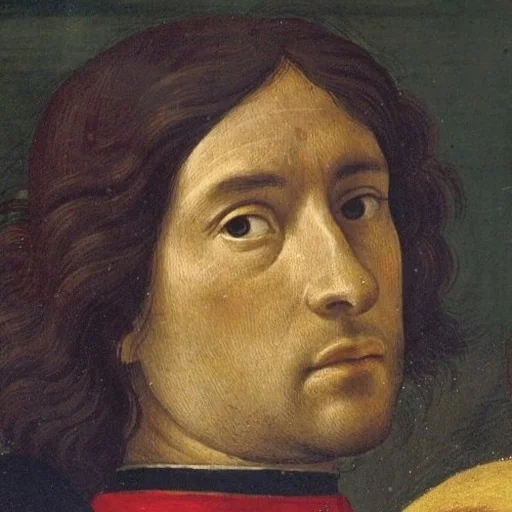
Domenico di Tommaso Curradi di Doffo Bigordi (2 June 1448 – 11 January 1494), professionally known as Domenico Ghirlandaio (also spelt as Ghirlandajo), was an Italian Renaissance painter born in Florence.

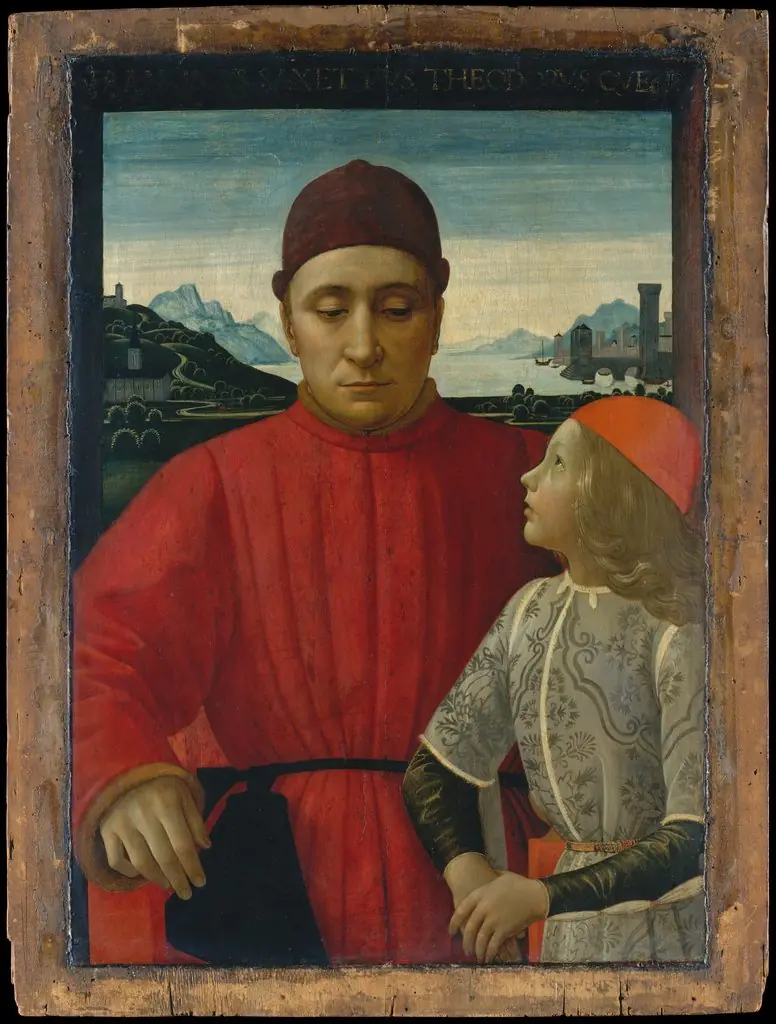
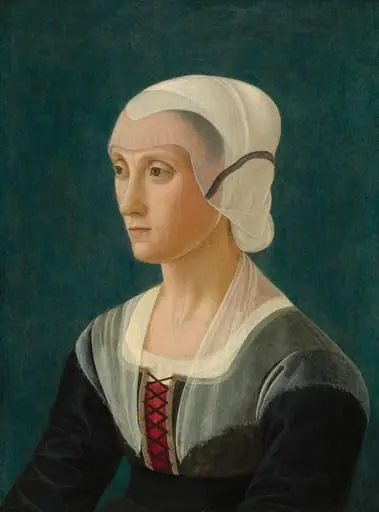
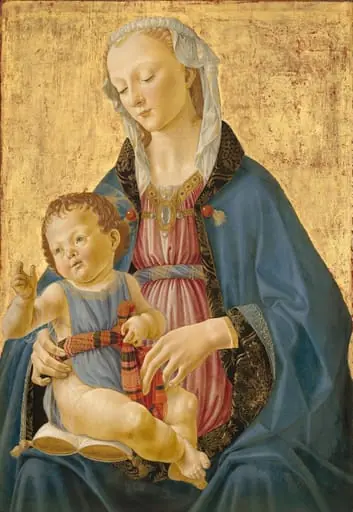
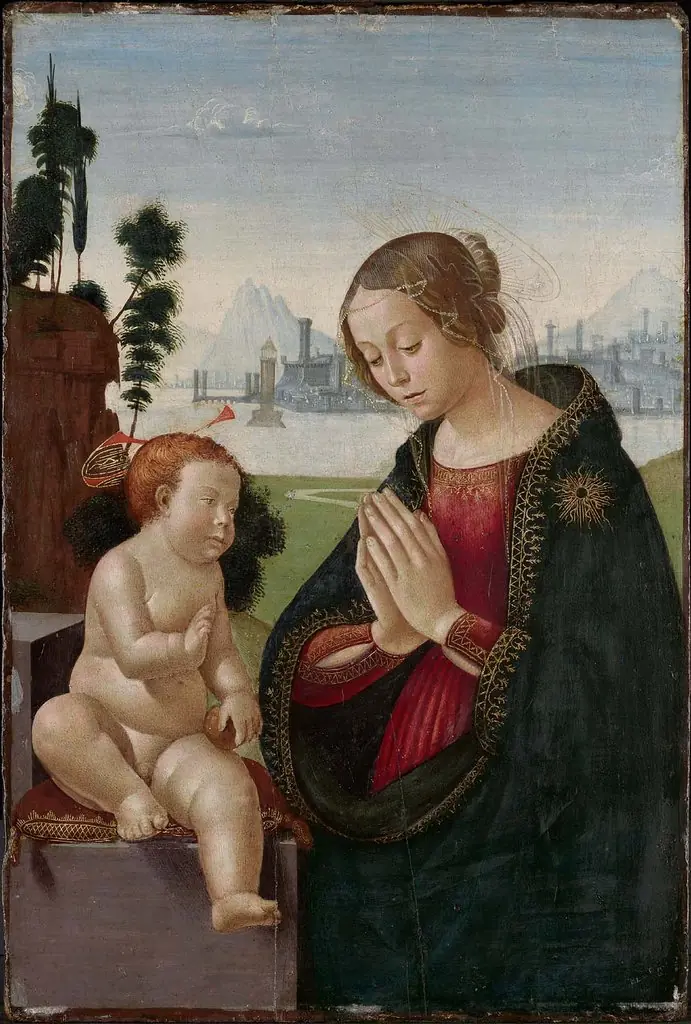
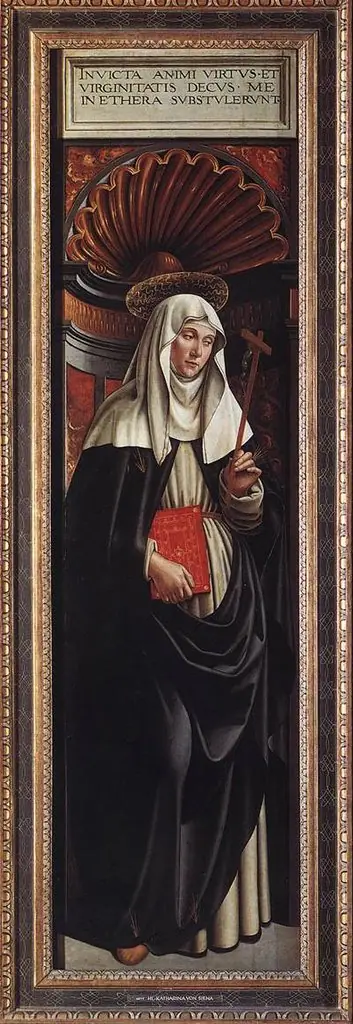
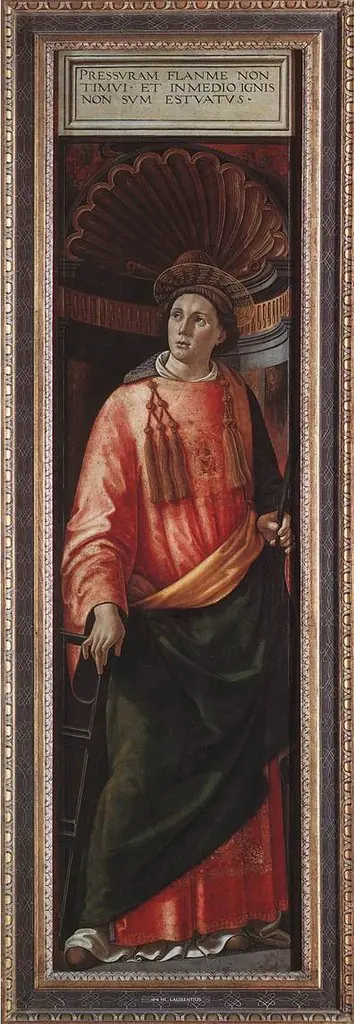
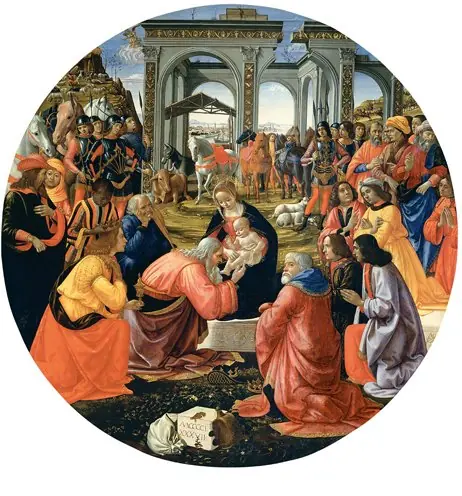
- Madonna and Child Enthroned with Saints
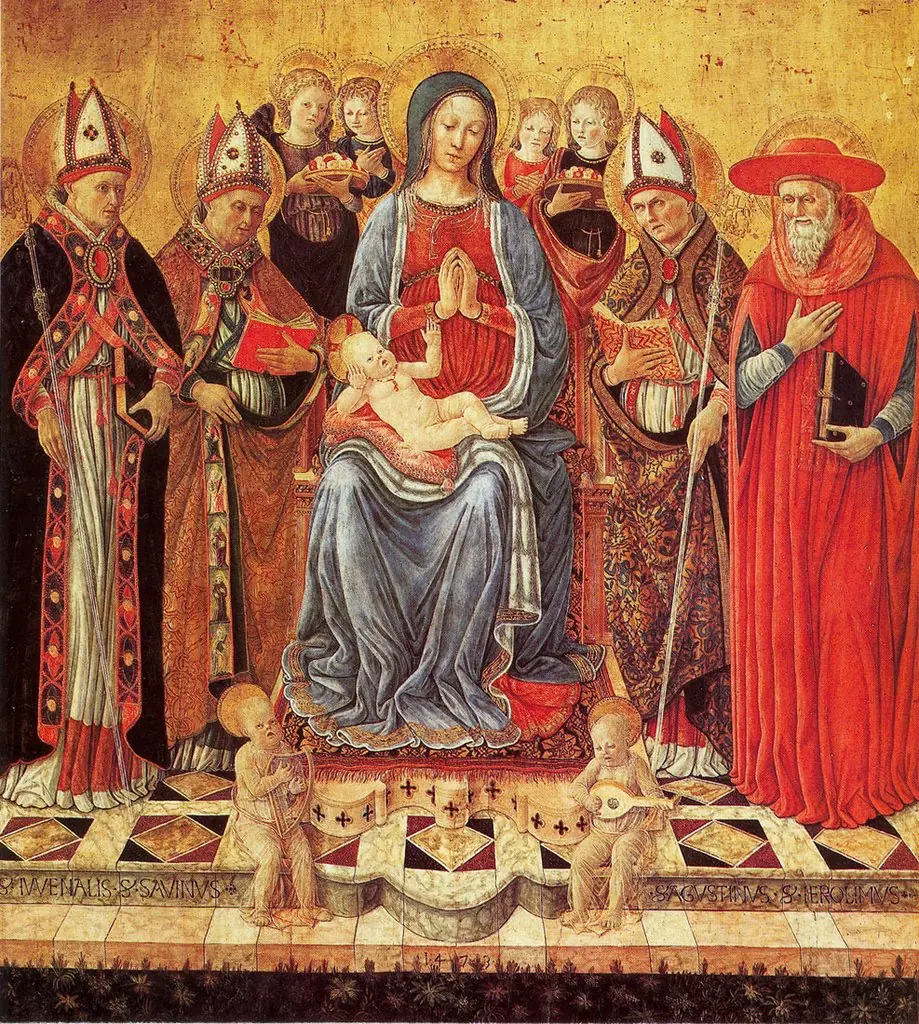 Madonna and Child Enthroned with Saints and Angels
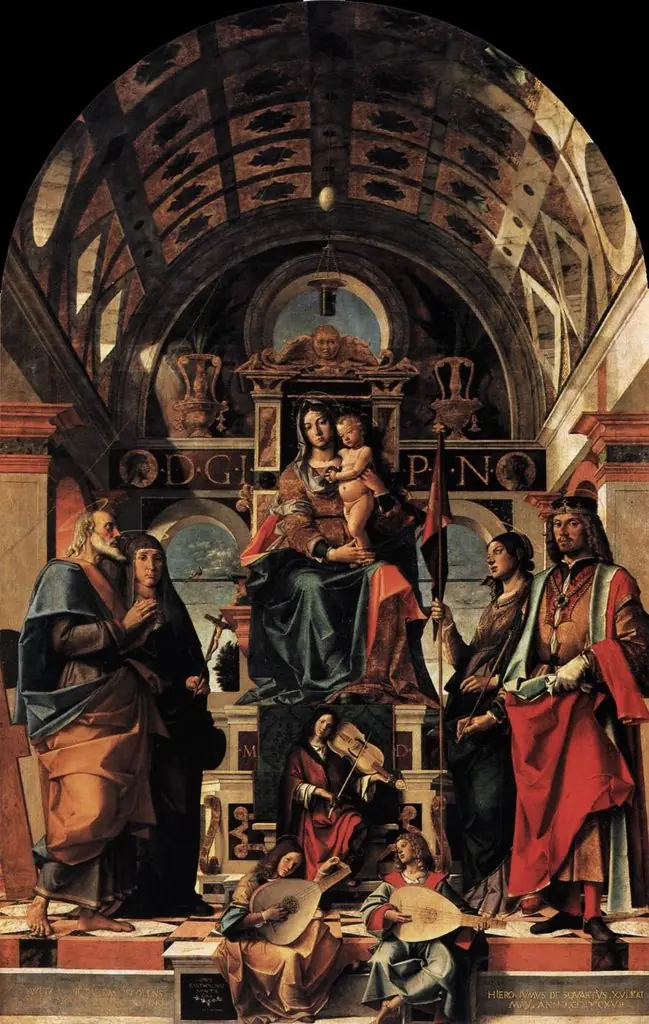 Madonna and Child enthroned with Saints
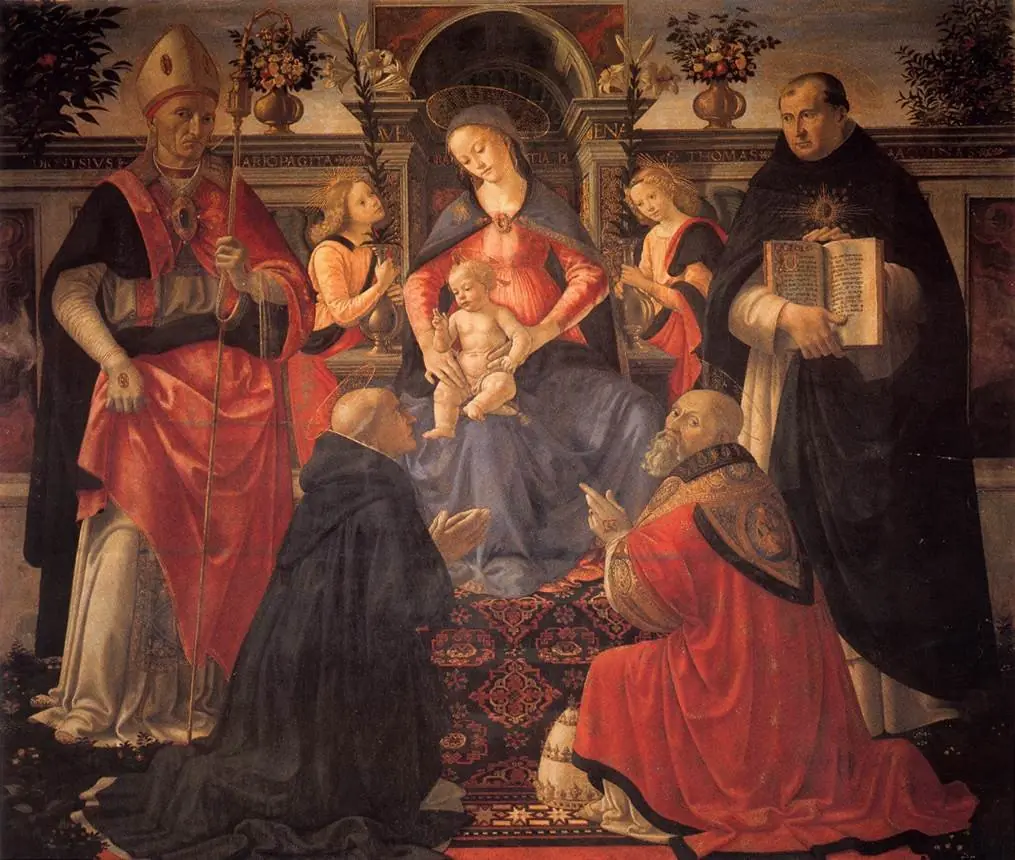 Madonna and Child Enthroned between Angels and Saints
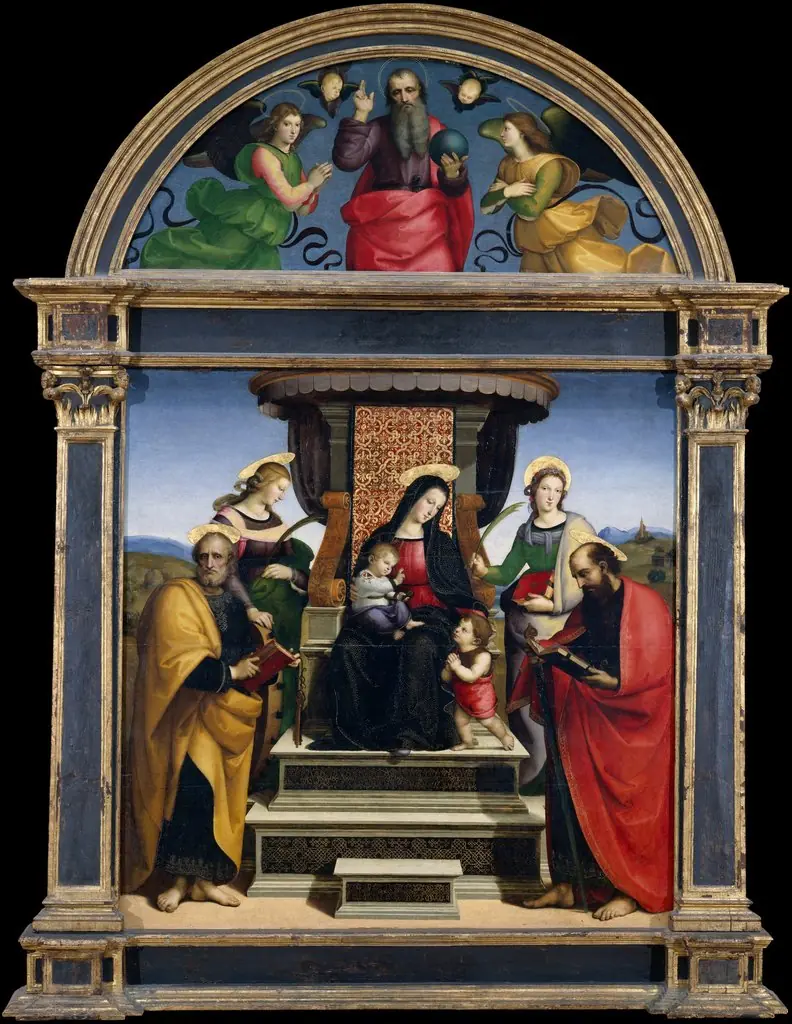 Madonna and Child Enthroned with Saints
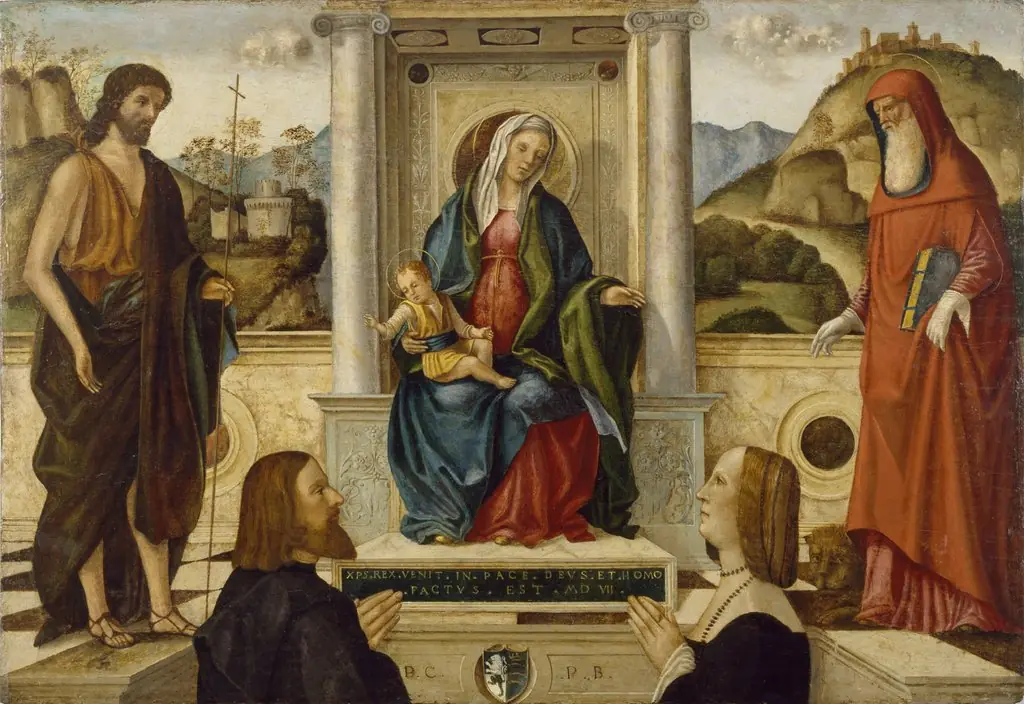 Madonna and Child Enthroned with Saints and Donor
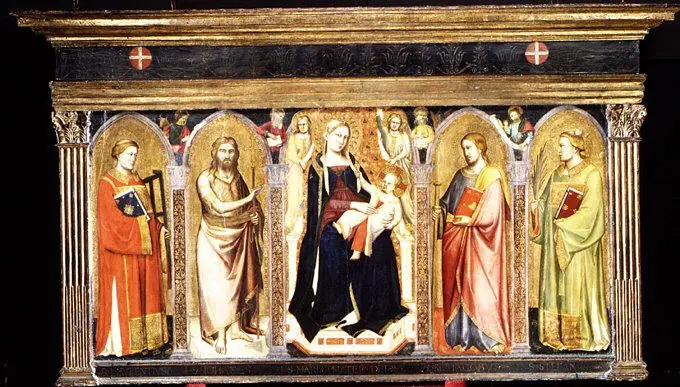 Madonna and Child Enthroned with Saints
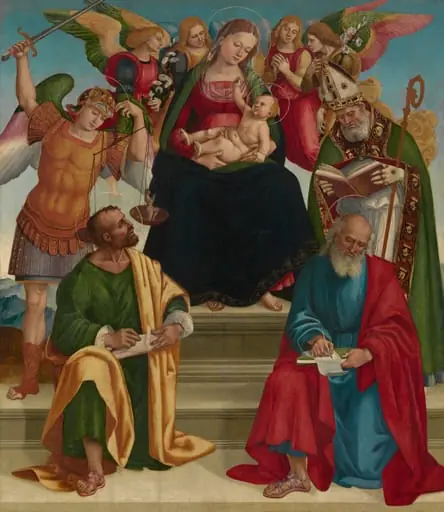 Madonna and Child with Saints and Angels
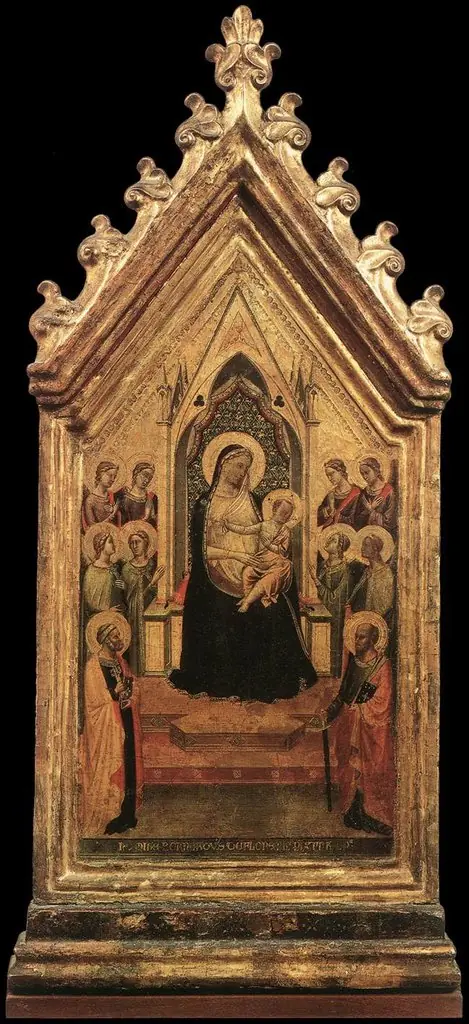 Madonna and Child Enthroned with Angels and Saints
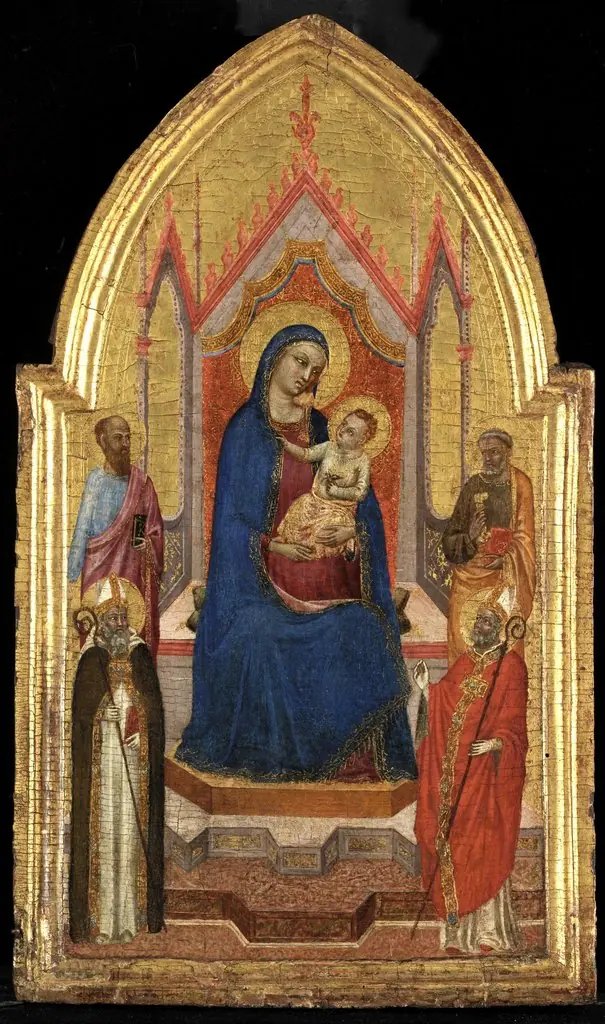 Madonna and Child Enthroned with Four Saints