Artwork
Madonna and Child Enthroned with Saints
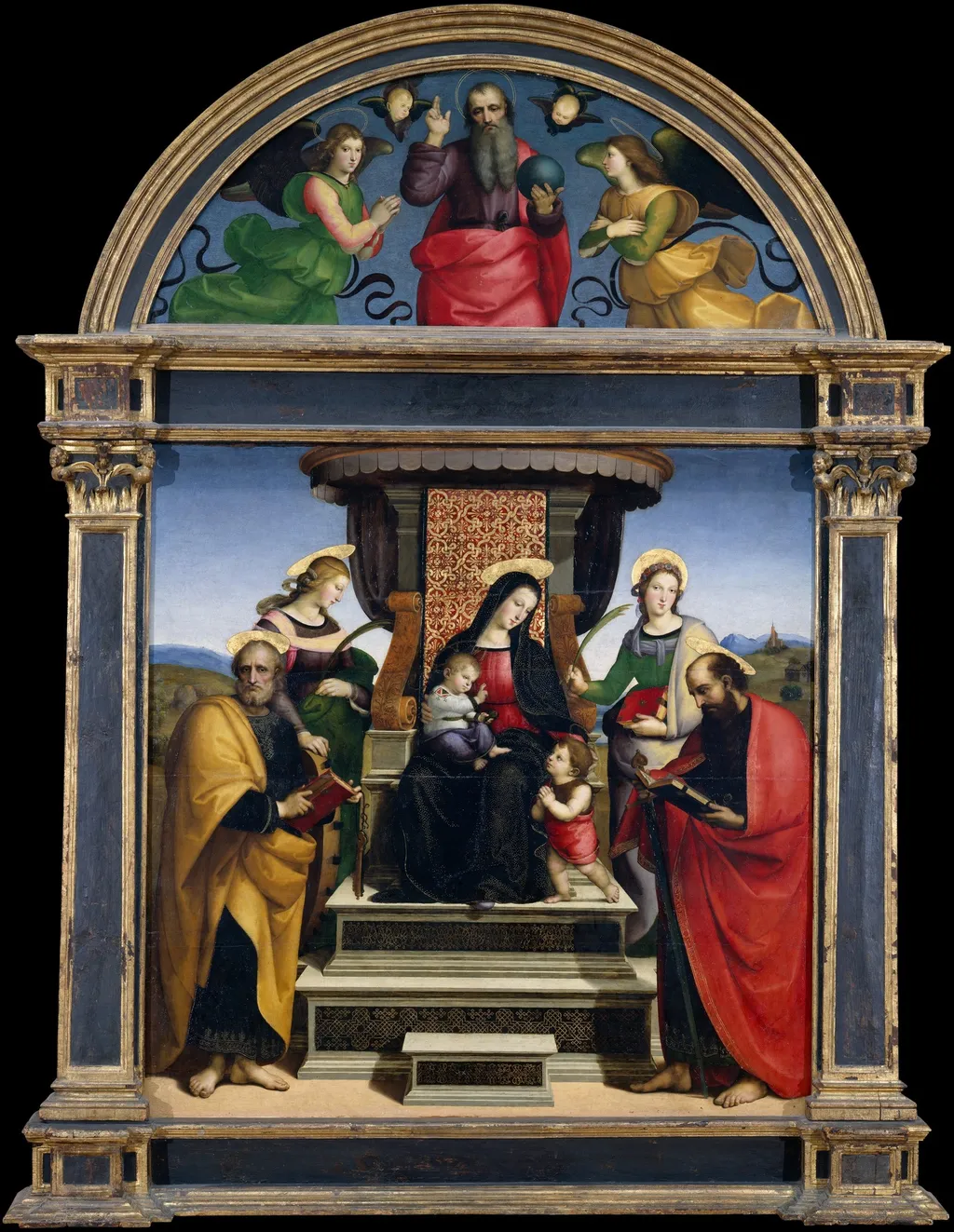
Madonna and Child Enthroned with Saints is an unspecified painting by the High Renaissance artist Raphael. It dates from 1504 and is held in the collection of the Metropolitan Museum of Art.
About this work
Raphael painted this monumental altarpiece in 1504, at twenty-one, for the Franciscan nuns of Sant'Antonio in Perugia. The central panel, now at the Metropolitan Museum of Art, shows the Virgin enthroned with the Christ Child among Saints Peter, Paul, Catherine, and Lucy, with God the Father in the lunette above. Known as the Colonna Altarpiece, it is the only Raphael altarpiece in the Americas.
Subject & Meaning
The saints are identifiable by their attributes: Peter holds keys, Paul a sword, and Catherine a wheel.
The work is a sacra conversazione, uniting the enthroned Madonna and Child with the young John the Baptist and four saints, Peter, Paul, Catherine of Alexandria, and an unidentified female saint. Unique iconographic features include the fully clothed Christ Child and John the Baptist, likely reflecting the explicit request of the Franciscan nuns of Sant'Antonio da Padova for whom the altarpiece was painted. Mary wears a dark blue mantle adorned with stars, echoing Byzantine iconography.
The saints are identifiable by their attributes: Peter holds keys, Paul a sword, and Catherine a wheel. The lunette depicts God the Father as Pantokrator holding a celestial globe, flanked by angels. The composition emphasizes the Incarnation and the role of the saints as intercessors, with the blessing Christ Child directing attention to John the Baptist, symbolizing the beginning of the New Covenant.
Technique & Style
The altarpiece is executed in oil on panel, with the predella panels painted on poplar wood. Stylistically, the main panel combines a sacra conversazione with a monumental architectural throne and a rich brocade curtain behind Mary, a device recalling Venetian painting. Perugino's influence remains strong in the sinuous poses of the female saints, but Raphael departs from his master through greater volumetric solidity, more intense colors, and a deeper sfumato.
The foreground saints, with their directed gazes, reflect exposure to Fra Bartolomeo. The predella panels survive in poor condition and are considered by some scholars to be largely studio work.
History & Provenance
The painting was commissioned around 1503–1505 for the Franciscan convent of Sant'Antonio da Padova in Perugia, where the nuns requested that the Christ Child be depicted fully clothed. Raphael executed the work partly in Umbria and completed it during visits to Florence circa 1505. The five-part predella was separated from the main panel in 1663 and sold to Queen Christina of Sweden; the main panel and lunette were sold in 1678 to the Colonna family (hence the altarpiece's name), then passed to the Bourbon kings of the Two Sicilies and were taken to Spain.
In 1901, American financier J. P. Morgan purchased the work for 2 million francs ($400,000). Upon Morgan's death, his heirs donated it to the Metropolitan Museum of Art in 1916.
Today, the altarpiece's main panels are housed at the Metropolitan Museum of Art in New York. Prior to this, the work was lent to the Louvre under Empress Eugénie and, in 1870, exhibited at the National Gallery in London. After being purchased by J.P. Morgan in 1901, it remained in private hands until his heirs bequeathed it to the Met in 1916. In 2006, the Met reunited the main panels with surviving predella panels for a special exhibition.
Context
The Colonna Altarpiece represents a pivotal moment in Raphael's early career, bridging his Umbrian training under Perugino with the Florentine innovations of Fra Bartolomeo, Leonardo da Vinci, and Giovanni Bellini. Commissioned around 1503 for the Perugian convent of Sant'Antonio, the work was made for nuns who notably requested that the Christ Child be fully clothed. Art-historical scholarship has debated the identity of the female saint on the right, and the predella panels' attribution remains uncertain.
Giorgio Vasari's Vite provides an early critical account. Acquired by J.P. Morgan in 1901 for a record price, the altarpiece is the only one by Raphael in the United States. The composition's supple handling and deepened sfumato mark Raphael's progression toward High Renaissance ideals.
Legacy
The Colonna Altarpiece is the only altarpiece by Raphael in the United States, a distinction that has shaped its reputation since its arrival at the Metropolitan Museum of Art. It was the last Raphael altarpiece in private hands when J.P. Morgan acquired it for a record price in the early 20th century. The work's legacy is also marked by the dispersal of its five predella panels across four museums on two continents, yet these panels were reunited at the Met for the first time in 2006, emphasizing the enduring scholarly and public interest in the complete composition. A preparatory drawing for the altarpiece at the Morgan Library further attests to its continued art-historical relevance.
Overview
Raphael's Madonna and Child Enthroned with Saints, also known as the Colonna Altarpiece, was painted between approximately 1503 and 1505. This significant work, created early in the artist's career, is presently housed at the Metropolitan Museum of Art in New York City. It holds the distinction of being the sole altarpiece by Raphael located in the United States, offering a rare opportunity to view a complete devotional commission from the High Renaissance master in North America.
Own this work as a print
Artist & collection
Artist
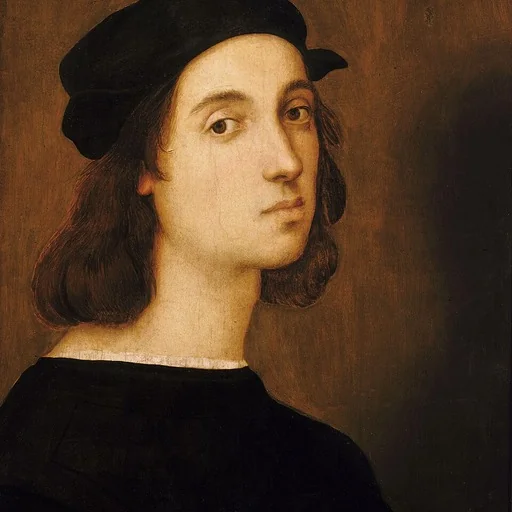
Raphael was born Raffaello Sanzio in Urbino on April 6, 1483, the son of Giovanni Santi, a painter and poet attached to the ducal court.


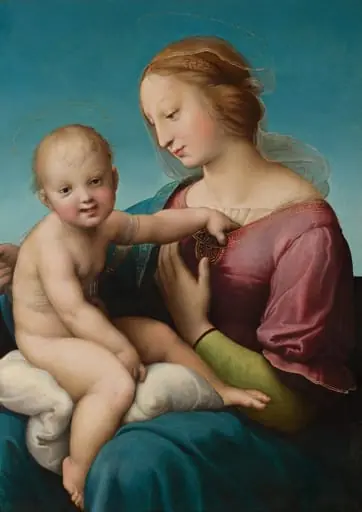
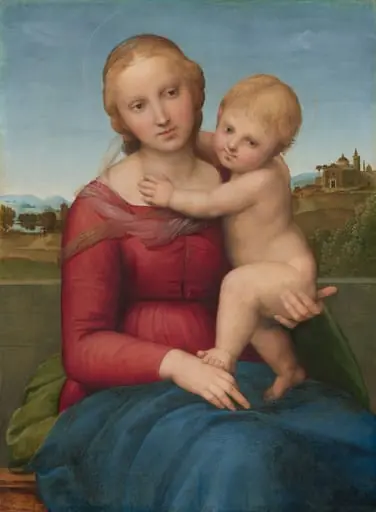
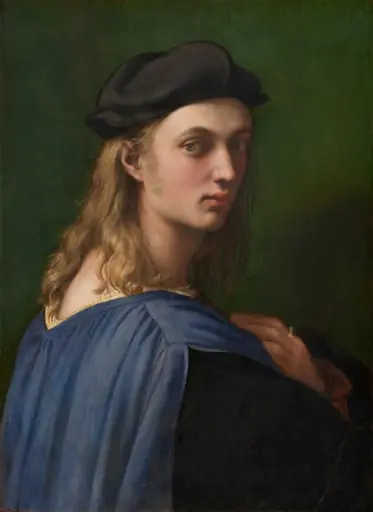
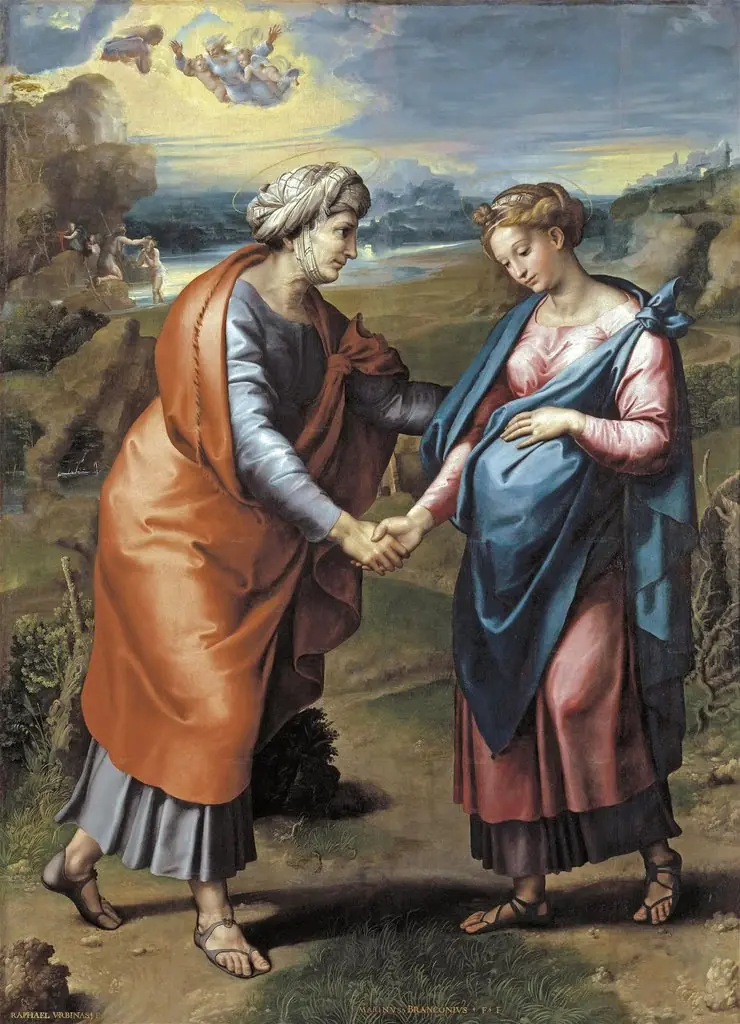
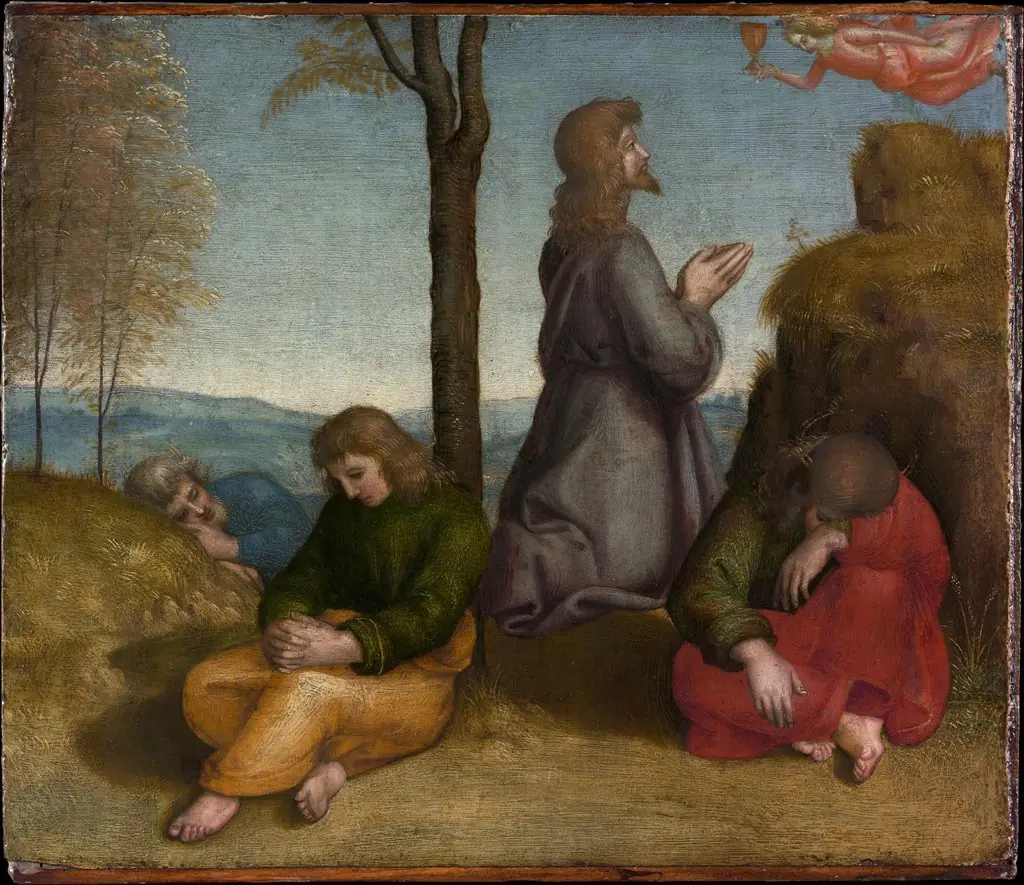
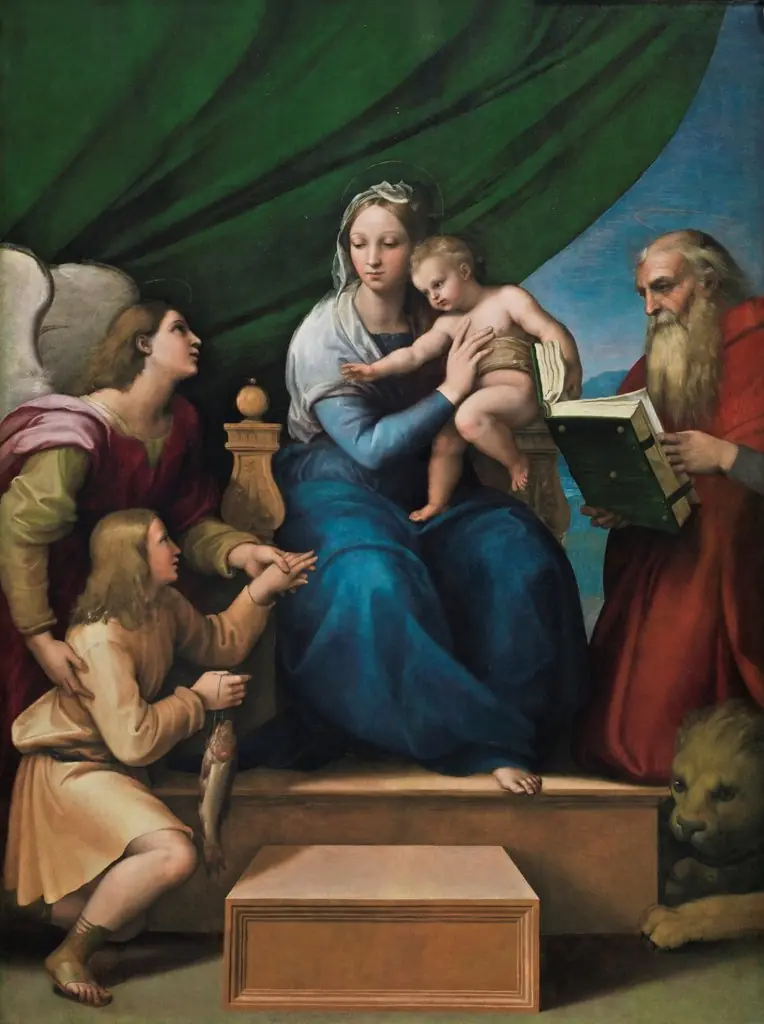
- Madonna and Child Enthroned with Saints
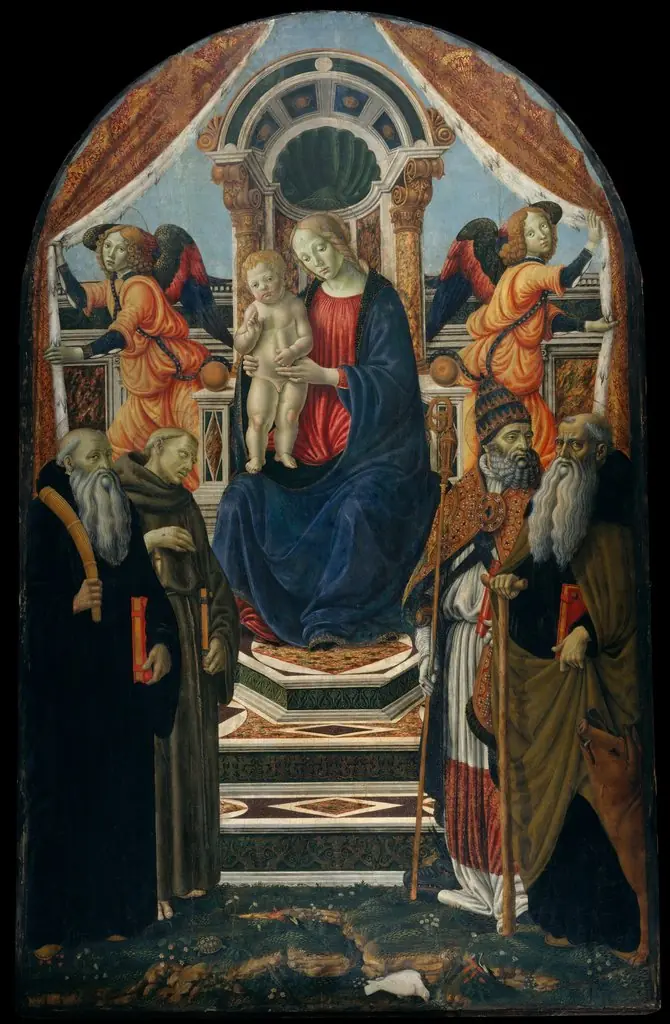 Madonna and Child Enthroned with Saints and Angels
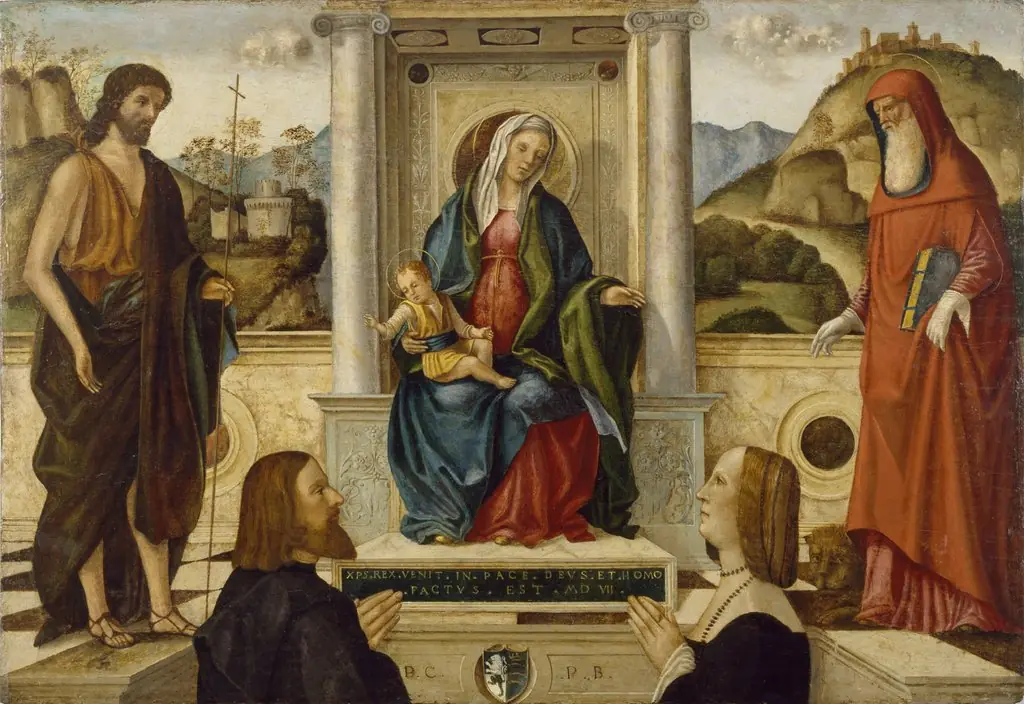 Madonna and Child Enthroned with Saints and Donor
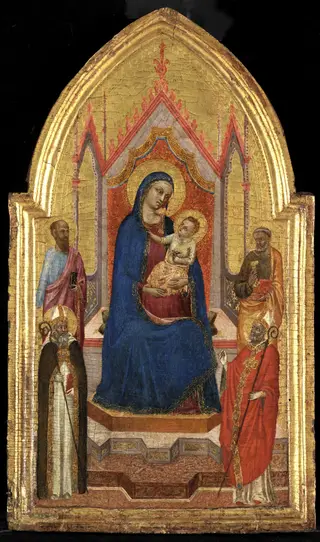 Madonna and Child Enthroned with Four Saints
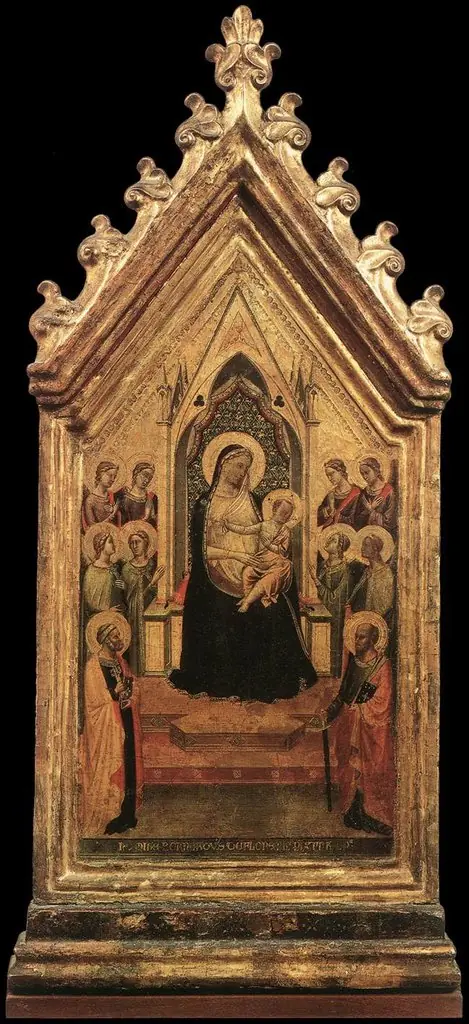 Madonna and Child Enthroned with Angels and Saints
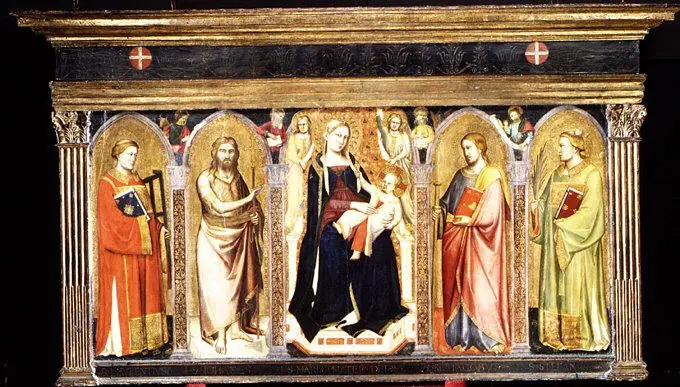 Madonna and Child Enthroned with Saints
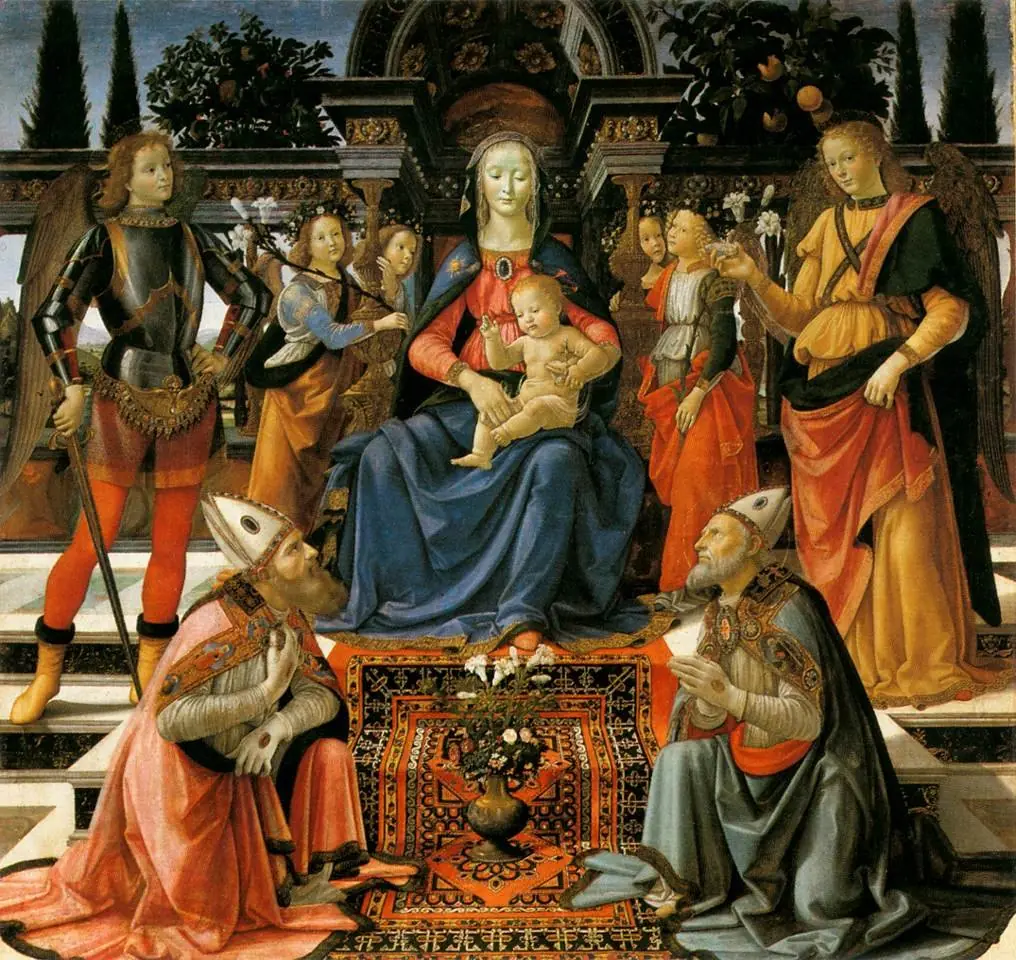 Madonna and Child Enthroned with Saints
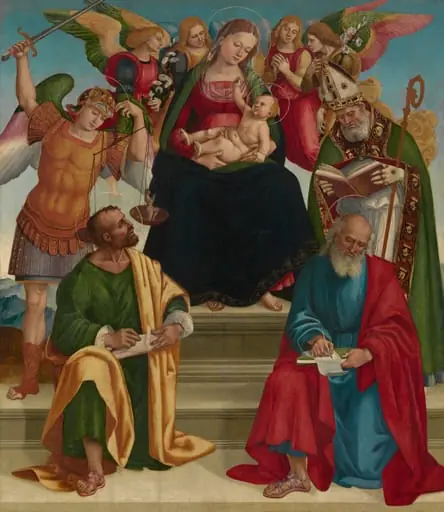 Madonna and Child with Saints and Angels
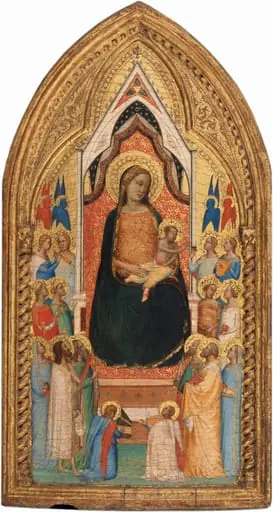 Madonna and Child with Saints and Angels