Artwork
Saint John the Evangelist with Acteus and Eugenius
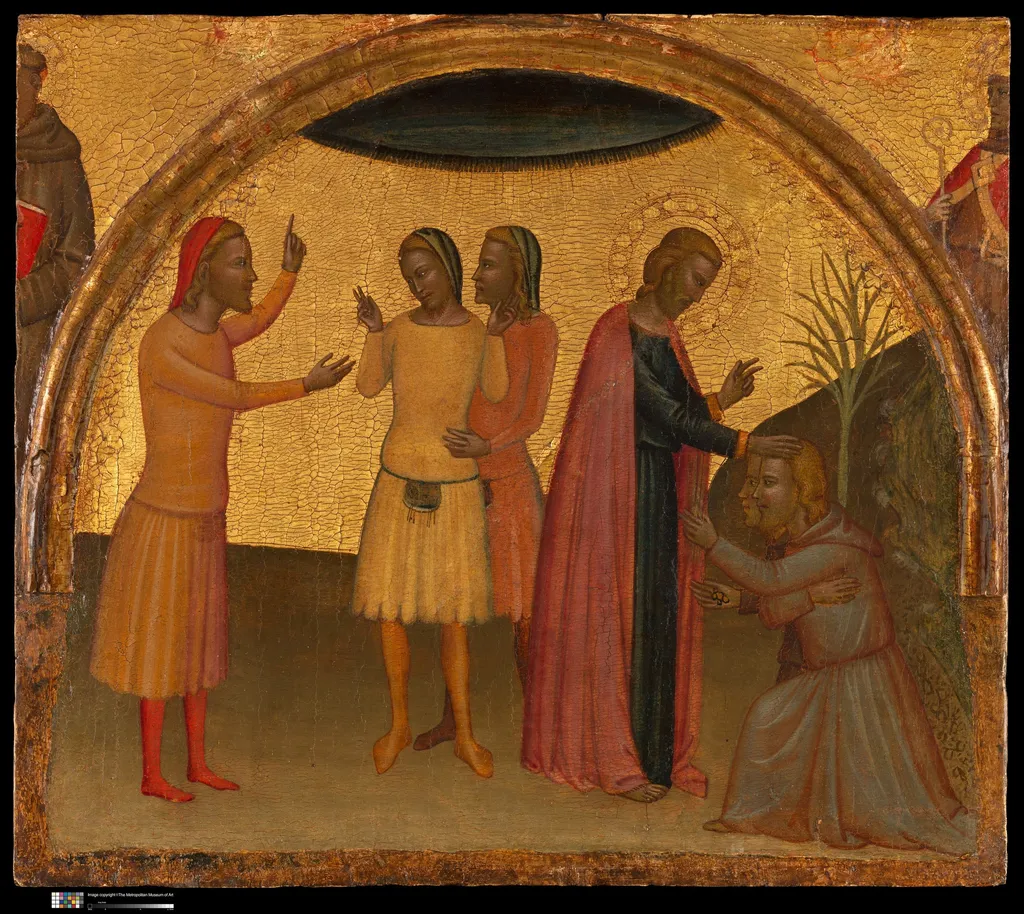
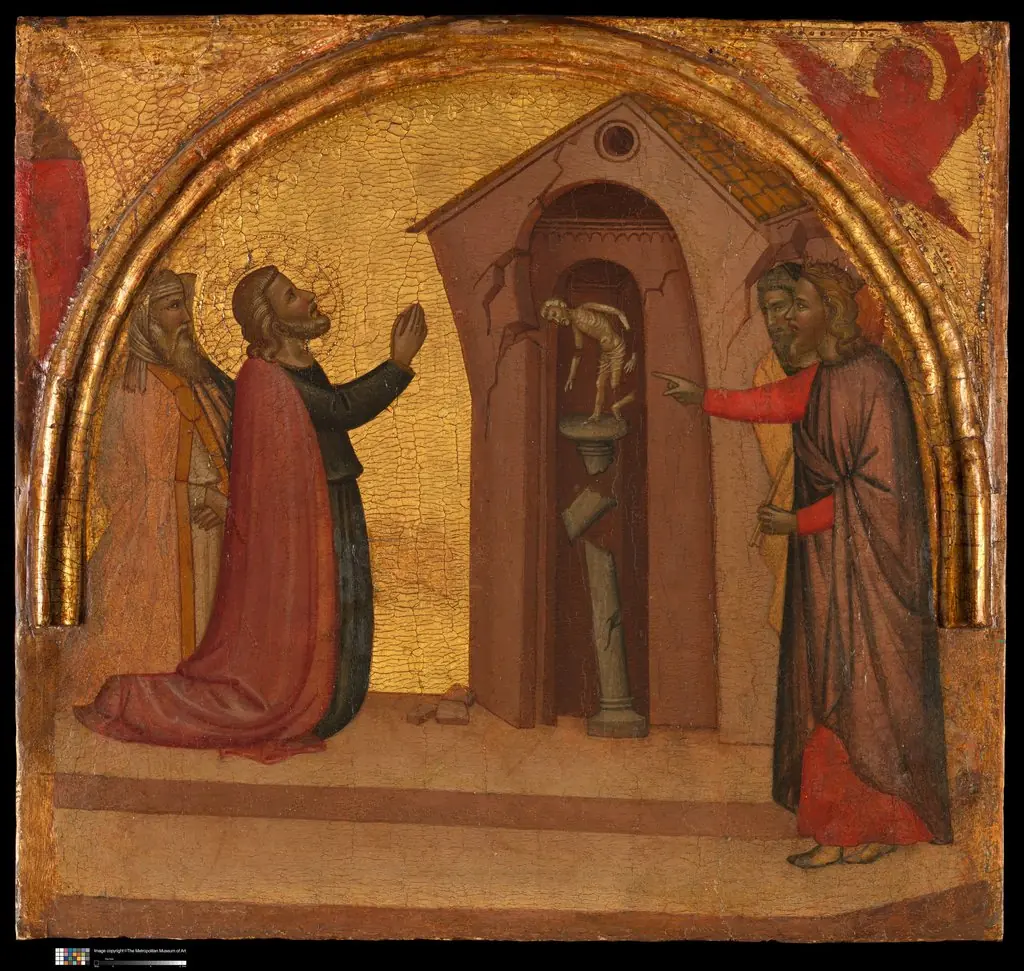
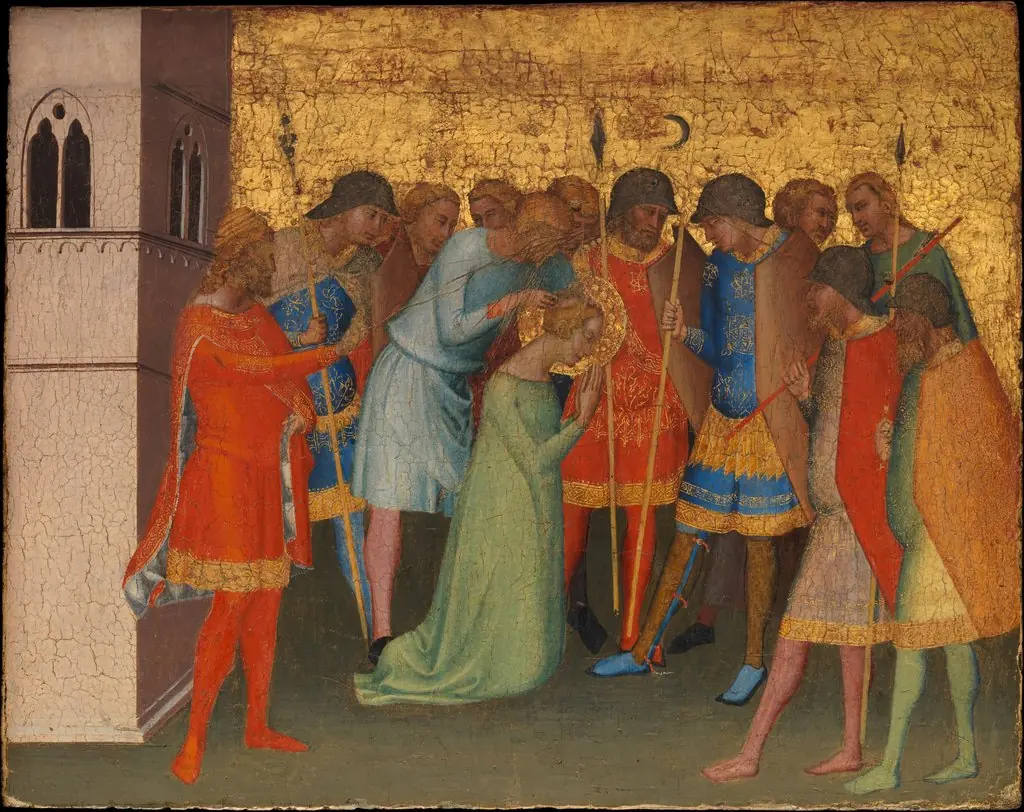
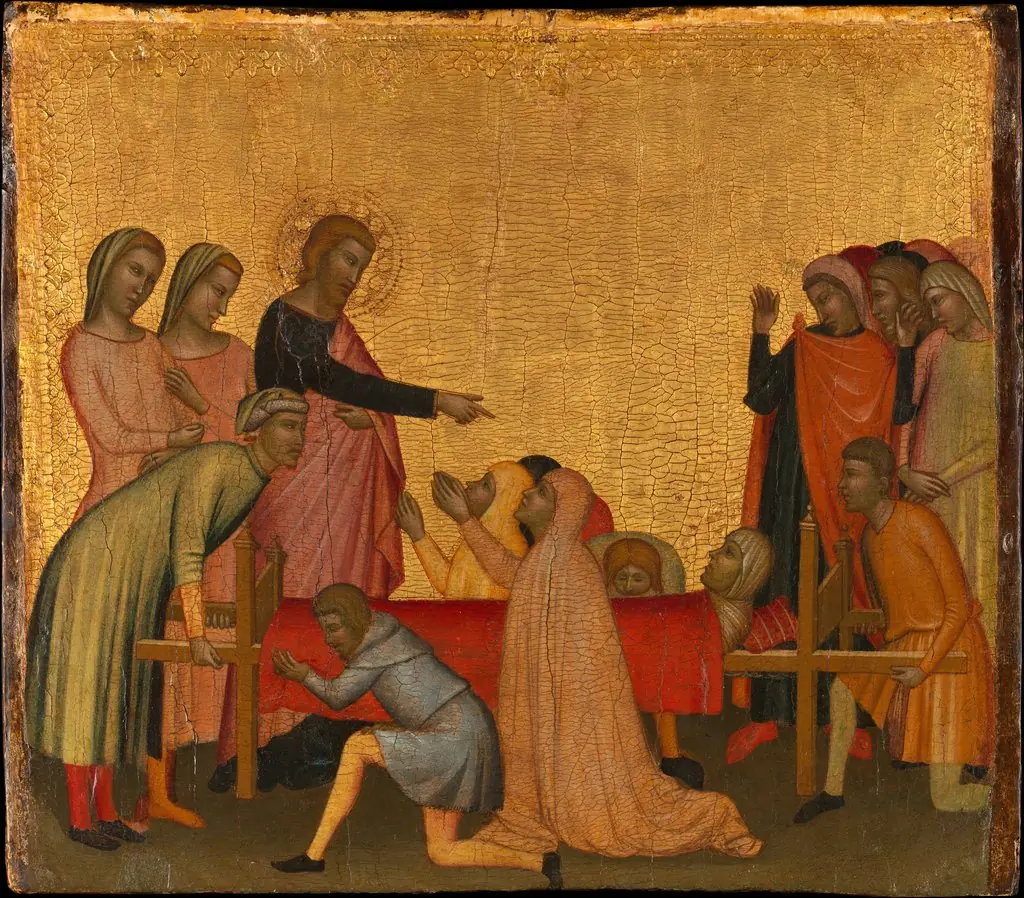
Saint John the Evangelist with Acteus and Eugenius is a tempera painting by the Italo Byzantine artist Francescuccio Ghissi. It dates from 1370 and is held in the collection of the Metropolitan Museum of Art.
About this work
Subject & Meaning
As a piece of religious art created in 1370, the painting utilizes tempera on panel to present a devotional scene typical of the period's iconography.
The work depicts Saint John the Evangelist, identified as the central religious figure, accompanied by two lay individuals named Acteus and Eugenius. As a piece of religious art created in 1370, the painting utilizes tempera on panel to present a devotional scene typical of the period's iconography. The composition centers on the apostle, shown in the company of the two figures associated with the hagiographical narrative of Acteus and Eugenius.
The inclusion of these named figures alongside the saint suggests a focus on their interaction or conversion, a common thematic element in works dedicated to the Evangelist. The visual arrangement serves to highlight the saint's role as a spiritual guide or witness within this specific context, grounding the image in the religious traditions of 14th-century Italy.
Technique & Style
The work is executed in tempera on panel, a standard technique for Italian devotional painting of the Trecento. Its modest dimensions, 36.5 by 41.3 centimeters, indicate an intimate scale suited to private devotion. The panel support and egg-based tempera medium would have allowed Ghissi to build up thin, translucent layers, producing the luminous color and fine linear detail characteristic of mid-fourteenth-century central Italian practice.
Beyond these material facts, the surviving sources do not describe the handling of brushwork, the condition of the panel, or specific stylistic qualities such as modeling, composition, or figural treatment.
History & Provenance
The work titled Saint John the Evangelist with Acteus and Eugenius was produced in 1370 by the Italian painter Francescuccio Ghissi. Executed in tempera on wood panel, it exemplifies the religious imagery typical of late-medieval Italian art. The composition depicts the evangelist alongside the figures Acteus and Eugenius, reflecting contemporary devotional practices.
The painting is held at the Metropolitan Museum of Art, New York, with accession number 1975.1.106, having entered the museum's collection in 1975 through acquisition. The work is displayed as part of the museum's permanent holdings, though no specific temporary exhibitions are documented in the cited sources.
Legacy
The painting's inclusion in the collection of the Metropolitan Museum of Art has contributed to its sustained scholarly attention and public visibility, reinforcing its reputation as an example of 14th-century Italian panel painting. Its designation as a tempera work on panel depicting Saint John the Evangelist with the figures Acteus and Eugenius illustrates the devotional practices of the period. The work's presence in a major museum underscores its lasting significance within art-historical narratives of early Italian art.
Overview
Francescuccio Ghissi completed Saint John the Evangelist with Acteus and Eugenius in 1370. This religious painting, rendered in tempera, is part of the collection at The Metropolitan Museum of Art. It presents a scene centered on the evangelist, accompanied by the figures of Acteus and Eugenius, characteristic of late medieval Italian art.
Own this work as a print
Artist & collection
Artist
Francescuccio Ghissi, also called Francesco di Cecco Ghissi, was an Italian painter. His exact date of birth and death are not known.