Artwork
Saints John the Evangelist and Mary Magdalene
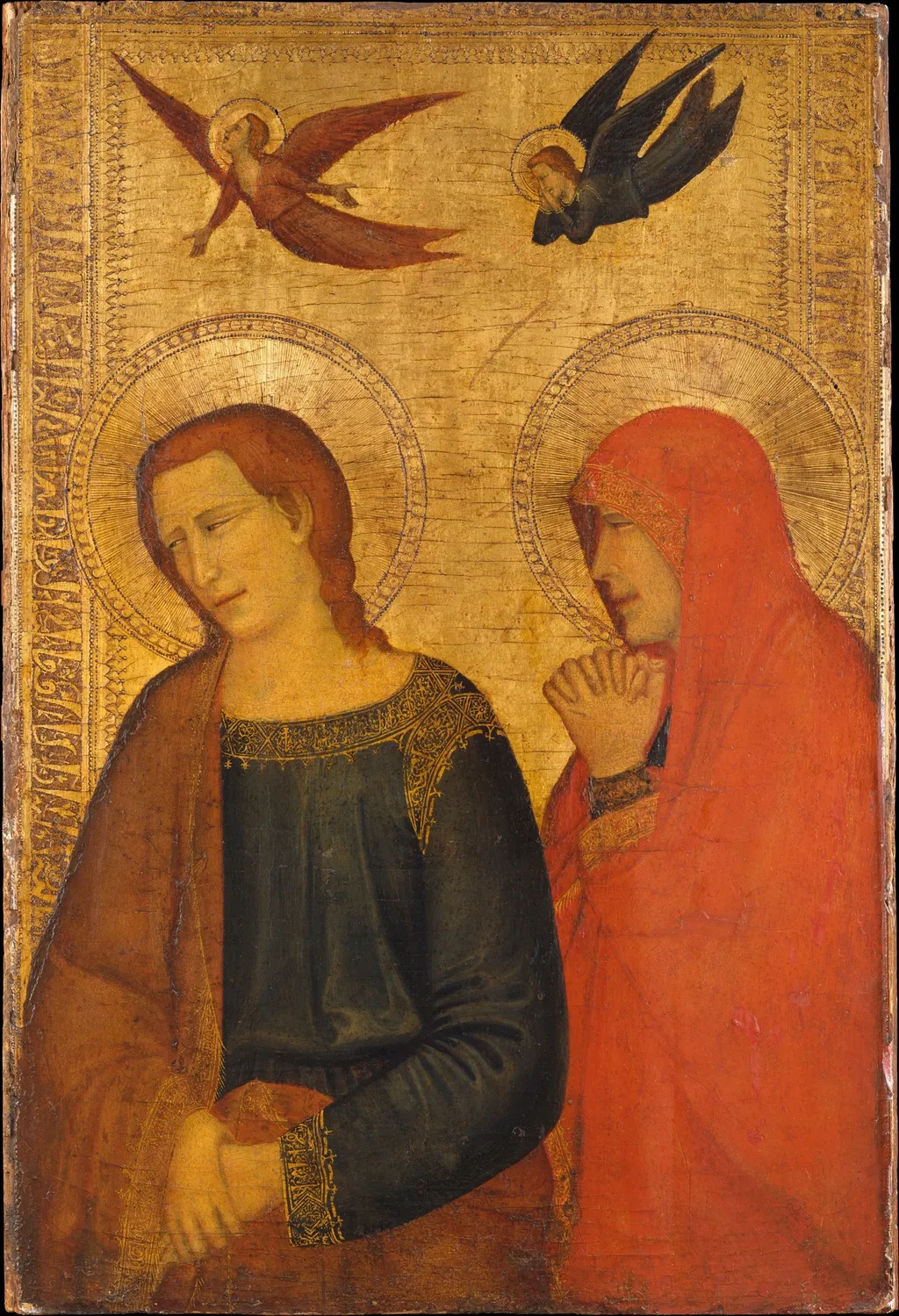
Saints John the Evangelist and Mary Magdalene is a tempera painting. It dates from 1340 and is held in the collection of the Metropolitan Museum of Art.
About this work
Subject & Meaning
The presence of an angel reinforces the sacred character of the scene, situating the saints within a heavenly context.
The painting depicts two Christian saints venerated in medieval devotion: John the Evangelist and Mary Magdalene. According to the cataloguing data, the composition also includes an angel among the figures shown. Executed in tempera on panel around 1340 by a Neapolitan artist working in the wake of Giotto, the work belongs to the tradition of religious art, presenting the pair as objects of veneration.
The pairing of John the Evangelist and Mary Magdalene was a common devotional subject in fourteenth-century Italian painting, typically used to invite contemplation of holy figures associated with Christ's Passion and Resurrection. The presence of an angel reinforces the sacred character of the scene, situating the saints within a heavenly context.
Technique & Style
Executed in tempera on panel, this devotional painting measures 58.4 cm in height by 39.7 cm in width, a relatively modest vertical format suited to its function as an intimate religious image. The medium and support are consistent with mid-fourteenth-century Italian panel practice, in which pigments bound in egg tempera were applied over a prepared wooden ground. Stylistically, the work is attributed to a Neapolitan follower of Giotto, indicating an adherence to the monumental figural conventions, simplified drapery, and sober coloring associated with the Giottesque tradition as transmitted in southern Italy.
The composition depicts Saints John the Evangelist and Mary Magdalene accompanied by an angel, rendered in the hieratic, devotional mode typical of Trecento religious painting.
History & Provenance
The panel painting titled Saints John the Evangelist and Mary Magdalene was created around 1340 in Italy, likely in the Neapolitan area, by an artist identified as a follower of Giotto; it is executed in tempera on a wooden panel measuring 58.4 × 39.7 cm. The work portrays the two saints alongside an angel and was originally produced as a devotional image in the late-medieval religious tradition.
In the twentieth century the painting entered the collection of Robert Lehman, who bequeathed it to the Metropolitan Museum of Art, New York, where it is held as part of the Robert Lehman Collection under accession number 1975.1.69.
Overview
This tempera painting, titled Saints John the Evangelist and Mary Magdalene, presents two significant religious figures. They are depicted standing side by side, each adorned with a golden halo, set against a luminous gold background. Above them, two smaller winged figures, also haloed, hover in the sky.
The composition conveys a serene portrayal of the saints, emphasizing their spiritual presence rather than a specific narrative moment or dramatic action.
Artist & collection

- Madonna from the Annunciation Scene
![Saint Mary Magdalene, with an Angel [left panel], by Pietro Lorenzetti](https://artifactworldgallery.com/img/pietro-lorenzetti--saint-mary-magdalene-with-an-angel-left-panel--c015f106a0790d0d-w320.webp) Saint Mary Magdalene, with an Angel [left panel]
Saint Mary Magdalene, with an Angel [left panel] The Annunciation
 Madonna and Child
 Saint John the Evangelist with Acteus and Eugenius
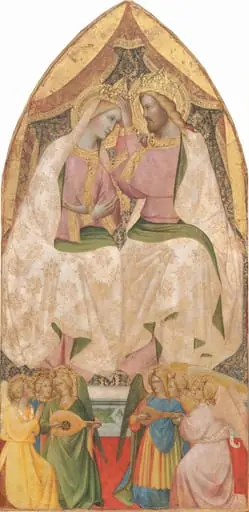 The Coronation of the Virgin with Six Angels
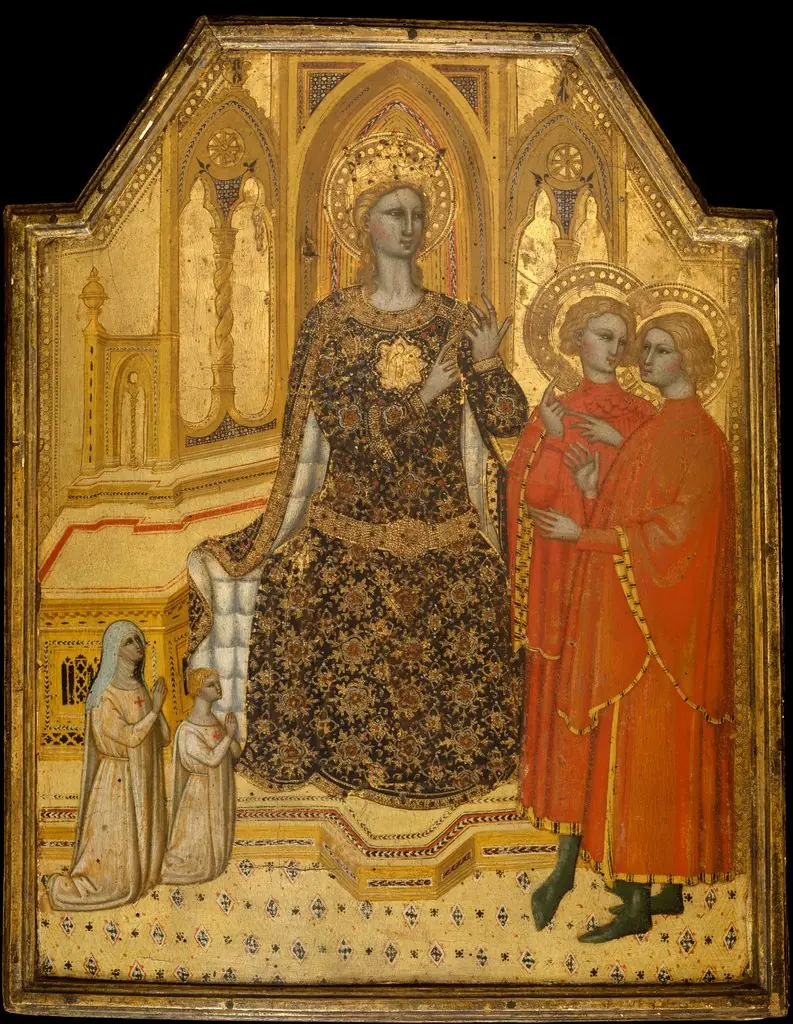 Saint Catherine Disputing and Two Donors
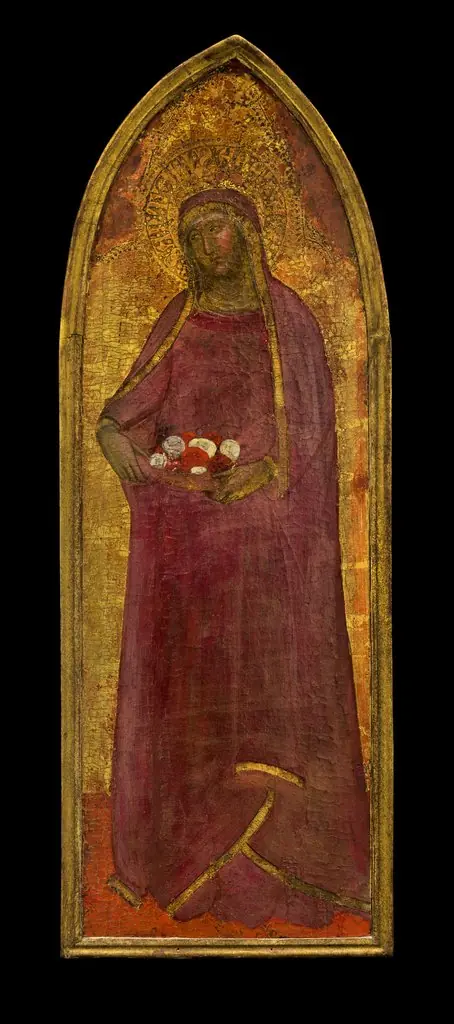 Saint Elizabeth of Hungary
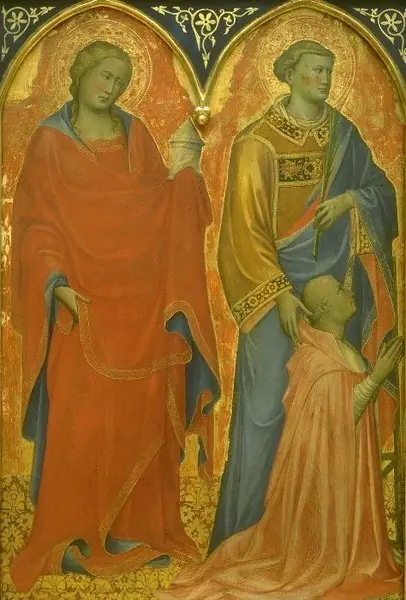 Saints Mary Magdalene, Lawrence and a donor/ Angelo Acciaiuolo
 Mary of the Annunciation
 Madonna del Parto
 Crucifixion