Artwork
Saint Reparata before the Emperor Decius
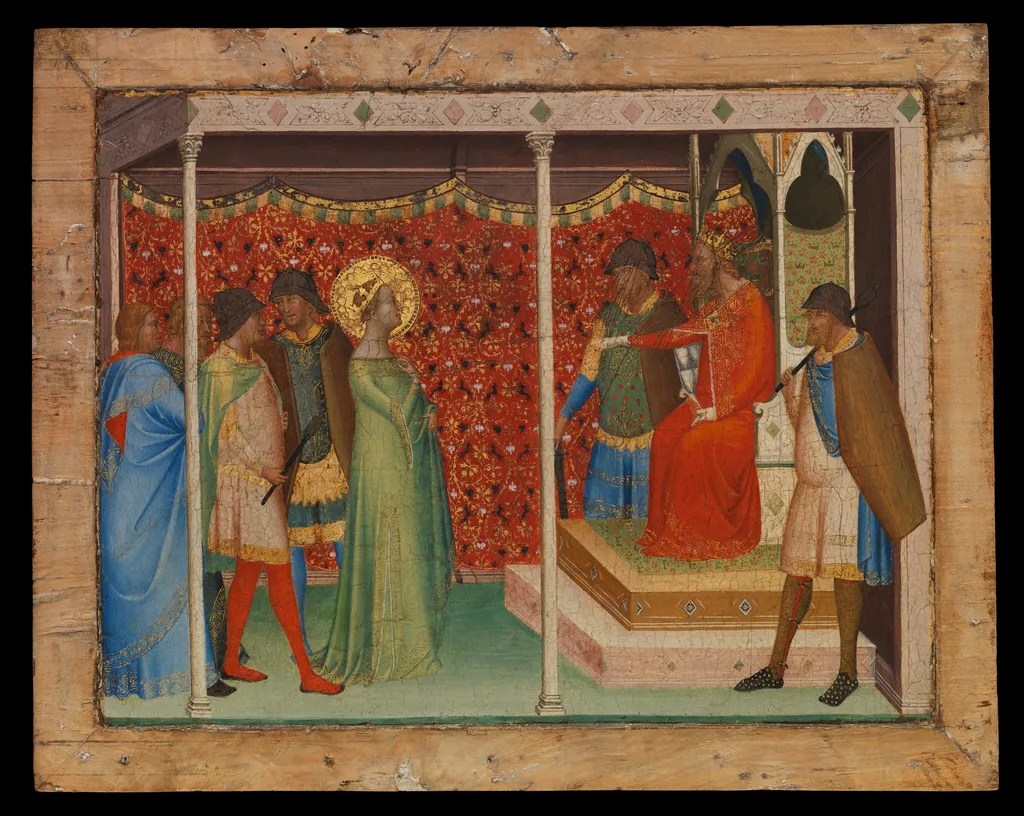
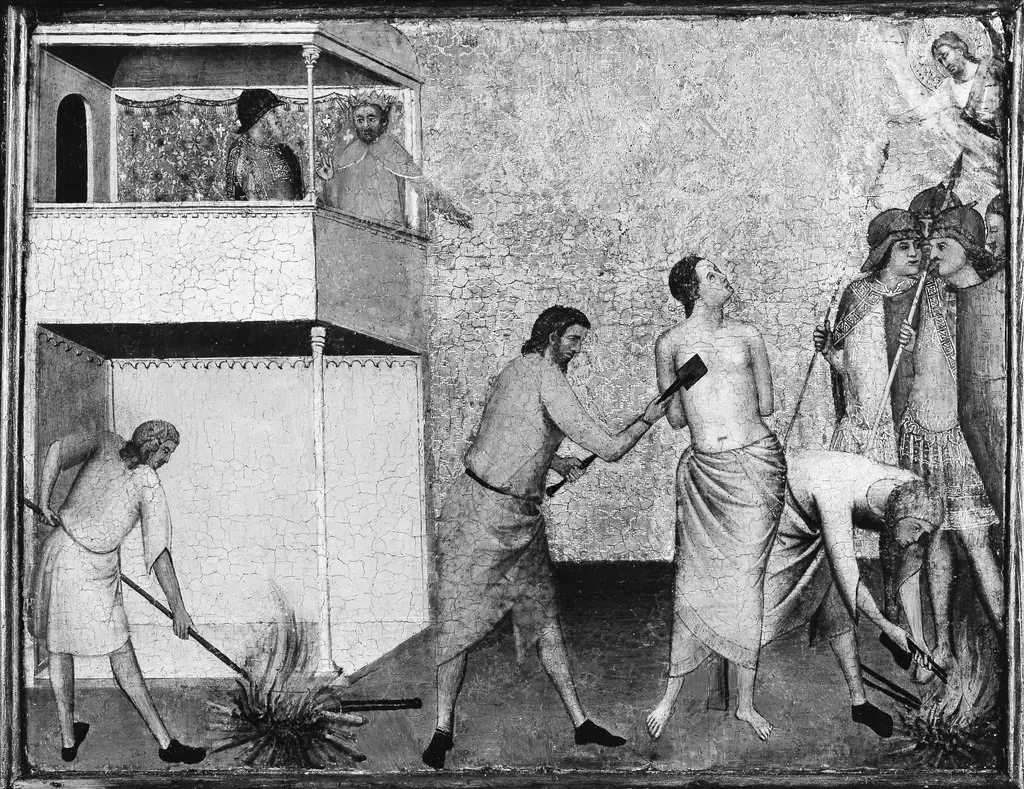
Saint Reparata before the Emperor Decius is a tempera painting by the Italo Byzantine artist Bernardo Daddi. It dates from 1338 and is held in the collection of the Metropolitan Museum of Art.
About this work
Subject & Meaning
Executed in tempera on panel in 1338, the work belongs to the religious genre and depicts the male emperor and the female saint.
The painting illustrates the hagiographic scene of Saint Reparata standing before the Roman emperor Decius, a medieval motif of a saint confronting imperial authority. Executed in tempera on panel in 1338, the work belongs to the religious genre and depicts the male emperor and the female saint. Its iconography emphasizes the triumph of Christian faith over persecution, serving as a devotional image that conveys themes of martyrdom and divine protection.
Technique & Style
Saint Reparata before the Emperor Decius is executed in tempera on a wooden panel, a technique typical of early fourteenth-century Florentine painting. The surface measures 26.7 cm in height by 35.2 cm in width and belongs to the Metropolitan Museum of Art collection. The composition relies on clear linear contours, flattened spatial depth, and a limited, vivid palette of blues, reds, and golds that convey the narrative of the saint's defiance. Stylistically the piece reflects the Gothic emphasis on elegant drapery and symbolic detail.
History & Provenance
Saint Reparata before the Emperor Decius was created by Bernardo Daddi in 1338. Executed in tempera on panel, the painting measures 26.7 cm by 35.2 cm. It portrays the saint in a devotional scene, reflecting the religious genre typical of early fourteenth-century Florentine art. The piece is held in the collection of the Metropolitan Museum of Art.
Context
Bernardo Daddi executed Saint Reparata before the Emperor Decius in 1338, a tempera panel measuring roughly 26.7 × 35.2 cm. The work, classified as a religious painting, is housed in the Metropolitan Museum of Art as part of its early Italian devotional holdings. Scholars view the composition as emblematic of the trecento transition from Byzantine formalism toward a more naturalistic spatial treatment characteristic of Florentine workshops.
Overview
Bernardo Daddi, a leading Florentine painter of the early Italian Renaissance, completed Saint Reparata before the Emperor Decius in 1338. This tempera painting, now part of The Metropolitan Museum of Art's collection, depicts a religious narrative. Daddi was a pivotal figure in advancing more realistic compositional approaches within Florentine art and contributed significantly to the widespread adoption of small, portable altarpieces.
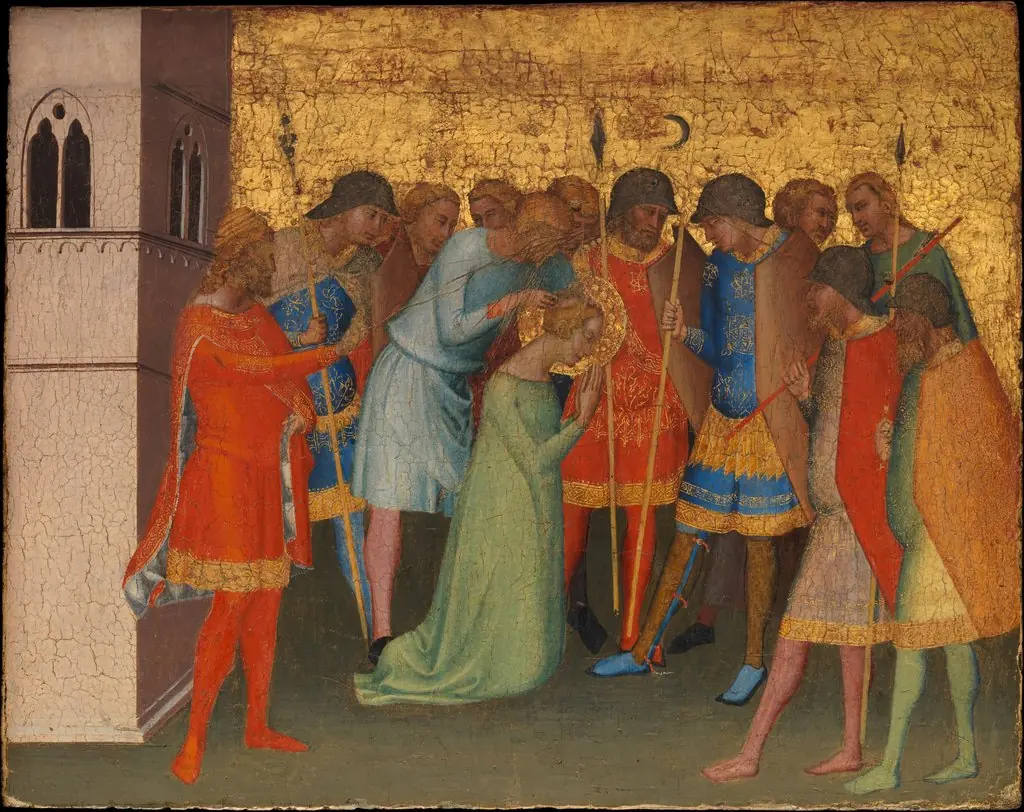
Own this work as a print
Artist & collection
Artist
Bernardo Daddi (c. 1280 – 1348) was an early Italian Renaissance painter and the leading painter of Florence of his generation. He was one of the artists who contributed to the revolutionary art of the Renaissance,…

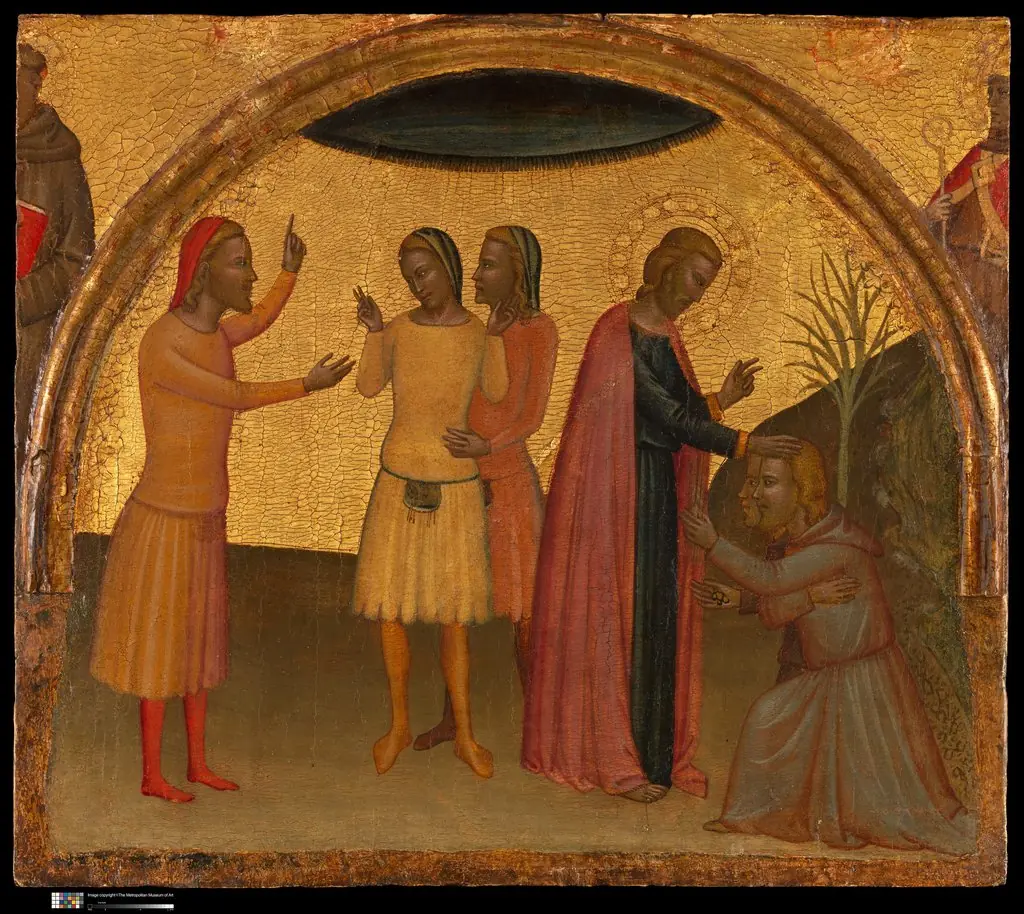 Saint John the Evangelist with Acteus and Eugenius
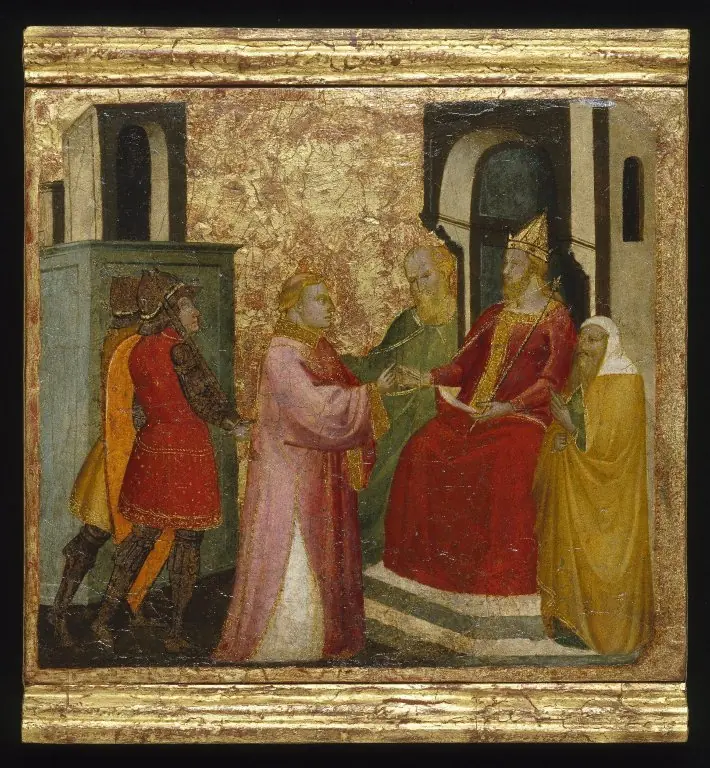 Saint Lawrence Arraigned Before the Prefect Valerianus
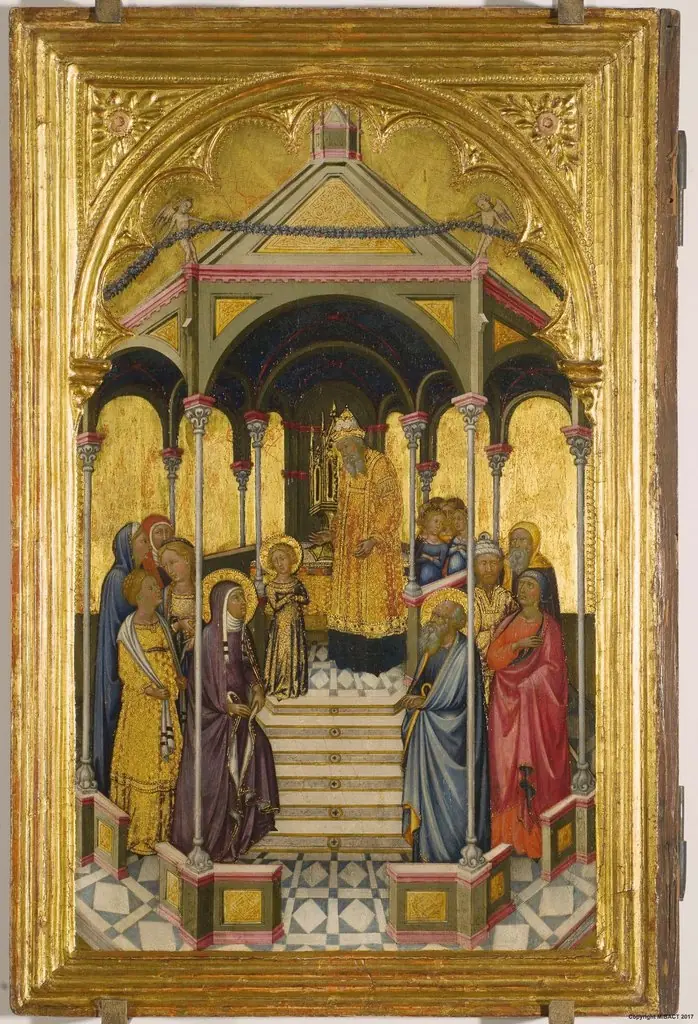 The Presentation of the Virgin at the Temple
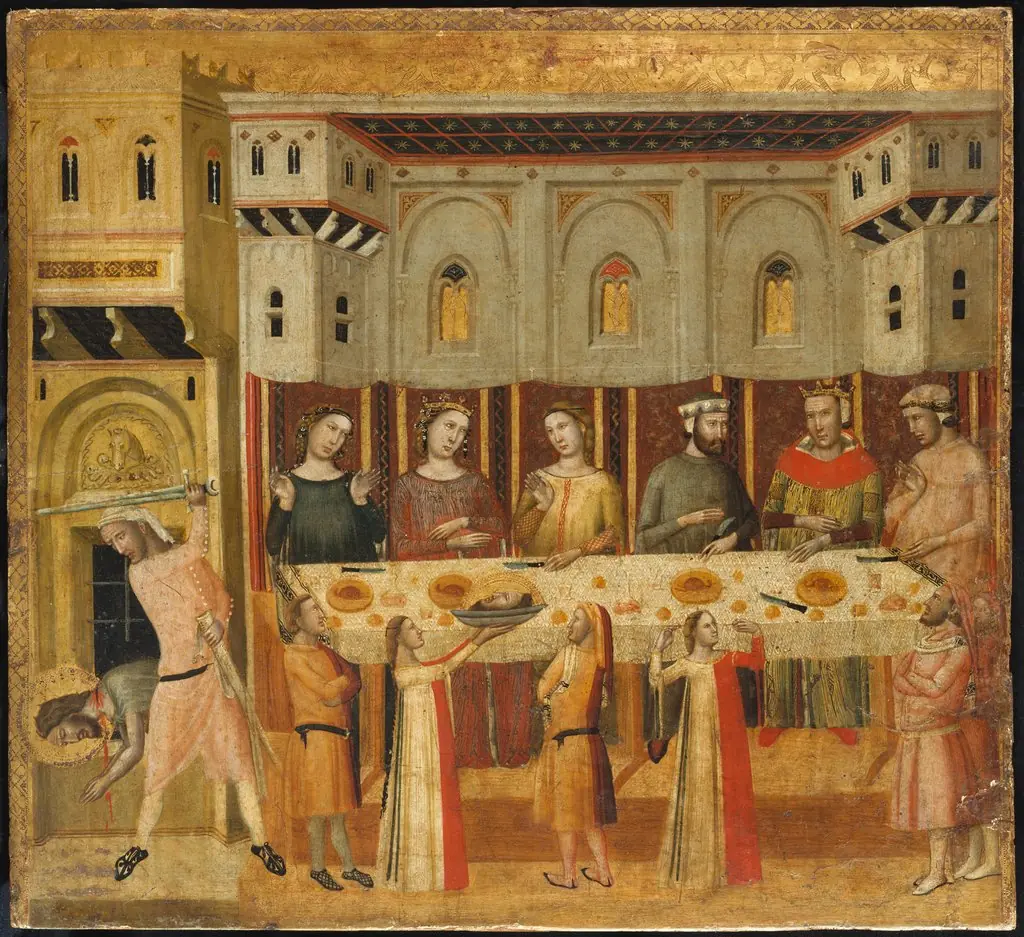 The Feast of Herod and the Beheading of the Baptist
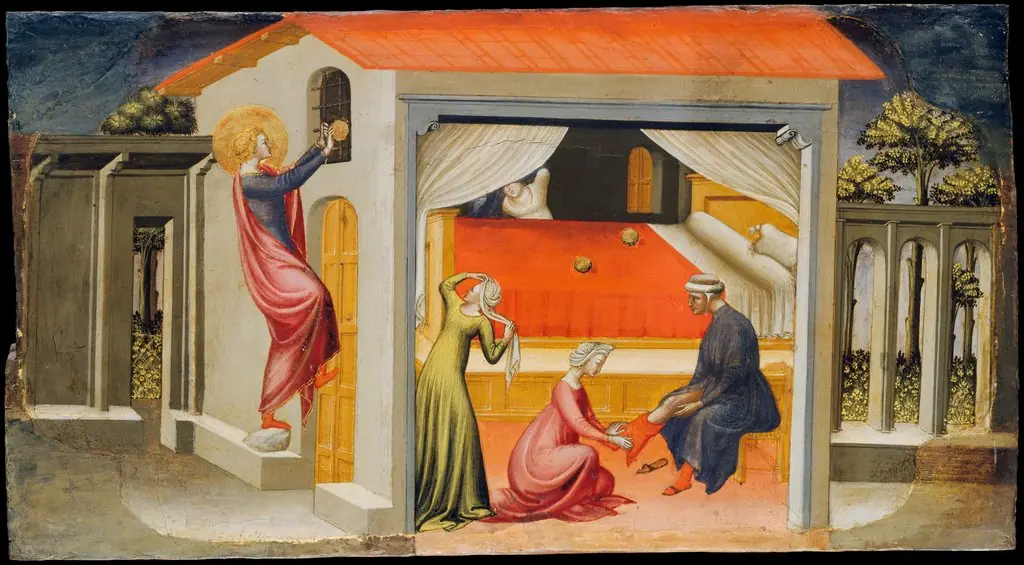 Saint Nicholas Providing Dowries
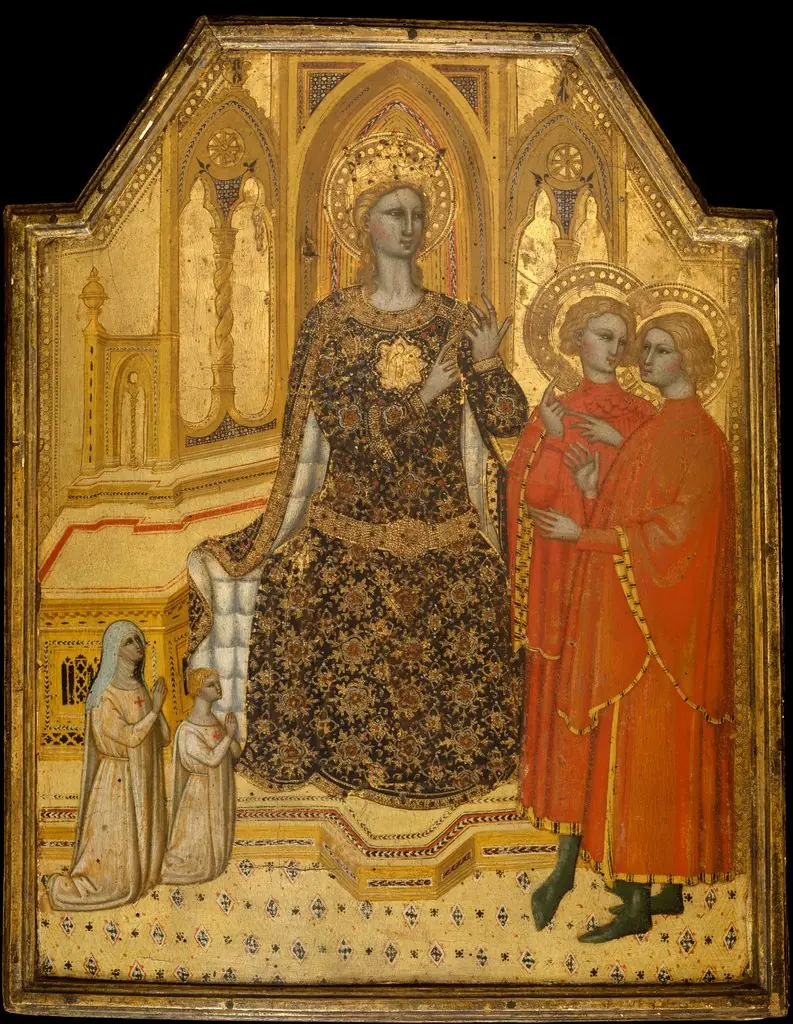 Saint Catherine Disputing and Two Donors
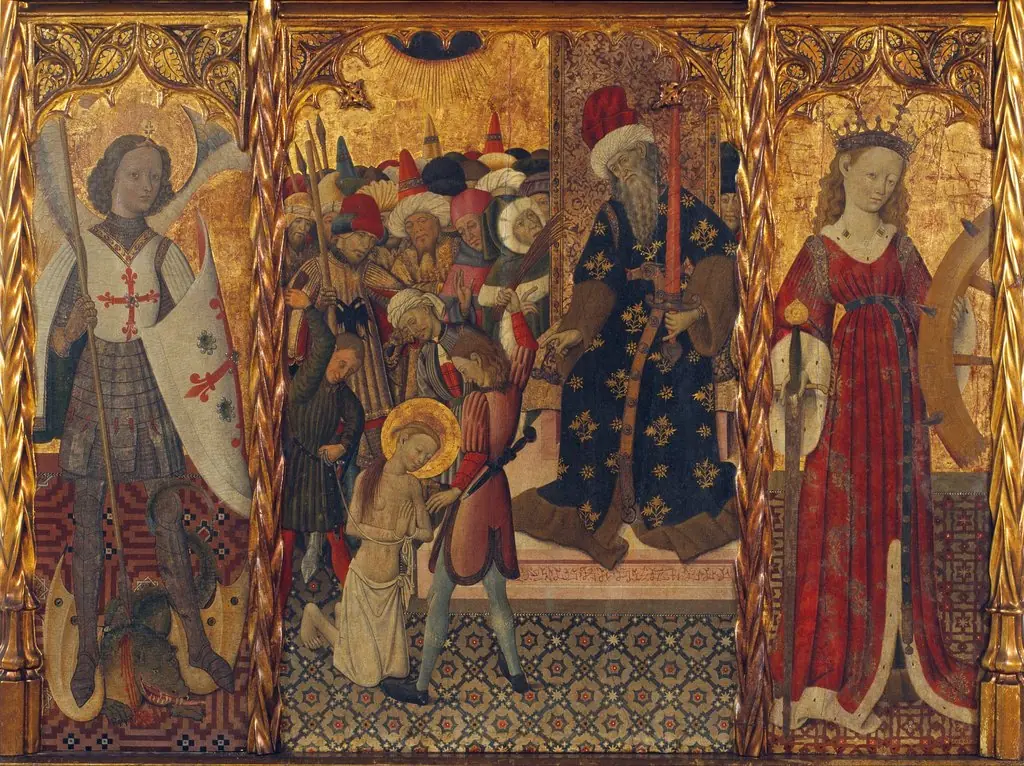 Saint Michael, Martyrdom of Saint Eulalia and Saint Catherine
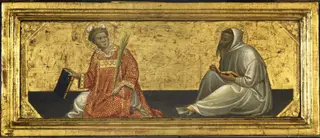 St. Stephen and St. Bruno
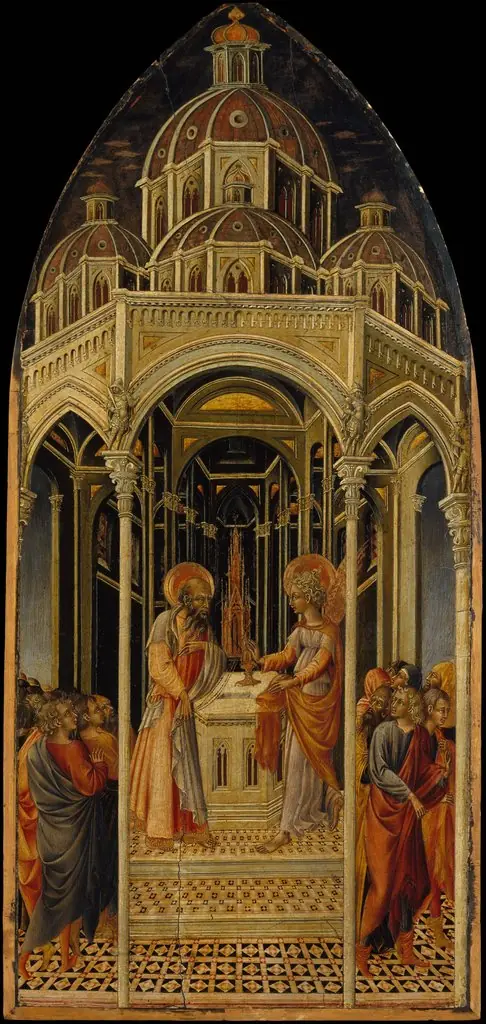 The Annunciation to Zacharias; (verso) The Angel of the Annunciation
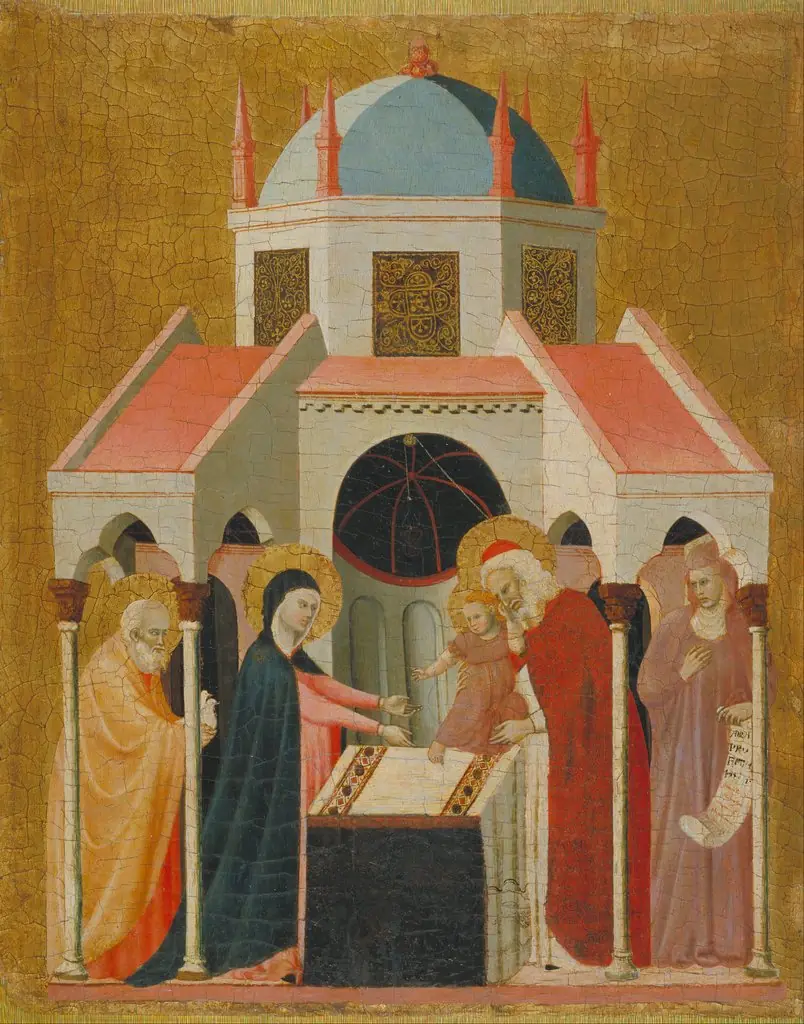 Presentation of Jesus at the Temple
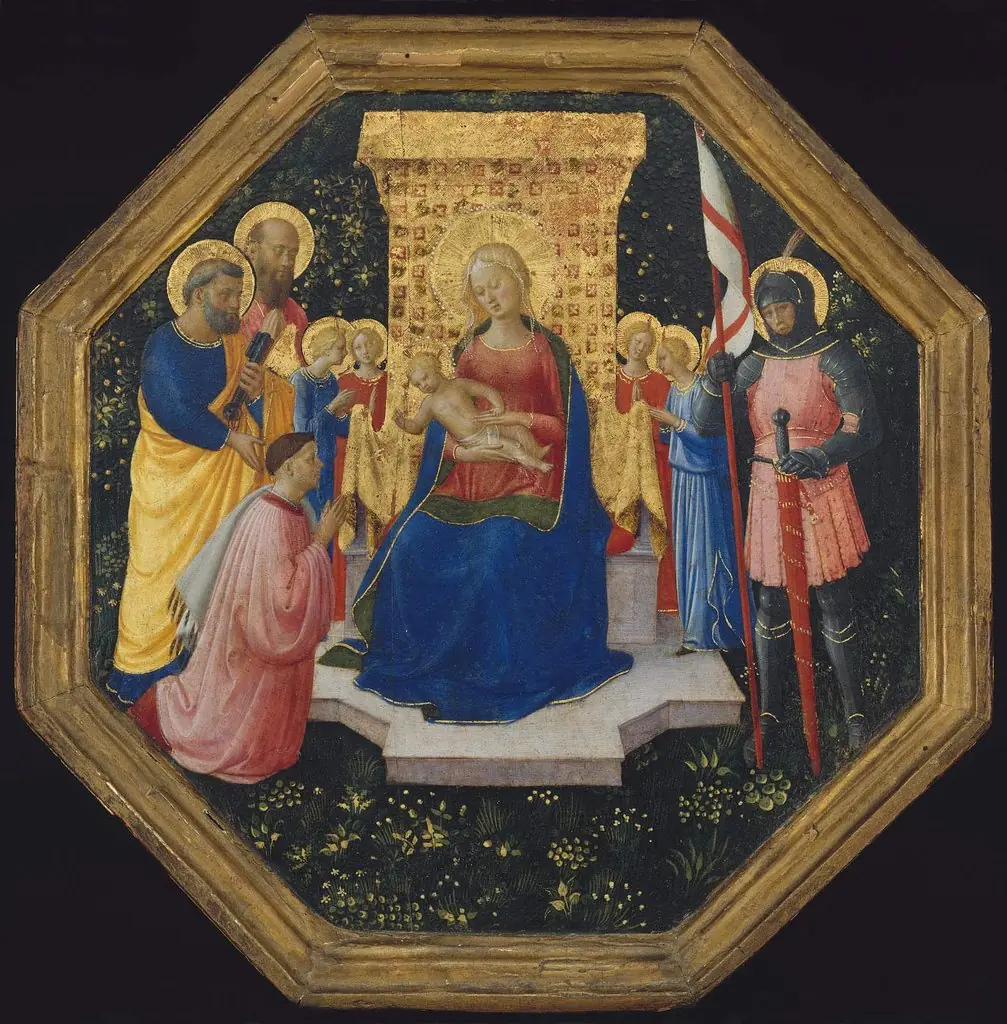 Virgin and Child Enthroned with Saints Peter, Paul and George (?), Four Angels, and a Donor