Artwork
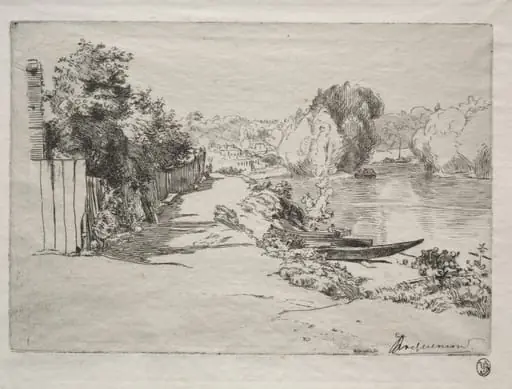
Towing Path
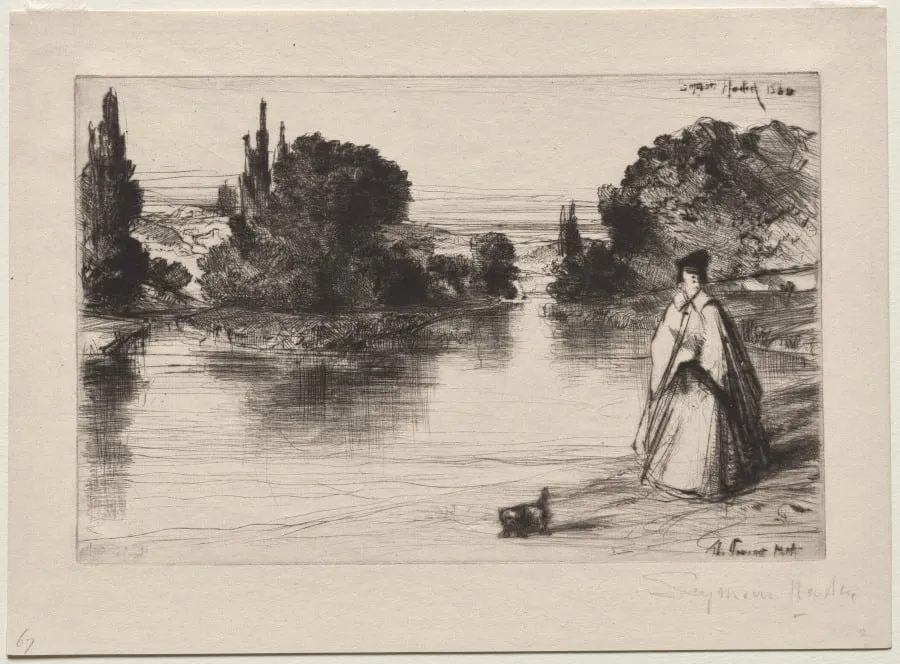
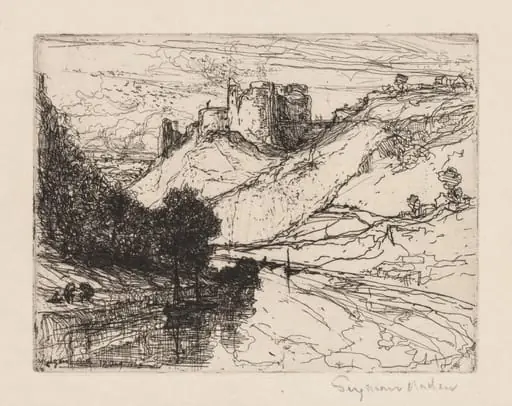
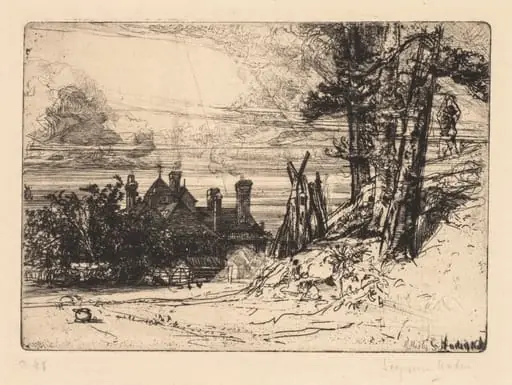
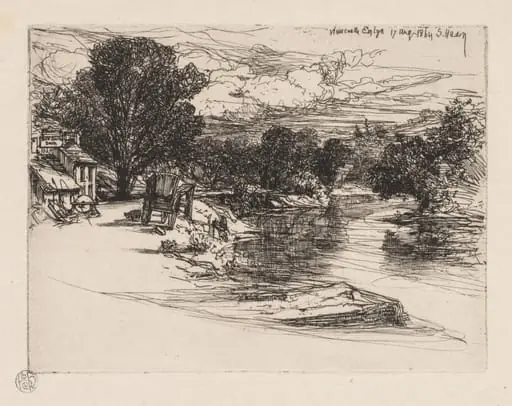
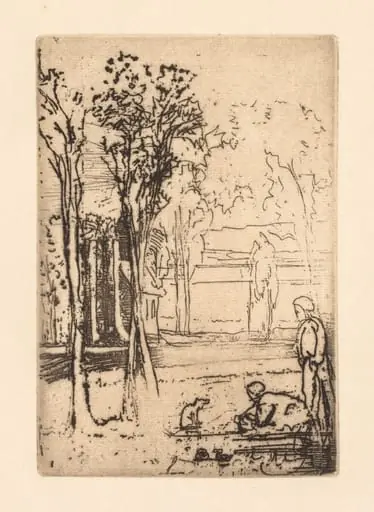
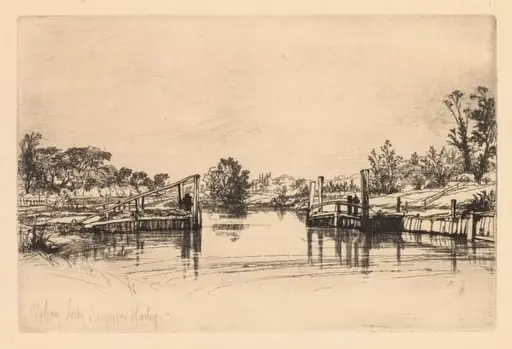
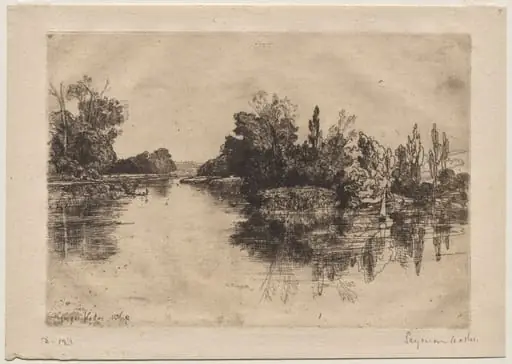
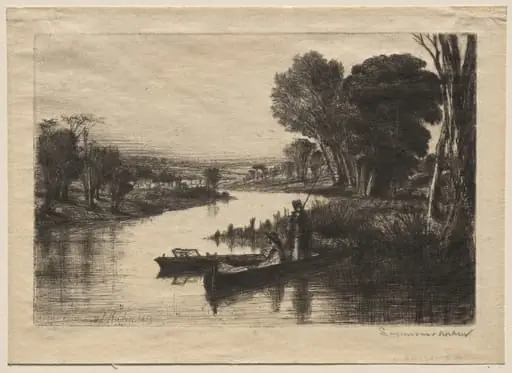
Towing Path is a print by the Impressionist artist Francis Seymour Haden. It dates from 1864 and is held in the collection of the Cleveland Museum of Art.
- Accession no.
- 1946.326
- Credit line
- In memory of Ralph King, gift of Mrs. Ralph King; Ralph T. Woods, Charles G. King; and Frances King Schafer
About this work
Overview
Towing Path, created in 1864 by Francis Seymour Haden, is a drypoint print capturing a quiet riverside scene in England. Unlike painted landscapes of the period, this work relies on the fine, incised lines characteristic of etching to suggest form and atmosphere. The Cleveland Museum of Art holds the print as part of its collection of 19th-century British graphic art.
Subject & Meaning
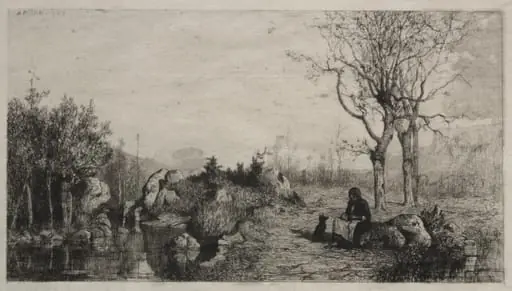
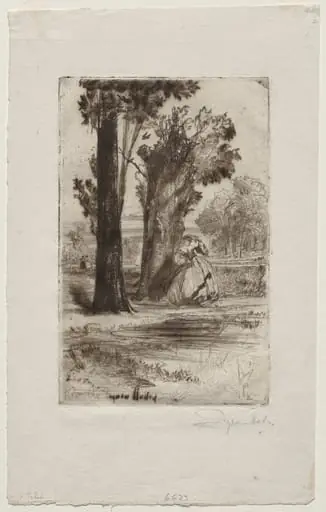
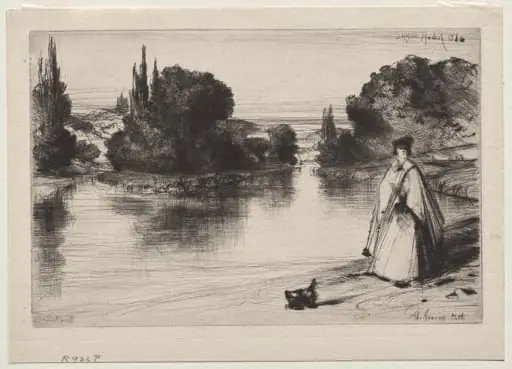
The scene portrays a solitary figure, a woman in a long skirt and shawl, standing near the water’s edge with a small animal at her side. The absence of narrative detail invites contemplation rather than storytelling. The quiet presence of the figure, paired with the unobtrusive path along the river, suggests a moment of stillness within everyday rural life, emphasizing solitude over drama.
Technique & Style
Haden employed drypoint, a printmaking method that creates rich, velvety lines by scratching directly into a metal plate. The soft, blurred edges and subtle tonal gradations mimic the effects of light on water and foliage. Loose, expressive strokes convey texture without detail, prioritizing mood over precision. The muted palette arises from ink density and paper tone, not color.
History & Provenance
Haden, a physician turned artist, was instrumental in reviving interest in etching as a fine art medium in Britain. Towing Path was made during a period when he focused on landscapes along the Thames and its tributaries. The print entered the Cleveland Museum of Art’s collection in the 20th century, where it remains as an example of his quiet, observational approach to printmaking.
Context
While contemporaries like the Pre-Raphaelites emphasized detail, Haden aligned more closely with emerging European tendencies toward atmospheric suggestion.
Created in the mid-19th century, Towing Path reflects a growing interest in naturalistic, unidealized landscapes outside academic traditions. While contemporaries like the Pre-Raphaelites emphasized detail, Haden aligned more closely with emerging European tendencies toward atmospheric suggestion. His work, though not part of Impressionism, shares an affinity for capturing transient light and quiet moments.
Legacy
Haden’s prints, including Towing Path, influenced later generations of British etchers who valued personal expression over technical polish. His emphasis on direct observation and tonal subtlety helped elevate printmaking from reproductive craft to independent artistic practice. Today, his work is studied for its restraint and sensitivity to natural form.
Artist & collection