Artwork
La oración. Costumbres de la provincia de Salamanca
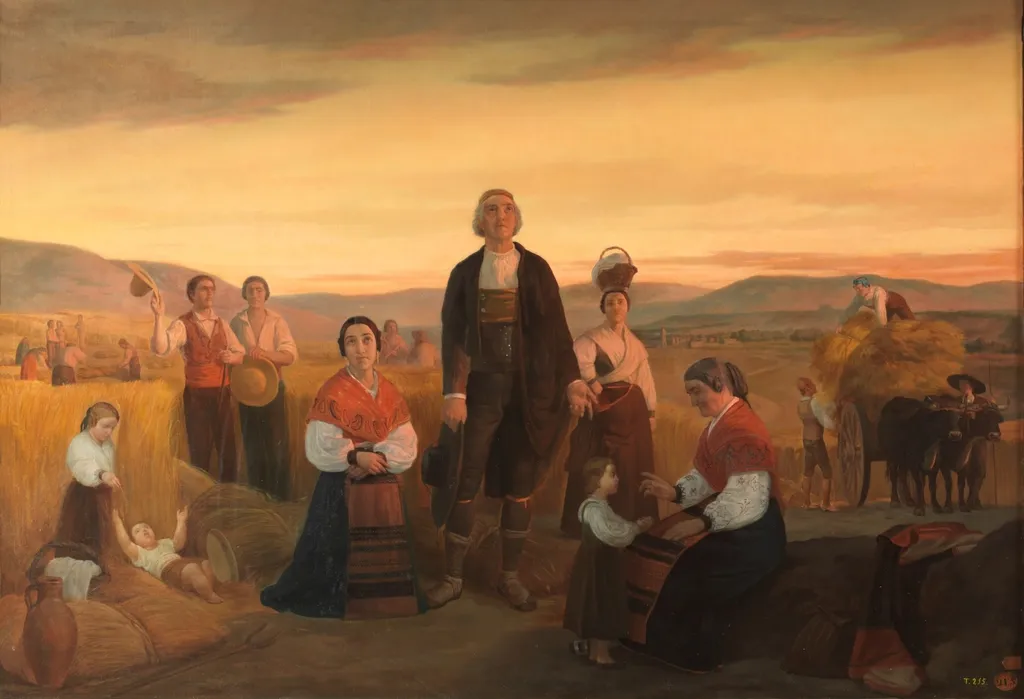
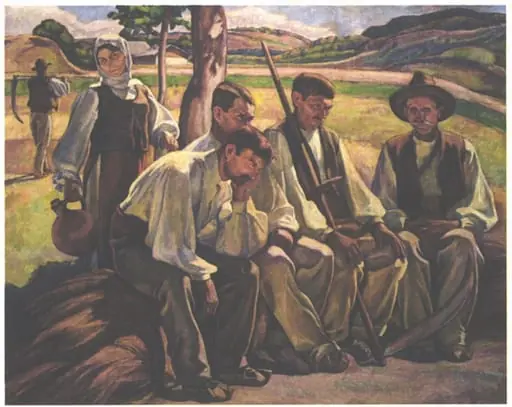
La oración. Costumbres de la provincia de Salamanca is an oil painting by the Realist artist Francisco Aznar. It dates from 1866 and is held in the collection of the Museo del Prado.
About this work
Overview
La oración, painted in 1866 by Francisco Aznar, is an oil-on-canvas work that captures a quiet rural moment in the province of Salamanca.
La oración, painted in 1866 by Francisco Aznar, is an oil-on-canvas work that captures a quiet rural moment in the province of Salamanca. It is part of the permanent collection at the Museo del Prado in Madrid. The painting presents a group of peasants engaged in everyday tasks, framed by a gentle landscape. Its composition emphasizes stillness and routine, reflecting regional life with restrained emotion and attention to natural detail.
Subject & Meaning
The central figure, a man in dark clothing holding a hat, appears to be leading a moment of prayer, while others around him continue with their labor, harvesting, caring for children, or resting. The scene suggests a fusion of spiritual practice and agricultural life, common in 19th-century Spanish rural communities. The painting does not dramatize the moment but presents it as an unremarkable, habitual act, underscoring the integration of faith into daily existence.
Technique & Style
Aznar employs soft, warm tones and diffused light to create a calm, atmospheric effect. Brushwork is subtle, avoiding sharp definition in favor of gentle transitions between figures and landscape. The foreground figures are rendered with quiet realism, while the background hills and sky blend into a hazy horizon. The composition guides the eye toward the central figure without theatrical emphasis, reinforcing the painting’s understated tone.
History & Provenance
Completed in 1866, the painting entered the Museo del Prado’s collection shortly after its creation. It was acquired during a period when Spanish institutions sought to document regional customs through art. Unlike grand historical or religious works, this piece was valued for its ethnographic sincerity.
Its provenance remains unbroken since acquisition, with no record of private ownership or exhibition outside Spain until modern cataloging.
Context
Painted during Spain’s post-revolutionary era, La oración aligns with a broader movement to portray rural life with dignity, countering romanticized or exoticized depictions. Regionalist artists like Aznar focused on local traditions, often under state patronage aimed at fostering national identity. The work reflects the influence of French Realism and Spanish costumbrismo, emphasizing ordinary people without sentimentality or moral judgment.
Legacy
Though not widely exhibited beyond Spain, La oración remains a representative example of 19th-century Spanish regional painting. It contributes to scholarly understanding of how rural customs were visually documented during a time of social change. The work’s quiet realism has influenced later studies of Spanish peasant life, though Aznar himself remained outside the mainstream of Spanish art history, his reputation tied closely to this single, enduring image.
Own this work as a print
Artist & collection

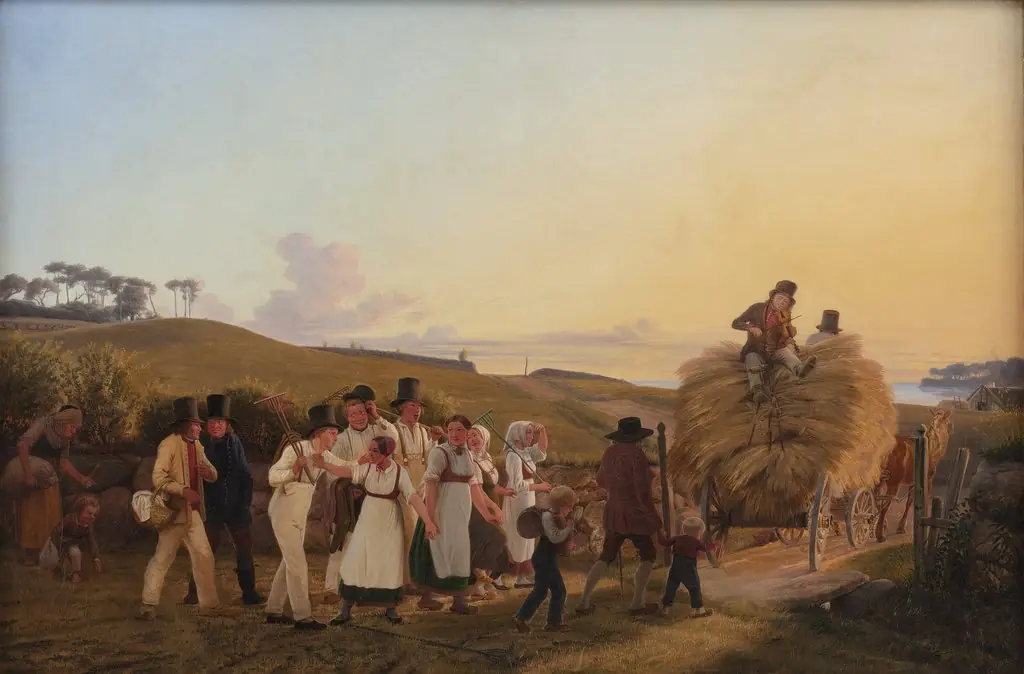
- Farmers Returning Home from the Field with the Final Sheaves of Grain
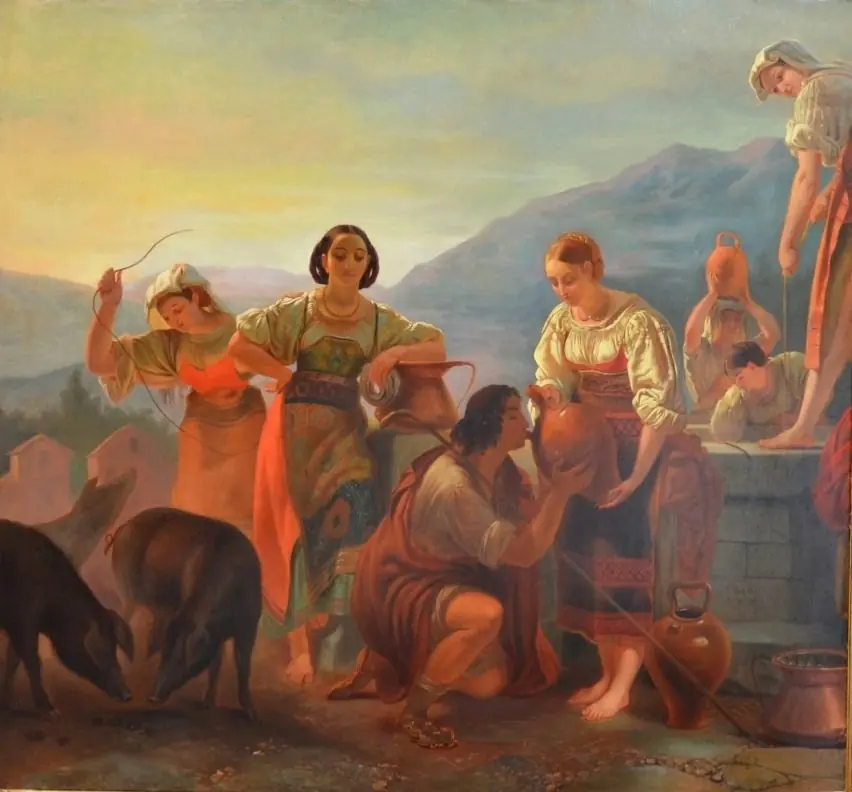 The Youth of future Pope Sixtus V
 St. Hansfest i Tisvilde
 St. Hansfest i Tisvilde
 Highlanders' Dance
 Harvest Thanksgiving Mass in the Roman Campagna
 Harvest Thanksgiving Mass in the Roman Campagna
 Kurkijoen rahvas kansanpuvuissa, Magnus von Wrightin mukaan
 Midnight Fires on the Alps
 Savolaispirtti
 Roman pilgrims
 Cosași odihnindu-se