Artwork
The Horrors of War: Thanks To The Millet
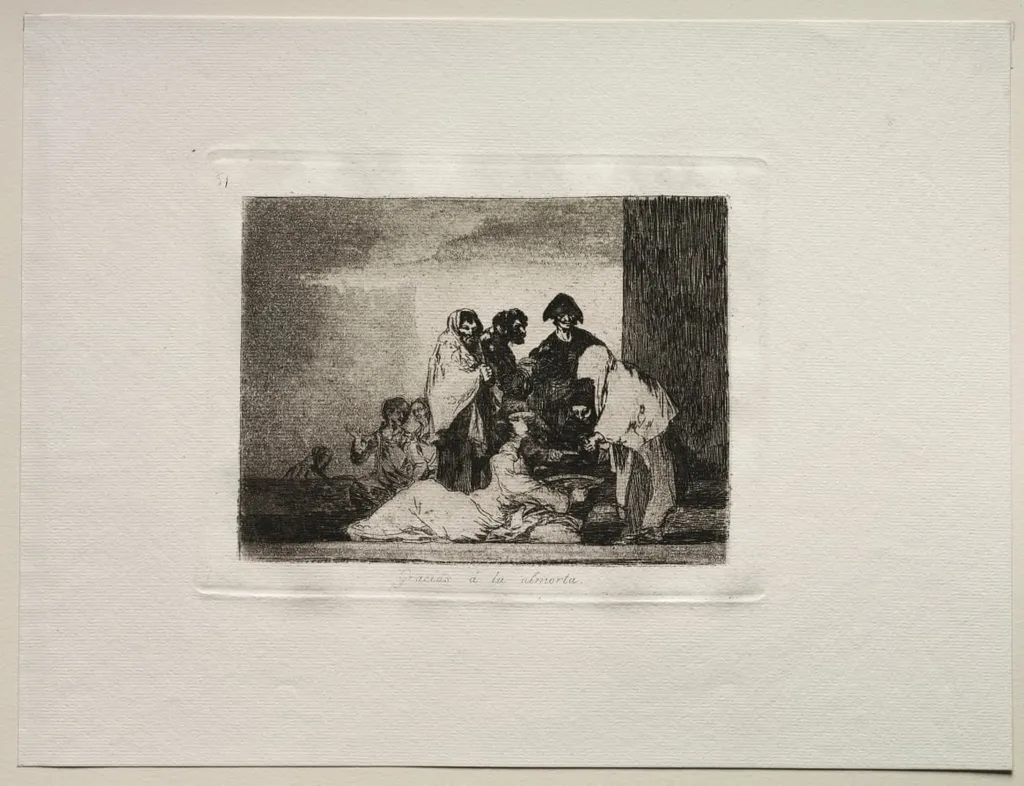
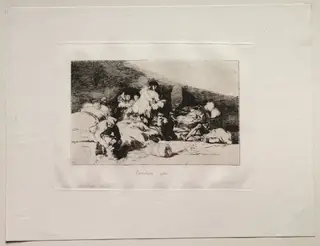
The Horrors of War: Thanks To The Millet is a print by the Romanticist artist Francisco de Goya. It dates from 1815 and is held in the collection of the Cleveland Museum of Art.
- Accession no.
- 1922.567
- Credit line
- Dudley P. Allen Fund
About this work
Overview
Created around 1815, The Horrors of War: Thanks To The Millet is a print by Francisco de Goya that reflects the brutality of conflict during the Peninsular War.
Created around 1815, The Horrors of War: Thanks To The Millet is a print by Francisco de Goya that reflects the brutality of conflict during the Peninsular War. Unlike traditional war imagery, it avoids heroism, focusing instead on suffering and chaos. The work is part of a larger series Goya produced in response to the violence engulfing Spain. It resides in the collection of the Cleveland Museum of Art.
Subject & Meaning
The scene depicts civilians and soldiers caught in the aftermath of violence, with no clear victor or moral resolution. The title’s ironic reference to the Millet family, known for their charitable work, underscores the betrayal of humanitarian ideals amid war. Goya presents war not as glory but as senseless destruction, stripping away any romanticized narrative to reveal raw human anguish.
Technique & Style
Goya employs stark contrasts of light and shadow, a technique known as chiaroscuro, to heighten emotional tension. The composition is crowded and unbalanced, with figures emerging from deep darkness, their forms barely defined. His loose, expressive lines and minimal detail convey urgency and despair, aligning with his shift toward more personal, critical art in his later years.
History & Provenance
The print was made during Goya’s retreat from public life, following years of witnessing war and political upheaval. It was originally part of his series Los Desastres de la Guerra, unpublished until decades after his death. The Cleveland Museum of Art acquired it in the 20th century, where it remains as a testament to Goya’s unflinching documentation of wartime trauma.
Context
Goya created this work amid the collapse of Spanish liberalism and the restoration of absolutist rule under Ferdinand VII. The Peninsular War had left the country devastated, and Goya’s prints served as private, subversive commentaries. While official art celebrated victory, his images exposed the cost of conflict to ordinary lives, making them radical for their time.
Legacy
The Horrors of War: Thanks To The Millet influenced later artists who sought to depict war’s reality rather than its myth. Its unvarnished portrayal of suffering prefigured 20th-century documentary photography and anti-war art. Goya’s refusal to offer redemption or closure established a new standard for visual testimony, making his prints enduring records of human vulnerability.
Artist & collection
Artist
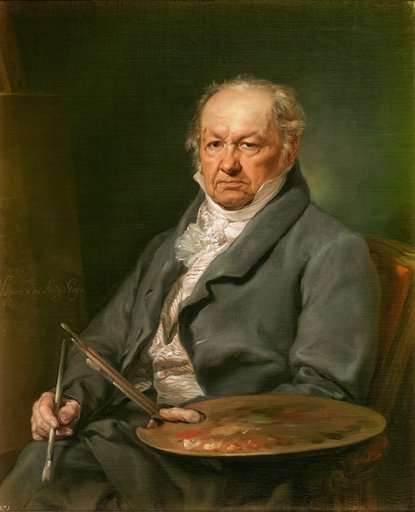
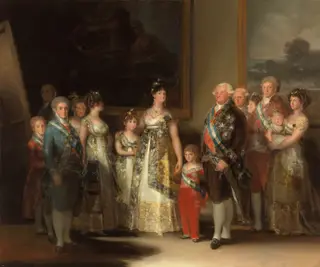
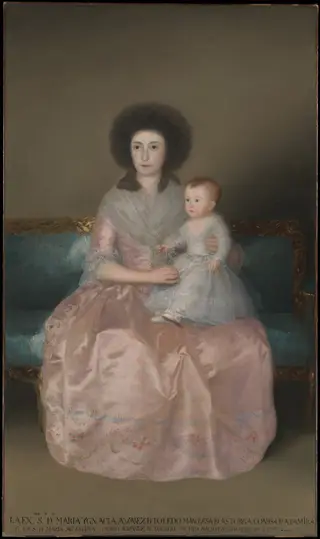
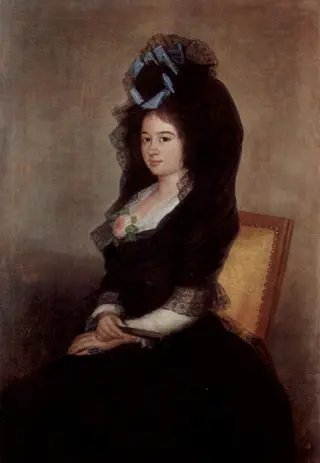
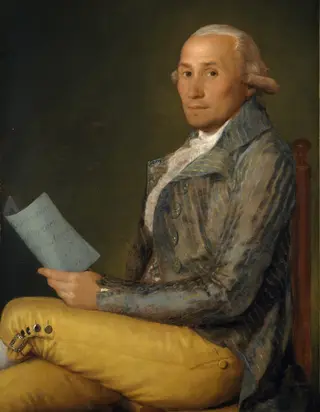
Francisco José de Goya y Lucientes was a Spanish romantic painter and printmaker.

 The Horrors of War: These Too
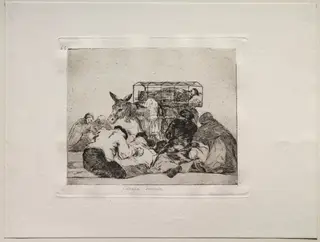 The Horrors of War: Strange Devotion!
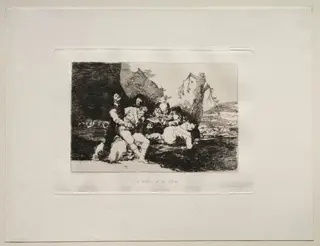 The Horrors of War: Get them Well and On to the Next
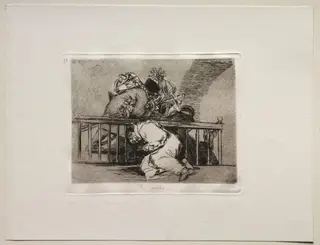 The Horrors of War: This is How it Happened
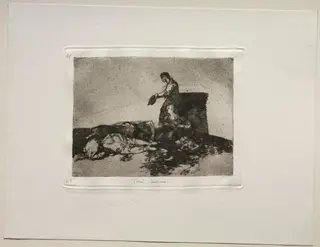 The Horrors of War: Cruel Tale of Woe
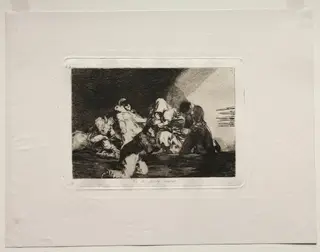 The Horrors of War: One Can't Look
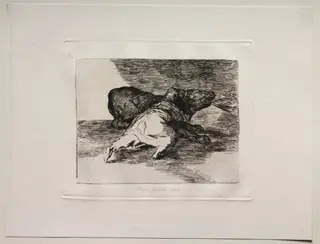 The Horrors of War: He Gets Something Out of It.
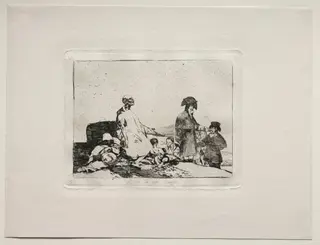 The Horrors of War: Perhaps They are of Another Breed