Artwork
La Leocadia
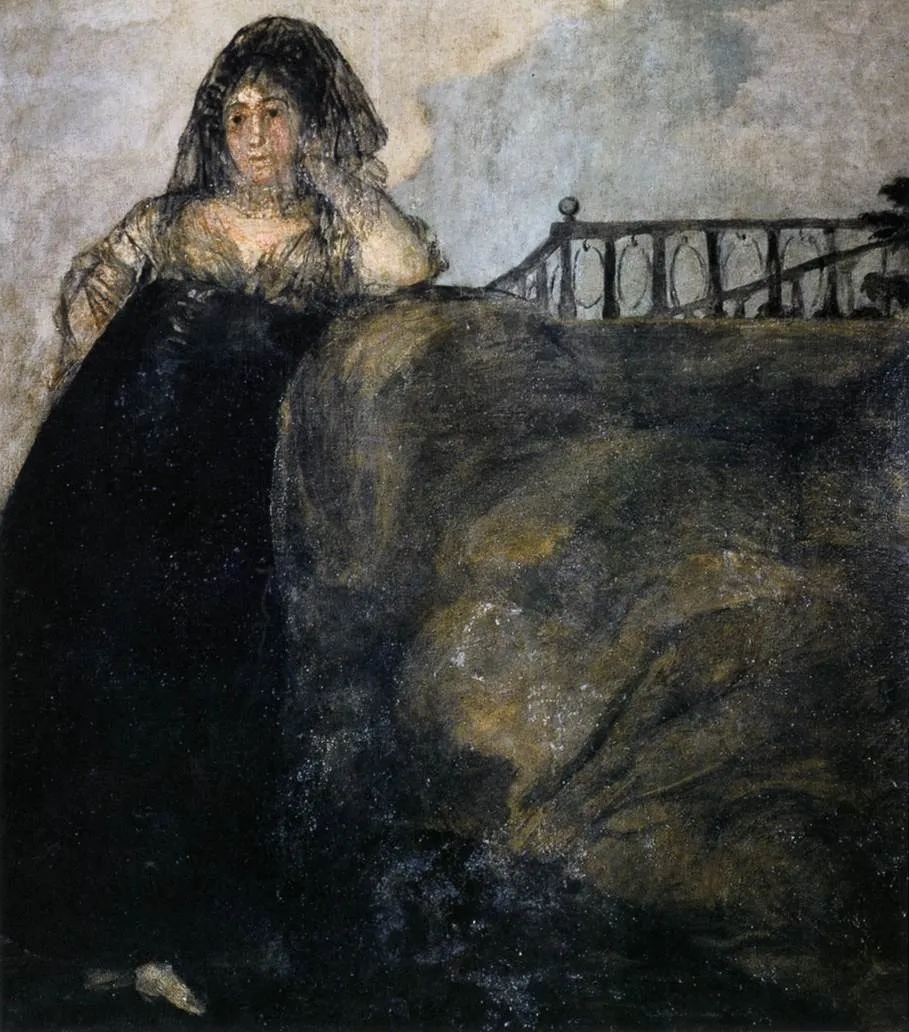
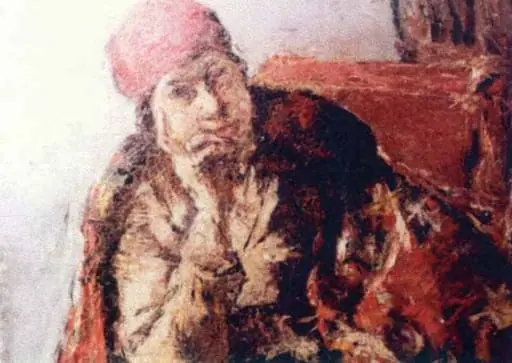
La Leocadia is an oil painting by Francisco de Goya. It dates from 1819 and is held in the collection of the Museo del Prado.
About this work
This oil painting shows a woman named Leocadia. Goya painted it late in life, between 1819 and 1823. She leans on something, maybe a mantel or mound, and looks straight at us with a sad face.
She was his maid and likely his lover. The dress is dark and heavy. Goya used bold brushwork to make the mood heavy.
Look up Francisco Goya next.
Technique & Style
La Leocadia is an oil paint painting on canvas created by Francisco Goya between 1819 and 1823 as part of his Black Paintings series.
La Leocadia is an oil paint painting on canvas created by Francisco Goya between 1819 and 1823 as part of his Black Paintings series. The work measures 145.7 cm in height and 129.4 cm in width and is housed in the Museo del Prado in Madrid. It depicts a woman in a dark mourning dress leaning against a mound topped by wrought iron rails, set against a blue and ocher sky illuminated by yellow light that highlights her face, arm, and chest. The composition conveys a sense of peace and reconciliation uncommon in the series, with scholars interpreting the figure as a personification of melancholy or a symbol of love and impending death. The background features a clear sky with clouds among Goya's finest, contrasting with the dark foreground scene. The painting's limited palette of blues, blacks, and ochres underscores themes of death and widowhood and has been noted as a precursor to 20th-century expressionism.
History & Provenance
Francisco Goya created La Leocadia between 1819 and 1823 as a mural on the walls of his Madrid villa, the Quinta del Sordo. Originally executed in oil on plaster, the work was situated on the ground floor near the entrance. An inventory by his friend Antonio Brugada around 1828-1830 documented the mural's location in the villa. Following Goya's death, the property eventually passed to the French banker Émile d'Erlanger by 1873. In 1874, d'Erlanger commissioned Salvador Martínez Cubells, a restorer at the Museo del Prado, to transfer the mural from plaster to canvas, a process assisted by Cubells's brothers. D'Erlanger intended to sell the work at the 1878 Paris Universal Exposition, but it failed to attract buyers. Consequently, he donated it to the Museo del Prado in 1881, where it remains today. La Leocadia is held by the Museo del Prado in Madrid, where it is on display. The painting originally adorned a wall of the ground floor of the Quinta del Sordo, Goya's villa outside Madrid, where it occupied a position to the left of the entrance door alongside other Black Paintings. Following Goya's death, the work was transferred from mural to canvas beginning in 1874 by Salvador Martínez Cubells, working under a commission from the French banker Baron Émile d'Erlanger, who intended to offer it at the 1878 Paris Universal Exposition. The painting failed to attract buyers there, and d'Erlanger donated it in 1881 to the Museo del Prado, where it has remained since. No specific inventory or accession number is recorded in the available sources.
Context
Completed between 1819 and 1823, La Leocadia is the final work in Goya's Black Paintings series, created during a period of profound political and psychological turmoil following his retreat from the Madrid court. Originally painted directly onto the plaster walls of the Quinta del Sordo, the mural occupied the ground floor's female thematic sector alongside works like Judith and Holofernes. Critics note a distinct shift in tone here; unlike the surrounding horrors, this portrait exhibits a sense of peace and reconciliation, with its blue and ocher sky anticipating the artist's later Milkmaid of Bordeaux.
Scholarship identifies the subject as Leocadia Weiss, Goya's companion, interpreting her mourning attire and the tomb-like mound as a premonition of the artist's death or a reflection of his near-fatal illness in 1819. The work was transferred to canvas in 1874 by Salvador Martínez Cubells under the commission of Baron Émile d'Erlanger. After failing to attract buyers at the 1878 Paris Exposition, the piece was donated to the Museo del Prado in 1881. Modern analysis frequently cites the painting's reduced palette and emotional intensity as a precursor to twentieth-century Expressionism.
Legacy
After its transfer to canvas in 1874 and donation to the Museo del Prado in 1881, La Leocadia entered the public sphere and became a touchstone for modernist reevaluations of Goya’s late work. Critics from the late nineteenth century onward highlighted its chromatic restraint and psychological intensity as precursors to Expressionism, emphasizing the reduced palette of blues, ochres and blacks and the stark silhouette as formative traits of twentieth‑century modernism. Its placement within the Black Paintings further anchored its reputation as a meditation on mortality and mourning, themes that resonated with early modernist sensibilities. The painting’s iconography, particularly the ambiguous mound and the figure’s mournful gaze, has continued to invite readings that range from allegories of melancholy to personal elegies, sustaining interpretive debates into the twenty‑first century.
Artist & collection
Artist
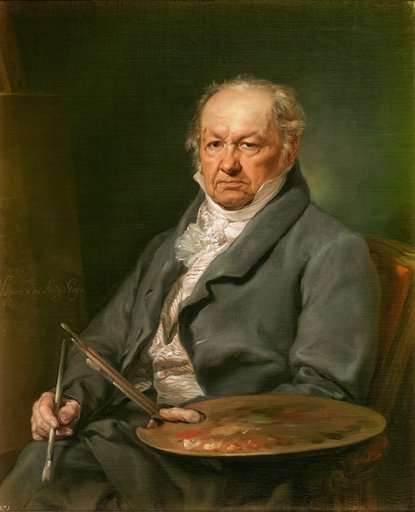
Francisco José de Goya y Lucientes was a Spanish romantic painter and printmaker.