Artwork
Portrait of King Charles IV
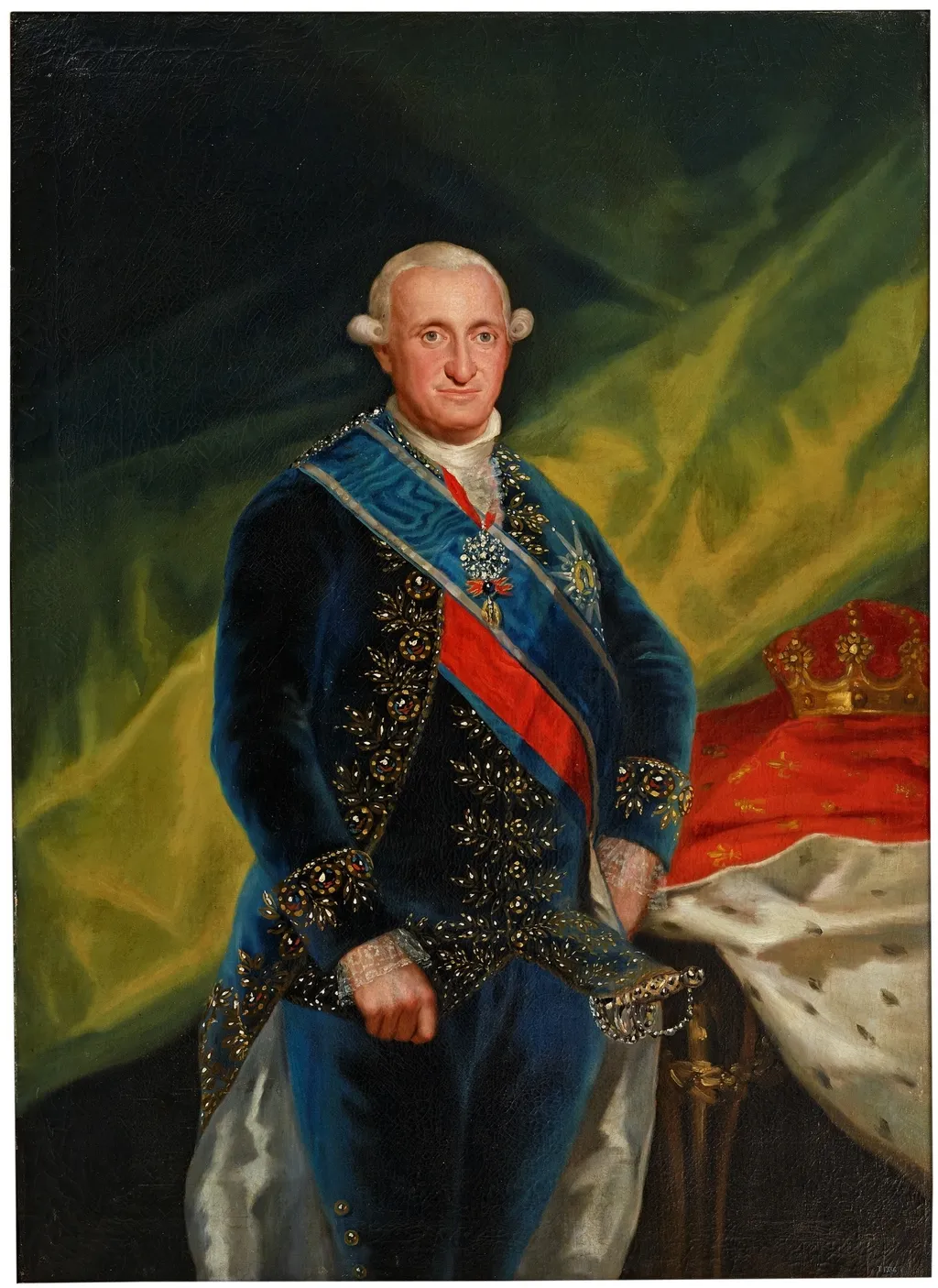
Portrait of King Charles IV is an oil painting by the Spanish Baroque Tenebrist artist Francisco de Goya. It dates from 1796 and is held in the collection of the Museo del Prado. Francisco Goya’s 1796 oil portrait presents King Charles IV in full regal dress, crowned and draped in a blue and gold mantle.
About this work
Subject & Meaning
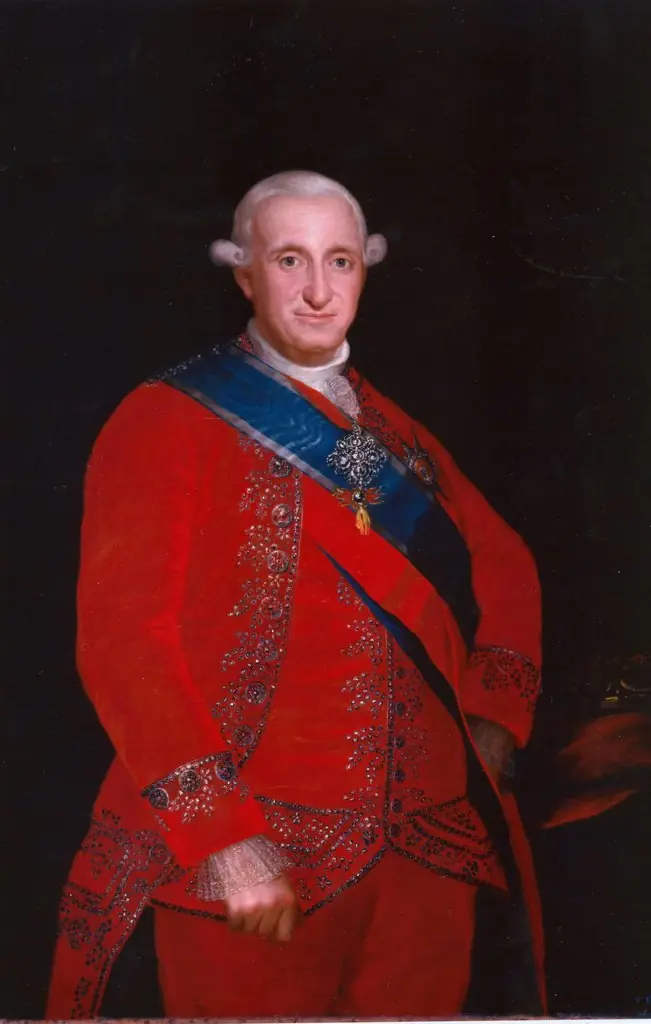
The portrait belongs to a broader visual program of royal imagery, as the composition is based on an earlier depiction of Charles IV in Red.
The painting depicts Charles IV of Spain, the principal subject of the composition. Goya portrays him wearing a crown and royal mantle, the two attributes explicitly identified as depicted elements of the work. Together, the crown and mantle function as conventional iconography of Spanish monarchy, signaling sovereign authority and dynastic legitimacy rather than personal characterization.
The portrait belongs to a broader visual program of royal imagery, as the composition is based on an earlier depiction of Charles IV in Red. By reusing that compositional model, Goya situates his likeness within an established tradition of representing the king in formal regalia, reinforcing continuity with prior royal portraiture.
As an official state portrait held by the Museo del Prado, the work functions as an instrument of royal representation: it presents Charles IV as the reigning monarch of Spain, communicating kingship through the standardized symbols of crown and mantle rather than through narrative or allegorical content.
Technique & Style
Executed in 1790, this portrait utilizes oil paint applied to a canvas support. The work measures 152 cm in height and 110 cm in width. Stylistically, the composition focuses on the royal figure adorned with a crown and a royal mantle, adhering to the conventions of formal portraiture.
The piece serves as a derivative work based on an earlier depiction of the monarch known as Charles IV in Red.
History & Provenance
The Portrait of King Charles IV by Francisco Goya is held in the collection of the Museo del Prado in Madrid, where it has been located as a work of the museum's holdings. Painted in oil on canvas in 1790, the portrait measures 152 cm in height and 110 cm in width, and is catalogued within the Prado's inventory of Goya's royal portraits.
The painting is based on Goya's earlier composition Charles IV in Red and depicts the Spanish monarch wearing a crown and royal mantle. No specific exhibition history beyond its presence in the Prado's collection is documented in the available sources.
Overview
Francisco Goya’s 1796 oil portrait presents King Charles IV in full regal dress, crowned and draped in a blue and gold mantle. The monarch is positioned beside a chair, his hand resting lightly upon it, while a red curtain and the edge of a golden crown loom in the dim background. The composition balances formal authority with a subtle, illuminated presence.
Context
The portrait was produced at a time when Spain was navigating political and social change, and Goya was emerging as a leading artist bridging the traditions of the Old Masters with a more personal, observational approach. The work thus sits at the intersection of royal portraiture and the evolving artistic sensibilities of the late eighteenth century.
Own this work as a print
Artist & collection
Artist
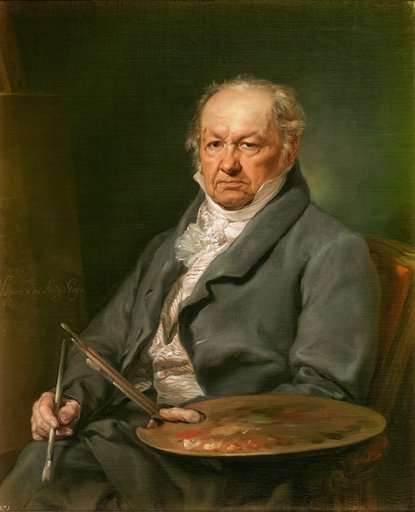
Francisco José de Goya y Lucientes was a Spanish romantic painter and printmaker.

 Portrait of Infante Don Luis de Borbon
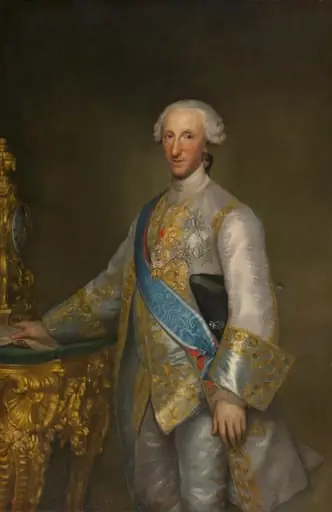 Portrait of Infante Don Luis de Borbon
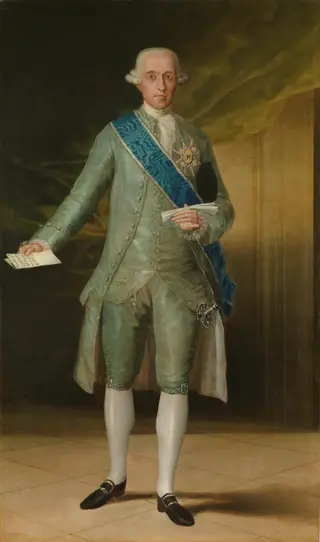 José Moñino y Redondo, count de Floridablanca
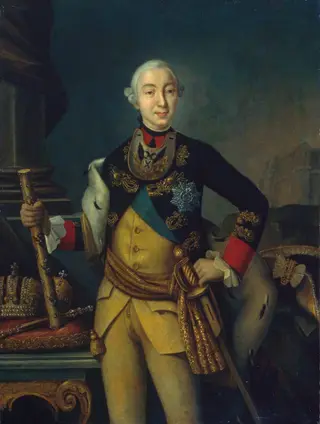 Portrait of Emperor Peter III
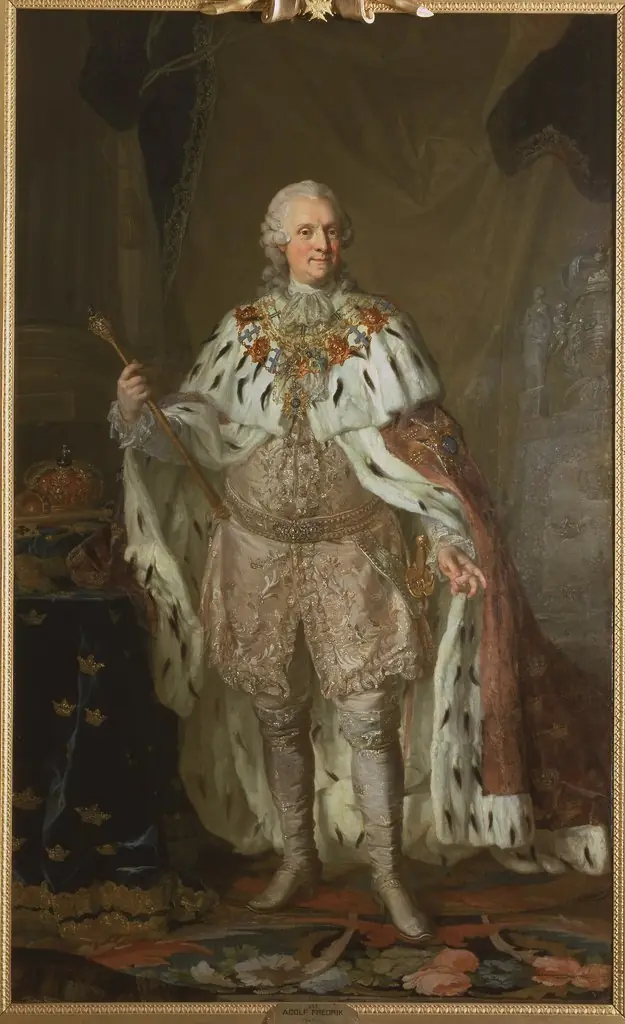 Adolf Fredrik, 1710-1771, konung av Sverige hertig av Holstein-Gottorp
 Ritratto di Francesco II di Borbone
 Kurfürst Max III. Joseph von Bayern (zugeschrieben)