Artwork
The Triumph of Saint Hermenegildo
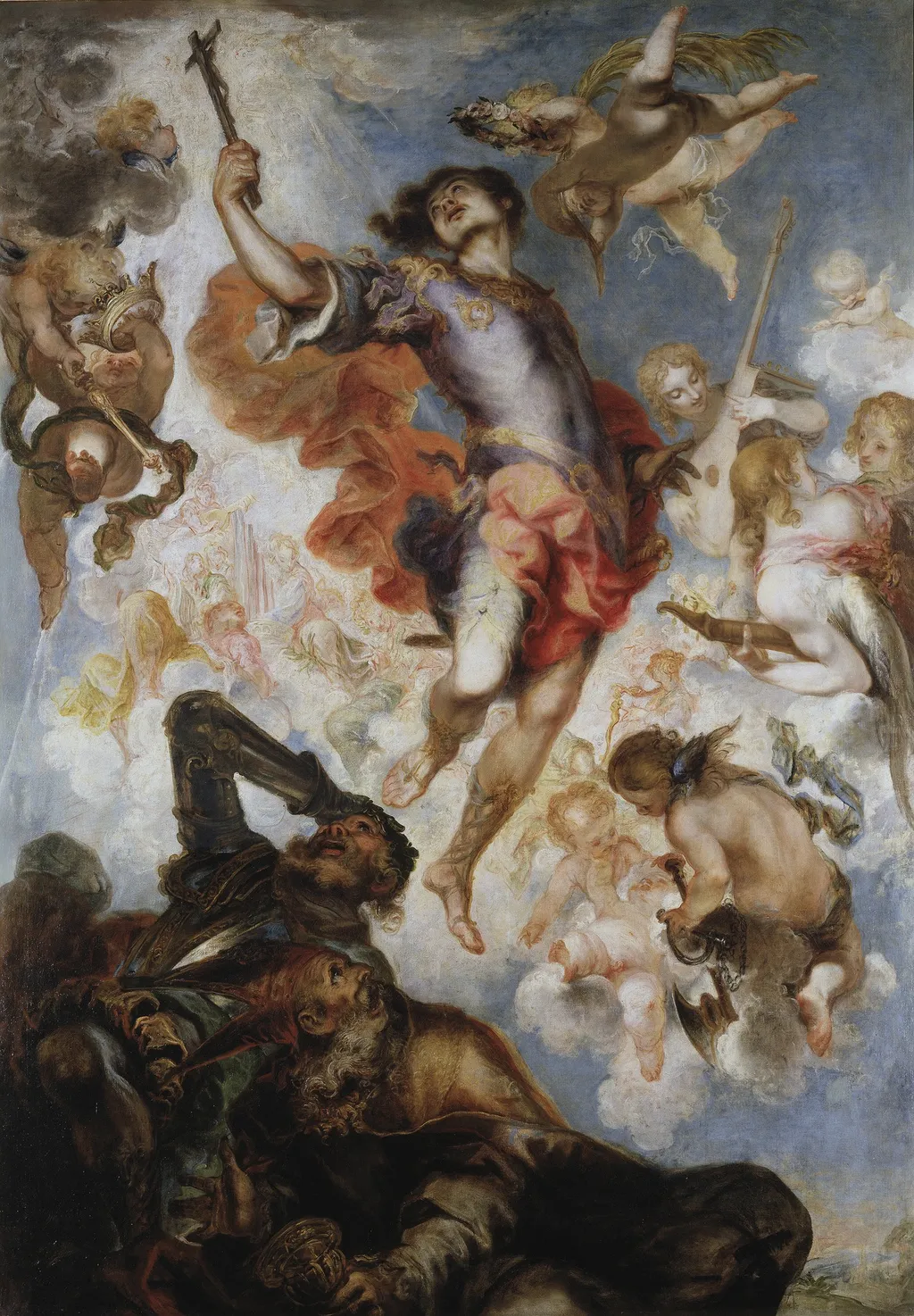
The Triumph of Saint Hermenegildo is an oil painting by the Early Baroque Italian artist Francisco Herrera the Younger. It dates from 1654 and is held in the collection of the Museo del Prado.
About this work
Technique & Style
The canvas has been preserved in the Museo del Prado since its acquisition by Ferdinand VII in 1831.
The Triumph of Saint Hermenegildo (1654) is an oil‑on‑canvas painting measuring 326 × 228 cm, originally part of a fourteen‑canvas altarpiece for the convent of San Hermenegildo in Madrid. The work depicts the saint in armor, crowned and holding a crucifix, surrounded by angels bearing symbols of martyrdom and triumph; the composition is organized around a helical ascent that creates dramatic movement and spatial depth. Herrera employed rich colour, strong chiaroscuro and a virtuoso handling of brushwork to achieve a Baroque full‑style grandeur, a novelty that influenced contemporaries such as Murillo and Rizi.
The canvas has been preserved in the Museo del Prado since its acquisition by Ferdinand VII in 1831.
Context
The painting, completed in 1654 by Francisco Herrera the Younger after his Italian sojourn, signaled a decisive shift toward full Baroque expression in Spain. Contemporary chronicler Antonio Palomino recorded a flamboyant anecdote about the work’s unveiling, underscoring Herrera’s awareness of its significance. 19th‑century scholarship has hailed it as “one of the absolute masterpieces of Spanish painting of the century” and as a catalyst for the adoption of Baroque motifs, influencing artists such as Murillo, Valdés Leal, Rizi and Carreño.
The composition depicts Saint Hermenegildo’s heavenly ascent, a triumphant rather than martyrdom‑focused scene rendered with a helical motion and rich symbolic detail. After staying in the convent, the canvas was sold in 1786, purchased by Ferdinand VII in 1831, and has been part of the Museo del Prado’s collection ever since.
Legacy
The Triumph of Saint Hermenegildo became a reference point for the development of full Baroque in Spain. Contemporary accounts recorded that its display was accompanied by fanfare, underscoring its perceived importance. The work’s dramatic composition, dynamic lighting and integration of martyr symbols influenced major painters such as Murillo, Valdés Leal, Rizi and Carreño, who adopted its theatrical gestures and rich colourism.
After remaining in the convent of San Hermenegildo, the canvas was sold in 1786, failed to find a buyer and was purchased by King Ferdinand VII in 1831 for the Museo del Prado, where it has been exhibited ever since. Its status as a masterpiece of Spanish painting was cemented through 19th‑century scholarship and continues to shape interpretations of Baroque visual language.
Overview
Francisco Herrera the Younger painted The Triumph of Saint Hermenegildo in 1654 using oil on canvas. This religious work depicts the ascent of Saint Hermenegild amidst a celestial battle, a common theme in Baroque art. The painting is currently housed in the collection of the Museo del Prado, where it represents a significant example of Spanish Golden Age painting.
Subject & Meaning
The painting centers on Saint Hermenegild, a Visigothic prince, shown ascending heavenward in radiant robes of red and gold, clutching a cross. He is surrounded by a dynamic host of winged angels, armed with swords and shields, engaged in a chaotic struggle in the sky. Below, a dark, equestrian figure wields a sword over shadowy forms, suggesting a worldly conflict overcome by divine intervention. The presence of an axe and body armor further alludes to the saint's martyrdom and military background.
History & Provenance
Created in 1654, The Triumph of Saint Hermenegildo is a notable work from the mid-17th century, a period when religious commissions were prevalent in Spain. The painting has since become part of the esteemed collection at the Museo del Prado in Madrid, where it remains accessible to the public. Its presence there contributes to the museum's comprehensive representation of Spanish Baroque art.
Own this work as a print
Artist & collection
Artist
Francisco Herrera the Younger (born in Seville around 1627, died in Madrid in 1685) was a Spanish painter and architect of the Baroque, the son and pupil of Francisco Herrera the Elder.

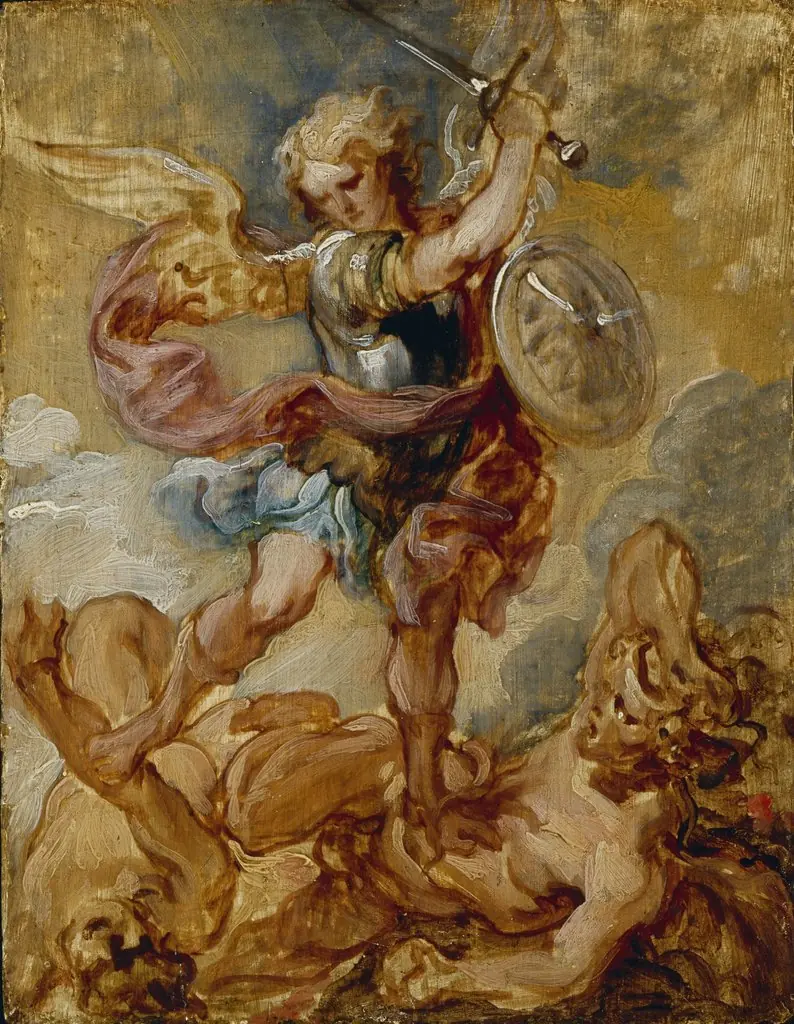
- Saint Michael
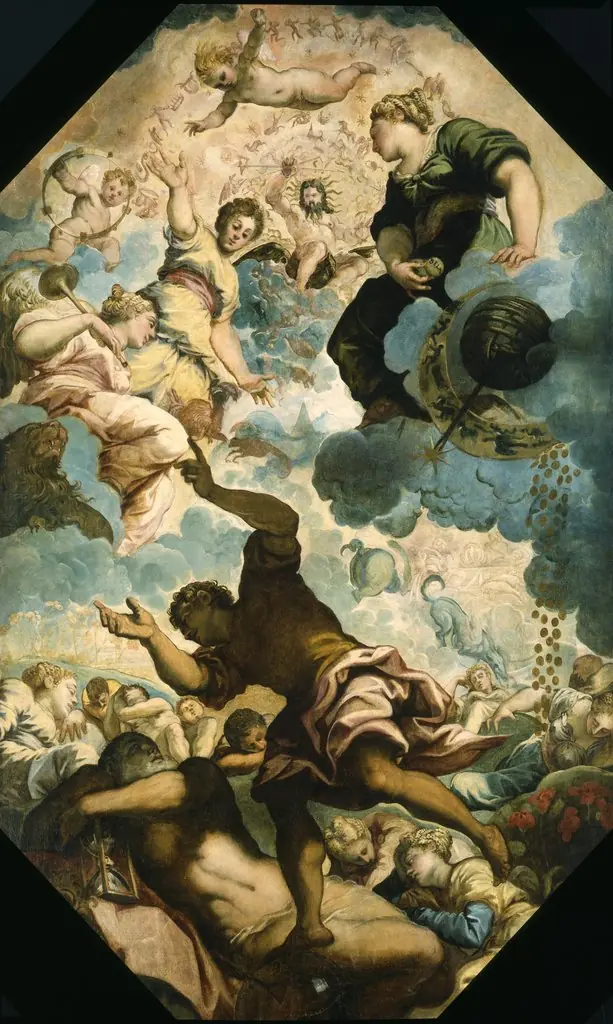 The Dreams of Men
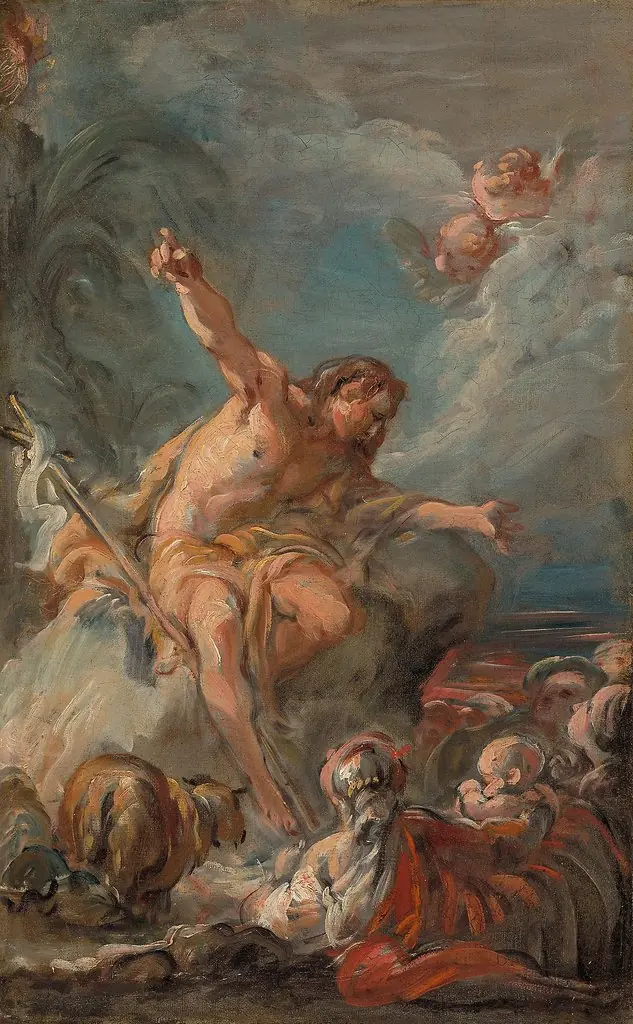 Saint John the Baptist Preaching in the Desert
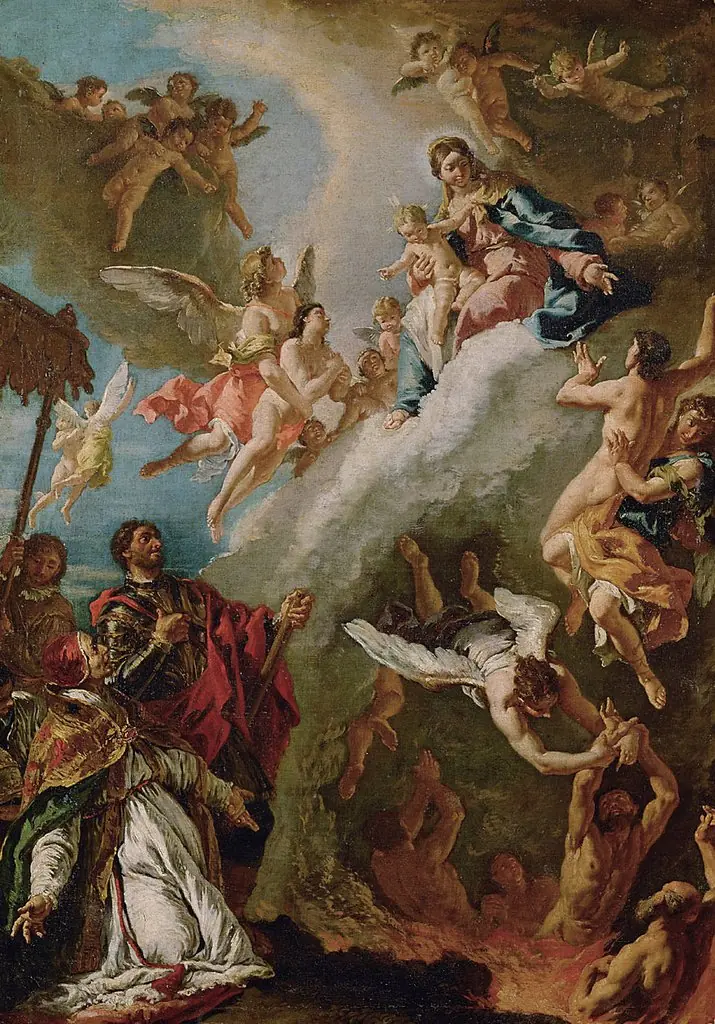 Papst Gregor I. und der Hl. Vitalis bitten die Madonna für die Seelen im Fegefeuer
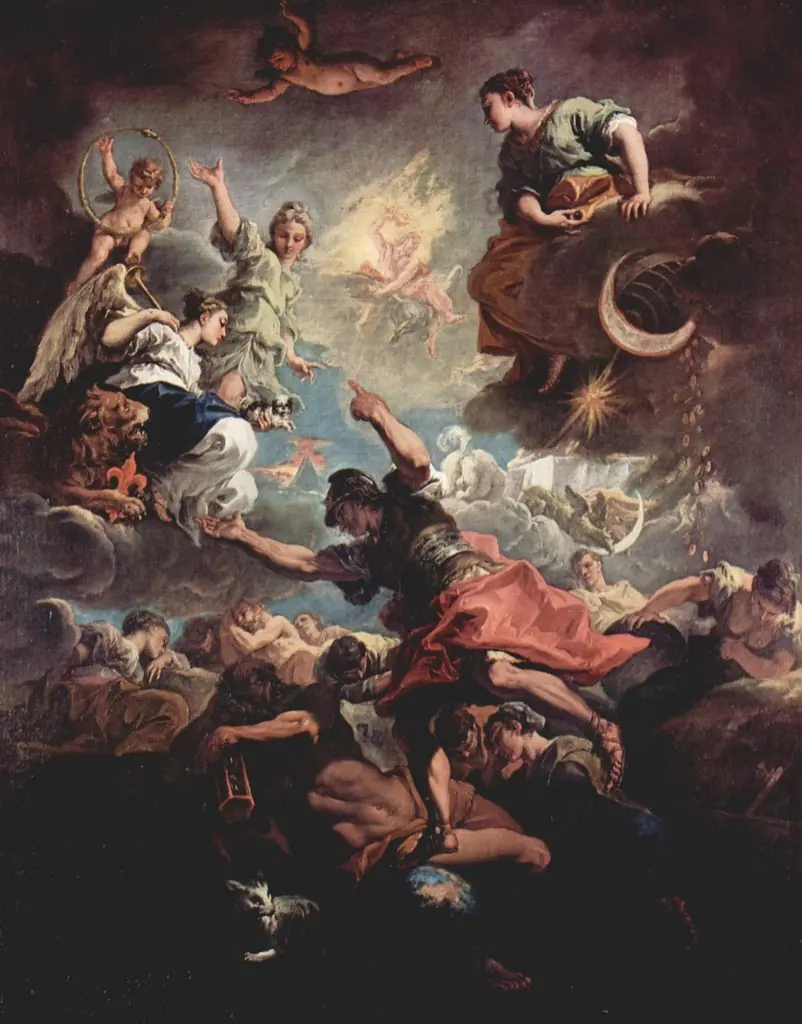 Allegory of Tuscany
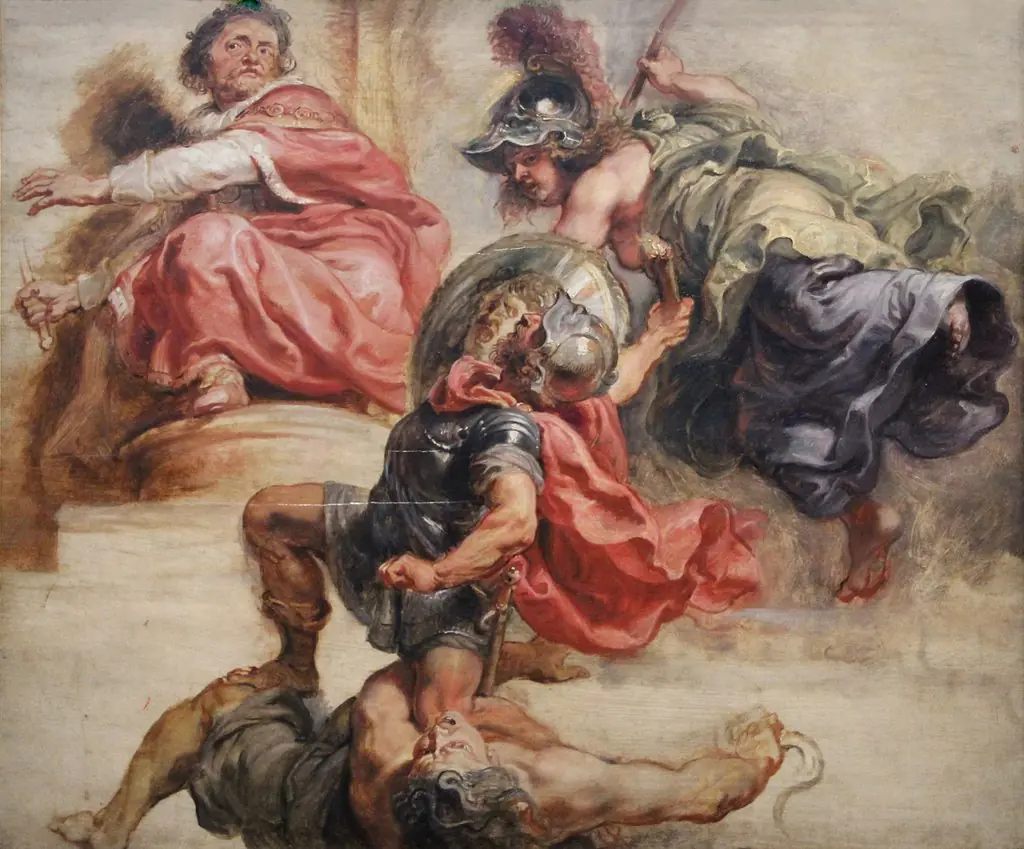 Wisdom triumphant over war and discord under the government of James I of England
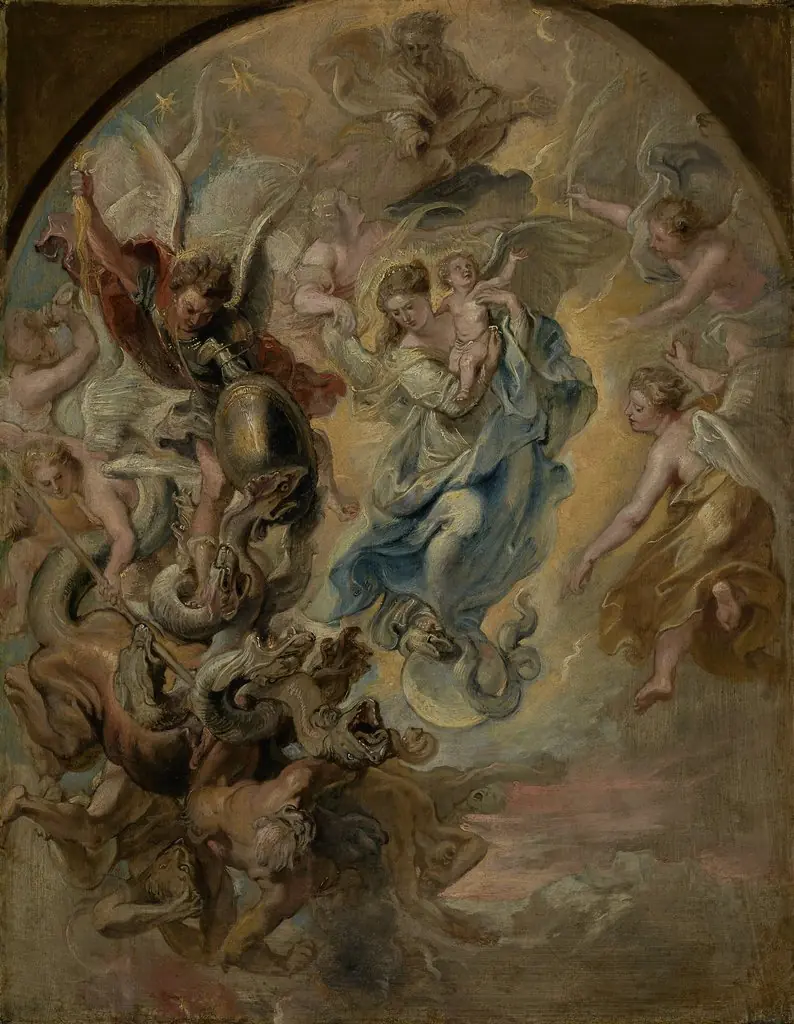 The Virgin as the Woman of the Apocalypse
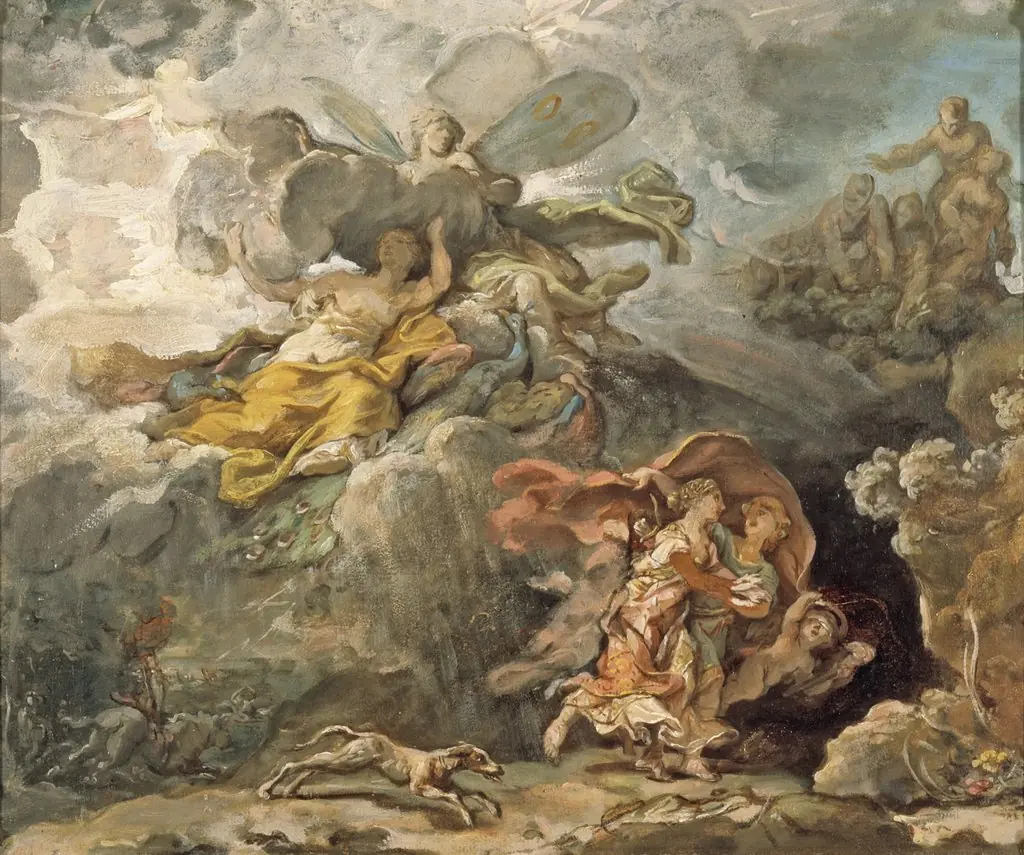 Aeneas and Dido Fleeing the Storm
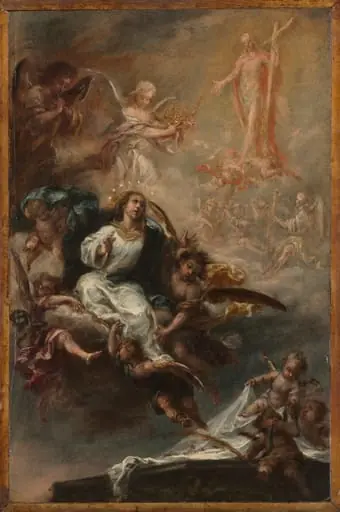 Study for "The Assumption of the Virgin" for San Augustín, Seville
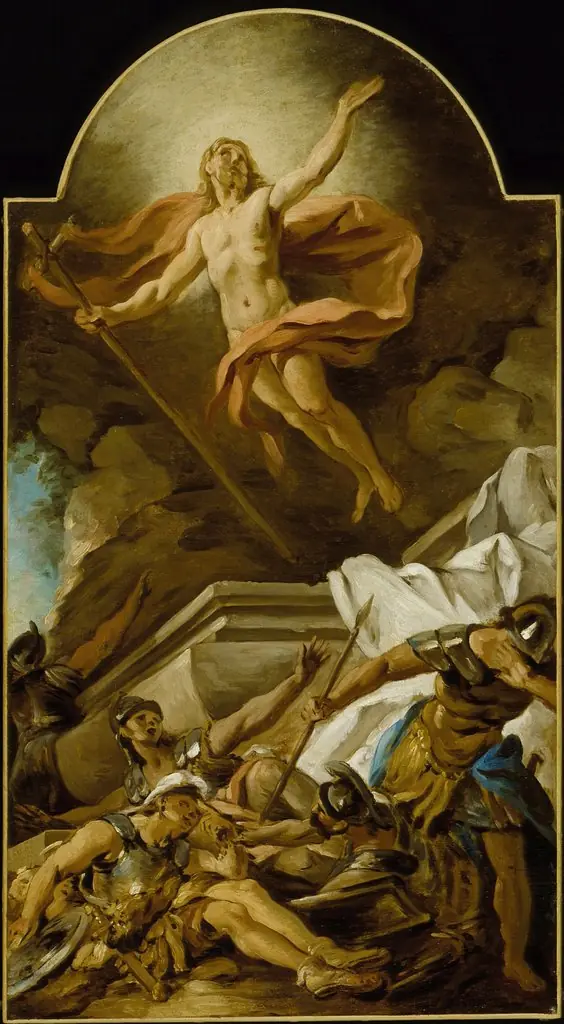 The Resurrection
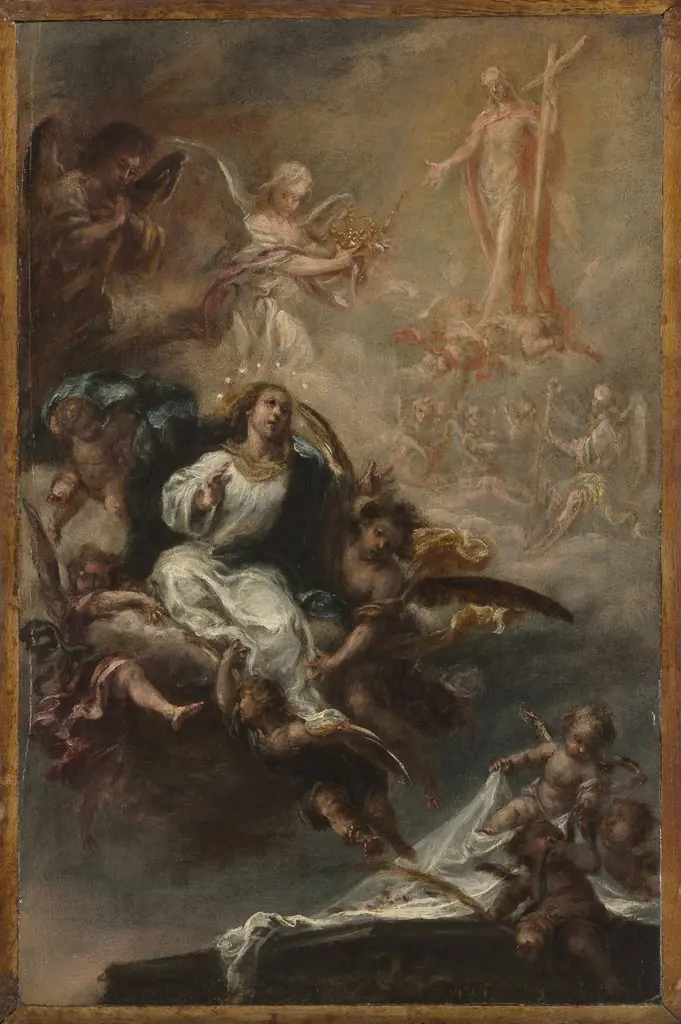 Study for "The Assumption of the Virgin" for San Augustín, Seville
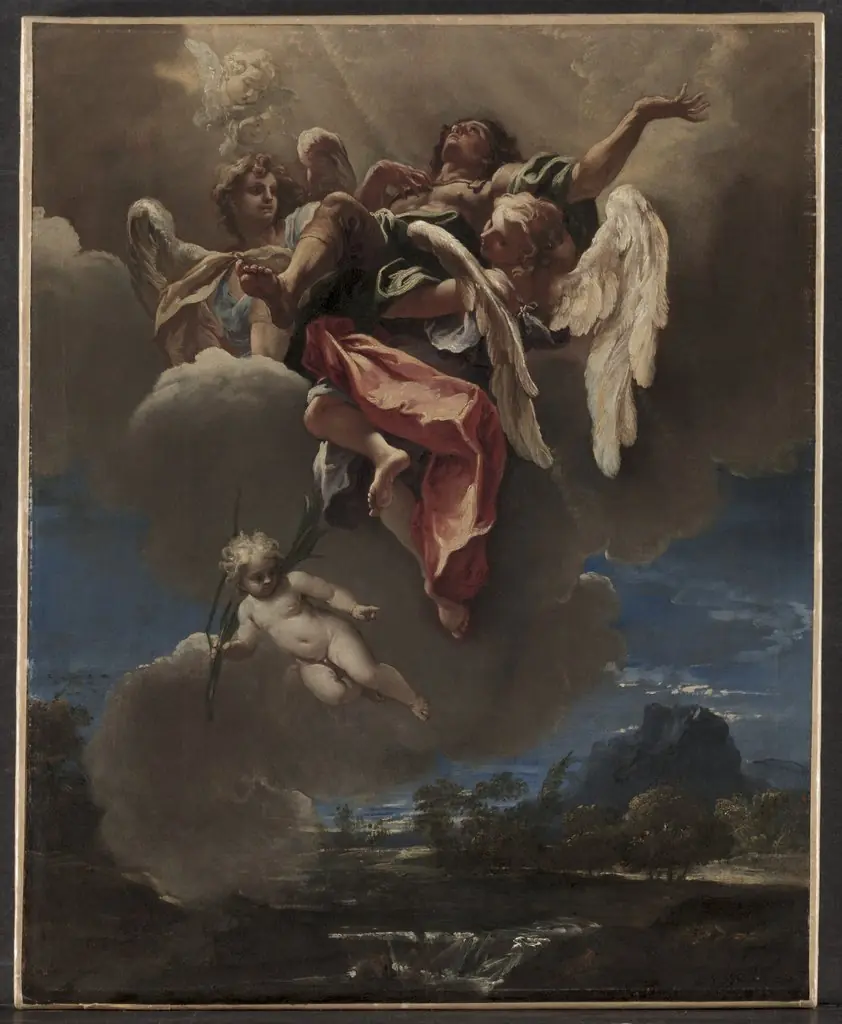 Study for "An Apotheosis of a Saint" (for San Bernardino dei Morti, Milan)