Artwork
Stream in the forest
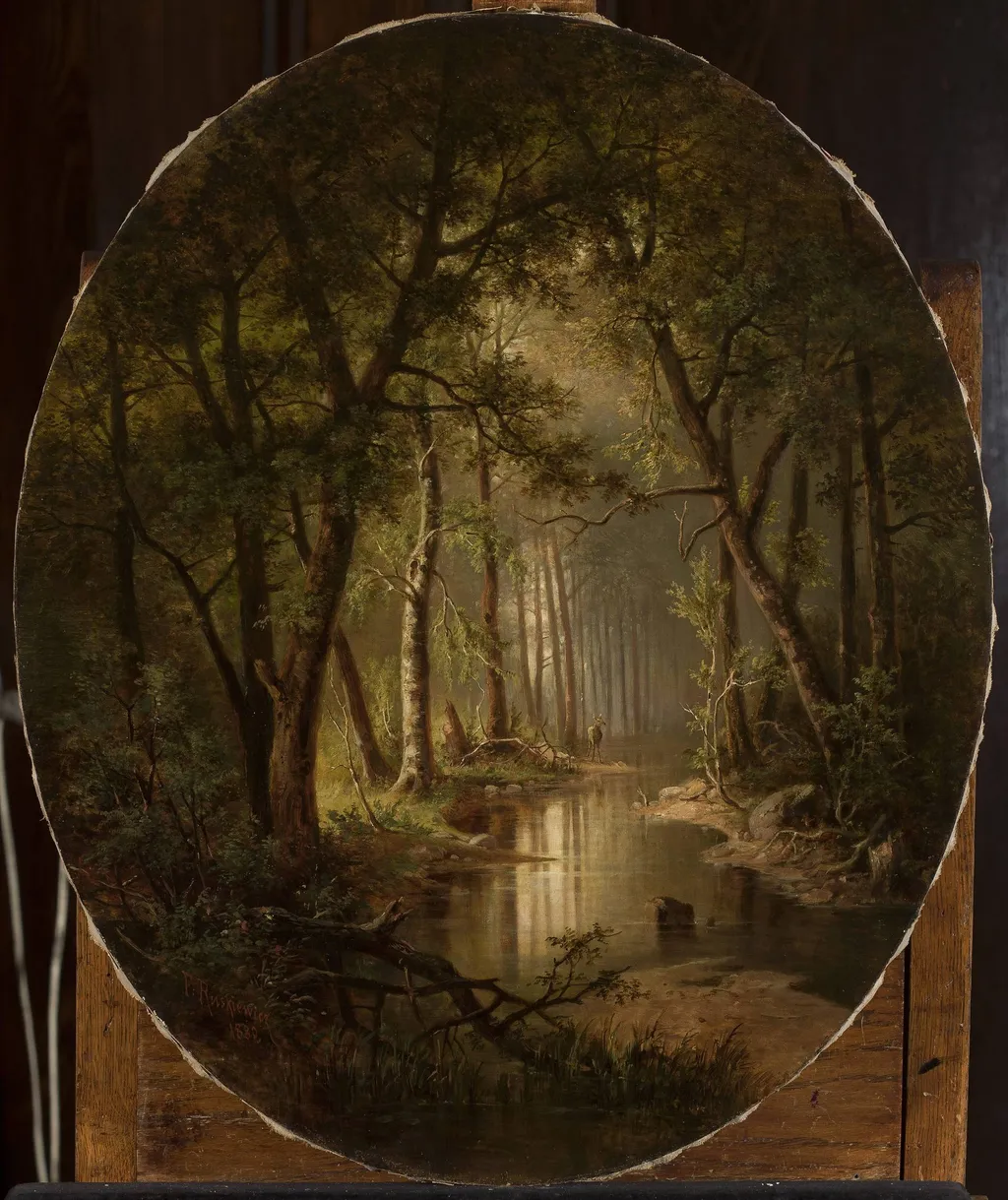
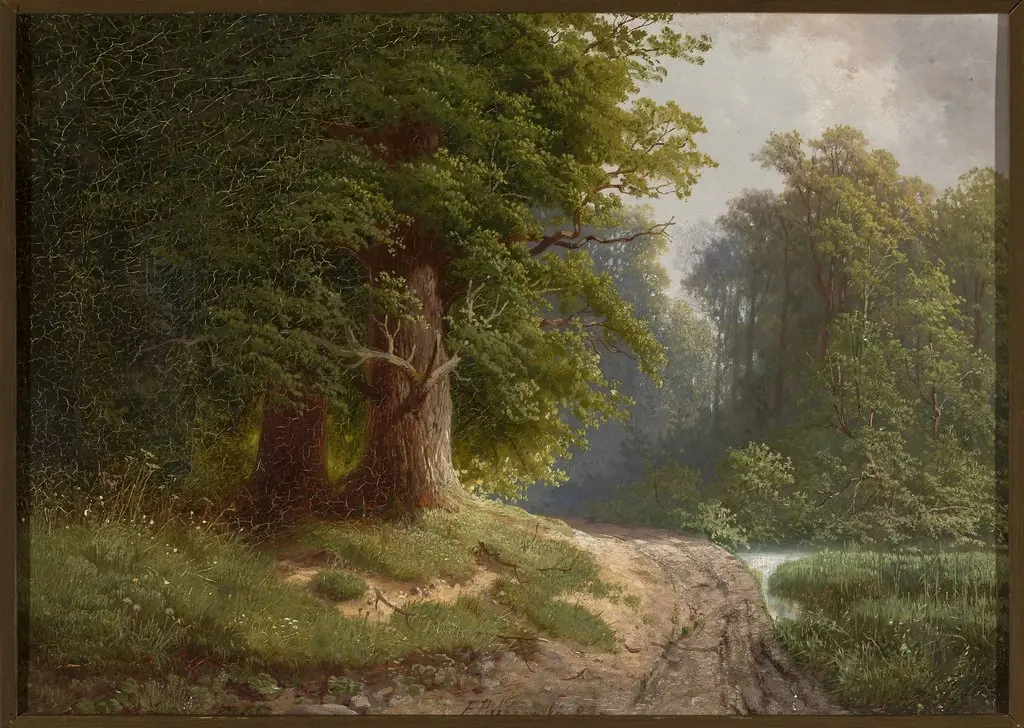
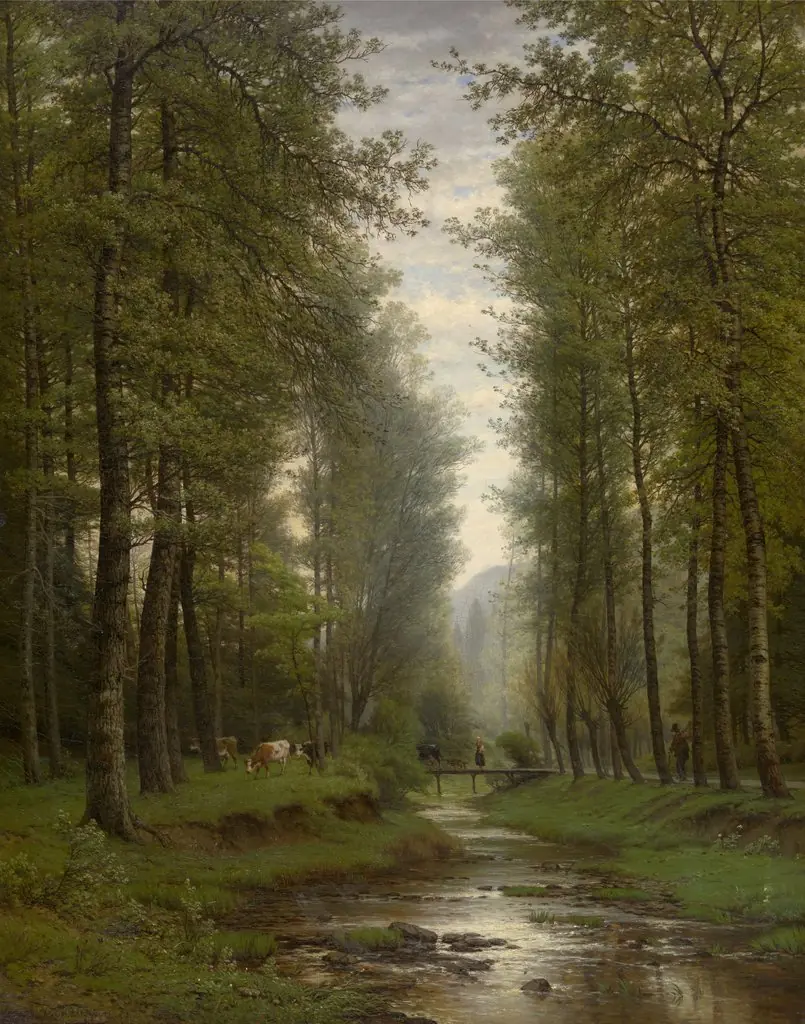
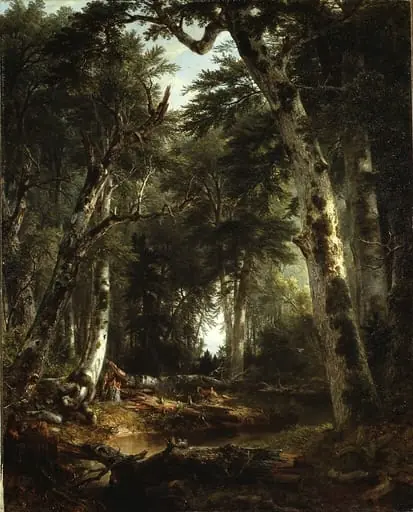
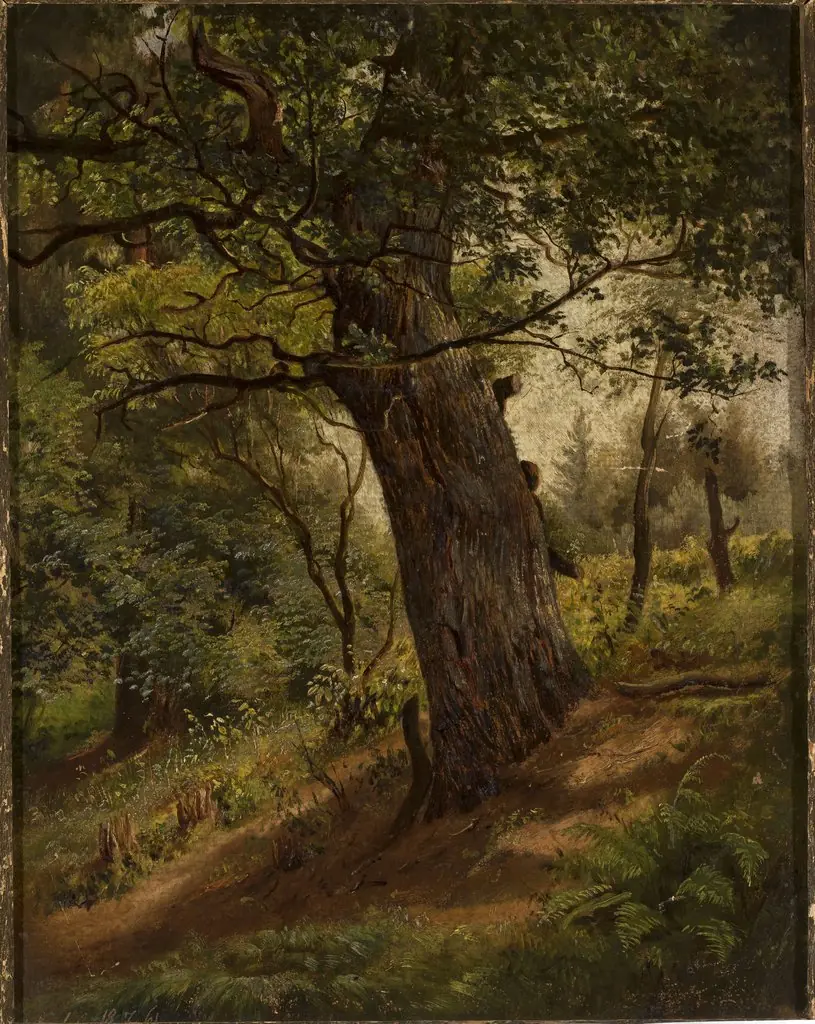
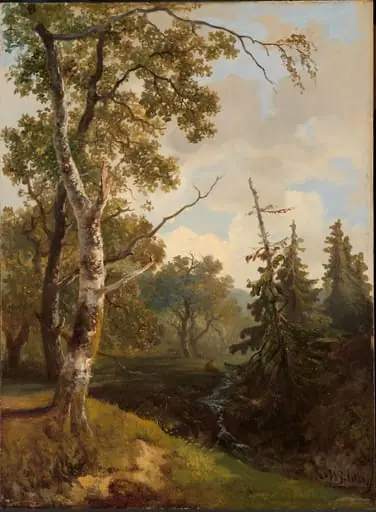
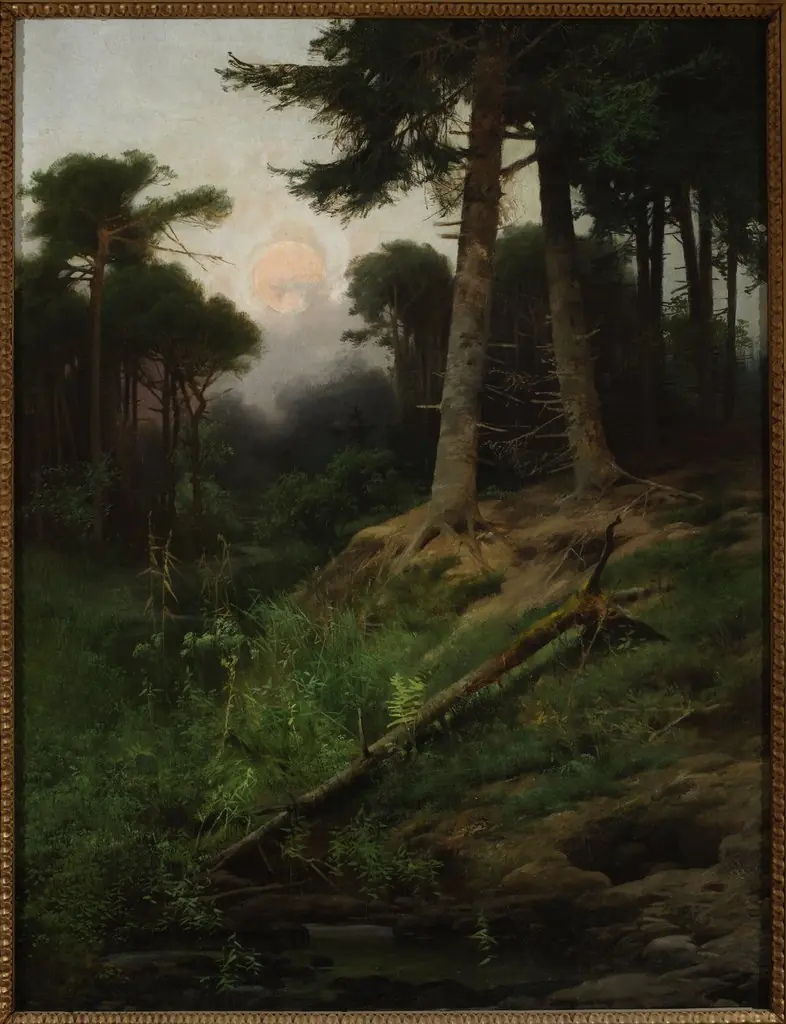
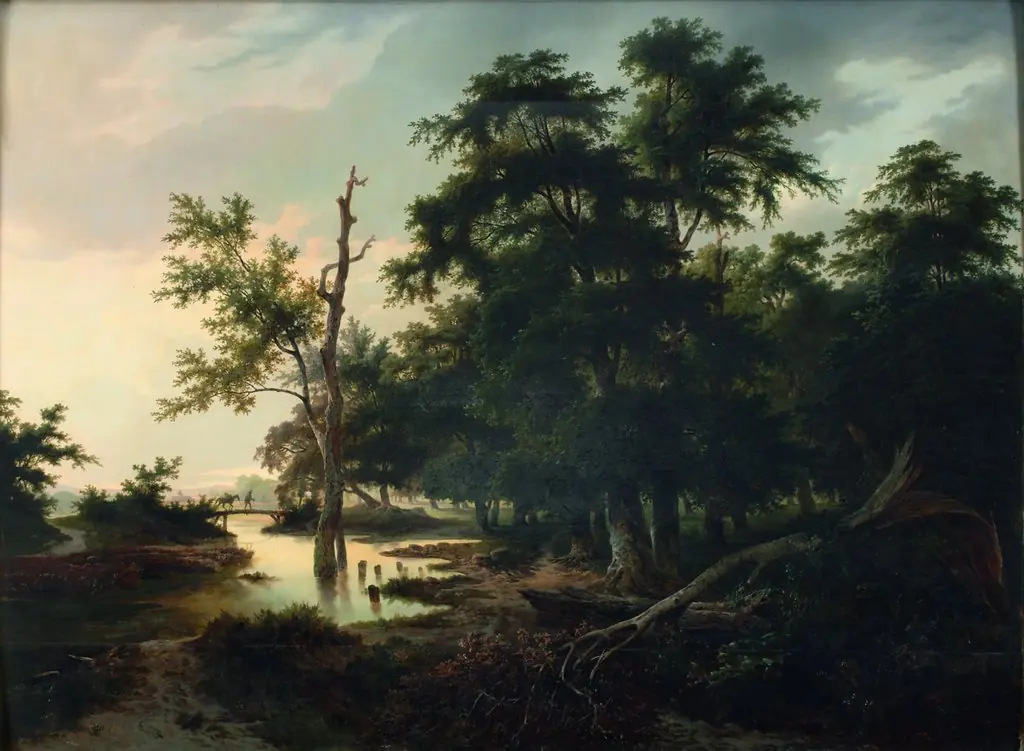
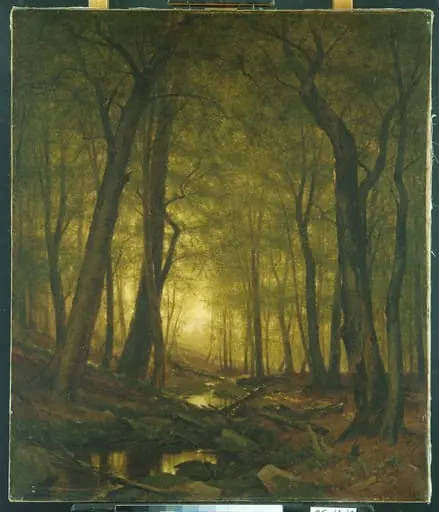
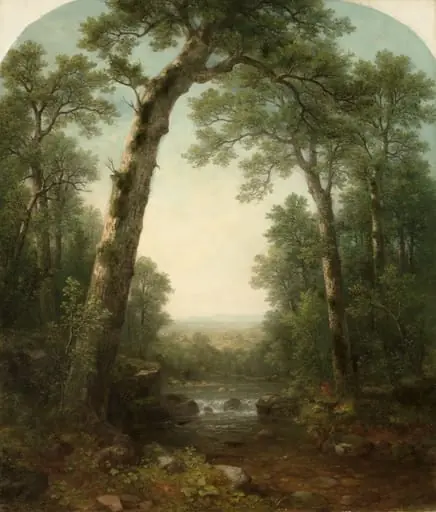
Stream in the forest is an oil painting by the Realist artist Franciszek Ruśkiewicz. It is held in the collection of the National Museum in Warsaw.
About this work
Overview
It captures a moment of stillness in nature, emphasizing the interplay of light and shadow rather than narrative or human presence.
Painted in 1890 by Franciszek Ruśkiewicz, this oil on canvas depicts a quiet woodland stream winding through a thick forest. The work is part of the collection at the National Museum in Warsaw. It captures a moment of stillness in nature, emphasizing the interplay of light and shadow rather than narrative or human presence. The composition invites contemplation through its muted tones and gentle transitions.
Subject & Meaning
The scene presents no figures or overt symbolism, focusing instead on the natural rhythm of a forest stream. The water, reflecting dappled sunlight, becomes a visual pathway leading the eye inward. The absence of human activity suggests an untouched, meditative space.
The painting conveys reverence for the quiet persistence of nature, rooted in 19th-century Polish Romantic sensibilities that valued solitude and the sublime in landscape.
Technique & Style
Ruśkiewicz employs smooth, blended brushwork to soften edges between foliage, water, and shadow. Chiaroscuro is used subtly to model forms and create spatial depth, with areas of bright light contrasting against deep, cool greens and browns. The palette remains restrained, avoiding vivid hues in favor of atmospheric harmony. This technique enhances the painting’s hushed, introspective mood without resorting to theatrical effect.
History & Provenance
Created in 1890, the painting entered the National Museum in Warsaw’s collection in the early 20th century. Its acquisition aligns with the museum’s broader effort to document Polish artistic responses to nature during the Partitions. While not widely exhibited in its early decades, it has remained a consistent part of the permanent holdings, reflecting its quiet significance within the national collection.
Context
Ruśkiewicz worked during a period when Polish artists increasingly turned to landscape as a form of cultural affirmation under foreign rule. Unlike dramatic historical scenes, this work embraces quietude, aligning with broader European trends in naturalism and plein air study. Its focus on unpopulated nature resonated with a generation seeking identity through the land, not politics.
Legacy
Though not among Ruśkiewicz’s most frequently reproduced works, this painting exemplifies his commitment to atmospheric realism. It contributes to the understanding of late 19th-century Polish landscape painting as a space for emotional restraint and spiritual reflection. Its continued presence in the National Museum underscores its role as a quiet anchor in the nation’s artistic heritage.
Own this work as a print
Artist & collection