Artwork
Sketch of John Kavanaugh
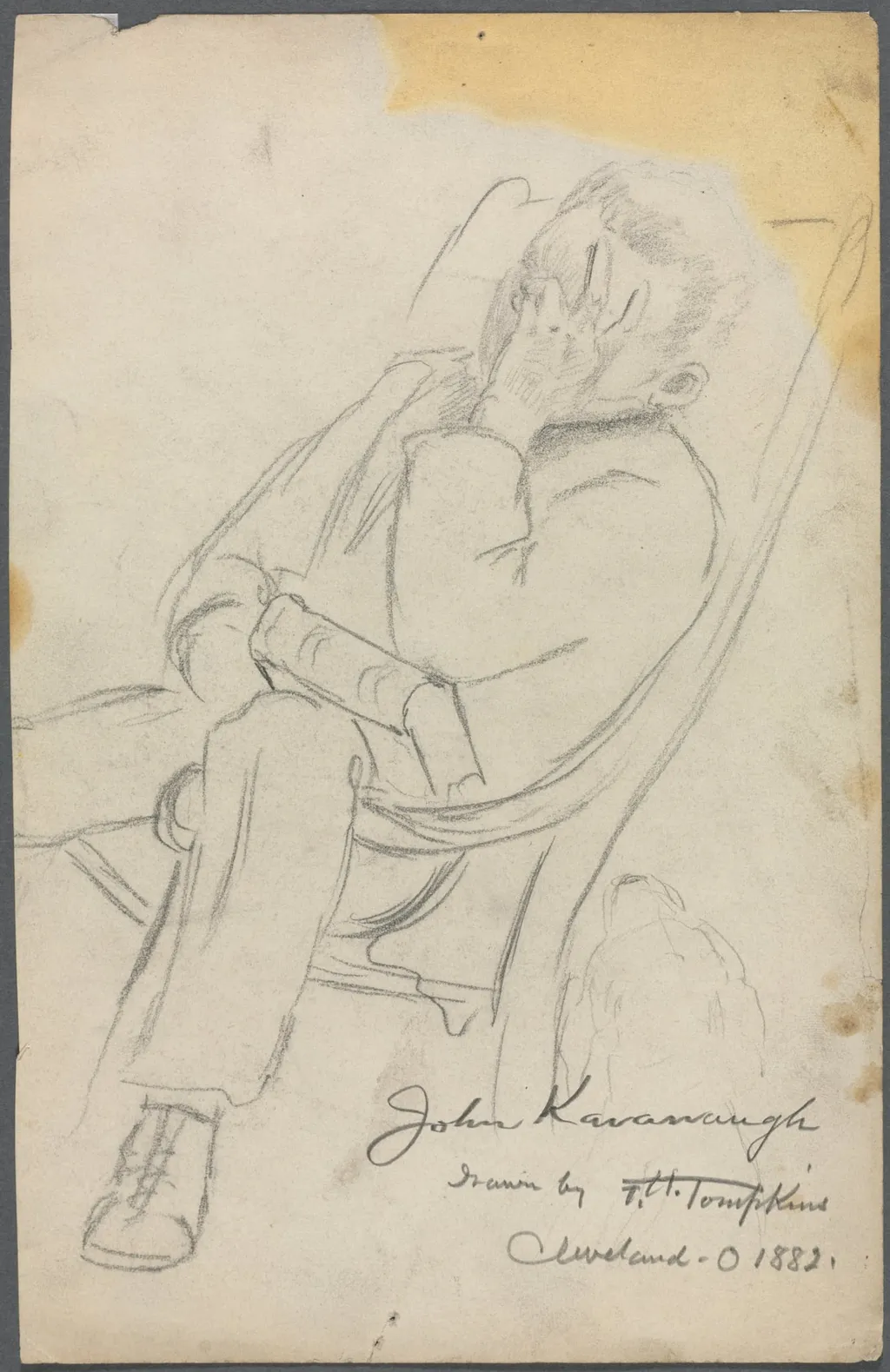
Sketch of John Kavanaugh is a drawing by the Impressionist artist Frank Hector Tompkins. It dates from 1882 and is held in the collection of the Cleveland Museum of Art. This pencil drawing, executed in 1882 by Frank H.
- Accession no.
- 1917.893
- Credit line
- Gift of F. H. Tompkins
About this work
The drawing is loose and quick, with simple lines that focus on the figure’s posture and clothing.
This sketch shows a person sitting, legs crossed, with one hand resting on their knee. The drawing is loose and quick, with simple lines that focus on the figure’s posture and clothing. The paper looks old, with some wear along the edges.
The artist signed it in the corner: "Sketch of John Kavanaugh / Drawn by F.H. Tompkins / Cleveland – 1882." The handwriting is clear but small, tucked away like an afterthought.
If you like this sketch, check out The Cleveland Museum of Art to see more works like it.
Overview
This pencil drawing, executed in 1882 by Frank H. Tompkins, captures a seated figure identified as John Kavanaugh. Rendered with minimal, fluid lines, the work reflects a spontaneous observational approach. The artist inscribed the title, name, and date in small, deliberate script in the lower corner, indicating a personal or informal intent.
The paper shows signs of age, with frayed edges and subtle discoloration consistent with its age and handling.
Subject & Meaning
The subject, John Kavanaugh, is depicted in a relaxed, natural pose, legs crossed, one hand resting on his knee. No narrative or symbolic elements are present; the focus is purely on the individual’s posture and presence. The drawing functions as a quiet record of a moment, likely made during a casual encounter. Its simplicity suggests an intimate, unposed interaction rather than a formal portrait.
Technique & Style
Tompkins employed a loose, economical line quality, using light pencil strokes to suggest form without detail. Shadows and contours are implied rather than modeled, emphasizing the figure’s silhouette and the folds of clothing. The absence of shading or background elements directs attention solely to the sitter’s posture. The sketch’s immediacy reflects a direct, on-the-spot method typical of preparatory or personal studies.
History & Provenance
The drawing remained in private hands until its acquisition by The Cleveland Museum of Art. Its inscription confirms the artist’s local ties to Cleveland and the year of creation. No record of prior ownership or exhibition exists prior to its museum acquisition, suggesting it was kept as a personal keepsake. Its survival into the 20th century reflects its quiet significance to those who preserved it.
Context
In the early 1880s, Cleveland was developing as a cultural center, and artists like Tompkins often documented local figures in informal sketches. While not part of a major artistic movement, such drawings were common among illustrators and draftsmen as exercises in observation. This work aligns with a broader 19th-century practice of capturing everyday individuals with immediacy rather than idealization.
Legacy
Though not widely exhibited or reproduced, the sketch endures as a modest example of regional artistic practice. It offers insight into Tompkins’ working methods and the social environment of late 19th-century Cleveland. Its preservation in a public collection ensures its continued availability as a record of ordinary life rendered with quiet precision.
Own this work as a print
Artist & collection
Artist
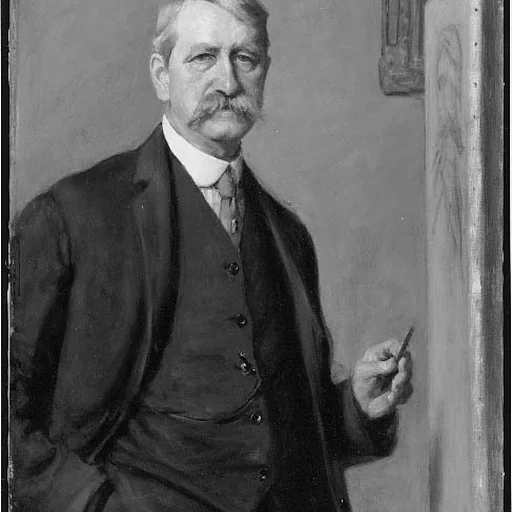
Frank Hector Tompkins (1847–1922) was an American artist, born in Hector.

- Head of a Boy Seen from Behind
 Madame Cezanne
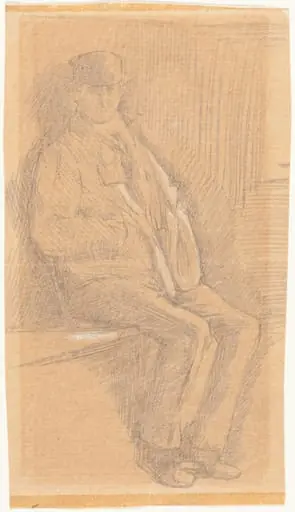 Seated Man
 Joseph Pennell, No. 2
 Madame Cezanne
 Madame Cezanne
 Self-Portrait
![Five Sheep; Head of a Woman and Head of a Bearded Man [recto], by Paul Gauguin](https://artifactworldgallery.com/img/paul-gauguin--five-sheep-head-of-a-woman-and-head-of-a-bearded-man-recto--b52e1d9f193e7f08-w320.webp) Five Sheep; Head of a Woman and Head of a Bearded Man [recto]
Five Sheep; Head of a Woman and Head of a Bearded Man [recto] Le Fou
![Two Figures and a Bench; Three Studies of Men's Heads and One of a Hand [recto], by Paul Gauguin](https://artifactworldgallery.com/img/paul-gauguin--two-figures-and-a-bench-three-studies-of-men-s-heads-and-one--b308c9e6d9f9cfa9-w320.webp) Two Figures and a Bench; Three Studies of Men's Heads and One of a Hand [recto]
Two Figures and a Bench; Three Studies of Men's Heads and One of a Hand [recto] Three Heads, One of Madame Cezanne
 Sketch of Madame Cézanne (verso)