Artwork
Carl Philipp Emanuel Bach (1714-1788)
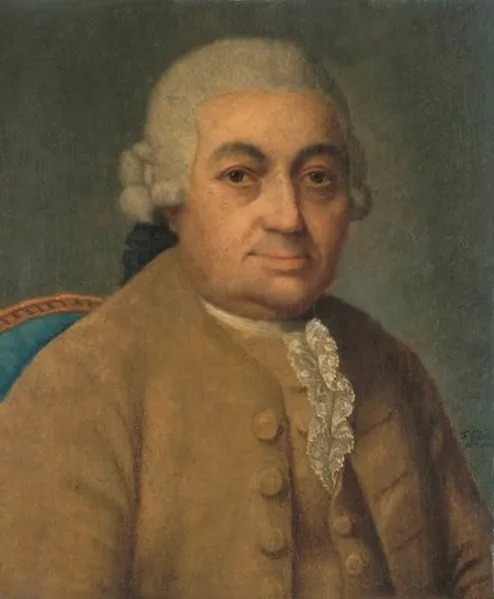
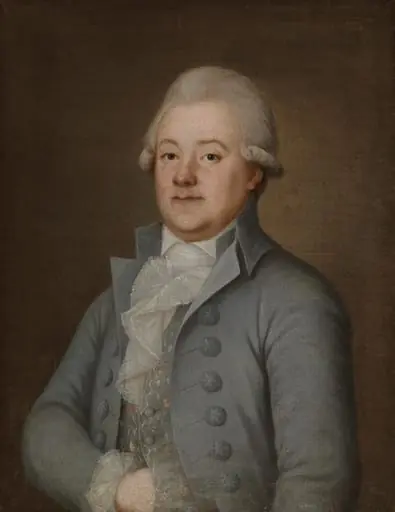
Carl Philipp Emanuel Bach (1714-1788) is an oil painting by the Rococo painting artist Franz Conrad Löhr. It dates from 1775 and is held in the collection of the Gemäldegalerie Berlin.
About this work
Overview
The painting resides in the Gemäldegalerie Berlin, where it serves as a visual record of one of the 18th century’s most significant musical figures.
This 1775 oil portrait by Franz Conrad Löhr depicts Carl Philipp Emanuel Bach, the influential composer and son of Johann Sebastian Bach. Painted during Bach’s tenure in Hamburg, the work captures him in middle age, surrounded by the quiet formality of his professional life. The painting resides in the Gemäldegalerie Berlin, where it serves as a visual record of one of the 18th century’s most significant musical figures.
Subject & Meaning
Carl Philipp Emanuel Bach is portrayed with a composed, direct gaze, reflecting his reputation as a thoughtful and intellectual musician. His attire, brown coat, lace cravat, and powdered wig, signals his status as a cultivated man of the Enlightenment era. The unadorned background and restrained composition emphasize his identity as a thinker rather than a courtly figure, aligning with his role as a bridge between Baroque and Classical traditions.
Technique & Style
Löhr employs chiaroscuro to model the sitter’s face with subtle gradations of light and shadow, enhancing the three-dimensionality of his features. The texture of the lace cravat and the sheen of the wig are rendered with precision, while the muted gray background avoids distraction. The brushwork remains controlled and observational, characteristic of mid-18th-century German portraiture, prioritizing likeness over dramatic flourish.
History & Provenance
Commissioned in 1775, the portrait was likely created during Bach’s time as music director in Hamburg, where he held a prominent cultural position. It entered the collection of the Gemäldegalerie Berlin in the 19th century, possibly through state acquisition or donation. Its preservation reflects the growing institutional interest in documenting Germany’s musical heritage during the Romantic period.
Context
Painted at a time when musical patronage was shifting from aristocratic courts to public institutions, the portrait reflects Bach’s transition from court musician to independent artist. His prominence in the Berlin and Hamburg musical scenes placed him at the center of evolving aesthetic ideals, making his image a symbol of intellectual and artistic authority in late Enlightenment Germany.
Legacy
The portrait remains one of the most recognized visual representations of Carl Philipp Emanuel Bach. It has been reproduced in scholarly texts and exhibition catalogs, contributing to the public understanding of his persona. While not a work of overt theatricality, its quiet realism endures as a reliable document of his appearance and the cultural values of his time.
Artist & collection

- Portrait of Abel-François Poisson, marquis de Marigny
 Portrait of C.H. Granby as Sir Peter Teazle in 'The School for Scandal'
 Portrait of Admiral Ommaney
 Portrait of a Male Member of the Szalay Family
 Francisco Cabarrús y Lalanne conde de Cabarrús (Copia)
 Chamber Councilor Joachim Ulrich Giese
 Portrait of Emperor Franz I von Lothringen (1708-1765)
 A. N. Astafiev's portrait
 Portrait of Savva Krenitsin
 Portrait of Antoine-Omer Talon (1760-1811)
 Thomas Pryse of Gogerddan
 Gustaf Borgström