Artwork
The Arts of Industry as Applied to War (cartoon for a wall painting in the Victoria and Albert Museum)
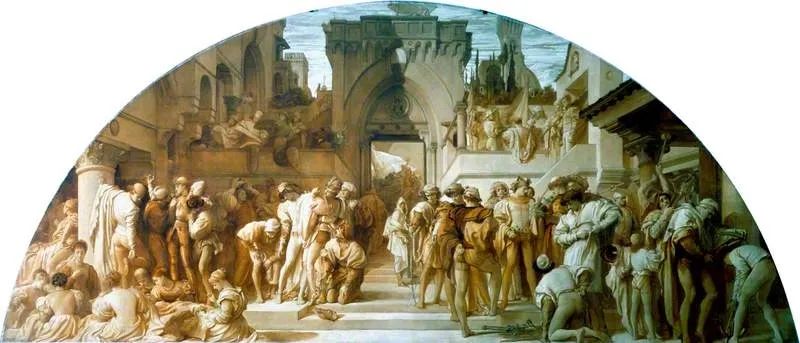
The Arts of Industry as Applied to War (cartoon for a wall painting in the Victoria and Albert Museum) is an oil painting by the Aestheticist artist Frederic Leighton. It dates from 1872 and is held in the collection of the Victoria and Albert Museum.
About this work
Overview
Created in 1872 by Frederic Leighton, this oil painting serves as a full-scale cartoon for a planned wall decoration in the Victoria and Albert Museum.
Created in 1872 by Frederic Leighton, this oil painting serves as a full-scale cartoon for a planned wall decoration in the Victoria and Albert Museum. Intended to adorn the museum’s architecture, it was never executed as a mural but remains a significant preparatory work. Its scale and detail reflect the ambition of Victorian decorative programs, blending historical narrative with allegorical representation.
Subject & Meaning
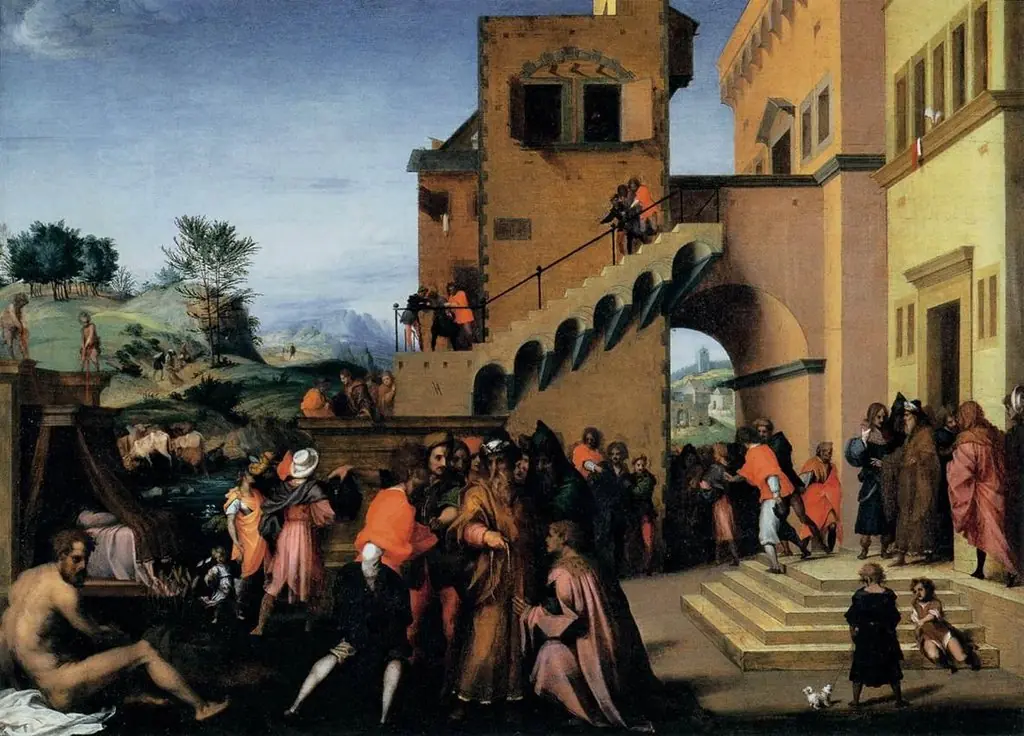
The scene depicts a gathering of figures engaged in the production and inspection of military equipment, framed as an allegory of industrial progress serving national defense. Figures in period dress, craftsmen, officials, and observers, suggest a collective civic effort. The composition implies a harmonious union between artisan skill and state power, reflecting 19th-century ideals of industry as a civilizing force.
Technique & Style
Leighton employed meticulous oil painting techniques to render a complex, multi-figured composition with rich color and precise detail. The figures are arranged in a shallow, curved space, guiding the viewer’s eye across the scene. His academic training is evident in the balanced composition and idealized forms, while the atmospheric background of buildings and sky provides depth without distracting from the foreground activity.
History & Provenance
Commissioned as part of the V&A’s decorative scheme, the cartoon was completed in 1872 and remained in the museum’s collection. Though the intended mural was never painted, the cartoon was preserved as a key artifact of Victorian artistic planning. It has been exhibited periodically, offering insight into the museum’s early ambitions to merge art, industry, and public education.
Context
Created during a period when British institutions sought to elevate industrial design through art, the work aligns with the V&A’s founding mission to connect craftsmanship with national identity. Leighton’s involvement reflects the era’s belief in art’s role in public life. The theme of industry applied to war resonated with contemporary debates over militarization, technological advancement, and civic duty.
Legacy
Though never realized as a mural, the cartoon endures as a rare example of a large-scale preparatory work for a public decorative project. It illustrates the ambitions of Victorian artists to contribute to institutional narratives and remains a valuable record of how art was used to communicate ideals of progress, labor, and national purpose in the 19th century.
Artist & collection

Artist
Frederic Leighton, 1st Baron Leighton, known as Sir Frederic Leighton between 1878 and 1896, was a British Victorian painter, draughtsman, and sculptor.