Artwork
The Temple of Dendur, Showing the Pylon and Terrace
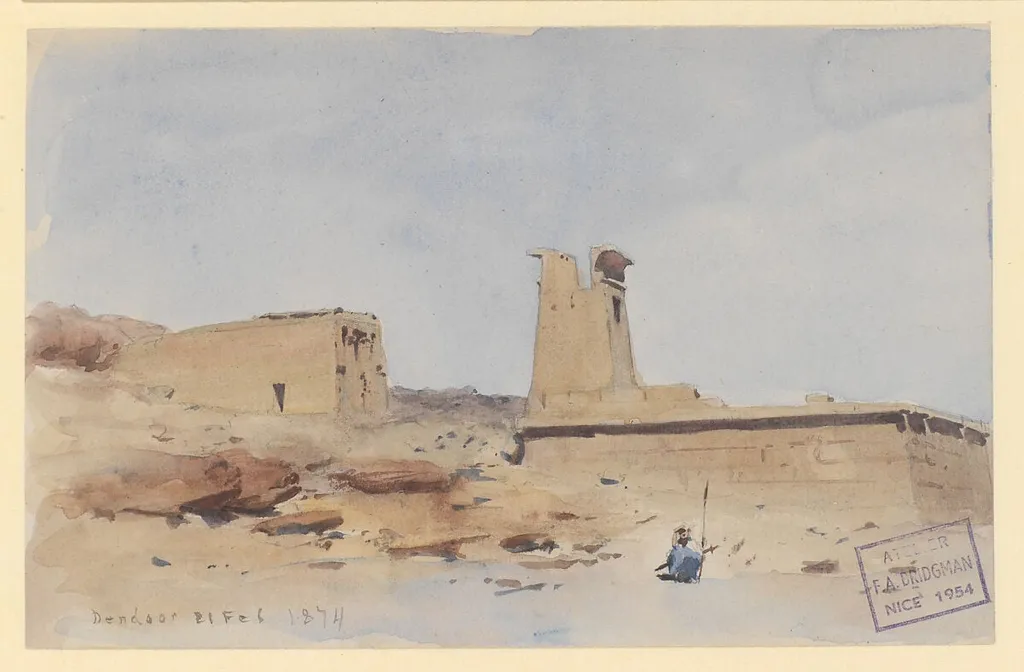
The Temple of Dendur, Showing the Pylon and Terrace is a watercolor work on paper by the American Impressionist artist Frederick Arthur Bridgman. It dates from 1874 and is held in the collection of the Metropolitan Museum of Art.
About this work
You see a sunlit Egyptian temple, its stone walls golden against a pale sky, with steps leading up to a carved doorway.
Bridgman painted this in 1874, long before the real Temple of Dendur was moved to New York. He used watercolor to catch the dry heat and quiet age of the ruins, no people, just shadows and time.
If you like how light plays on old stone, look up glazing.
Technique & Style
The work is executed in watercolor and gouache on off-white wove paper, measuring 12.
The work is executed in watercolor and gouache on off-white wove paper, measuring 12.4 cm by 19.4 cm, and depicts a ruined temple with its pylon and terrace. The composition emphasizes the architectural elements of the pylon, framing the structure against a landscape setting that blends topographical detail with atmospheric rendering. The handling of light and texture in the medium underscores the formal qualities of the scene, presenting the temple in a stylized, yet meticulously observed manner.
History & Provenance
Frederick Arthur Bridgman created this watercolor and gouache work on off-white wove paper in 1874. The piece, which depicts the ruins of a temple, was produced during the artist's career prior to its acquisition by the Metropolitan Museum of Art. The museum currently holds the artwork within its American Wing collection.
While the specific circumstances of the original commission and the detailed chain of ownership between the artist's studio and the museum are not specified in the available records, the work's inception is firmly established as 1874.
The watercolor and gouache work The Temple of Dendur, Showing the Pylon and Terrace by Frederick Arthur Bridgman is held in the collection of the Metropolitan Museum of Art. Created in 1874, the piece measures 12.4 cm in height and 19.4 cm in width. It is classified within the museum's American Wing.
The provided sources do not contain specific inventory accession numbers or a record of exhibition history for this artwork.
Overview
Frederick Arthur Bridgman's 1874 watercolor and gouache, The Temple of Dendur, Showing the Pylon and Terrace, depicts the ancient Egyptian sanctuary as it appeared in its original Nubian setting prior to its relocation to the United States. The composition centers on the temple's pylon and terrace, rendered with a focus on the interplay of light and shadow across the weathered stone. Bridgman employs a warm, golden palette to capture the intense sunlight of the Egyptian landscape, contrasting the textured masonry against a pale, expansive sky.
The work is notable for its absence of human figures, directing the viewer's attention entirely to the architectural grandeur and the quiet desolation of the ruins. Executed during the height of the Orientalist movement, this piece reflects Bridgman's extensive travels in North Africa and his reputation for meticulous archaeological accuracy combined with atmospheric sensitivity. The medium of watercolor and gouache on off-white wove paper allows for both the crisp definition of architectural details and the soft diffusion of light characteristic of the desert environment.
This work stands as a significant document of the temple's pre-relocation state and exemplifies the artist's contribution to 19th-century American Orientalist landscape painting.
Subject & Meaning
The composition focuses on the temple’s massive stone walls, rendered in a warm, golden hue against a clear sky. Steps ascend toward an elaborately carved doorway, while the absence of figures emphasizes the timeless stillness of the ancient site.
Context
The work belongs to a period when American artists traveled abroad to document exotic locales for an audience eager for visual accounts of distant cultures. Bridgman, known for his Orientalist subjects, employed a scientific eye for architectural accuracy while maintaining a lyrical treatment of light.
Artist & collection


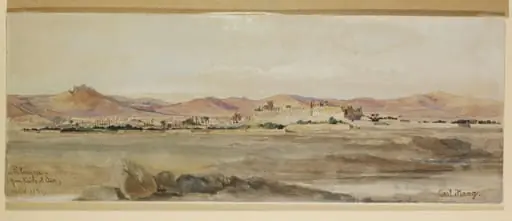 Palmyra (from Kasr el Ain)
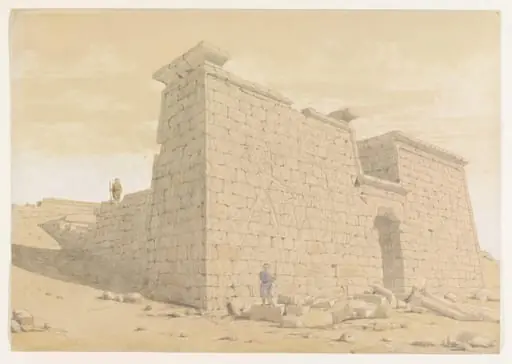 Temple of Sabooa - Nubia
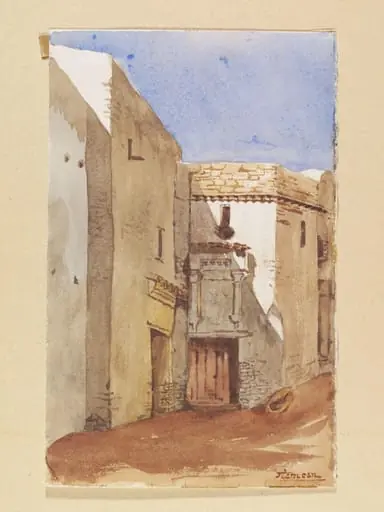 Tlemcen
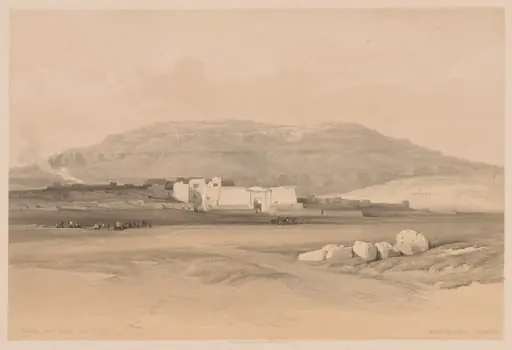 Egypt and Nubia: Volume II - No. 20, Medinet Abou, Thebes
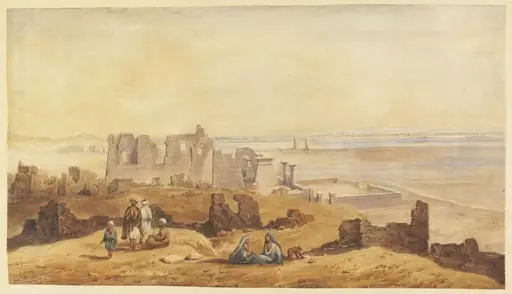 Luxor: the West Bank, with the Temple of Ramesses III at Madinat Habu; looking east towards the Nile
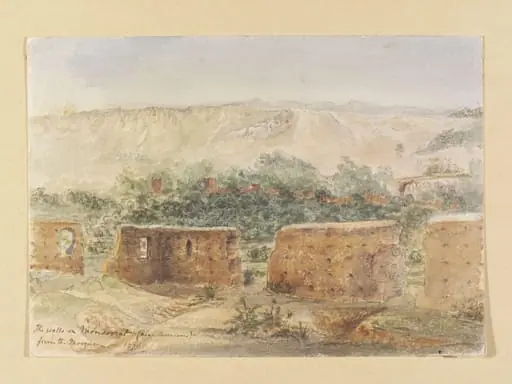 The walls on Monsoorat (near Tlemcen) from the Mosque
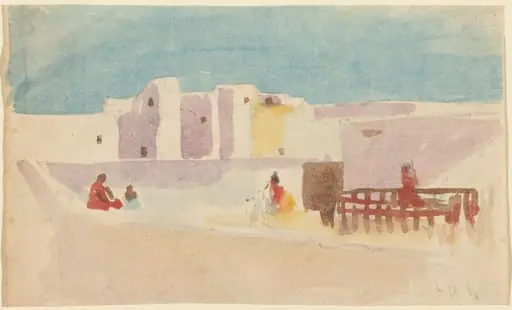 Walls of a North African City
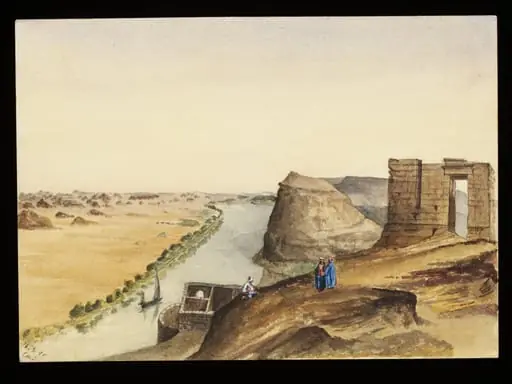 `Ibreem - The Ancient Castle of Premnis (parva) Nubia. Frontier Cantonment of the Romans "On the Nile"
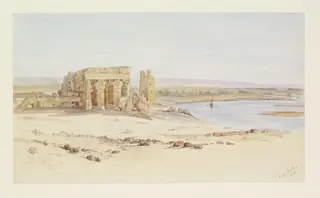 Kom Ombos
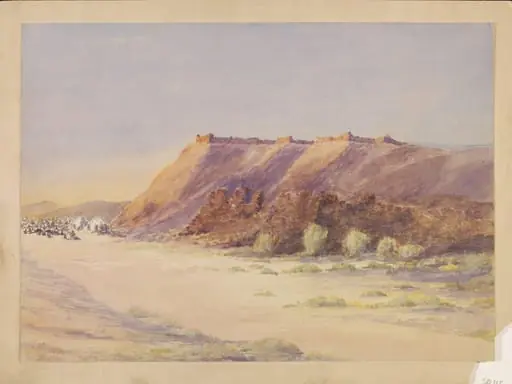 Eastern Desert, Egypt
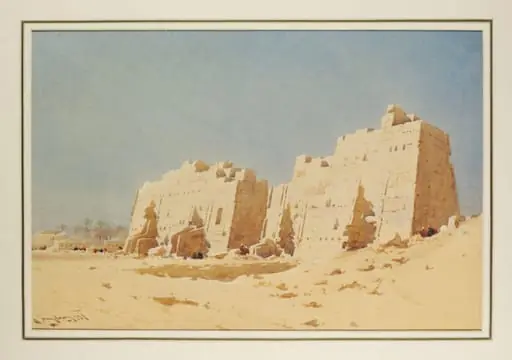 The Eighth Pylon, Karnak, Thebes
- `Temple of Denderah. Distant view from bank of River. Upper Egypt'
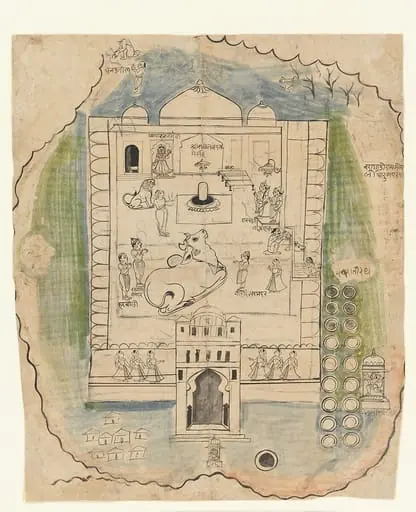 Untitled
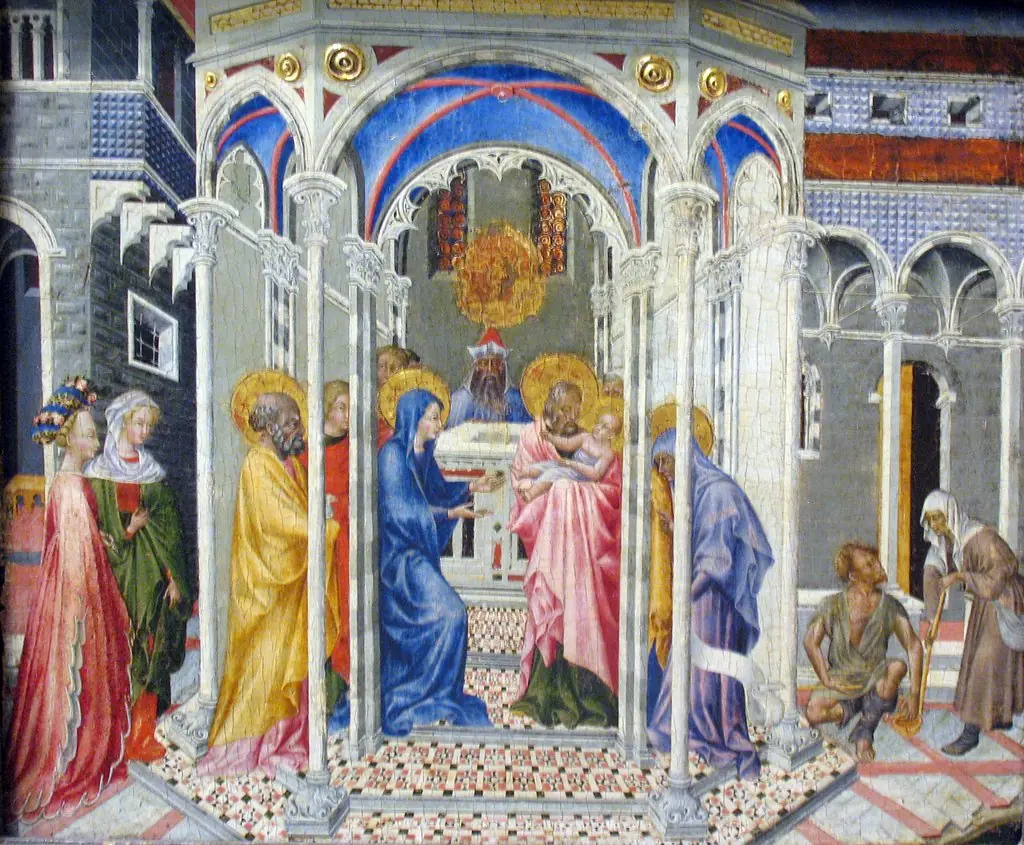 The Presentation of Christ in the Temple
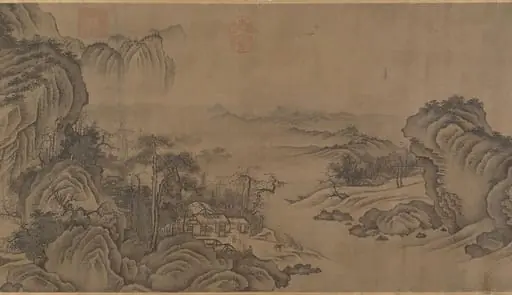 元/明 佚名 舊傳 燕文貴 秋山蕭寺圖 軸|Buddhist Temples amid Autumn Mountains
 明 佚名 樓閣江帆圖 團扇|Village and Temples in Jiangnan
 神於寺縁起絵巻断簡|Scene from The Illustrated Legends of Jin’ōji Temple (Jin’ōji engi emaki)
 Untitled
 Saint John the Evangelist Causes a Pagan Temple to Collapse
 太宰府安楽寺 北野天神縁起絵巻 断簡 (Dazaifu Anrakuji, Kitano Tenjin engi emaki dankan)|Courtiers Visit Sugawara no Michizane’s Mortuary Temple, from Illustrated Legends of the Kitano Tenjin Shrine