Artwork
Untitled
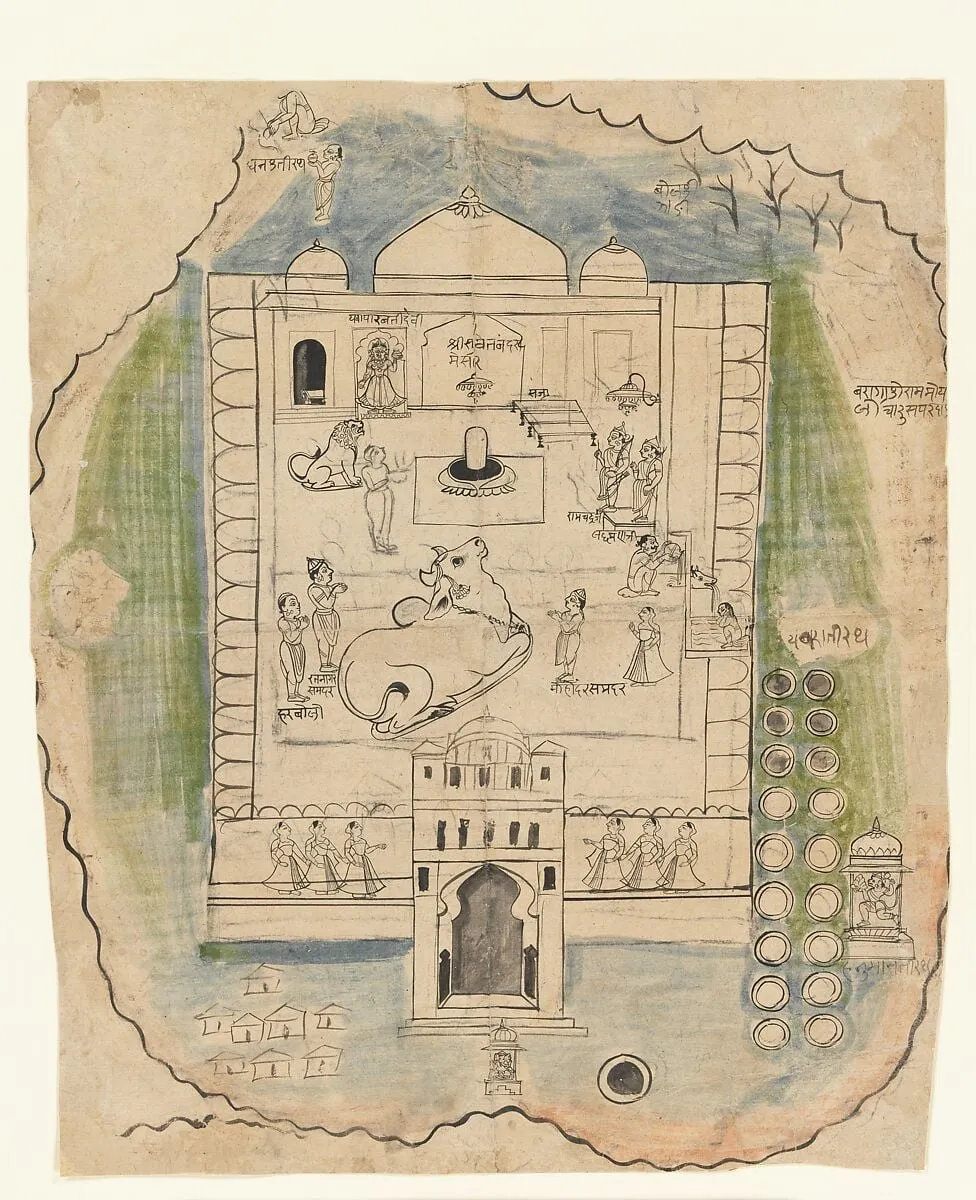
Untitled is a watercolor painting. It dates from 1850 and is held in the collection of the Metropolitan Museum of Art.
About this work
Technique & Style
The support is paper, and the technique combines linear ink drawing with fluid washes and translucent watercolor to create depth and texture.
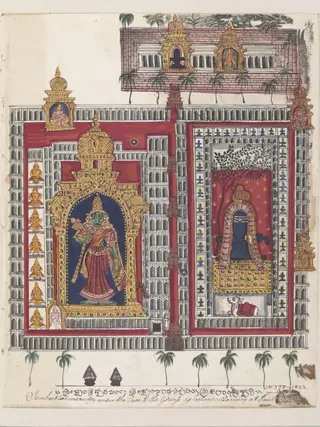
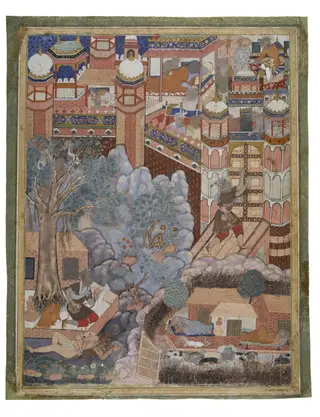
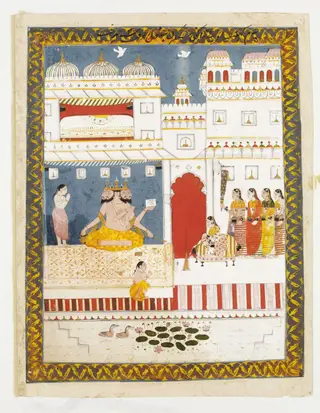
This work, dated to 1850 and originating from Rajasthan, employs ink, wash, and transparent watercolor on paper as its medium. The support is paper, and the technique combines linear ink drawing with fluid washes and translucent watercolor to create depth and texture. The composition is densely packed with figures, including deities Rama, Lakshmana, and Shiva, a dancer, a lion, cattle, and a woman, suggesting a narrative scene typical of Rajput painting.
The large dimensions (81.3 × 62.2 cm) indicate an ambitious scale for a work on paper. The handling balances precise outlines with broad washes, contributing to a dynamic, layered visual effect. No specific condition notes are provided in the sources.
History & Provenance
The untitled work is a drawing dated to 1850, created in Rajasthan, India. It was executed in ink, wash, and transparent watercolor on paper. The artist is not identified in the available records.
No information about its commission or any prior ownership chain has been documented. The drawing is currently held in the collection of the Metropolitan Museum of Art, having entered the museum at an unknown date.
Overview
This late nineteenth-century drawing from Rajasthan, though formally untitled, depicts a comprehensive plan of a Shiva temple compound. Rendered with ink, wash, and transparent watercolor on paper, the work offers a detailed architectural representation. Measuring approximately 81.3 by 62.2 centimeters (32 by 24 1/2 inches), it is housed within the Metropolitan Museum of Art's collection, serving as a visual document of religious architecture.
Subject & Meaning
The composition centers on the linga, the aniconic representation of the Hindu deity Shiva, with his devoted bull, Nandi, positioned directly beneath it. The temple complex includes smaller shrines dedicated to other significant figures: Ganesha guards the entrance, while Hanuman is honored in another area. Inscriptions within the drawing identify Rama and Lakshmana, depicted in postures of reverence, acknowledging Shiva's divine authority.
Context
The artwork holds dual significance: it functions as a valuable art-historical document, preserving a visual record of late nineteenth-century Rajasthani religious architecture and its iconography. Simultaneously, its acquisition history highlights ongoing discussions within the museum community regarding ethical sourcing and due diligence in collecting. The drawing thus serves as a case study reflecting broader challenges in the provenance of cultural heritage objects.
Artist & collection

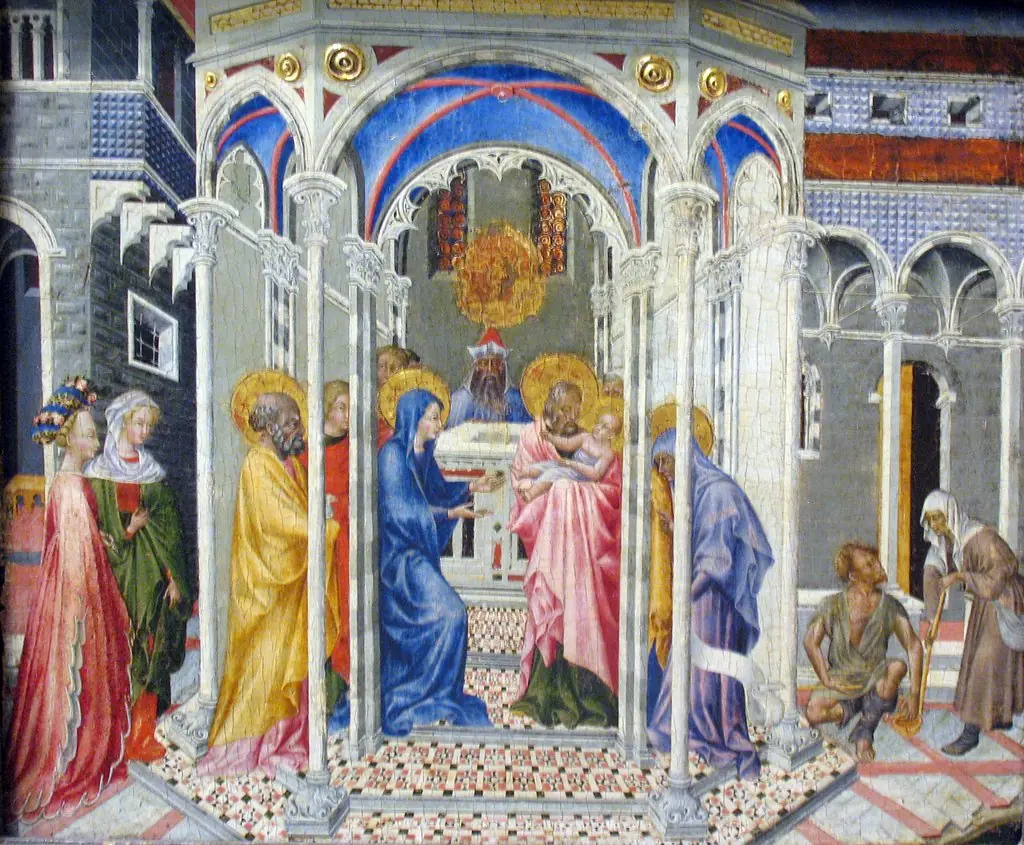 The Presentation of Christ in the Temple
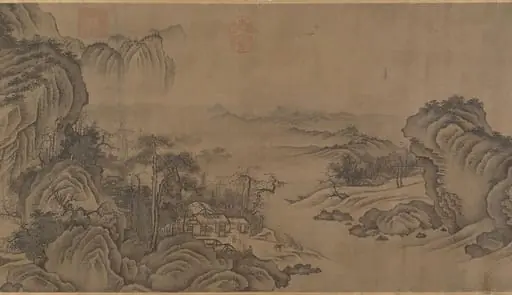 元/明 佚名 舊傳 燕文貴 秋山蕭寺圖 軸|Buddhist Temples amid Autumn Mountains
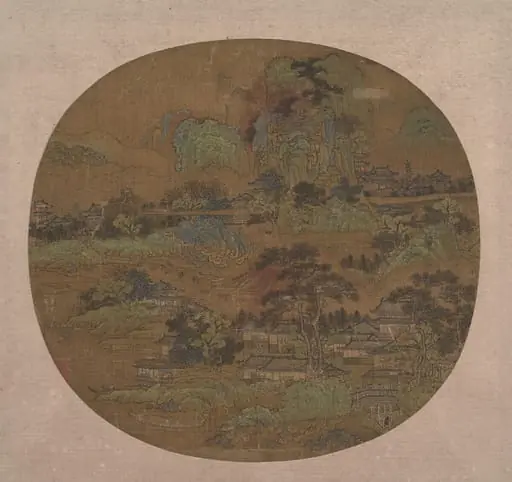 明 佚名 樓閣江帆圖 團扇|Village and Temples in Jiangnan
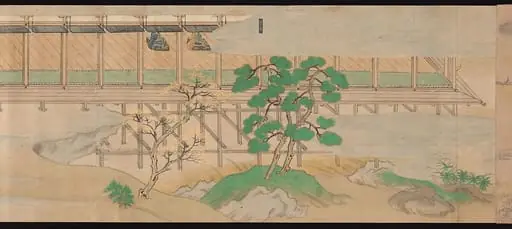 神於寺縁起絵巻断簡|Scene from The Illustrated Legends of Jin’ōji Temple (Jin’ōji engi emaki)
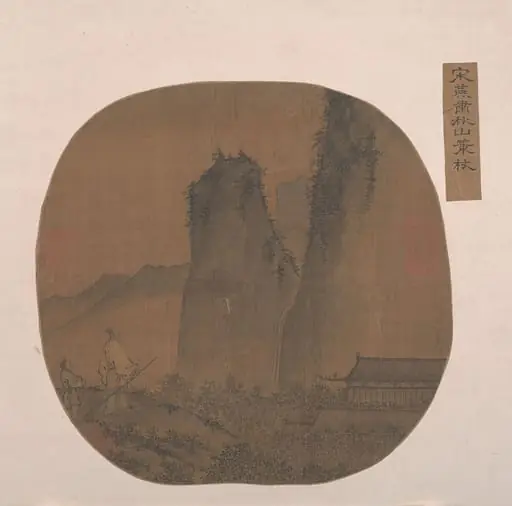 Untitled
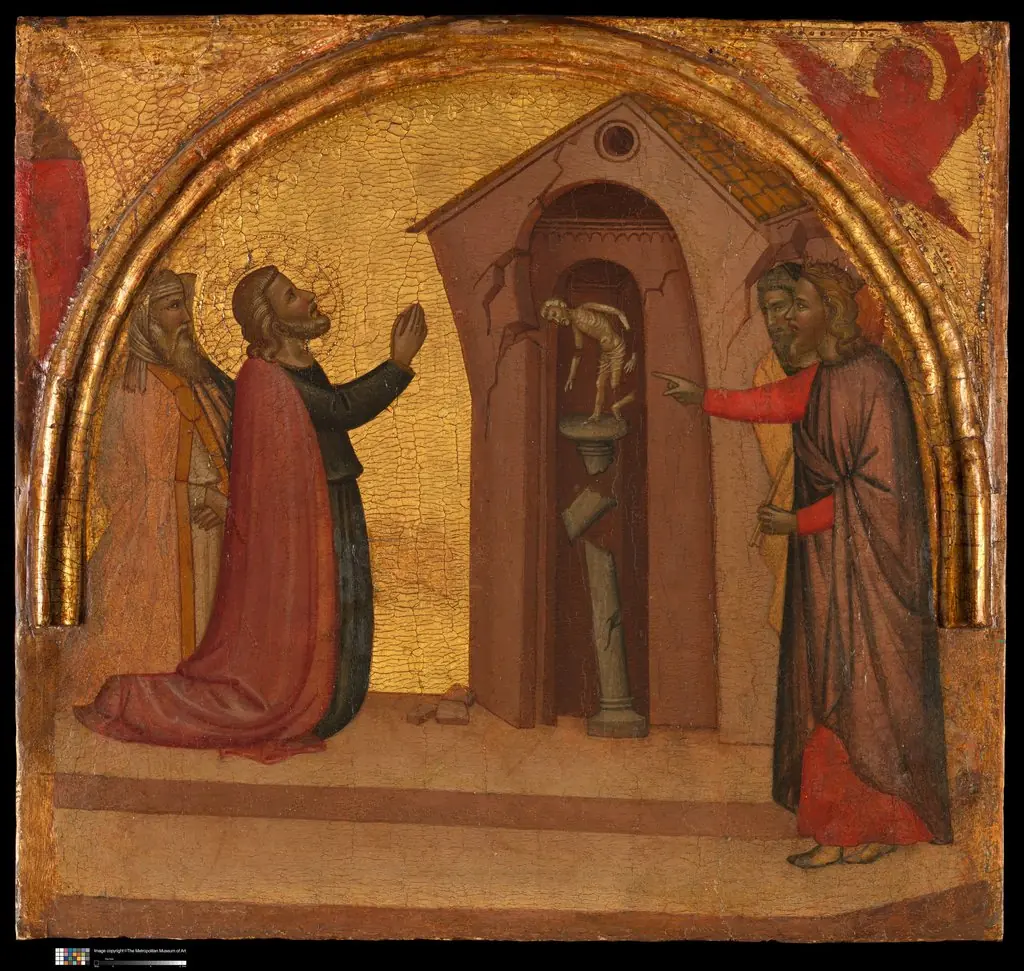 Saint John the Evangelist Causes a Pagan Temple to Collapse
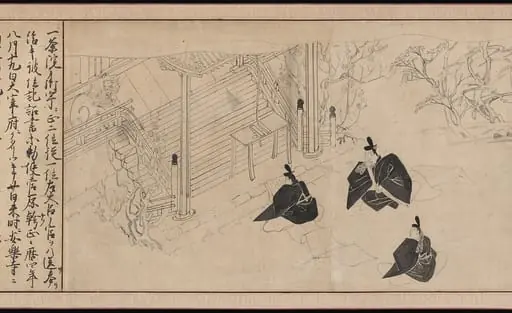 太宰府安楽寺 北野天神縁起絵巻 断簡 (Dazaifu Anrakuji, Kitano Tenjin engi emaki dankan)|Courtiers Visit Sugawara no Michizane’s Mortuary Temple, from Illustrated Legends of the Kitano Tenjin Shrine
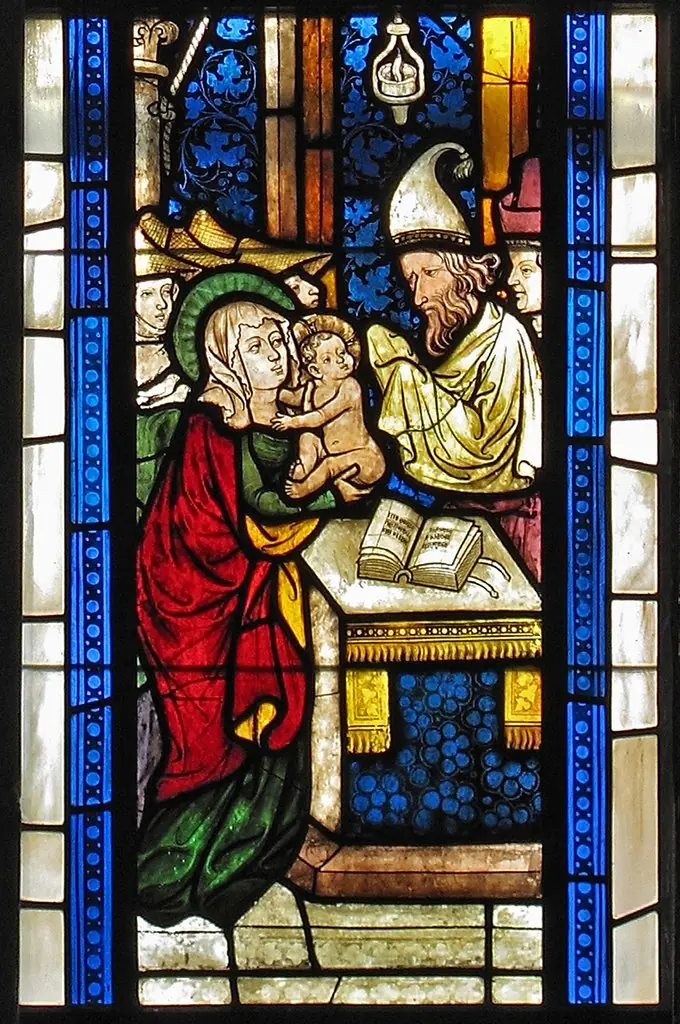 The Presentation in the Temple