Artwork
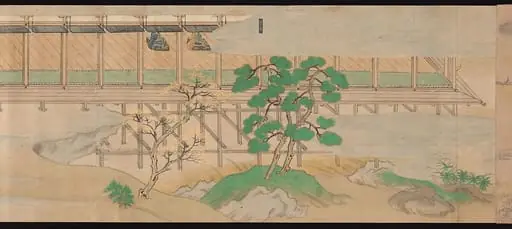
太宰府安楽寺 北野天神縁起絵巻 断簡 (Dazaifu Anrakuji, Kitano Tenjin engi emaki dankan)|Courtiers Visit Sugawara no Michizane’s Mortuary Temple, from Illustrated Legends of the Kitano Tenjin Shrine
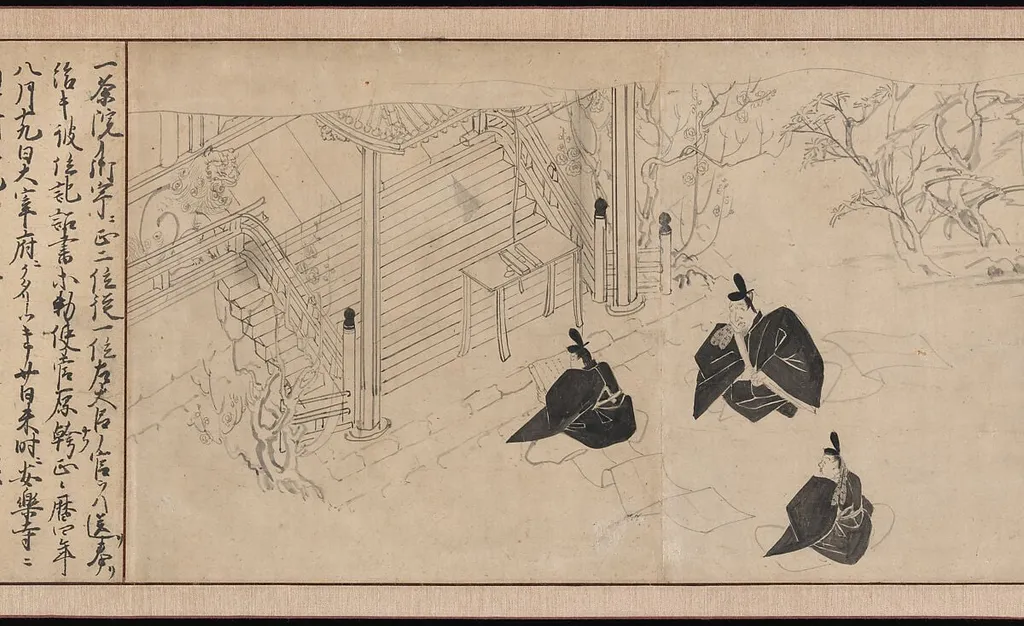
太宰府安楽寺 北野天神縁起絵巻 断簡 (Dazaifu Anrakuji, Kitano Tenjin engi emaki dankan)|Courtiers Visit Sugawara no Michizane’s Mortuary Temple, from Illustrated Legends of the Kitano Tenjin Shrine is an ink painting. It dates from 1300 and is held in the collection of the Metropolitan Museum of Art.
- Accession no.
- 2015.300.17
- Credit line
- Mary Griggs Burke Collection, Gift of the Mary and Jackson Burke Foundation, 2015
About this work
Subject & Meaning
This interpretation draws on documented depictions of a man reading within a temple context in both the painting’s descriptive catalog and its Wikidata entry.
The handscroll portrays courtiers gathered before the mortuary temple of Sugawara no Michizane, a man engaged in reading within a sacred setting. The composition emphasizes scholarly contemplation and ritual reverence, linking the figure to the deified Tenjin motif of the Kitano Tenjin engi emaki. By situating the reader amid temple architecture, the work symbolizes the intersection of literary virtue and divine favor, reflecting the broader cultural reverence for Michizane as a paragon of learning and moral authority.
This interpretation draws on documented depictions of a man reading within a temple context in both the painting’s descriptive catalog and its Wikidata entry.
Technique & Style
This detached fragment from the Kitano Tenjin engi emaki is executed as a handscroll in ink on paper, a format consistent with the narrative handscroll tradition used for illustrated legends in medieval Japan. The work dates to around 1300 and is attributed to an anonymous painter. The Metropolitan Museum of Art classifies the object under paintings, specifically within the genre of history painting, and the imagery depicts a man reading within a temple setting. No additional information on pigment, brushwork, mounting, or current condition is provided by the available sources.
History & Provenance
Created in Japan around 1300, this handscroll fragment belongs to the larger Kitano Tenjin engi emaki (Illustrated Legends of the Kitano Tenjin Shrine). The work was executed by an anonymous artist using ink on paper. While the specific original commissioner is not identified in the available records, the piece depicts courtiers visiting the mortuary temple of Sugawara no Michizane at Dazaifu Anrakuji.
The scroll eventually entered the collection of the Metropolitan Museum of Art, where it is currently housed. The dating to the year 1300 places its production in the early fourteenth century, reflecting the historical narrative style of that period.
Context
The fragmentary handscroll, dated to 1300 and attributed to an anonymous painter, belongs to the Kitano Tenjin engi emaki series and is preserved in the Metropolitan Museum of Art. Scholarship identifies it as a rare example of early Kamakura‑period narrative painting that visualizes the courtly visit to the mortuary shrine of Sugawara no Michizane, situating the work within the broader tradition of shrine‑dedicated picture scrolls in Heian and Kamakura Japan. Its depiction of a solitary figure reading has been cited in studies of narrative composition and devotional imagery, influencing interpretations of how textual legends were rendered visually in medieval Japanese art.
The piece is frequently referenced in catalogues of Japanese emaki and in articles on the evolution of religious illustration.
Overview
This ink-on-paper handscroll fragment, titled Courtiers Visit Sugawara no Michizane’s Mortuary Temple, originates from a larger narrative work illustrating the life of Sugawara no Michizane. The scene depicts robed figures approaching a temple gate, engaged in various activities such as bowing, reading, or holding scrolls. It offers a glimpse into the visual storytelling tradition of Japanese illustrated legends, capturing a moment of reverence.
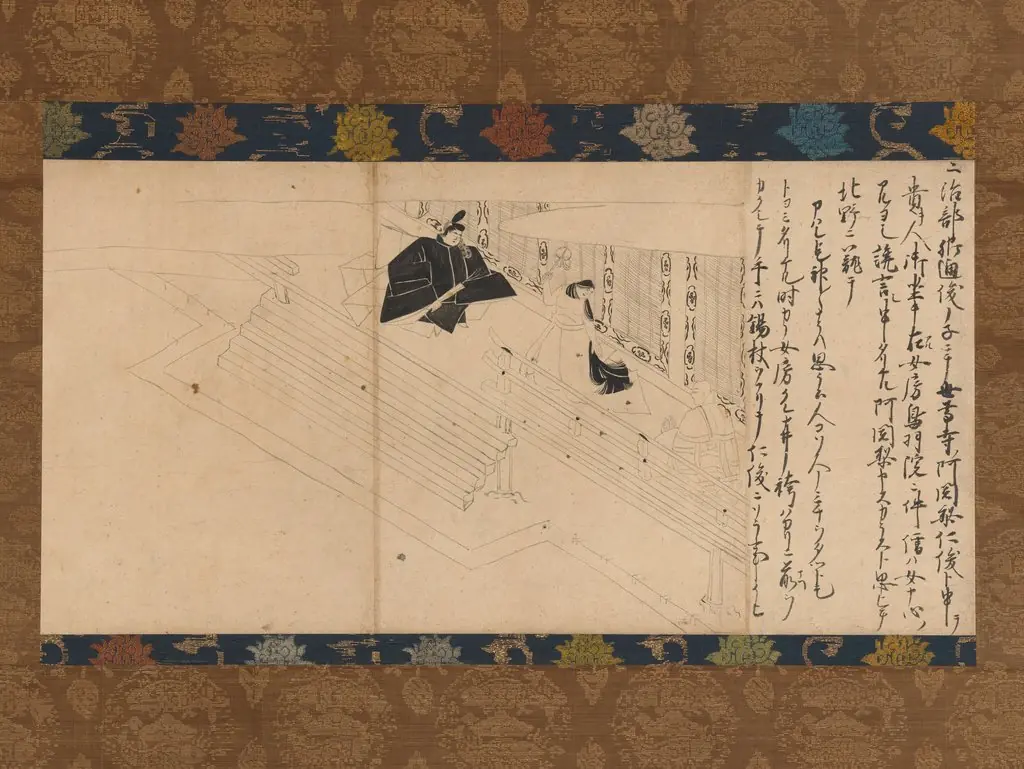
Artist & collection

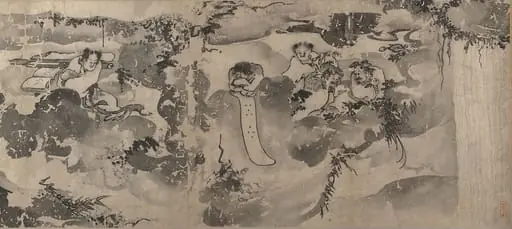 壺天聚樂圖|Merry Gatherings in the Magic Jar
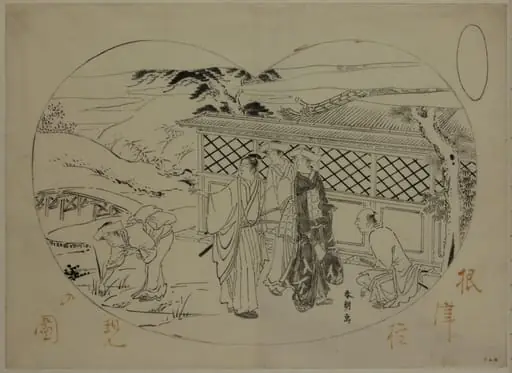 The Nezu Gongen Shrine
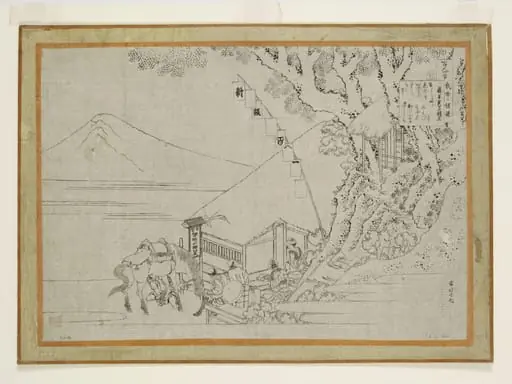 Fujiwara Sanekata no Ason
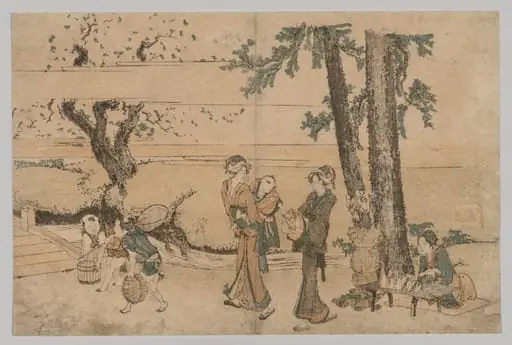 Group of Figures near a Brook
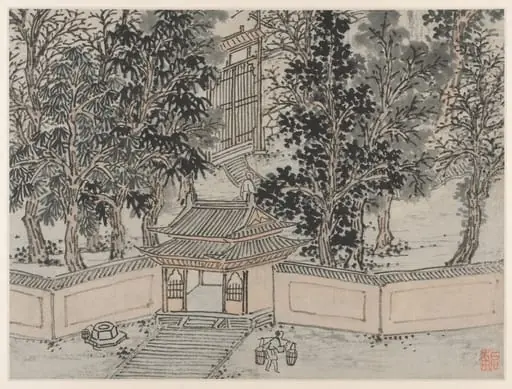 Tiger-Flight Spring at the Back Gate, from Twelve Views of Tiger Hill, Suzhou
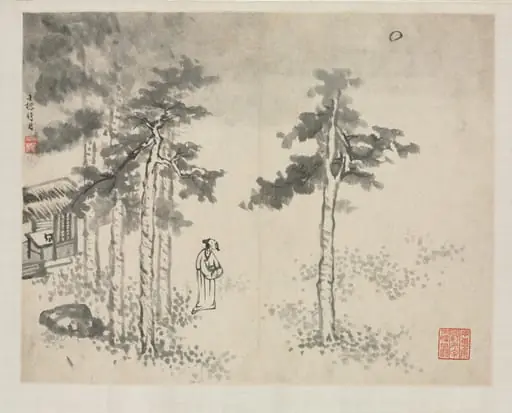 Landscape Album in Various Styles: Shibiao Waiting for the Moon
 Group Pilgrimage to the Jizo Nun
 "Heartvine" ("Aoi") chapter from The Tale of Genji (Genji monogatari)
 Scene from the Tale of the Wisteria Robe
 Cherry Blossom Viewing at the Temple on Mt. Suribachi after a Design in Volume 5 of Picture Book of the Souvenirs of Edo (Ehon Edo miyage)
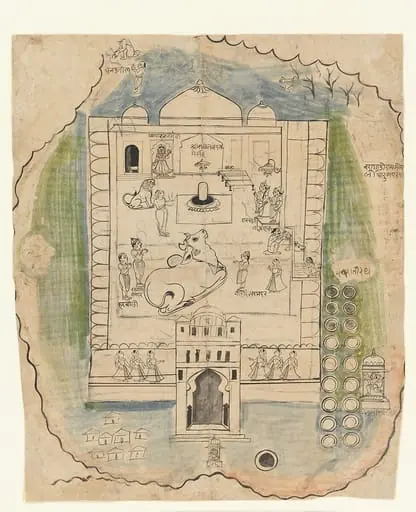 Untitled
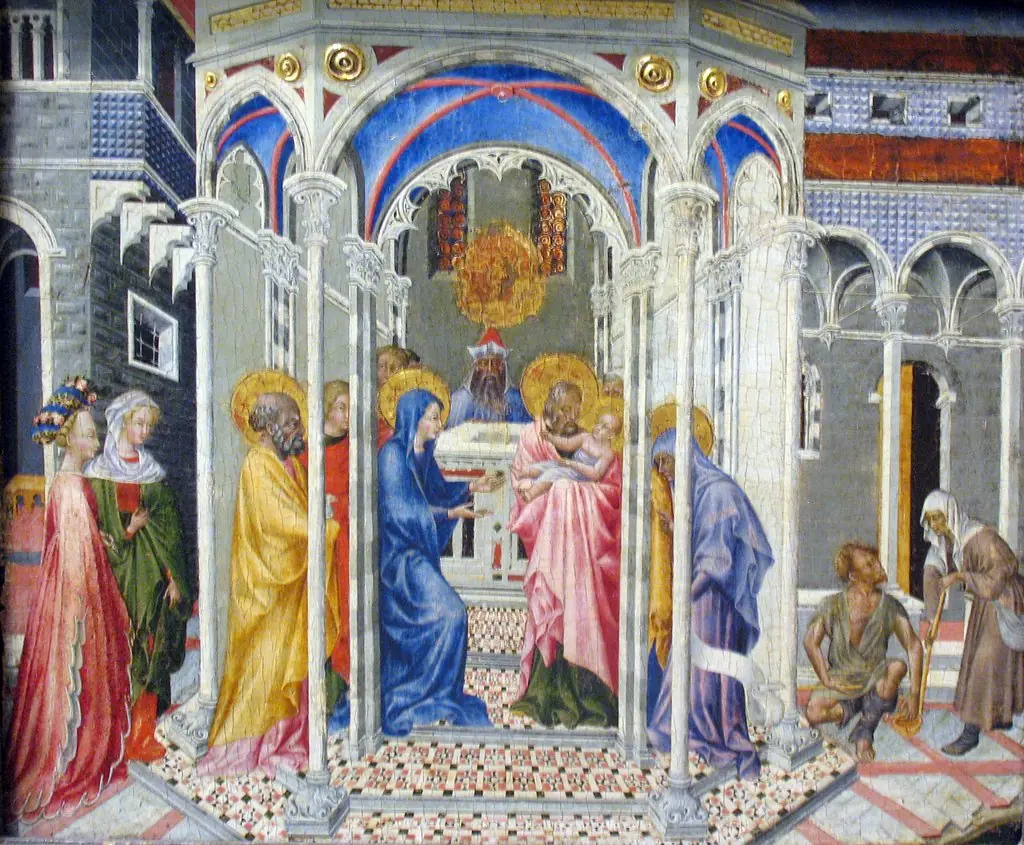 The Presentation of Christ in the Temple
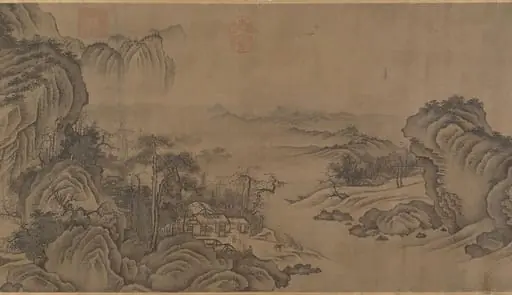 元/明 佚名 舊傳 燕文貴 秋山蕭寺圖 軸|Buddhist Temples amid Autumn Mountains
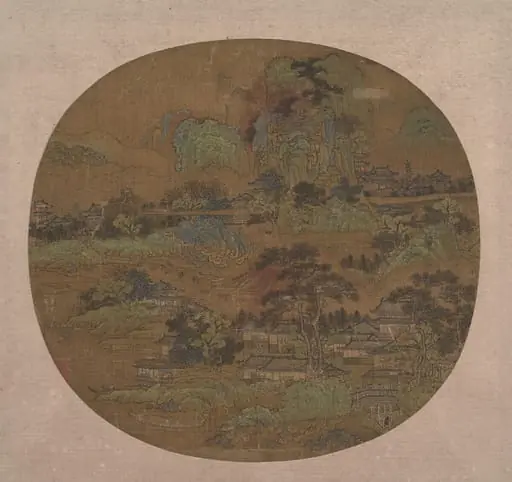 明 佚名 樓閣江帆圖 團扇|Village and Temples in Jiangnan
 神於寺縁起絵巻断簡|Scene from The Illustrated Legends of Jin’ōji Temple (Jin’ōji engi emaki)
 Untitled
 Saint John the Evangelist Causes a Pagan Temple to Collapse
 The Presentation in the Temple