Artwork
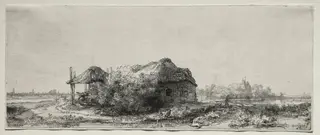
Maur's Farm
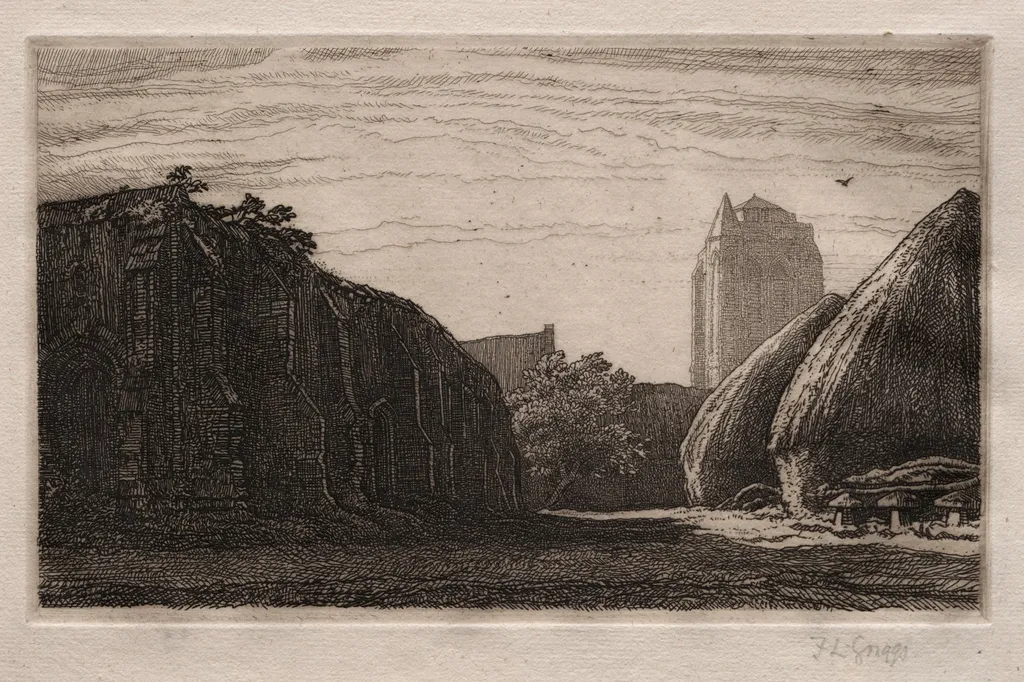
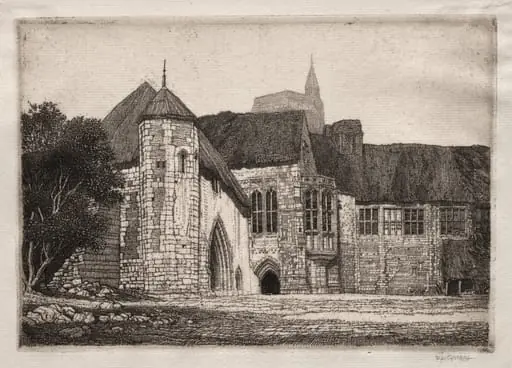
Maur's Farm is a print by Frederick Landseer Maur Griggs. It dates from 1917 and is held in the collection of the Cleveland Museum of Art.
- Accession no.
- 1957.476
- Credit line
- Gift of J. Byers Hays
About this work
Overview
It is part of the collection at The Cleveland Museum of Art, where it is recognized as an example of early 20th-century British printmaking.
Created around 1917 by Frederick Landseer Maur Griggs, this black-and-white print depicts a tranquil rural landscape in southern England. The composition centers on a modest farmhouse nestled among gentle hills, with a distant church spire anchoring the horizon. The scene is rendered entirely in tonal contrasts, emphasizing atmosphere over detail.
It is part of the collection at The Cleveland Museum of Art, where it is recognized as an example of early 20th-century British printmaking.
Subject & Meaning
The image presents an unidealized view of agricultural life, avoiding romanticism in favor of quiet observation. The farmhouse, fence, and scattered trees suggest human presence without figures, inviting contemplation of solitude and continuity in the countryside. The towering church spire implies a spiritual or communal anchor within the landscape, subtly reinforcing the connection between land and tradition in rural England.
Technique & Style
Griggs employed drypoint etching to achieve sharp, expressive lines and deep tonal contrasts. The sky is rendered with swirling, rhythmic strokes that suggest movement through air or cloud cover, while the land and structures are defined by bold chiaroscuro. This method enhances spatial depth without relying on perspective alone, focusing instead on texture and light to evoke mood and form.
History & Provenance
The print was produced during Griggs’s active period as a printmaker, following his earlier work in architecture and illustration. It entered The Cleveland Museum of Art’s collection in the 20th century, likely through acquisition from a British print dealer or donor with ties to the English art scene. Its preservation reflects growing institutional interest in British etchings of the interwar years.
Context
Made during the aftermath of World War I, the image resonates with a broader cultural turn toward introspective landscapes in Britain. Artists like Griggs turned away from urban modernism to document the enduring rhythms of rural life, often with a sense of loss or resilience. This work aligns with the revival of traditional print techniques among artists seeking authenticity amid societal upheaval.
Legacy
Griggs’s print contributes to a modest but significant body of British etchings that emphasized atmosphere over narrative. While not widely known outside specialist circles, it remains a representative example of early 20th-century English printmaking, valued for its restrained technique and emotional subtlety. It continues to inform scholarly discussions on the role of landscape in interwar British art.
Own this work as a print
Artist & collection
Artist
Frederick Landseer Maur Griggs
Frederick Landseer Maur Griggs was an English etcher, architectural draughtsman, illustrator, and early conservationist, associated with the late flowering of the Arts and Crafts movement in the Cotswolds, centred in Chipping Campden.

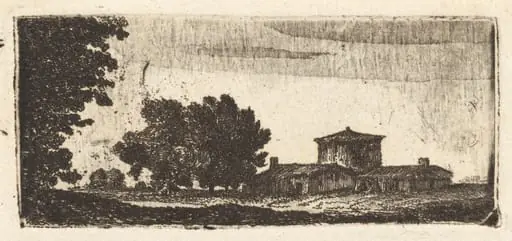 Trees with a Low Building
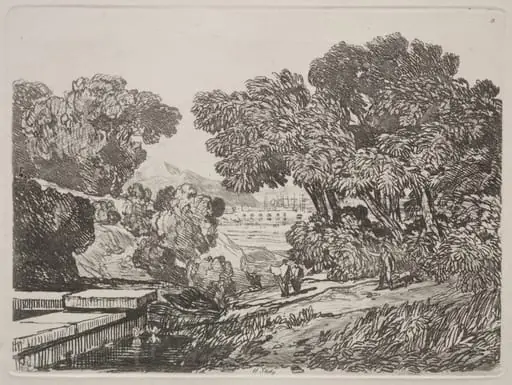 Liber Studiorum: A Study
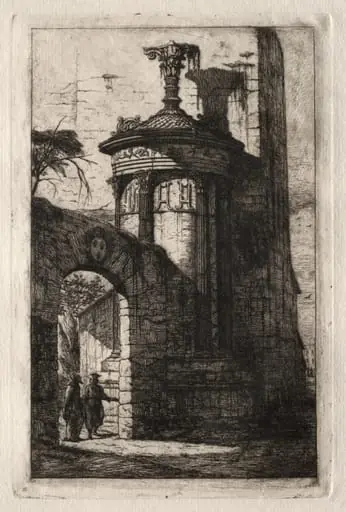 Entrance to the French Capuchin Convent at Athens
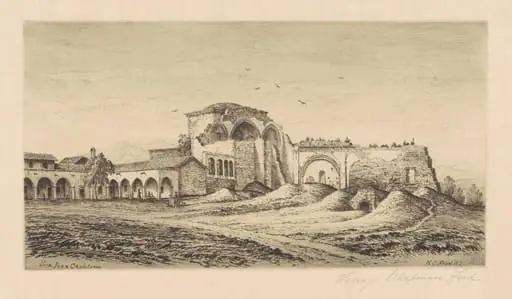 Mission San Juan Capistrano
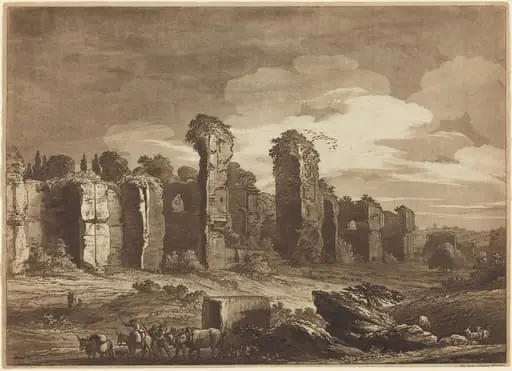 View of the Remains of Caracalla's Baths, Taken from the Jesuits Gardens at Rome
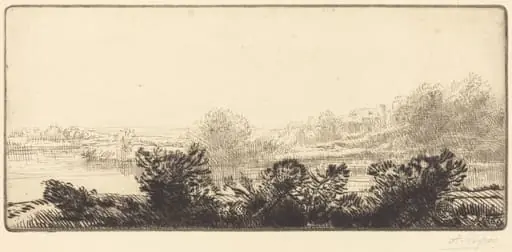 Banks of the Loire (Bord de la Loire)
 Cottage with a White Paling
 Newark Castle
 Hut in the Marsh (Cabane dans les marais)
 Ruins with a Seated Man, and a Covered Wagon in the Distance
 Landscape with a Cottage and Hay Barn: Oblong
- Sellenger