Artwork
A Miracle of Saint Benedict
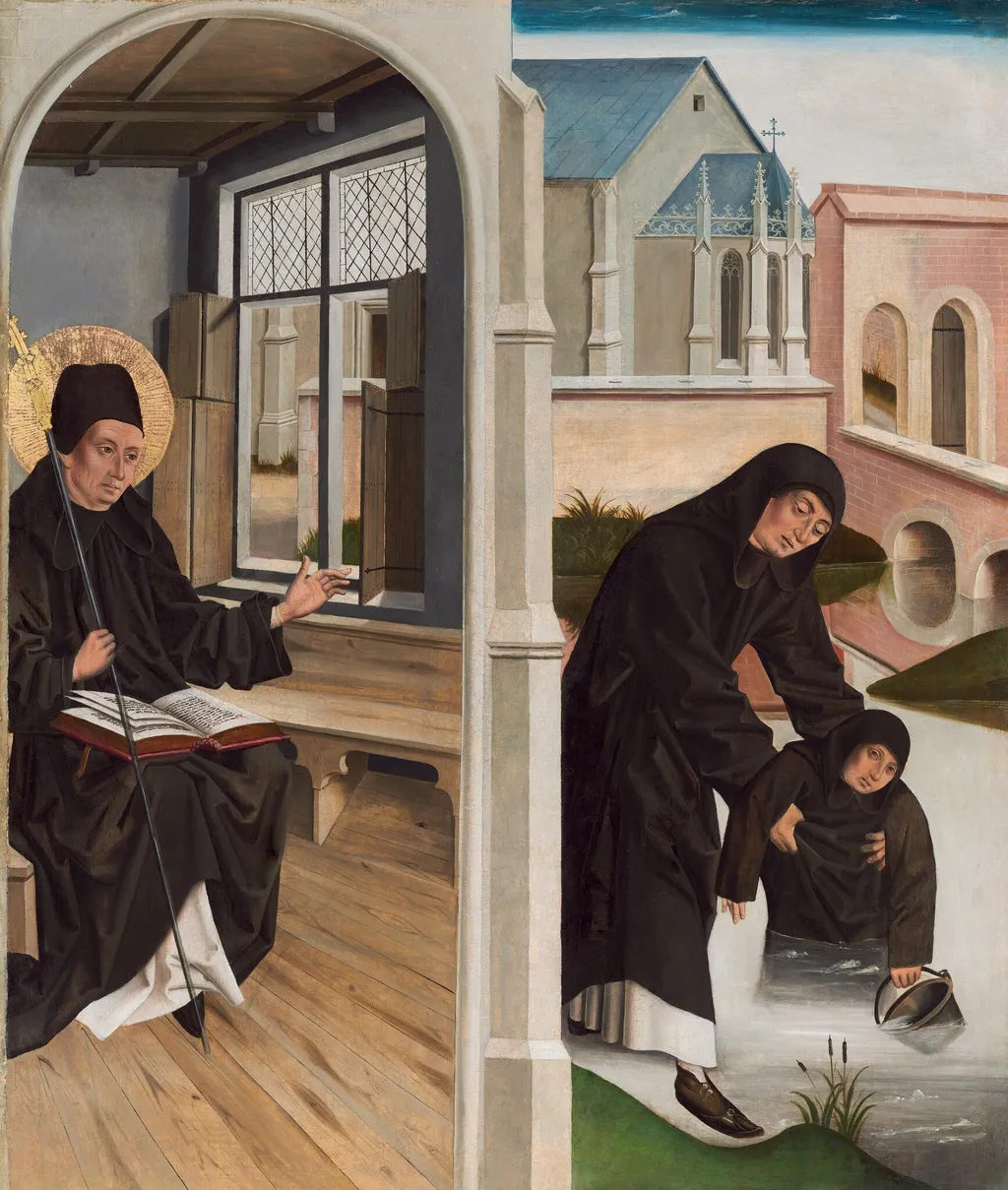
A Miracle of Saint Benedict is an oil painting. It dates from 1480 and is held in the collection of the National Gallery of Art.
About this work
Subject & Meaning
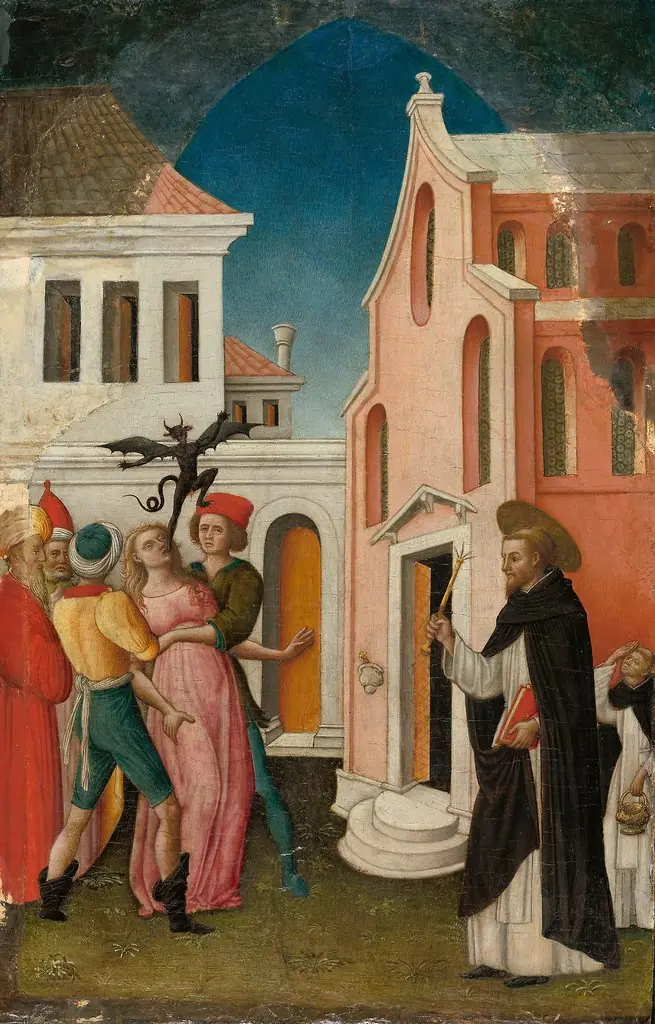
The work illustrates a hagiographic episode attributed to Saint Benedict, the founder of Western monasticism, in which the saint performs a miraculous act, traditionally the resurrection of a dead man or the multiplication of food, signifying divine favor toward the monastic community. Rendered in oil on oak panel around 1480, the composition emphasizes Benedict’s black habit, crozier, and a gesturing hand that directs attention to the miracle, while surrounding figures react with awe, underscoring themes of faith, divine intercession, and the triumph of order over chaos. The painting’s iconography aligns with late‑medieval devotional practices that highlighted Benedict’s role as protector against evil and as a model of ascetic virtue.
Technique & Style
The support consists of a single oak board, prepared with a ground suitable for oil application (1).
A Miracle of Saint Benedict is executed in oil paint on an oak panel, a typical medium for Netherlandish and French panel painting of the late fifteenth century (1,2). The support consists of a single oak board, prepared with a ground suitable for oil application (1). The work measures 91.1 cm in height and 77.5 cm in width, presenting a modest vertical format that accommodates the narrative scene (2). It is classified as a religious painting, reflecting the devotional purpose of the work (1).
History & Provenance
Created around 1480, A Miracle of Saint Benedict is an oil painting on oak panel attributed to a French artist of the 15th century. The work's early ownership is linked to Eugene Leopold Garbaty, a German-Jewish tobacco magnate and collector whose collection was likely housed at Schloss Altdöbern near Berlin before his family fled in 1938 or 1939. Garbaty retained the painting through his relocation to New York, where it was listed in a 1945 inventory by dealer Georges Seligmann.
The piece was sold to the Samuel H. Kress Foundation in New York in 1948, subsequently passing through the gallery Paul Drey. In 1952, the Kress Foundation presented the painting as a gift to the National Gallery of Art in Washington, D.C., where it remains part of the permanent collection.
A Miracle of Saint Benedict is held in the collection of the National Gallery of Art in Washington, D.C., specifically within the Samuel H. Kress Collection. The work entered the foundation's holdings in 1948 after being sold by the dealer Paul Drey, having previously belonged to Eugene Leopold Garbaty. It was officially gifted to the museum in 1952.
Regarding its exhibition history, the painting was among the works lent by Garbaty to the art exhibition at the 1939 New York World's Fair. Following this debut, the piece participated in the fair's subsequent tour across the United States.
Context
The work, an oil on oak panel dated to 1480, depicts a miracle of Saint Benedict and belongs to the religious genre of late‑medieval French art. Its early ownership is traced to German Jewish collector Eugene Leopold Garbaty, who held it in Berlin before fleeing Nazi persecution in 1938-39 and later showing it at the 1939 New York World's Fair; the painting was sold in 1948 to the Samuel H. Kress Foundation and gifted to the National Gallery of Art in 1952. Scholars such as Grete Ring have catalogued it among French paintings of 1400-1500, while auction records and Seligmann's 1945 inventory confirm its provenance and significance within the corpus of 15th-century French religious art.
Legacy
The painting remained in the private collection of Eugene Leopold Garbaty, who lent it to the 1939 New York World’s Fair exhibition and its touring circuit; a 1945 report by dealer Georges Seligmann cited it among his notable holdings. After Garbaty’s death, the work was acquired by the Samuel H. Kress Foundation in 1948 and entered the National Gallery of Art as part of the Kress Collection in 1952, where it continues to be displayed as a representative example of French fifteenth‑century religious art.
Overview
A Miracle of Saint Benedict is an oil painting rendered on an oak panel. It depicts a narrative scene divided into two distinct parts. On the left, a holy figure is presented within an interior setting, while the right side illustrates a dramatic rescue from water, suggesting a miraculous event. The composition brings together elements of spiritual contemplation and active intervention.
Artist & collection

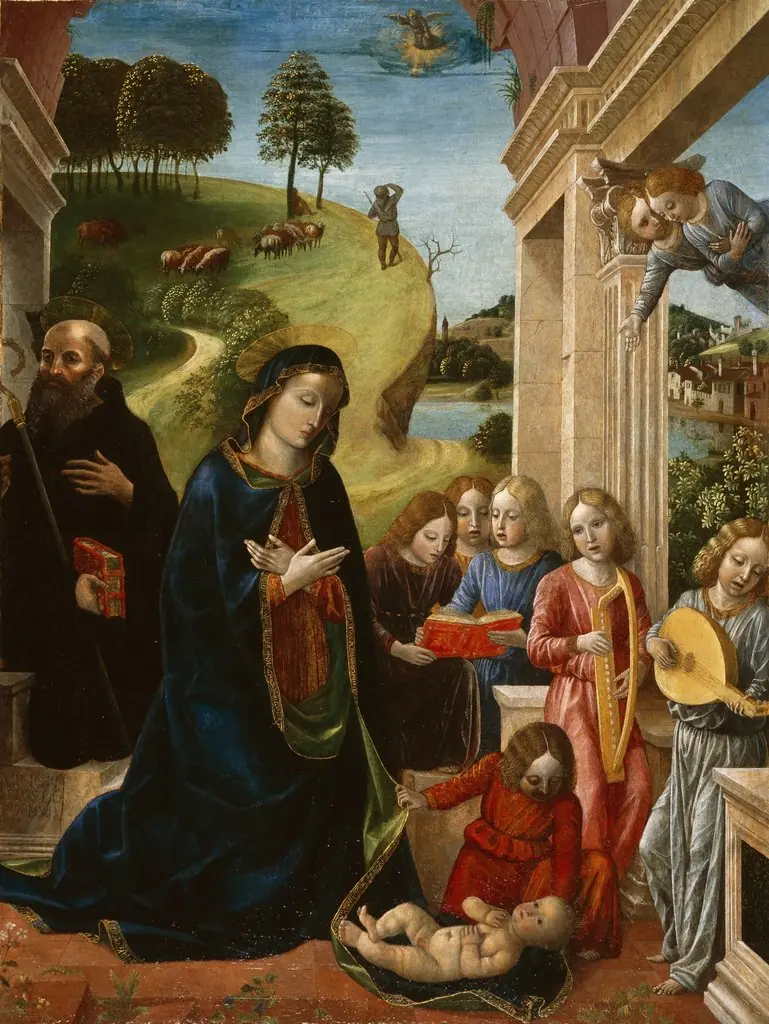
- Adoration of the Child with St. Benedict and Angels
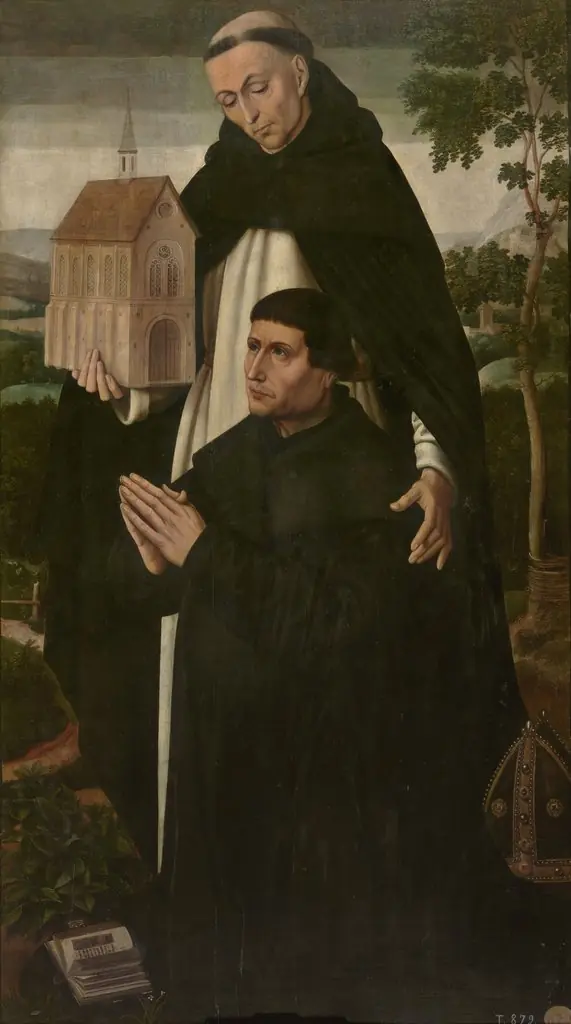 Santo Tomás y un donante
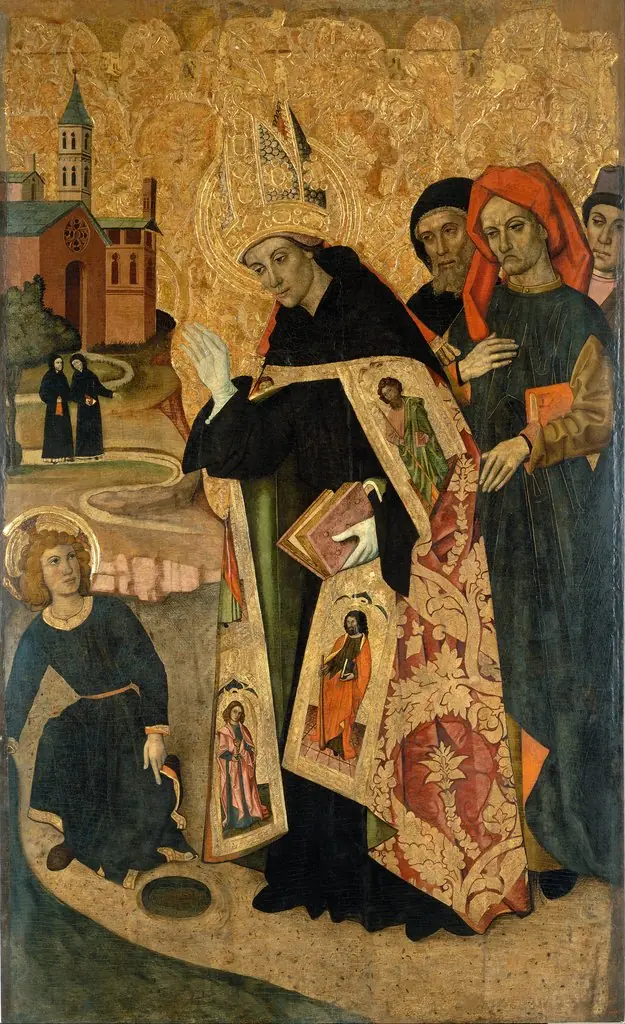 Saint Augustine Meditates on the Trinity when the Child Jesus Appears before him
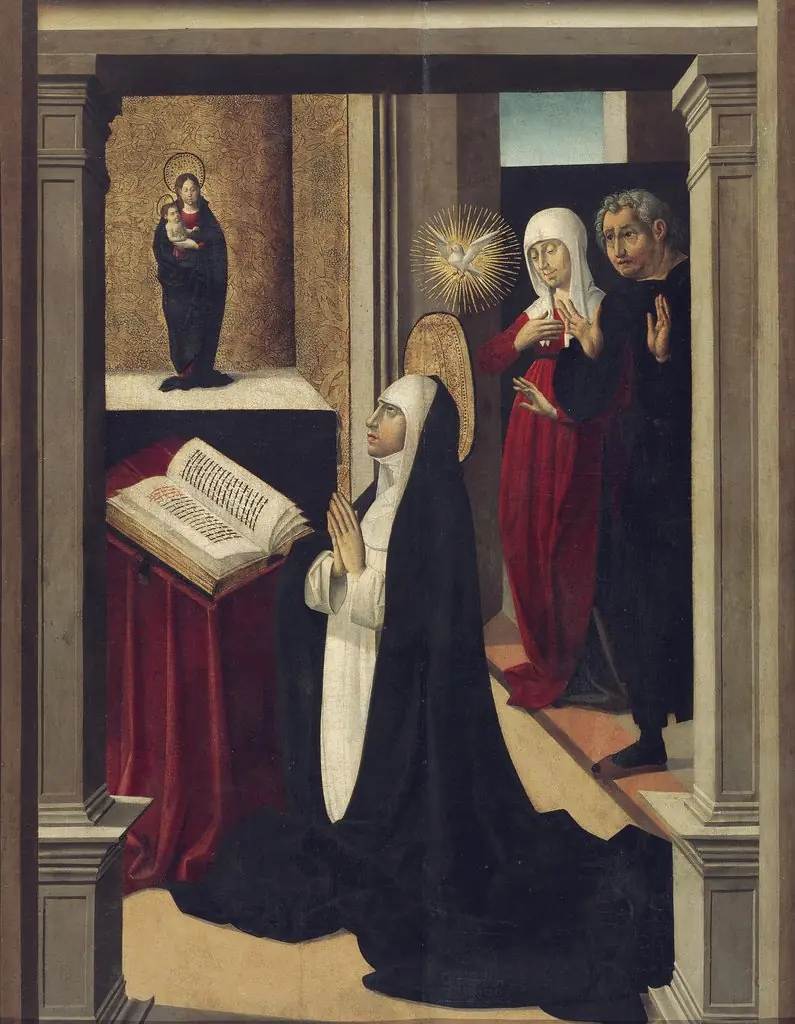 The Calling of Saint Catherine of Sienna
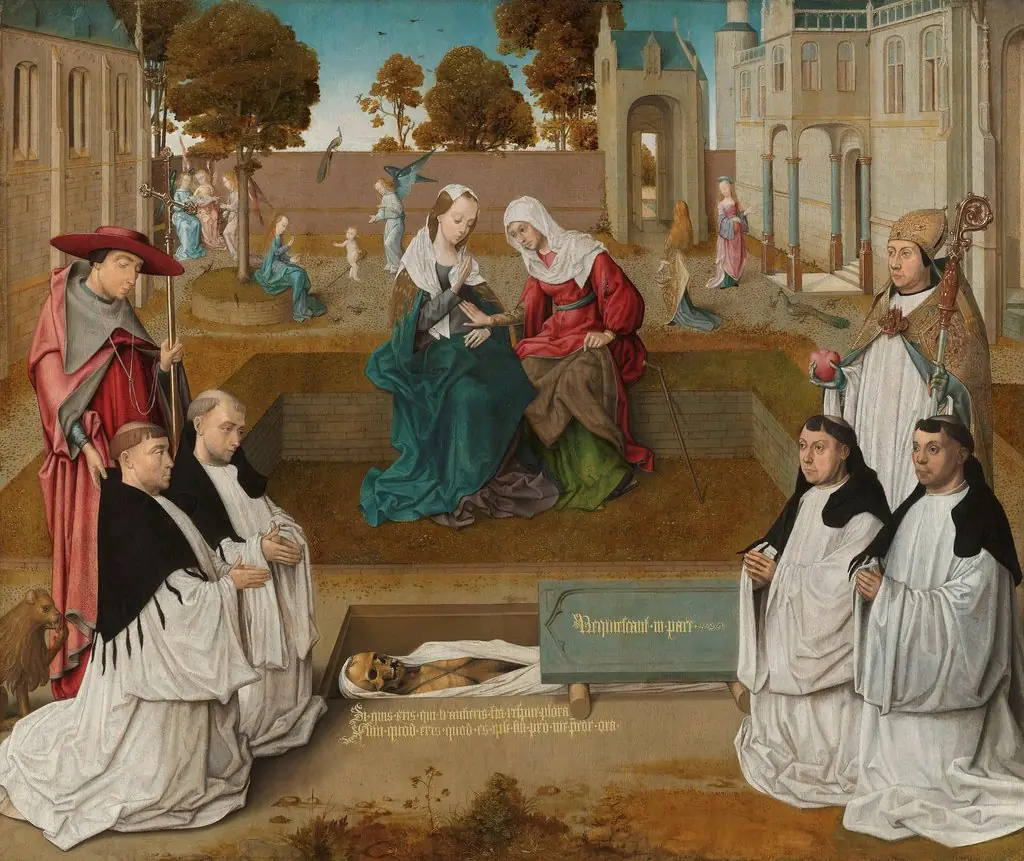 Four canons with Sts Augustine and Jerome by an open grave, with the Visitation
 St Anthony of Padua with a Nun
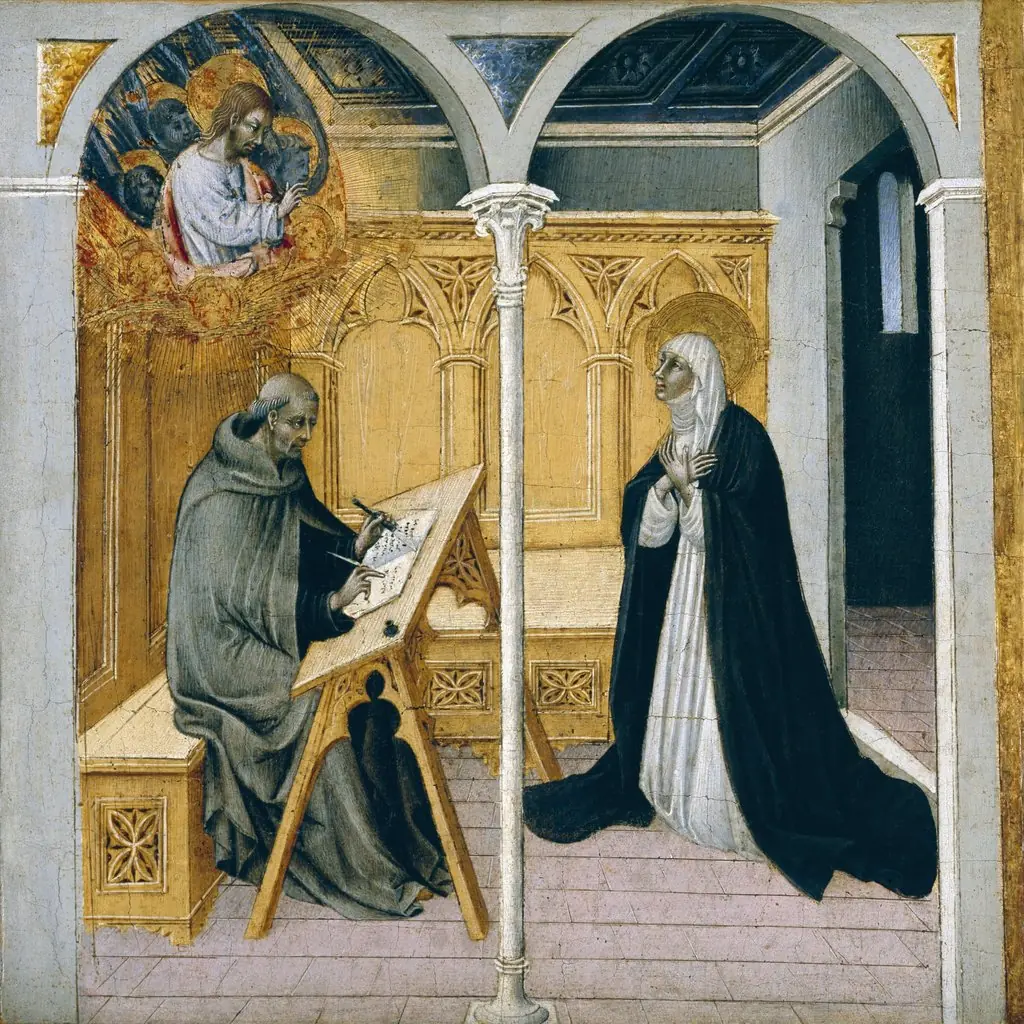 Saint Catherine of Siena Dictating Her Dialogues
 The Calling of Saint Anthony
 San Benito bendiciendo a San Mauro
 Saint Nicholas of Tolentino Rescuing a Boy from Drowning
 Santa Clara e Santa Coleta
 Saint Peter Martyr Exorcizing a Woman Possessed by a Devil