Subject
Cattle
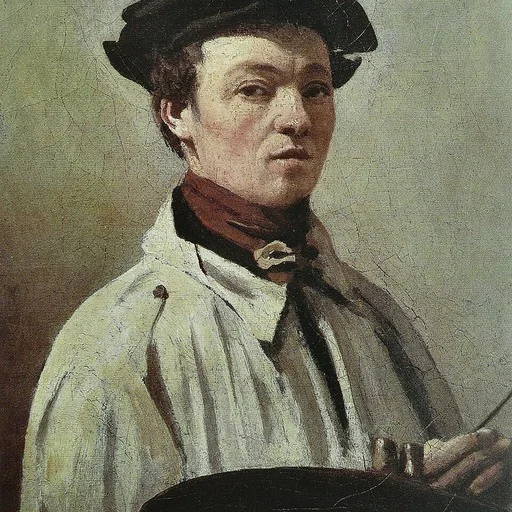
Cattle is a subject in art. The gallery holds 200 works in this subject in art, including works by Jean Baptiste Camille Corot, Gustave Courbet and Albert Bierstadt.
Cattle (Bos taurus), domesticated from the now-extinct wild aurochs, are among the oldest and most persistent subjects in art. The aurochs dominates the Paleolithic Hall of the Bulls at Lascaux in France, painted roughly 17,000 years ago, where one black bull stretches some 5.2 metres—the largest animal known in cave art. From there the beast recurs across Neolithic petroglyphs, Bronze Age figurines, and Ancient Egyptian and Near Eastern reliefs, where it embodied power, fertility, and sacred potency. This deep symbolic charge—the ox as a measure of wealth, labour, and divine strength—underlies almost every later treatment of cattle in Western art.
Cattle became an autonomous artistic subject in the Dutch Golden Age. Emerging from Flemish precedents around 1640, animal painting flourished as Dutch landscapists gave grazing herds pride of place, reflecting national pride in a booming dairy economy whose cheese and butter were prized exports. Paulus Potter (1625–1654) is regarded as the genre's pioneer; his nearly life-sized The Bull (1647) renders its subject with almost hyperreal precision. Aelbert Cuyp (1620–1691) of Dordrecht perfected the pastoral mode, silhouetting cattle against golden, Italianate light from a low vantage to evoke arcadian well-being. The cow effectively became an emblem of Holland and its prosperity.
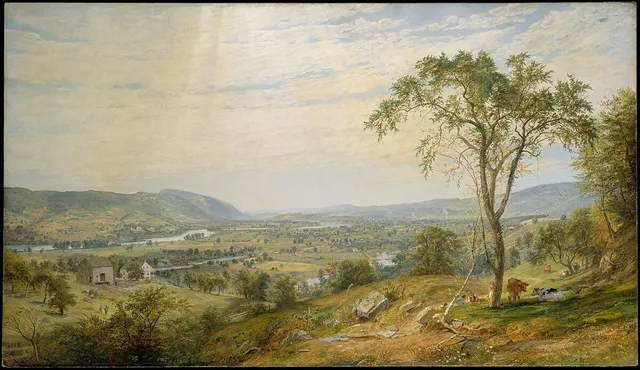
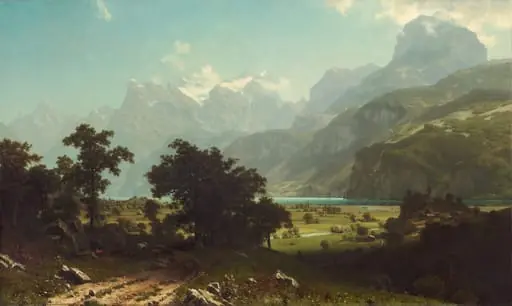
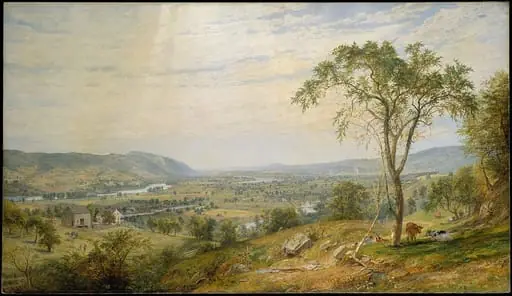
The nineteenth century revived cattle painting through the French Barbizon school and the animalier tradition. Constant Troyon (1810–1865), inspired directly by Cuyp and Potter, turned from pure landscape to monumental herds in works such as Oxen Going to Work; Rosa Bonheur won international fame for her unsentimental, anatomically exact animal studies. In America, the Hudson River School folded grazing cattle into visions of pastoral abundance and improved land—an ideal of prosperity inherited from English landscape. The catalogue's holdings exemplify this current: Asher Brown Durand's Pastoral Landscape and High Point: Shandaken Mountains, Jasper Francis Cropsey's The Valley of Wyoming, Albert Bierstadt's Lake Lucerne, and William Trost Richards's Indian Summer all set livestock within luminous, expansive scenery.
Across these traditions cattle served as a flexible sign—of agrarian wealth, national identity, and humanity's bond with the land—linking prehistoric ritual, Dutch realism, Barbizon naturalism, and American luminism into one enduring iconographic thread.
Key artists

Overview
Cattle (Bos taurus) are large, domesticated, cloven-hoofed bovid ungulates widely kept as livestock. They are the most widespread species of the genus Bos, encompassing taurine cattle in Europe and temperate regions, zebu in India and tropical areas, and sanga cattle primarily in sub-Saharan Africa. Domesticated from wild aurochs around 10,500 years ago in the Near East and the Indian subcontinent, cattle have served humanity as sources of meat, dairy, and leather, and as draft animals pulling carts and farm implements. This deep, utilitarian interdependence has made cattle a persistent subject in global visual culture, appearing in contexts ranging from ancient cave paintings to modern agricultural documentation.
Iconography & meaning
The iconography of cattle is deeply tied to their economic and religious significance. Etymologically, the term cattle derives from the Latin caput, meaning head, reflecting their historical status as movable personal property and a measure of capital. In Hinduism, cattle, particularly the zebu, are considered sacred, embodying the core concept of ahimsa, or nonviolence toward all beings. This veneration is visually codified in depictions of the god Krishna accompanied by cows. In Western art, bulls specifically function as symbols of raw strength and fertility. More broadly, cattle in agrarian societies symbolize rural prosperity and the foundational labor of agricultural life, serving as visual markers of humanity's dominion over and harmony with the natural world.
Across movements & periods
The artistic treatment of cattle has shifted considerably across movements and periods. The earliest known depictions are prehistoric cave paintings, such as those in Borneo dating up to 40,000 years ago, which establish the animal as one of the earliest subjects of figurative art. In the 17th-century Dutch Golden Age, painters elevated the cow to a monumental subject, rendering it with tactile precision as the heroine of luminous, pastoral landscapes. By the 19th century, Romanticism positioned cattle as harmonious elements within idealized rural retreats. As the Industrial Revolution advanced, Realism replaced this idyll with authentic portrayals of agricultural labor, emphasizing the daily toil of farmers and their livestock. Later, Impressionism and Post-Impressionism transformed the motif further, prioritizing light, color, and dynamic brushwork over anatomical precision. Concurrently, the American West generated its own distinct genre, depicting cattle not as settled pastoral fixtures but as components of a rugged, contested frontier.
Notable depictions
Canonical depictions of cattle span centuries and styles. In the Dutch Golden Age, Paulus Potter's The Young Bull (1647) presented a life-size bovine of national renown, while Albert Cuyp's Peasants and Cattle by the River Merwede (c. 1658-1660) ennobled the animals with golden light. The 19th century produced numerous masterworks of the genre: Rosa Bonheur's Ploughing in Nevers (1849) captured oxen tilling soil with vivid realism, earning a First Medal at the Salon. Jean-Francois Millet's Woman Milking a Cow (1854) and Gustave Courbet's Peasants of Flagey Back From the Fair (1850) grounded the subject in Realist depictions of rural labor. Vincent van Gogh's Lying Cow (1883) offered a rare Impressionist treatment of the animal, while Franz Marc's The Yellow Cow (1911) reimagined the subject through Expressionist abstraction. In the American West, Frederic Remington's The Fall of the Cowboy (1895) used cattle and fencing to symbolize the end of the open range.
Legacy
The cultural afterlife of cattle in art extends beyond traditional painting into modern institutional and photographic archives. The Cattle Raisers Museum, for instance, preserves a visual record of the 20th-century cattle industry through more than 25,000 historic photographs originally published in The Cattleman magazine, featuring the work of photographers like Erwin Smith and Frank Reeves. This collection, alongside artifacts like the Ken Spain Saddle Collection and the Leonard Stiles Branding Iron Collection, documents the material culture of ranching. Simultaneously, contemporary institutions like the Museum of the History of Cattle have reframed the narrative, shifting the perspective from human utilization to the bovine experience of shared reality, exploring how urbanization and the industrial revolution altered bovine landscapes and indigenous populations.
Works
 Lake Lucerne
 The Valley of Wyoming
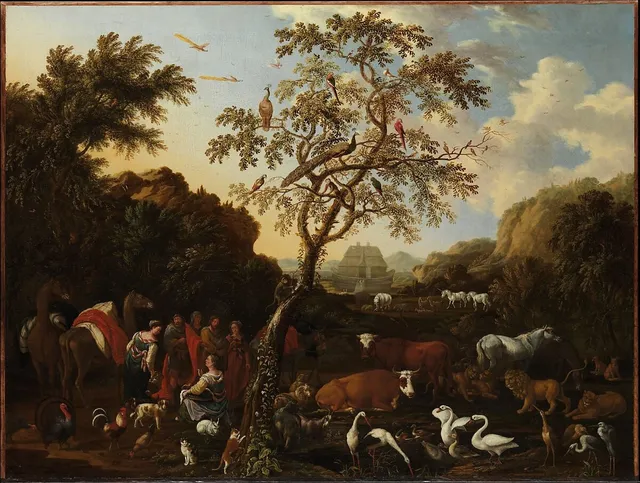
 The Ark
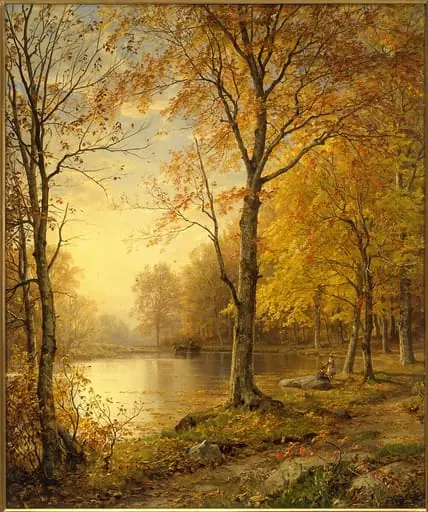 Indian Summer
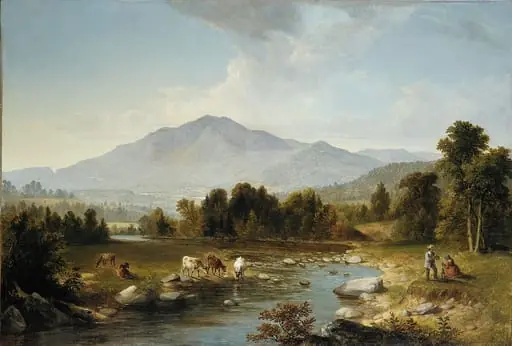 High Point: Shandaken Mountains
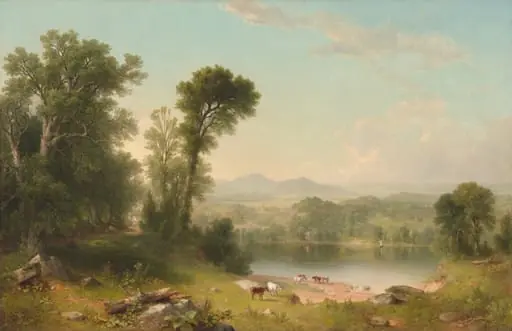 Pastoral Landscape
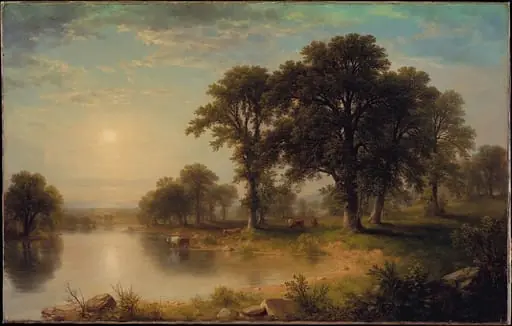 Summer Afternoon
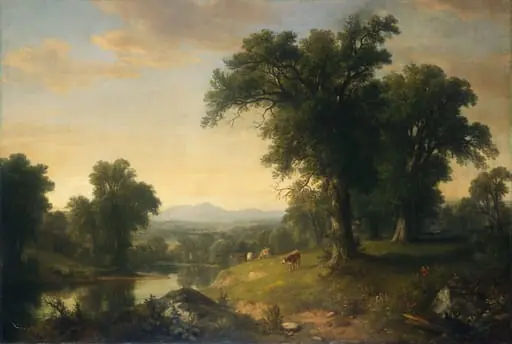 A Pastoral Scene
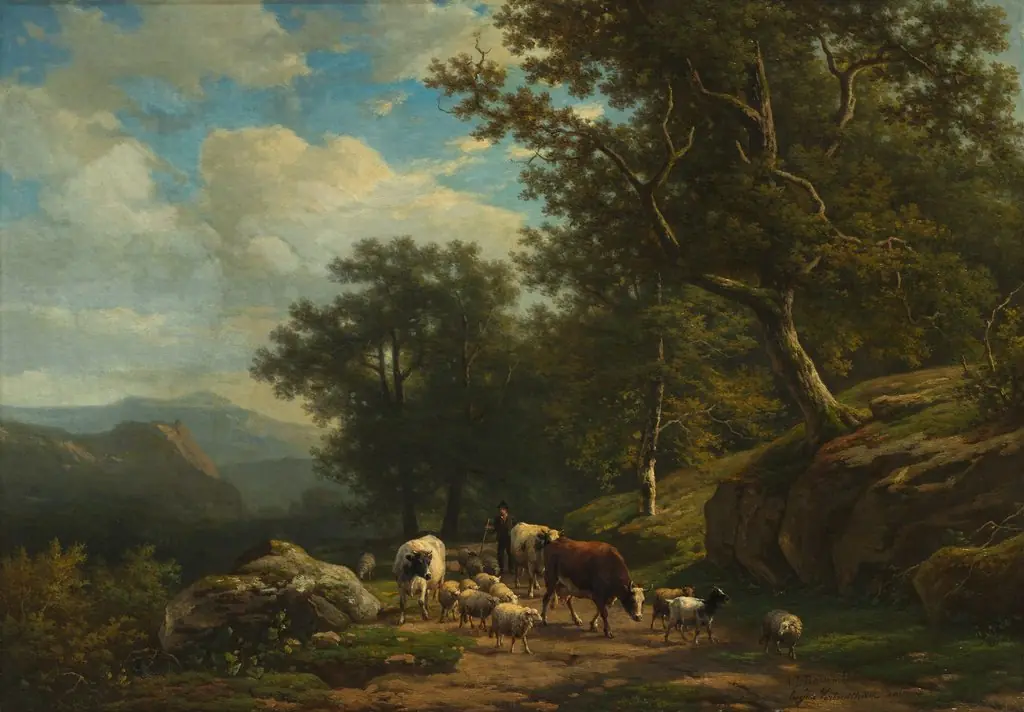 Landscape with a Peasant and His Flock
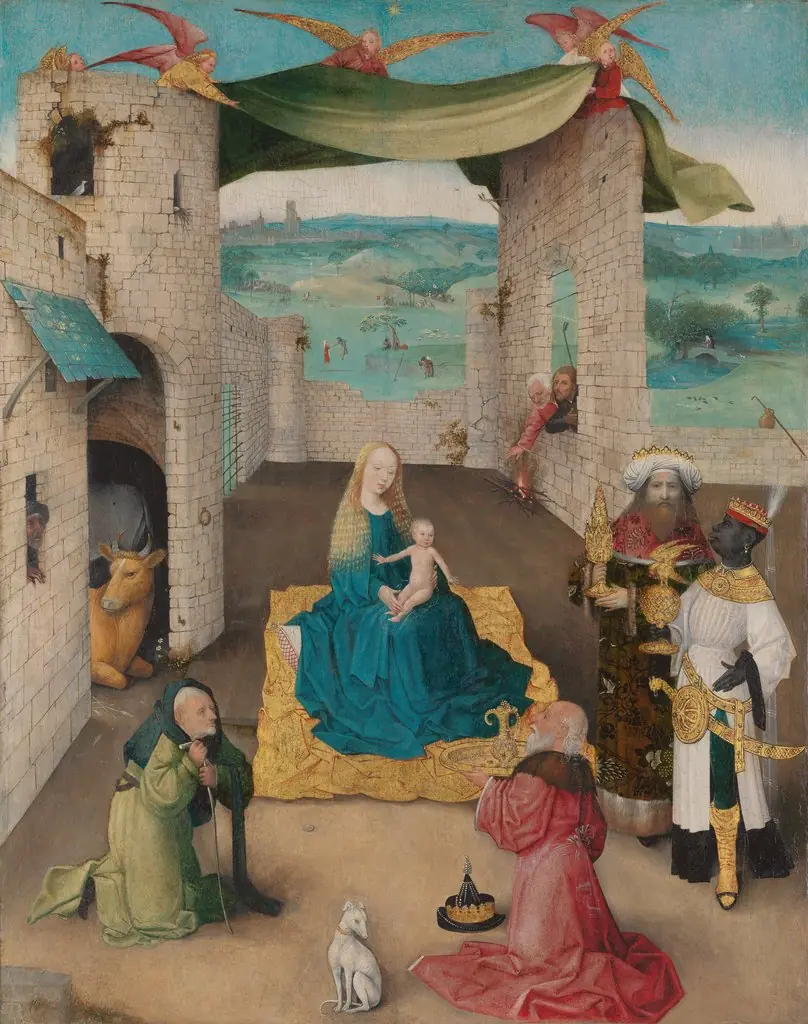 The Adoration of the Magi
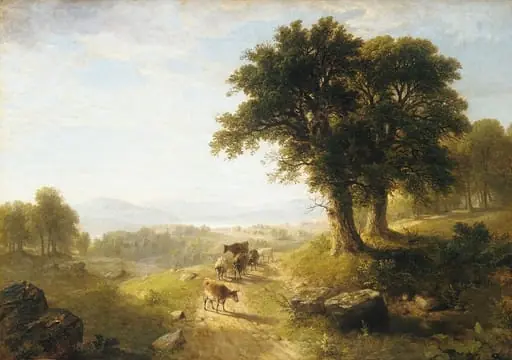 River Scene
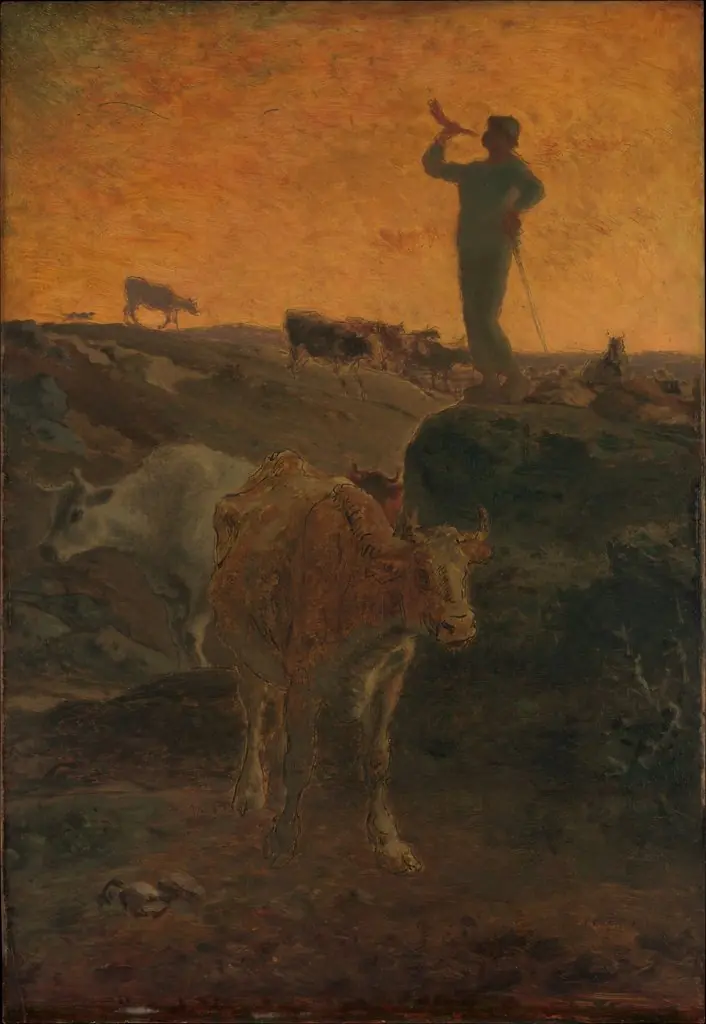 Calling the Cows Home
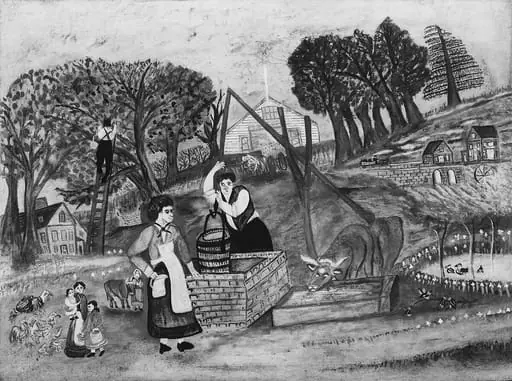 The Old Oaken Bucket which Hung in the Well
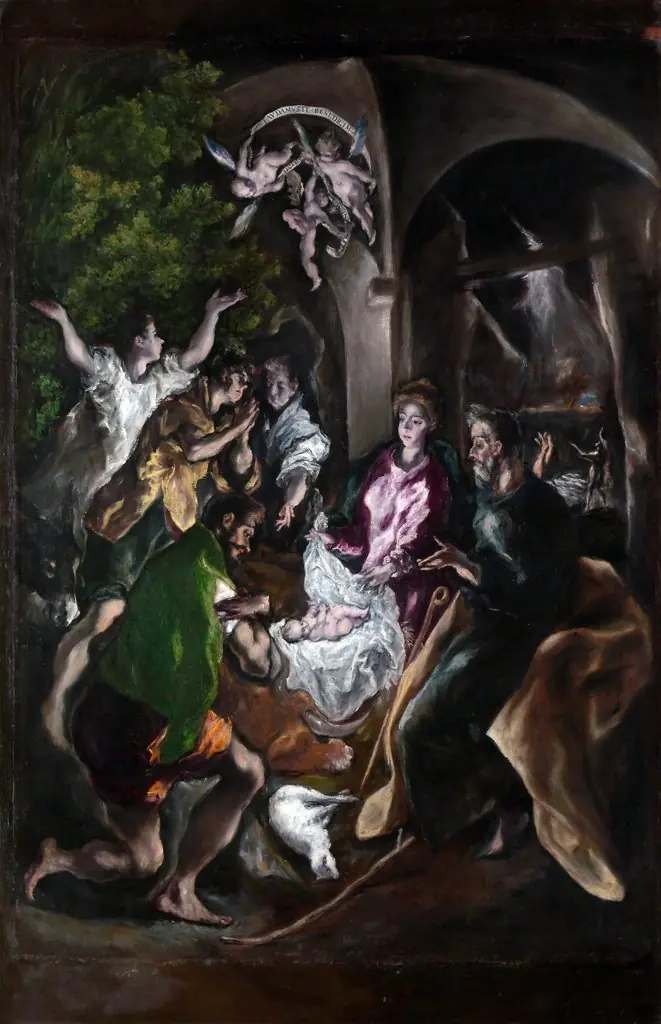 The Adoration of the Shepherds
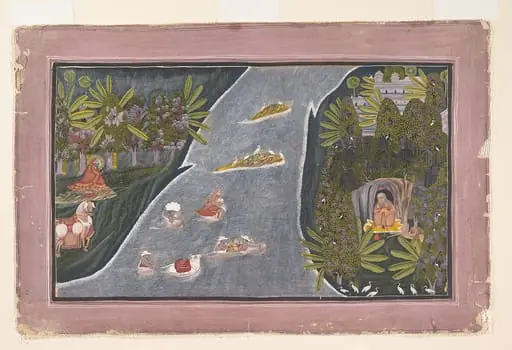 Untitled
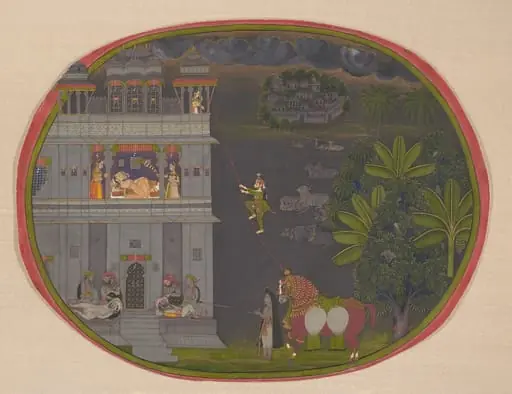 Untitled
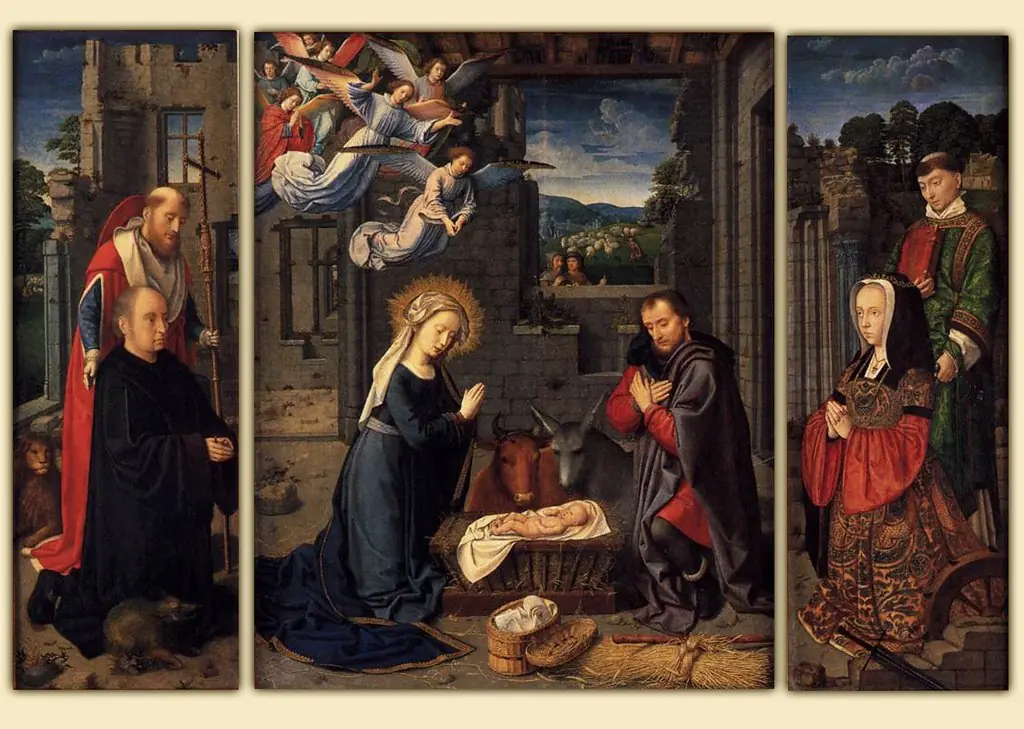 The Nativity with Donors and Saints Jerome and Leonard
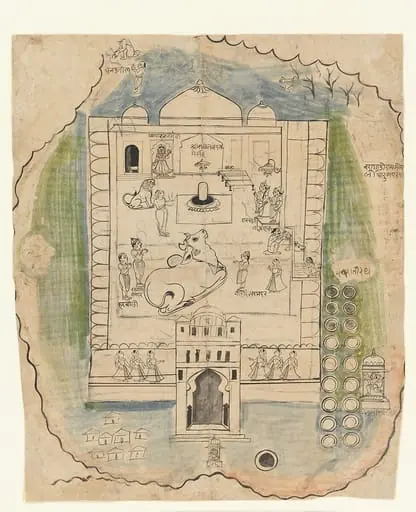 Untitled
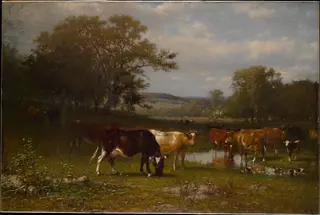 From Shifting Shade
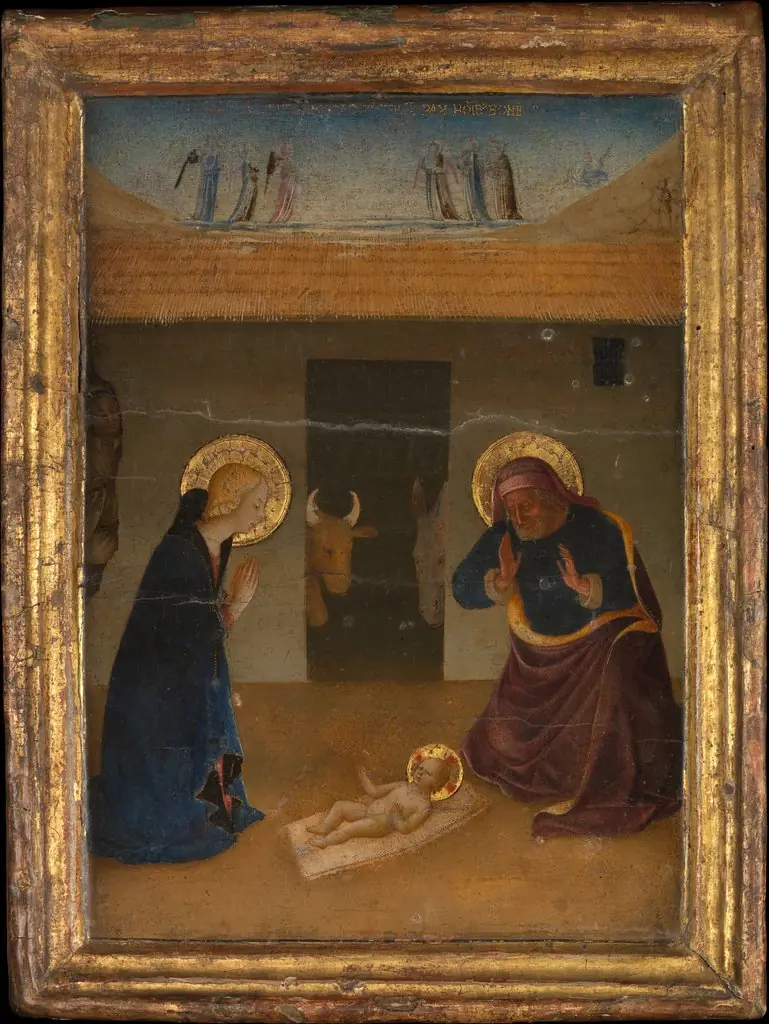 The Nativity
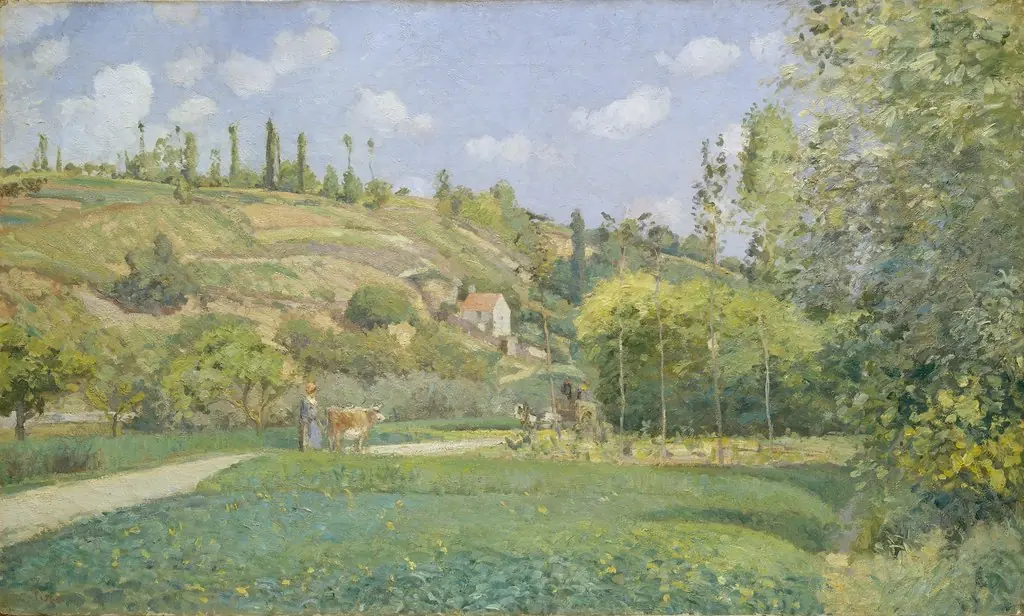 A Cowherd at Valhermeil, Auvers-sur-Oise
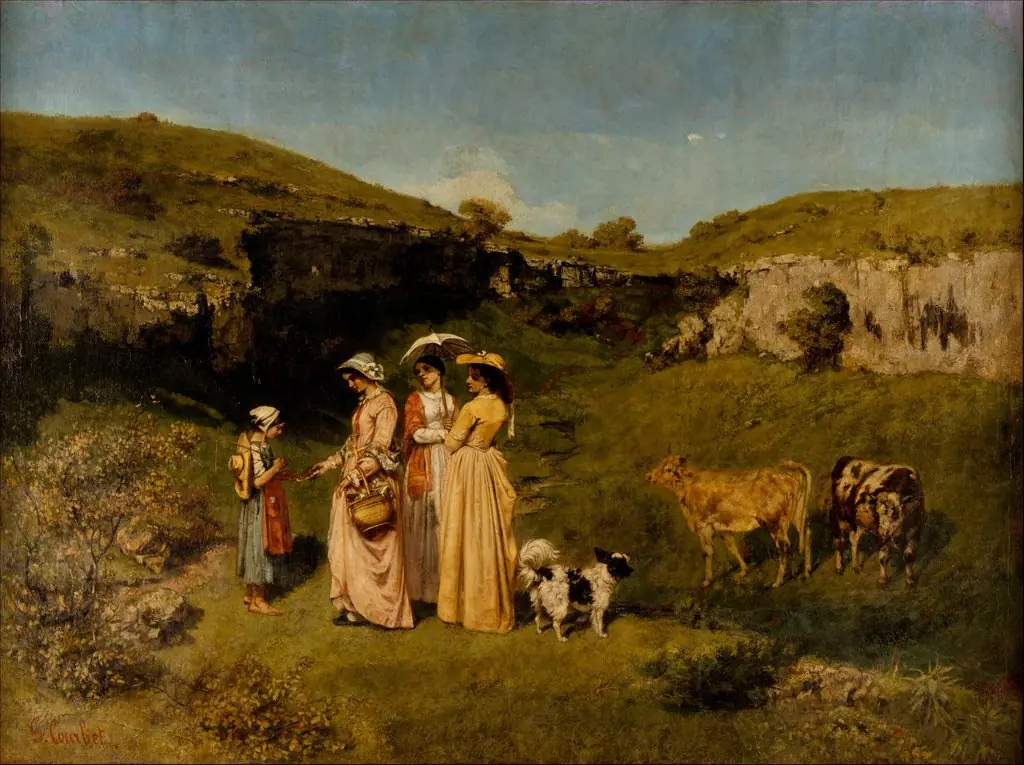 Young Ladies of the Village
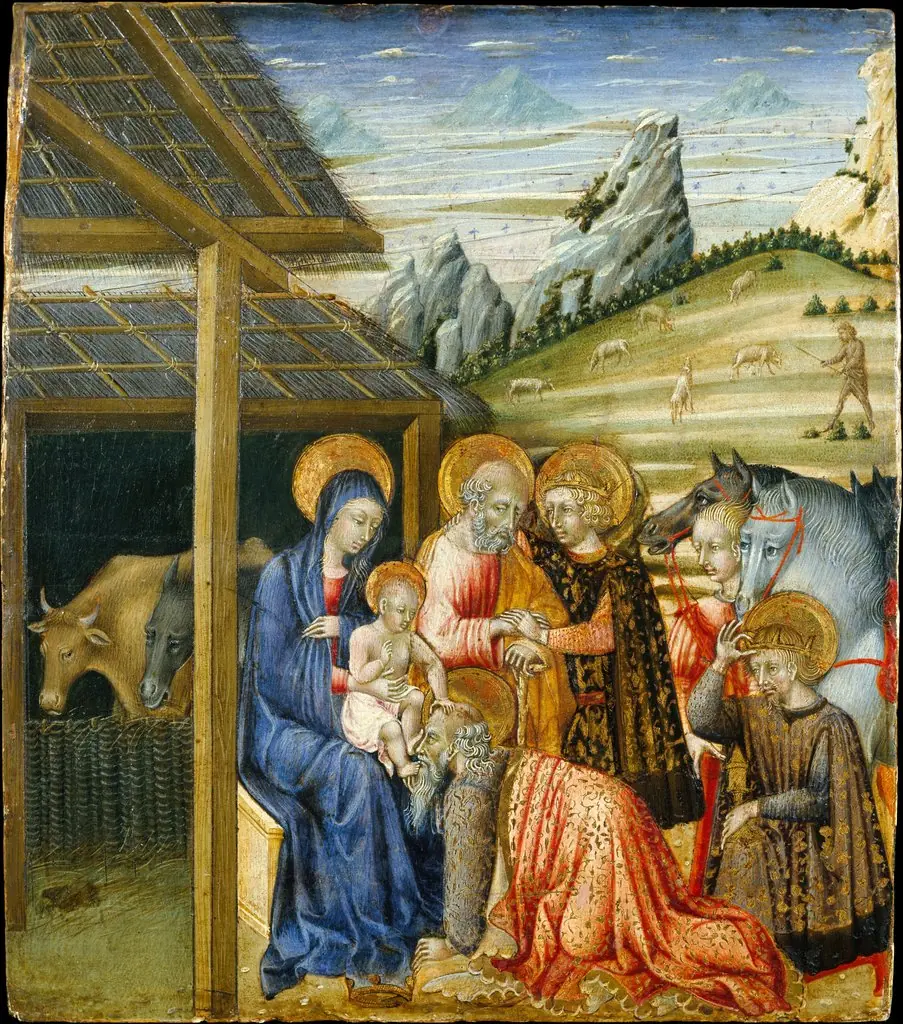 The Adoration of the Magi
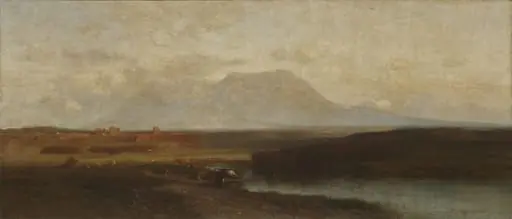 Spanish Peaks, Southern Colorado, Late Afternoon
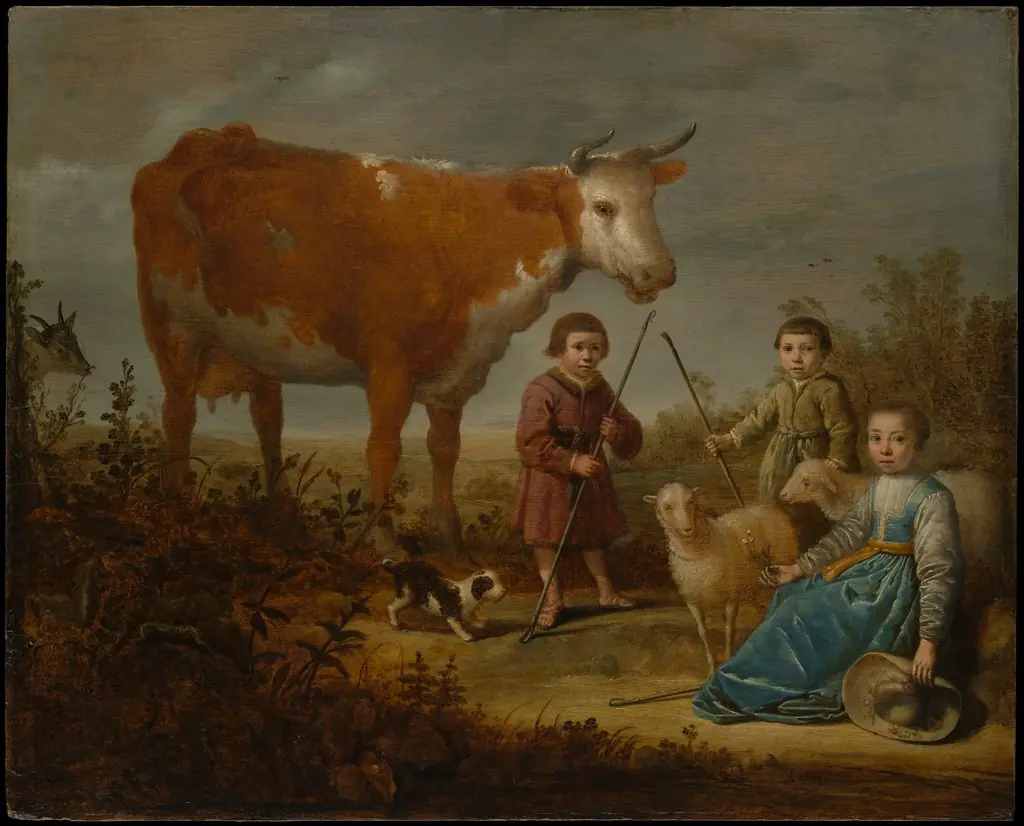 Children and a Cow
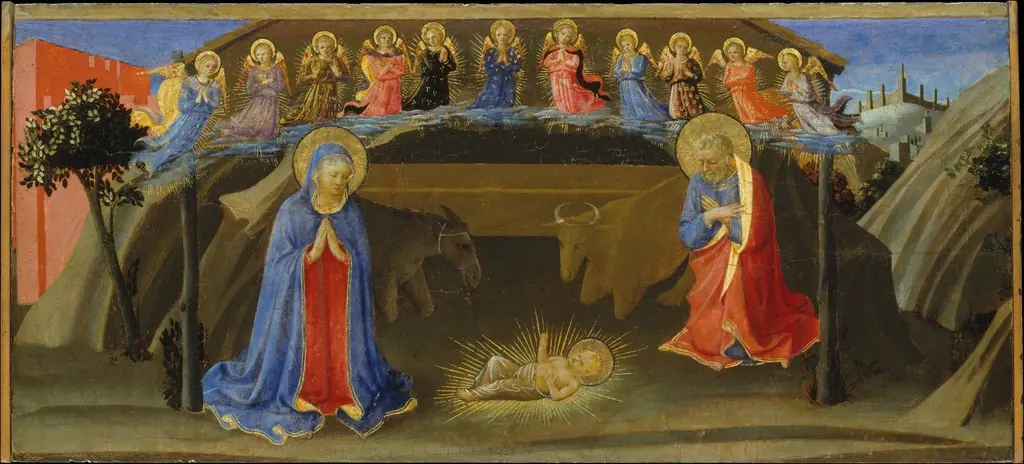 The Nativity
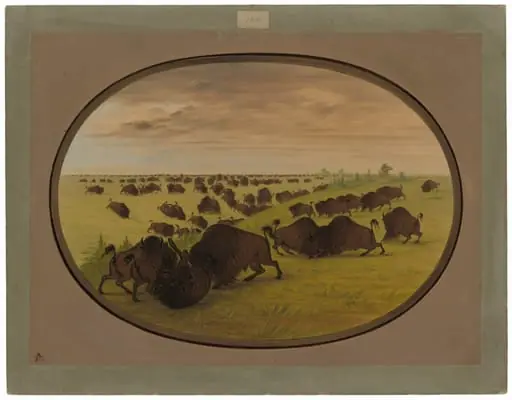 Bulls Fighting
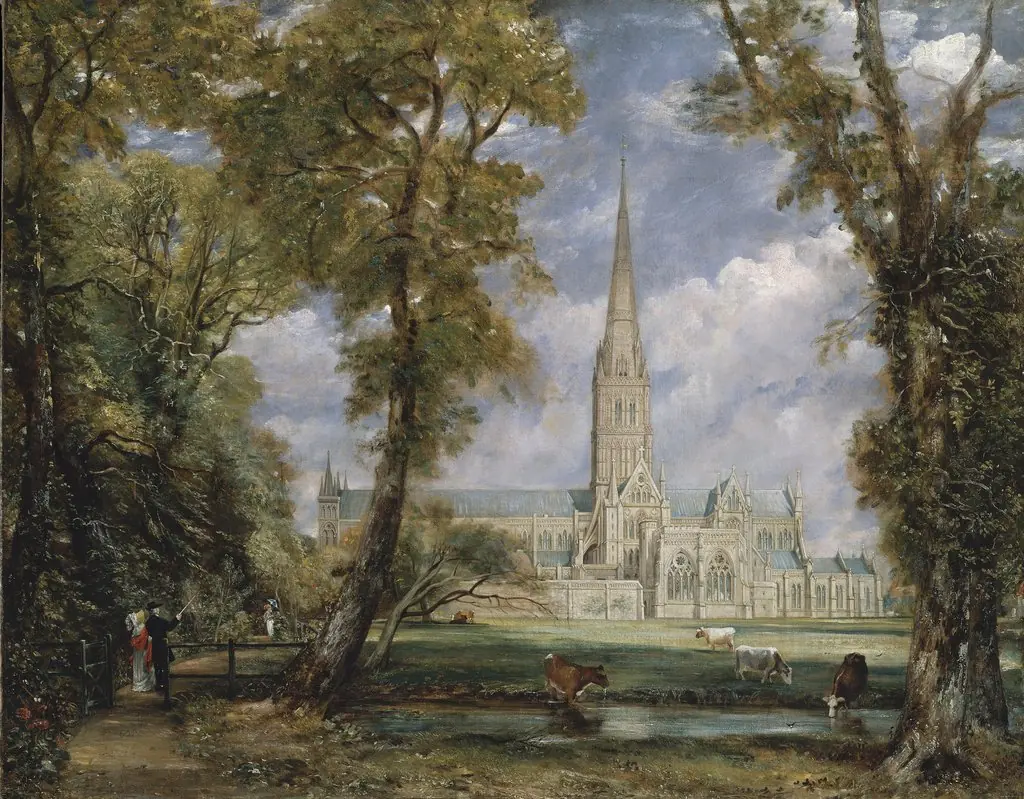 Salisbury Cathedral from the Bishop's Garden
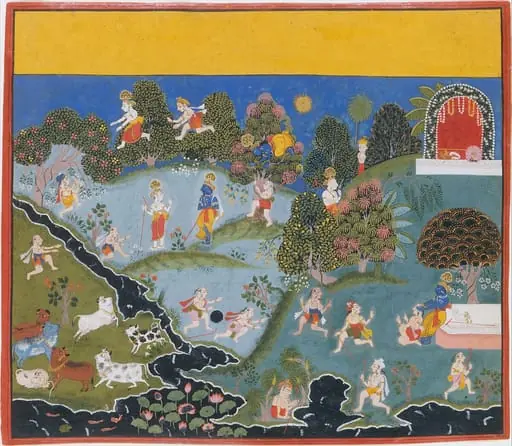 Untitled
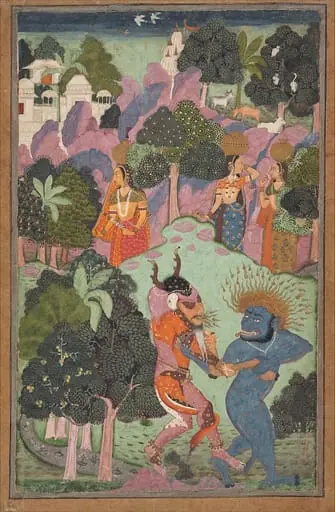 Untitled
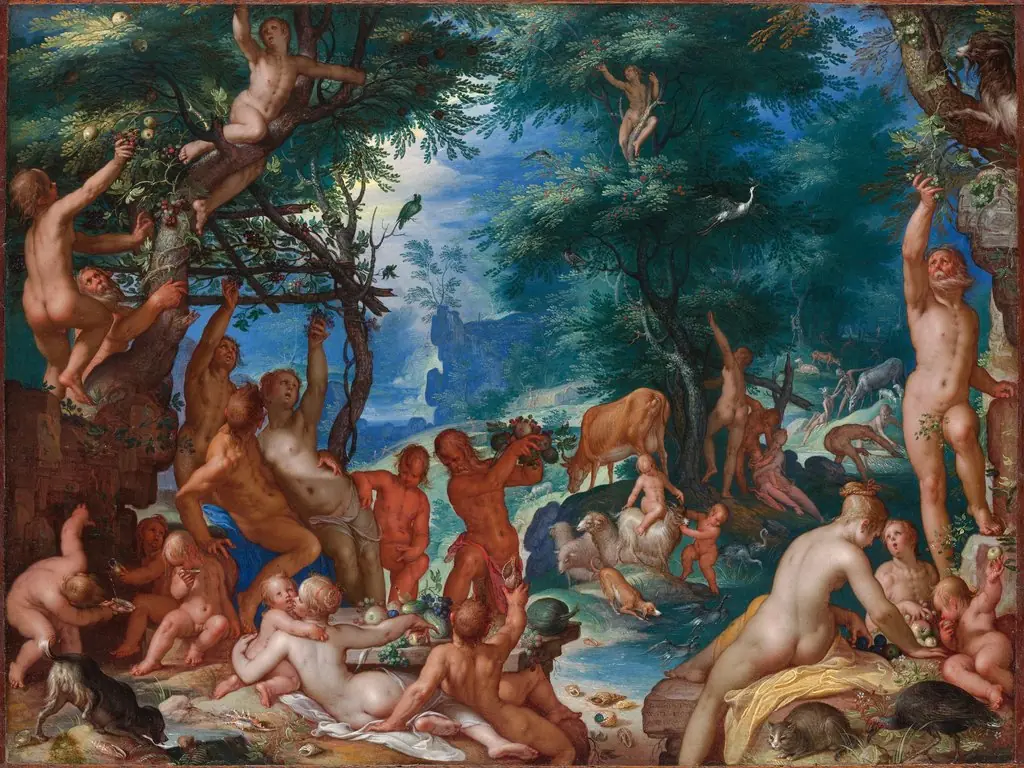 The Golden Age
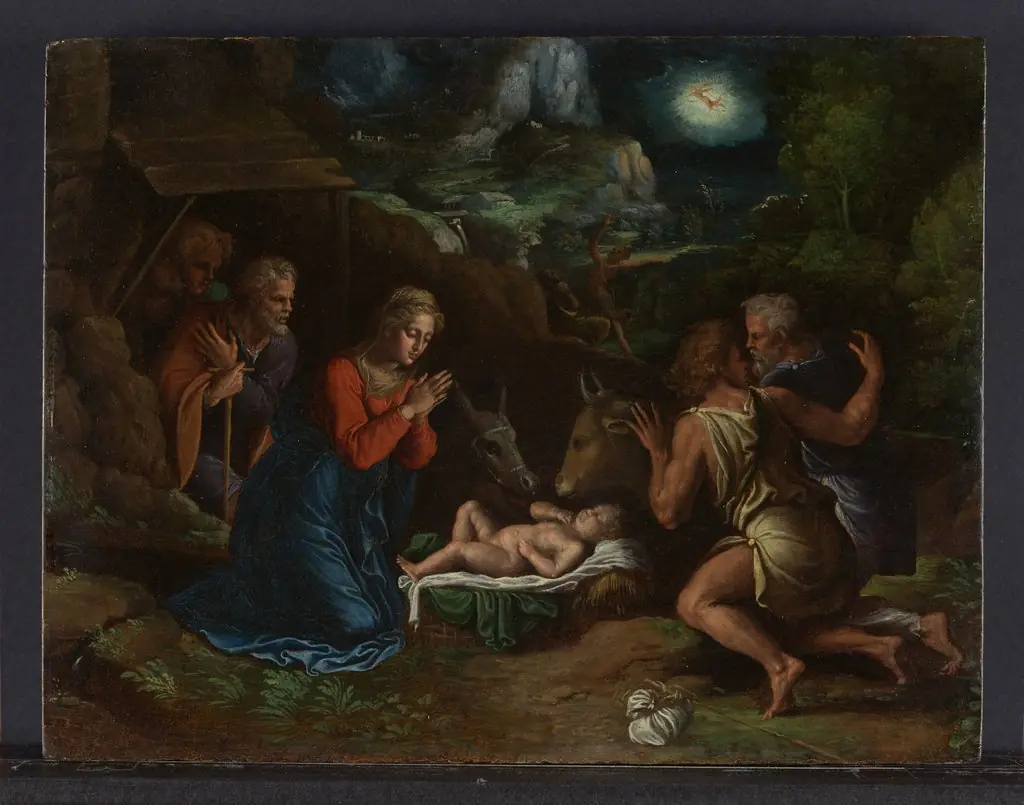 The Adoration of the Shepherds
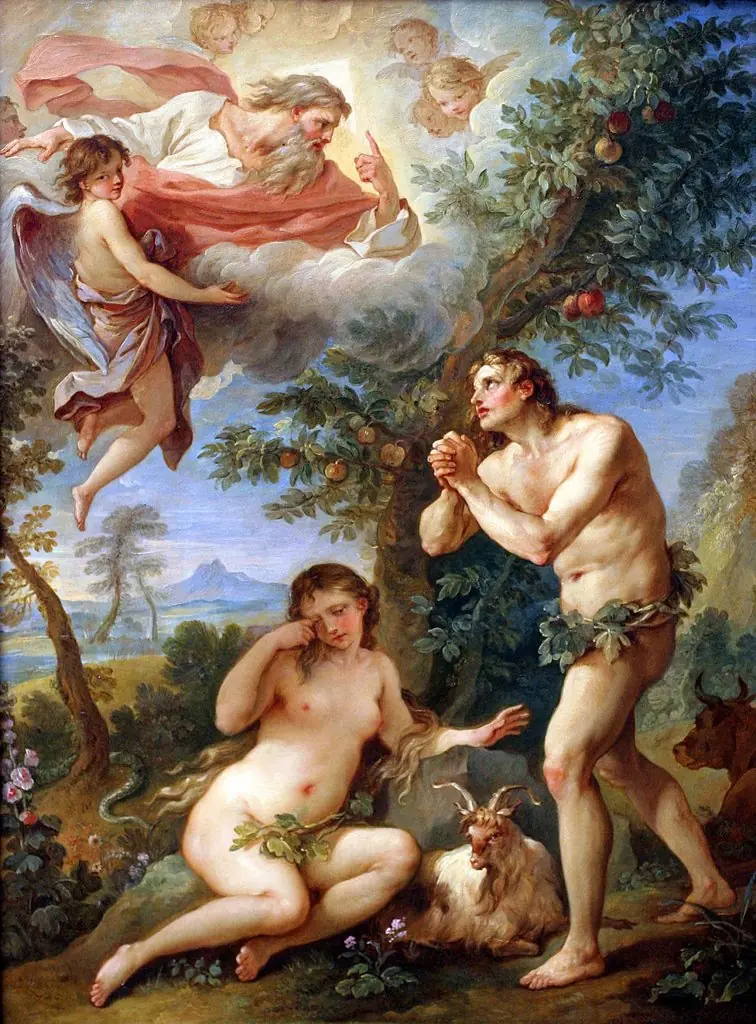 The Rebuke of Adam and Eve
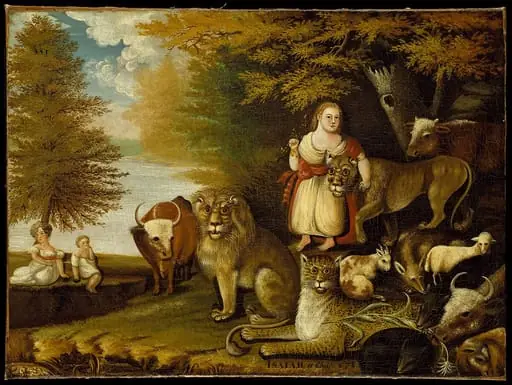 Peaceable Kingdom
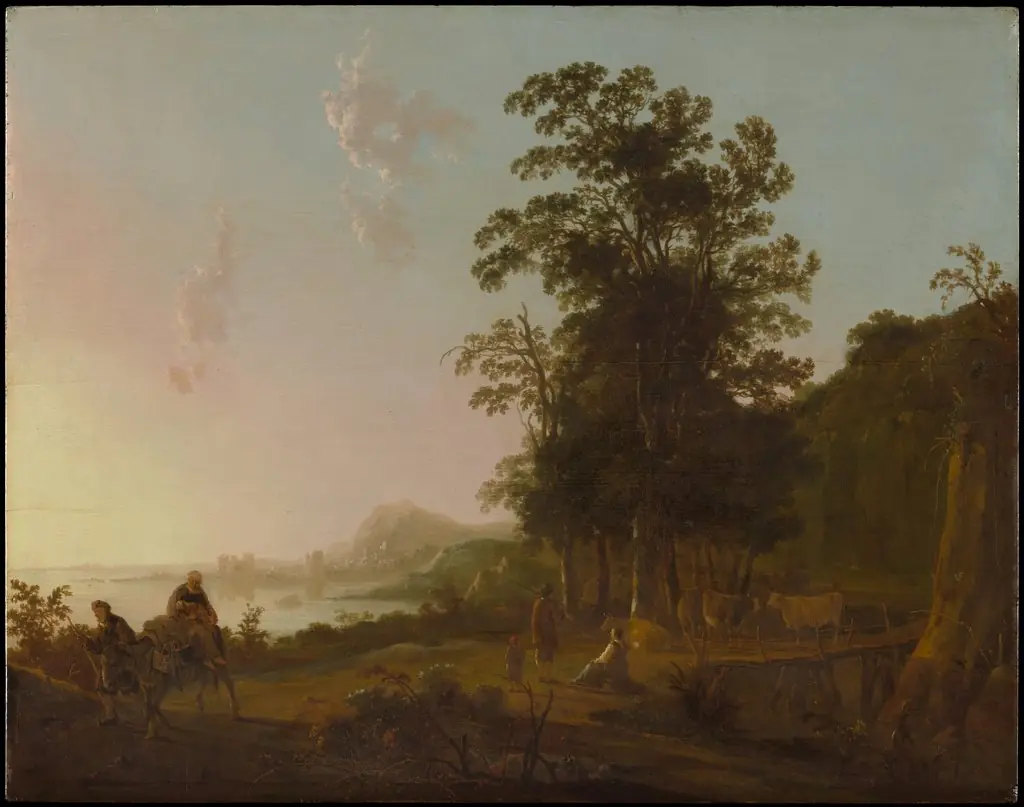 Landscape with the Flight into Egypt
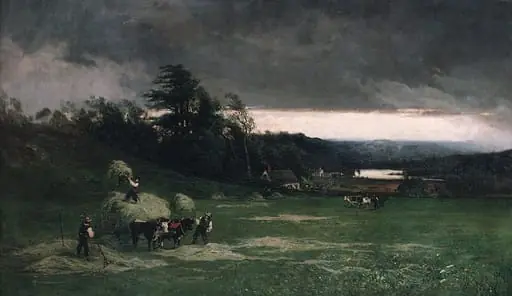 Approaching Storm
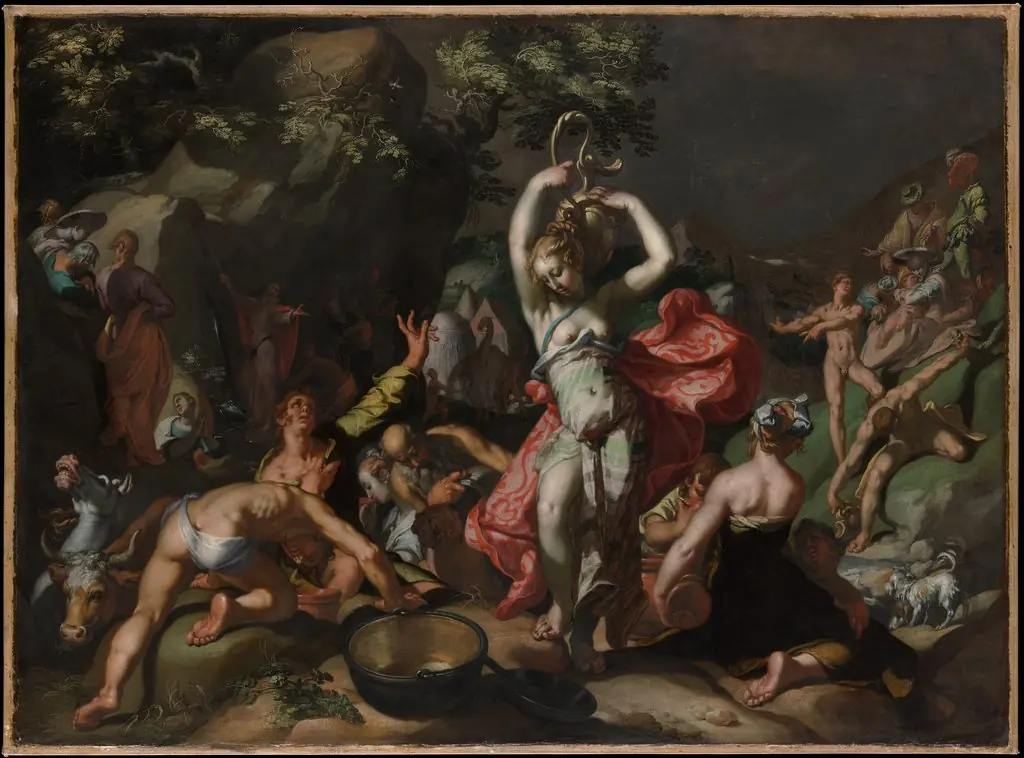 Moses Striking the Rock
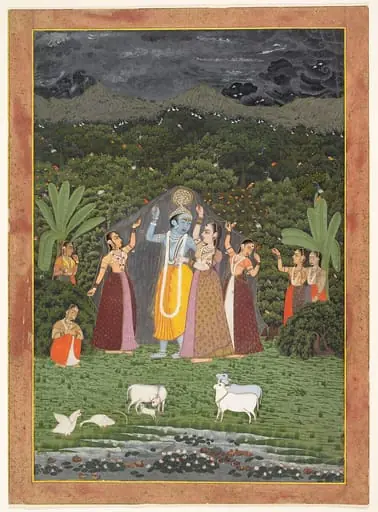 Untitled
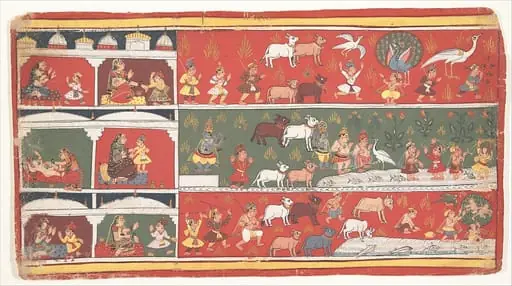 Untitled
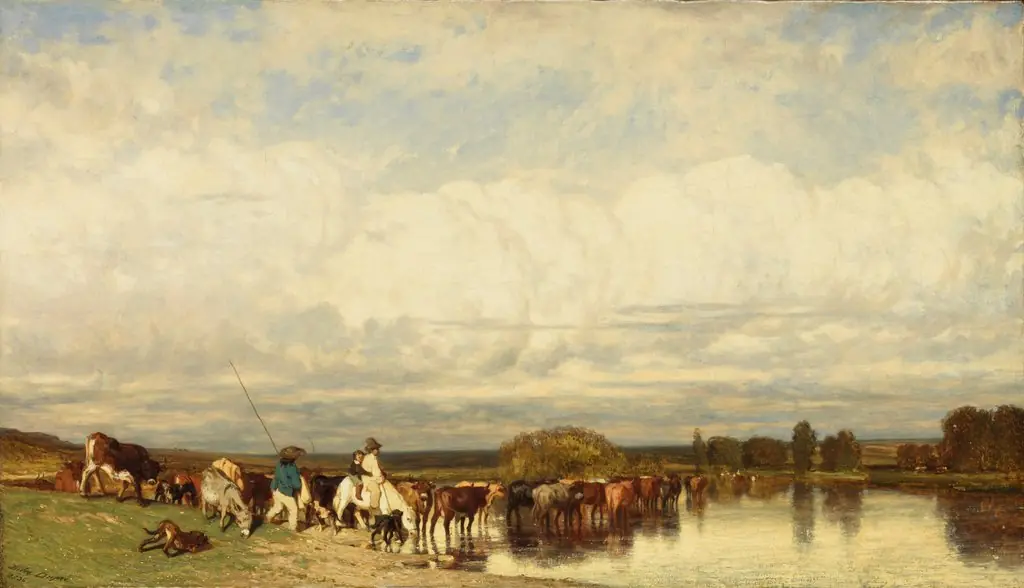 Cows Crossing a Ford
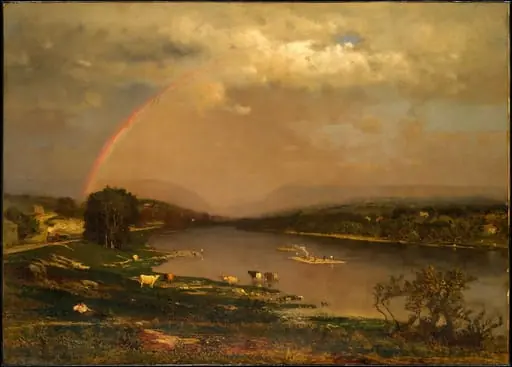 Delaware Water Gap
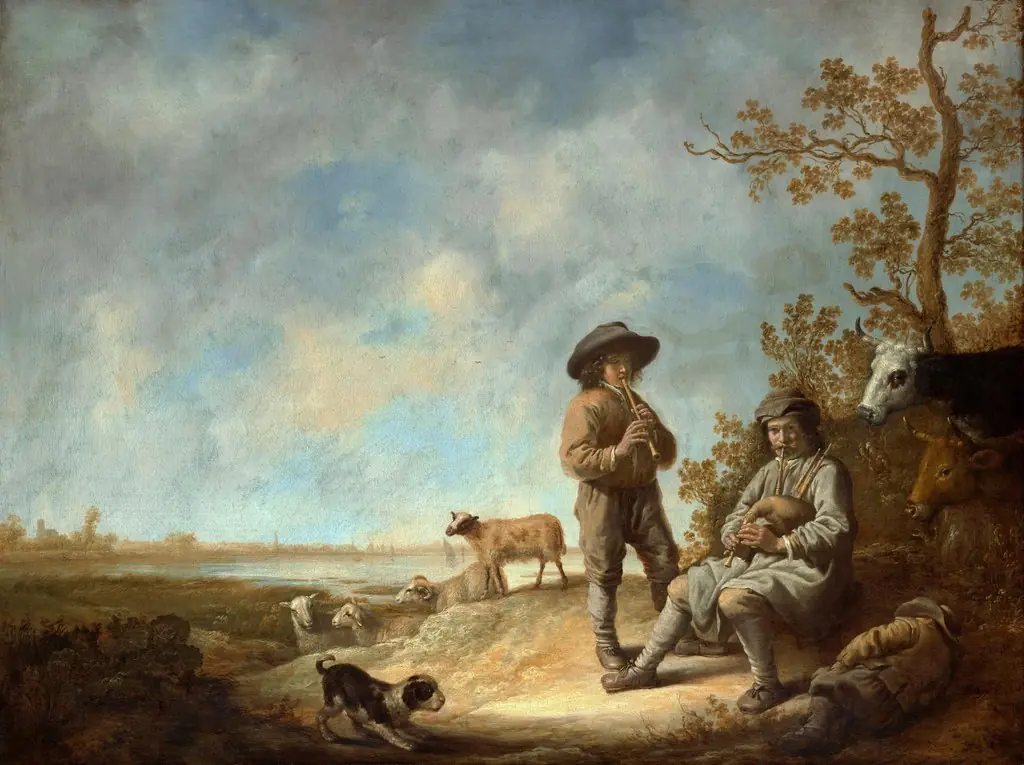 Piping Shepherds
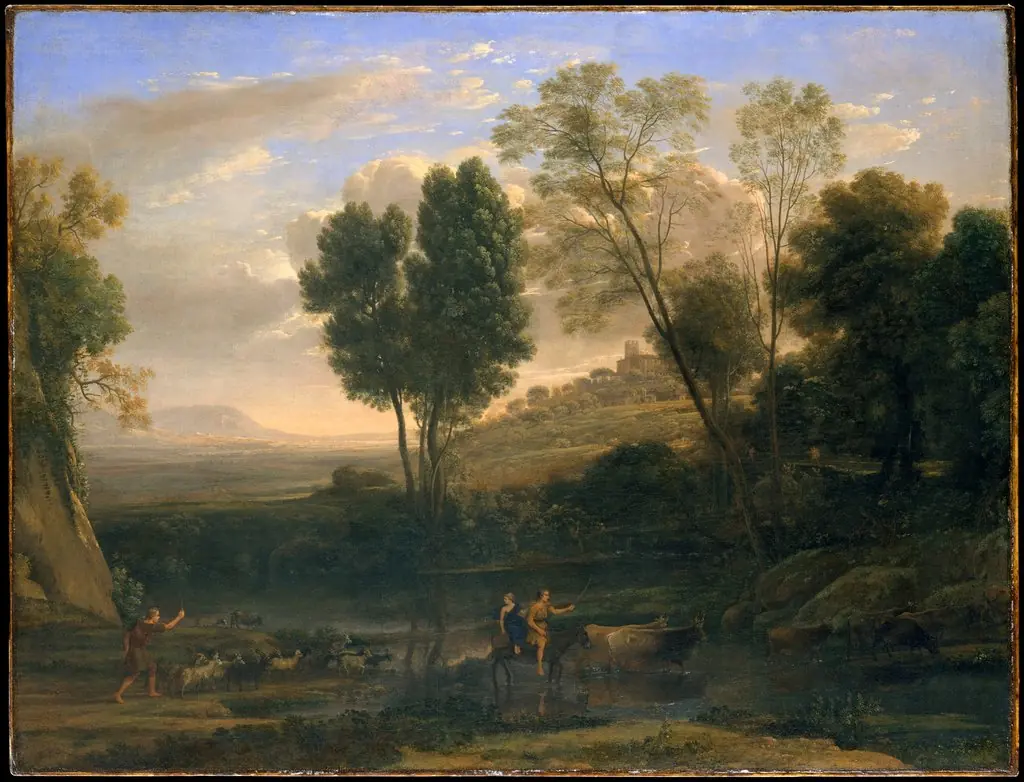 Sunrise
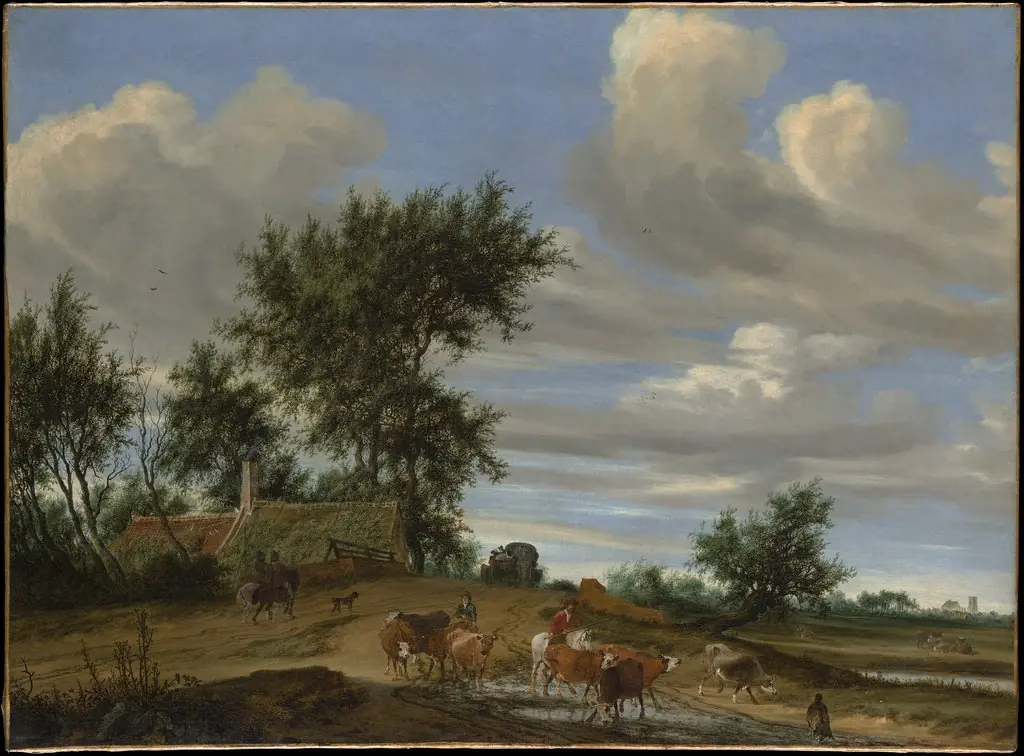 A Country Road
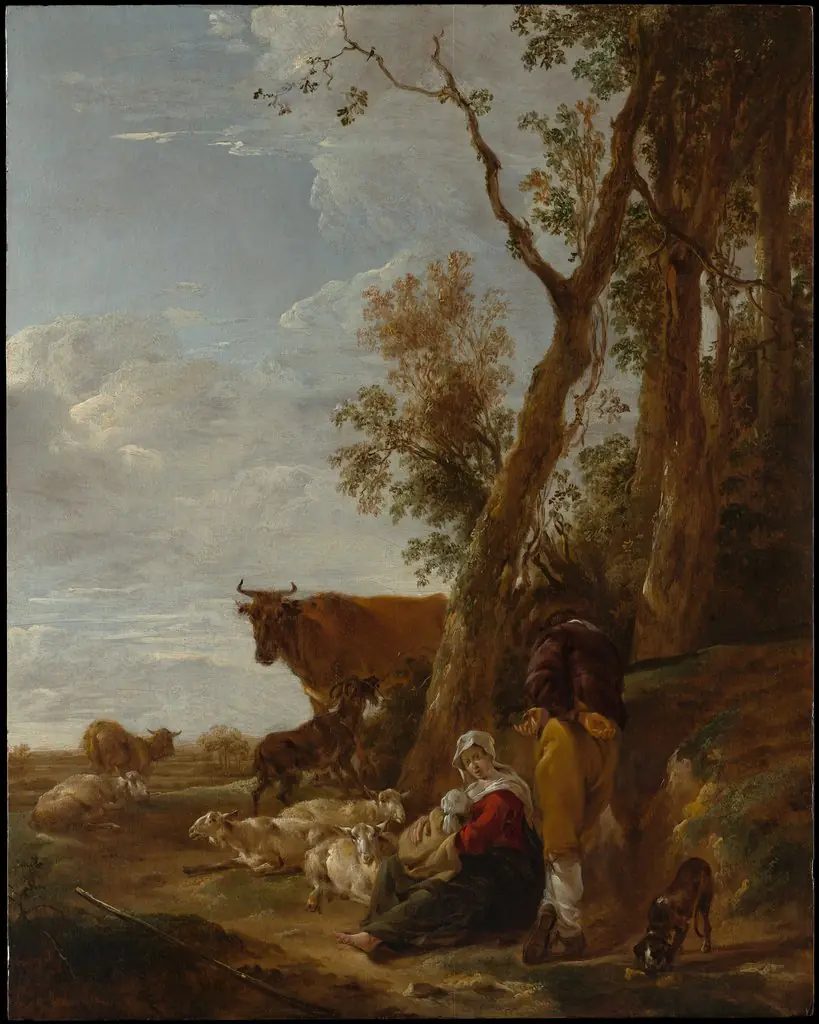 Rest
Rest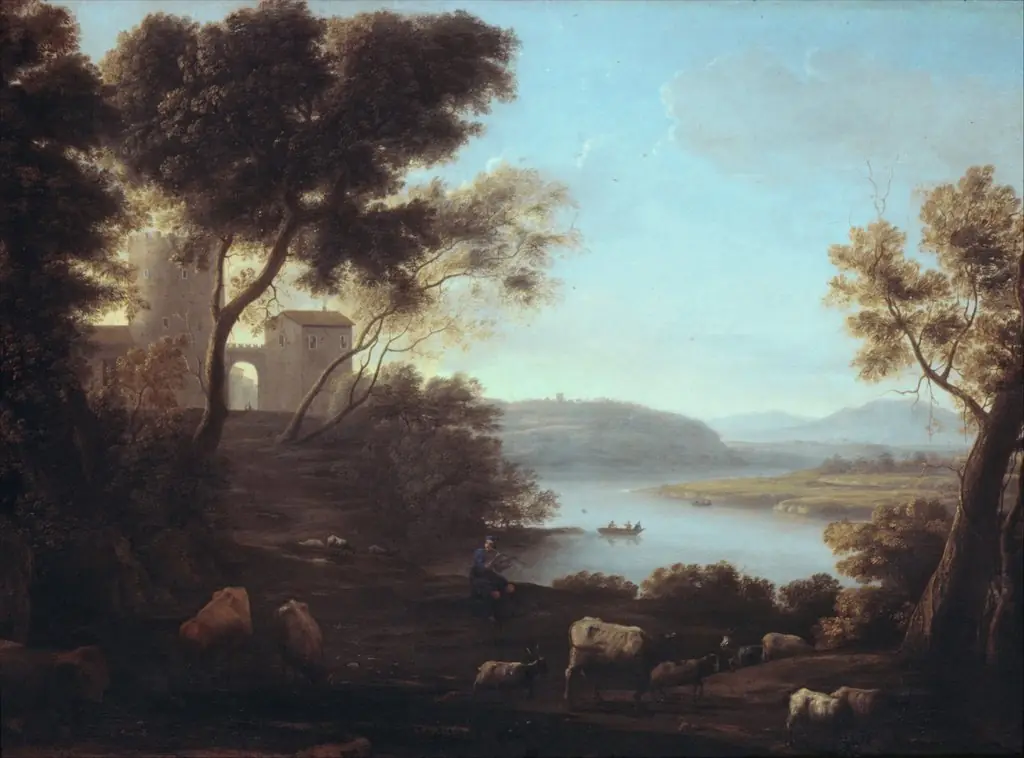 Pastoral Landscape: The Roman Campagna
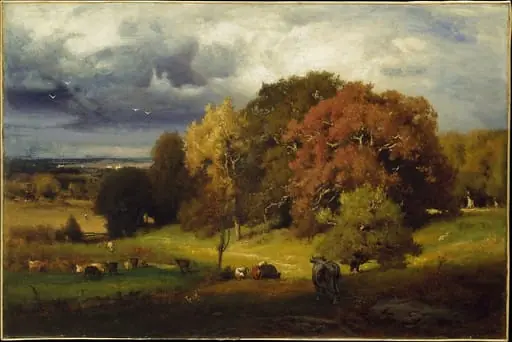 Autumn Oaks
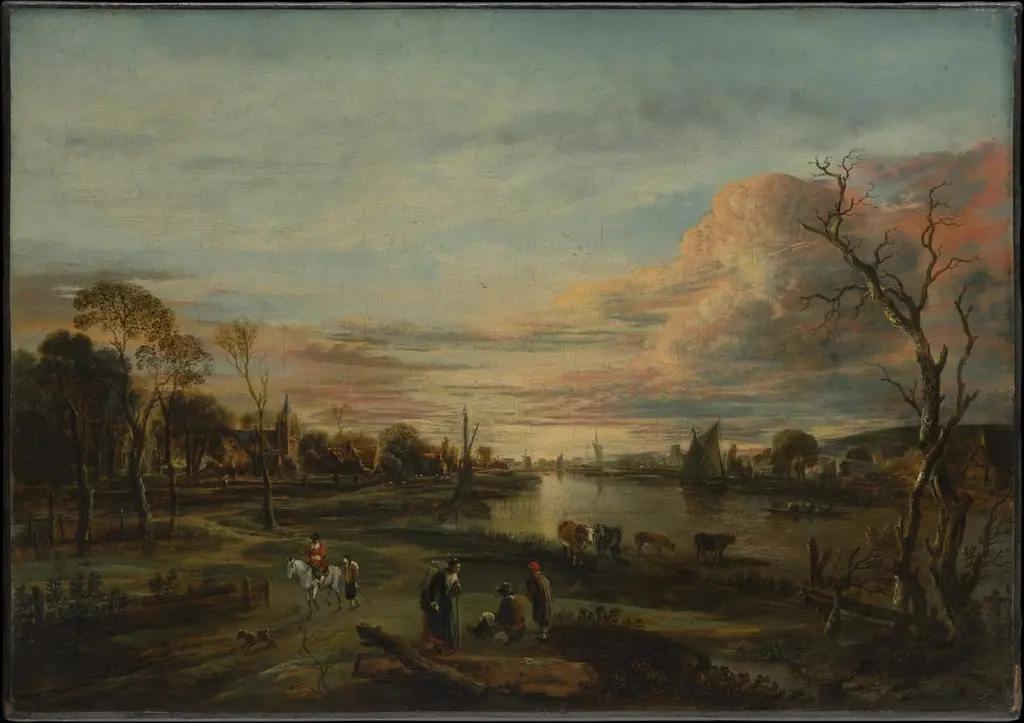 Landscape at Sunset
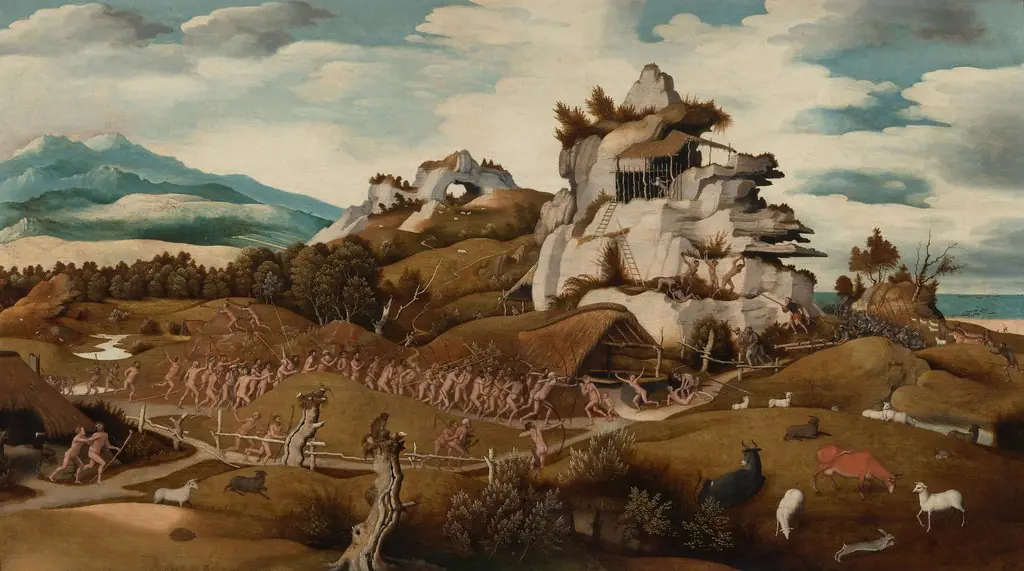 Landscape with a Scene of the Conquest of America
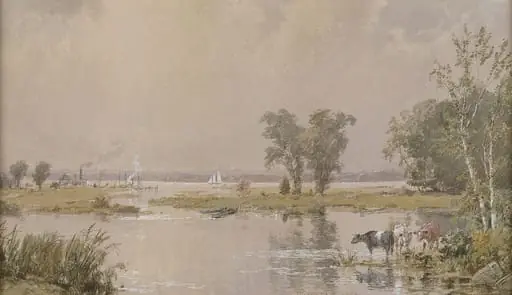 Hackensack Meadows
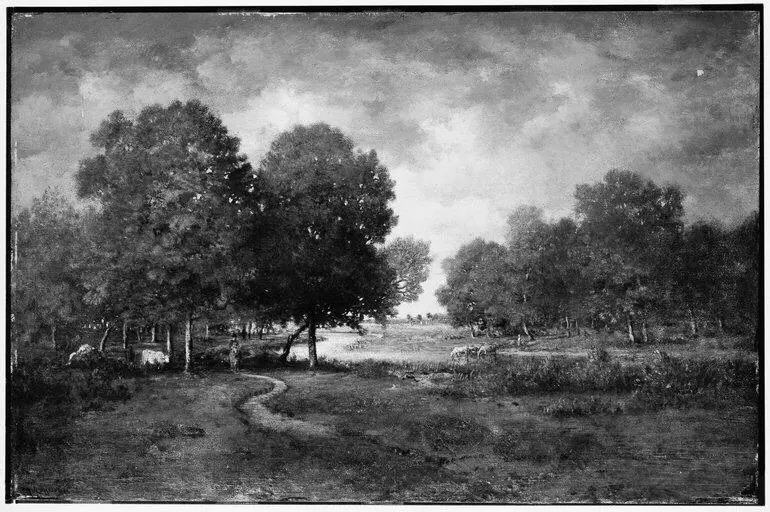 A River in a Meadow
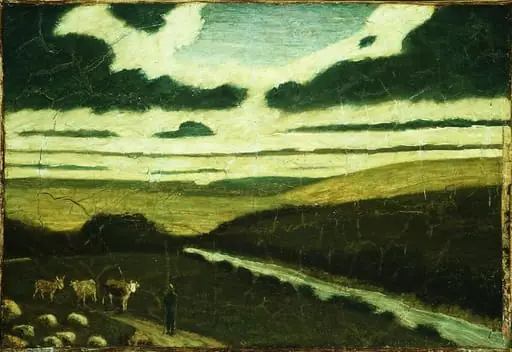 Landscape
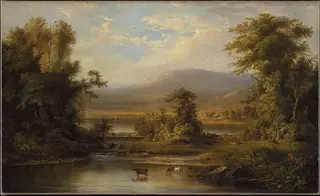 Landscape with Cows Watering in a Stream
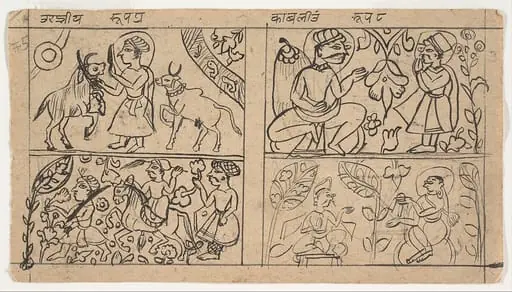 Untitled
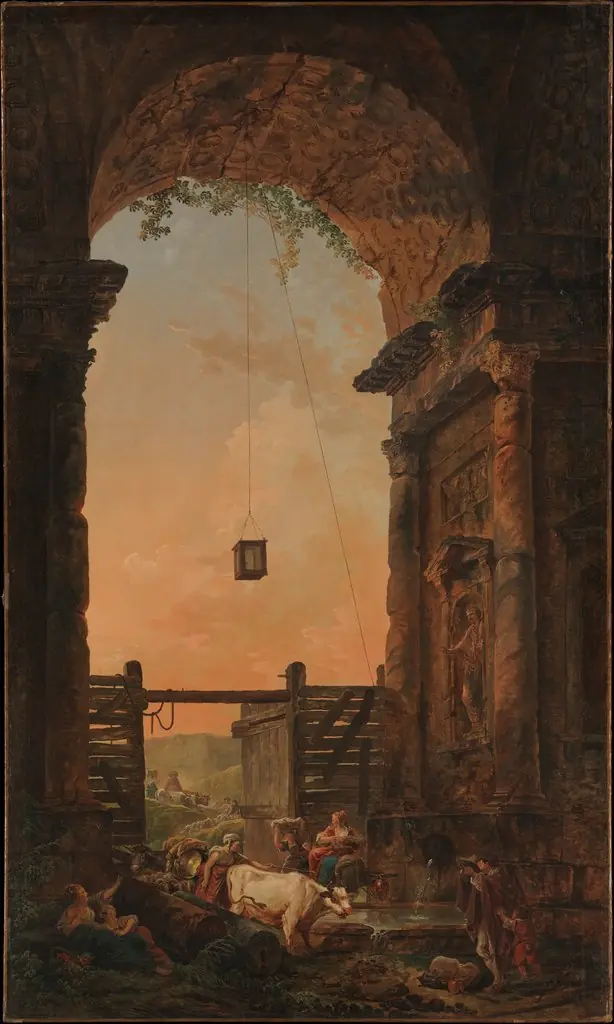 The Return of the Cattle
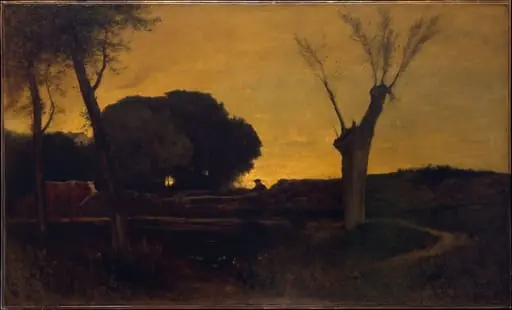 Evening at Medfield, Massachusetts
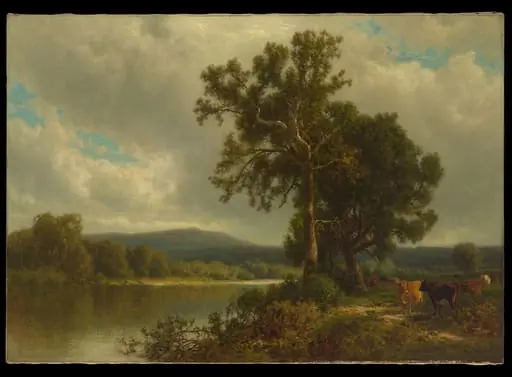 Scene at Napanoch
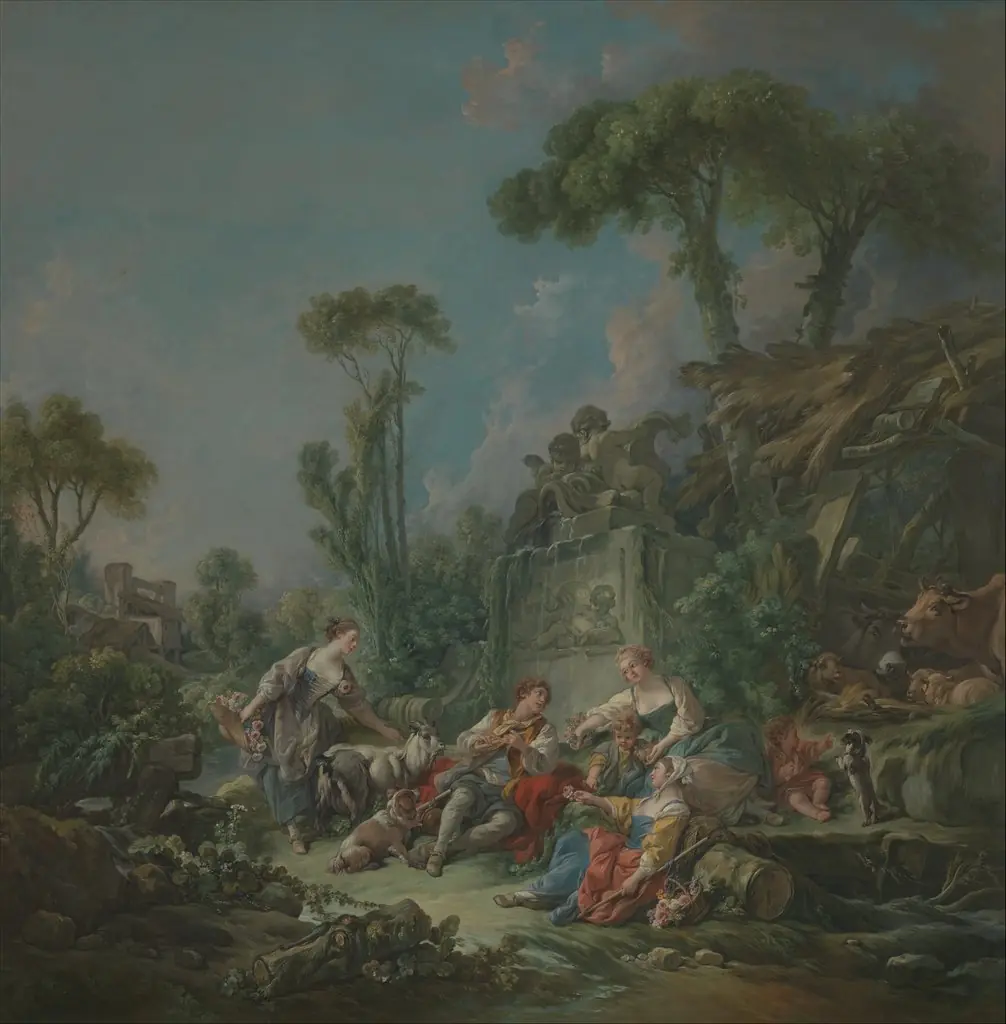 Shepherd's Idyll
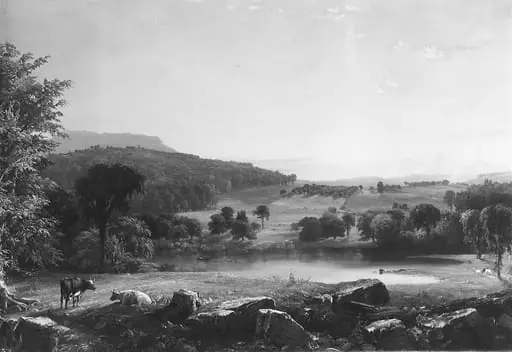 View near Sherburne, Chenango County, New York
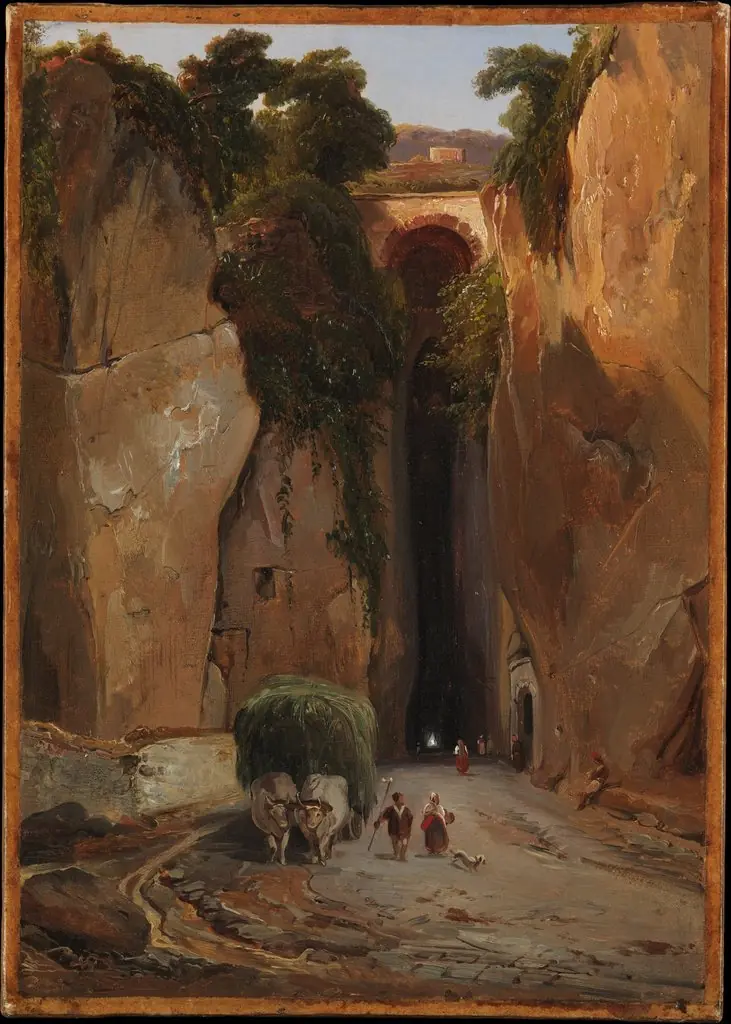 Entrance to the Grotto of Posillipo
 Pasture Scene
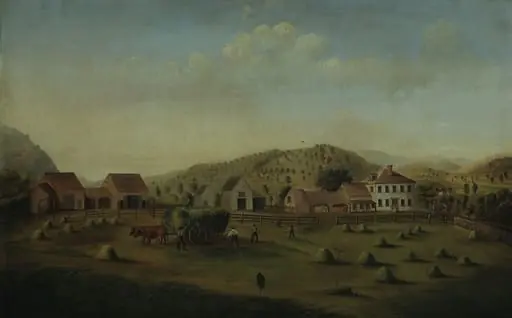 Leete Farm, West Claremont, New Hampshire
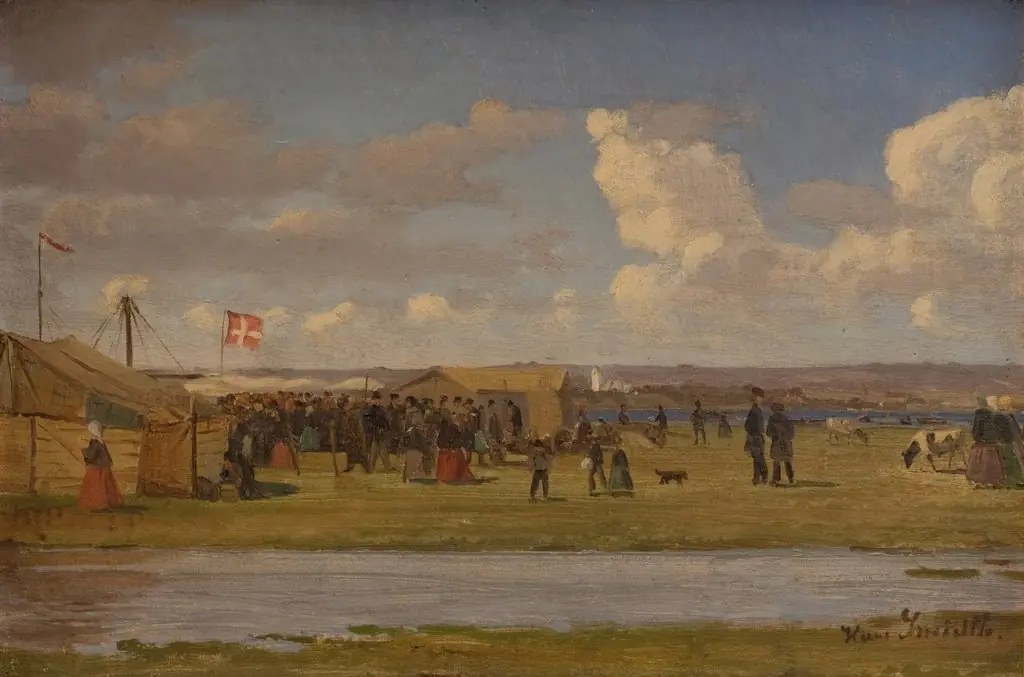 Fur marked
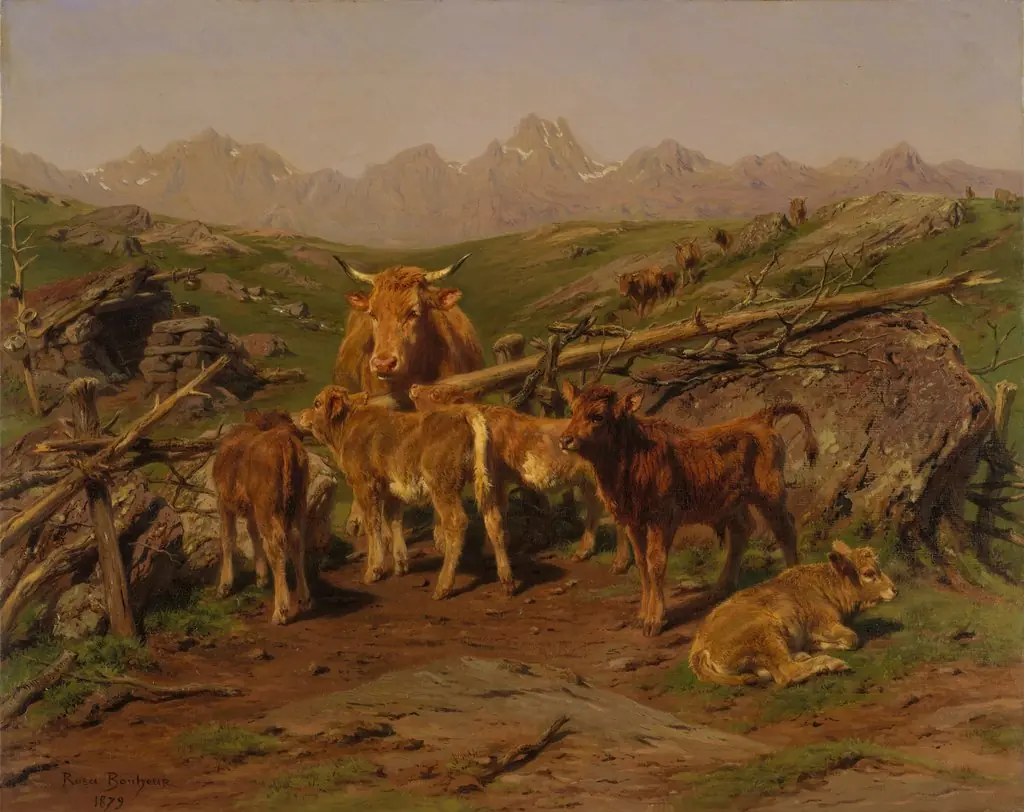 Weaning the Calves
 Sunset
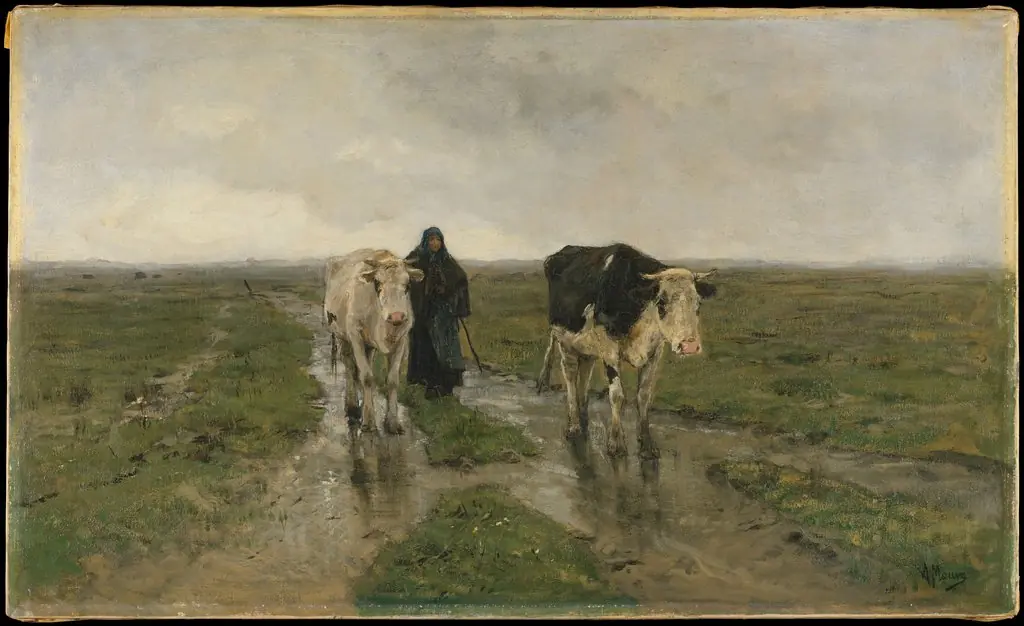 Changing Pasture
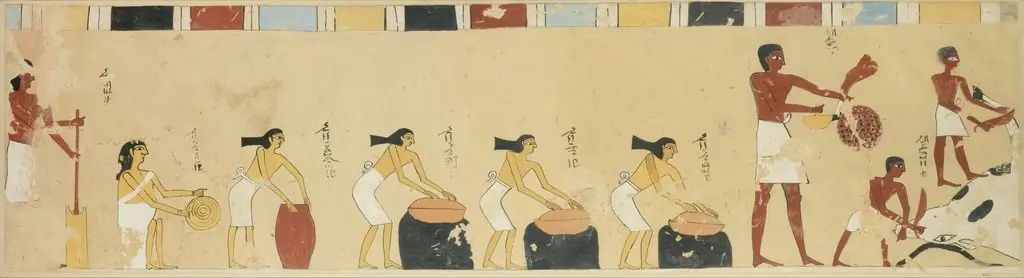 Women Preparing Food, Tomb of Djari
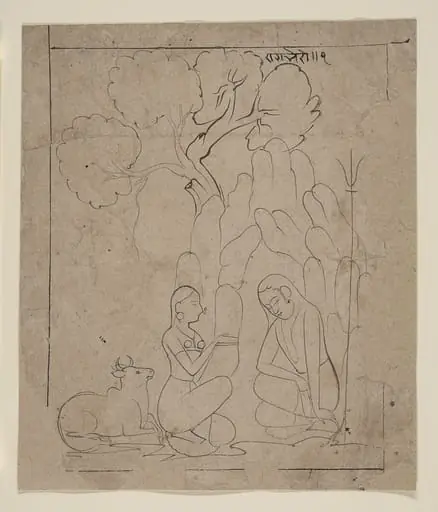 Untitled
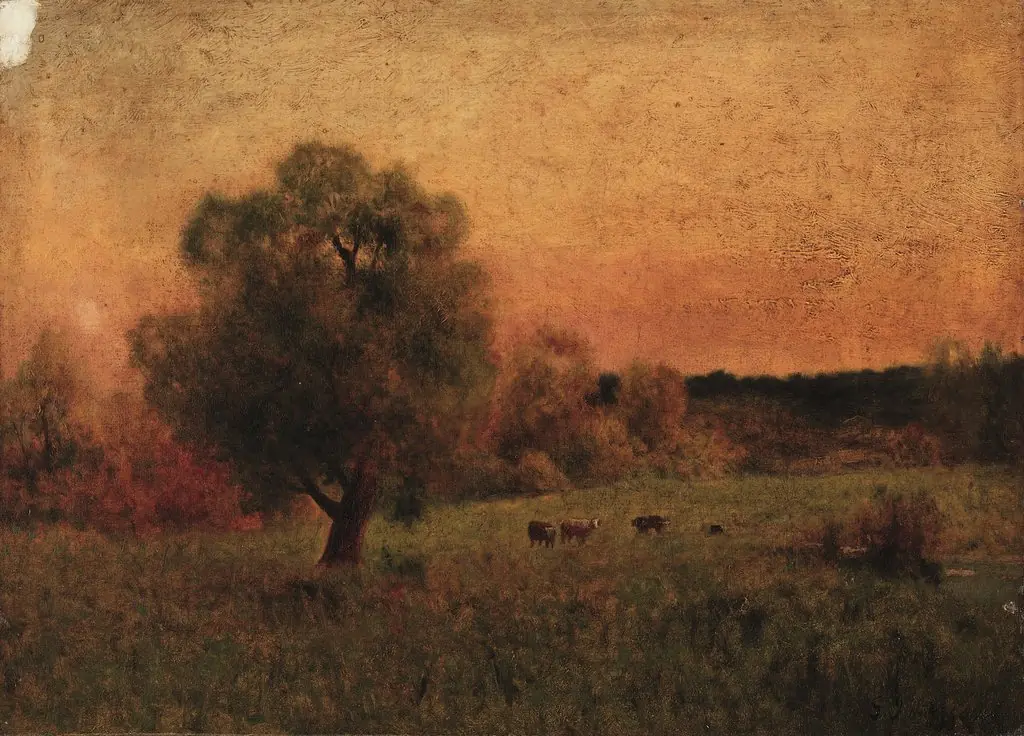 Cows in a Field
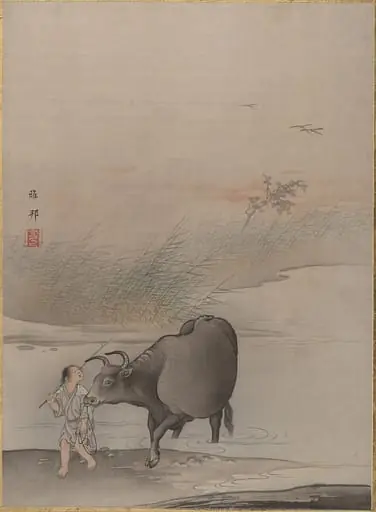 Untitled
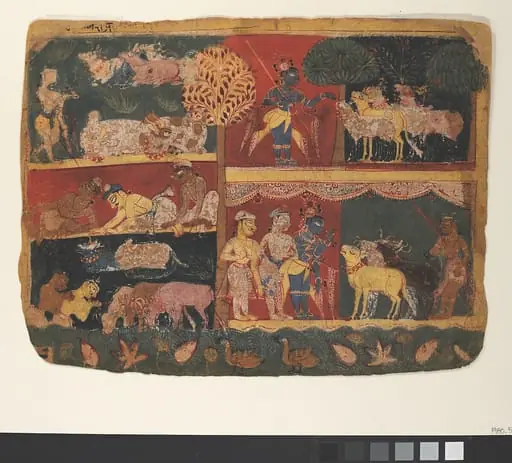 Untitled
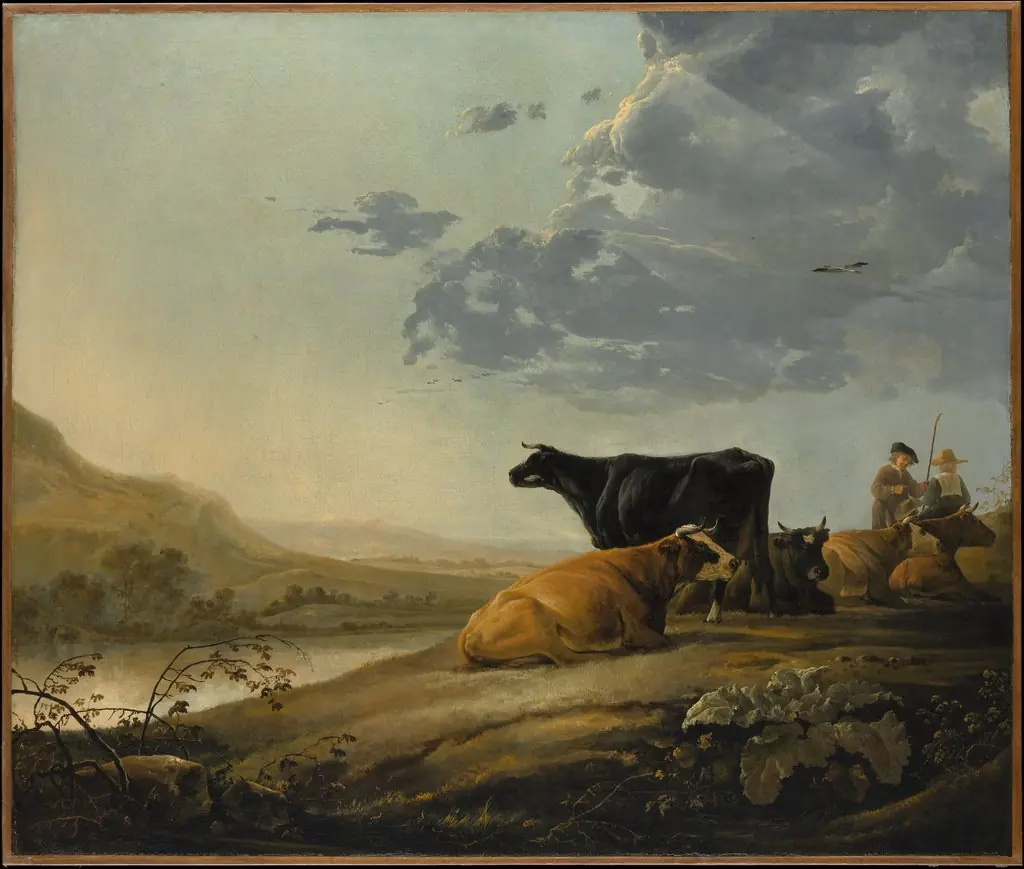 Young Herdsmen with Cows
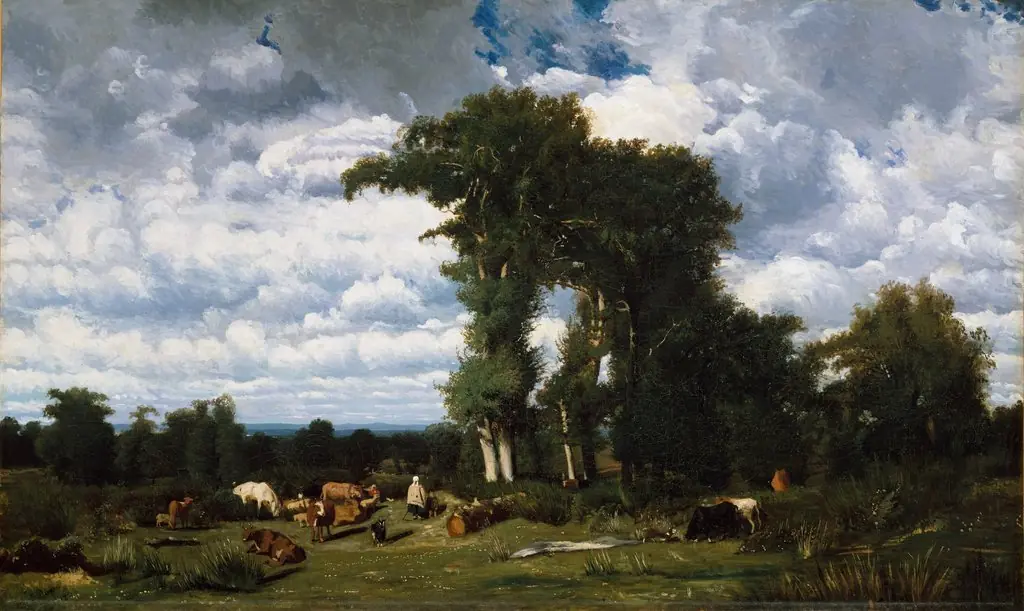 Landscape with Cattle at Limousin
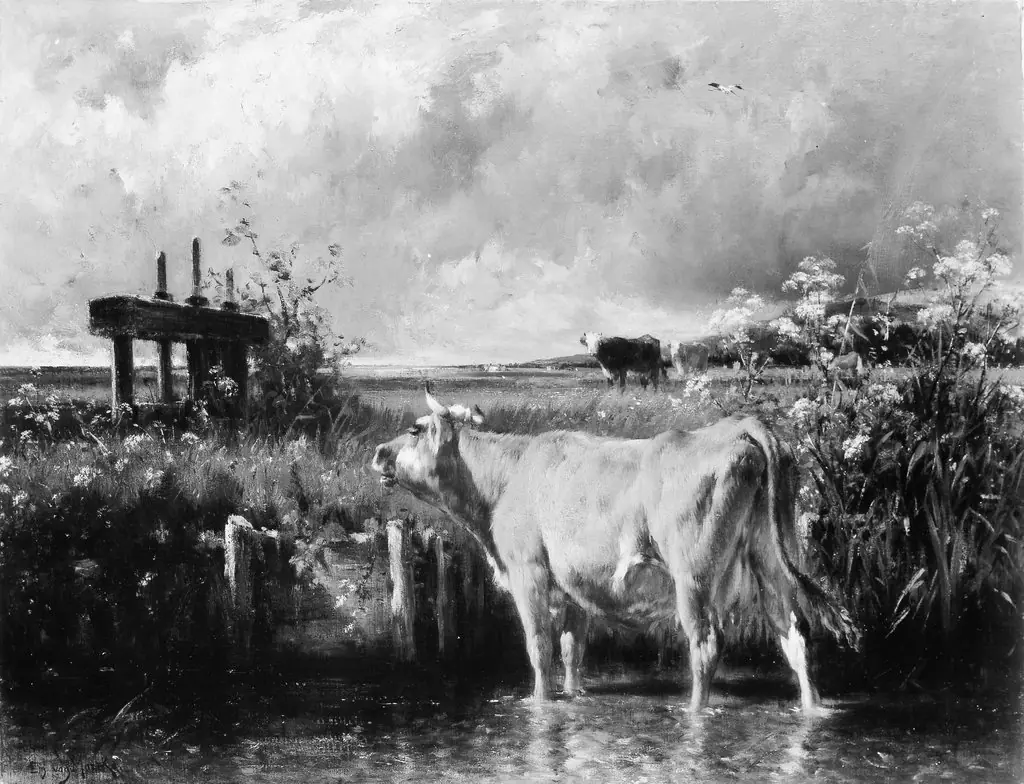 The Flood Gate
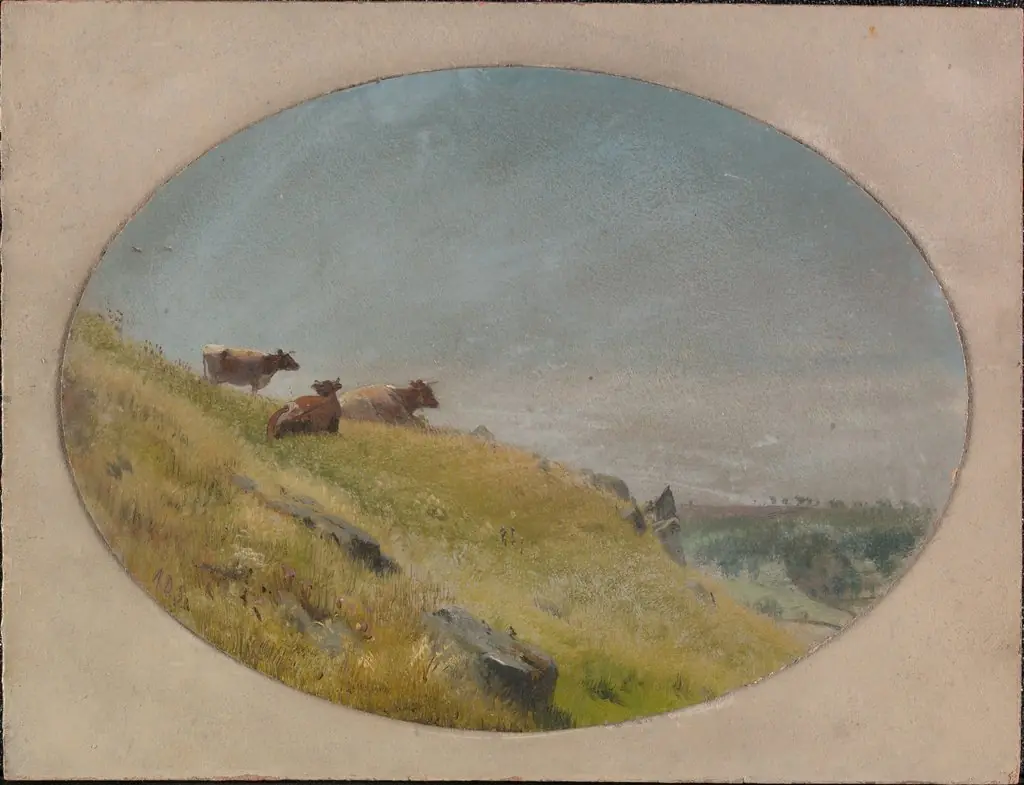 Landscape with Cows
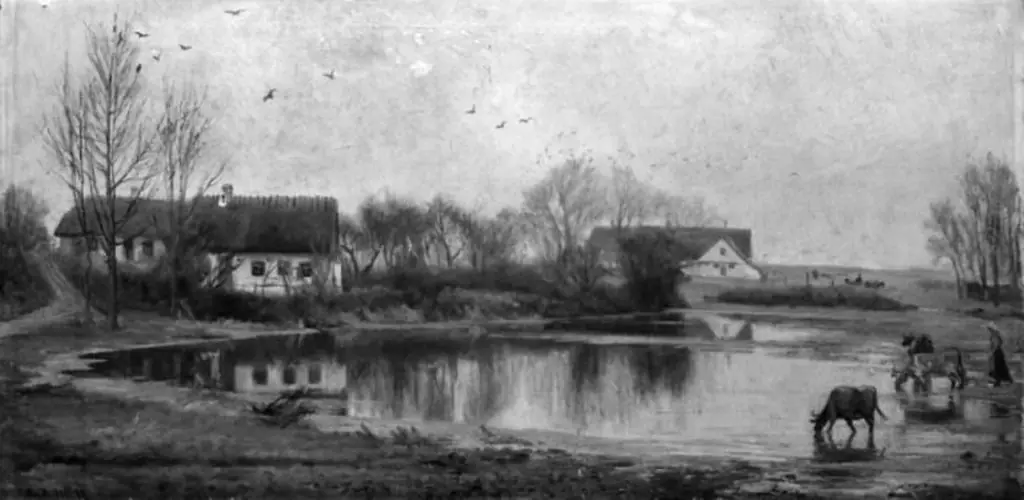 Gadekæret i Kajerød
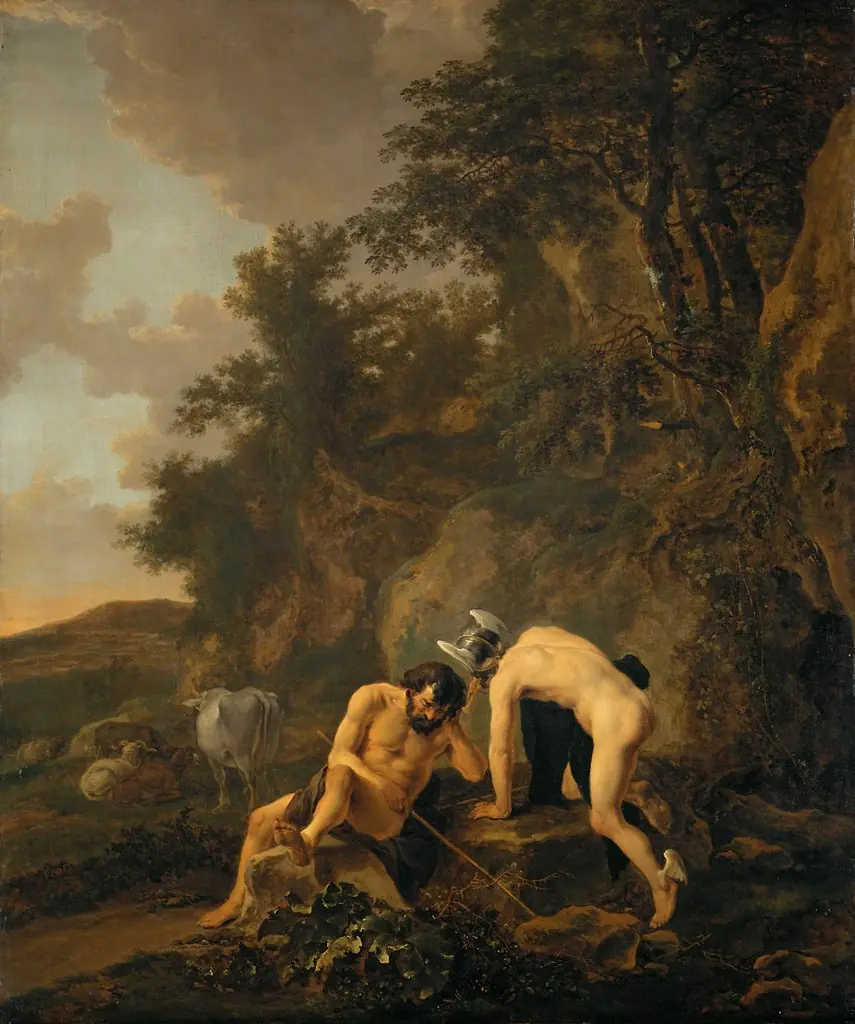 Southern rocky landscape with Mercury and Argus
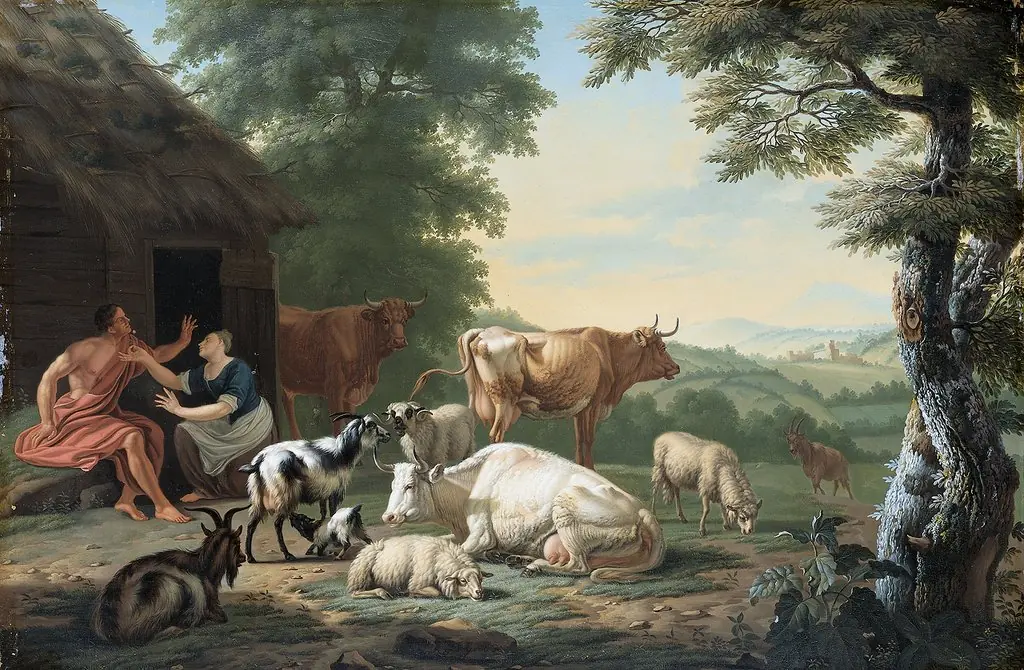 Arcadian Landscape with Shepherds and Animals
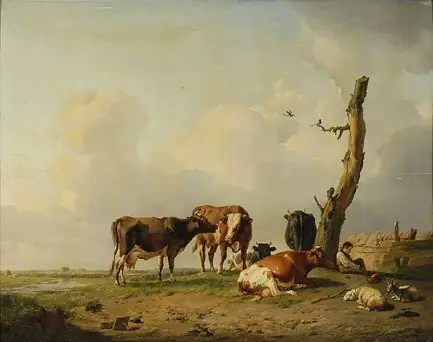 Landschap met herder en vee bij een boom
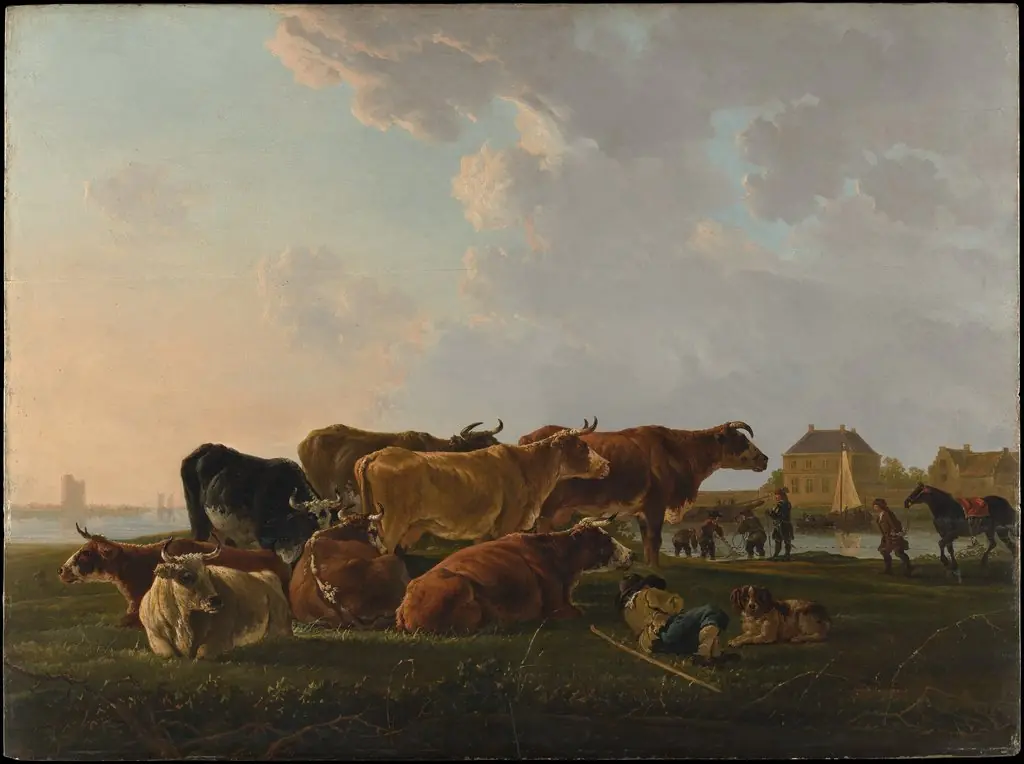 Landscape with Cattle
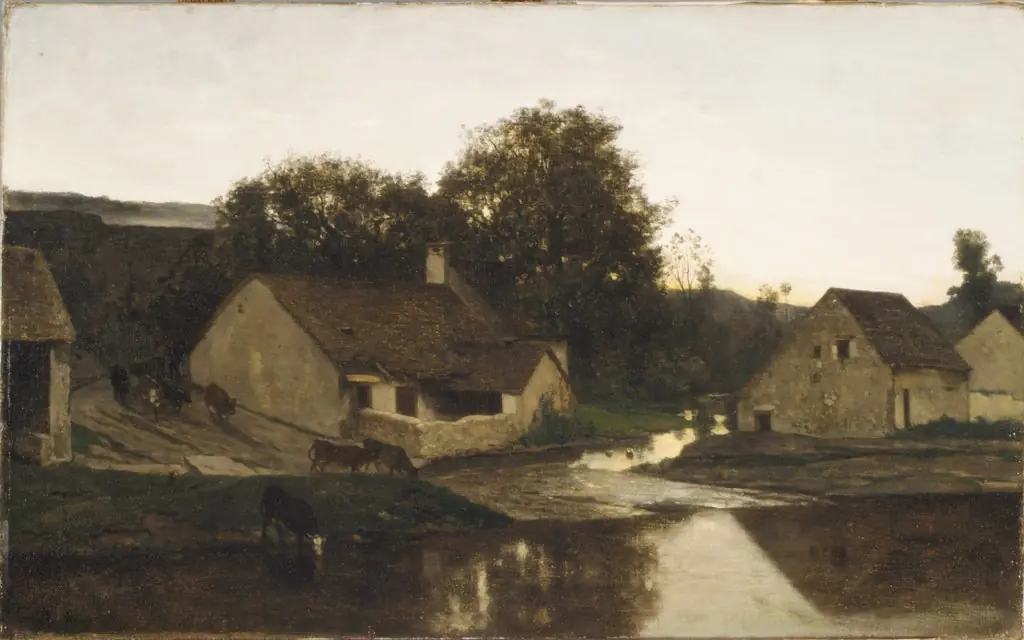 The Hamlet of Optevoz
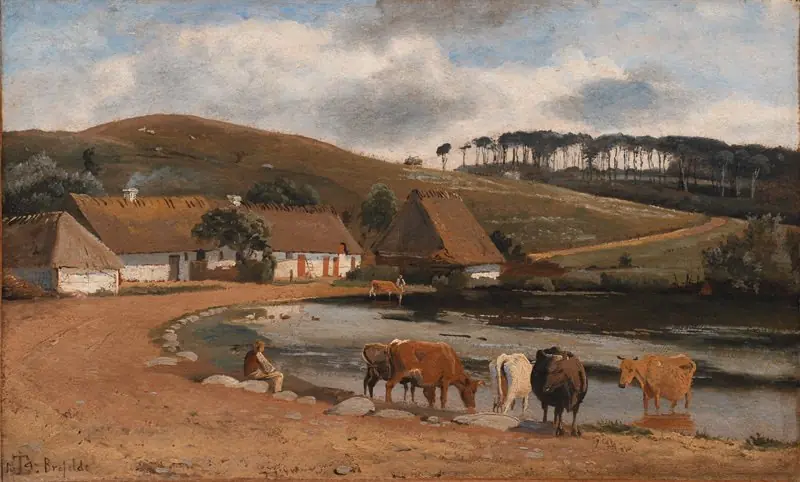 Cows being Watered at a Village Pond. Brofelde, Zealand
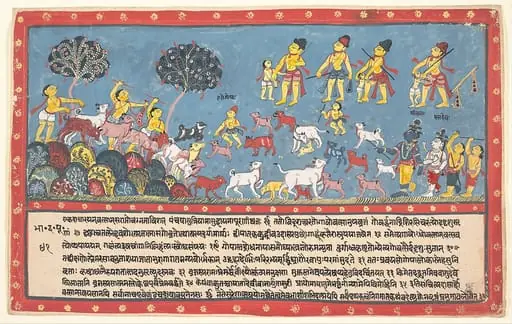 Untitled
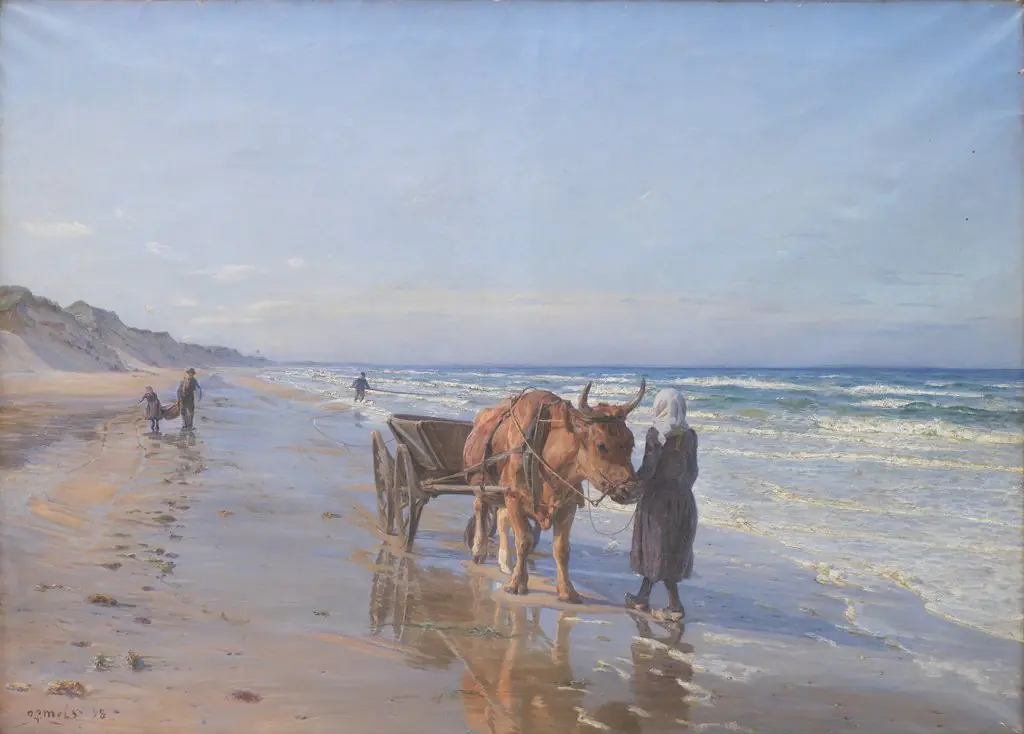 Kystboerne drager vod i landingen
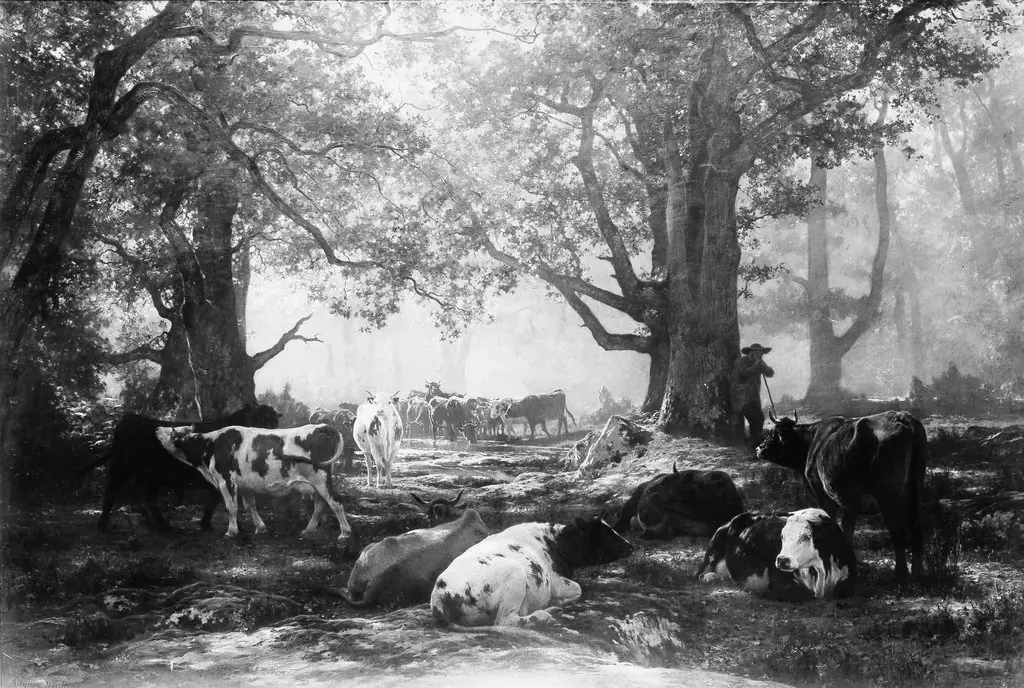 Environs of Fontainebleau: Woodland and Cattle
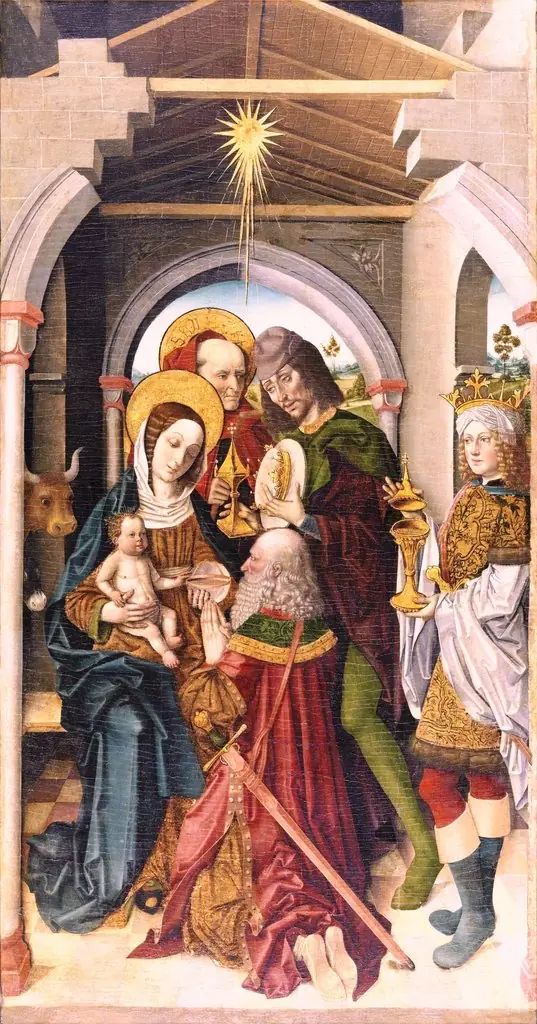 The Adoration of the Magi
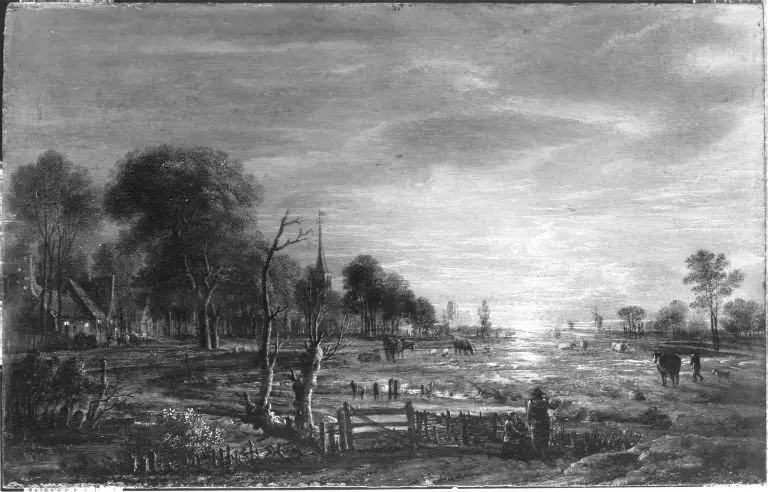 Sunset over a cattle meadow
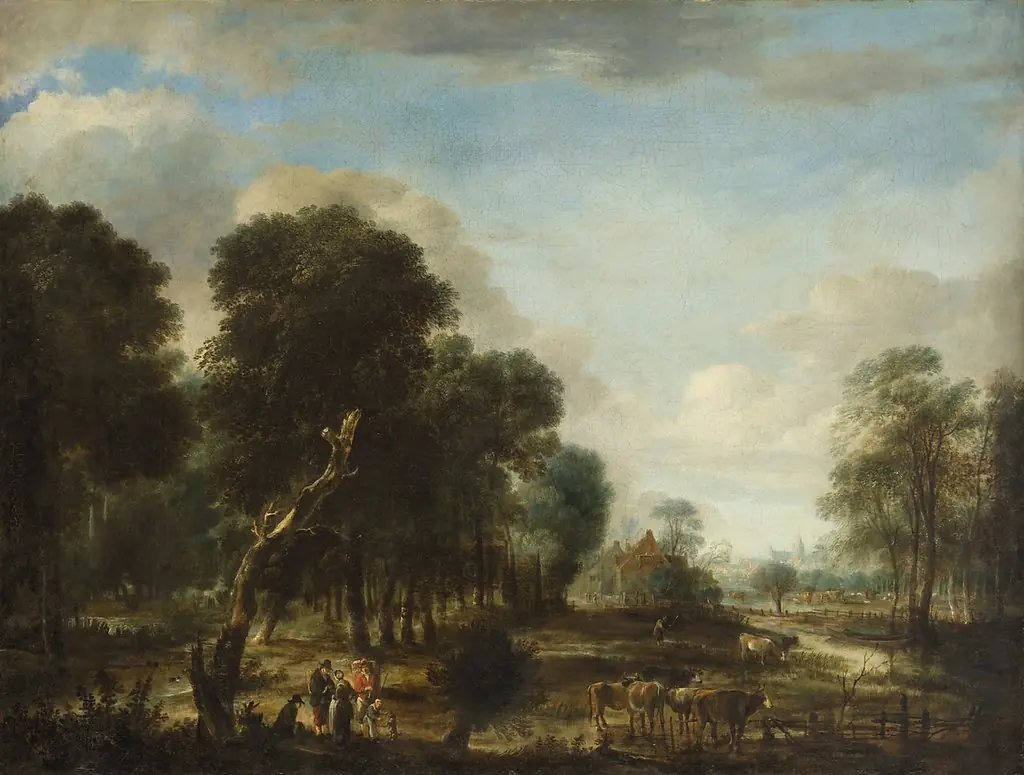 Road through a wet forest
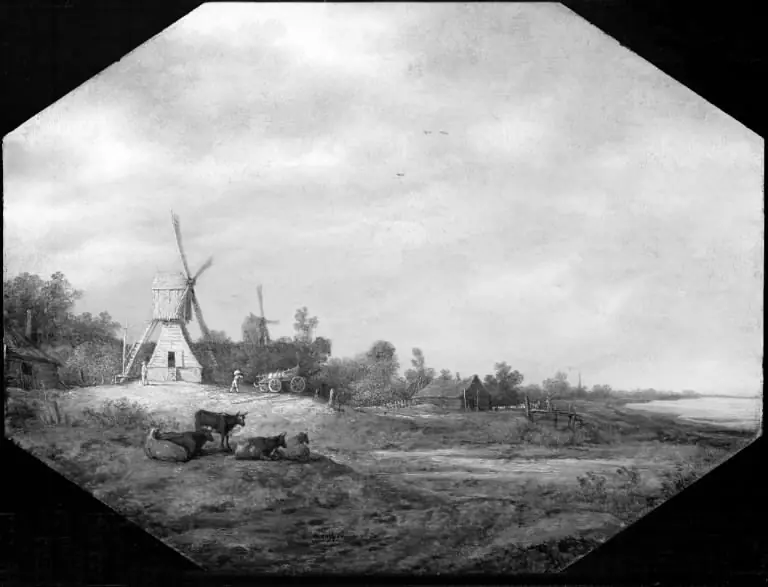 Landscape with Windmills
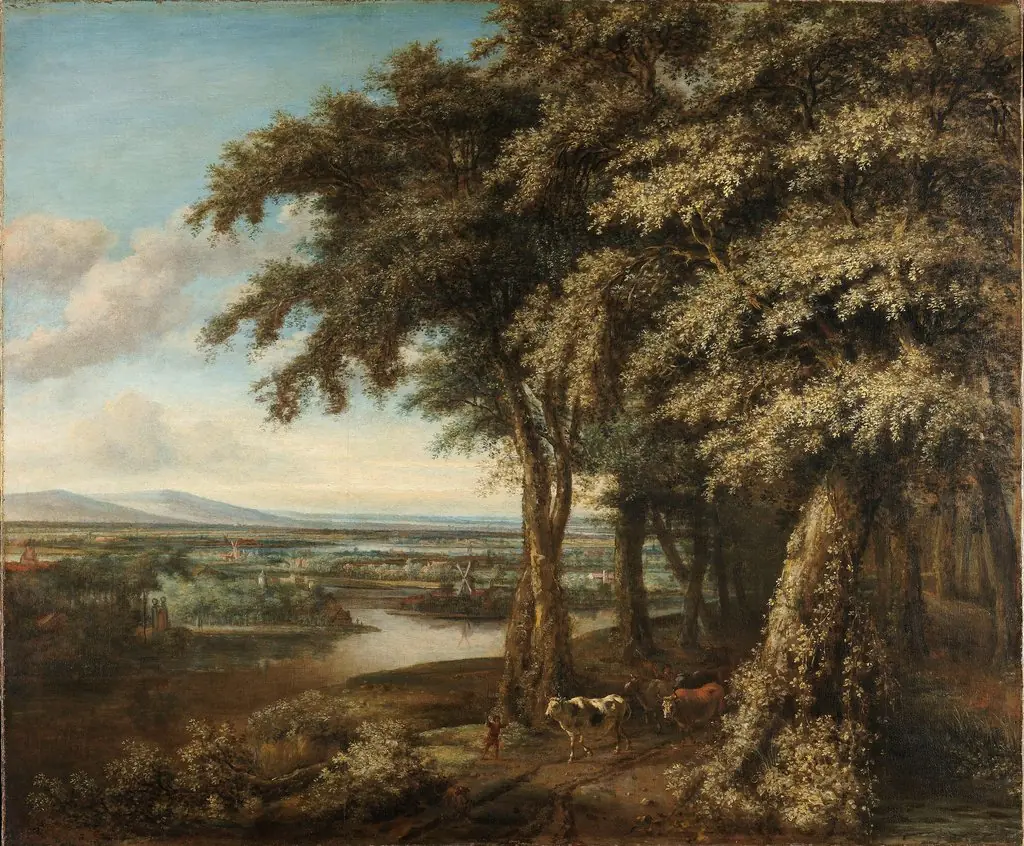 The entrance to the woods
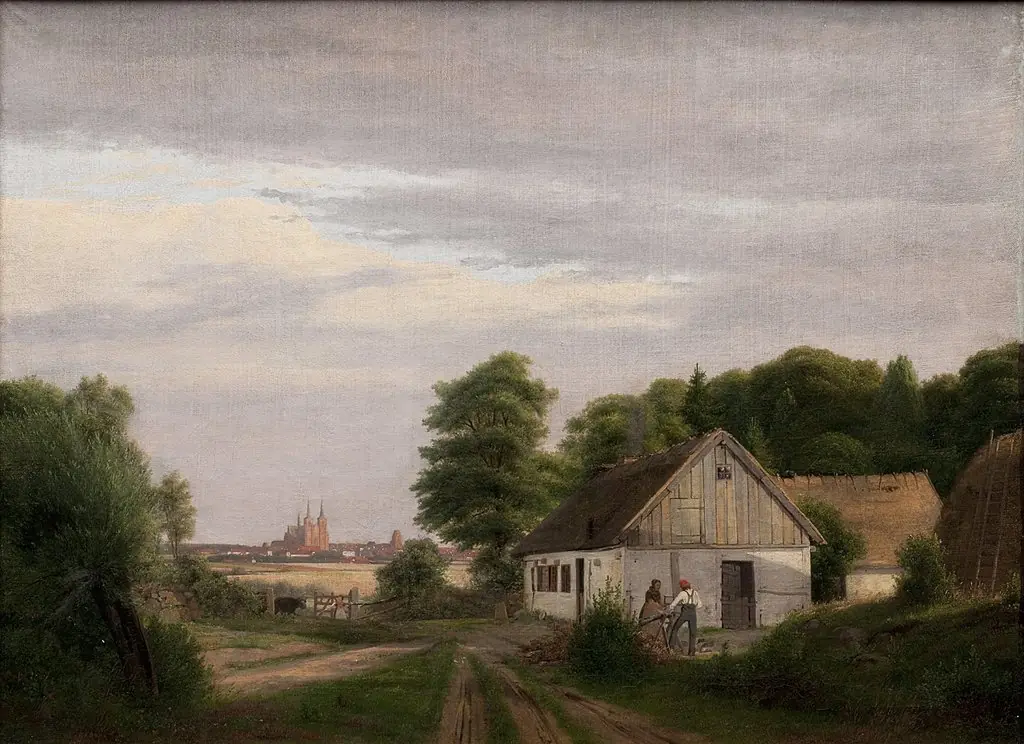 Udsigt mod Roskilde fra et husmandssted
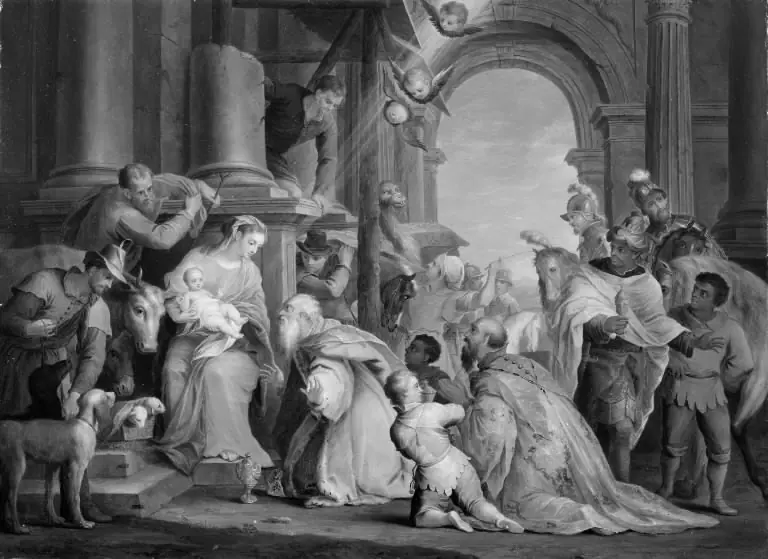 The Adoration of the Magi
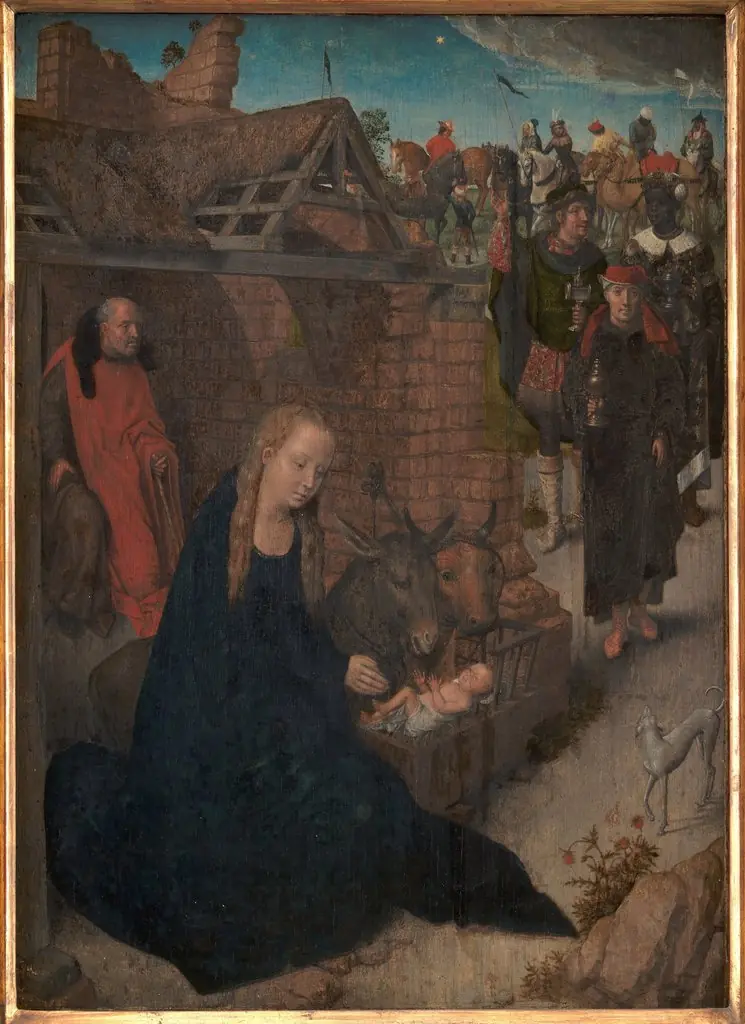 The Adoration of the Kings
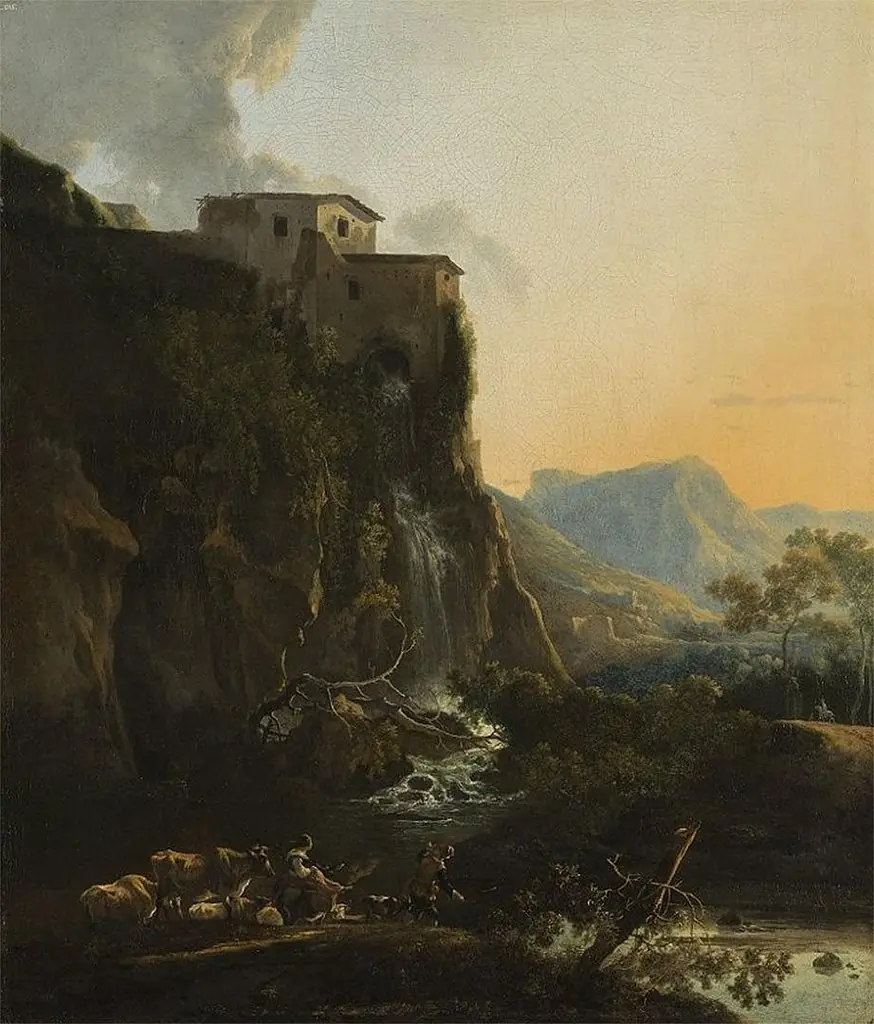 Mountainous Landscape
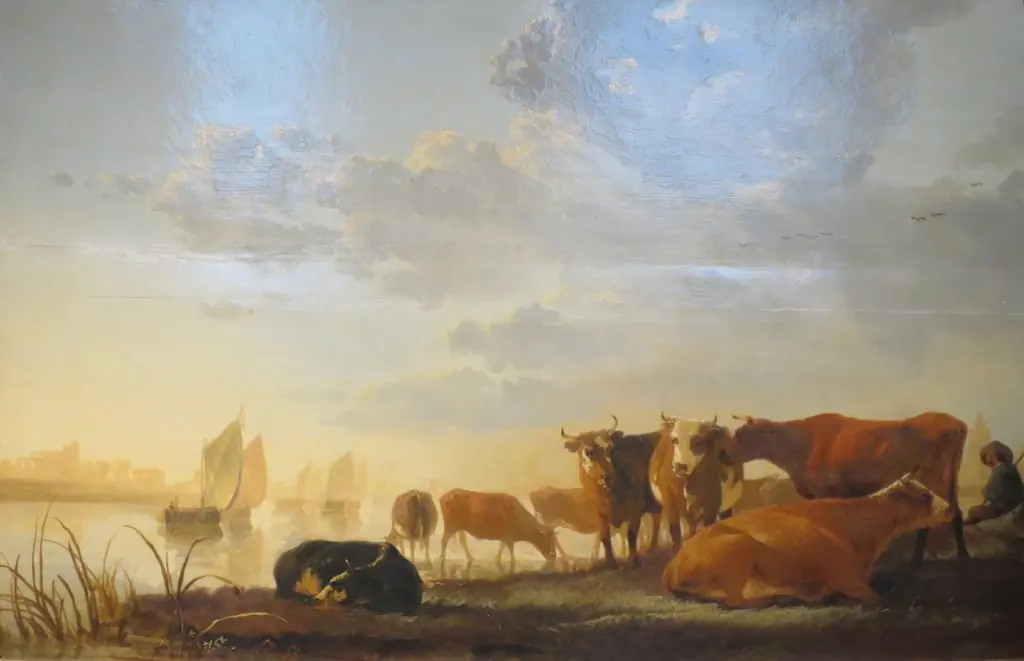 Cows in a River, at Sunset
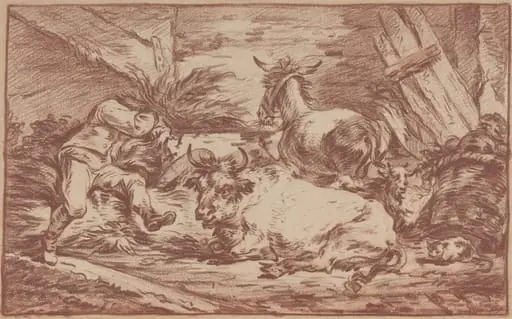 Animals in a Stable
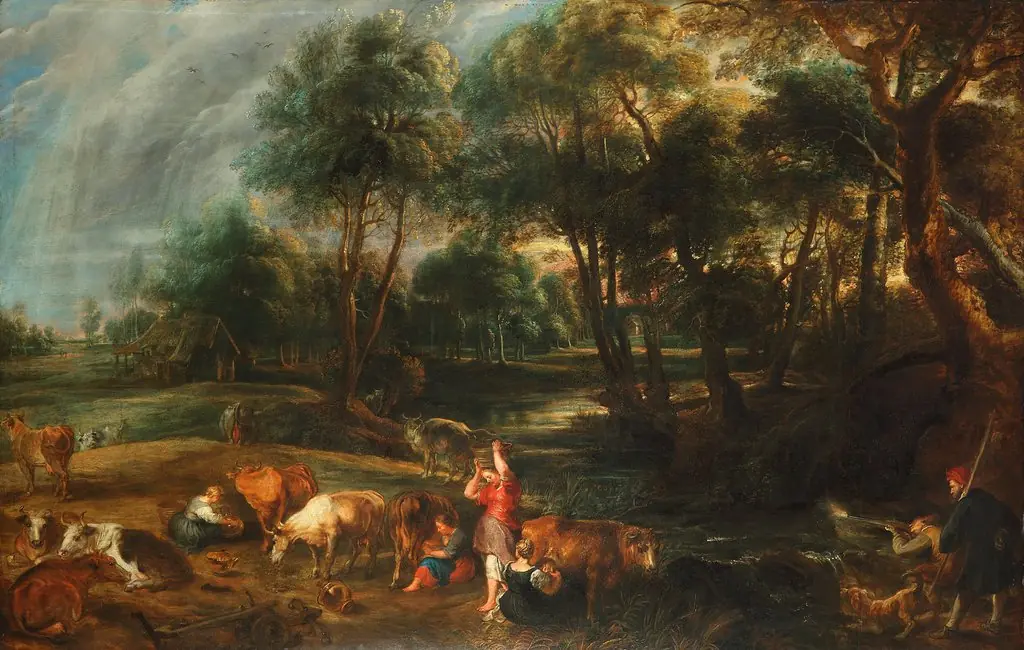 Landscape with Cows and Wildfowlers
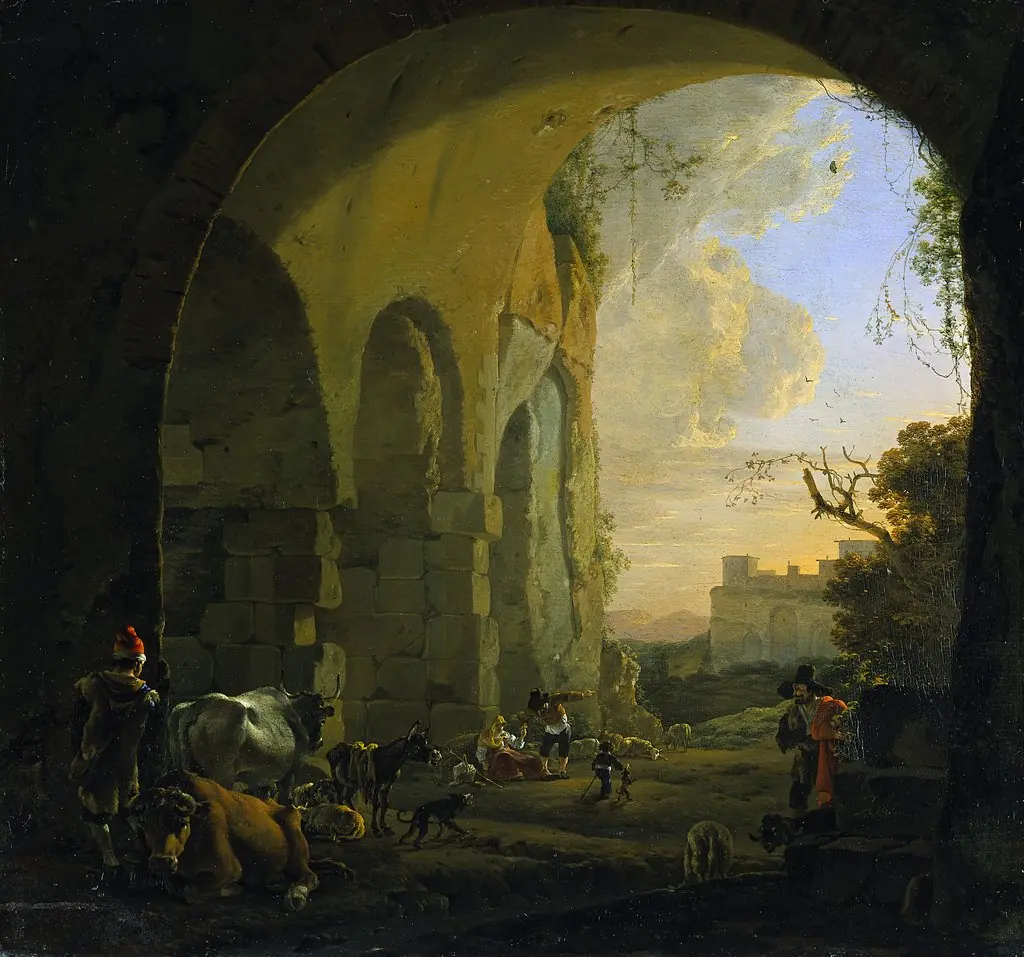 Drovers with cattle under an arch of the Colosseum in Rome
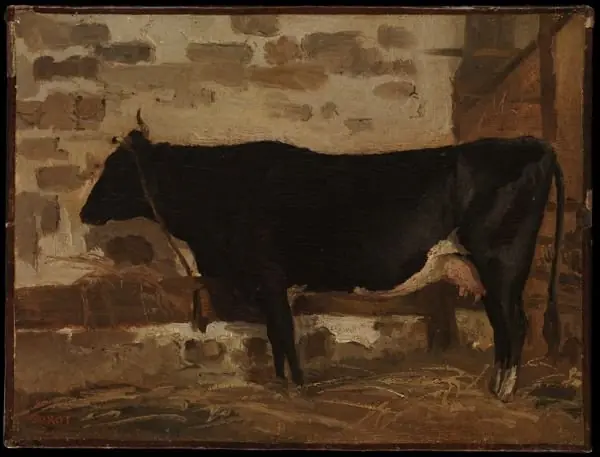 Cow in a Barn
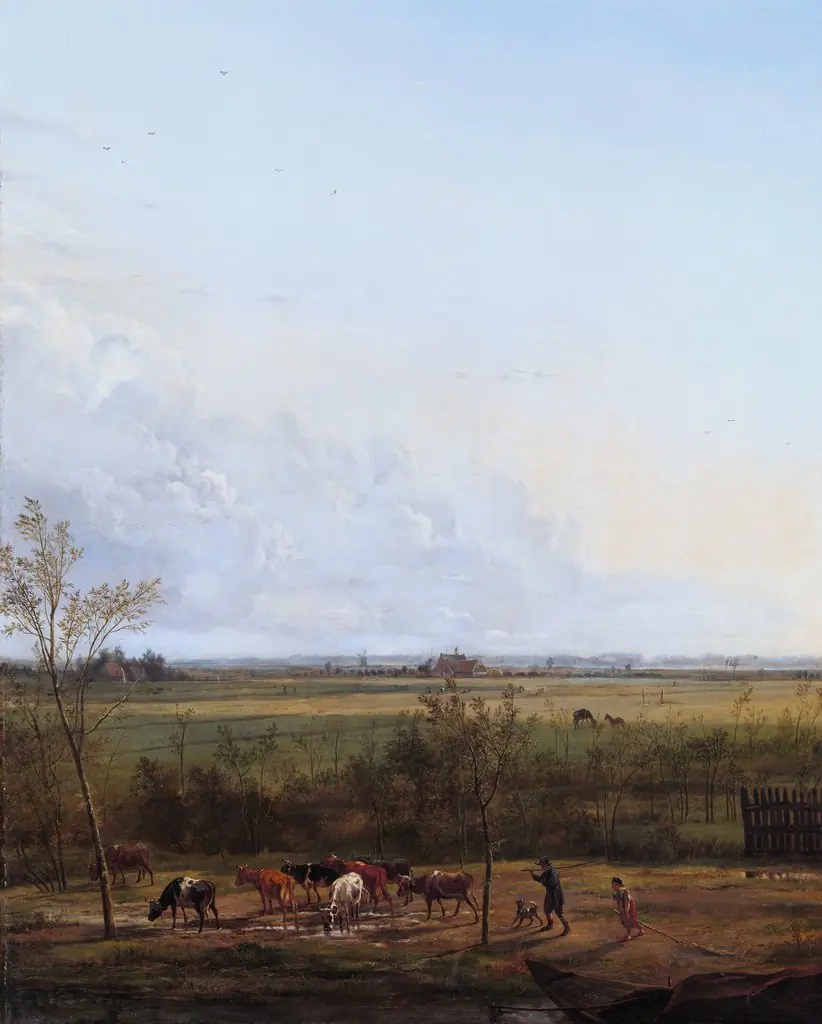 Distant View of the Meadows at ’s-Graveland
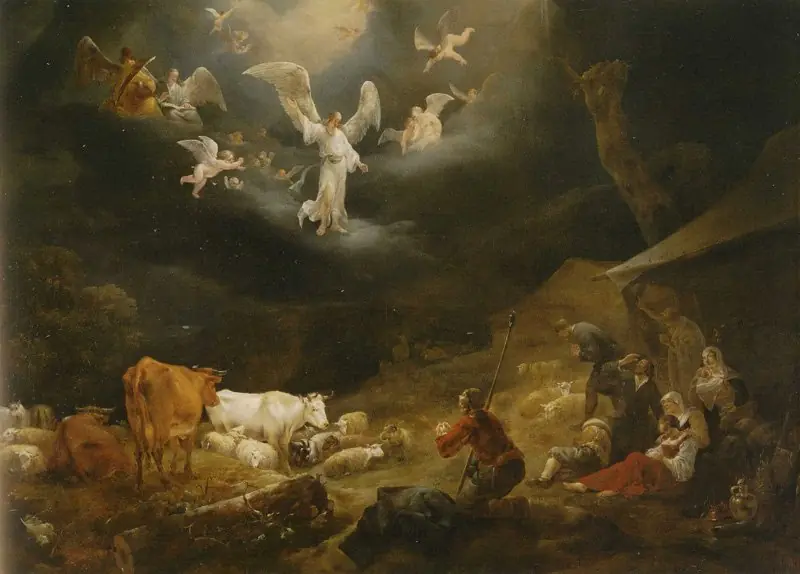 The Annunciation to the Shepherds
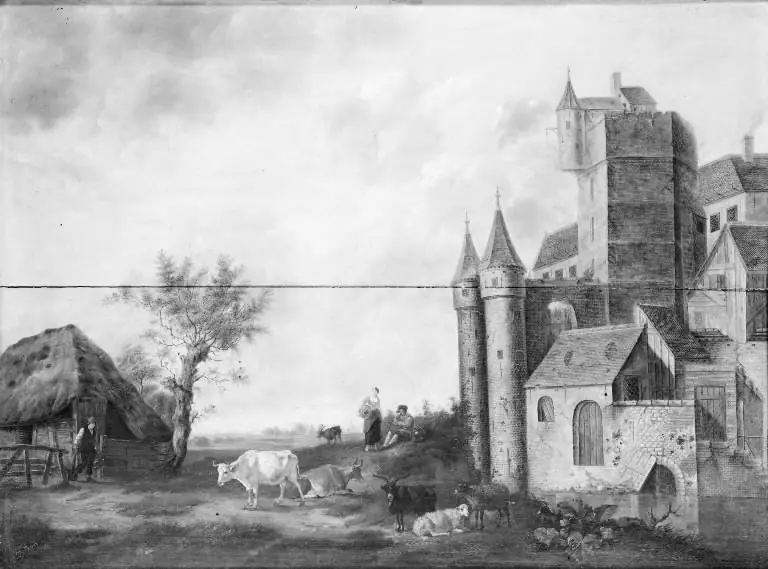 Landscape
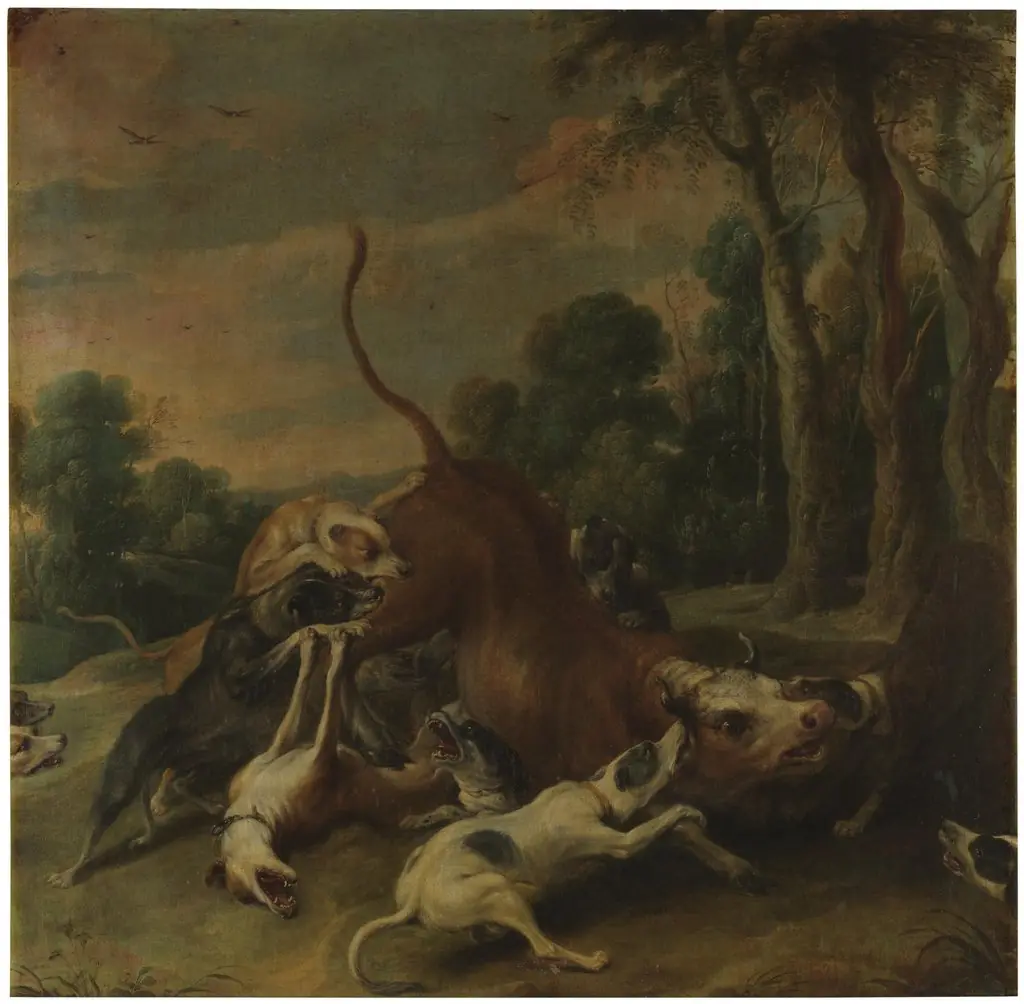 A bull overpowered by dogs
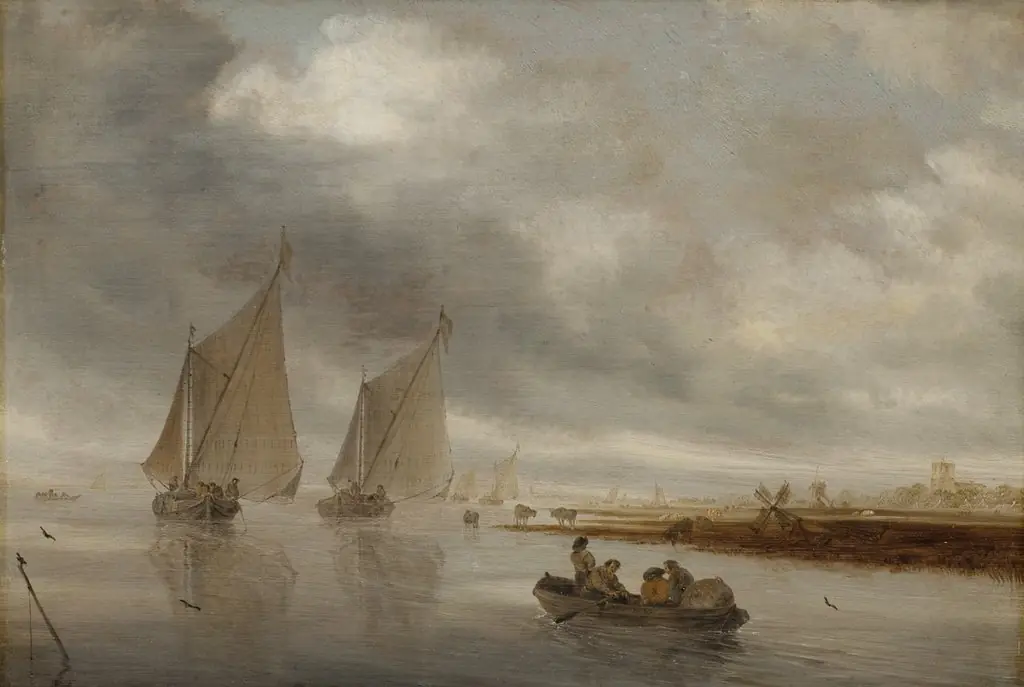 River Scenery
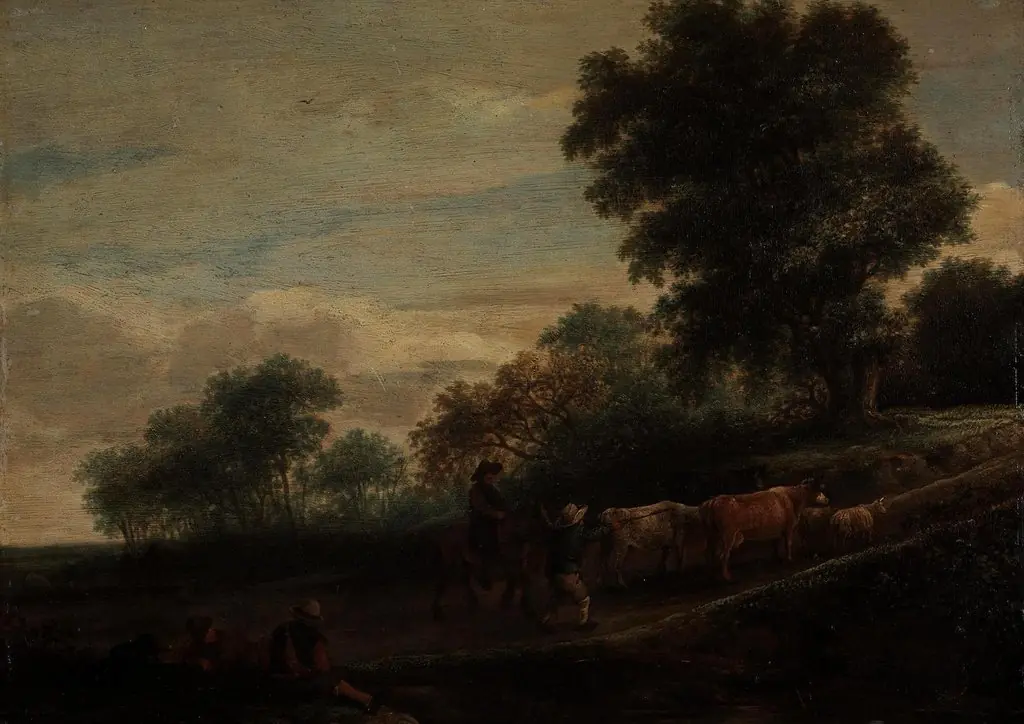 Landscape with Shepherds and Cattle
 Cattle and Landscape
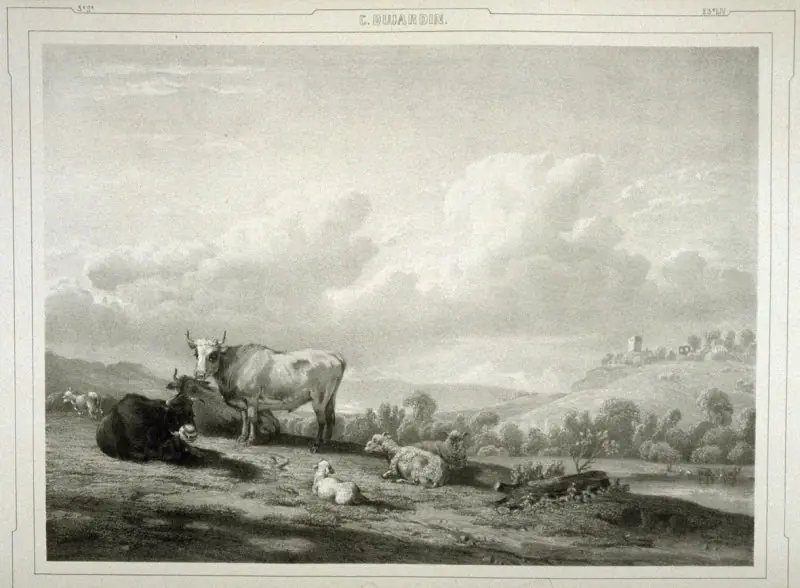 Farm animals at pasture
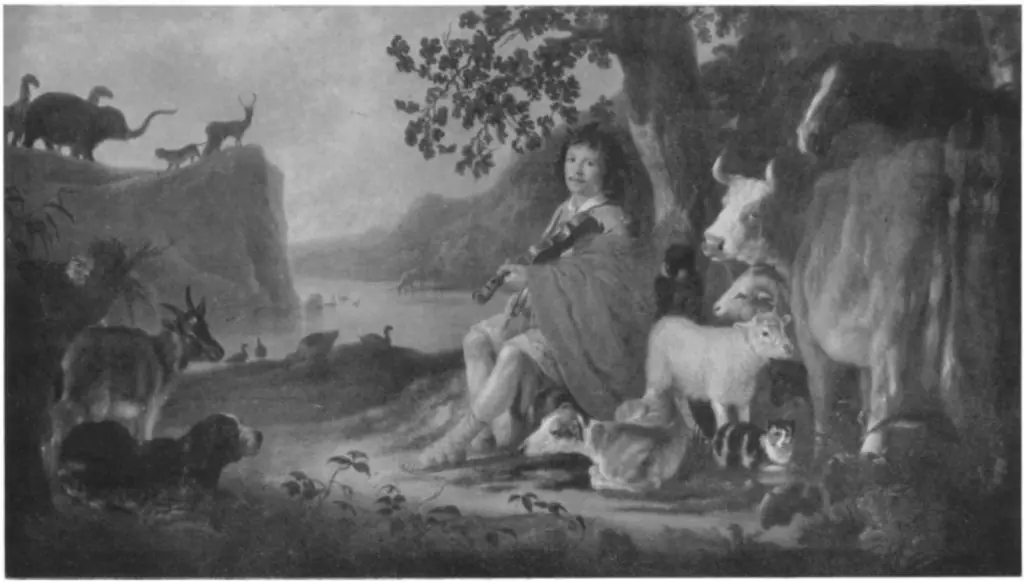 A musician as Orpheus, possibly a Self-portrait
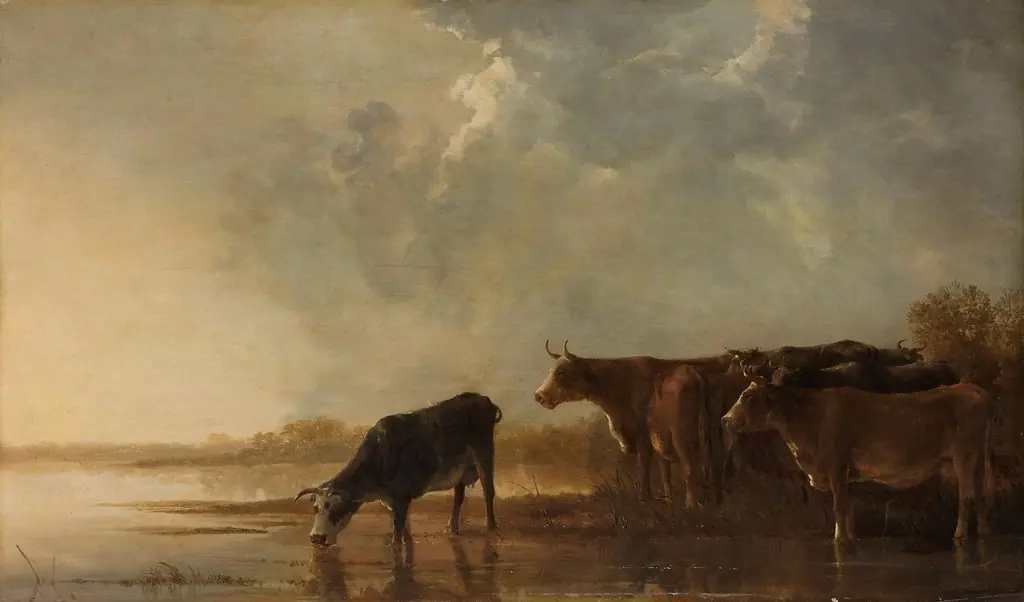 River landscape with cows
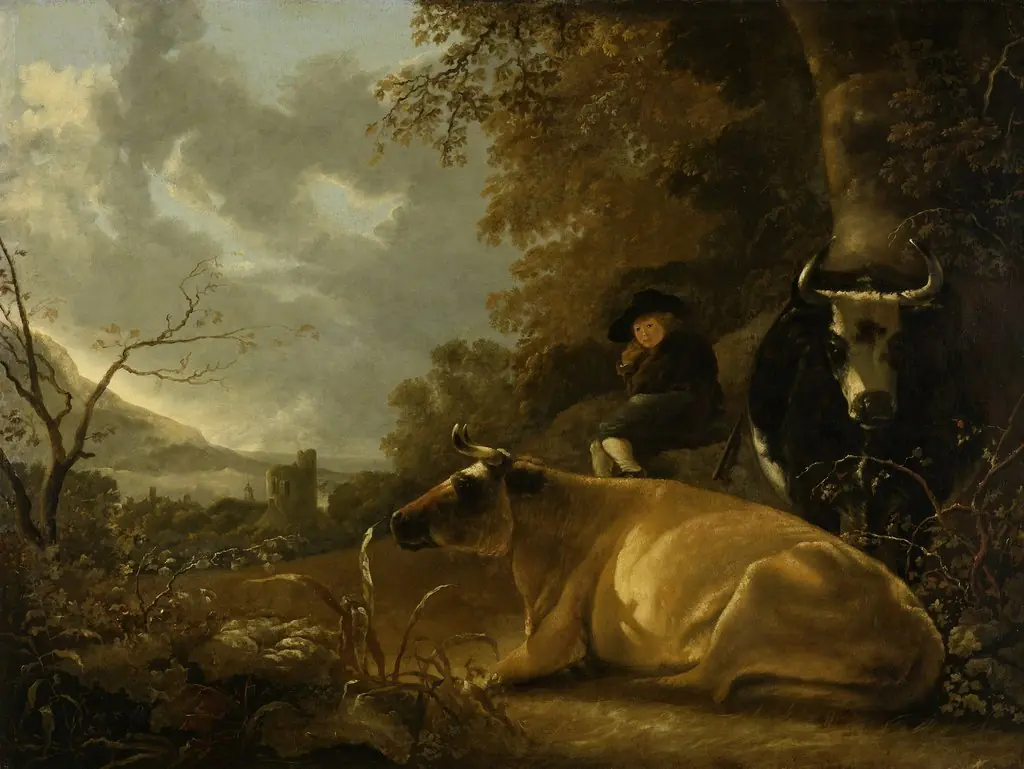 Landscape with cows and young herdsman
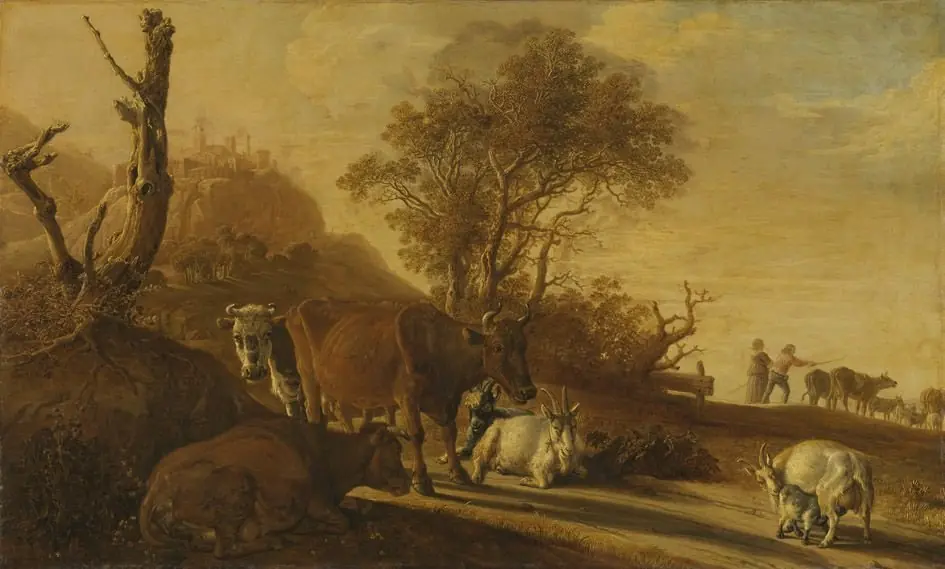 Landscape with Resting Cows and Goats
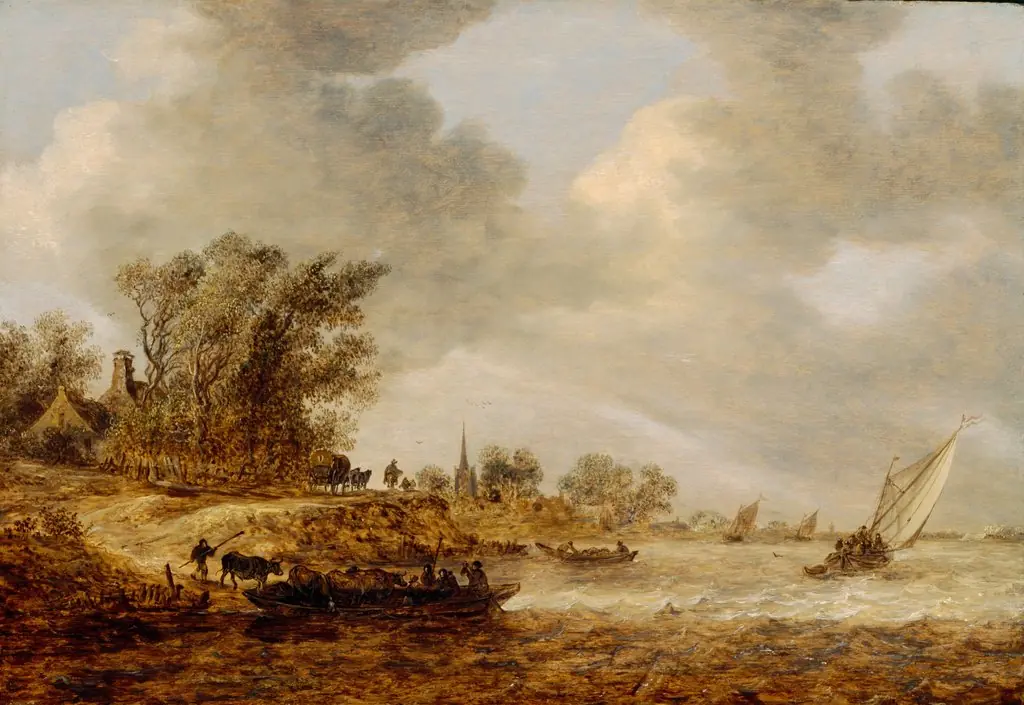 A Windy Day
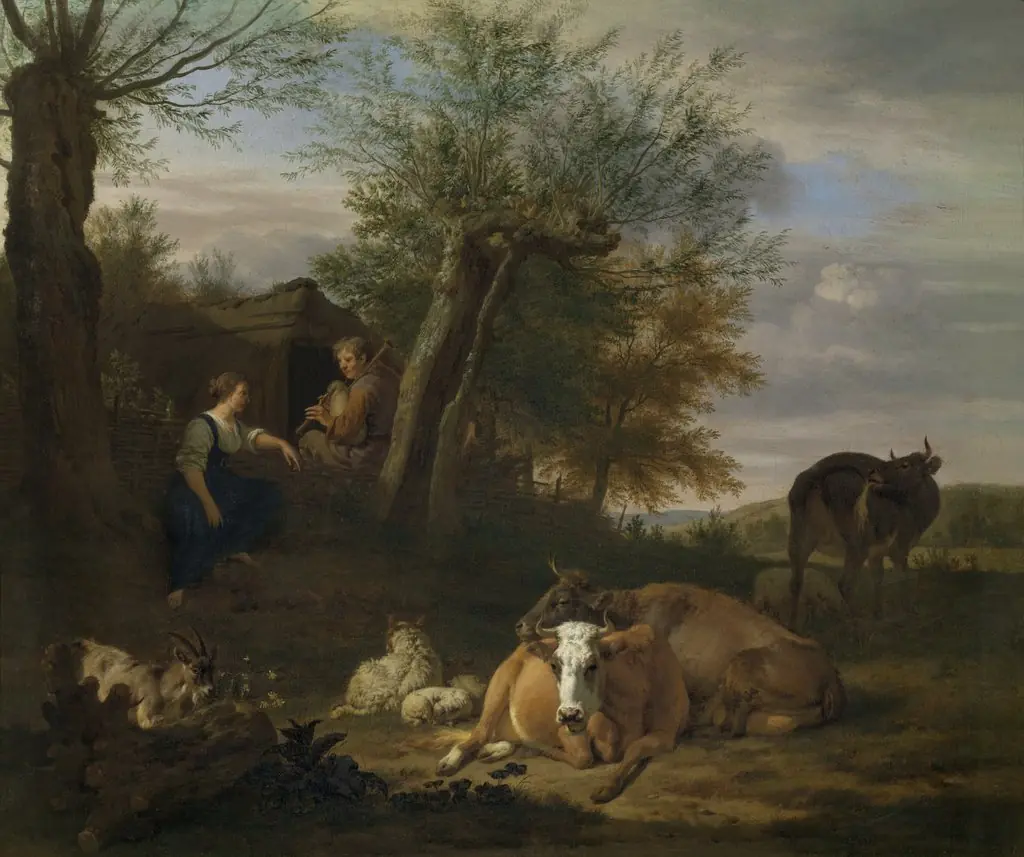 Bagpiper
 Landscape, Hyde Park, New York
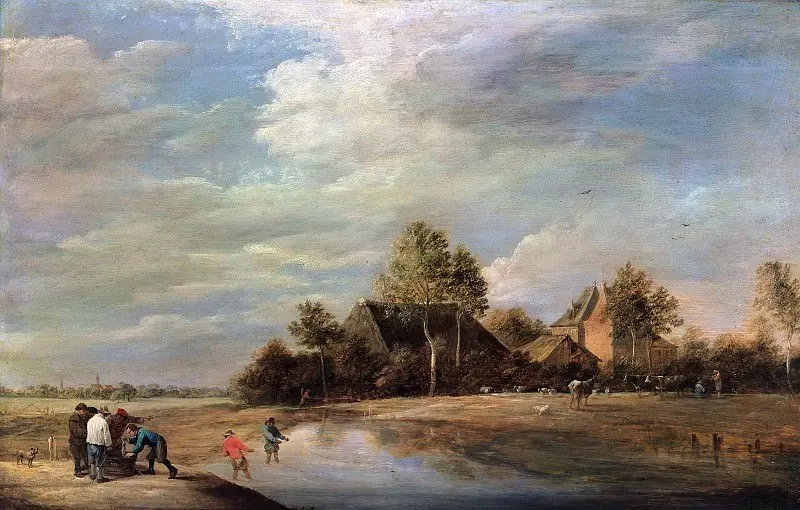 Landscape with Fishermen
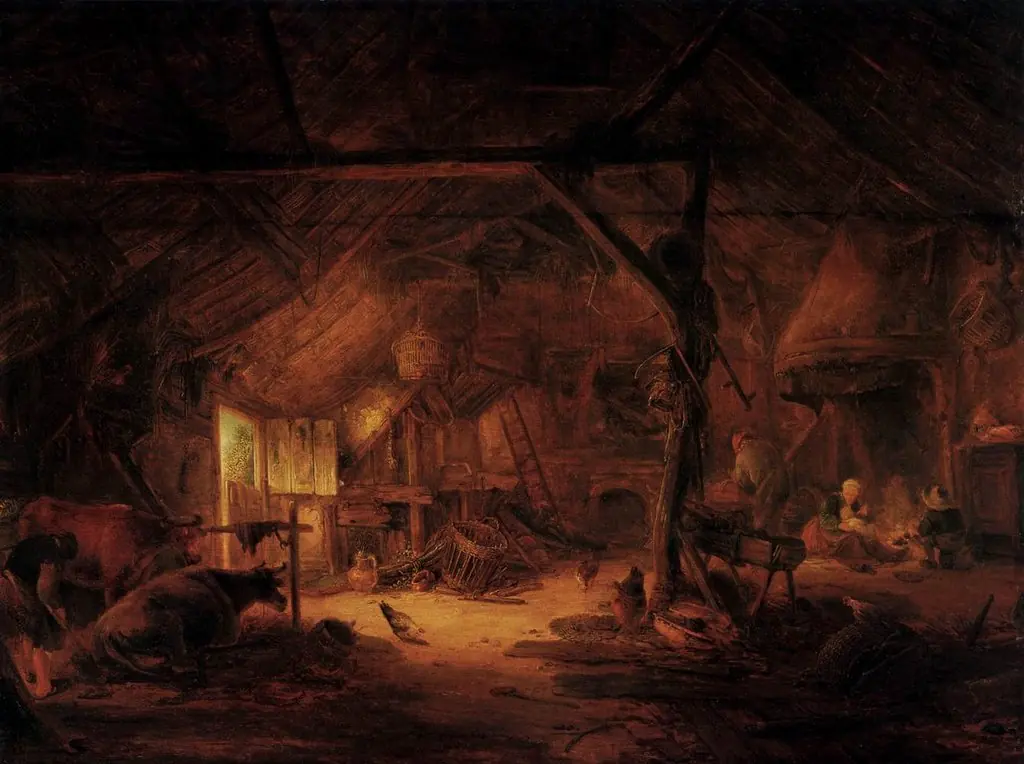 A Cowshed
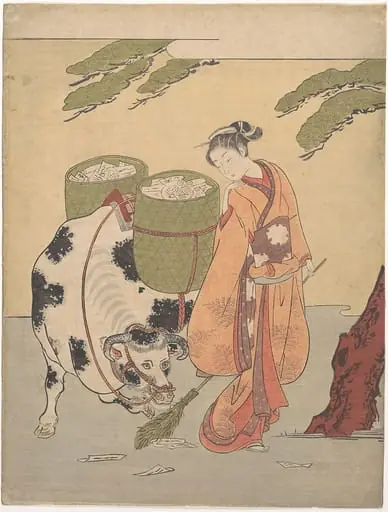 Untitled
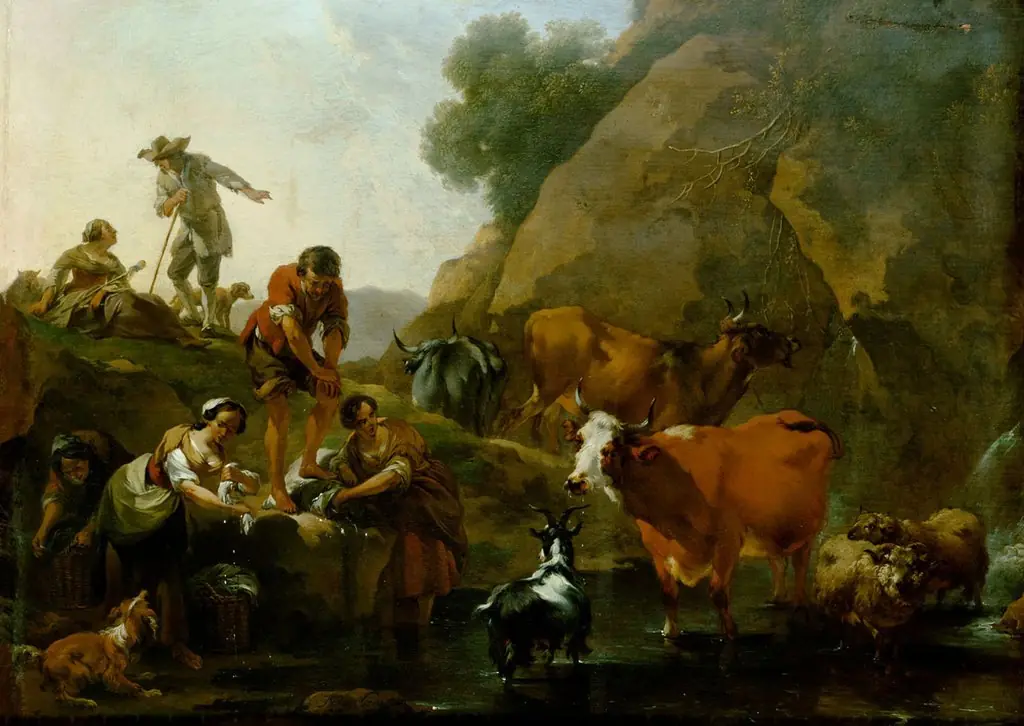 Cow herds and washing women near the water
 Herder and Cattle under Trees
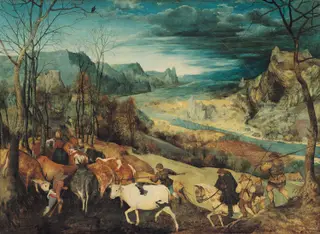 The Return of the Herd
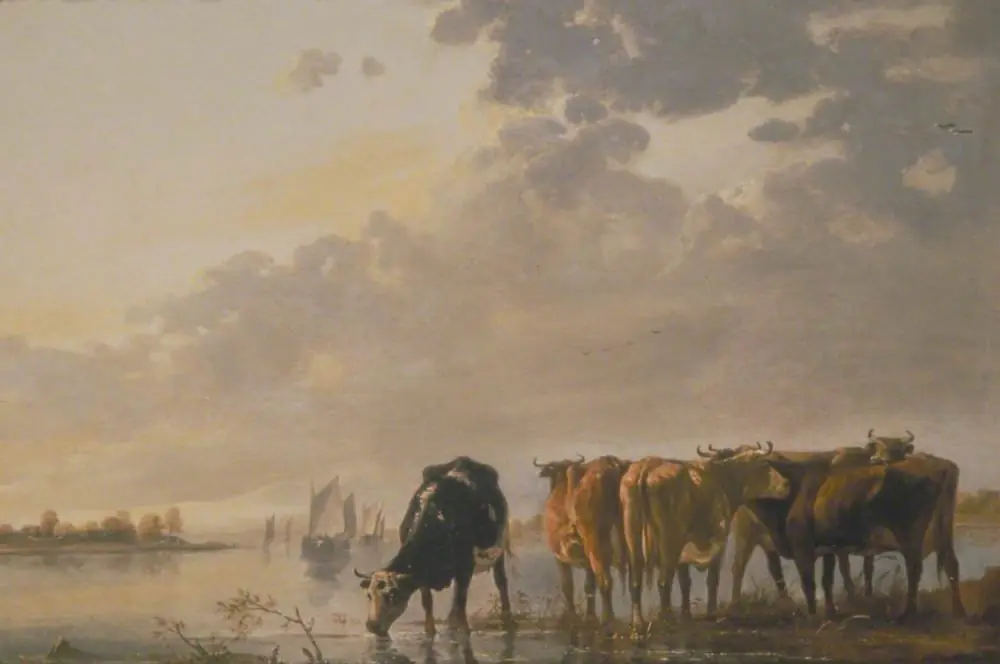 Cattle by a River
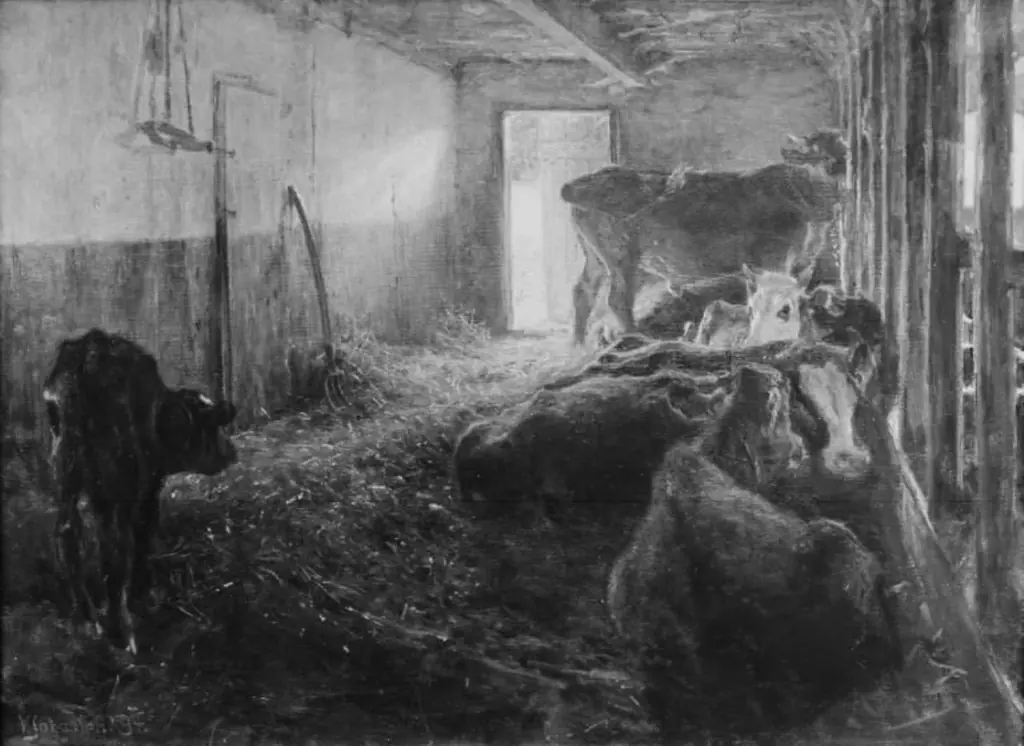 A Cowshed
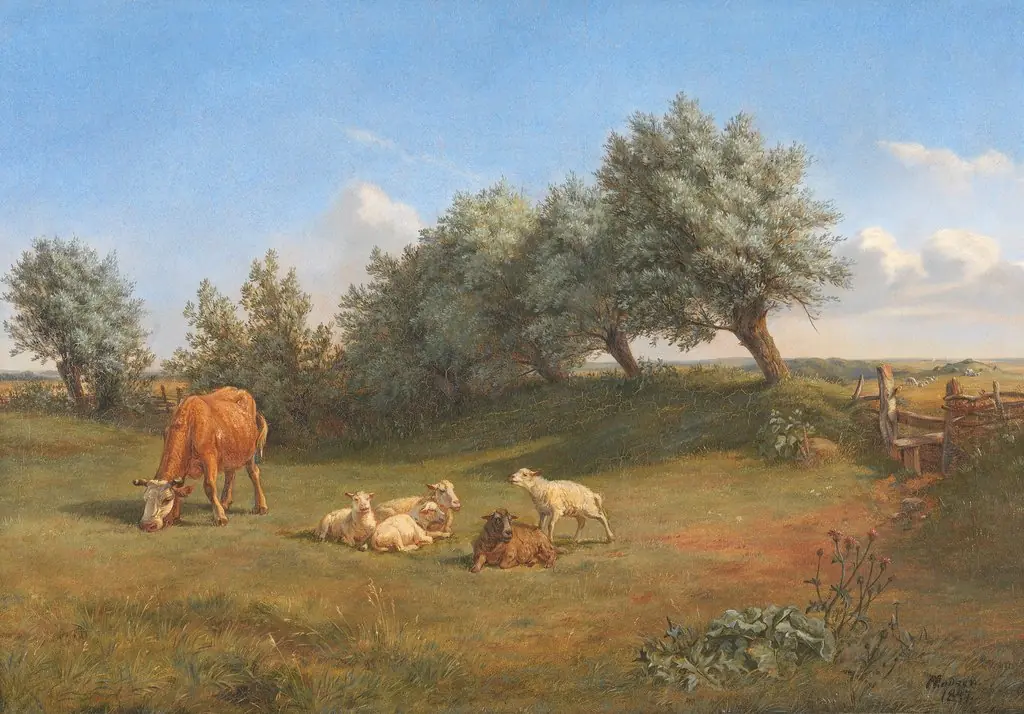 Et vænge
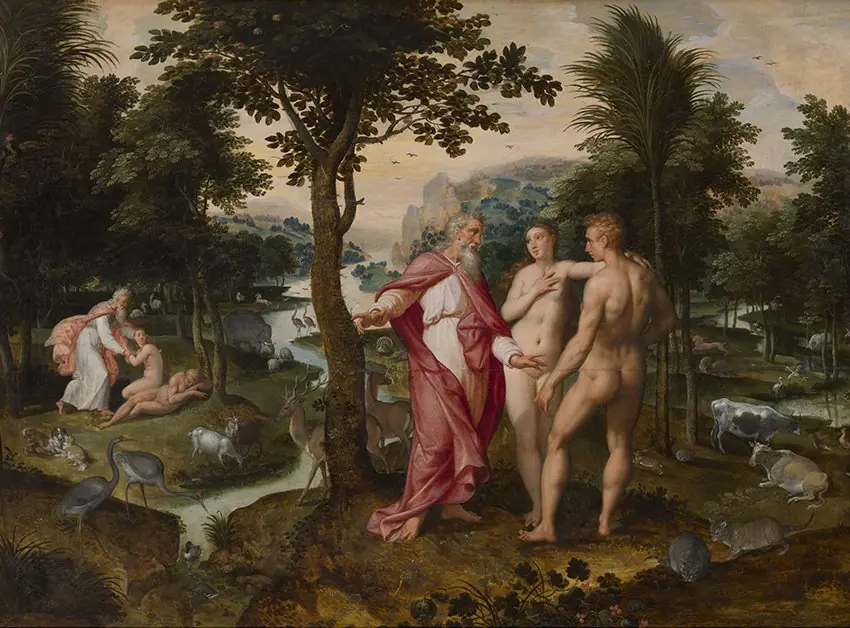 The Garden of Eden
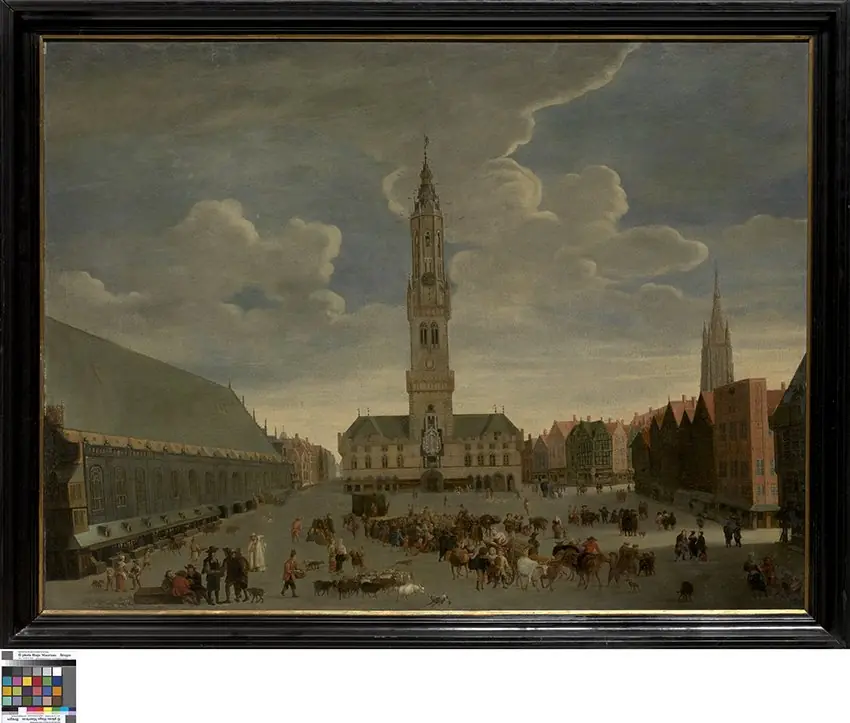 De Markt in Brugge
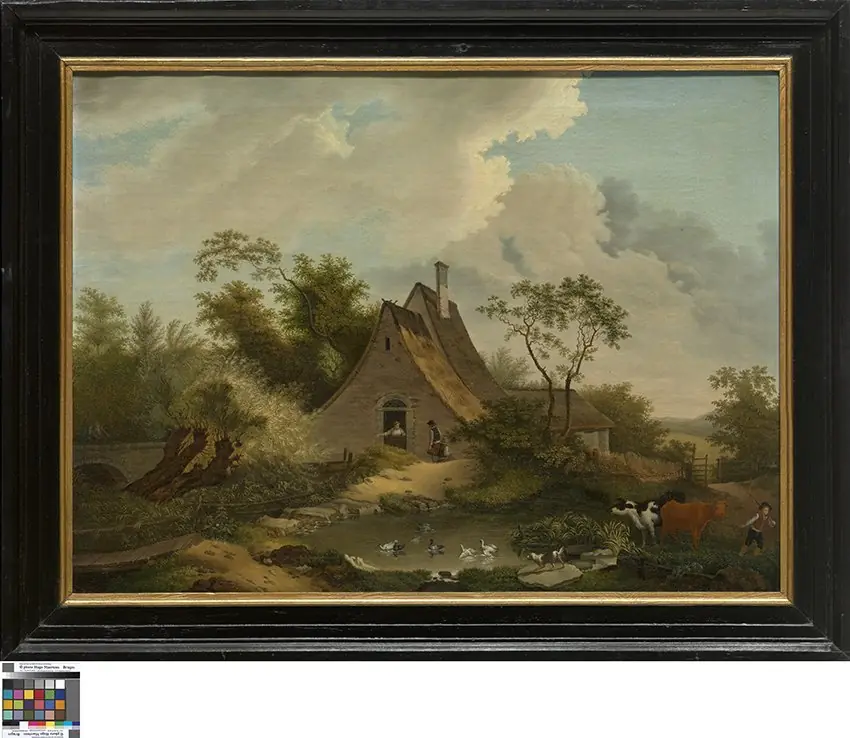 Landschap met hoeve
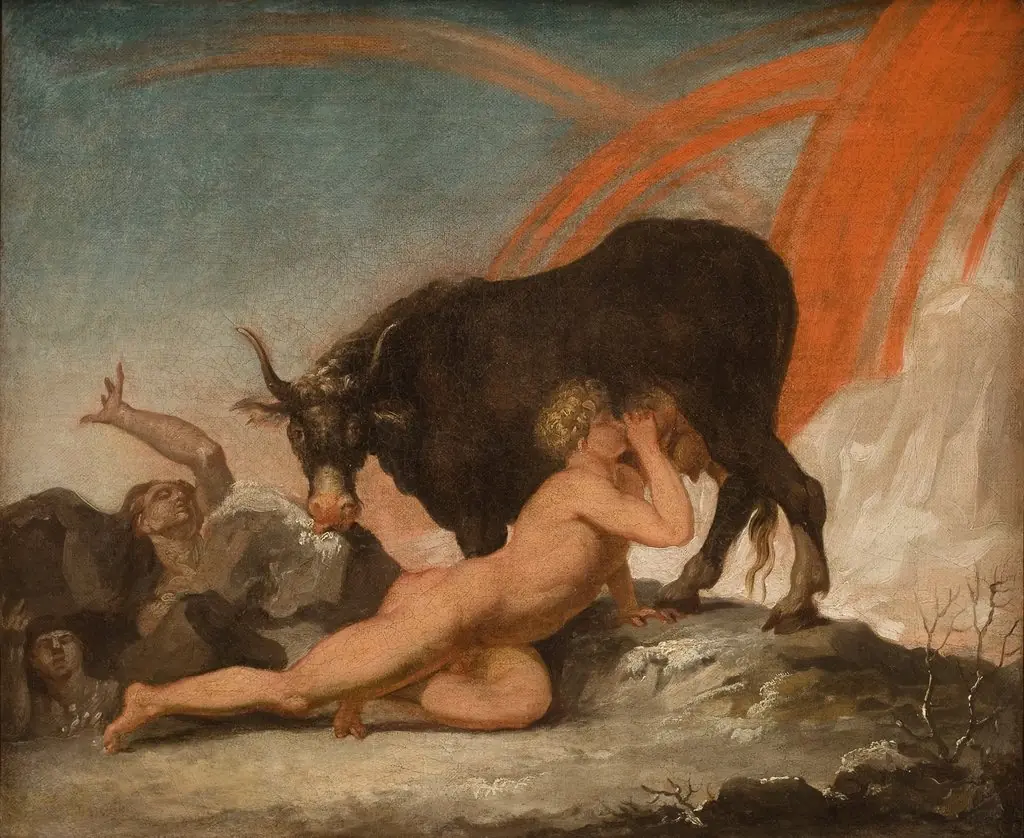 Ymir Suckling the Cow Audhumla
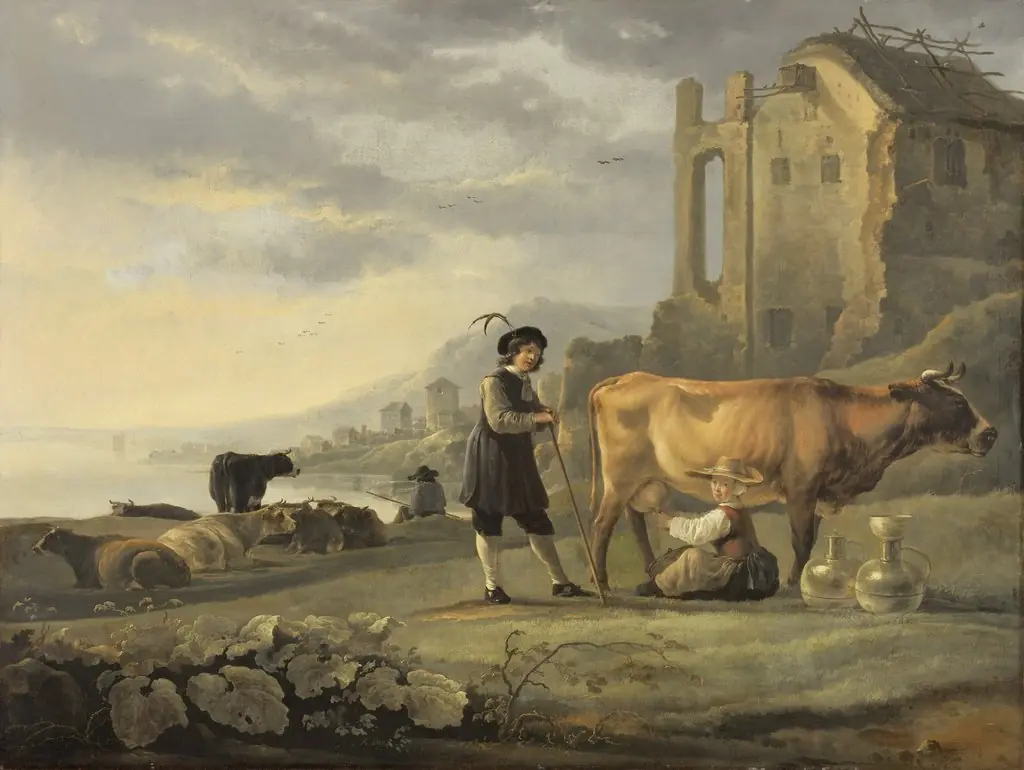 Landscape with Maid Milking a Cow
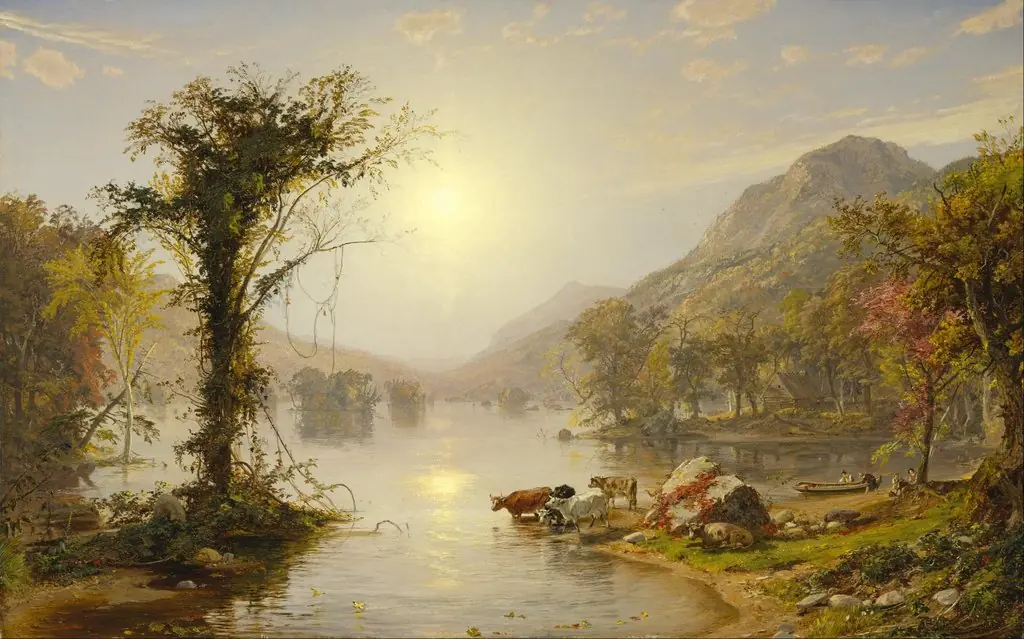 Autumn on Greenwood Lake
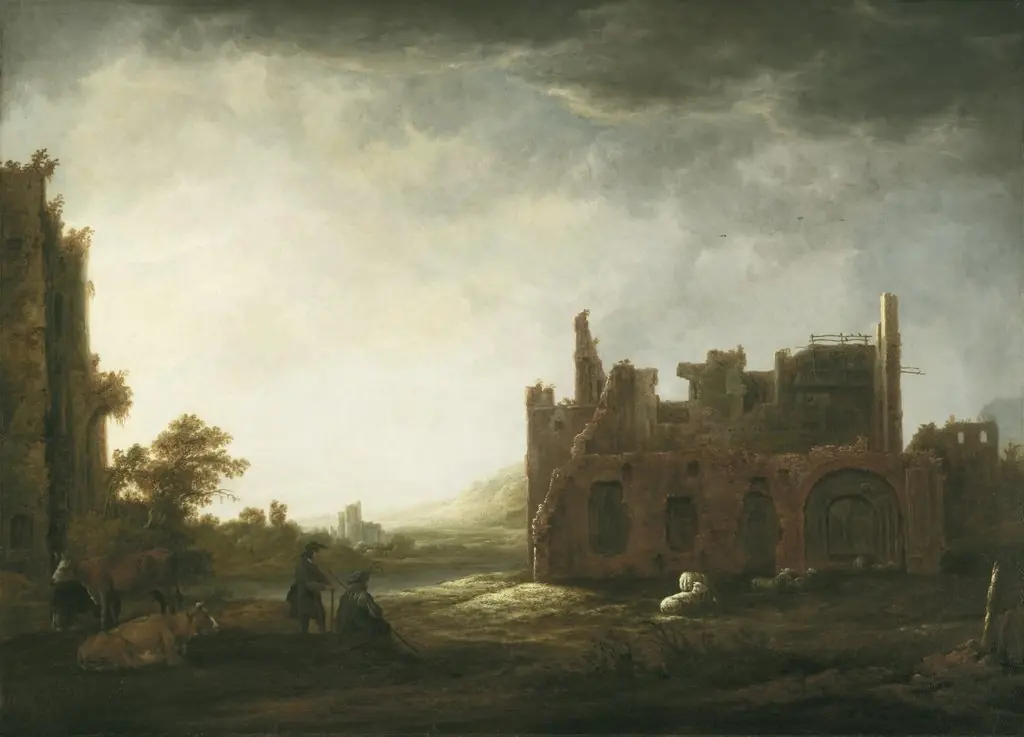 Landscape with the Ruins of Rijnsburg Abbey
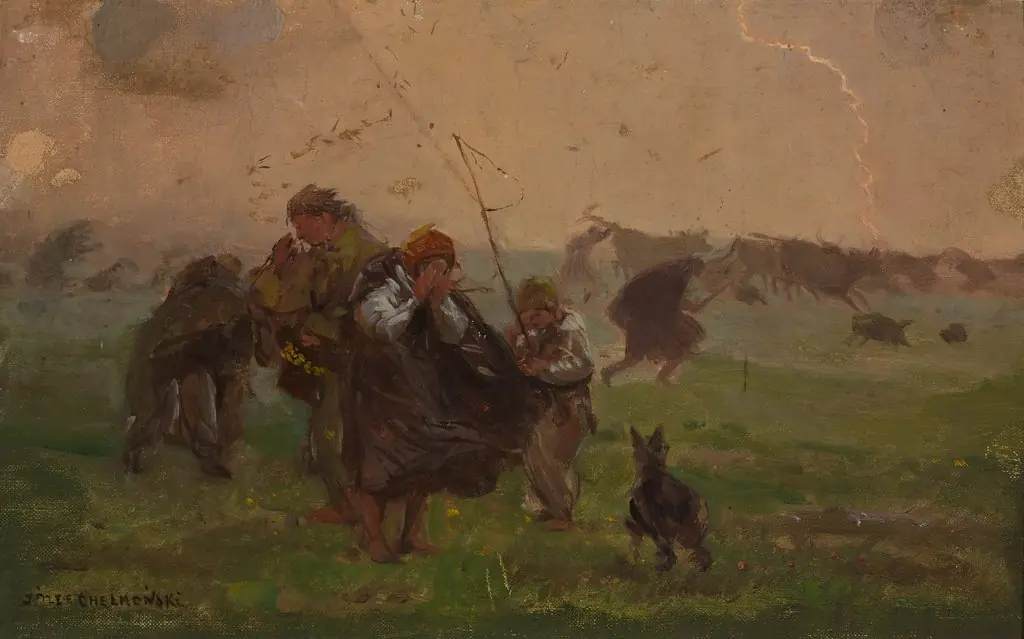 Before the storm, sketch for the painting “Storm”
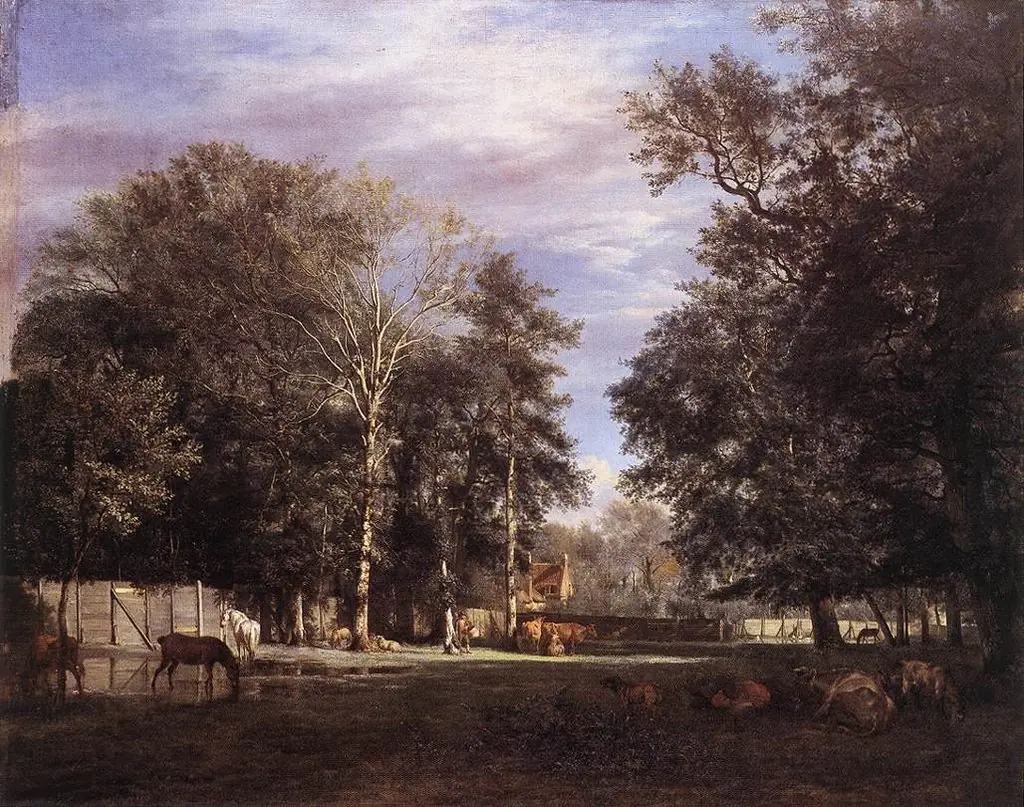 The Farm
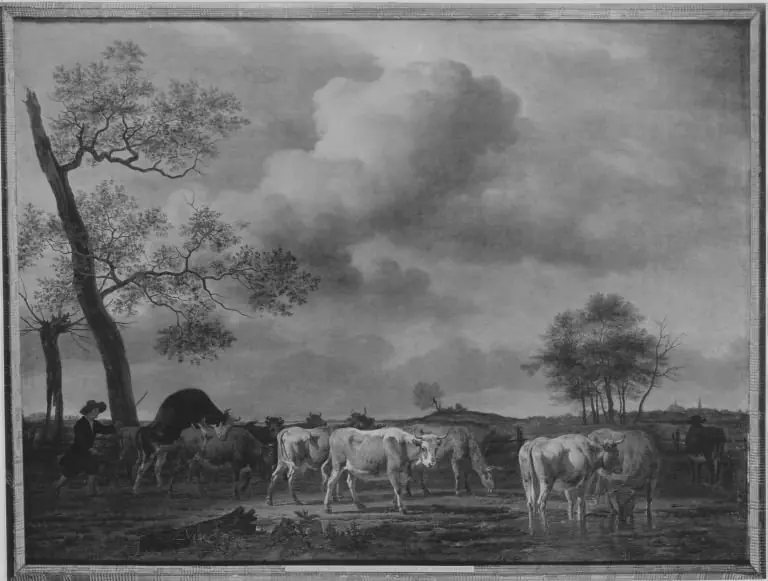 Hirt mit Rinderherde
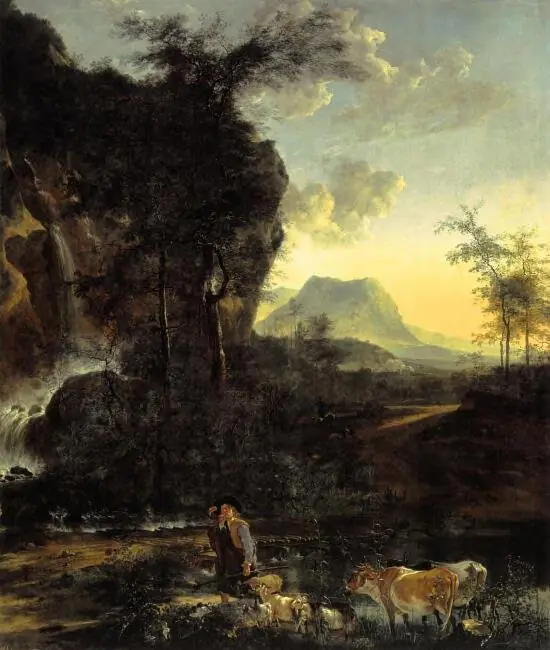 Landscape with waterfall and shepherd
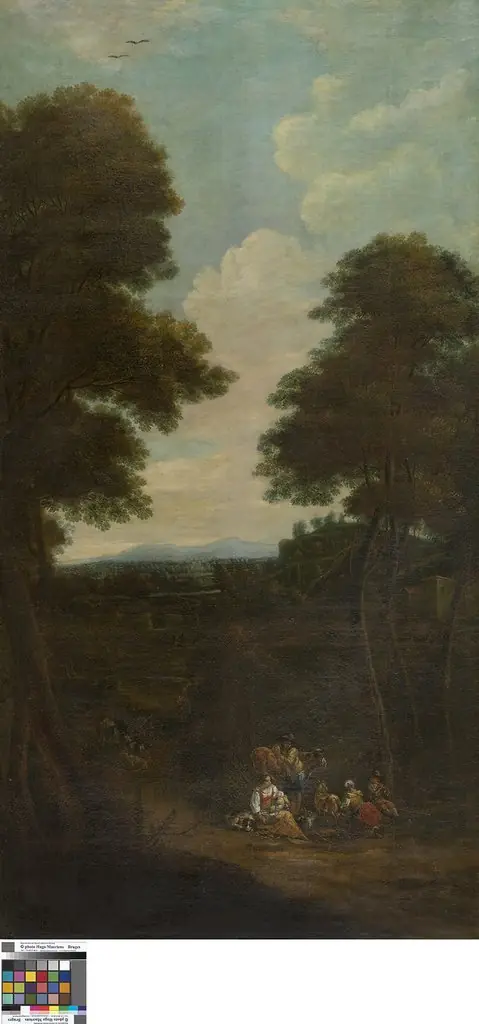 Landschap
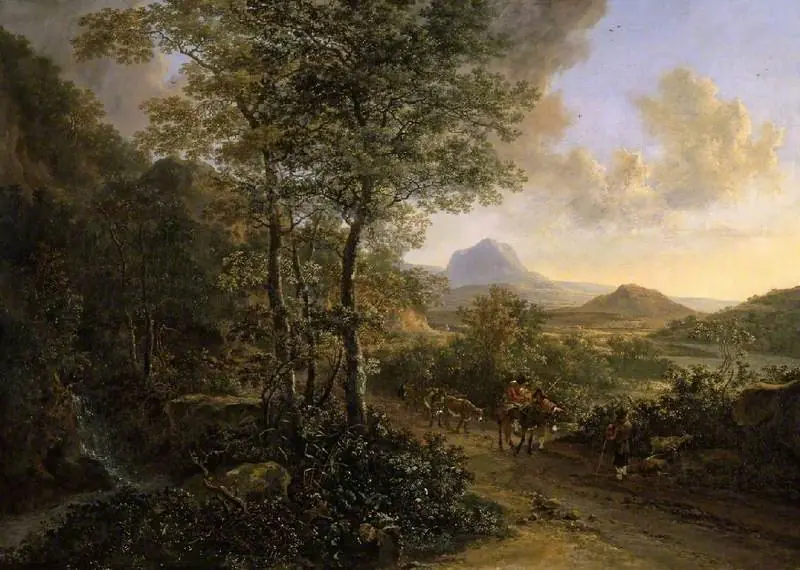 Italian Landscape with Monte Socrate
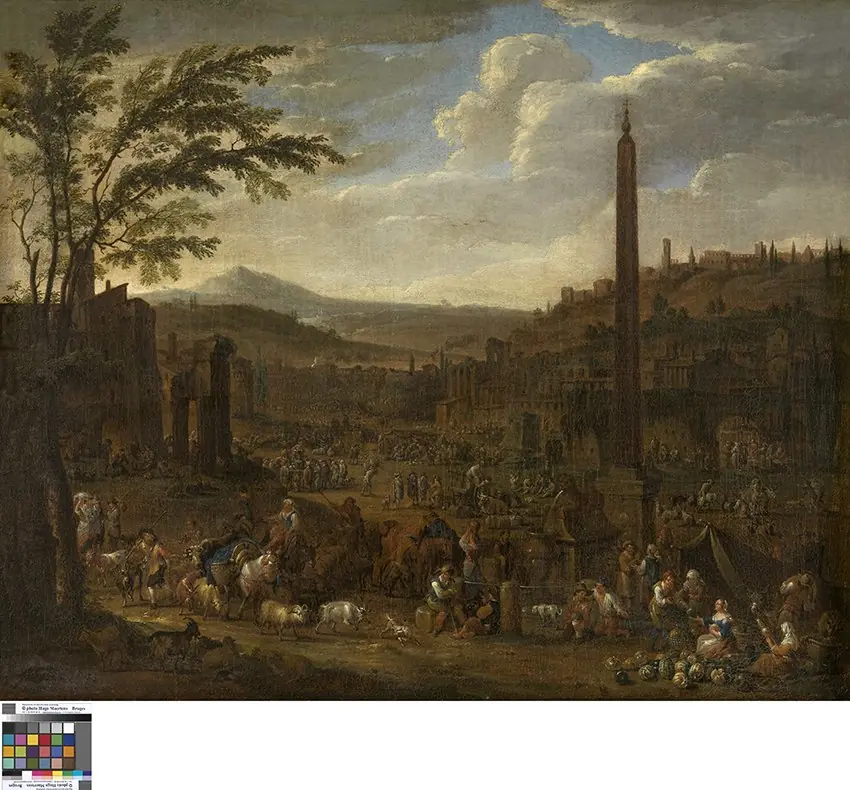 Italianiserend landschap met markttafereel
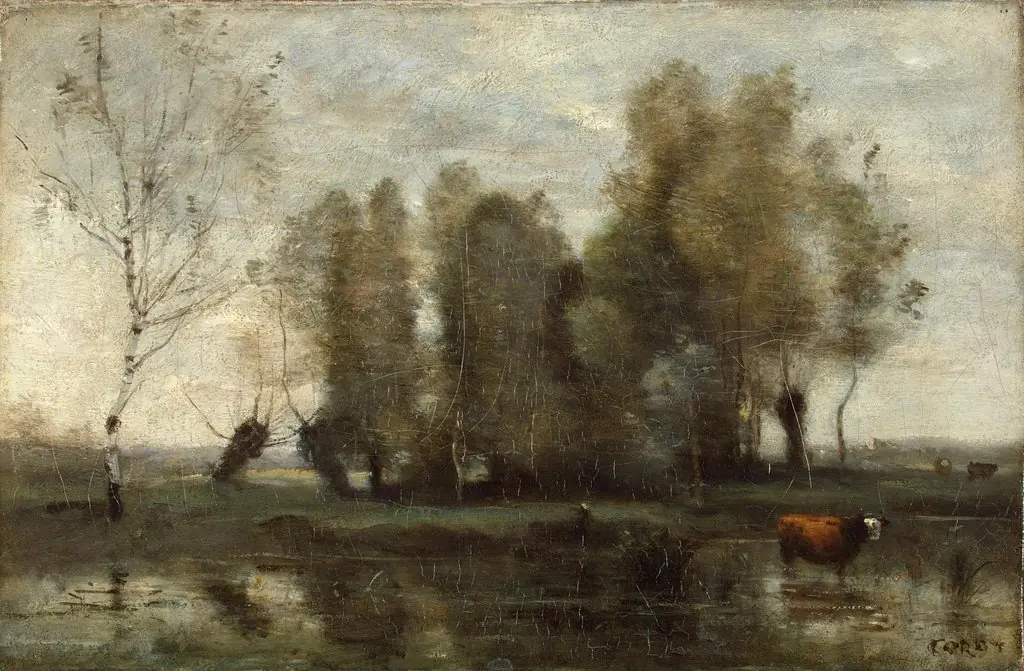 Trees in a Swamp
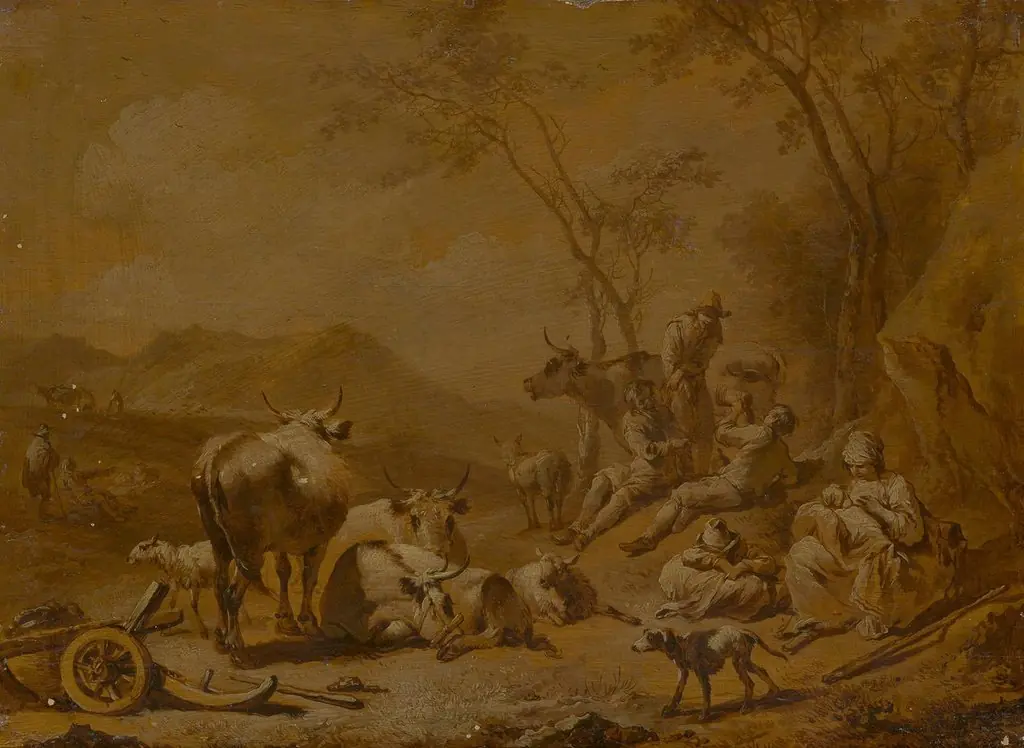 Landscape with Herdsmen and Herd (copy ?)
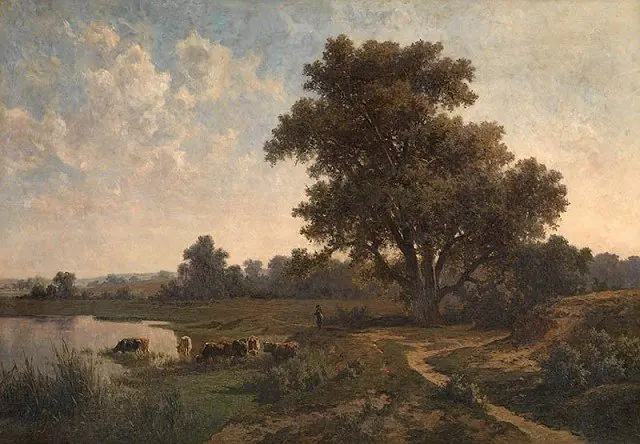 Heather near Oosterbeek
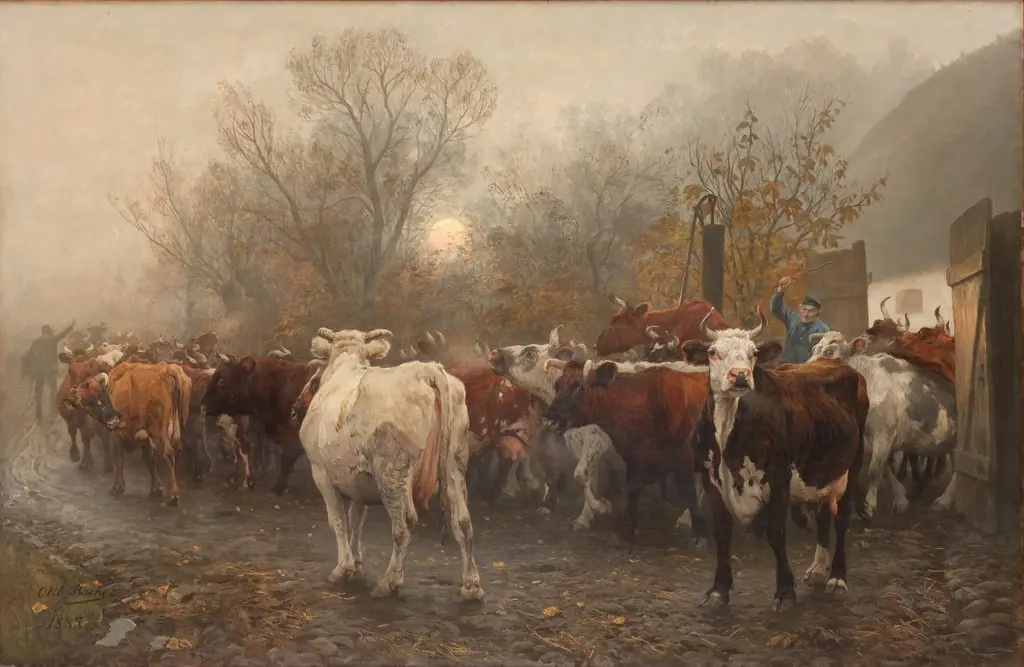 Driving Cows out of the Cowhouse
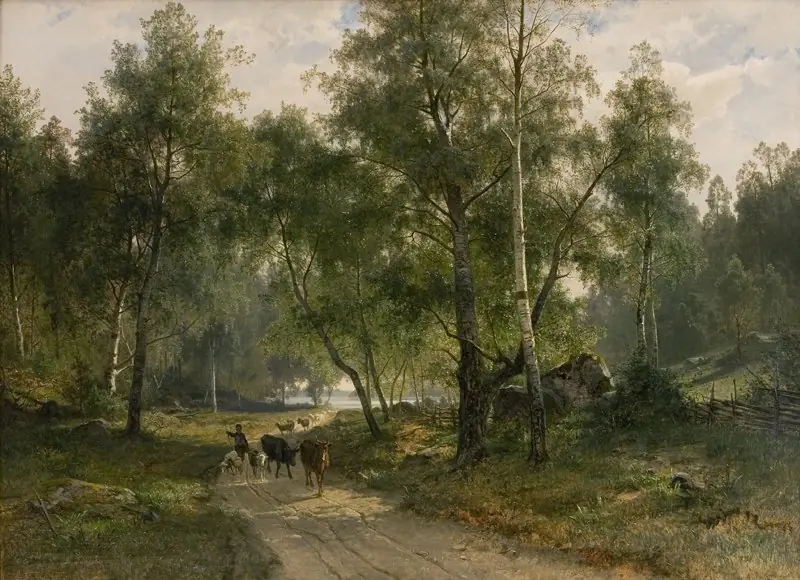 Beneath the Birches. Motif from Mälaren
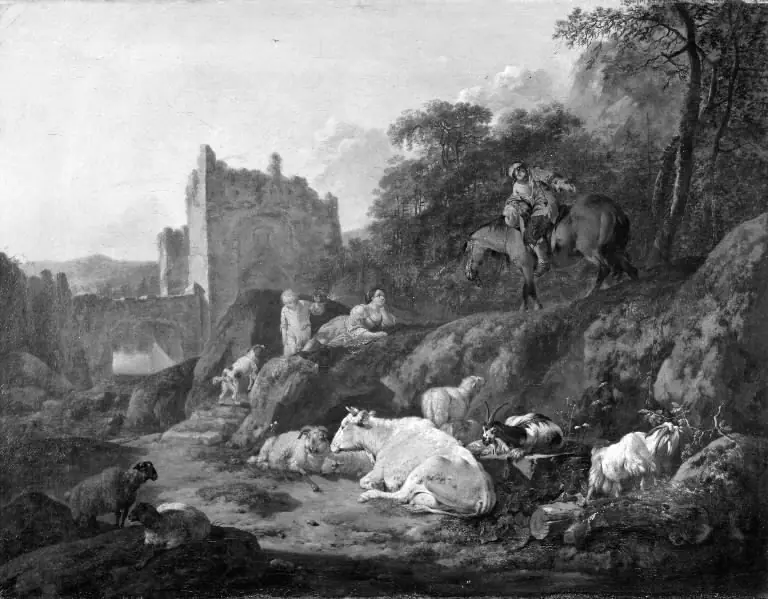 Landscape with Cattle
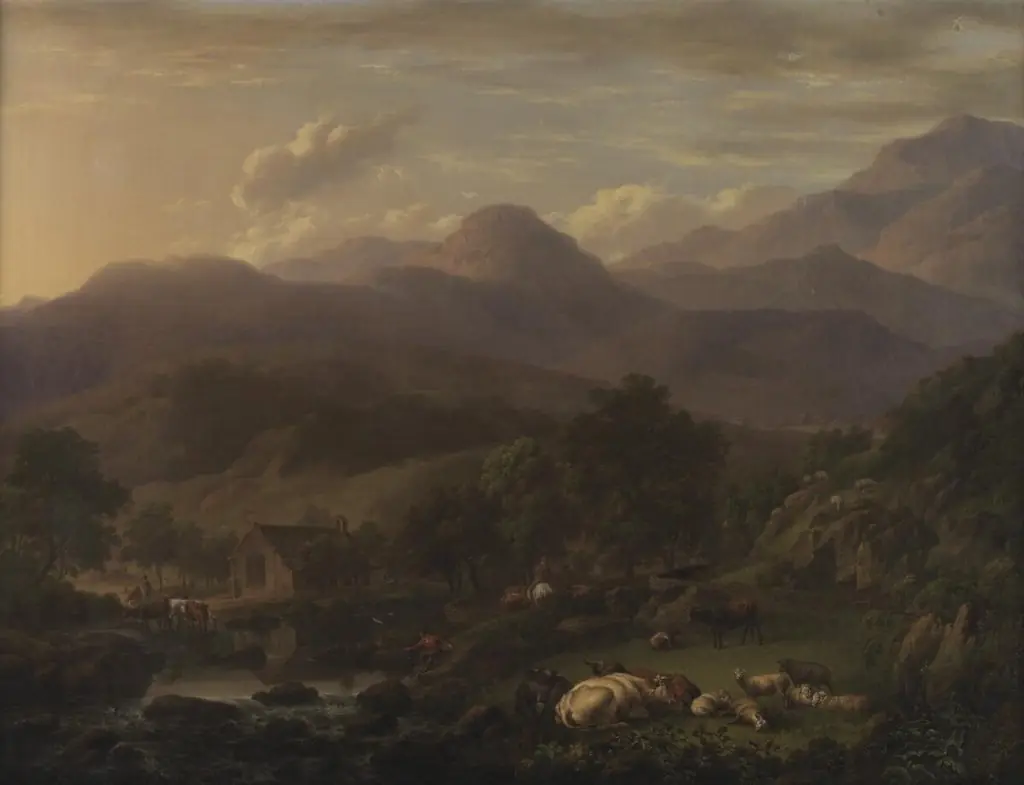 Welsh landscape with animals
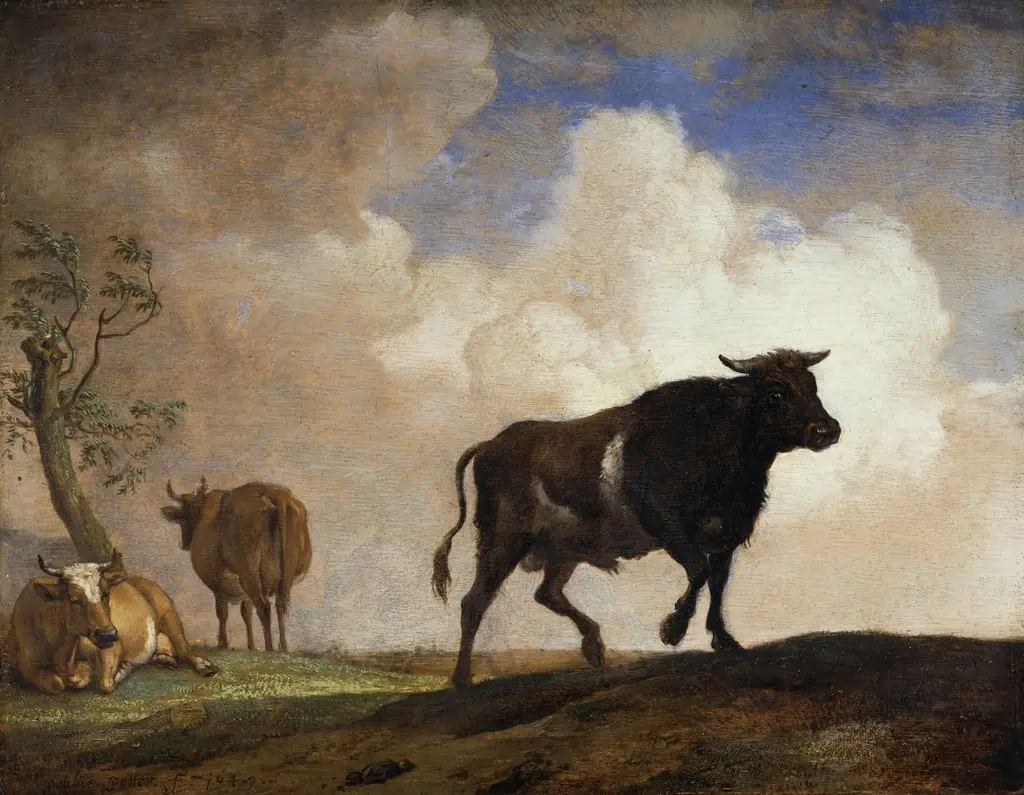 The Steer
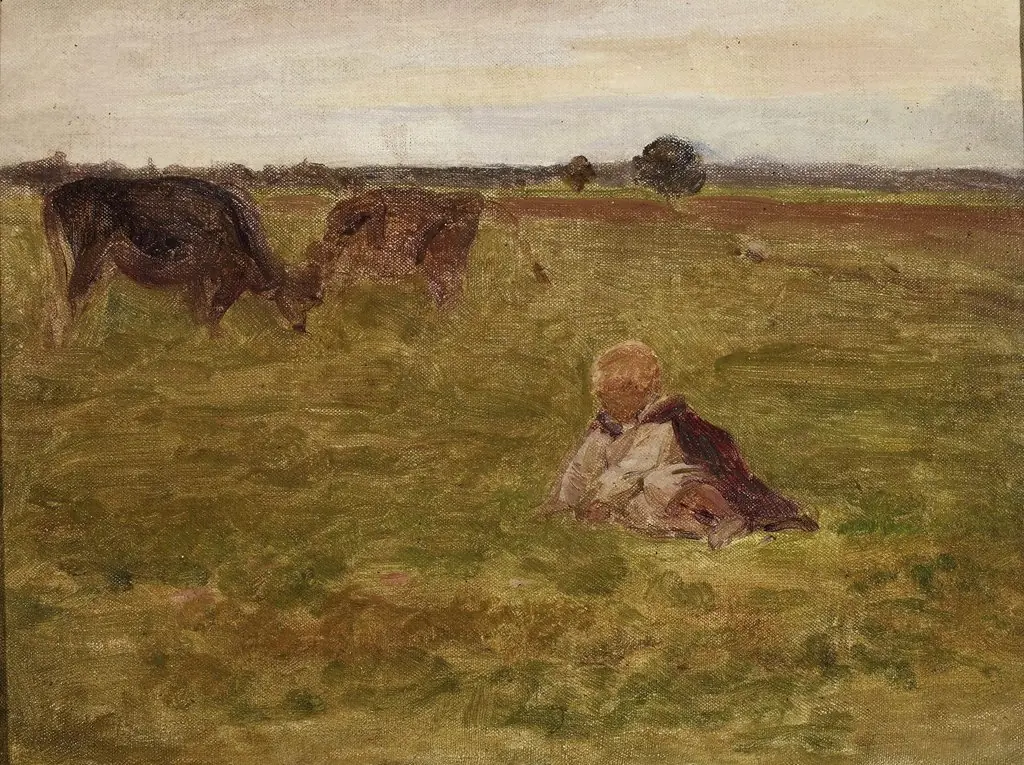 Study I for “Shepherd children”
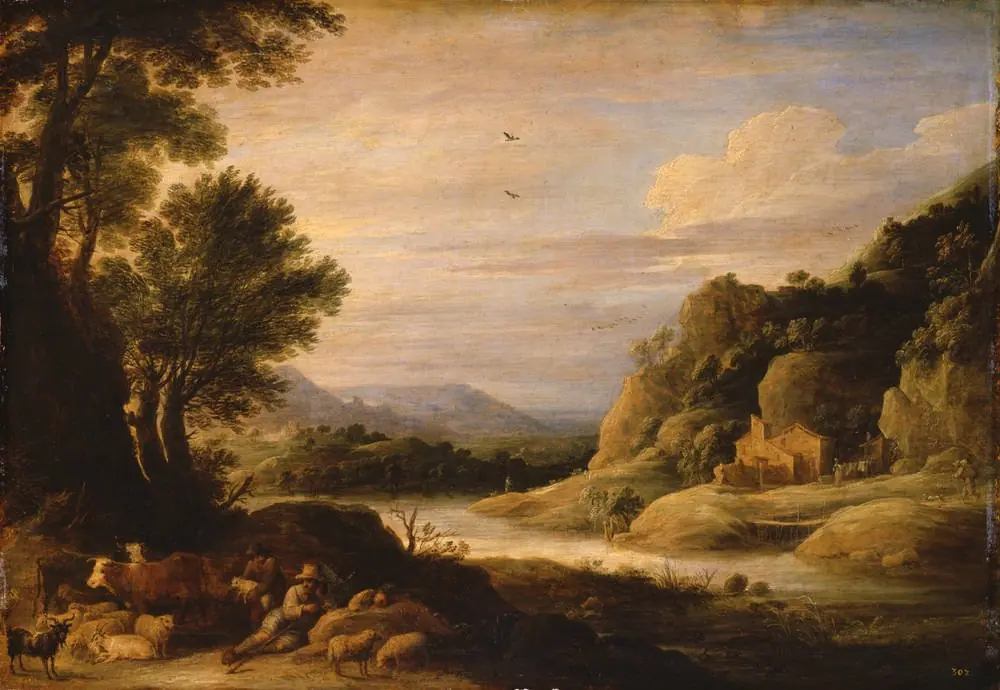 River landscape with resting shepherds and herds
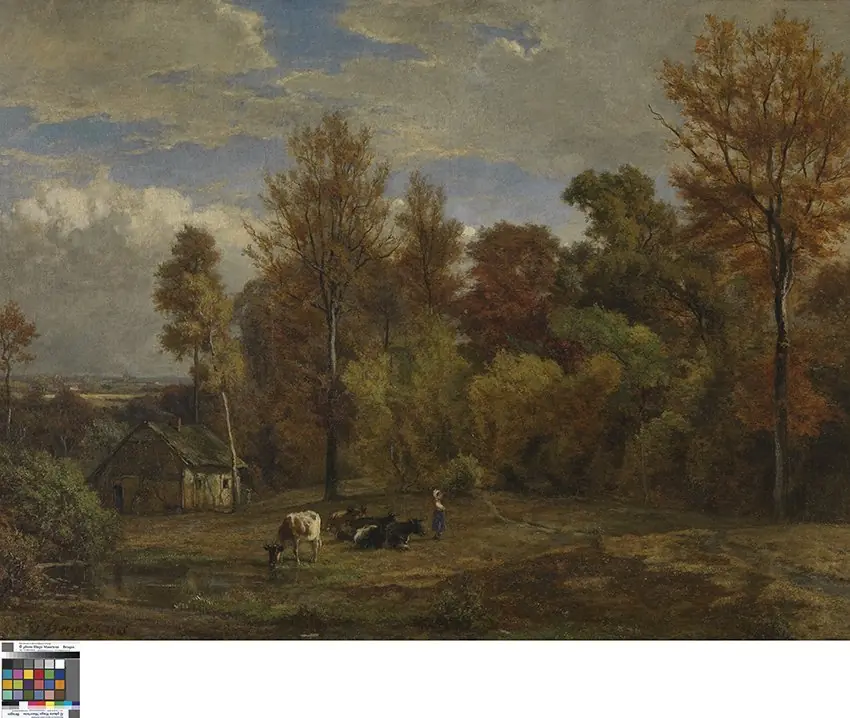 Boslandschap bij Presles
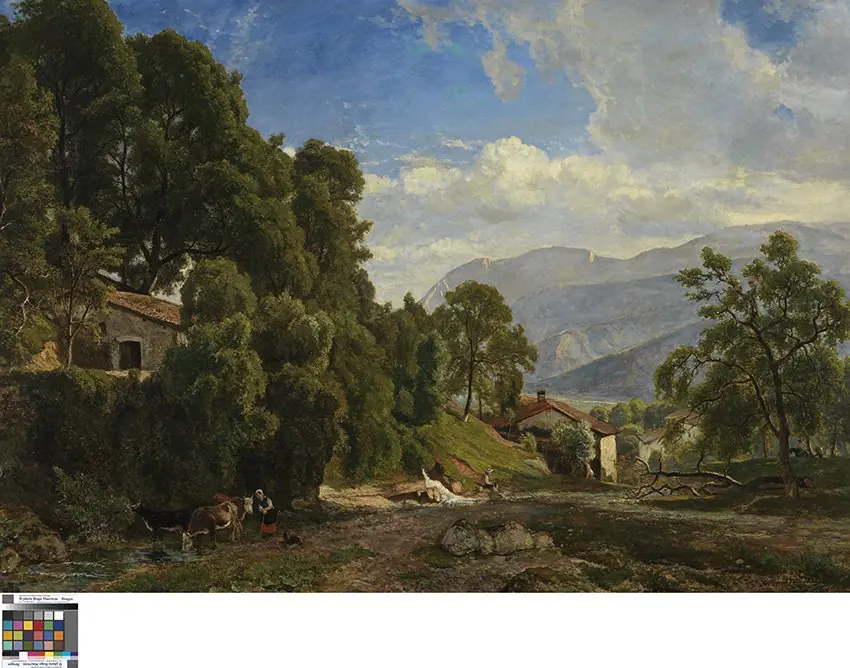 Berglandschap in Voreppe, Dauphiné
 Midsummer
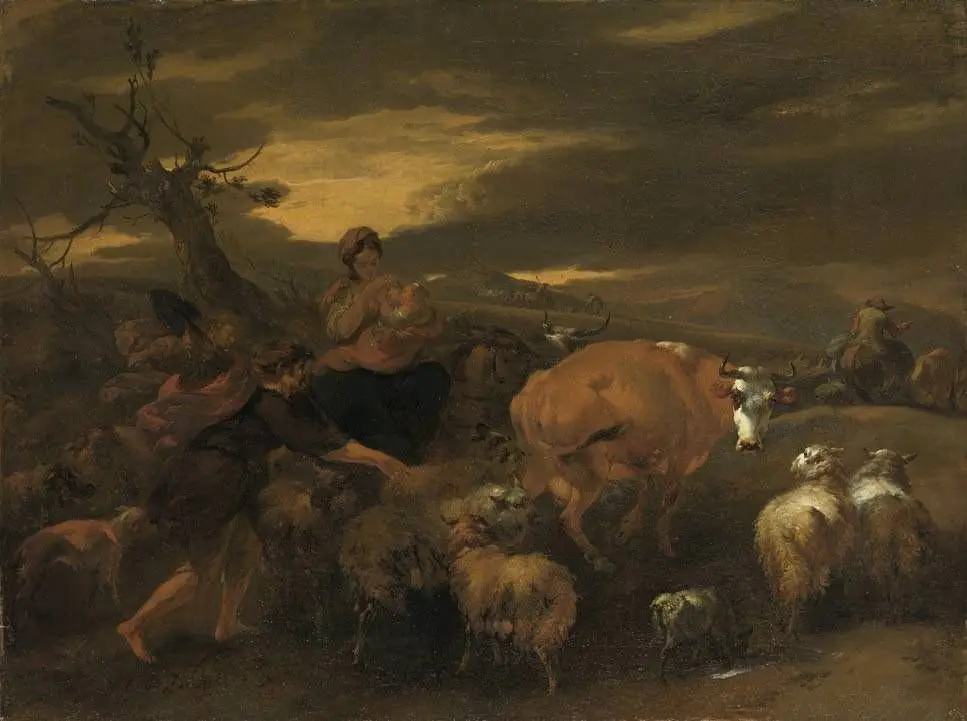 Evening landscape with cattle and shepherds
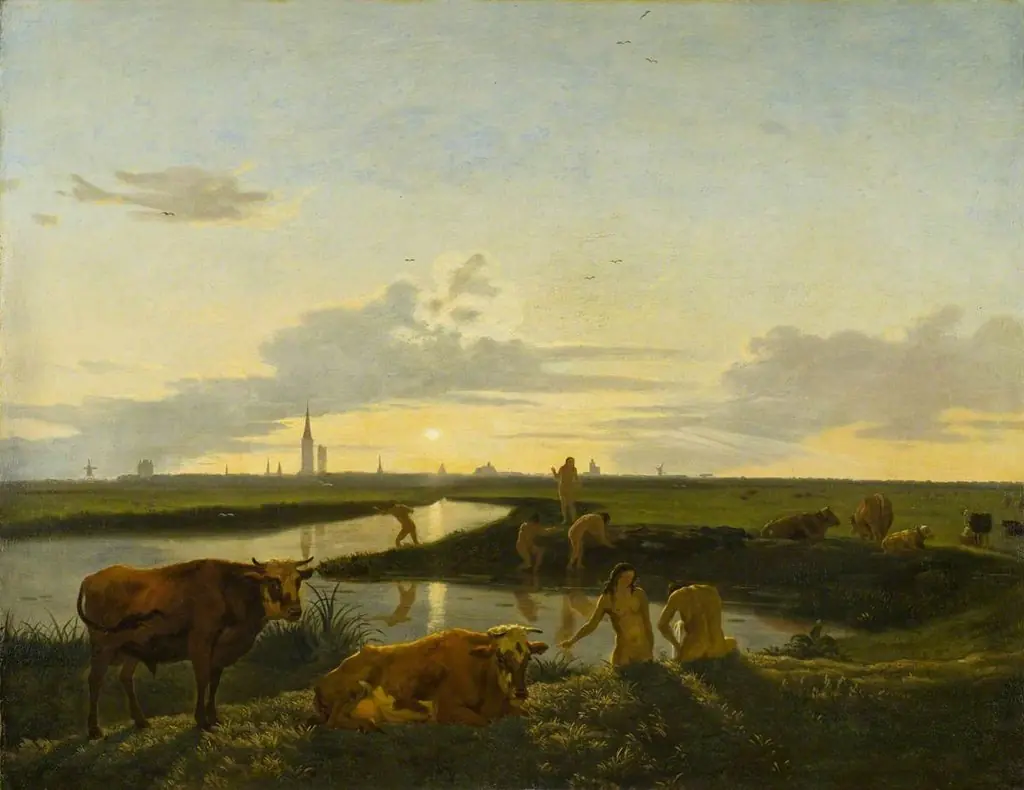 Canal Landscape with Figures Bathing
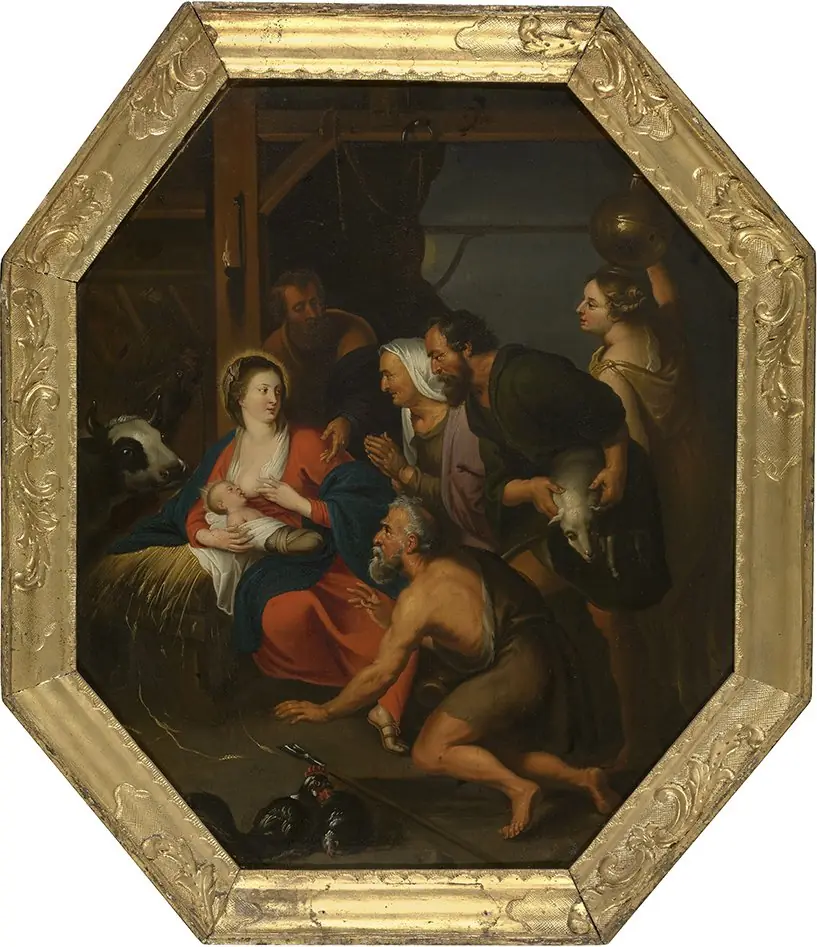 Adoration of the shephards
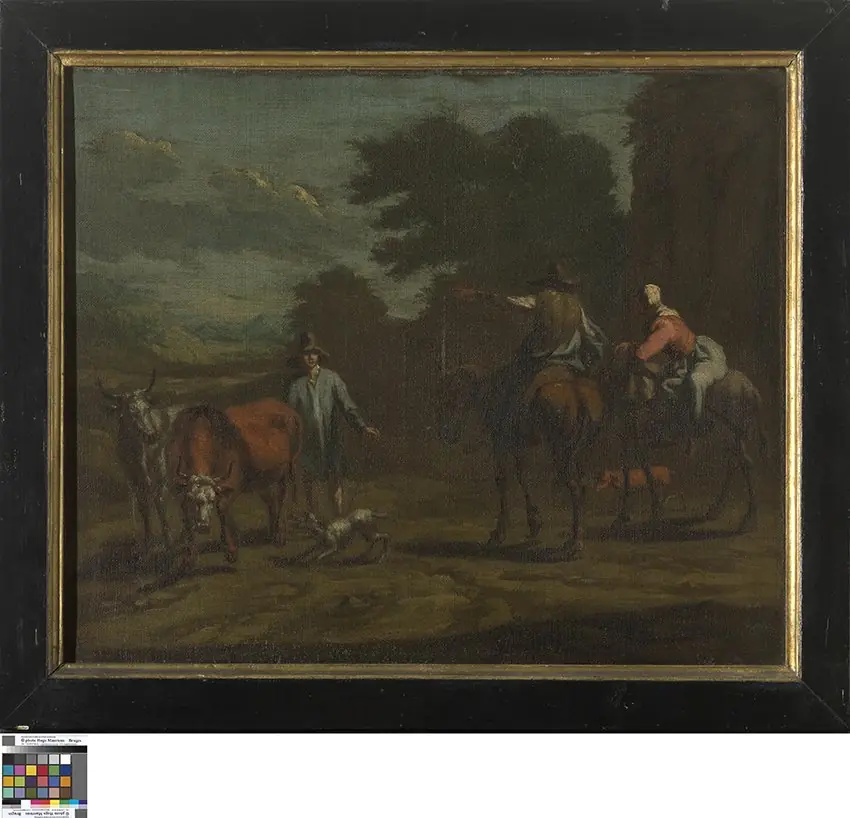 Landschap met boeren
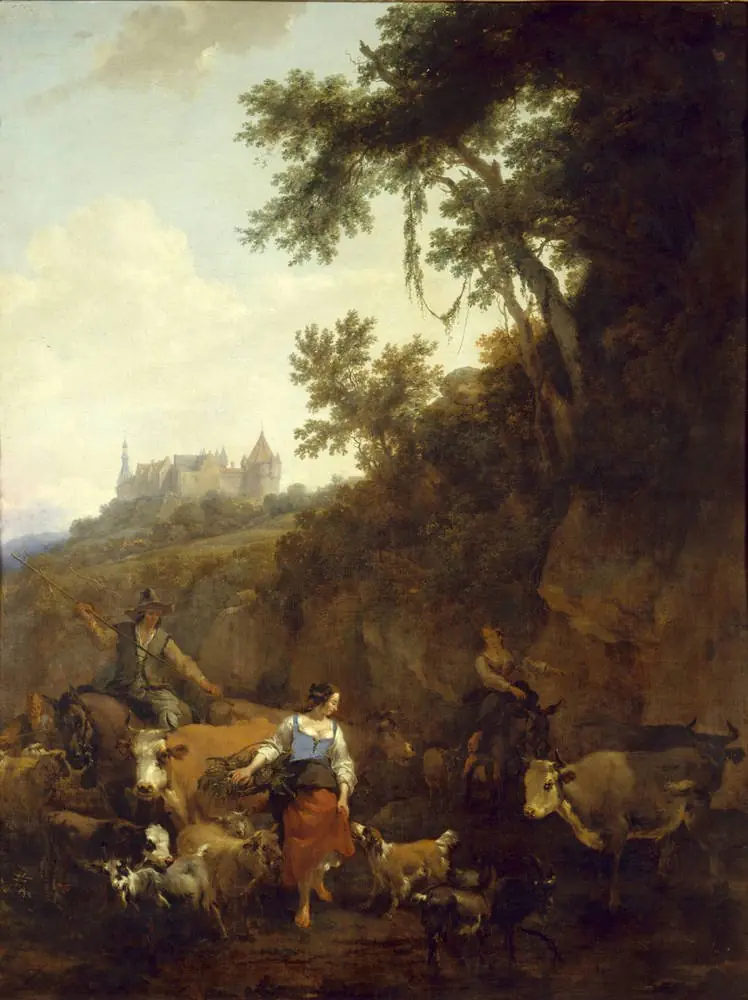 Landscape with Castle Bentheim
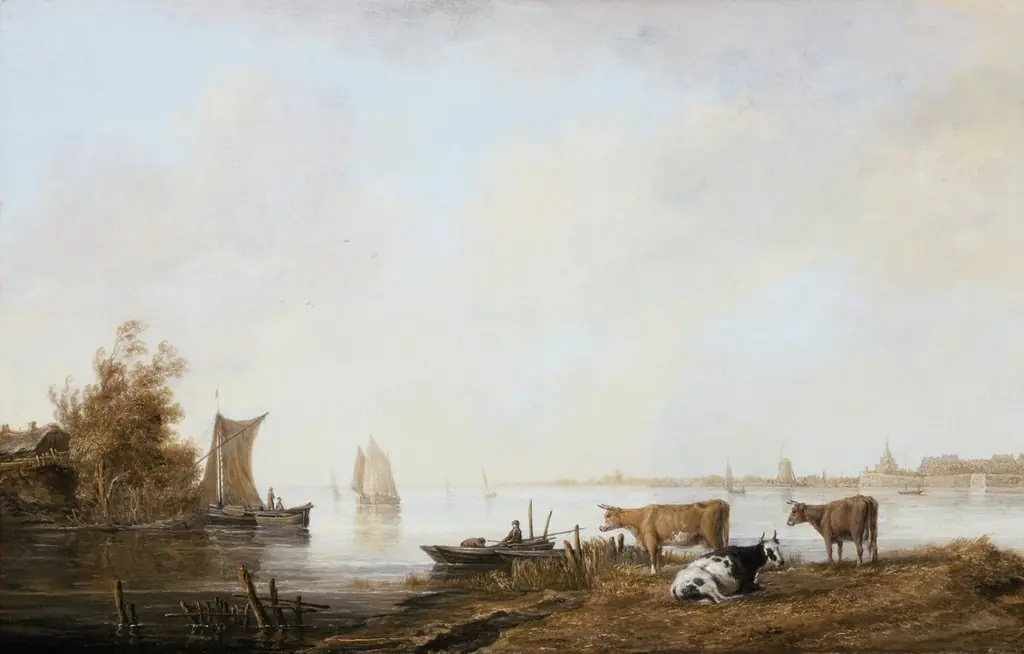 View of the Maas near Dordrecht
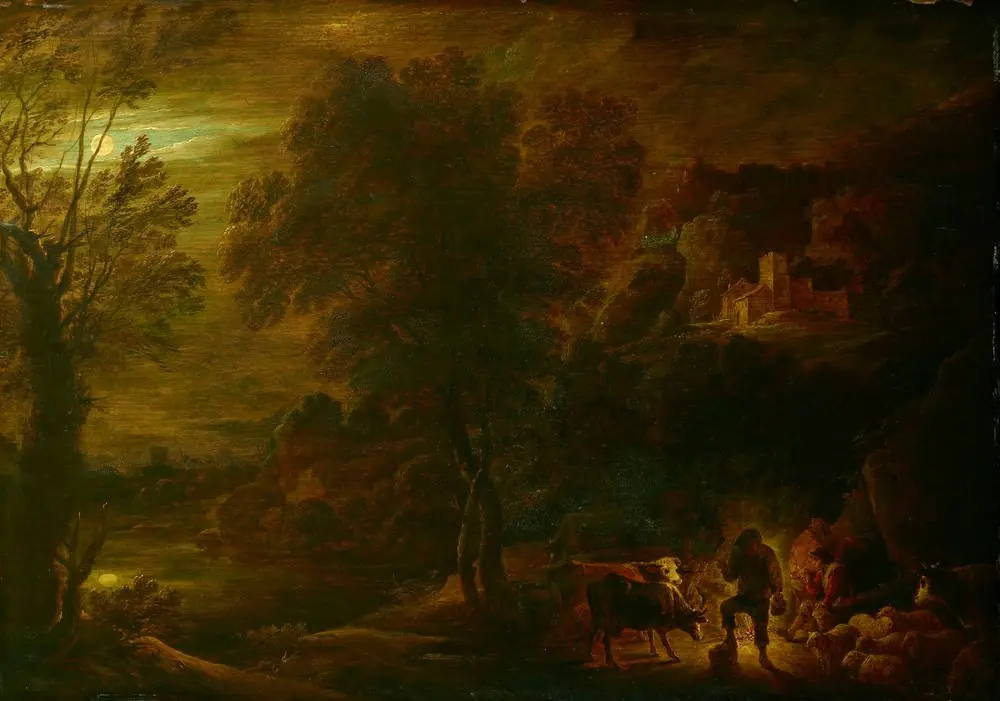 Moonlight landscape with shepherds at the fire
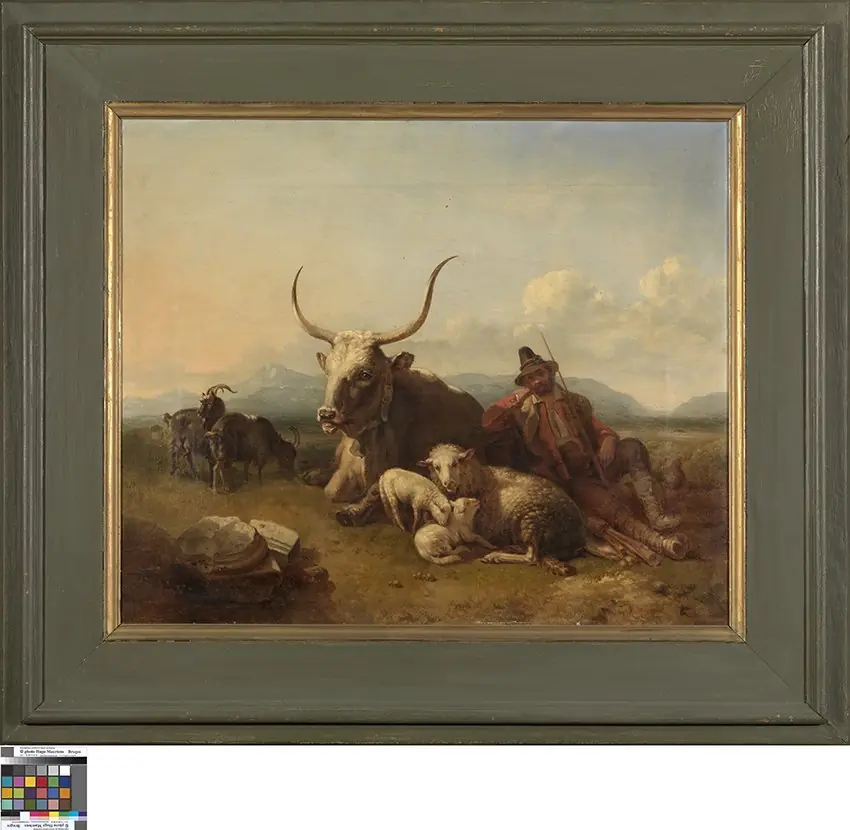 Herder met kudde
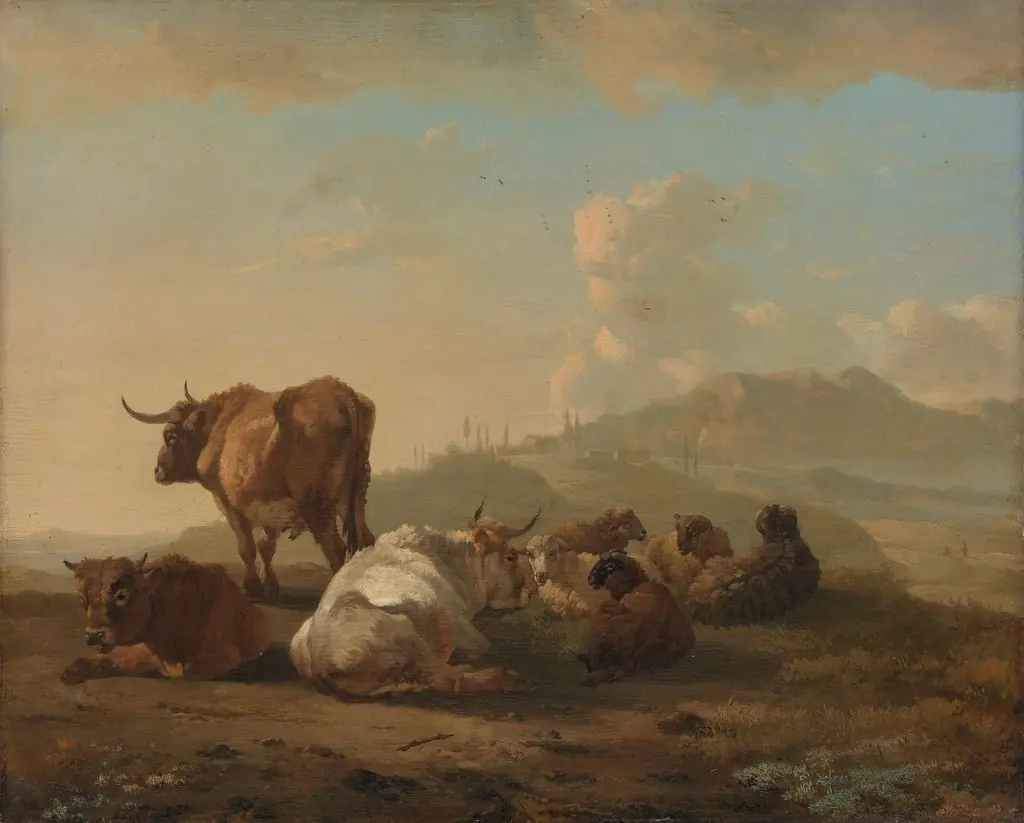 Resting herd
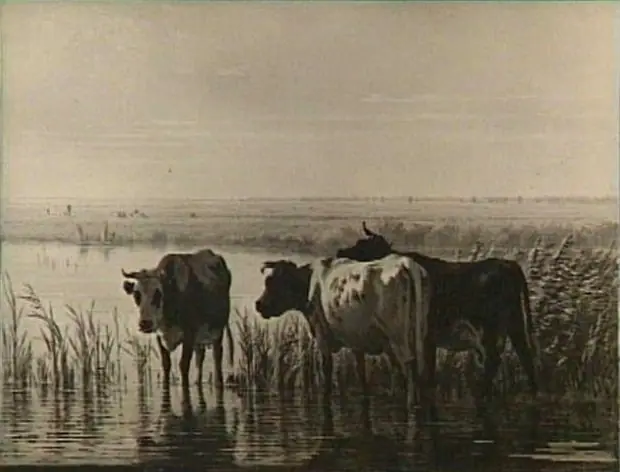 Early Morning on the Lakes
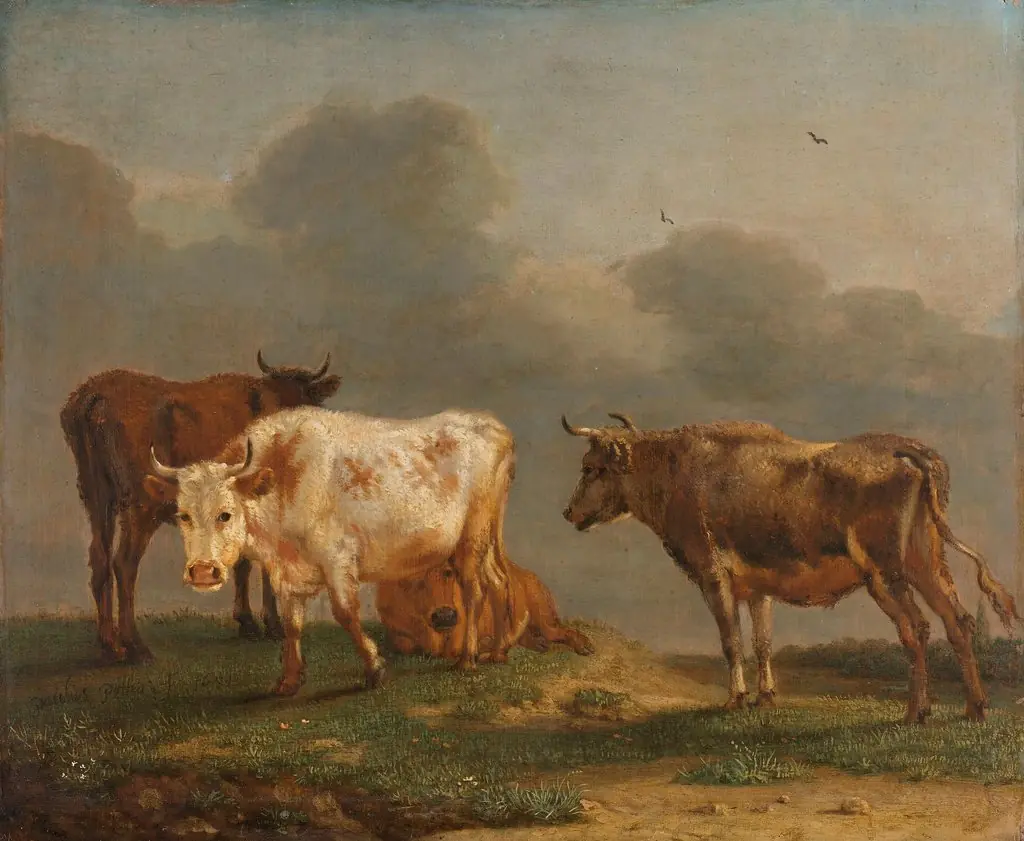 Four Cows in a Meadow
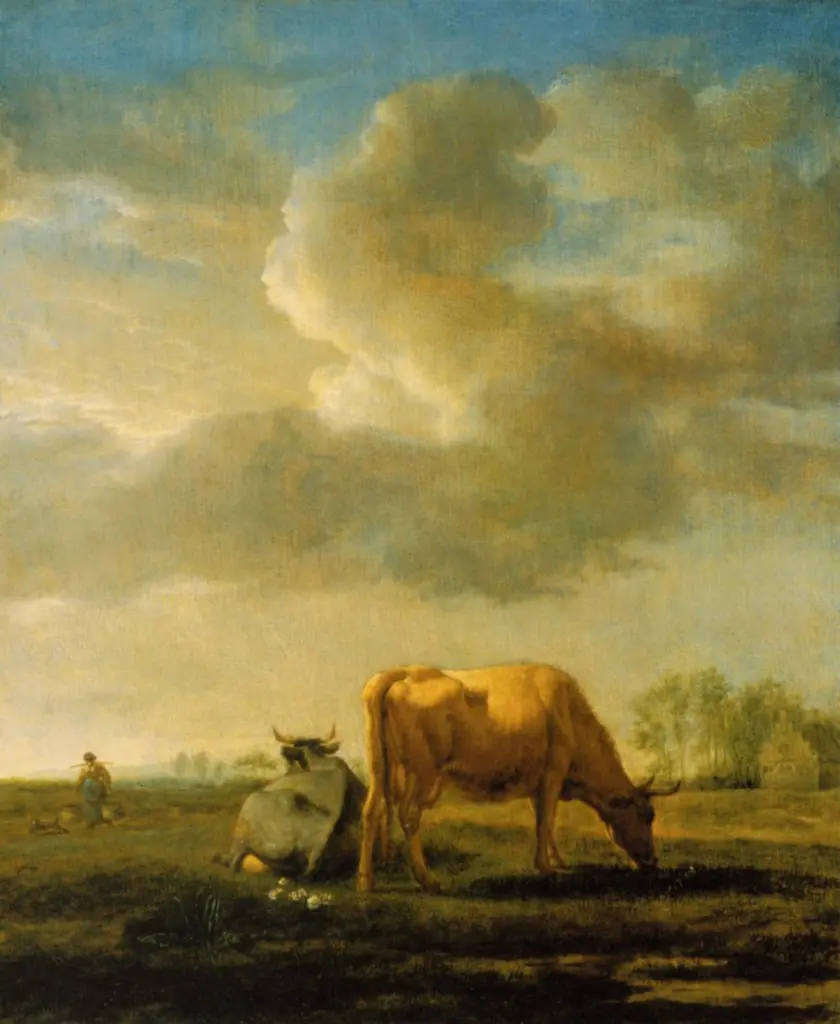 Cows at Pasture
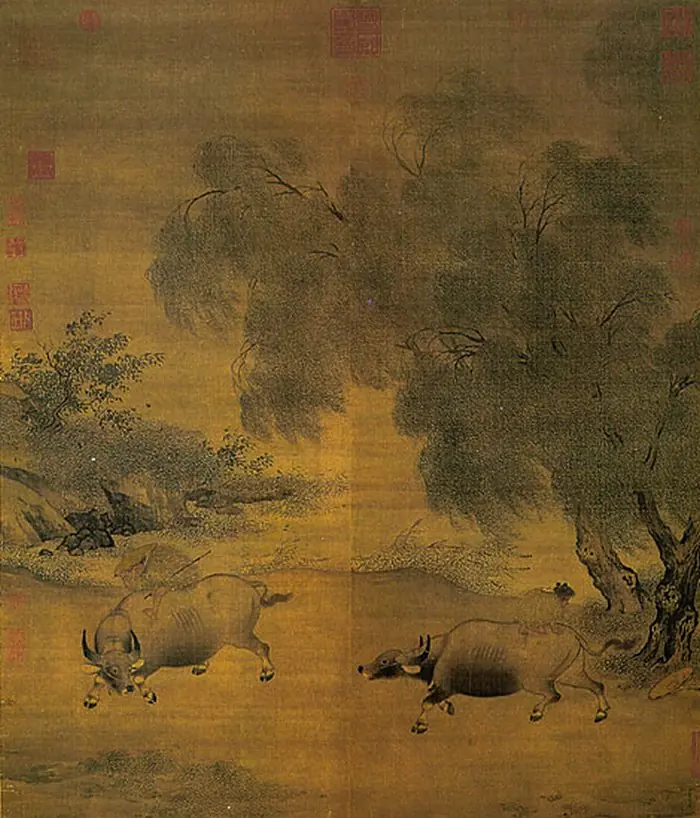 Homeward Oxherds in Wind and Rain
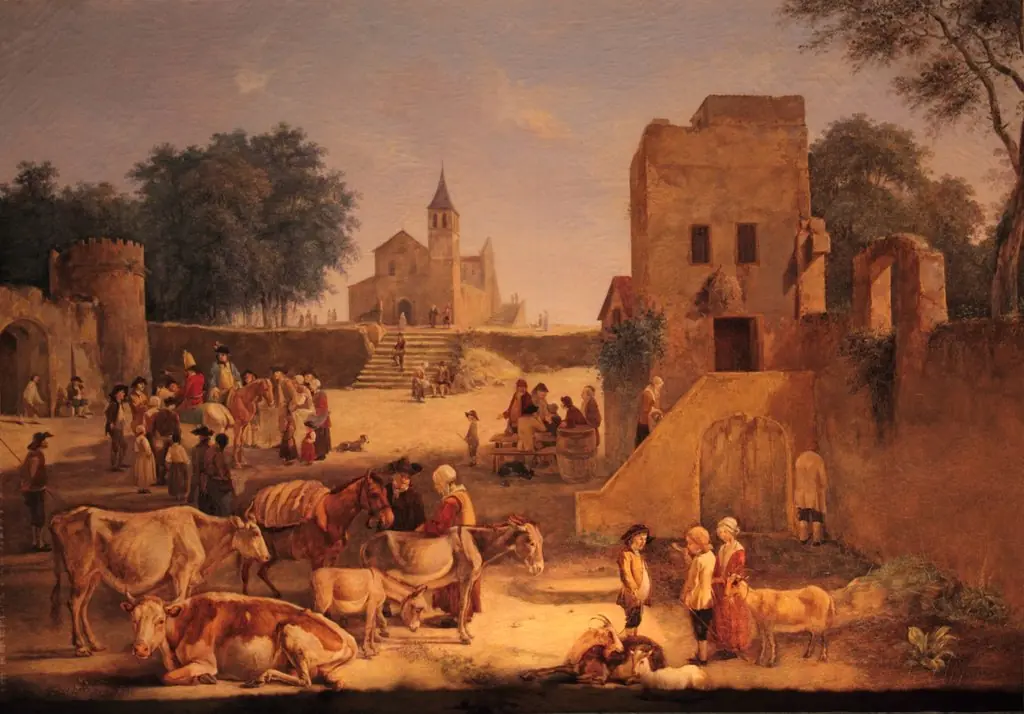 Animal market
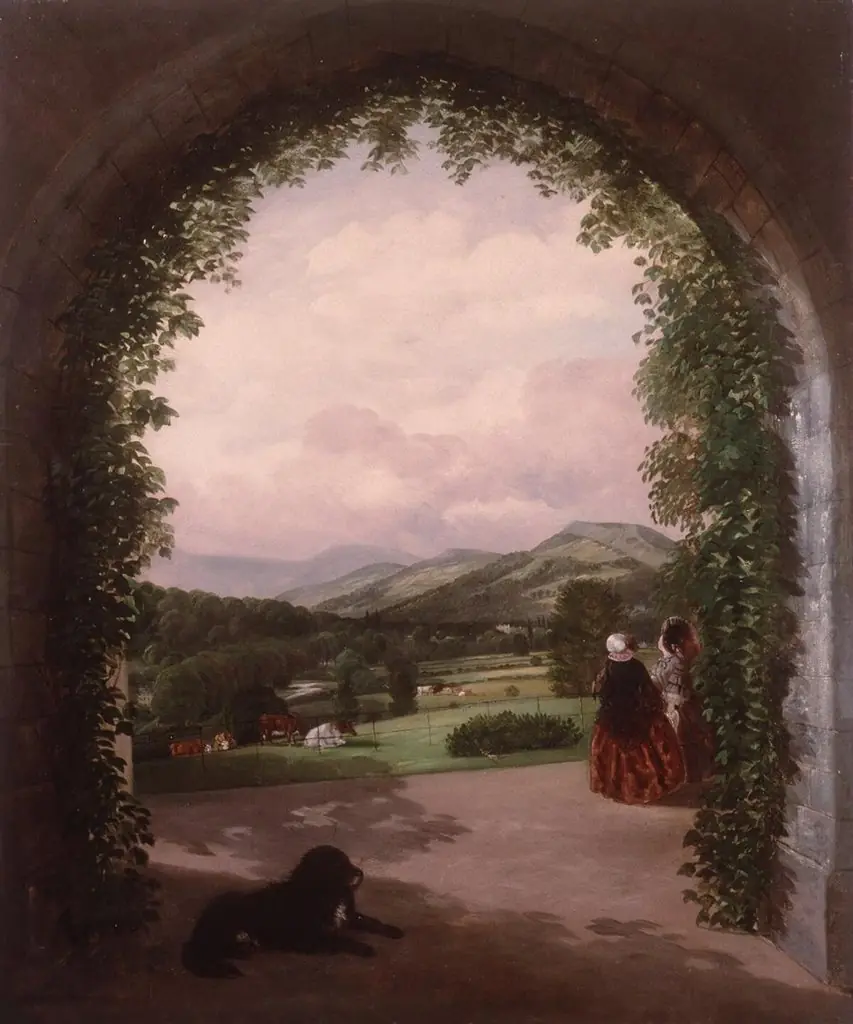 Crickhowell
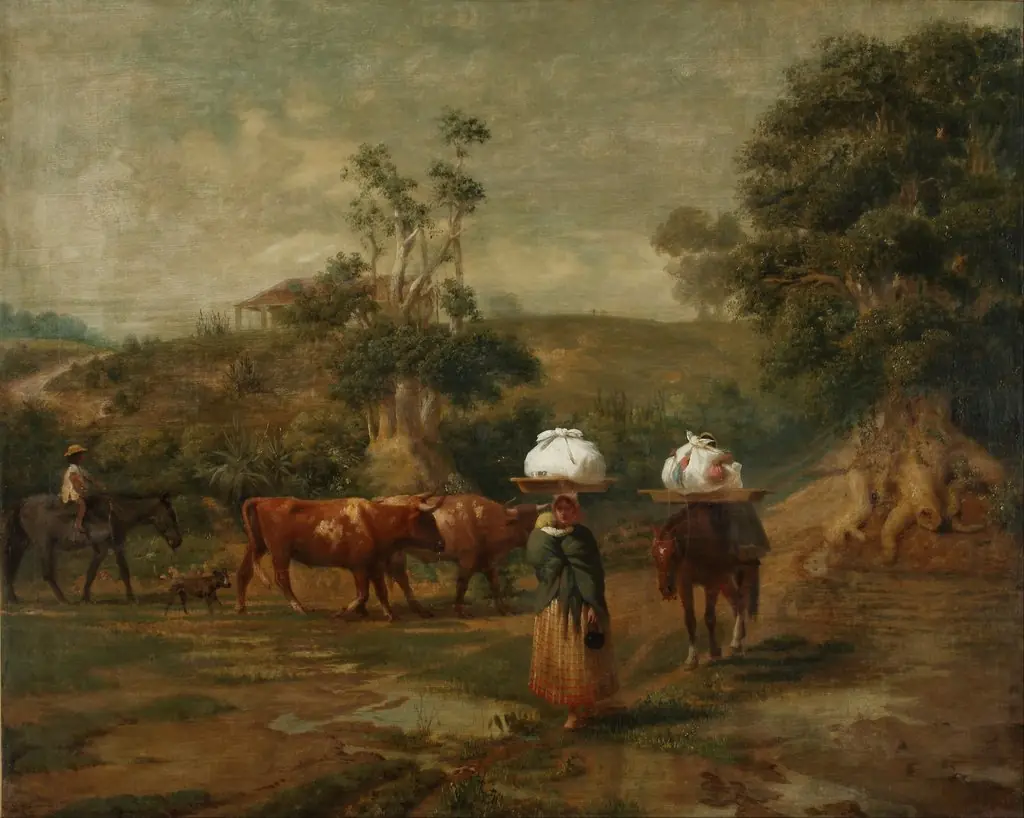 Lavanderas en el bajo de Belgrano
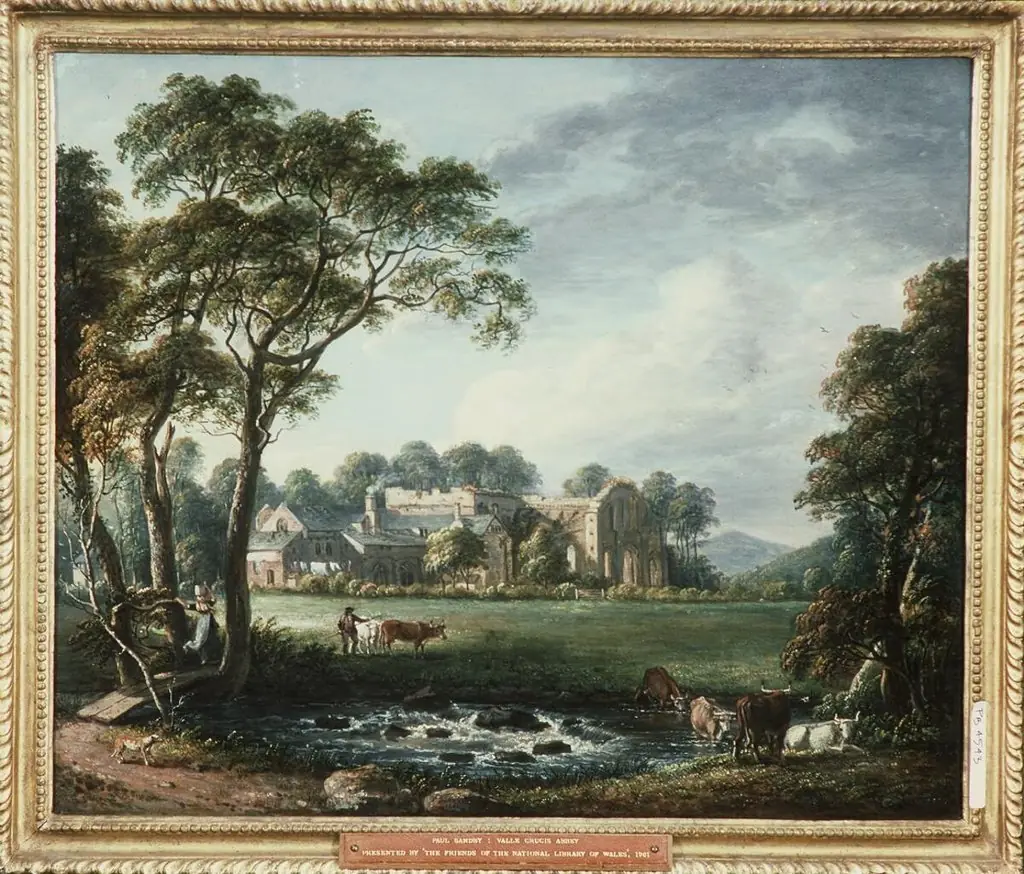 Valle Crucis Abbey
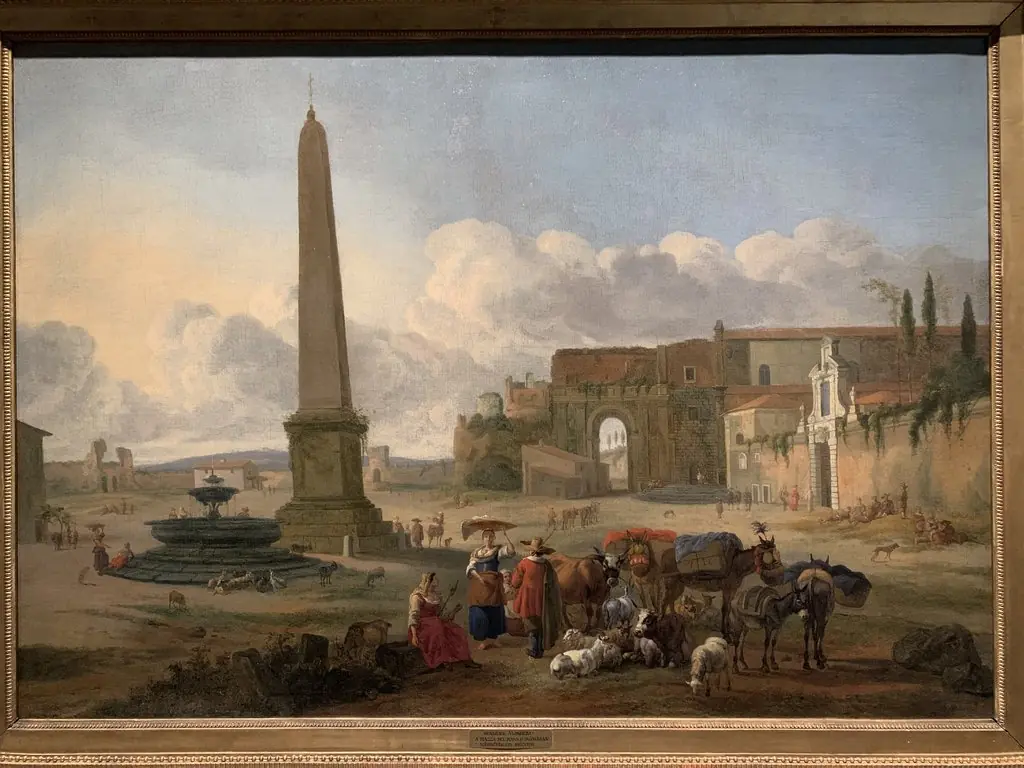 Roman populace in the Piazza del Popolo in Rome
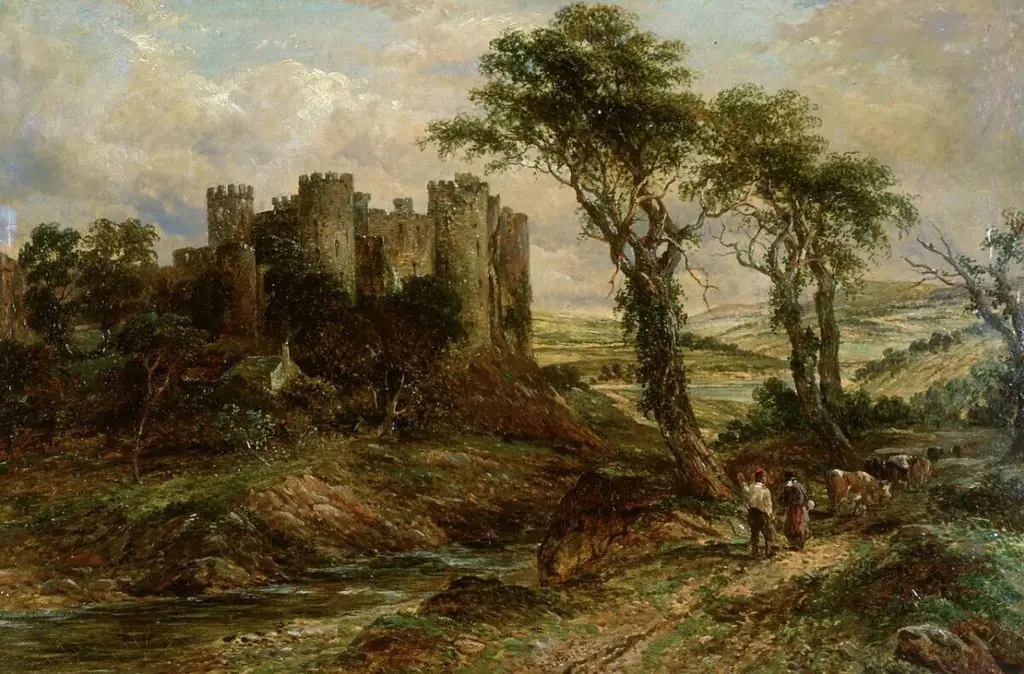 Conway Castle
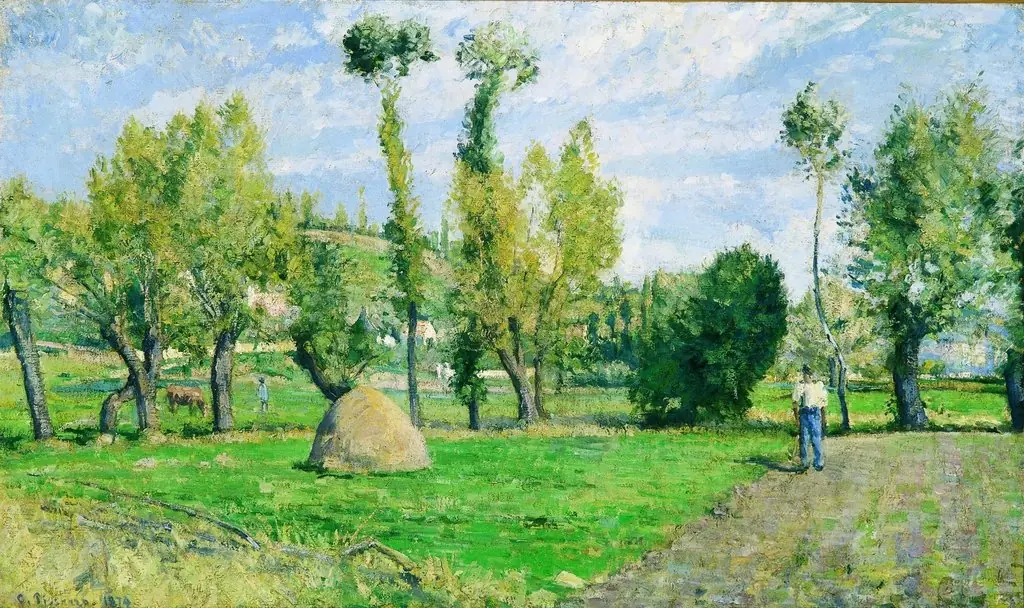 Meadows at Le Valhermeil, Auvers-sur-Oise
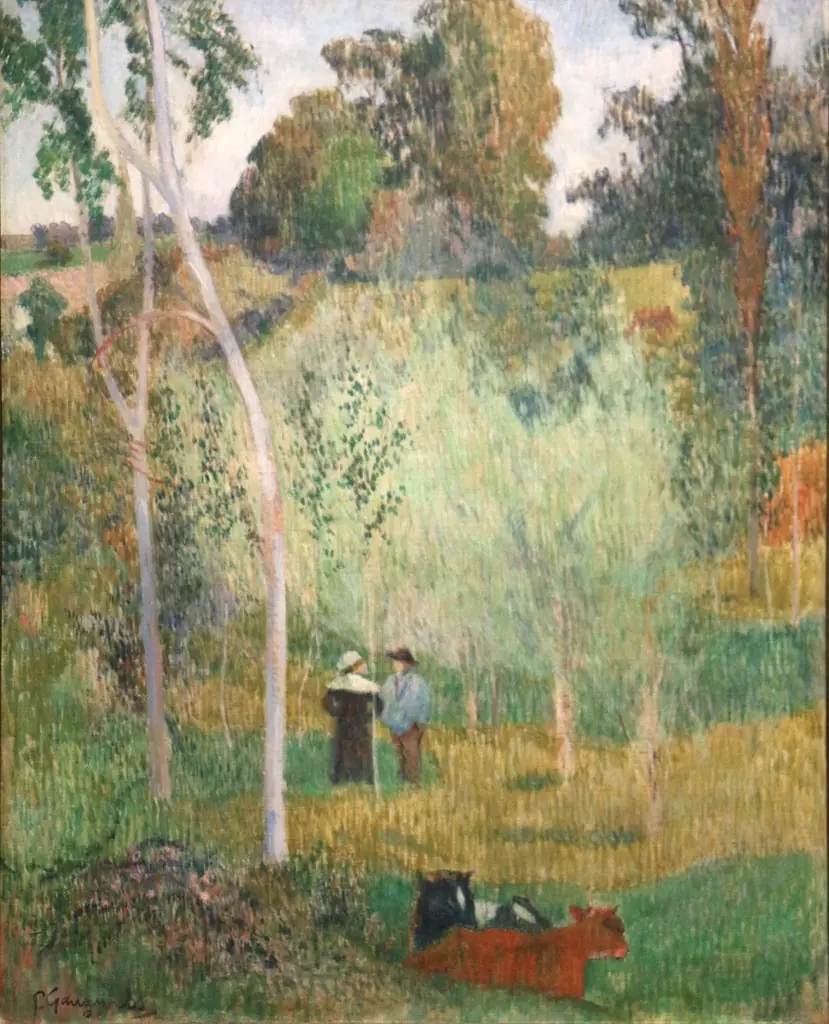 Conversation in the fields. Pont-Aven
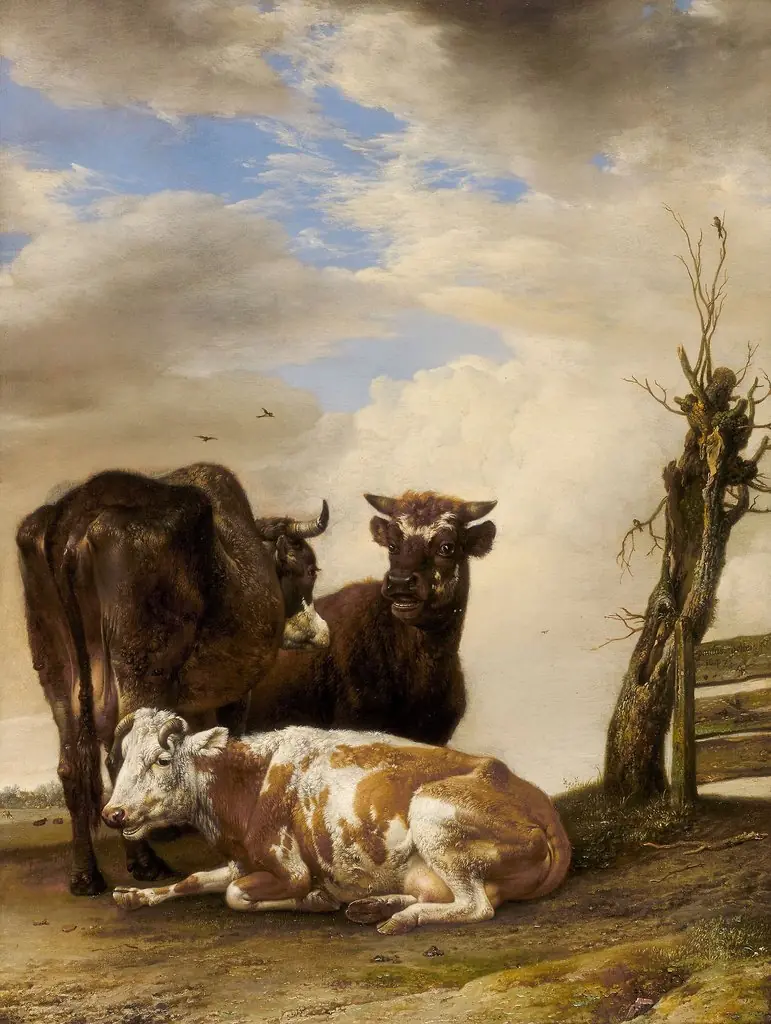 Two Cows and a Young Bull beside a Fence in a Meadow
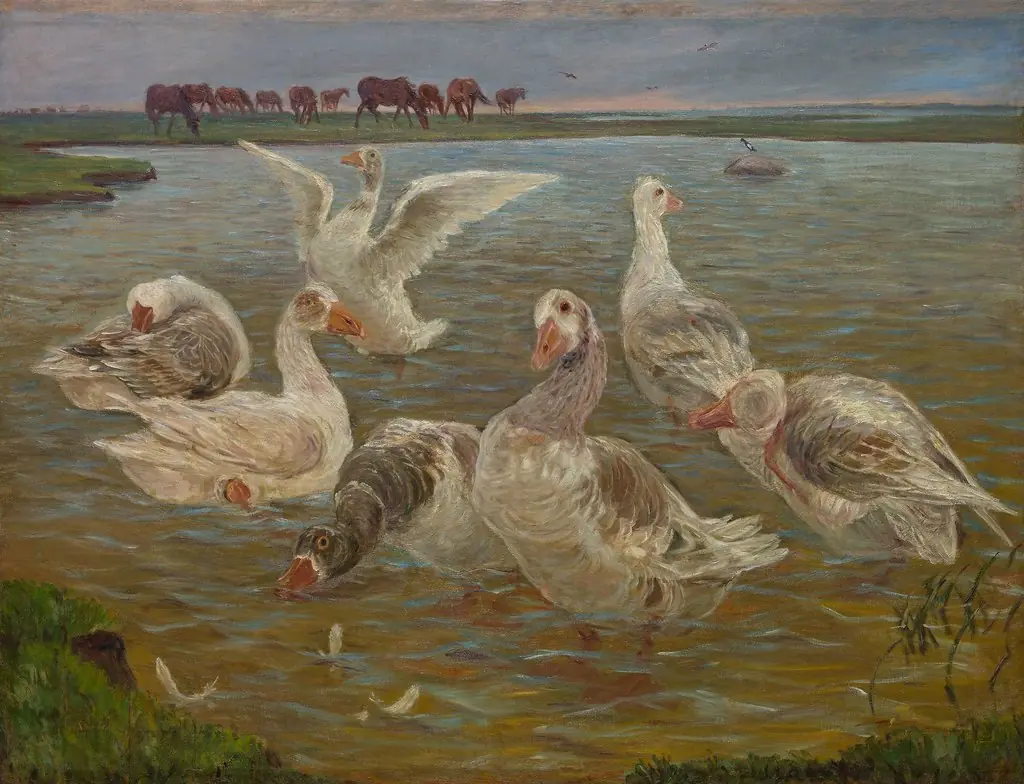 Les Oies
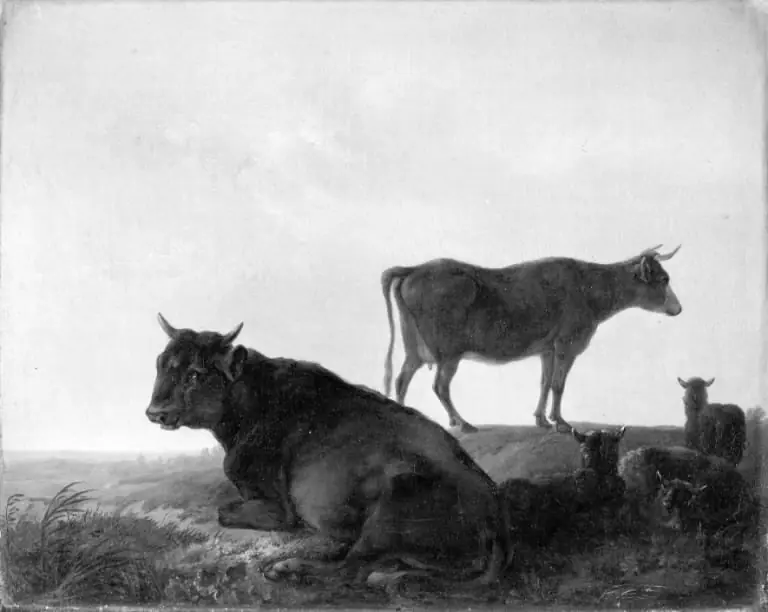 Et kvægstykke
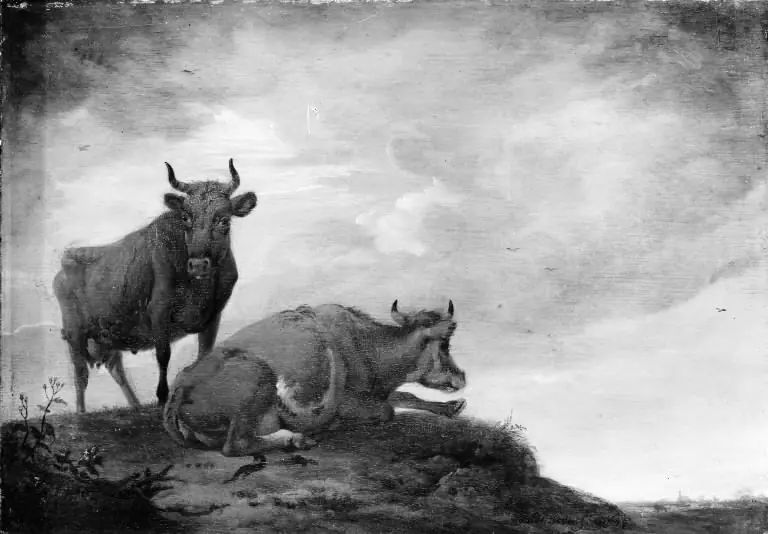 Two Cows on a Hill
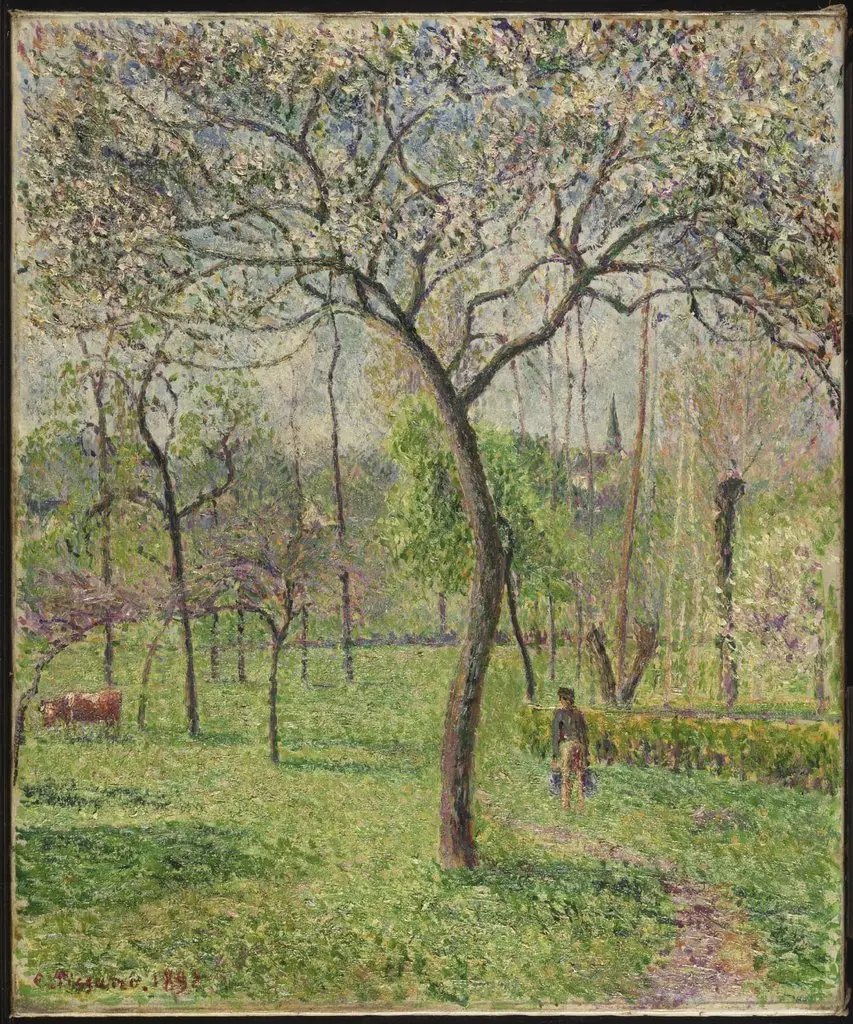 Landscape (Orchard)
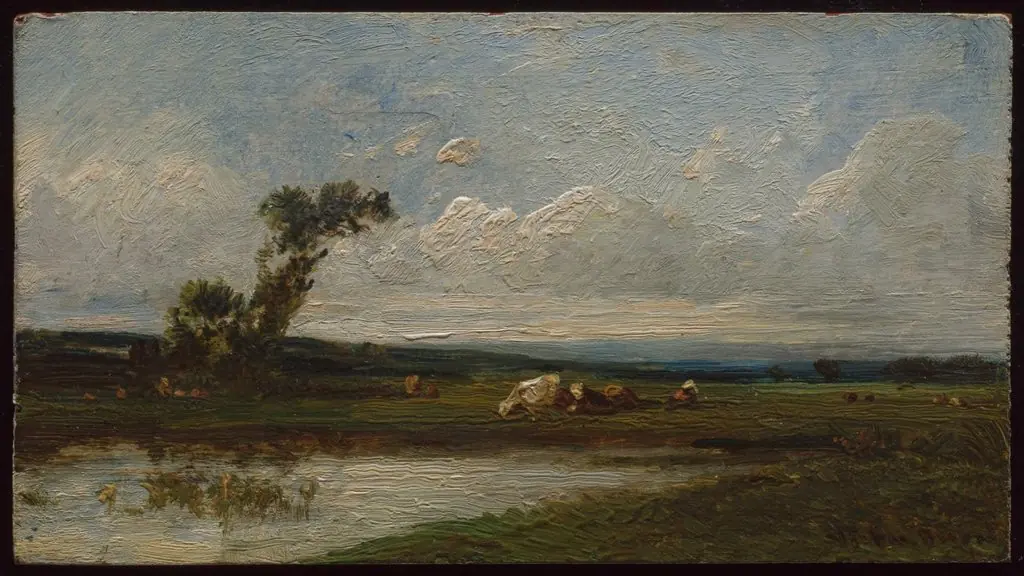 Water Meadows and Cattle
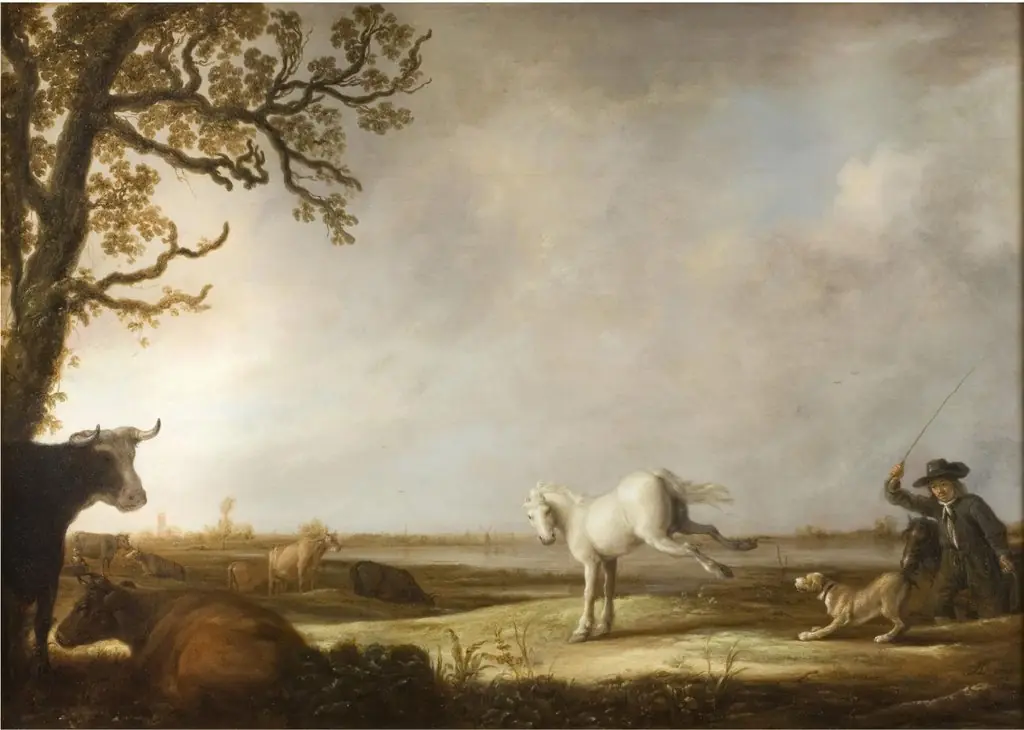 Kicking Horse
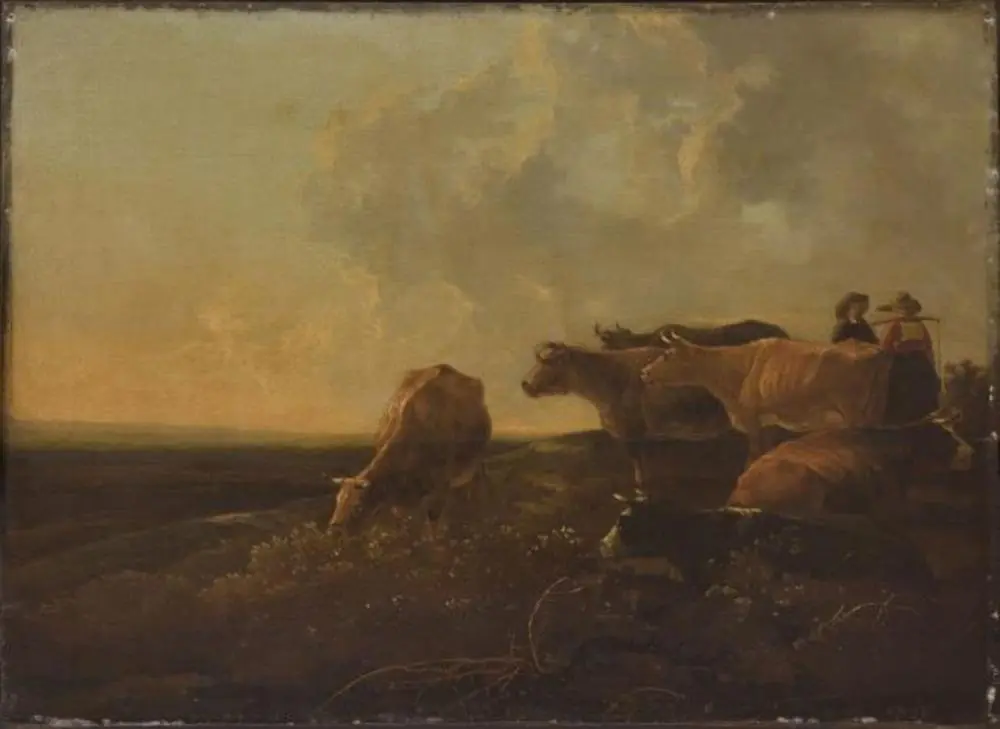 Hilly Landscape with Cattle
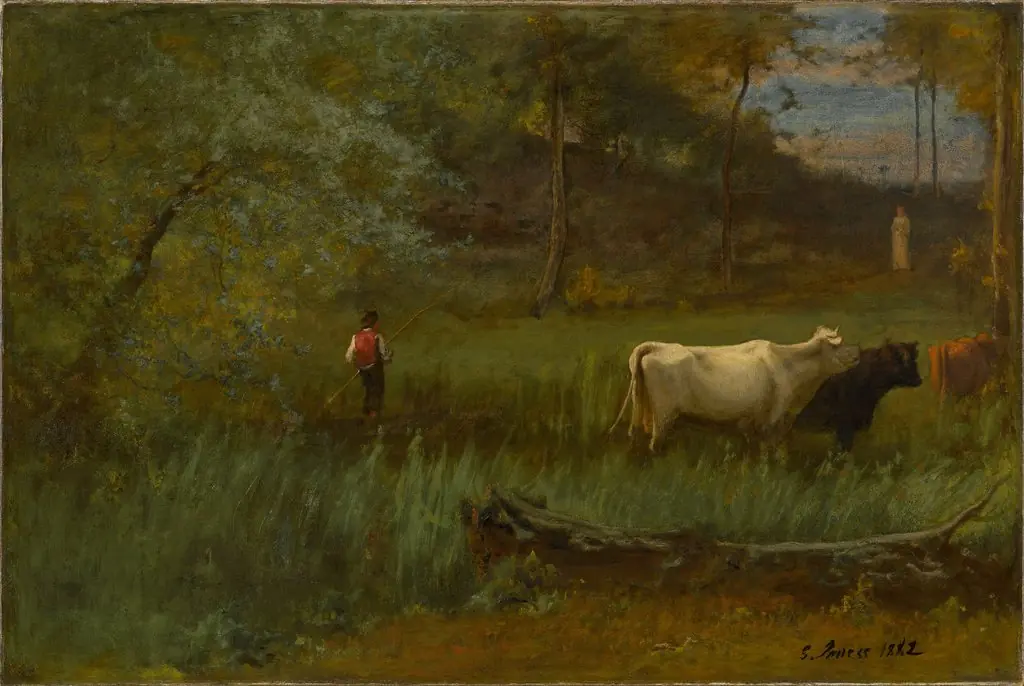 A Pastoral
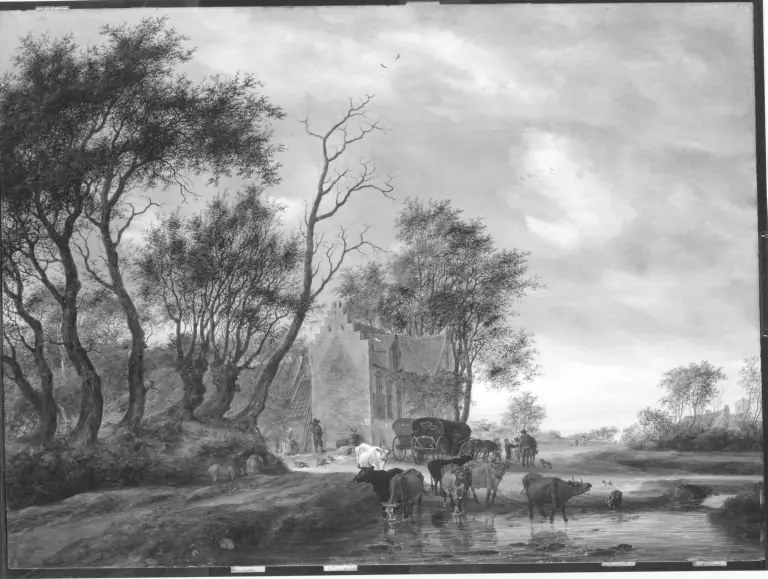 Halt vor der Herberge
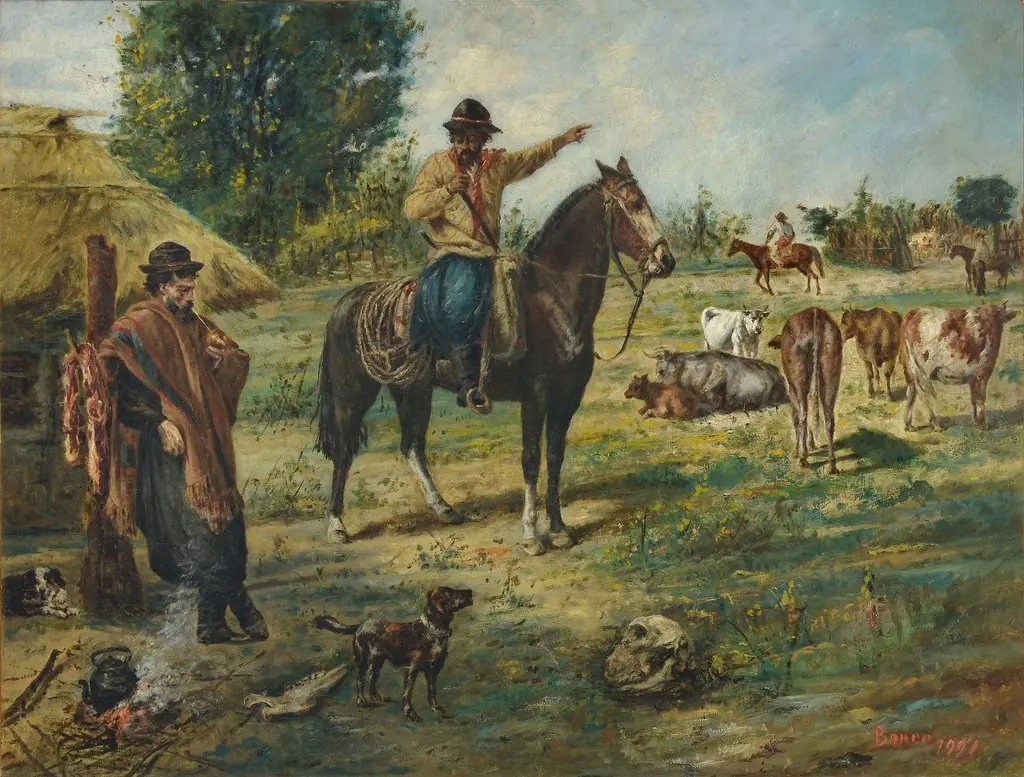 Foreman and rebellious peasant
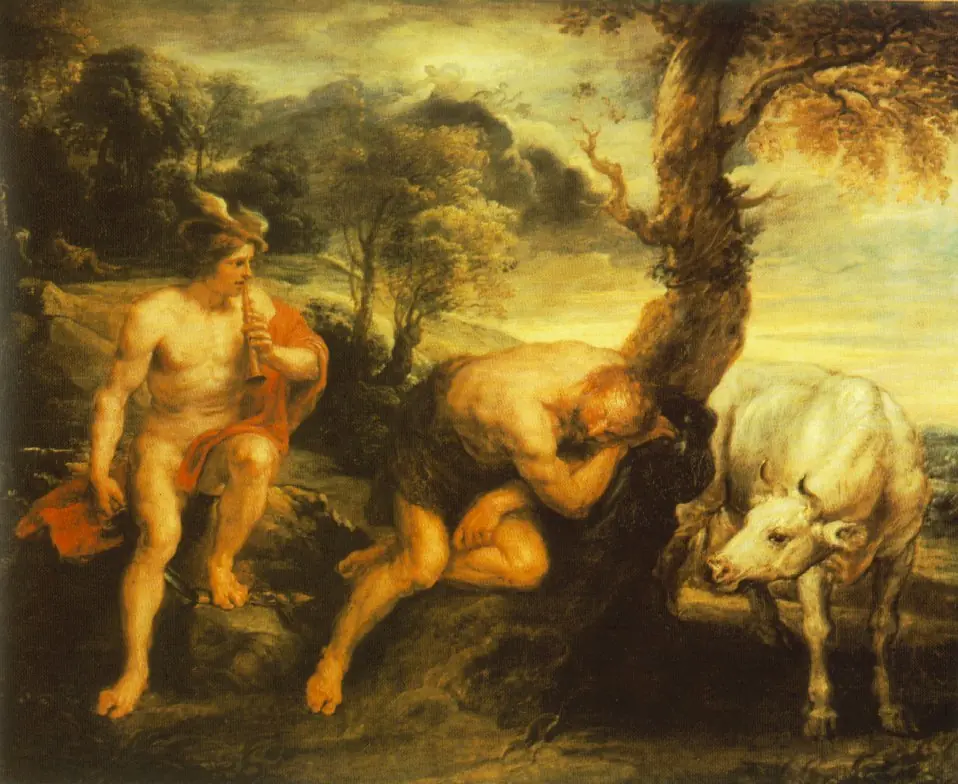 Mercury and Argus
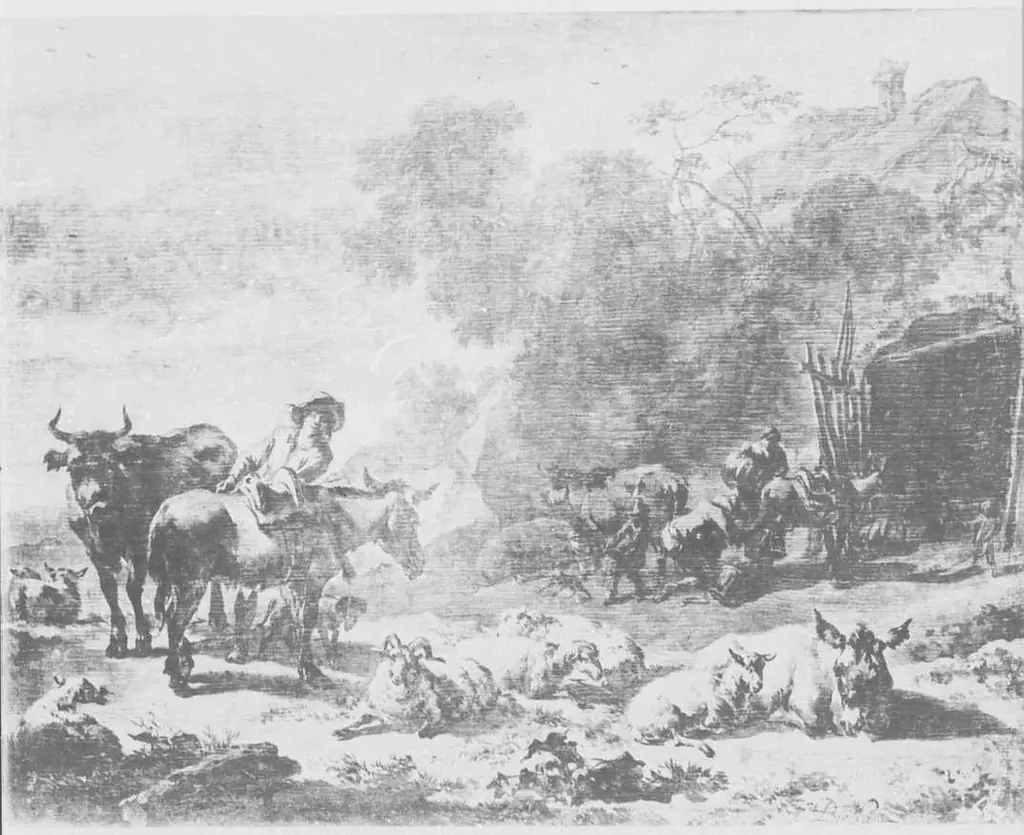 Herders and Herd
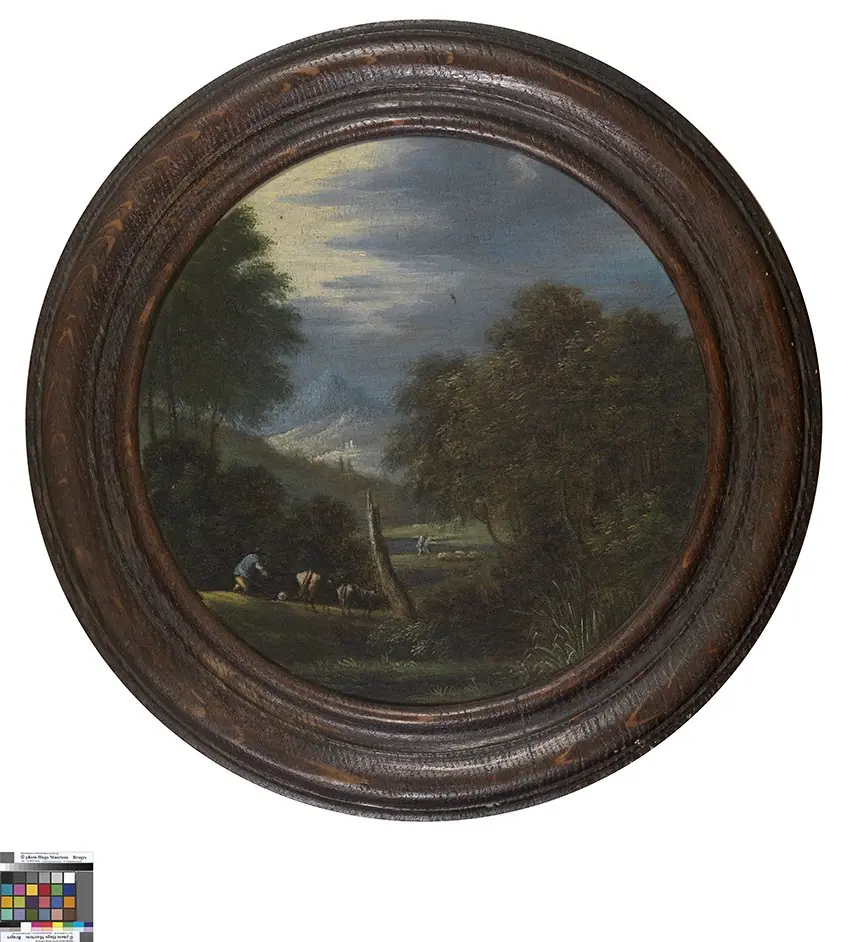 Landscape
 farm near Carmarthen
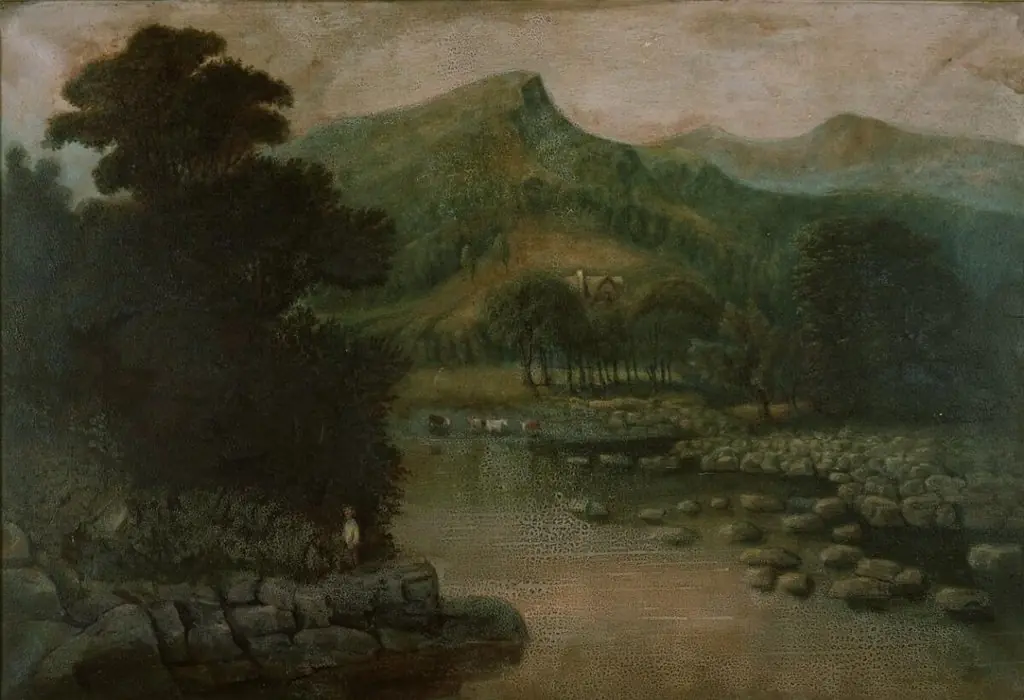 Landscape, South Wales
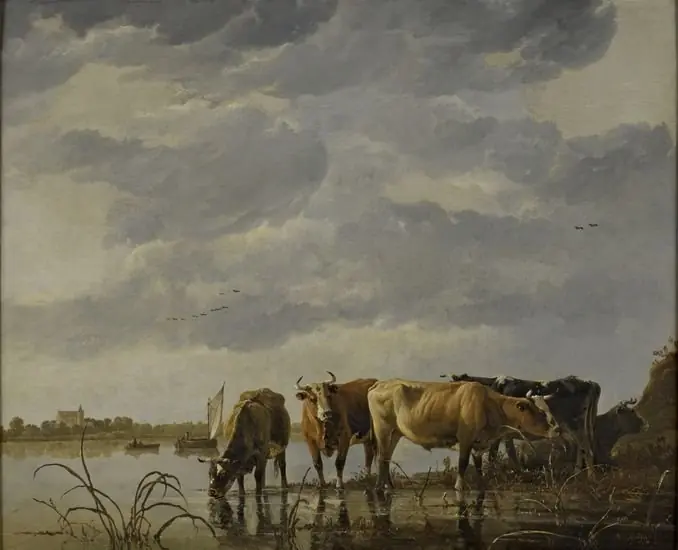 Cattle Watering by an Estuary
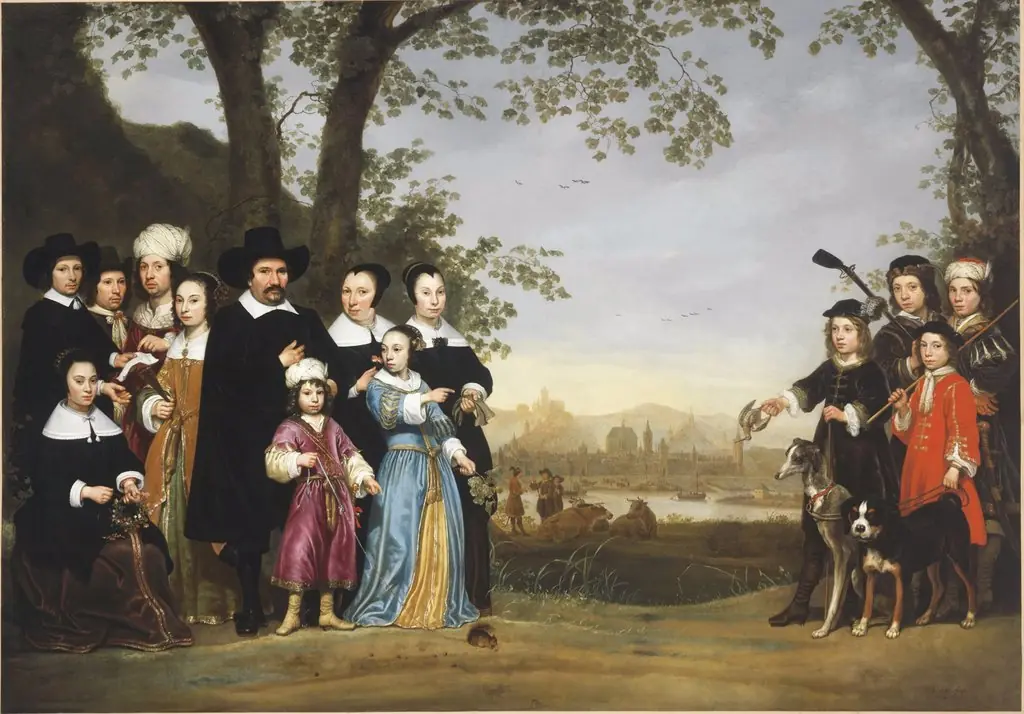 Portrait of the Sam Family
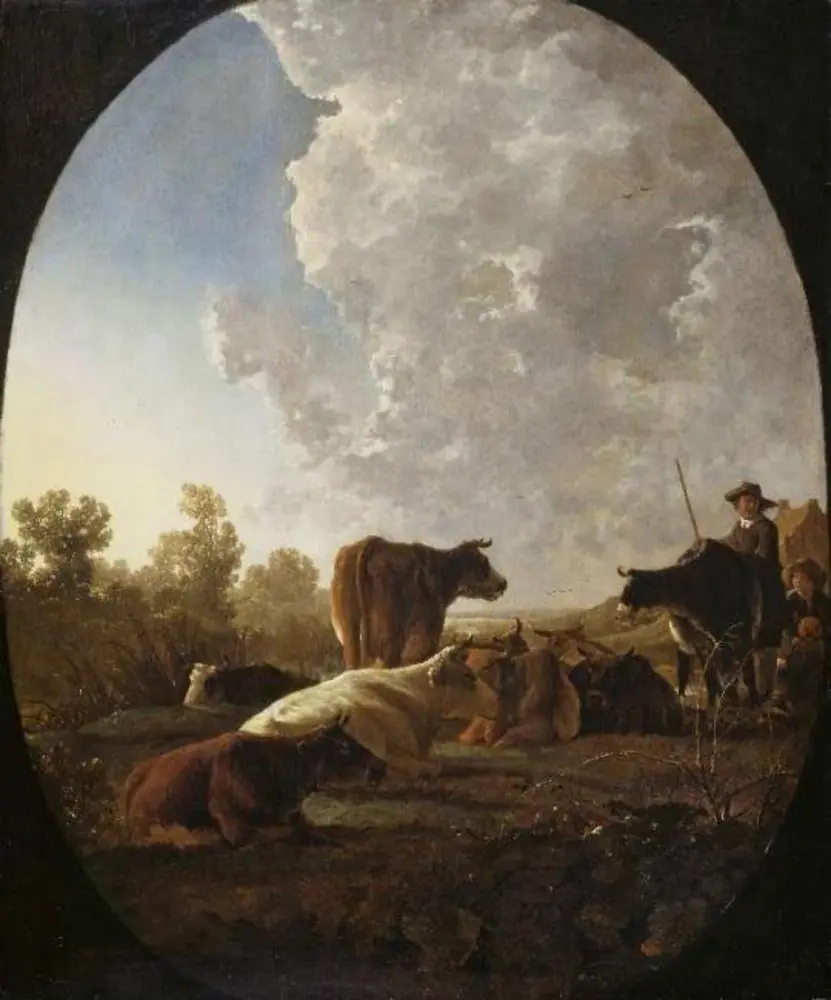 Sunset after rain
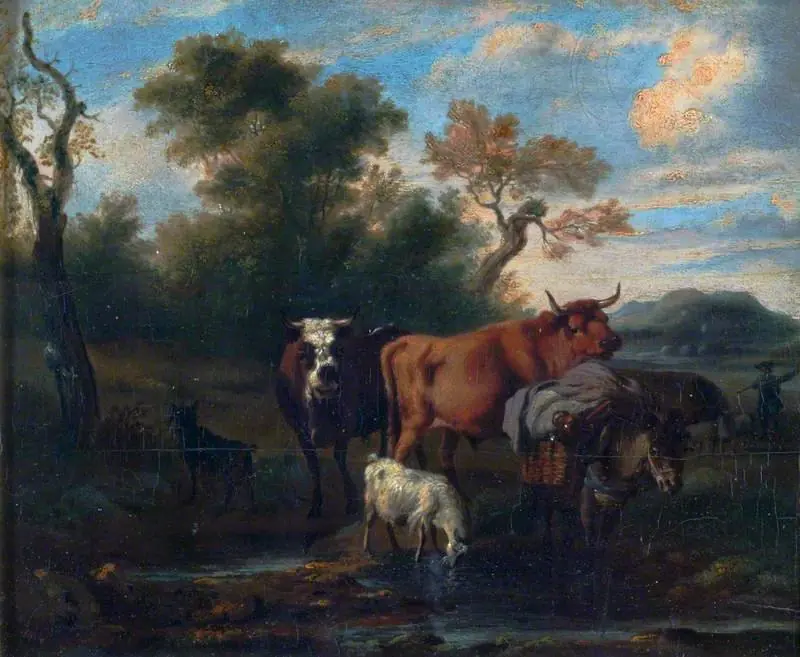 Landscape with Cattle
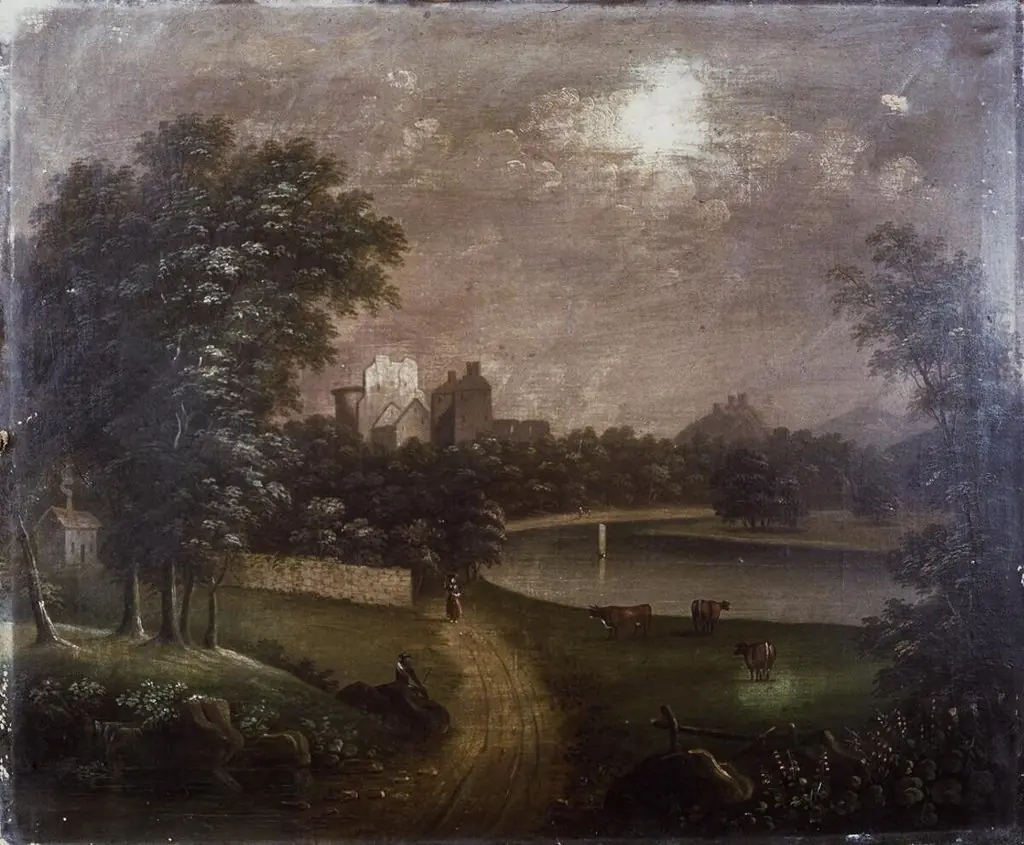 Down Castle looking east
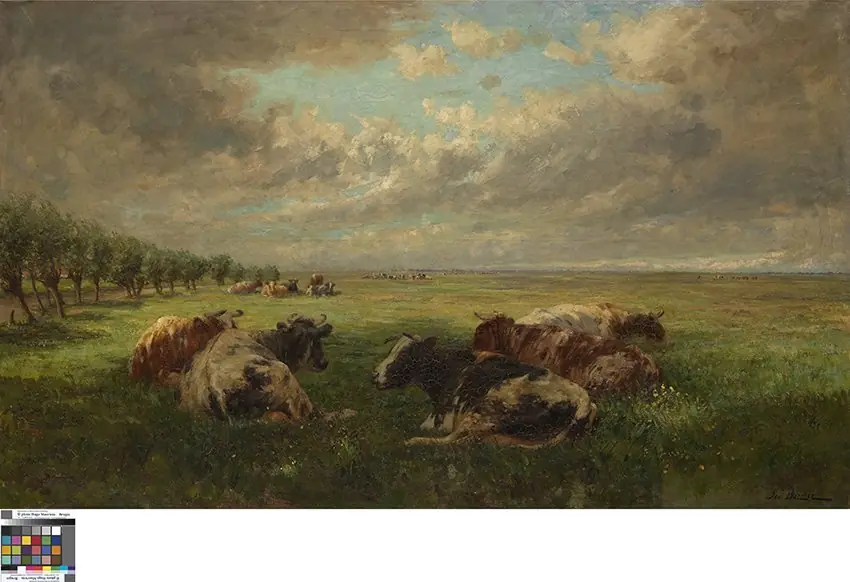 In Vlaanderen
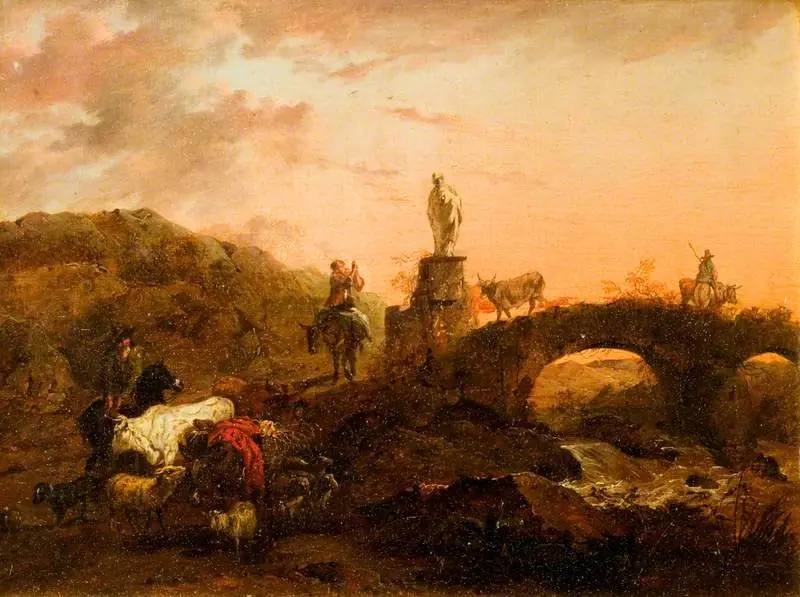 Landscape with Cattle
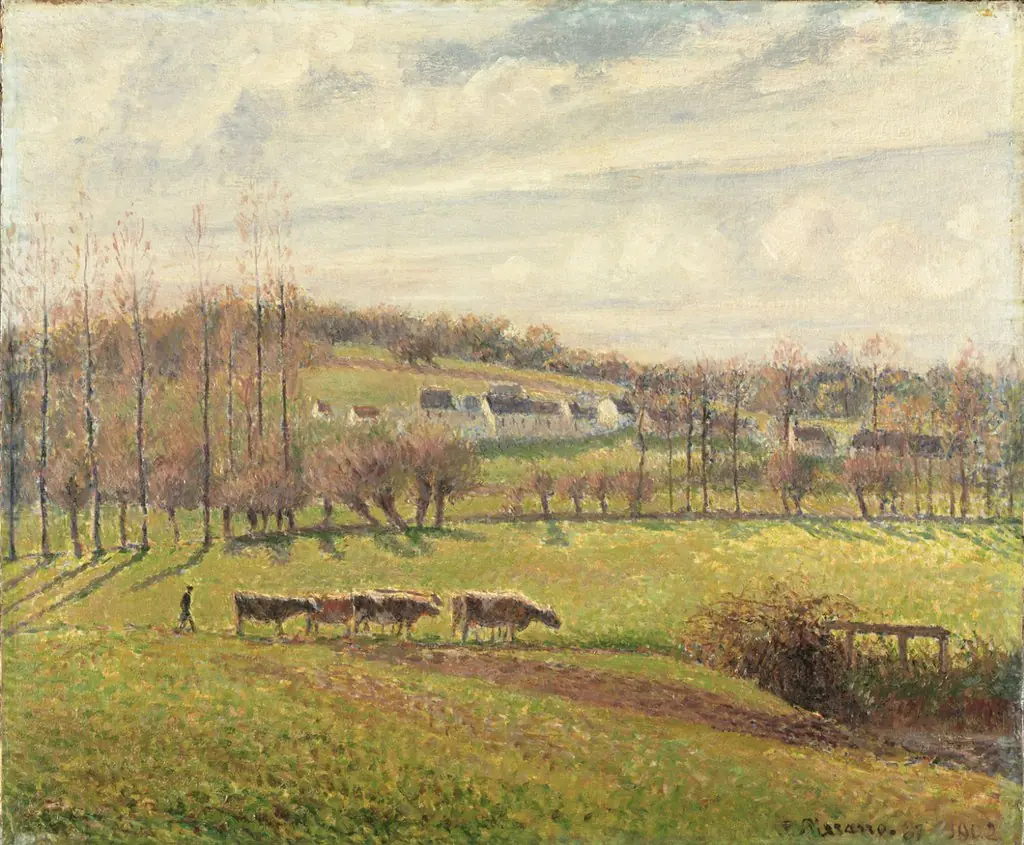 Summer Landscape, Eragny
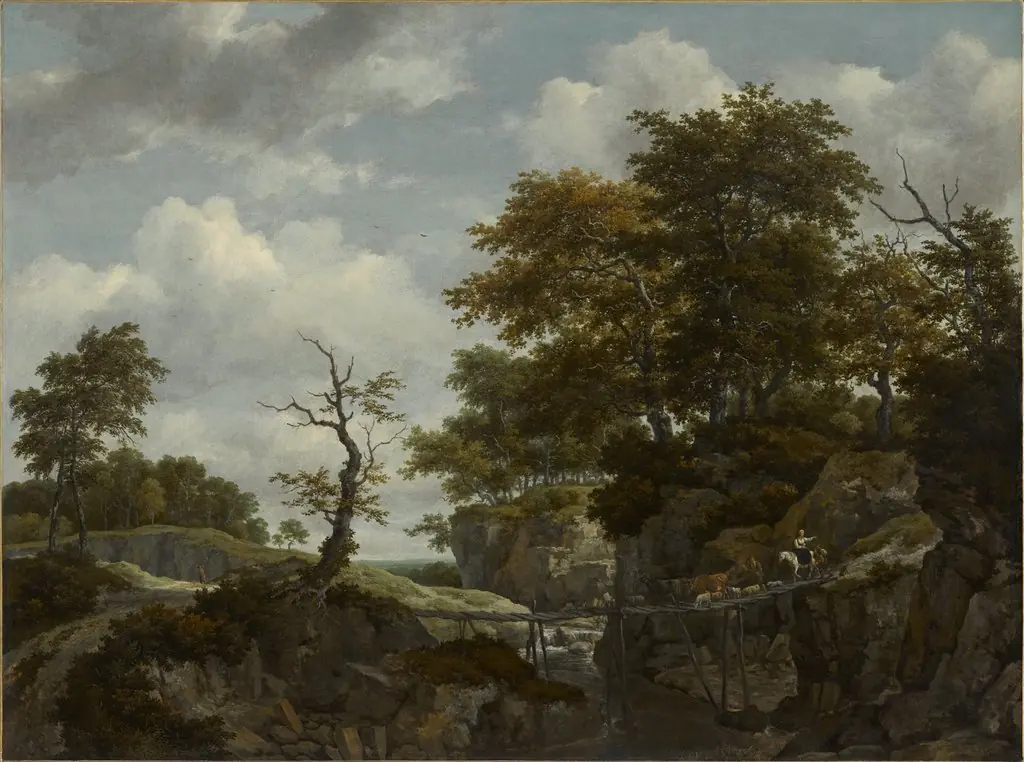 Landscape with Bridge, Cattle, and Figures
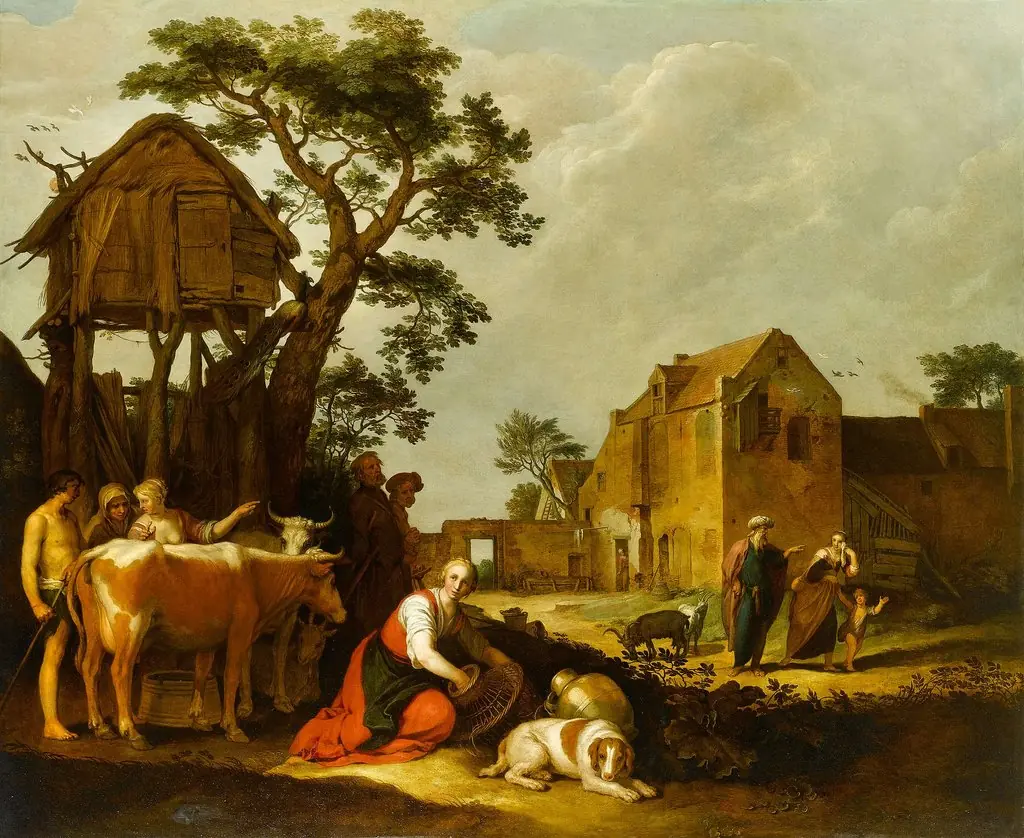 Rural landscape with the expulsion of Hagar and Ishmael (Genesis 21:14-21)
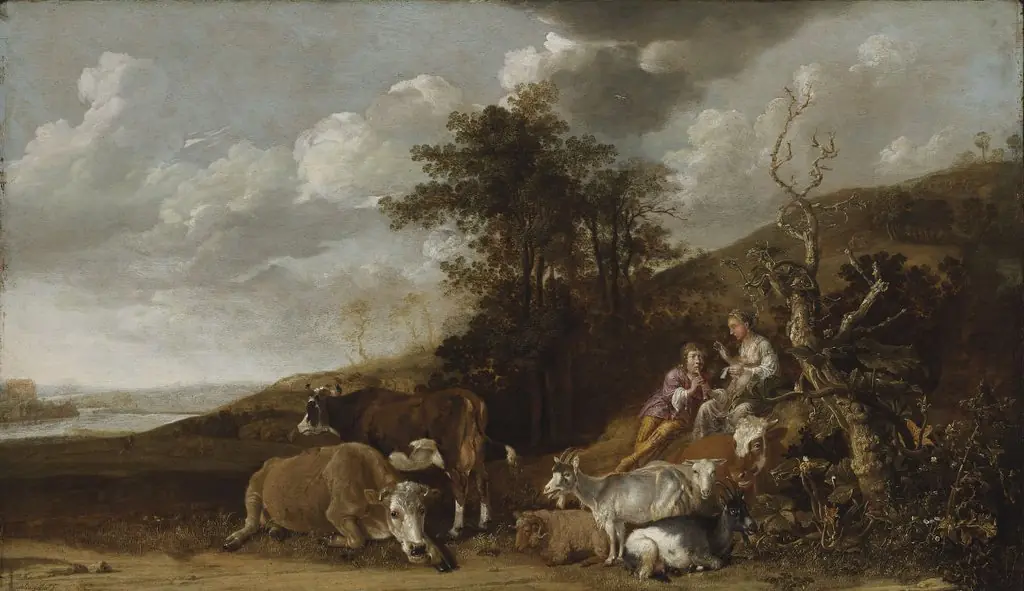 Landscape with Shepherdess and Shepherd Playing Flute
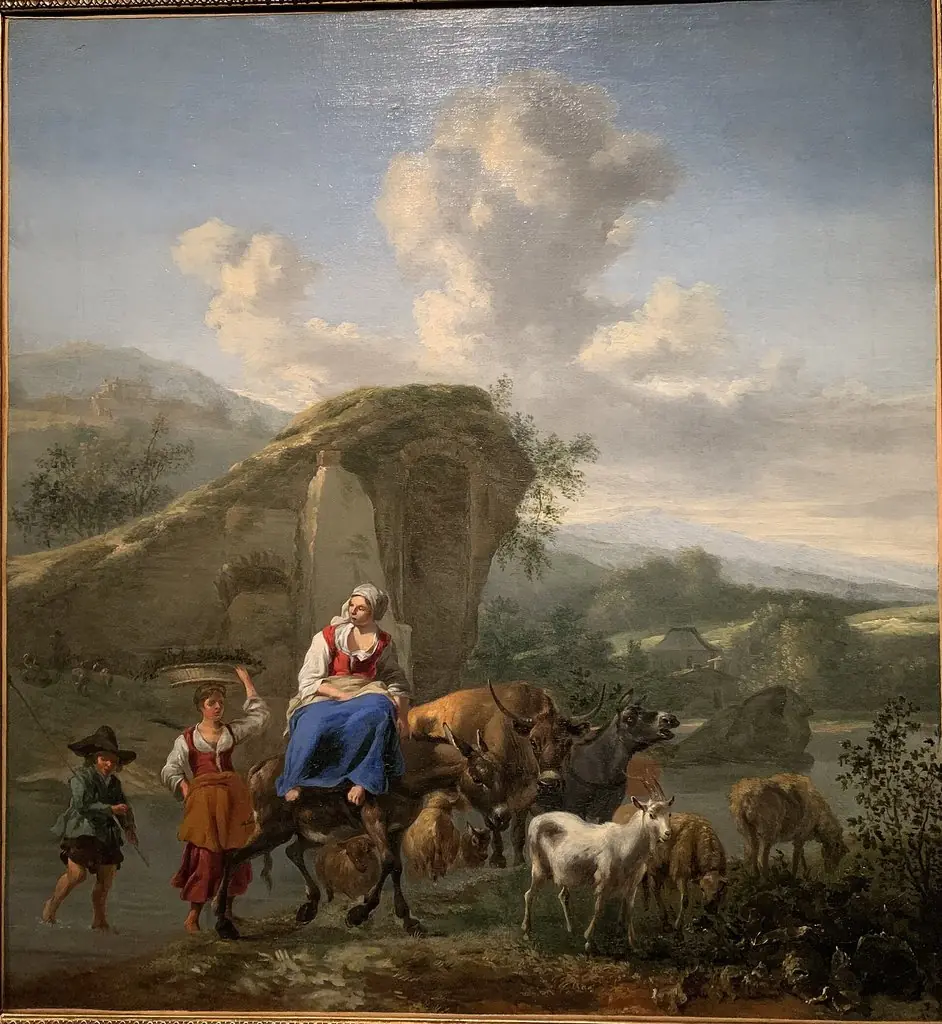 Shepherds at a Ford
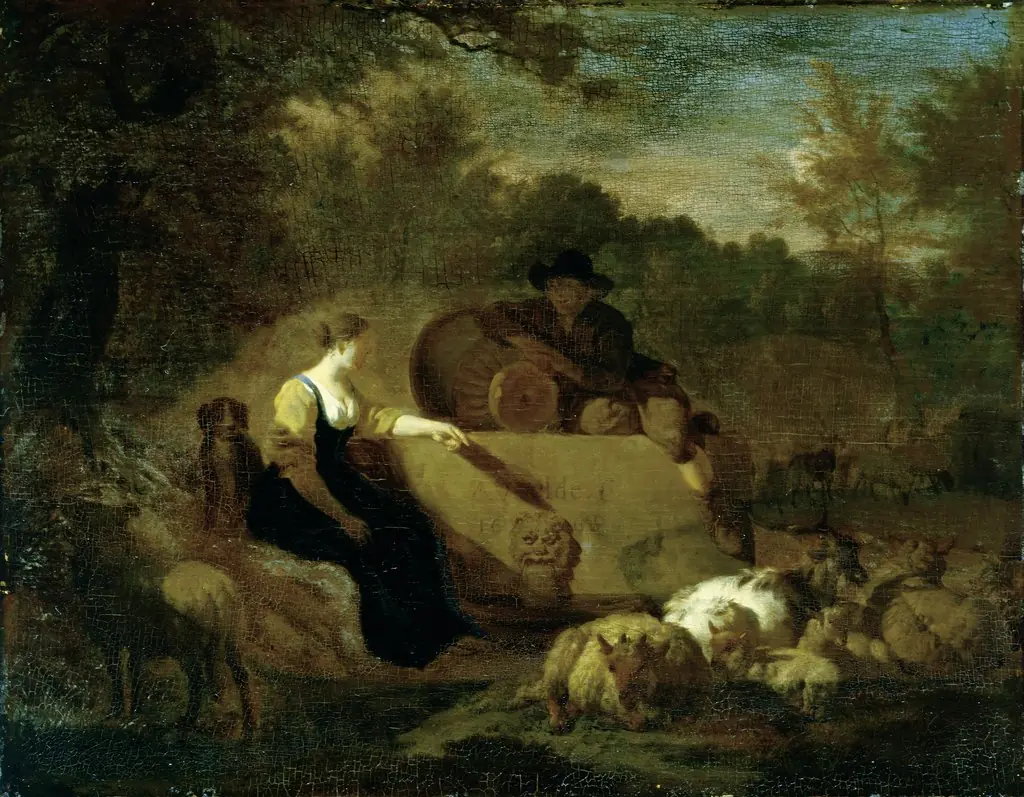 Shepherd's couple with their herd in a wooded landscape
Frequently asked questions
What is Cattle?
Cattle (Bos taurus) are large, domesticated, bovid ungulates widely kept as livestock.
How many Cattle works does Artifact World Gallery have?
Artifact World Gallery holds 200 public-domain Cattle works, all free to view and download.
Who are the key Cattle artists?
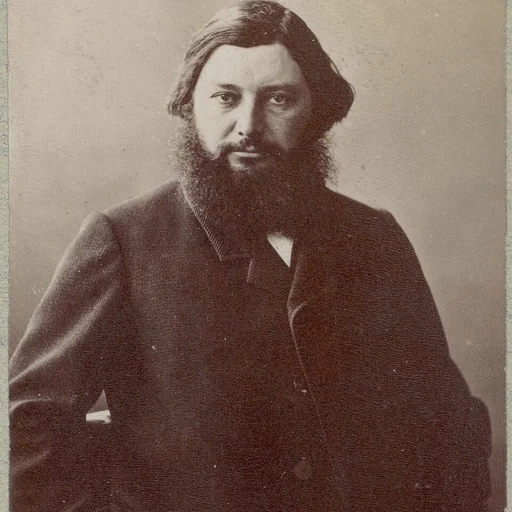
Key Cattle artists in the collection include Jean Baptiste Camille Corot, Gustave Courbet and Albert Bierstadt.
Where can I see Cattle works?
Cattle works in the collection are held by Metropolitan Museum of Art, Victoria and Albert Museum and National Gallery of Art.