Artwork
The Transportation of the Holy House of Loreto
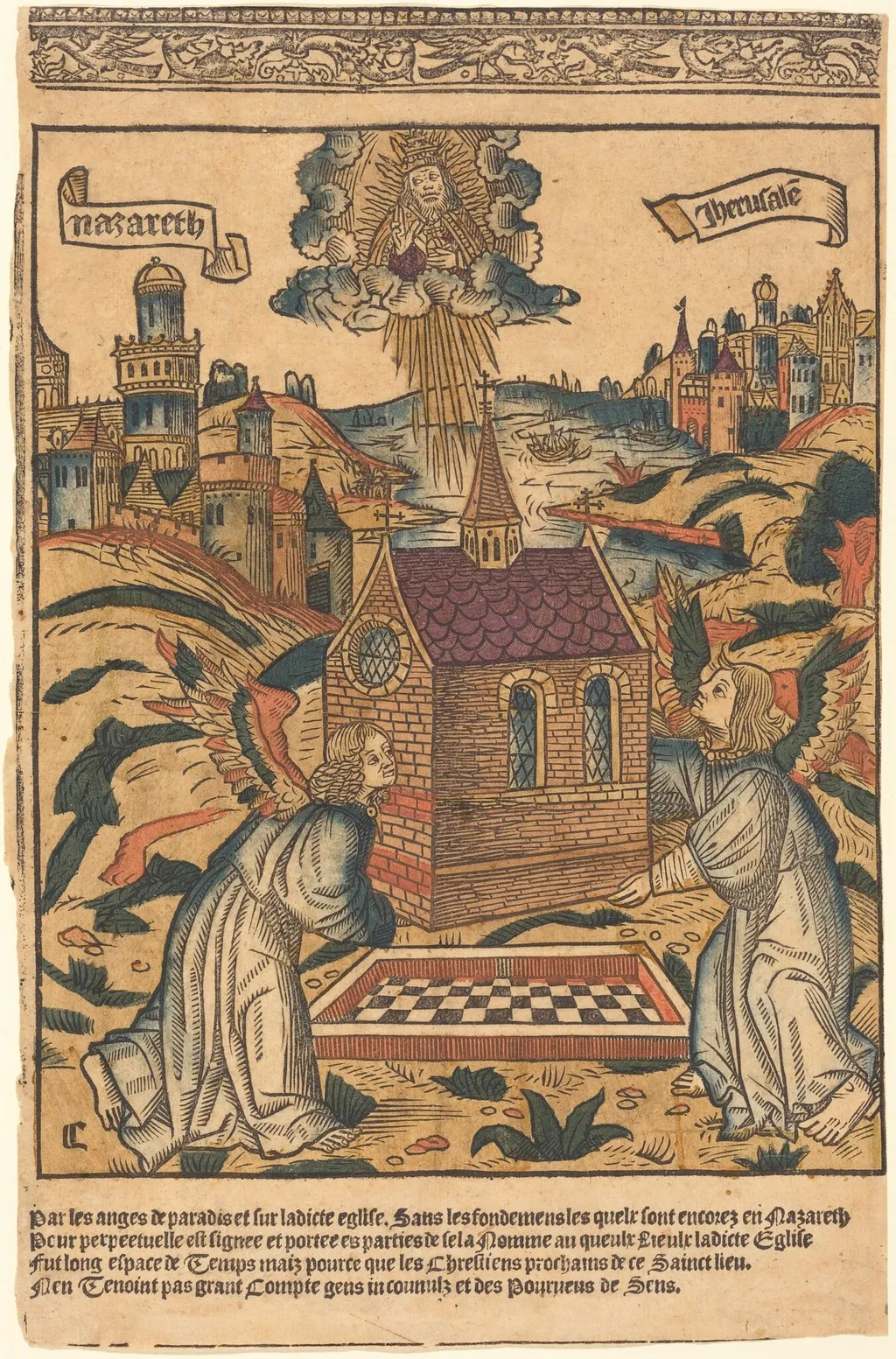
The Transportation of the Holy House of Loreto is an ink print by the Renaissance artist French 15th Century. It dates from 1494 and is held in the collection of the National Gallery of Art. The work is a hand‑colored woodcut that portrays a miraculous transport of a small church, identified as the Holy House of Loreto.
About this work
The painting depicts a scene with two angels, one on the left and one on the right, positioned in front of a small church.
The painting depicts a scene with two angels, one on the left and one on the right, positioned in front of a small church. The church features a red roof and a clock on its front wall. In the background, a cityscape is visible, complete with buildings and a body of water. Above the church, a figure of the Virgin Mary is shown, surrounded by clouds.
The painting is rendered in a range of colors, including tan, dark gray-green, orange, and purple. The green and orange hues may have been applied using a stencil. The overall effect is one of vibrant color and intricate detail.
This painting is an example of a Renaissance-era woodcut, a technique that was popular during the 15th century. To learn more about this style, explore the Renaissance movement.
Overview
The work is a hand‑colored woodcut that portrays a miraculous transport of a small church, identified as the Holy House of Loreto. Two angels flank the building, while the Virgin Mary hovers above amid clouds. A distant city with a waterfront and a clock‑topped façade forms the background, rendered in a palette of tan, dark gray‑green, orange and purple.
Subject & Meaning
The image illustrates the legendary relocation of the Holy House, the shrine traditionally associated with the Virgin Mary. The angels serve as divine agents guiding the structure, and the celestial presence of Mary underscores the sanctity of the event. The inclusion of a clock and urban setting situates the miracle within a recognizable, contemporary landscape.
Technique & Style
Executed as a woodcut, the print was later hand‑colored, with the green and orange tones possibly applied through stenciling to achieve uniform washes. The combination of line work typical of Renaissance printmaking and vivid pigments creates a detailed yet lively visual narrative, characteristic of late‑15th‑century devotional prints.
History & Provenance
The piece belongs to the Renaissance period, when woodcut printing flourished across Europe. Though the specific artist is not recorded, such prints were commonly produced for pilgrimage promotion and circulated among the faithful. Surviving examples are found in several museum collections, indicating a wide distribution in the early modern era.
Context
The Holy House of Loreto was reputedly moved from the Holy Land to Italy in the 13th century, a story that inspired numerous visual representations. This woodcut reflects the era’s interest in miraculous narratives and the use of print media to disseminate religious propaganda to a broad audience.
Artist & collection

Artist
An anonymous French hand glued vivid woodcuts into the lids of wooden boxes meant to ride on horseback, like secret postcards from God.

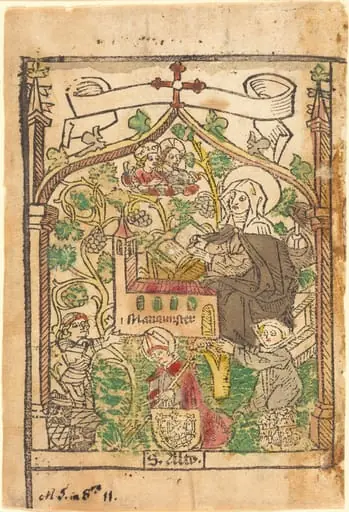
- Saint Alto, Saint Bridget and the Founders of the Mariamunster
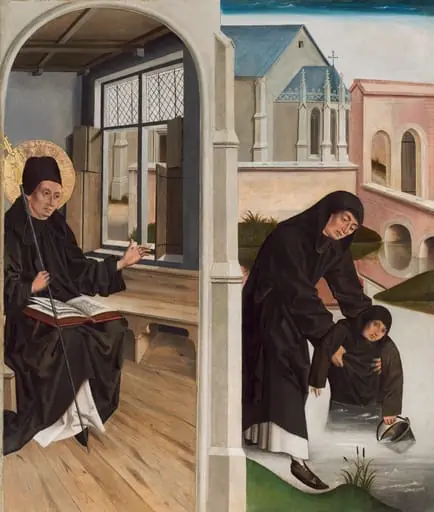
 Saint Bonaventure Arriving and Preaching in Lyon
![The Sacred Monograph with the Crucifixion and Passion Symbols [recto], by German 15th Century](https://artifactworldgallery.com/img/german-15th-century--the-sacred-monograph-with-the-crucifixion-and-passion-symbol--0037ce706250b56f-w320.webp) The Sacred Monograph with the Crucifixion and Passion Symbols [recto]
The Sacred Monograph with the Crucifixion and Passion Symbols [recto] The Annunciation
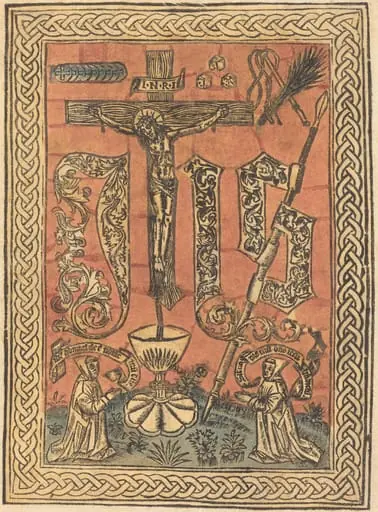 The Sacred Monogram
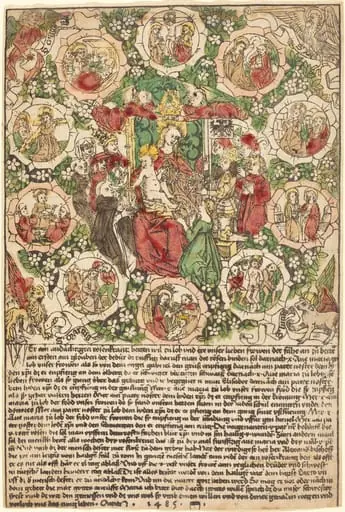 Madonna with the Rosary
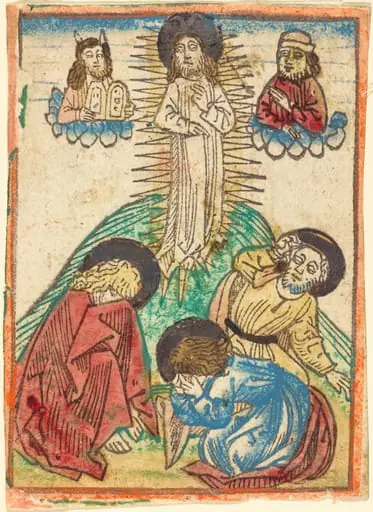 The Transfiguration
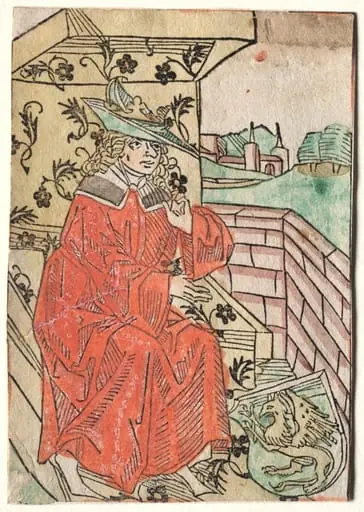 Hartlib's Alexander: Alexander Seated on Throne
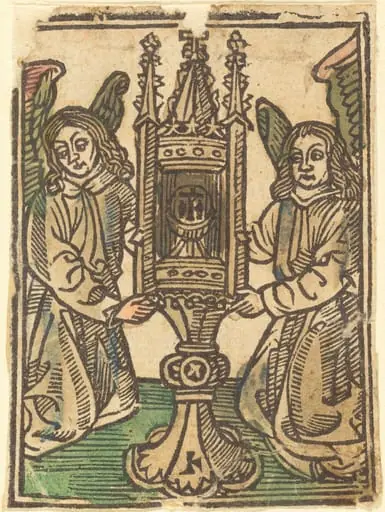 A Monstrance Held by Two Angels
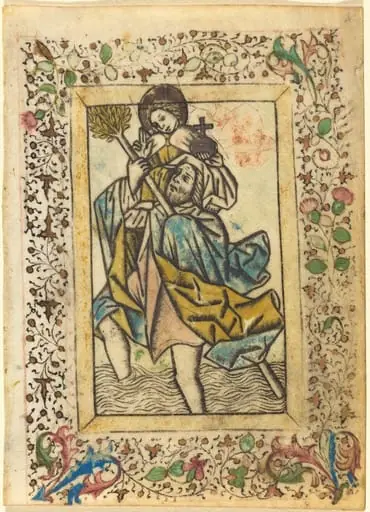 Saint Christopher
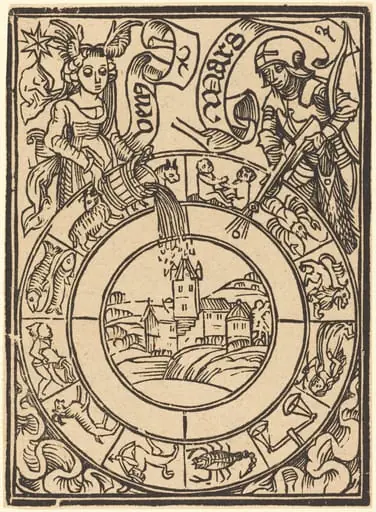 Mars and Venus
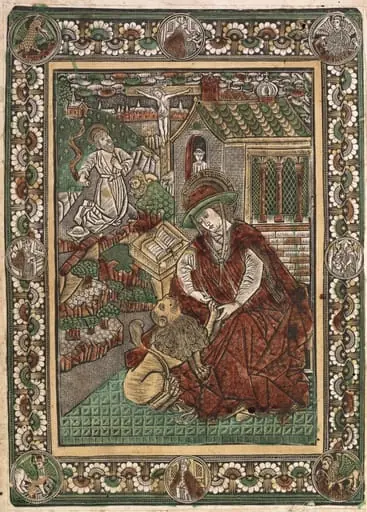 St. Jerome